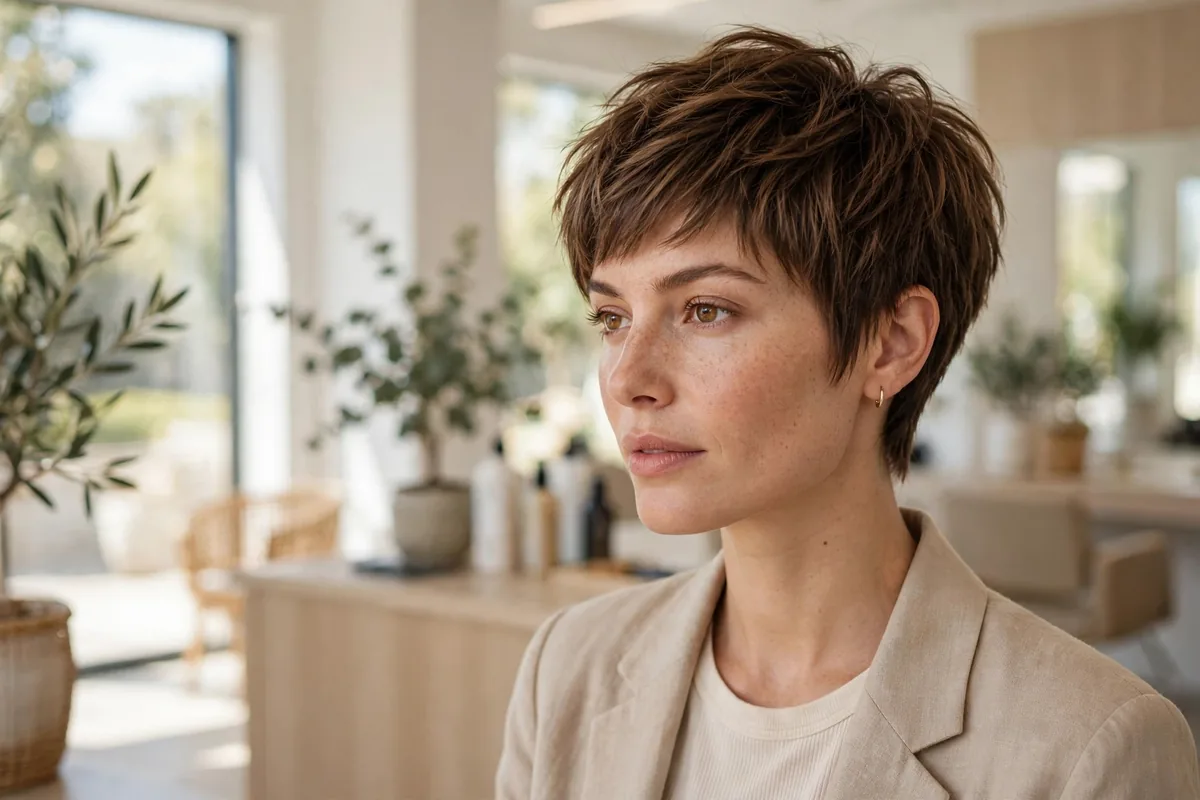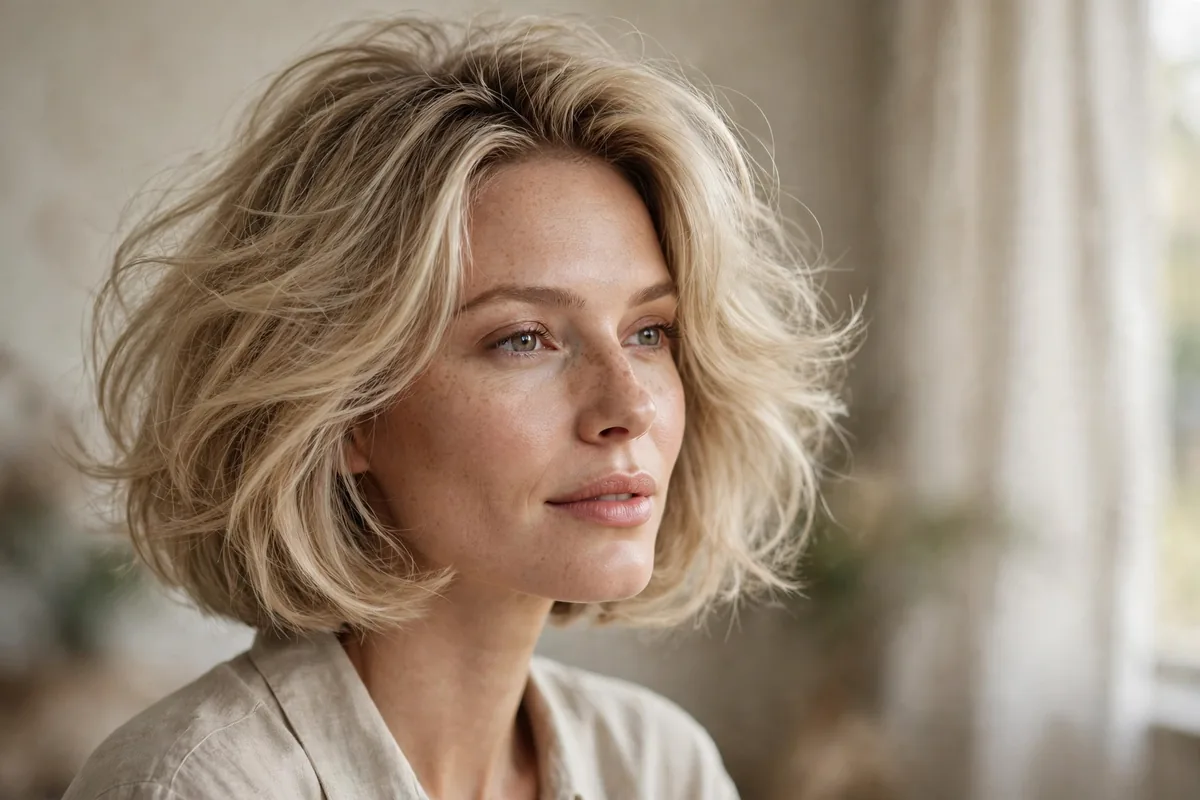
The secret to thin hair isn't more hair — it's a smarter haircut.
As hair thins with age, the old long layers that once worked start working against you — ends go wispy, the crown falls flat, and the whole style loses its shape. The fix is architectural: shorter lengths, strategic layering, and shapes that build volume where hair is sparsest.
The best cuts for thin hair all share a DNA: blunt or softly textured ends that look thicker, layers concentrated at the crown for lift, and lengths that keep the weight off. A great cut does half the volumizing work before you pick up a dryer.
Whether you want a pixie, a bob, or something in between, these 20 cuts are designed to make thin hair look like more of it. Bring photos to your stylist and let's find yours.
The Volumizing Stacked Bob
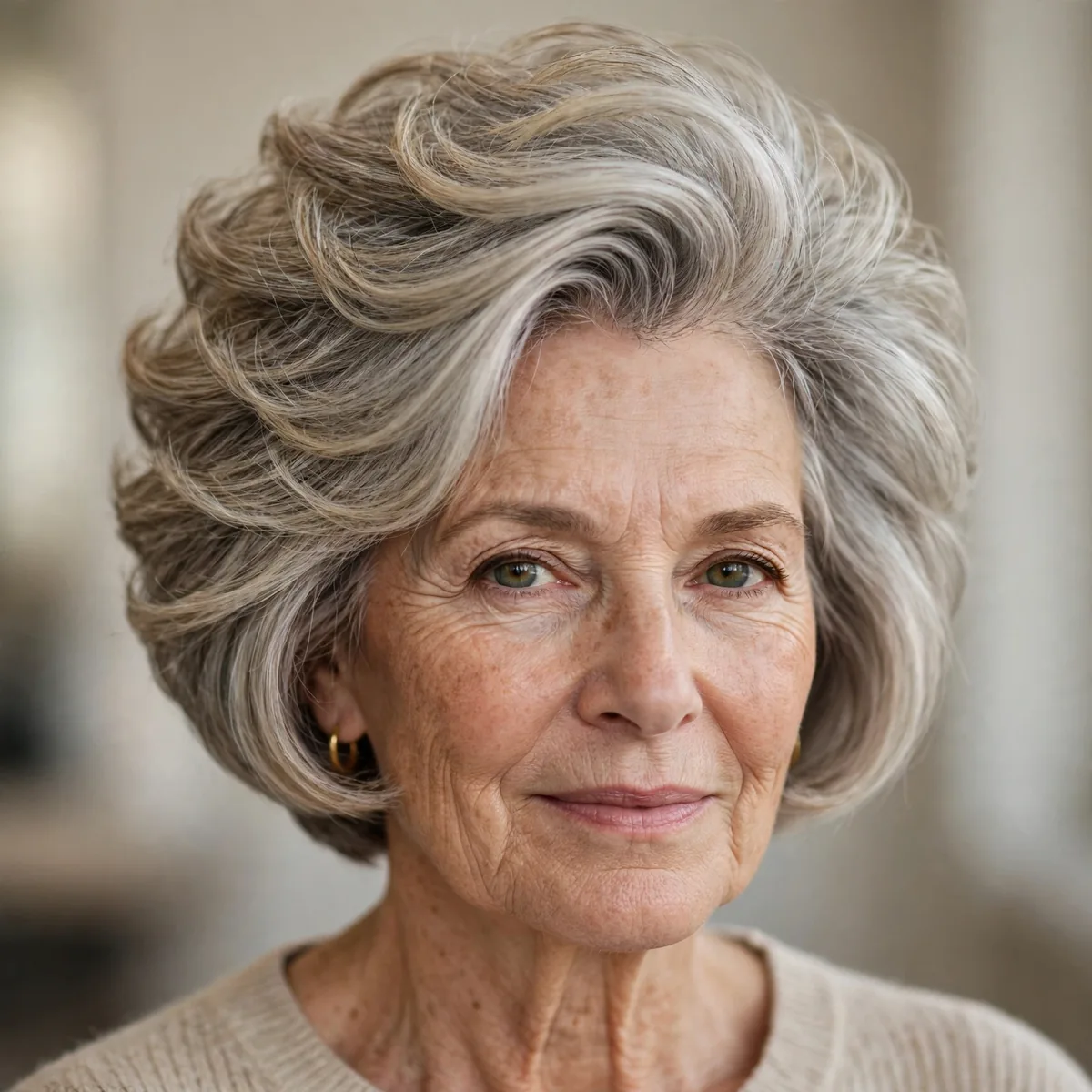
The stacked bob is thin hair's greatest ally — shorter layers at the nape that build upward create automatic volume at the crown, where thinning shows most. The graduated shape gives fine hair a fullness that no product alone can fake. It's the cut stylists recommend first for a reason.
This works beautifully on straight to wavy hair, and the stacked back camouflages a thinning crown completely. Ask your stylist for graduation through the back with soft texture on top — blunt enough to look thick, textured enough to move. The length should hit at or above the jawline. Ask your stylist to customize the layering to your texture, since the same cut behaves differently on every head.
Style it with a round brush and a root-lifting mousse, blow-drying the crown upward for maximum lift. A light texturizing spray at the roots adds grip that keeps the volume through the day. This cut is wash-and-go friendly but rewards five minutes of styling. A round brush and blow dryer bring out the cut's full potential, adding polish in under ten minutes.
Maintenance is straightforward: trims every six to eight weeks keep the stack from growing out shapeless. The shape does the work, so you can skip heavy volumizing products that weigh fine hair down. Less is genuinely more here. Regular trims every six to eight weeks keep the shape intentional rather than overgrown.
Textured Pixie With Long Crown
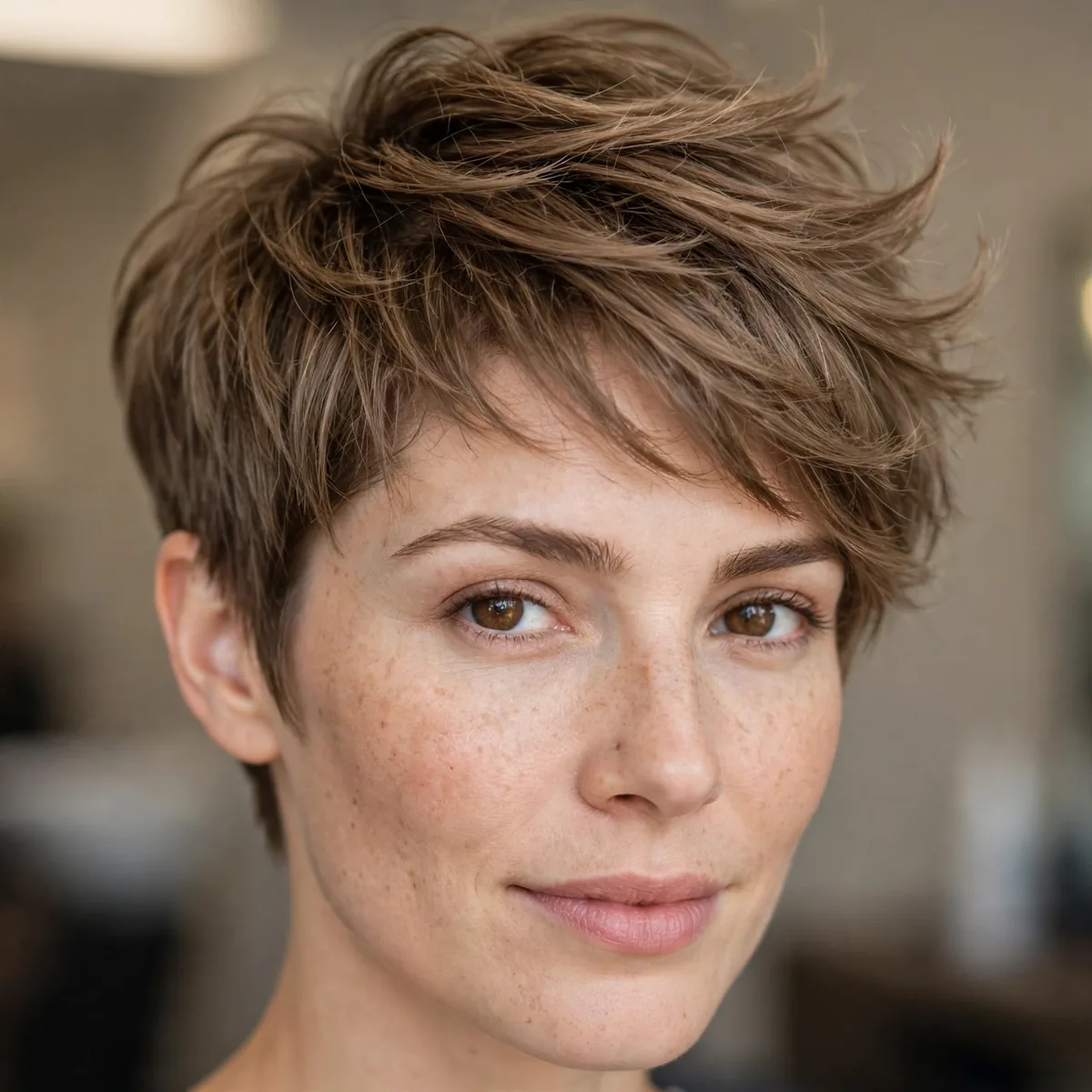
A pixie with length left on top is the boldest volumizing move — short sides remove the weight that drags thin hair down, while the longer crown layers create height and texture. The contrast makes the top look remarkably full. It's chic, low-maintenance, and endlessly flattering past sixty. The silhouette reads full and intentional from every angle, with movement that catches the light beautifully.
This suits oval, heart, and square face shapes especially well, and it works on straight or wavy textures. Ask for point-cut texture through the crown — never blunt — so the layers piece together into visible fullness. Keep the sides tapered, not shaved, for softness. A razor finish adds softness, while scissor point-cutting keeps the ends looking thicker and healthier.
Styling takes minutes: a pea-sized amount of texturizing paste worked through dry hair, piece by piece. The texture is the volume — resist the urge to smooth it down. A root powder at the crown adds extra lift on flat days. For special occasions, hot rollers create bouncy volume that lasts well into the night.
Pixies need trims every four to five weeks to hold the shape, but the daily effort is nearly zero. This cut also grows out gracefully if you decide to change — the crown length gives you options most pixies don't. A clarifying shampoo once a month removes buildup that can weigh down the style.
Collarbone Blunt Lob

The blunt lob proves thin hair can go longer — the one-length cut makes ends look maximally thick because there's no layering to wisp them out. Hitting at the collarbone, it's long enough to feel feminine and short enough that the weight doesn't pull the crown flat. Elegant and deceptive.
This is ideal for straight, fine hair — the blunt edge is the whole trick. Ask your stylist for a true one-length cut with only the slightest beveling underneath so it tucks in neatly. Avoid layers entirely; every layer removed is density lost at the ends. Thick hair may need interior thinning to achieve the same lightness, while fine hair should skip it entirely.
Style it sleek with a flat iron for maximum density illusion, or add a slight bend with a large-barrel iron for movement. A shine serum on the ends emphasizes the blunt edge. Root lift comes from blow-drying upside down for two minutes — that's all it needs. Keep heat protectant in your routine whenever hot tools touch the hair to prevent damage.
The blunt line needs trims every eight weeks to stay crisp — grown-out blunt ends look ragged fast. But between appointments, this is the lowest-effort long-ish cut for thin hair. The shape never lies about density. This cut requires minimal product, which keeps both your routine and your budget simple.
Feathered Shag Revival

The feathered shag is back, and it's a gift to thin hair — choppy layers throughout create movement and the illusion of density, while the feathered ends keep everything soft around the face. It's the 70s icon reimagined for modern texture and mature faces. The texture throughout prevents the flat, helmet-like finish that one-length cuts can sometimes produce.
This works on wavy and straight hair alike; the layers are the star, not the texture. Ask for long layers through the crown with feathered, face-framing pieces — the framing softens jawlines and cheekbones beautifully. Keep the overall length between chin and shoulder. Side parts versus center parts change the entire feel, so experiment before committing to one.
Style with a diffuser or air-dry with a sea-salt spray for piecey texture. The shag wants to look undone — over-styling kills its charm. A dry texturizing spray scrunched through the ends amplifies the feathered effect without weight. Finger-styling with a small amount of pomade creates piecey definition that looks modern.
Trims every eight to ten weeks keep the layers fresh. This cut is forgiving as it grows — the shaggy shape actually improves with a little length. It's the rare volumizing cut that looks better slightly lived-in. Track how the cut grows out so your stylist can adjust the shape at your next visit.
Graduated Jaw Bob

The graduated jaw bob is precision volume — shorter in back, longer in front, with the graduation building fullness exactly where thin hair needs it. The jaw-length front pieces frame the face while the stacked back lifts the crown. It's the most requested bob for a reason. Natural texture enhances this cut, but it also responds well to heat styling for sleeker finishes.
Best on straight to slightly wavy hair, this cut suits round and square faces by elongating the front. Ask for clean graduation through the nape with soft, not chunky, texture on top. The front should graze the jawline — longer fronts drag, shorter fronts widen. Bring reference photos to your appointment, since describing texture verbally often leads to miscommunication.
Blow-dry with a round brush, rolling the front pieces under for that classic swing. A volumizing mousse at the roots before drying gives the graduation extra lift. Tuck one side behind the ear for an asymmetric, modern finish. This cut pairs well with soft waves for evenings and sleek finishes for professional settings.
Keep the graduation sharp with trims every six weeks — this cut's architecture is its magic, and grown-out graduation just looks uneven. The daily styling is quick: the shape practically styles itself with a round brush. This cut is forgiving between appointments, holding its shape longer than more precise cuts.
Soft Layered Pixie-Bob

The pixie-bob — longer than a pixie, shorter than a bob — is the sweet spot for thin hair that wants coverage without weight. Soft layers throughout create movement and the length covers the neck and ears elegantly. It's sophisticated without trying. The perimeter stays strong even as the interior moves, balancing structure with softness.
This flatters most face shapes because the length is customizable — longer in front for round faces, more crown height for long faces. Ask for soft, blended layers rather than choppy ones; the pixie-bob's elegance comes from smooth transitions. Nape should be tapered and neat. Curly and wavy textures should be cut dry or in their natural state for the most predictable result.
Style with a blow dryer and a small round brush for polish, or air-dry with a smoothing cream for a softer finish. The cut works both sleek and textured — versatility is its strength. A light-hold hairspray keeps the shape without stiffness. A deep side part adds drama, while a center part keeps things modern and understated.
Trims every six weeks maintain the blended shape. This cut grows out into a lovely short bob, so there's no awkward phase — just evolving elegance. It's the safe adventurous choice. Ask your stylist about the best at-home maintenance for your specific texture and density. Avoid over-washing, since stripping natural oils leads to dryness that no product fully fixes.
Crown-Lifting Short Layers

Short layers concentrated at the crown are the most direct attack on flat thin hair — they remove weight exactly where lift is needed and leave length where coverage matters. The result is a rounded, full silhouette that reads as thick hair from every angle. The shape grows out gracefully, holding its structure for weeks without looking overgrown or shapeless.
This suits straight and wavy textures and works on round, oval, and heart faces. Ask your stylist for short layers through the crown only, with the perimeter left longer — the contrast between the lifted top and the longer outline creates the fullness illusion. Avoid over-layering the ends. This works beautifully on mature hair, since the shape adds youthfulness without trying too hard.
Blow-dry the crown with a round brush, lifting each section straight up from the scalp. A root-boosting spray applied to damp roots before drying doubles the effect. The layers do the architectural work; the styling just activates it. Dry shampoo at the roots on day two revives volume without a full wash.
The crown layers need refreshing every six to eight weeks or the lift collapses. But this is a genuinely low-daily-effort cut — the shape holds its volume with minimal intervention. Thin hair's hardest-working short cut. Regular trims every six to eight weeks keep the shape intentional rather than overgrown. A clarifying shampoo once a month removes buildup that can weigh down the style.
The Italian Bob
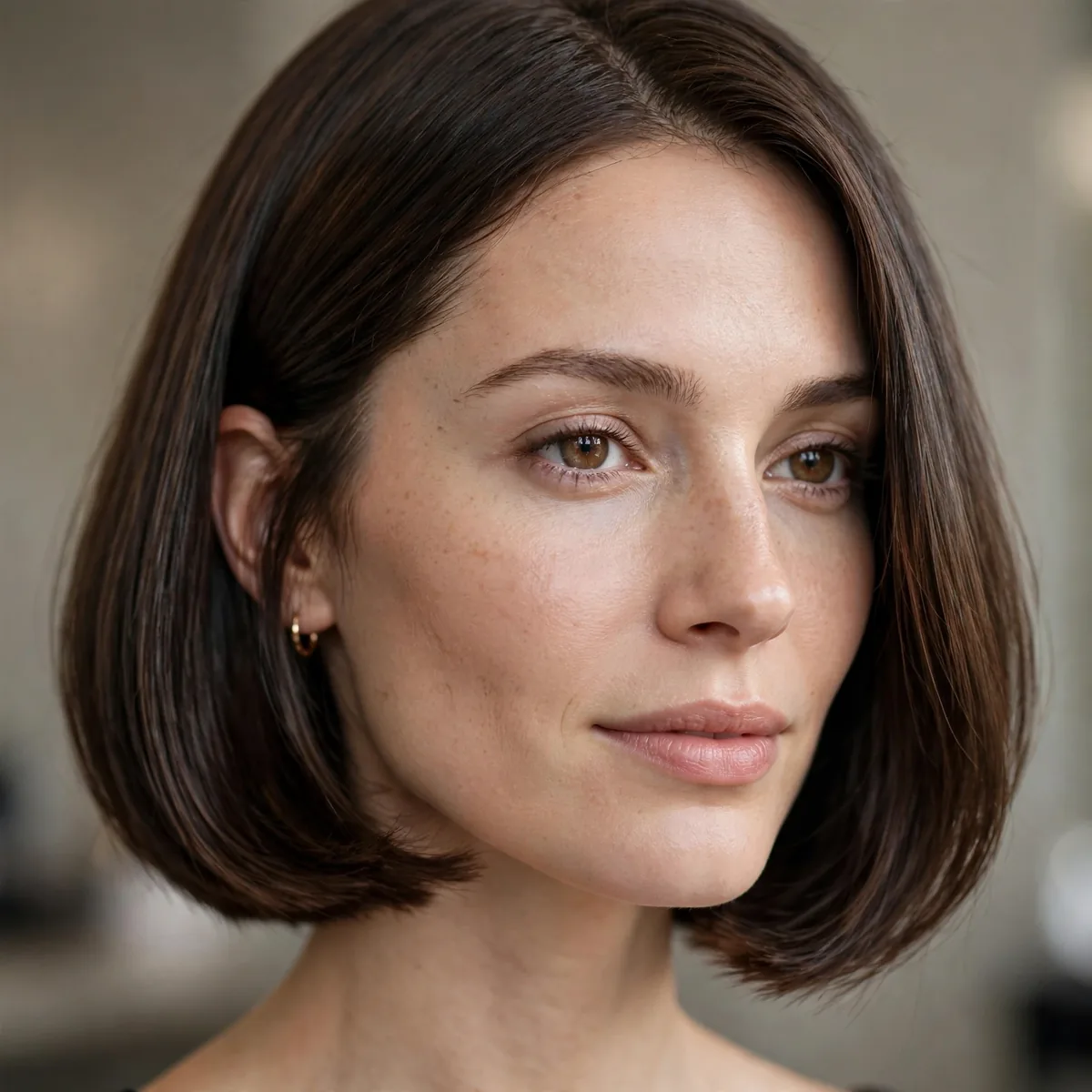
The Italian bob — chin-length, blunt, with minimal layering — is thin hair's red-carpet moment. The chunky, deliberate ends look dense and luxurious, and the chin length keeps all the weight off the crown. It's old-money elegance in a haircut. The ends look healthy and substantial, which is the true marker of a well-executed cut.
Best on straight hair where the blunt edge shows crisply. Ask for a true one-length bob at chin level with almost no layers — maybe the slightest internal texture to prevent a shelf. The ends should look thick enough to bounce when you turn your head. Ask your stylist to customize the layering to your texture, since the same cut behaves differently on every head.
Style it with a big round brush for a soft under-curl, or wear it pin-straight for maximum edge. The Italian bob loves shine — a gloss serum on the ends emphasizes the expensive blunt line. It's a cut that looks styled even when you barely try. A round brush and blow dryer bring out the cut's full potential, adding polish in under ten minutes.
Trims every six weeks keep the line razor-sharp. This cut is unforgiving of grow-out — but between trims, it's the chicest low-effort option for thin hair. The bluntness never stops working. This cut requires minimal product, which keeps both your routine and your budget simple. Track how the cut grows out so your stylist can adjust the shape at your next visit.
Wispy Bangs Bob

Wispy bangs on a bob do double duty for thin hair — they add forehead coverage that reads as fullness while the bob's shape builds volume below. The wispy texture keeps the bangs light and modern, never heavy or dated. Youthful without trying too hard. Density appears greatest where the eye naturally lands first, which is the cleverest part of the design.
This suits high foreheads and long faces beautifully, softening both. Ask for bangs that are wispy and piecey, not blunt — thin hair can't support a heavy fringe. The bob itself should be chin to jaw length with light layering for movement. A razor finish adds softness, while scissor point-cutting keeps the ends looking thicker and healthier.
Style the bangs with a small round brush or just your fingers and a blow dryer — wispy bangs want air, not precision. A dry shampoo at the roots on day two revives both the bangs and the crown. Keep the bangs trimmed between appointments or learn a careful DIY dusting.
Bangs need trimming every three to four weeks, but the bob itself goes six to eight. The combination is worth the maintenance — wispy bangs take years off and add the illusion of density right where the eye lands first. This cut is forgiving between appointments, holding its shape longer than more precise cuts.
Asymmetric Short Cut
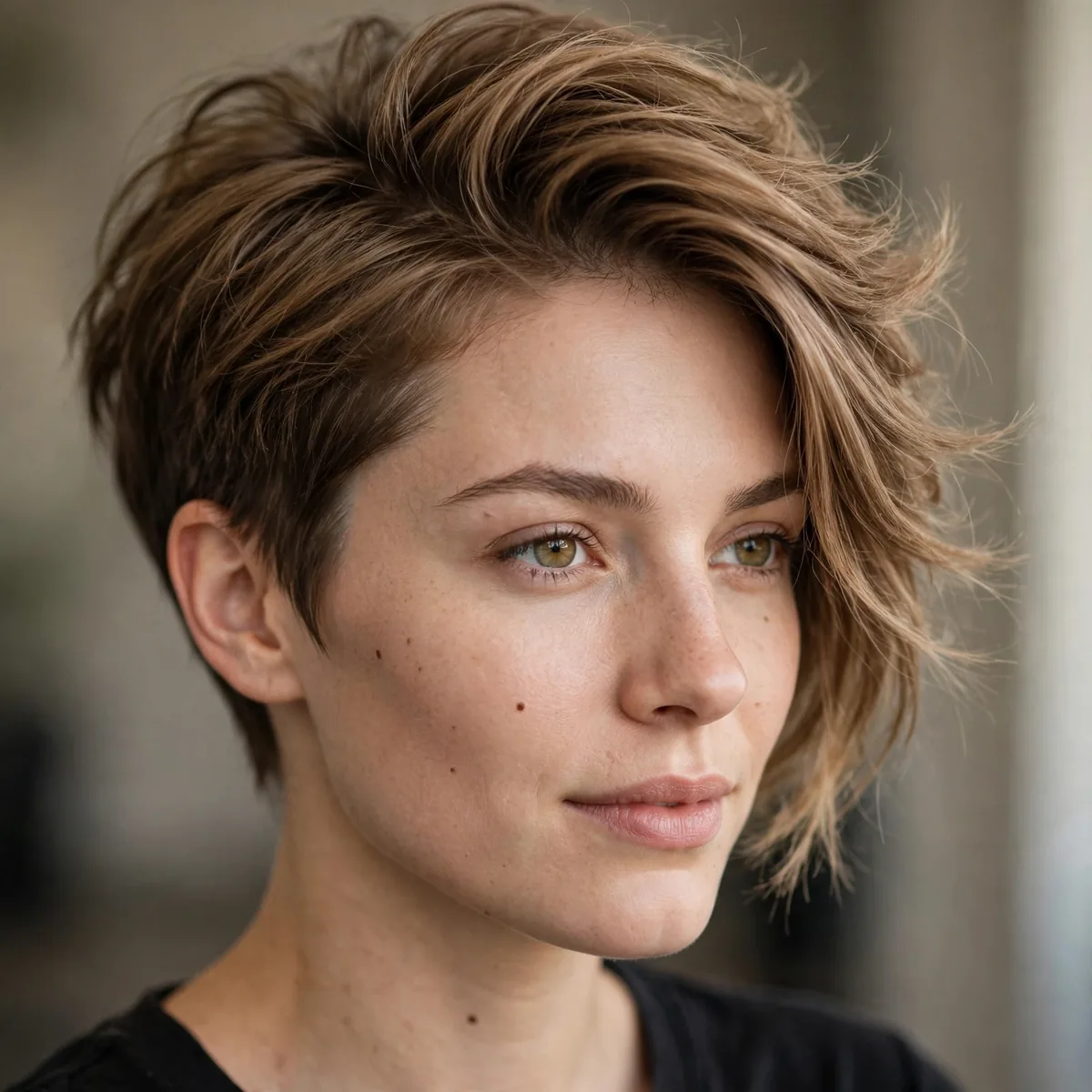
Asymmetry is thin hair's optical illusion — the uneven lines draw the eye along the shape rather than through it, so sparseness never registers. Longer on one side, shorter on the other, the cut creates visual interest that reads as fullness. Modern, artistic, and clever. The silhouette reads full and intentional from every angle, with movement that catches the light beautifully.
This works on straight and wavy hair and flatters round faces by breaking up symmetry. Ask for a dramatic but wearable difference — two to three inches between sides — with texture through the longer side. The shorter side should be tapered close for contrast. Thick hair may need interior thinning to achieve the same lightness, while fine hair should skip it entirely.
Style the longer side with volume — round brush, root lift, the works — and keep the shorter side sleek. The contrast between the two sides is the design. A strong-hold texturizer on the long side keeps the shape architectural. For special occasions, hot rollers create bouncy volume that lasts well into the night.
Asymmetric cuts need trims every five to six weeks to hold the deliberate imbalance — grow-out quickly looks accidental. But the daily styling is simple, and the cut itself does the visual heavy lifting. Thin hair disguised as avant-garde. Ask your stylist about the best at-home maintenance for your specific texture and density.
Layered Lob With Face Frame

A layered lob with face-framing pieces gives thin hair the best of both worlds — length to play with and layers that create movement. The face frame draws attention to the features while the layers add body through the mid-lengths. It's the most versatile cut on this list. The texture throughout prevents the flat, helmet-like finish that one-length cuts can sometimes produce.
Suitable for straight, wavy, and even curly fine hair. Ask for long layers starting at the chin, with the face-framing pieces cut to accent your cheekbones. Keep the base length at the collarbone — longer, and the weight defeats the layers' purpose. Side parts versus center parts change the entire feel, so experiment before committing to one.
Style with a large-barrel curling iron for soft waves that maximize the layers' movement, or blow out smooth for polish. The face frame looks best with a slight bend — flat-ironed straight, it can hang limp. Texturizing spray through the mid-lengths adds separation. Keep heat protectant in your routine whenever hot tools touch the hair to prevent damage.
Trims every eight to ten weeks keep the layers fresh. This cut is the grow-out champion — it looks good at every stage, making it ideal if you're growing from a bob or maintaining length. Versatility with built-in volume. Avoid over-washing, since stripping natural oils leads to dryness that no product fully fixes.
Tapered Nape Pixie
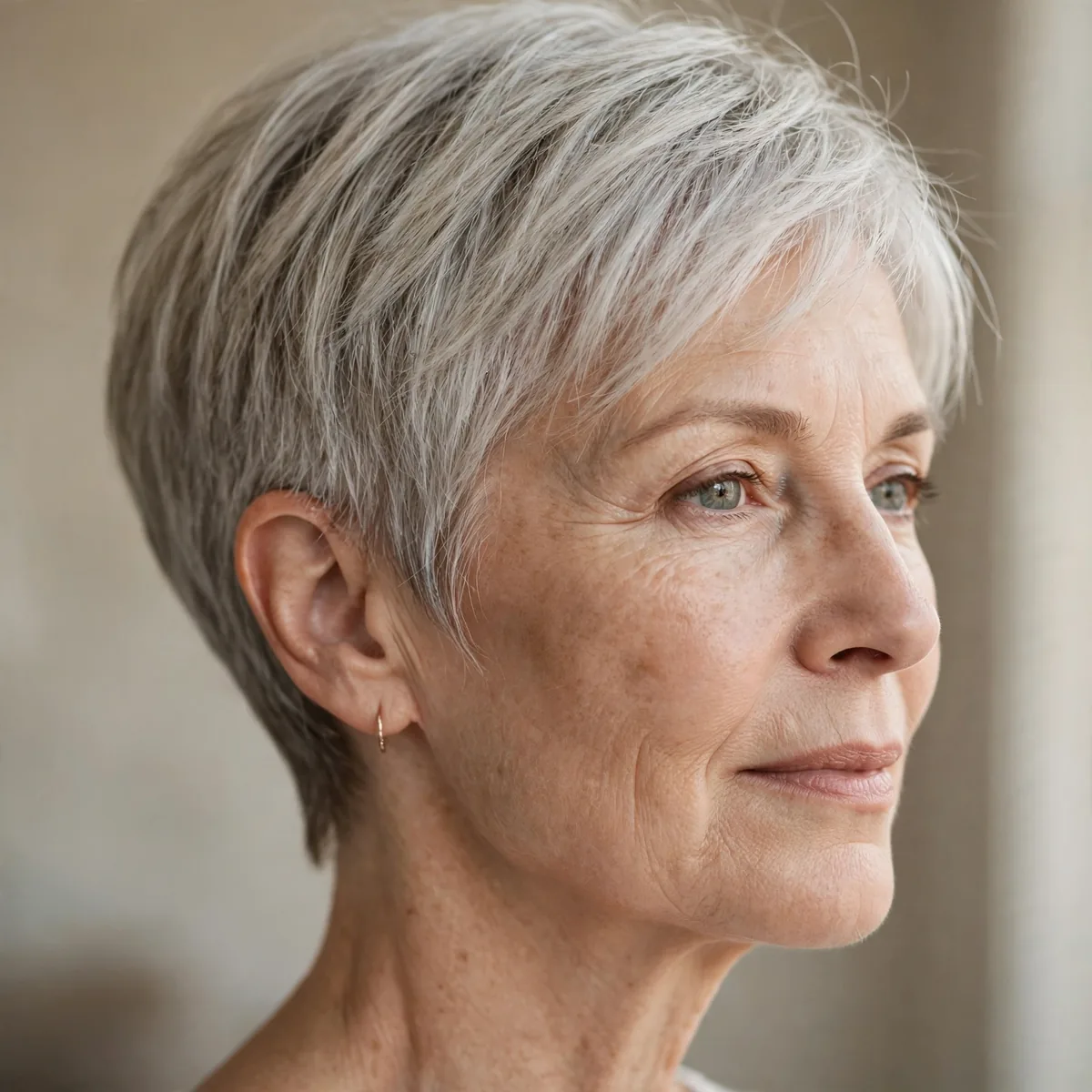
The tapered nape pixie is all about the silhouette — a close, clean nape that makes the crown look fuller by contrast. The taper removes bulk where you don't need it and leaves length where you do. It's the pixie's most flattering variation for thin hair. Natural texture enhances this cut, but it also responds well to heat styling for sleeker finishes.
This suits oval and heart faces particularly well, and works on straight or wavy textures. Ask for a soft taper at the nape — not a harsh undercut — with length through the crown and soft texture on top. The transition should be gradual and feminine. Bring reference photos to your appointment, since describing texture verbally often leads to miscommunication.
Style the crown with texture and lift — paste or powder at the roots, piecey definition on top. The nape needs nothing; its neatness is the point. This is a five-minute style that looks deliberately chic. Finger-styling with a small amount of pomade creates piecey definition that looks modern. This cut pairs well with soft waves for evenings and sleek finishes for professional settings.
Trims every four weeks keep the taper crisp — a grown-out nape ruins the contrast that makes this cut work. But the trade-off is negligible daily effort and a cut that always looks intentional. Thin hair, sharp silhouette. Regular trims every six to eight weeks keep the shape intentional rather than overgrown.
Shoulder-Length Blunt Cut

The shoulder-length blunt cut is the maximum length thin hair should attempt — one length, thick ends, zero layers to wisp out. At the shoulder, the hair still has enough body to hold the blunt line, and the length feels substantial. It's the elegant compromise. The perimeter stays strong even as the interior moves, balancing structure with softness.
Best on straight fine hair where the blunt edge reads crisply. Ask for a true one-length cut at the shoulder with clean ends — no thinning shears, ever, on thin hair. The ends are the density; protect them. Curly and wavy textures should be cut dry or in their natural state for the most predictable result.
Wear it sleek for the full density illusion, or add loose waves with a flat iron for softness. Either way, the blunt perimeter does the work. A weekly deep-conditioning mask keeps the ends healthy — split ends destroy the blunt line faster than anything. A deep side part adds drama, while a center part keeps things modern and understated.
Trims every eight weeks maintain the edge. This cut proves thin hair doesn't have to go short — it just has to go blunt. Length with integrity beats layered length every time for fine hair. A clarifying shampoo once a month removes buildup that can weigh down the style. This cut requires minimal product, which keeps both your routine and your budget simple.
Curly Top Pixie
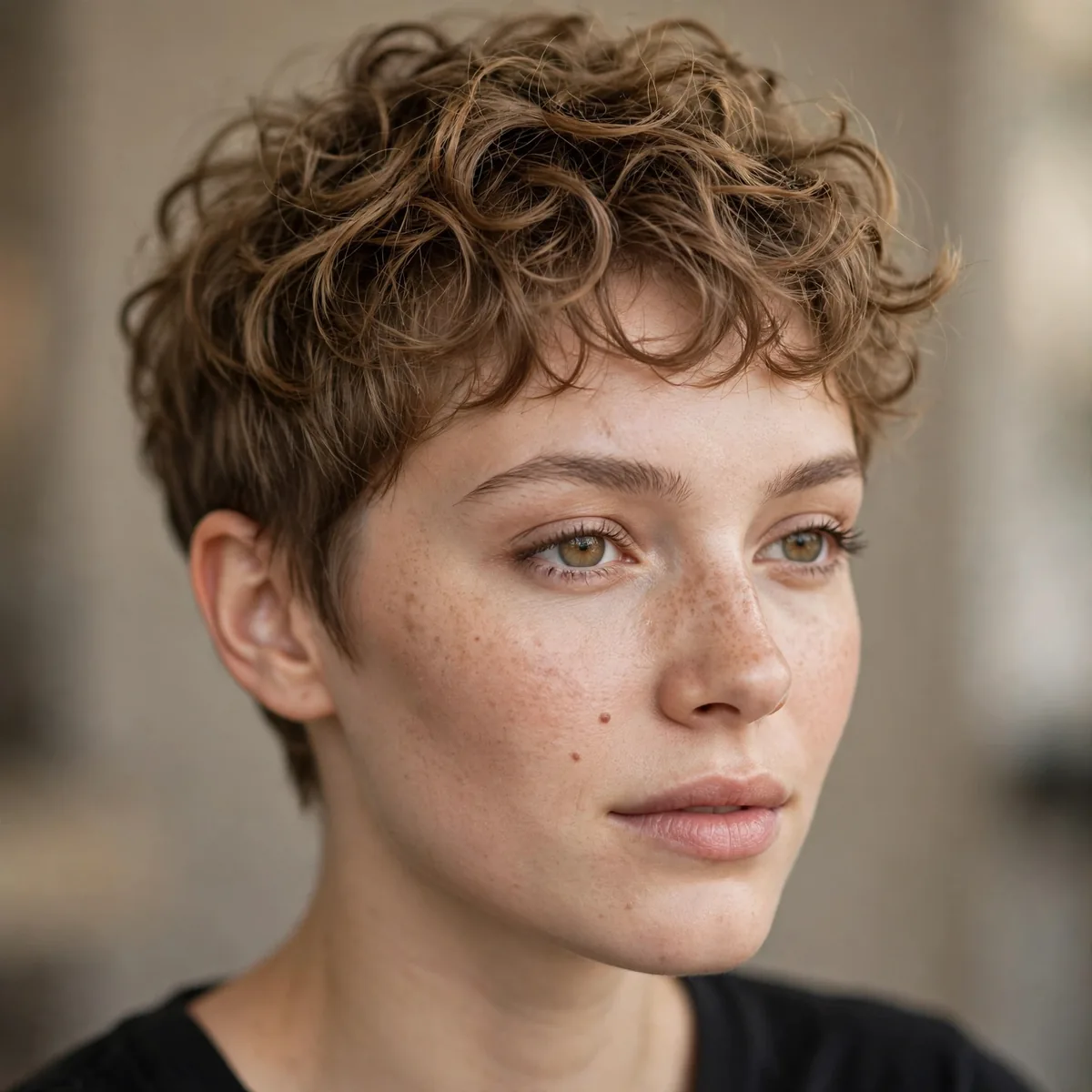
If your thin hair has natural wave or curl, the curly-top pixie turns texture into volume — curls on top create height and fullness that straight thin hair can't match. Short sides keep it neat while the curly crown does all the talking. Texture is thin hair's secret weapon. The shape grows out gracefully, holding its structure for weeks without looking overgrown or shapeless.
This is ideal for wavy to curly fine hair — the curl pattern provides built-in lift. Ask for length on top to let the curls form, with tapered sides. A curl-by-curl cut preserves the pattern better than blunt cutting on textured hair. This works beautifully on mature hair, since the shape adds youthfulness without trying too hard.
Style with a curl cream on damp hair, scrunched and air-dried or diffused. The curls need moisture, not hold — crunch comes from too much product. Refresh on day two with a water mist and a scrunch. Dry shampoo at the roots on day two revives volume without a full wash.
Curly pixies need trims every six weeks to maintain the shape, but the daily routine is wash-and-go. For thin curly hair, this cut maximizes what your texture already gives you. Work with the curl, not against it. Track how the cut grows out so your stylist can adjust the shape at your next visit.
The Bixie Blend
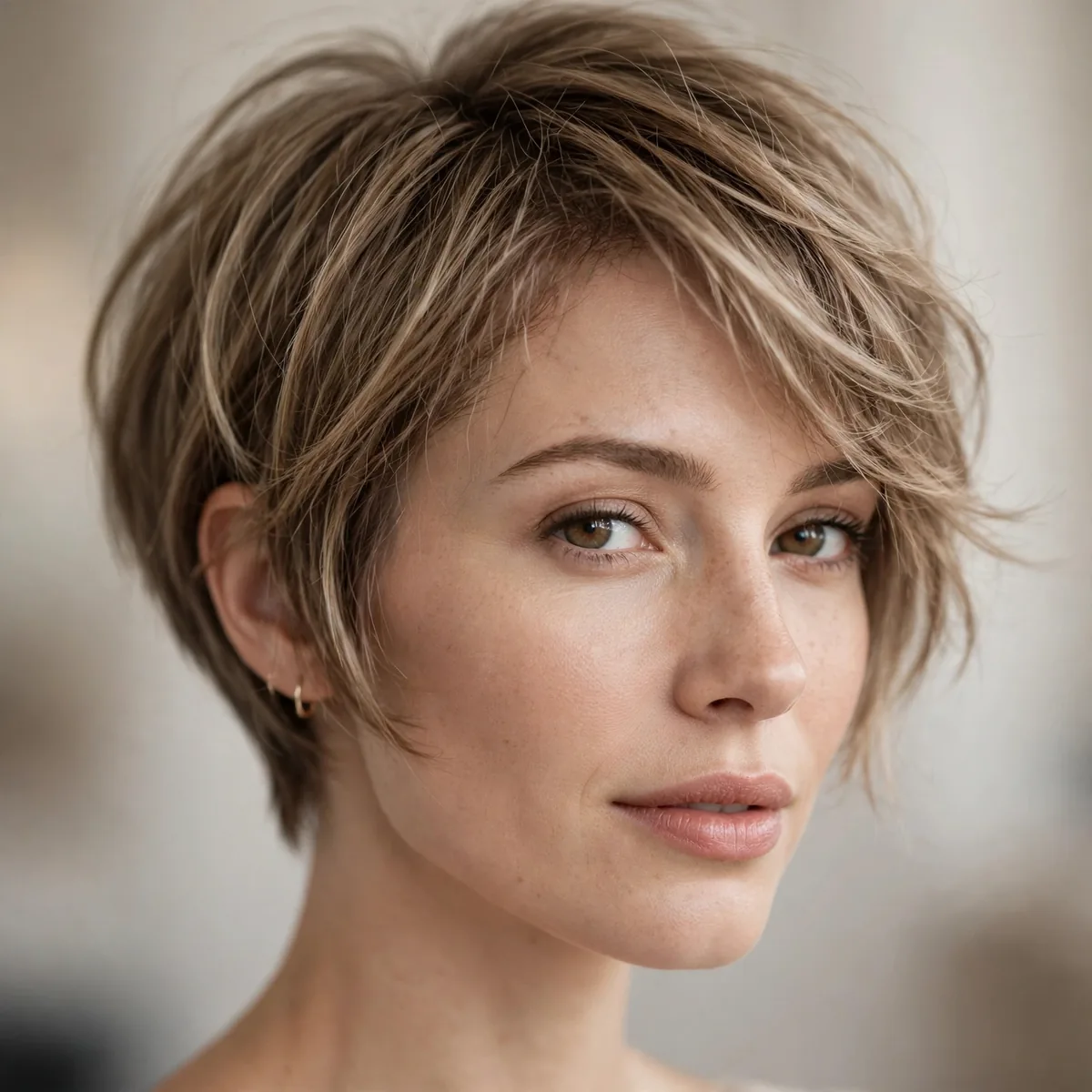
The bixie — bob meets pixie — is thin hair's modern sweetheart: the fullness of a pixie crown with the face-framing length of a bob. Shorter at the back, longer around the face, it's textured, current, and incredibly flattering past fifty. The ends look healthy and substantial, which is the true marker of a well-executed cut.
This suits straight and wavy textures and most face shapes — the length around the face is adjustable. Ask for a heavily textured cut, shorter through the back and crown, with longer pieces framing the cheeks and jaw. The texture is non-negotiable; blunt bixies fall flat. Ask your stylist to customize the layering to your texture, since the same cut behaves differently on every head.
Style with texturizing spray and your fingers — the bixie wants piecey, lived-in texture. Blow-dry the crown for lift, then piece out the ends with a tiny bit of wax. It's a deliberately undone look that takes five minutes. A round brush and blow dryer bring out the cut's full potential, adding polish in under ten minutes.
Trims every six weeks keep the texture fresh. The bixie grows out into a shaggy bob, so there's no awkward phase — just a style evolution. Current, flattering, and built for thin hair. This cut is forgiving between appointments, holding its shape longer than more precise cuts. Ask your stylist about the best at-home maintenance for your specific texture and density.
Side-Swept Long Pixie
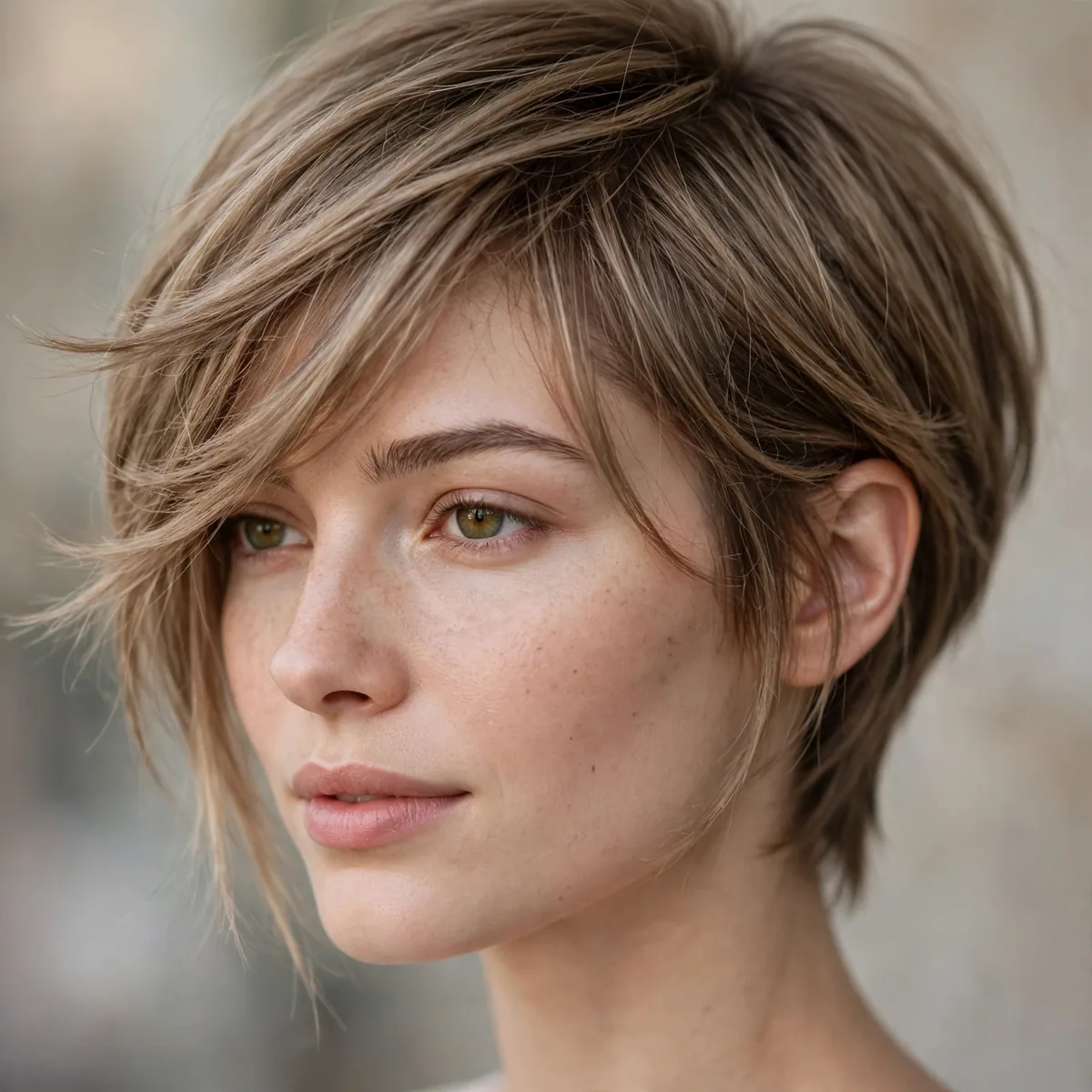
The side-swept long pixie uses direction as volume — hair swept across the forehead creates diagonal fullness that reads as density. The long sweep covers more scalp than any center part, and the asymmetry adds width where thin hair needs it. Classic with a clever trick. Density appears greatest where the eye naturally lands first, which is the cleverest part of the design.
This flatters high foreheads and long faces especially, and works on straight or wavy hair. Ask for a long pixie with the top left sweeping length — four to six inches — and the sides tapered. The sweep should be cut to fall naturally across, not forced. A razor finish adds softness, while scissor point-cutting keeps the ends looking thicker and healthier.
Blow-dry the sweep in its direction with a round brush for smoothness and volume. A light pomade on the ends keeps the sweep piecey. The deep side part is structural — find your natural part and commit to it. For special occasions, hot rollers create bouncy volume that lasts well into the night.
Trims every five weeks maintain the sweep's length balance. This is one of the most elegant pixie variations — the side sweep adds a softness that shorter pixies lack, while the volume trick works invisibly. Avoid over-washing, since stripping natural oils leads to dryness that no product fully fixes. Regular trims every six to eight weeks keep the shape intentional rather than overgrown.
Choppy Chin Bob

The choppy chin bob turns texture into the illusion of thickness — piecey, separated ends look fuller than blunt ends on very fine hair because the eye reads the texture as density. It's the edgy answer to the blunt bob, and it moves beautifully. The silhouette reads full and intentional from every angle, with movement that catches the light beautifully.
Best on straight to wavy fine hair. Ask for a chin-length bob with point-cut, choppy texture through the ends — the pieces should be visible but not ragged. Keep the interior light on layering; the chop at the perimeter is where the magic happens. Thick hair may need interior thinning to achieve the same lightness, while fine hair should skip it entirely.
Style with a texturizing spray and a quick tousle — this cut wants to look piecey, not perfect. A flat iron can add flicky ends for extra attitude. The choppiness means bedhead actually works in your favor. Keep heat protectant in your routine whenever hot tools touch the hair to prevent damage.
Trims every six to eight weeks refresh the chop — grown-out choppy ends just look messy rather than textured. But between cuts, this is wash-and-go with personality. Thin hair with an edge. A clarifying shampoo once a month removes buildup that can weigh down the style. This cut requires minimal product, which keeps both your routine and your budget simple.
Voluminous Curled Bob
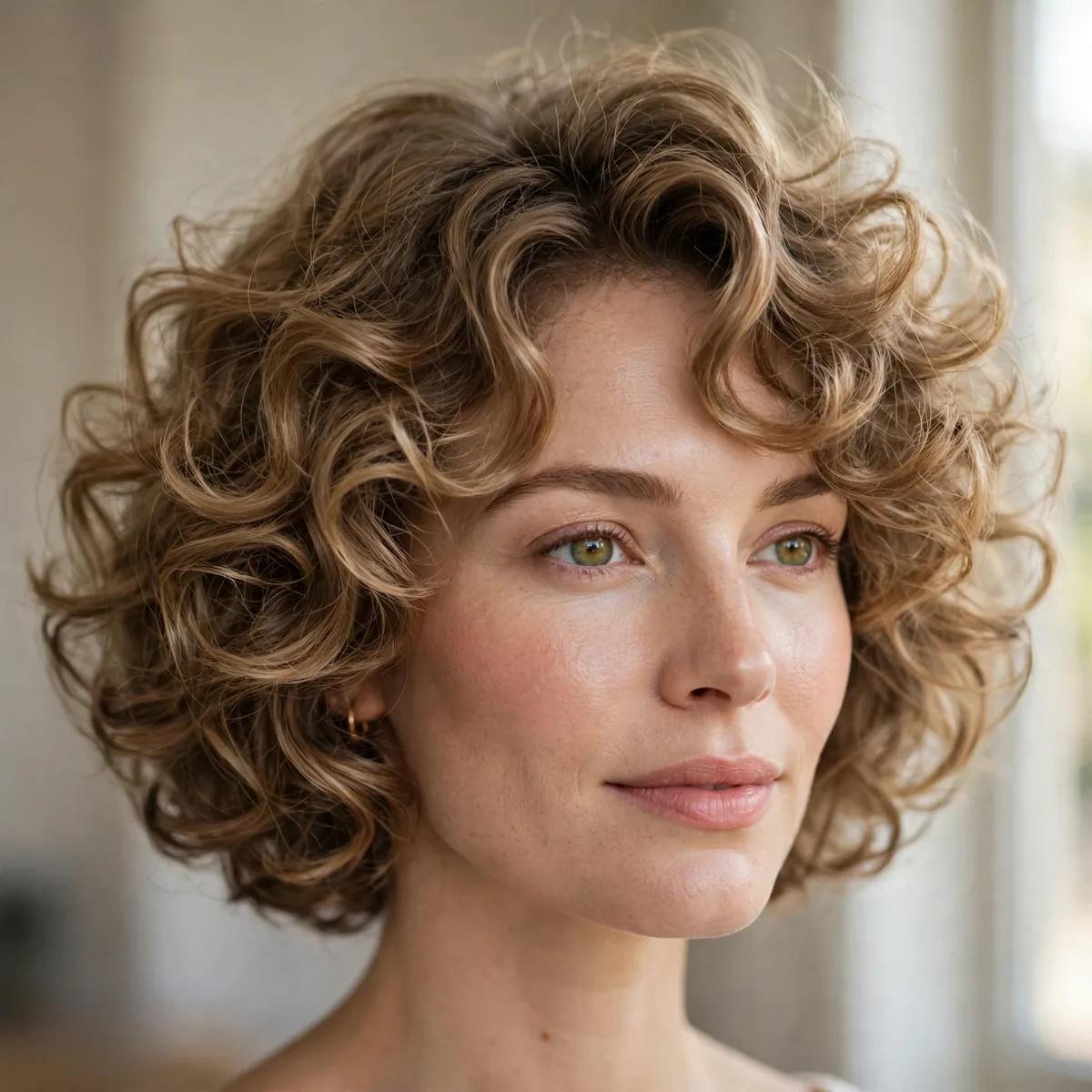
The voluminous curled bob proves styling can double a cut's density — a classic bob set in curls looks twice as full as the same bob worn straight. The curls create width and height that fine hair can't achieve on its own. It's special-occasion volume on demand. The texture throughout prevents the flat, helmet-like finish that one-length cuts can sometimes produce.
This works on any bob length from chin to shoulder, on straight or wavy hair that holds a curl. The cut itself should be simple — a classic bob with light layering — because the curls provide all the texture. Ask for ends that curl under cleanly. Side parts versus center parts change the entire feel, so experiment before committing to one.
Set the hair in hot rollers or curl with a medium-barrel iron, then brush out for soft volume. A volumizing mousse before styling and a flexible hairspray after lock in the fullness. The brush-out is key — tight curls read small, brushed curls read big. Finger-styling with a small amount of pomade creates piecey definition that looks modern.
The cut needs trims every six to eight weeks, but the styling is the star here. For thin hair, learning a great roller set is the single highest-ROI skill — it manufactures volume no cut alone can provide. Track how the cut grows out so your stylist can adjust the shape at your next visit.
Soft Undercut Bob

The soft hidden undercut is thin hair's secret weapon — removing a panel of hair underneath reduces bulk where it poofs and lets the top layer lie flatter and fuller. Counterintuitively, removing hair makes the remaining hair look thicker. It's engineering, not magic. Natural texture enhances this cut, but it also responds well to heat styling for sleeker finishes.
This suits thick-feeling thin hair — fine strands but lots of them that triangle out. Ask for a discreet undercut panel at the nape, hidden under the top layer. The visible cut should be a classic bob; nobody should know the undercut exists. Bring reference photos to your appointment, since describing texture verbally often leads to miscommunication.
Style the top layer smooth — the undercut removes the underneath puff that fights sleekness. The result is a bob that lies flat and looks dense rather than poufed. It's the fix for the triangle-head that plagues layered bobs. This cut pairs well with soft waves for evenings and sleek finishes for professional settings.
The undercut needs trimming every six weeks or it grows into an odd shelf. But it's invisible maintenance with visible payoff — the bob of your dreams without the bulk underneath fighting you. This cut is forgiving between appointments, holding its shape longer than more precise cuts. Ask your stylist about the best at-home maintenance for your specific texture and density.
The Timeless French Bob

The French bob — chin-length, blunt, with optional wispy bangs — is timeless because it's honest: a strong shape that makes thin hair look deliberate and chic. The Parisian nonchalance suits mature faces, and the strong perimeter reads as density. Effortless is the hardest-working style. The perimeter stays strong even as the interior moves, balancing structure with softness.
Best on straight fine hair. Ask for a chin-length blunt bob, worn with a slight tuck behind one ear — the tuck is the French signature. Optional micro-bangs add the full Parisian effect, but the bob stands alone beautifully. Curly and wavy textures should be cut dry or in their natural state for the most predictable result.
Style it barely at all — air-dry with a smoothing cream, tuck one side, done. The French bob's charm is its undoneness; over-styling ruins it. A touch of dry shampoo at the roots on day two keeps it fresh. A deep side part adds drama, while a center part keeps things modern and understated.
Trims every six weeks keep the line strong. This is the lowest-maintenance chic cut for thin hair — the shape is so strong it styles itself. Thin hair, Parisian attitude, zero fuss. Avoid over-washing, since stripping natural oils leads to dryness that no product fully fixes. Regular trims every six to eight weeks keep the shape intentional rather than overgrown.
Pin the volume-boosting cut you love for your stylist — and for more age-defying styles, see our pixie haircuts for women over 50 and layered bobs for older women.