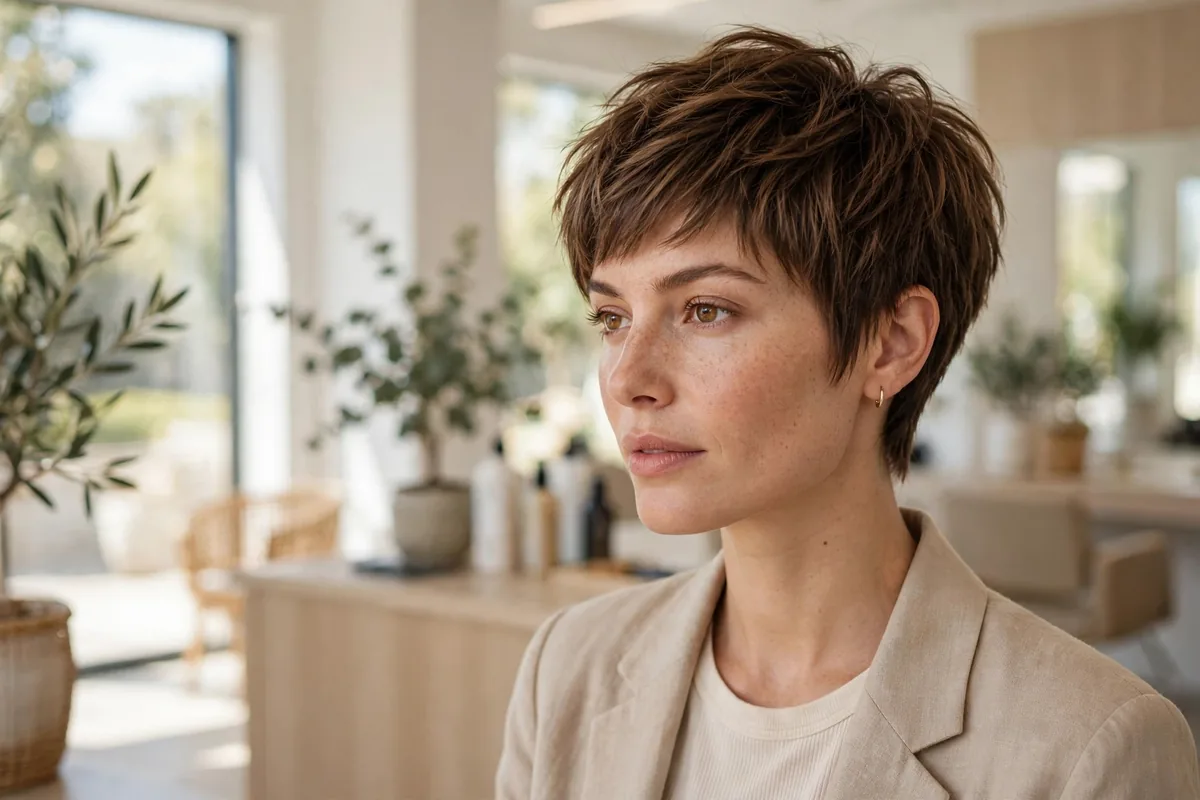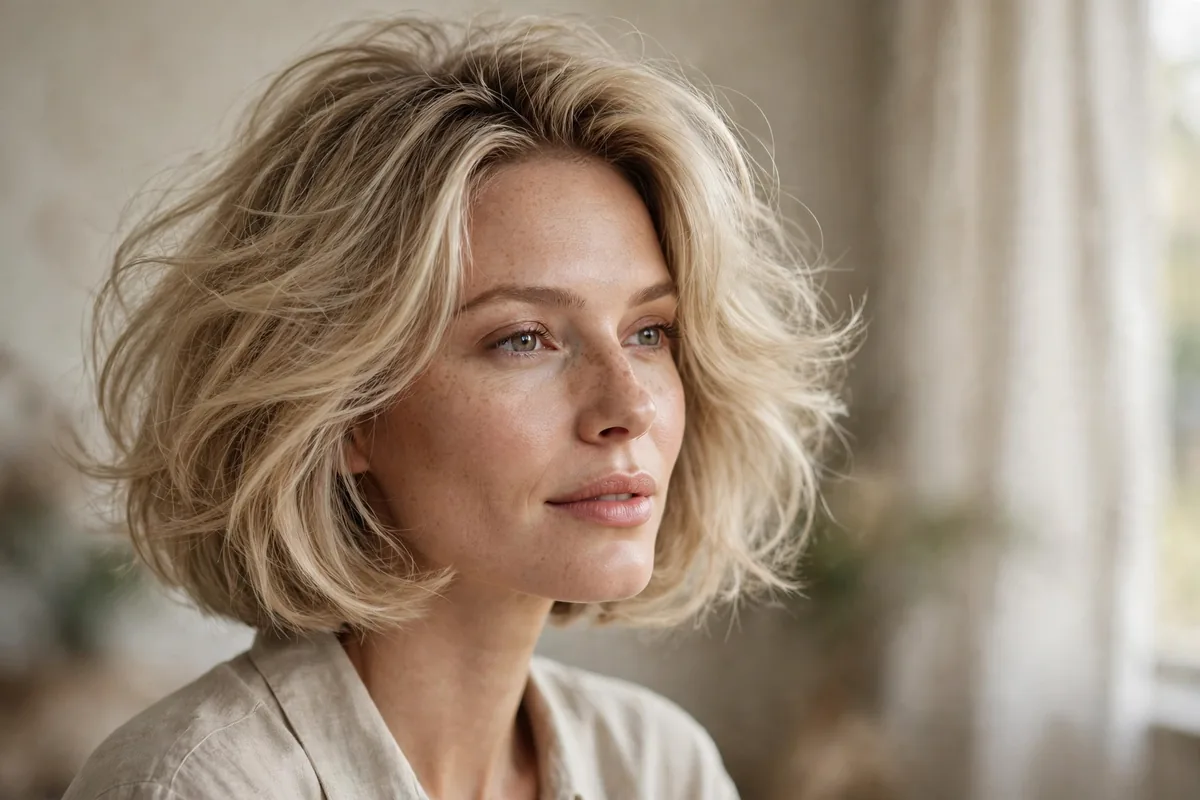
The fastest way to make fine hair look thicker is to cut it shorter.
It sounds counterintuitive, but length pulls fine hair down and exposes how little density there is. A jaw-length bob removes the straggly ends and concentrates all your hair's fullness into one dense, healthy-looking shape.
The jaw-length bob is the sweet spot: short enough to maximize the appearance of thickness, long enough to remain feminine and versatile. Every cut below is designed around one goal — making fine hair look like more hair.
From razor-blunt to softly stacked, these 15 cuts come with the stylist language and styling tricks that build real, visible fullness. Your fine hair is about to look its best.
The One-Length Jaw Bob
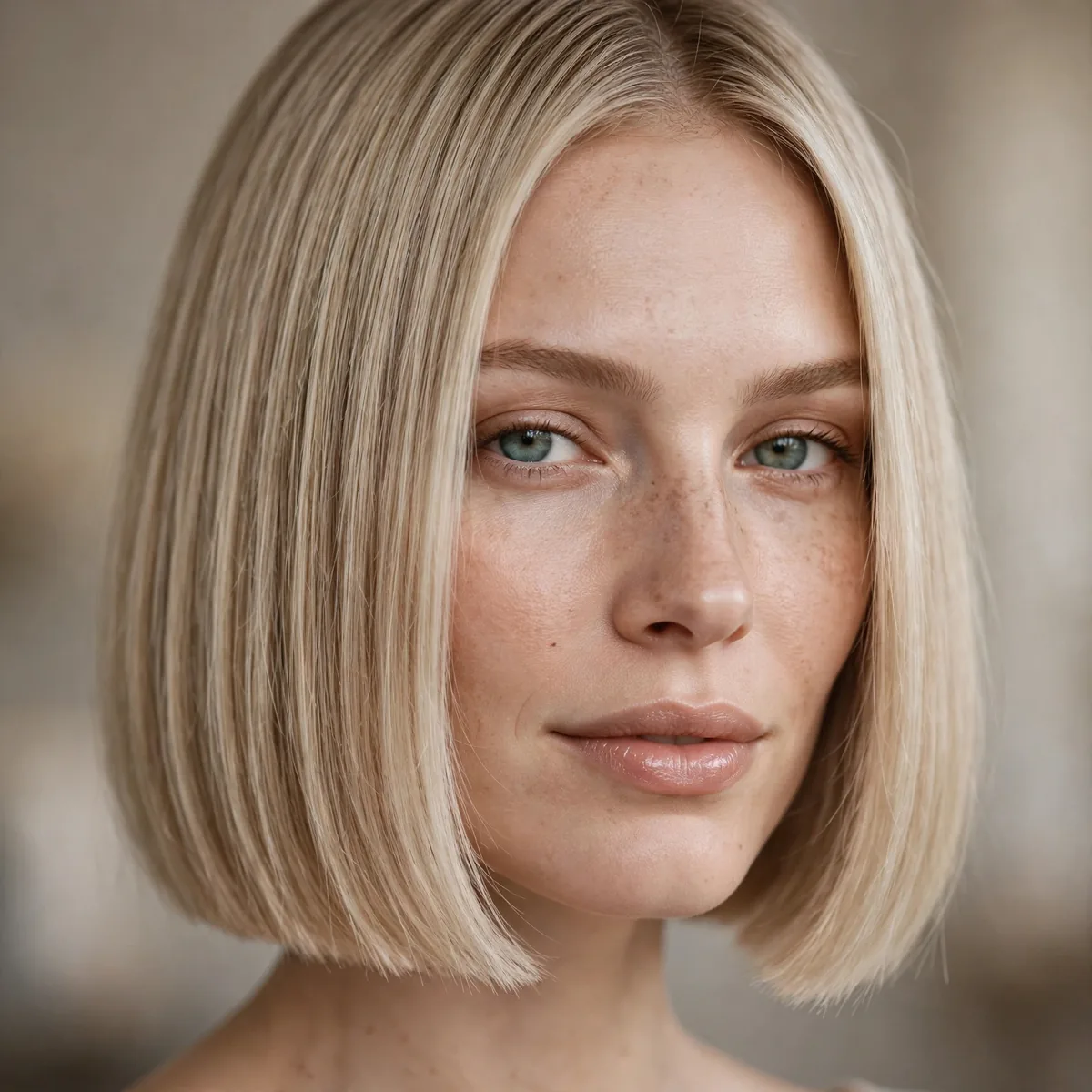
No layers, no thinning, no texture — just one clean, dense line at the jaw. This is the single most effective cut for making fine hair look thick, because every strand ends at the same point, creating maximum visual density.
Ask your stylist for a true one-length cut with zero layering and explicitly no thinning shears. The blunt perimeter is everything. Blow-dry smooth with a paddle brush and finish with a light shine spray. Resist the urge to texturize — the solidity is the point.
Oval and heart-shaped faces wear this cut best, since the jaw-skimming line mirrors balanced proportions beautifully. If you have a strong square jawline, the matching blunt edge can look strikingly architectural rather than harsh — many stylists love that echo. Age-wise, it is a quiet powerhouse for women over 50: the dense hemline reads youthful and polished. Only skip it if your hair is very coarse or thick, where the same one-length approach can feel heavy instead of sleek.
For styling variety, this cut is a minimalist's dream. Blow-dry it smooth for a polished office look, then switch to a center part with a tuck behind one ear for evening — the asymmetry keeps it interesting. A flat iron passes give that glassy, runway finish, while a slight bend at the ends reads more casual. In humid months, an anti-frizz serum seals the perimeter so the line stays crisp from morning to night.
Blunt Jaw Bob With Deep Part

A deep side part adds instant volume to a blunt jaw bob by piling more hair on one side. The asymmetry creates lift at the crown and makes fine hair look dramatically fuller. It is the easiest density trick there is.
Ask for a blunt jaw-length cut. To style, create a deep part while damp and blow-dry the heavy side with a round brush for lift. The deep part also slims round faces — a flattering double benefit. Switch your part side monthly to prevent the hair from going flat.
This variation flatters round and fuller faces beautifully — the deep part and piled-over volume create a diagonal line that visually lengthens everything. It also works wonders on women with thinning at the crown, since the heavy sweep camouflages sparse areas. Straight to slightly wavy textures hold the part best; very curly hair may fight the sweep. Schedule a trim every five to six weeks, because a grown-out blunt edge softens the drama this look depends on.
Refresh the part every few days by flipping it to the opposite side — this resets root lift and prevents the hair from training flat. For evening, press the swept side smooth with a flat iron and let the underneath side stay slightly tucked; the contrast looks intentional and chic. In winter, a drop of argan oil on the ends stops static. And for weddings or events, pin the heavy side back with a decorative clip for instant evening glam.
The Jaw Bob With Underneath Stacking
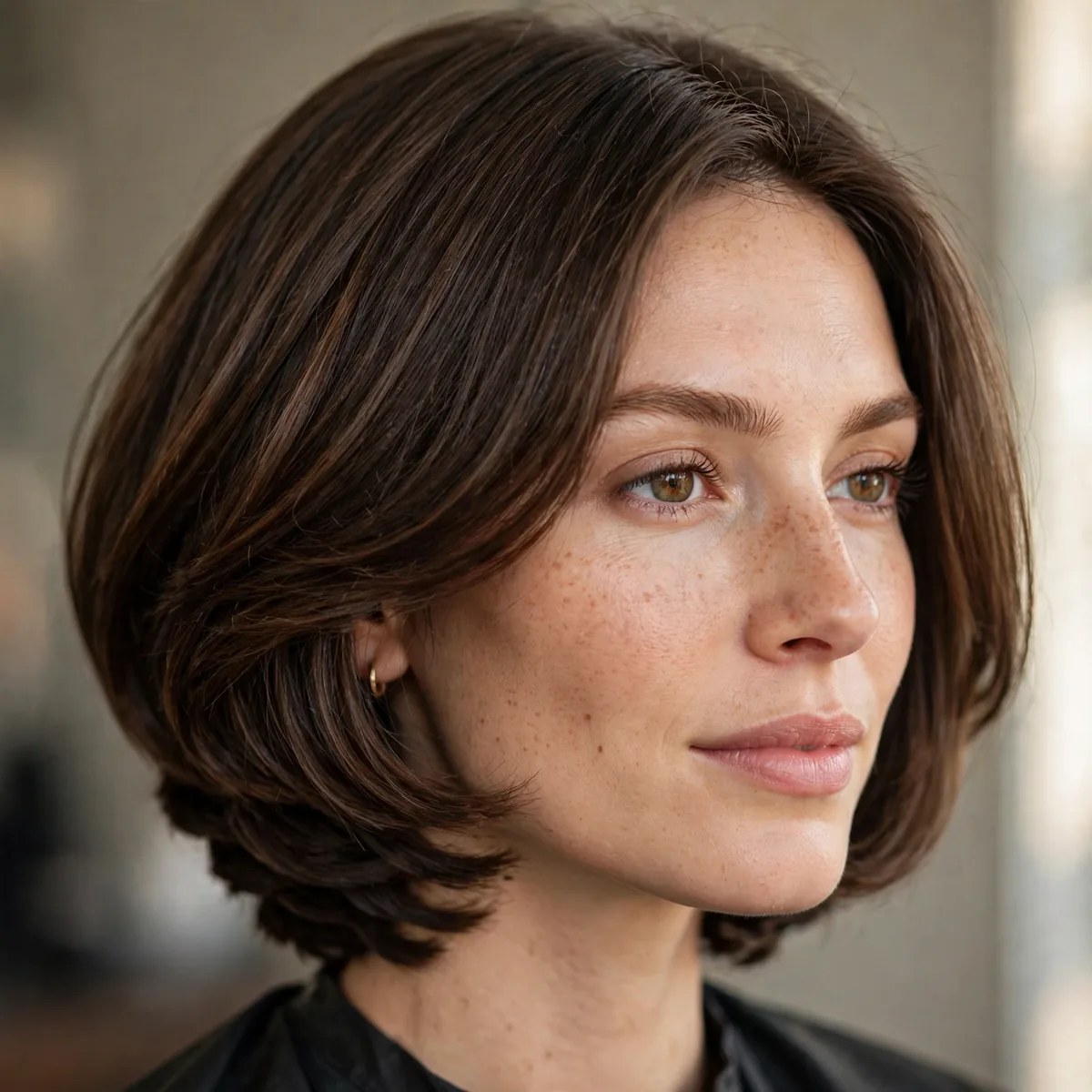
A whisper of stacking underneath the surface — invisible from the front, volume-building from every angle. The stacked underlayers push the top hair outward, creating fullness that looks completely natural.
Ask for subtle stacking through the nape and underneath, with a clean jaw-length perimeter on top. This is not the dramatic stacked bob of the 2000s — it is a modern, invisible version. A volumizing mousse at the roots amplifies the effect.
This is the best of both worlds for women with fine, straight hair who want volume without visible layering. Heart and oval faces love the gentle fullness at the nape, and petite women benefit because the cut never overwhelms small frames. If your hair is wavy or thick, ask for minimal stacking — too much graduation can create a dated, poufy silhouette. It grows out gracefully, but book a clean-up every six weeks to keep the nape line sharp.
Style it with a round brush, directing the nape hair downward and the surface hair slightly under — this emphasizes the stacked lift underneath. A volumizing mousse worked into damp roots at the crown gives the top enough body to sit over the stacked layers. For a night-out version, smooth the top with a flat iron while leaving the underlayers slightly flipped out at the ends; the peek of movement feels modern. Skip heavy waxes, which collapse the invisible architecture.
Textured Jaw-Length Bob
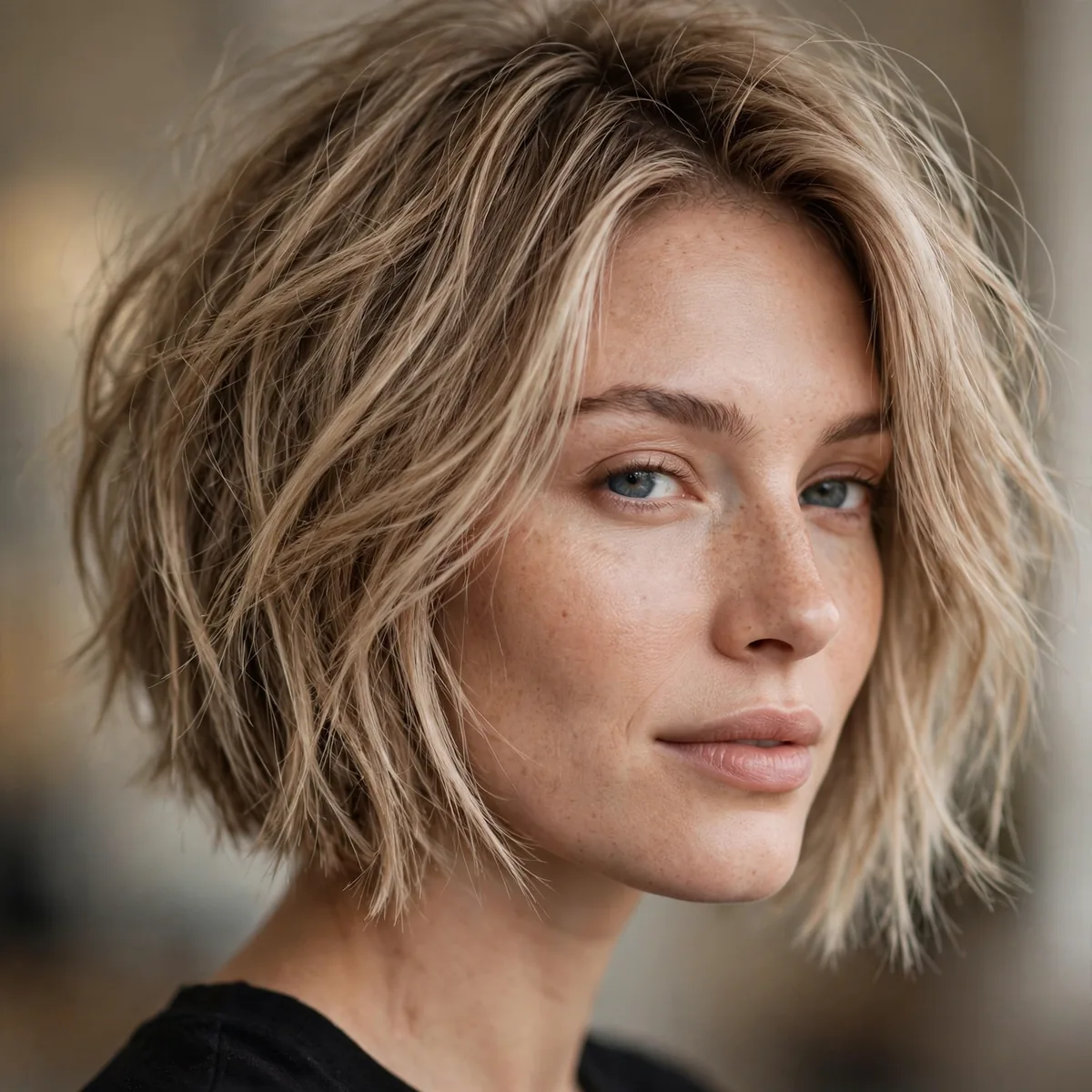
Light texture through the ends — not the interior — gives a jaw bob movement without sacrificing density. The key for fine hair is texturizing only the last half-inch, so the body of the cut stays full and solid.
Tell your stylist: "Texture the ends only, keep the interior dense." Point-cutting the very ends creates soft separation that catches light and looks like volume. A texturizing spray adds grit that makes fine hair behave like thicker hair.
Textured ends are a gift for square and oblong faces — the broken-up perimeter softens strong jawlines in a way a blunt cut cannot. It is also the friendliest option for thick hair, since point-cutting removes bulk without sacrificing the jaw-length silhouette. Women in their 30s and 40s often prefer this version because it feels current without trying too hard. Straight hair holds the piece-y definition best; very curly textures may need the texture carved in with a razor instead.
This cut lives for second-day hair — a spritz of dry texturizing spray at the roots and a rough tousle with fingers is often all it needs. For more polish, curl random sections with a one-inch wand, alternating directions, then shake everything loose; the result is deliberately imperfect. Trim every six to eight weeks and ask for the texture refreshed at each visit. In summer, a sea-salt spray enhances the piece-y ends for that lived-in beach feel.
Jaw Bob With Curtain Bangs

Curtain bangs add face-framing fullness to a jaw bob without removing density from the lengths. The parted fringe creates the illusion of more hair around the face — exactly where fine hair tends to look sparse.
Ask for curtain bangs that blend into the bob, cut with minimal thinning. Fine-haired bangs should stay relatively dense to look full. Blow-dry with a round brush, sweeping outward. The bangs grow out gracefully into face-framing layers.
Curtain bangs are the diplomat of this cut — the soft center-parted fringe flatters nearly every face shape, especially wide foreheads and heart-shaped faces where it breaks up the brow line. They also disguise fine hair's flatness at the front beautifully. Women over 40 love how the fringe softens the eye area. Just know the fringe needs a trim every three to four weeks to keep the curtain parting sitting right, even while the rest of the bob grows out.
Style the curtain fringe with a round brush, sweeping each side away from the center so it frames the cheeks. For lazy days, clip the damp bangs into their parted shape and let them air-dry — the wave pattern usually cooperates. At the gym or on windy days, pin the fringe back with bobby pins; the short length hides pins easily. For date night, add a light bend to the fringe ends with a straightener for that soft, French-girl sweep.
The Rounded Jaw Bob
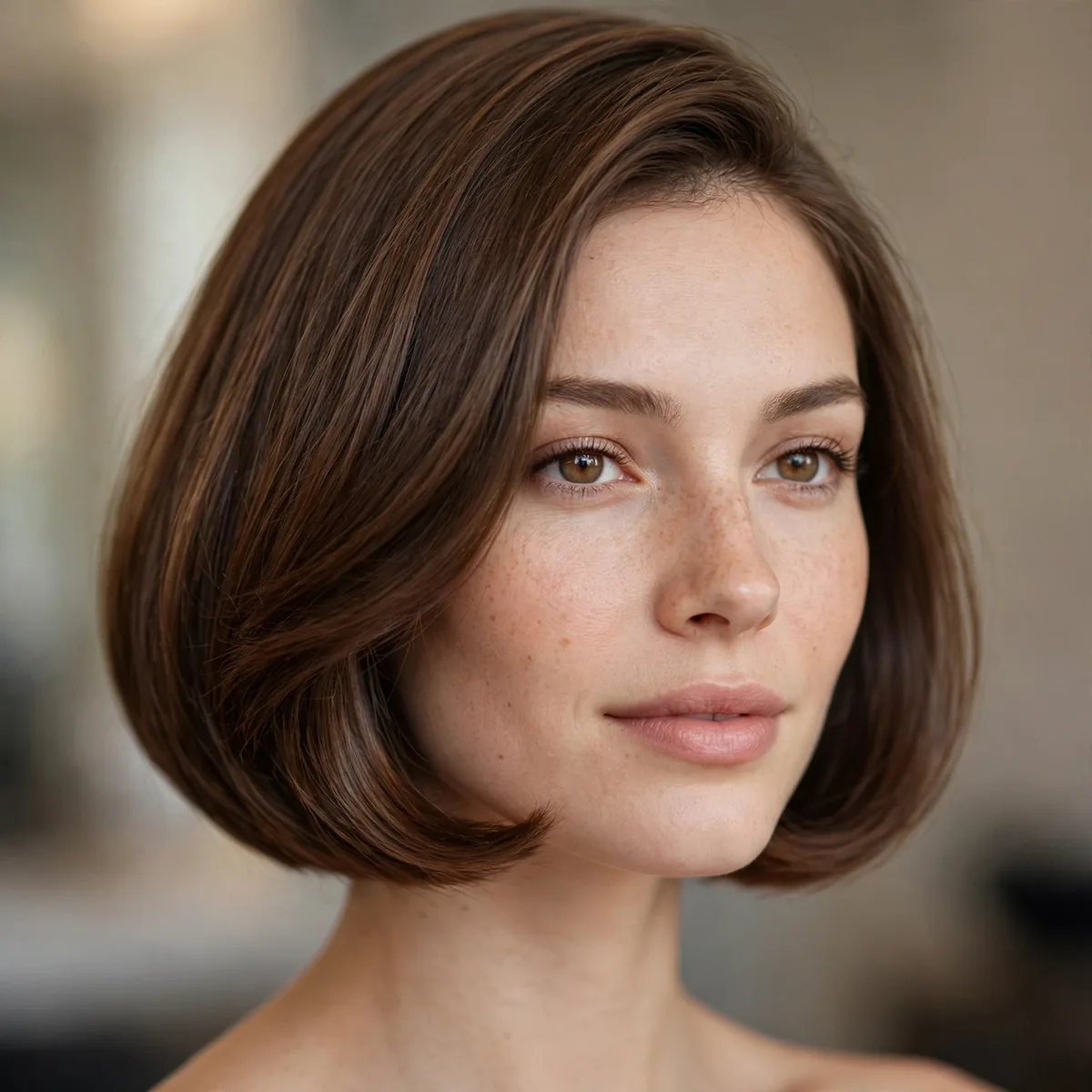
A rounded silhouette — slightly shorter at the back, curving under at the jaw — creates the illusion of a full, dense shape. The curve makes fine hair look like it has body and bounce rather than lying flat.
Ask for a jaw-length cut with the ends beveled to turn under. Blow-dry with a medium round brush, rolling the ends under. The rounded shape is classic and polished, and it makes fine hair look intentionally styled rather than thin.
The rounded shape is tailor-made for long and oblong faces — the curved silhouette adds welcome width at the cheeks, balancing length beautifully. It also flatters women with angular features who want softness without layers. Medium to thick straight hair holds the rounded contour best; very fine hair may need a root-lifting mousse to keep the curve from collapsing. This is a lovely pick for the office, since the smooth shape reads polished from every angle.
Blow-dry with a medium round brush, rolling the ends under as you go — that under-turn is what builds the rounded shape. For extra curve, finish the perimeter with a large-barrel curling iron, rolling everything under in one direction. A lightweight smoothing cream keeps flyaways down without flattening the contour. In rainy weather, a humidity-resistant spray protects the shape. For weddings, the rounded bob pairs beautifully with statement earrings, since the tucked-under ends keep the neckline clear.
French-Style Jaw Bob

The French bob's jaw length and piece-y texture are surprisingly good for fine hair. The short length concentrates density, and the undone texture creates the illusion of more hair through separation and movement.
Ask for a jaw-grazing bob with light texture. The French approach — air-dried, a little imperfect — actually suits fine hair because it avoids the flat, over-styled look. A little texturizing spray is all you need. C'est magnifique on fine hair.
The French bob flatters petite features and oval faces especially — its cropped length and bangs create a chic frame that makes eyes the focal point. Women with natural wave get the effortless look for free, while straight hair needs a little tousling to avoid looking too prim. It is a favorite for creative professions and weekend wardrobes alike. If you have a very round face, ask for the bangs slightly longer at the sides to avoid widening the cheeks.
Less is more with French styling — air-dry with a little salt spray, scrunch, and leave it alone; the charm is in the imperfection. For a night-out refresh, tuck one side behind the ear and add a bold red lip, the classic Parisian move. A beret-friendly cut year-round, it handles winter hats gracefully since the fringe is built to be a little undone. Avoid over-straightening; pin-straight ends kill the insouciant French spirit this bob is all about.
Jaw Bob With Side-Swept Bangs
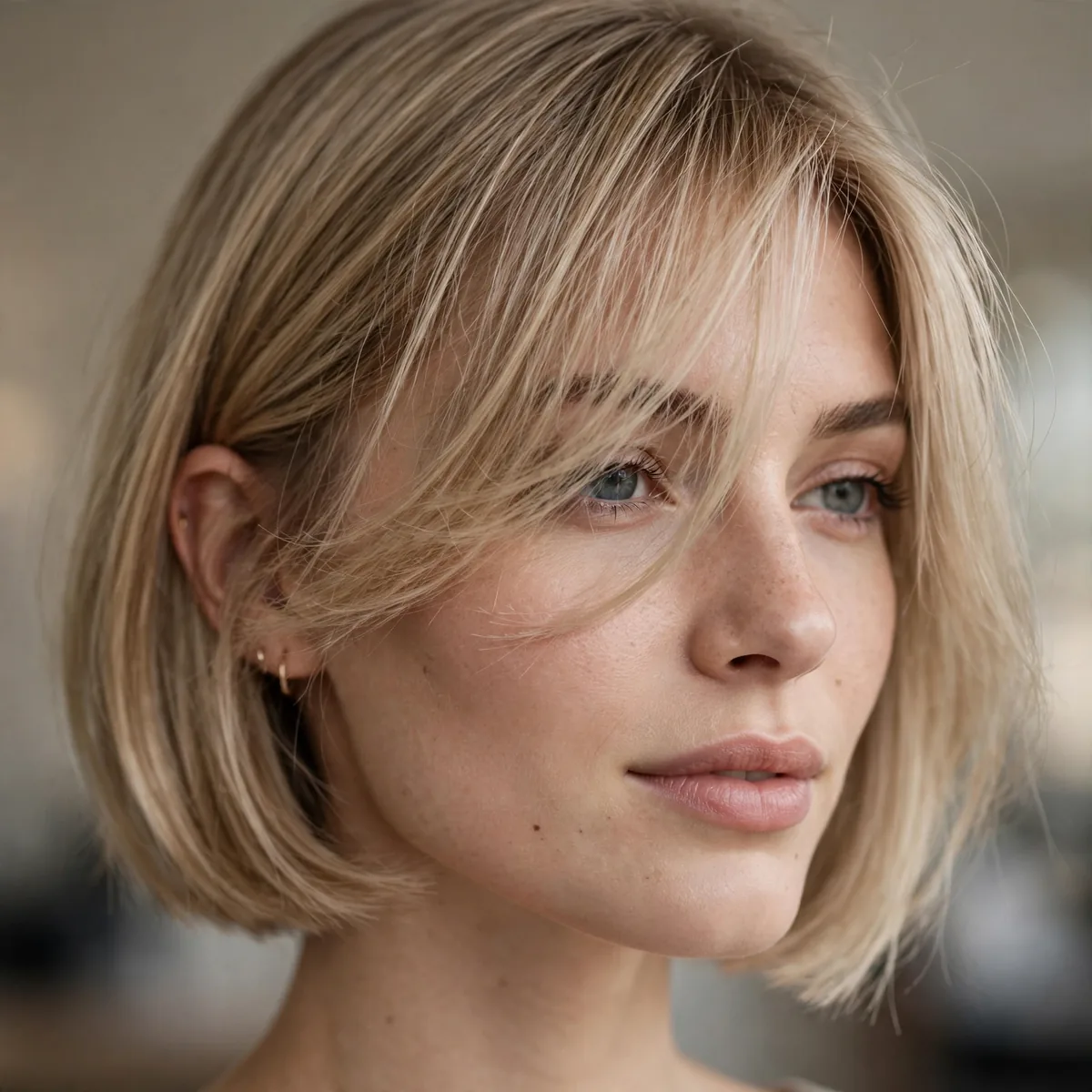
Side-swept bangs add diagonal fullness across the forehead, making fine hair look denser where it counts. They blend into the jaw bob seamlessly and flatter round, square, and heart-shaped faces.
Ask for bangs that sweep from a side part and blend into the bob's front. Keep them piece-y rather than solid for a modern feel. The side sweep creates asymmetry that the eye reads as volume. For more volume-building cuts, our bobs for fine hair roundup goes deeper.
Side-swept bangs are a face-shape magician: the diagonal sweep slims round faces, balances wide foreheads, and draws attention to the eyes on every shape. This combo works especially well for women with fine hair, because the fringe adds front fullness without taking length. It is also forgiving as bangs grow out — the sweep simply gets longer and sexier. Book fringe trims every three to four weeks; when the sweep hits your lashes, it is time.
Sweep the bangs with a small round brush, directing them across the forehead and down over one eye for that romantic fall. For a sleeker office version, blow-dry the fringe flat against the forehead with a paddle brush. On day two, revive the sweep with a dab of dry shampoo at the roots — bangs show oil first. For summer, pin the sweep to the side with a pretty clip; it keeps hair off a sweaty forehead while looking styled.
The Asymmetric Jaw Bob

Asymmetry creates visual interest that distracts from thinness. A jaw bob that is slightly longer on one side looks deliberate and fashion-forward, and the diagonal line adds the illusion of movement and body.
Ask for a subtle asymmetry — about an inch of difference. The shorter side can tuck behind the ear while the longer side frames the face. Wear it sleek to emphasize the line. It is the fine-hair bob for women who want edge with their fullness.
Asymmetry is a power move for angular and square face shapes — the uneven line breaks up strong geometry and keeps the eye moving. It also flatters women who wear glasses, since the longer side creates a striking frame. Fine hair gains edge and visual interest, while thick hair should be texturized so the longer side does not feel heavy. This cut demands precision, so see a stylist who specializes in geometric cutting; a lopsided DIY attempt is painfully obvious.
Style the longer side smooth and let it fall forward over one shoulder — that drape is the point of the cut. Use a flat iron to sharpen the asymmetry, checking that the difference between sides stays crisp. For weekends, tuck the shorter side behind the ear to exaggerate the contrast. Trim every four to five weeks; asymmetry loses its punch as the shorter side catches up. A shine serum on the longer side draws the eye to the drama.
Jaw-Length Bob With Highlights

Color creates dimension, and dimension reads as thickness. Fine hair in one flat color looks thinner than the same hair with subtle highlights that create light and shadow. The right color can add visual density without a single extra strand.
Ask your colorist for fine, blended highlights or a root shadow with lighter ends — the contrast creates depth. Avoid all-over single-process color, which flattens fine hair visually. A gloss adds shine, and shine always looks like health and fullness.
Highlights are the secret weapon for making fine hair look thicker — lightened strands reflect light and create the illusion of depth between strands. Face-framing balayage flatters round faces by drawing the eye vertically, while babylights around the crown add allover fullness. This is ideal for women growing out natural gray, since blended highlights disguise regrowth beautifully. Warm skin tones glow with honey and caramel tones; cool undertones shine with ash and champagne.
Maintain the color with a sulfate-free shampoo and a weekly purple mask if your highlights lean cool — brassiness is the enemy of expensive-looking blonde. Refresh toner every six to eight weeks and book partial highlights every ten to twelve to keep the blend seamless. For styling, curl a few face-framing pieces to catch the light; highlights show off best with movement. In summer, a UV-protectant spray prevents sun from turning your beautiful balayage brassy.
The Sleek Glass Jaw Bob
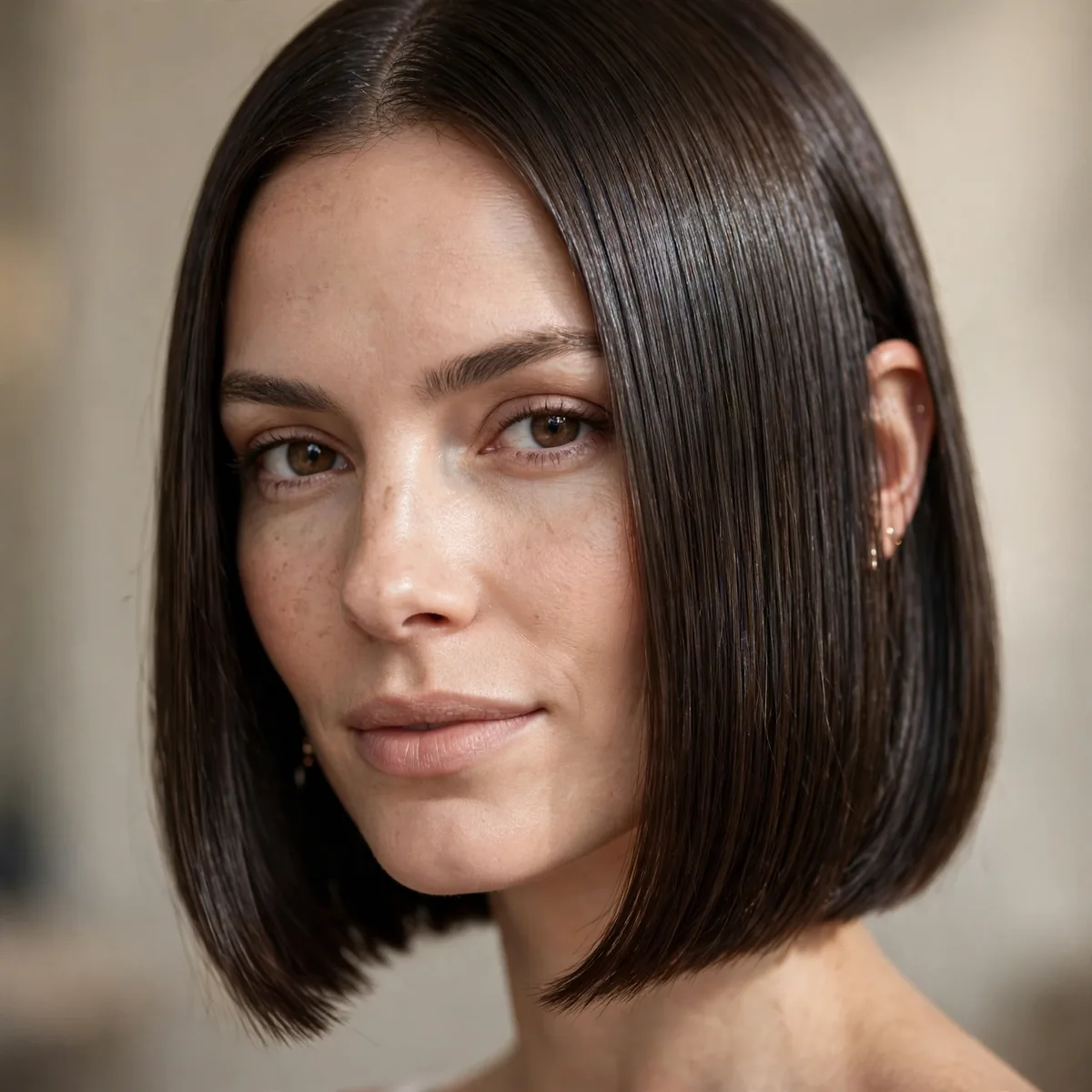
Ultra-sleek and straight, the glass jaw bob turns fine hair's natural smoothness into a luxury. When fine hair is perfectly smooth and blunt, it looks expensive and intentional rather than thin.
This cut demands healthy ends — trim every 6 weeks without fail. Flat-iron in thin sections and finish with a shine serum. The glass finish reflects light, and reflective hair always looks denser than dull hair. A glossing treatment every couple of months maintains the mirror shine.
Glass hair suits straight, fine-to-medium hair best — the mirror shine needs a smooth canvas, so very curly or coarse textures require serious straightening first. Oval and heart faces carry it beautifully, since the severe line shows off balanced proportions. This is a statement look for evenings, galas, and fashion events. Keep a keratin treatment every three months if your hair is naturally wavy; glass shine on fight-back frizz is a full-time job otherwise.
Achieve the glass effect by blow-drying smooth, then passing a flat iron slowly over thin sections — the slower pass is what creates the mirror finish. A few drops of silicone-based shine serum on the mid-lengths add that liquid reflectivity. Avoid touching the hair during the day; oils from fingers dull the surface. In winter, static spray keeps the sheet of hair lying perfectly flat. This finish photographs incredibly, so it is a go-to for events with cameras.
Wavy Jaw Bob for Fine Hair
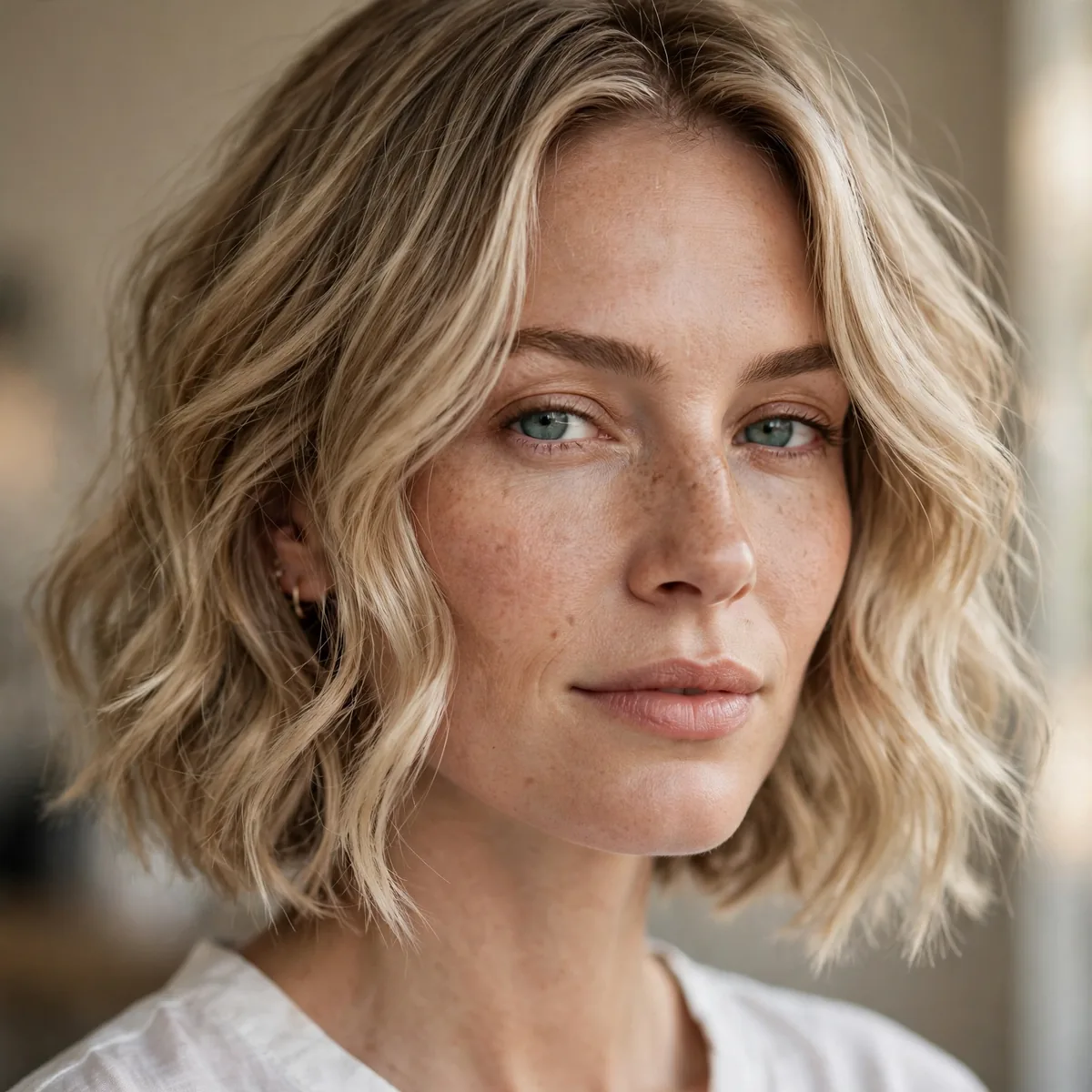
Waves are volume. A jaw bob with soft, loose waves looks significantly fuller than the same cut worn straight, because the waves create space between strands. This is the easiest way to fake density.
Ask for a jaw-length cut with minimal layering — the waves provide the texture. Create waves with a medium-barrel iron, alternating directions, then break them up with your fingers. A texturizing spray holds the waves and adds grit. The waves do not need to be perfect; undone waves look fuller.
Waves are fine hair's best friend — the bends create visual width that straight styling cannot. This cut suits oval, heart, and long faces, since the added width balances length. Naturally straight hair takes well to a loose perm or overnight braids. Women with high density but fine strands get the best of both worlds. Growing this cut out is painless, since waves disguise uneven length gracefully.
Style with a one-inch curling iron, wrapping sections away from the face and leaving the ends out for that modern, undone bend. A pea-sized amount of wave cream scrunched in defines the bends without weight. For a beachier summer version, braid damp hair loosely before bed and unravel in the morning. Avoid brushing waves dry — use a wide-tooth comb on damp hair only. A light flexible-hold spray keeps the bends intact through humidity.
Jaw Bob With Micro Layers

Micro layers — the shortest, most subtle layering possible — add a hint of movement to a jaw bob without removing visible density. They are the compromise between one-length fullness and layered movement.
Ask for micro-layering through the ends only, keeping the perimeter blunt and dense. The layers should be nearly invisible — just enough to prevent the cut from looking like a solid block. This is the fine-hair bob for women who want a little softness with their thickness.
Micro layers are the gentle answer for women who find blunt bobs too severe but full layers too fluffy. They suit fine, straight hair perfectly, adding movement at the ends without touching the dense perimeter. Round and square faces benefit from the softened edge. This is a wonderful choice for first-time bob wearers — the shape feels familiar and safe while looking current. Keep layers truly micro; once they get long, the cut drifts into regular layered-bob territory.
These whisper layers need almost no styling — blow-dry smooth and the micro movement appears on its own. For a little extra, flip the ends outward with a flat iron for a playful 60s nod. Trim every five to seven weeks; micro layers blur into nothingness as they grow, and the cut loses its magic. A lightweight leave-in conditioner keeps the ends soft without weighing them down. In fall, this cut layers beautifully under scarves and turtlenecks without bunching.
The Tucked Jaw Bob

Styling trick as haircut feature: the jaw bob is the perfect length to tuck behind the ears, which instantly makes hair look thicker by compressing it. The tucked style shows off your face and creates a sleek, dense silhouette.
This works best on a true jaw-length blunt cut. Tuck both sides for a sleek, minimal look, or tuck one side for asymmetry. A little pomade smooths the tucked sections. Add statement earrings — the tucked bob frames them like a gallery wall.
The tucked bob is a stylist's trick that flatters everyone — tucking behind the ears reveals the jawline and cheekbones, instantly sharpening any face shape. It works on fine and thick hair alike, though very layered cuts tuck less neatly. Women with statement earrings or bold glasses frames should try this daily; the tuck puts accessories center stage. For job interviews and polished events, the tuck reads confident and put-together with zero extra effort.
The trick to a tuck that stays: tuck, then set with a light-hold spray behind the ears so fine hair stays put. For a looser weekend version, tuck only one side and let the other fall free. A tiny flat-iron wave in the tucked section adds texture that grips better. In humid weather, tuck both sides and pin for a sleek, sweat-proof style. This is also the fastest way to make a grown-out bob look deliberate again.
Chin-Grazing Blunt Bob
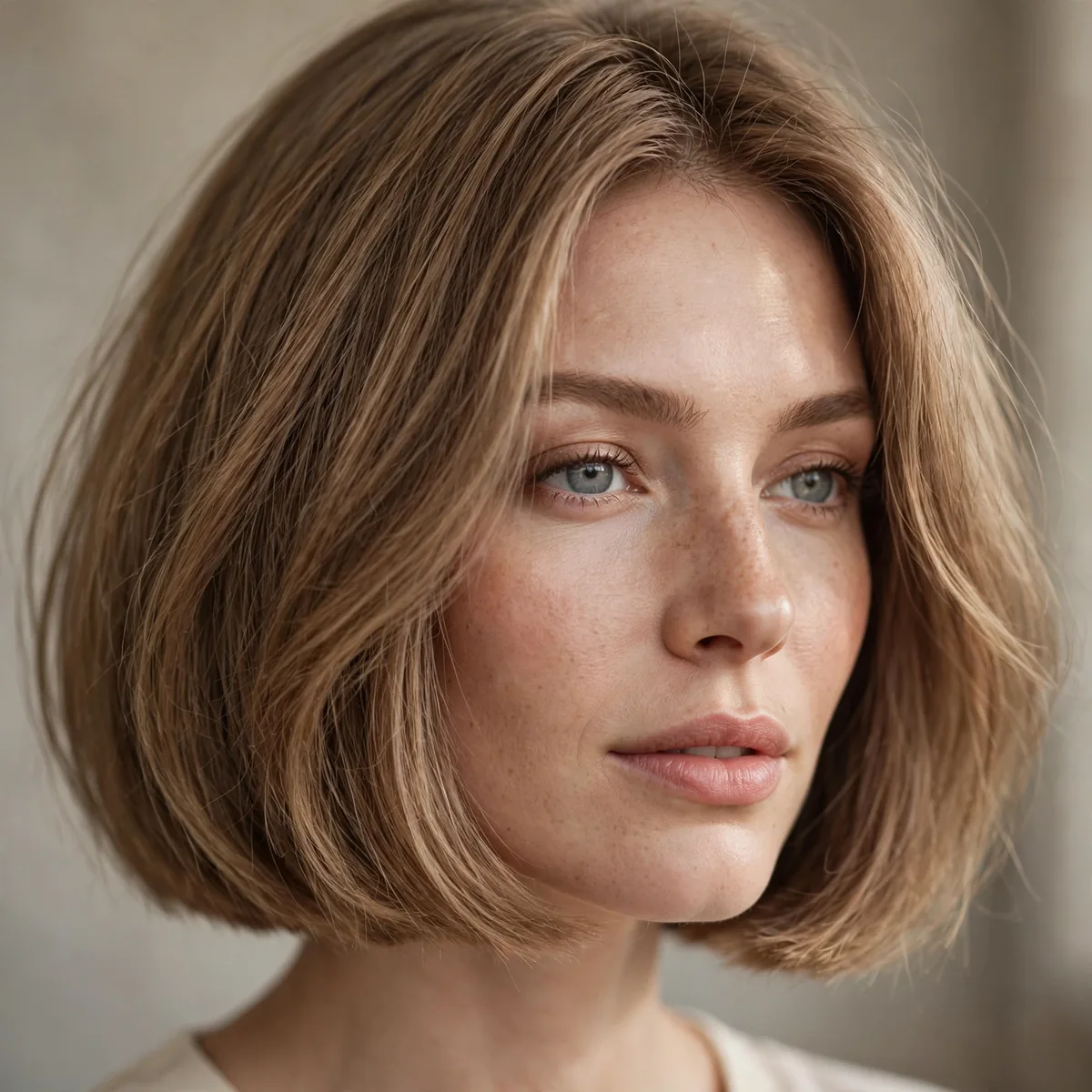
The shortest version here — grazing the chin — concentrates fine hair into its densest possible shape. Every strand contributes to one thick, healthy-looking line. It is bold, chic, and the maximum-fullness option.
Ask for a precision blunt cut at chin level. This length shows off your jawline and neck beautifully. Style sleek for drama or with a slight bend for softness. Short, blunt, and confident — fine hair has never looked this substantial. For the French take on this length, see our French bob haircuts.
The chin-grazing length is the boldest of the bunch — it puts the jawline and neck on full display, flattering oval and heart faces most dramatically. Confident square jaws can lean into the graphic edge too. Fine, straight hair is ideal; this length leaves no room to hide frizz. Fashion and design types love it as a style signature. Petite women love it — nothing overwhelms a small frame like this.
This length demands upkeep: trims every four weeks keep the chin-grazing line razor-sharp, since even half an inch of growth changes the whole effect. Style it dead straight with a flat iron for maximum impact, or tuck one side for asymmetry. A root-lifting spray at the crown stops the severe line from looking flat on top. In winter, wear it with turtlenecks — the short length never bunches. Pack a mini straightener for touch-ups; this cut shows every kink.
Fine hair is not a limitation — it is a brief for smarter cutting. For more density tricks, explore our bobs for fine hair, or see how blunt bobs for straight hair use precision lines for maximum impact.