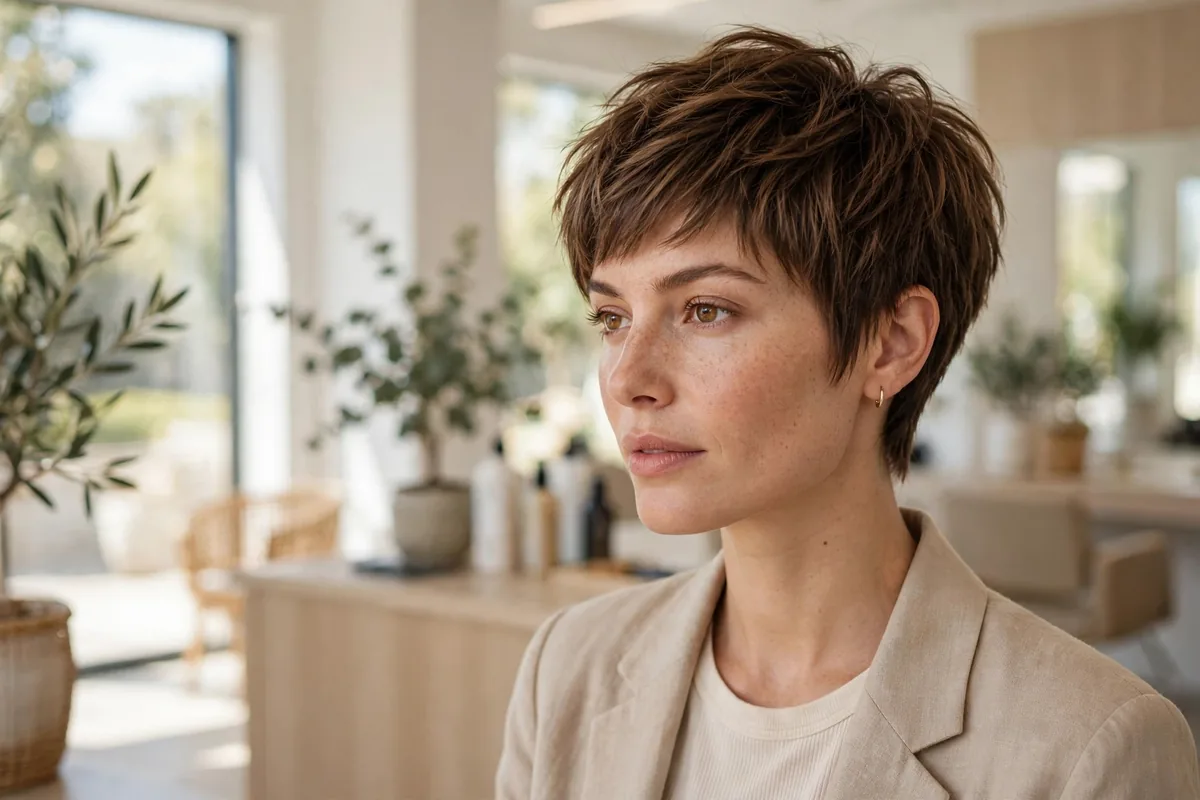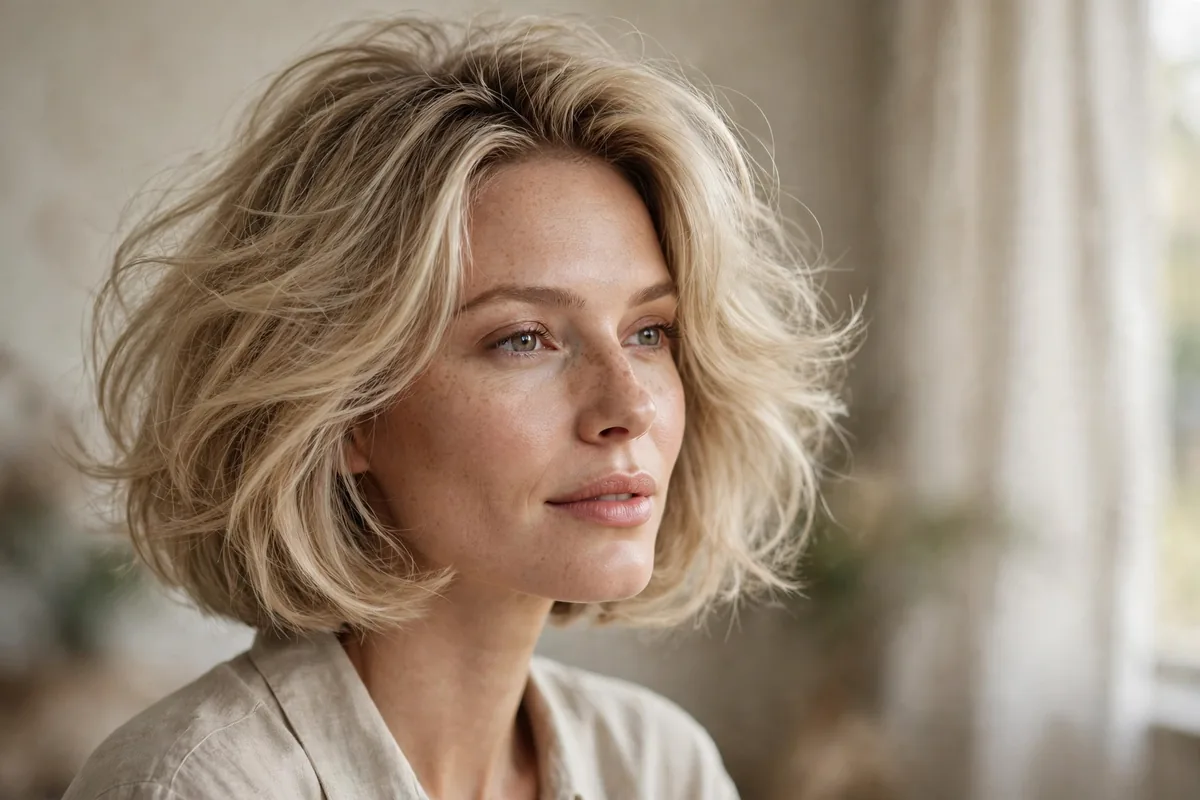
Thick hair is a gift — until it is so heavy it pulls your whole style down.
If your hair takes forever to dry, swallows every curl within an hour, and feels more like a helmet than a hairstyle, the cut is the problem, not your hair. Thick hair needs strategic weight removal: interior layers, texturized ends, and shapes that let air move through the hair instead of trapping it.
The long bob is the sweet spot for thick hair. It keeps the length you love, but every one of these 20 cuts is engineered to feel lighter from the moment you walk out of the salon. Think hidden layers, carved-out ends, and silhouettes that move when you do.
Bring these ideas to your stylist with a clear ask: "I want to keep my length but lose the bulk." These photos give you the exact language and visuals to make that happen.
The Feathered Perimeter Lob
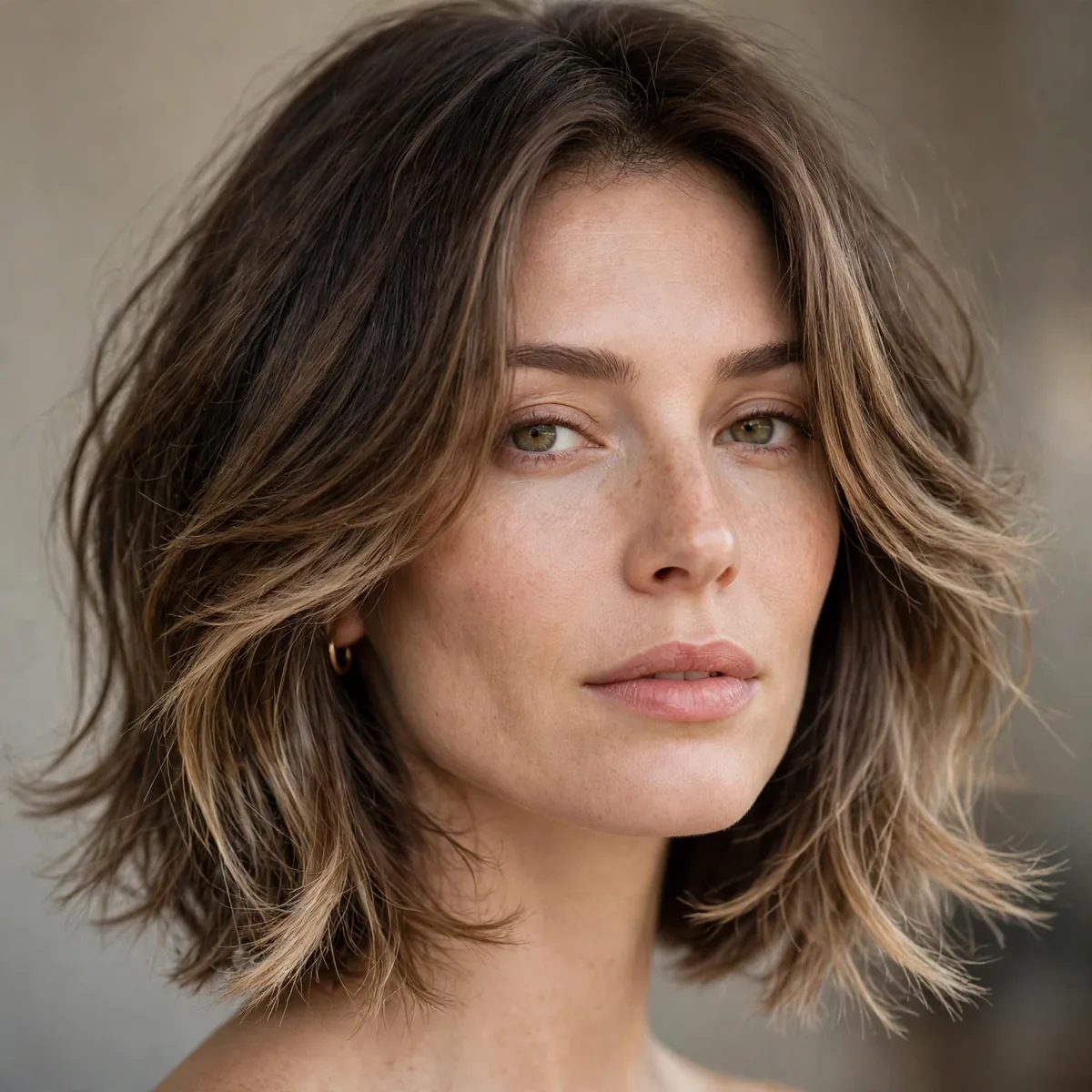
This lob keeps its length but the bottom two inches are feathered with point cutting, so the perimeter looks soft and airy instead of heavy and blunt. It works beautifully on oval and square faces because the wispy ends draw attention away from a strong jawline. Ask your stylist for a one-length base with feathered texture through the last two inches.
Style it with a large round brush, flipping the ends slightly outward for that breezy finish. A light leave-in spray is all the product you need — heavy creams will just weigh thick hair back down.
This cut flatters oval and round face shapes especially, since the airy perimeter visually lengthens the face rather than adding width at the jawline. It is also a smart grow-out option: the feathered edge disguises regrowth lines between trims, so you can stretch appointments to ten or twelve weeks. Wear it to the office sleek, or flip the ends out for evening polish — it adapts without restyling from scratch.
For summer, swap the leave-in for a lightweight sea-salt mist to amplify that breezy texture without weighing fine strands down. If your hair is coarse as well as thick, a pea-sized drop of smoothing serum on just the bottom inch keeps the feathering defined instead of frizzy. In winter, add a hydrating cream through the mid-lengths — the cut's movement shows off healthy ends best when they are moisturized, not dry and flyaway.
Hidden Interior Layers
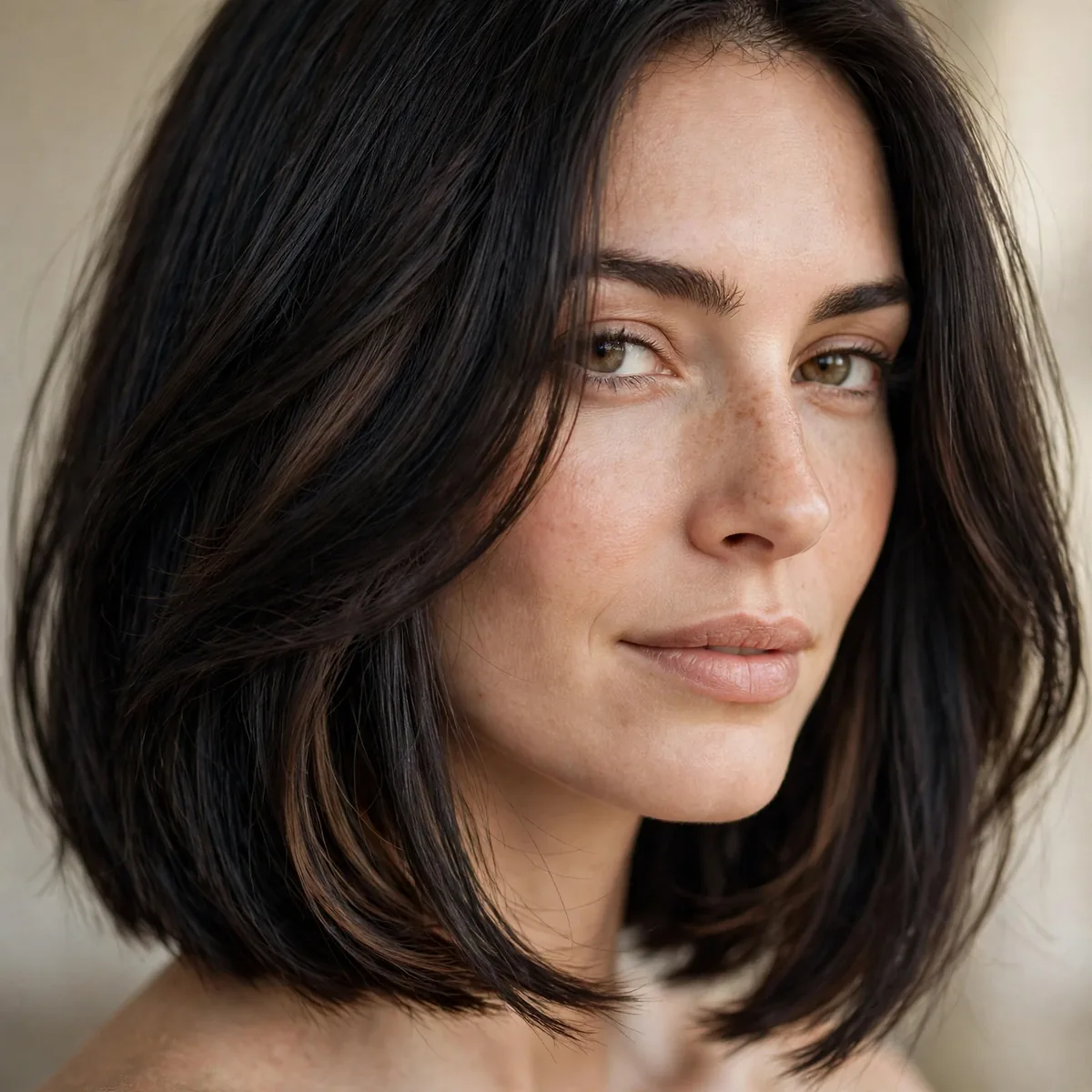
This is the thick-hair secret weapon. Your stylist cuts short layers underneath the top section so bulk is carved out where nobody sees it. The surface stays smooth and polished while the inside is dramatically lighter. Ideal for very dense, coarse hair that puffs out at the ends.
When you sit in the chair, say: "I want interior layering for weight removal, but keep the top layer long and clean." Dry with your head upside down for the first minute to activate the lightness, then smooth the top with a paddle brush.
Square and heart-shaped faces benefit most, because the interior shaping slims the lower half of the silhouette without touching the face-framing length. It also suits fine-but-dense hair types that puff outward — the hidden layers release the bulk at the roots where roundness starts. Maintenance is minimal since there is nothing to style around: your blow-dry routine stays exactly the same, just faster and flatter at the crown.
Pair this cut with a sulfate-free volumizing shampoo, which keeps roots lifted rather than flattened by heavy silicones. When heat-styling, a paddle brush works better than a round one here — you want the top layer smooth and curtain-like so the interior layers stay invisible. For special occasions, try pinning one side back: the contrast between the sleek surface and the piecey under-layers underneath photographs beautifully and adds dimension.
The Airy A-Line Lob
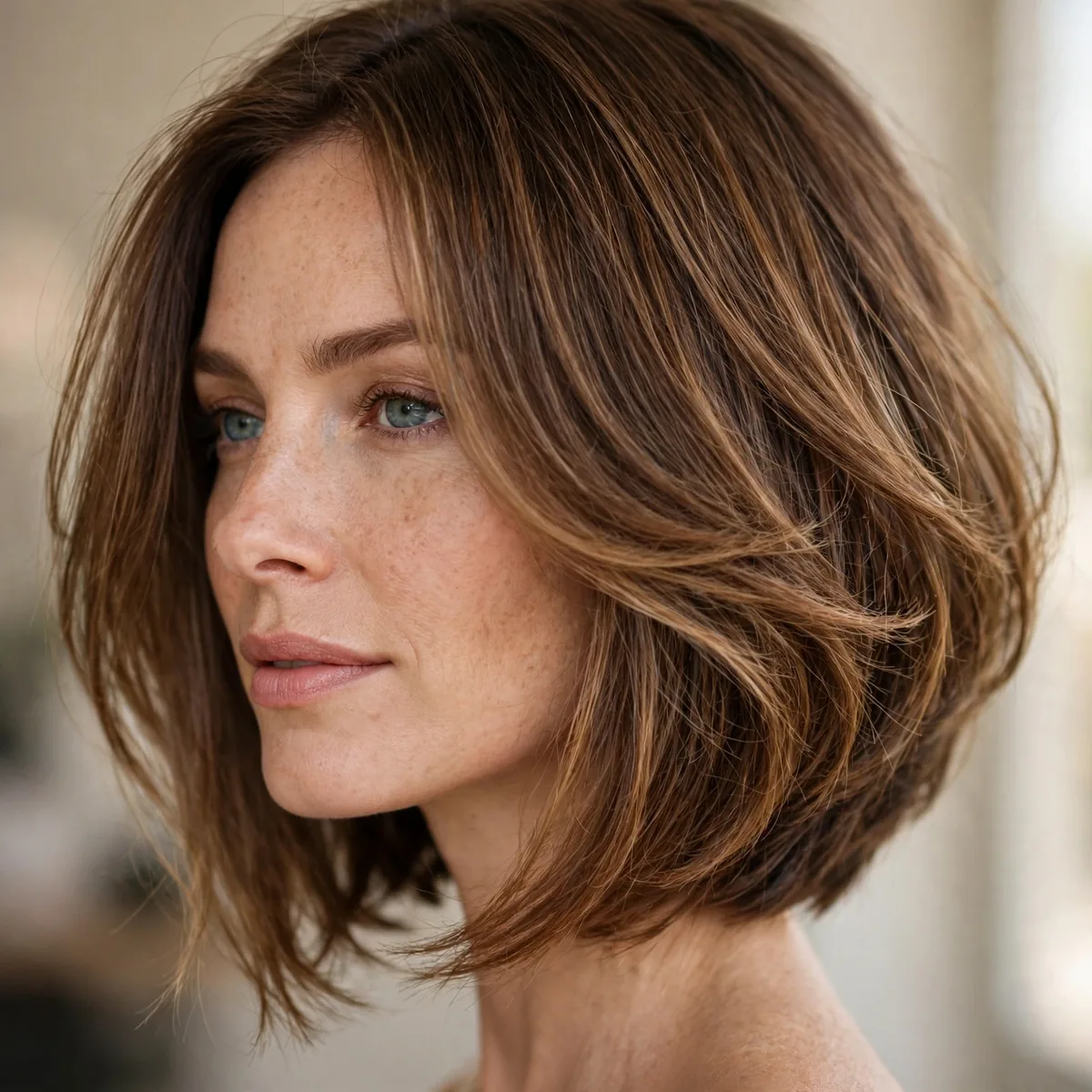
An A-line shape is naturally debulking: shorter stacked layers at the nape remove a huge amount of weight exactly where thick hair bunches up, while the long front pieces keep your length and frame your face. It flatters round and heart-shaped faces by creating a slimming diagonal line.
Ask for stacked graduation at the back that blends into collarbone-length front pieces. Wear it sleek for a sharp, expensive look or bend the front pieces with a flat iron for softness. If you love the A-line shape, our A-line bobs for round faces show the shorter versions too.
Round faces get the best mileage from this silhouette because the longer front pieces draw the eye downward and visually slim the cheeks. It is also a favorite for women over forty — the lift at the nape and the forward swing around the jawline feel youthful without reading trendy or high-maintenance. The shape holds through growth too, since stacked back layers grow out softly rather than flipping.
Style the nape section with a small round brush, directing heat upward to keep the graduation tucked close to the head. A root-lifting mousse applied before blow-drying gives fine, thick hair that salon lift without teasing. In humid weather, run a flat iron over just the front sections to keep them swingy while the back stays airy. This cut also tucks beautifully behind the ears for workouts and then falls back into place.
Face-Framing Curtain Lob
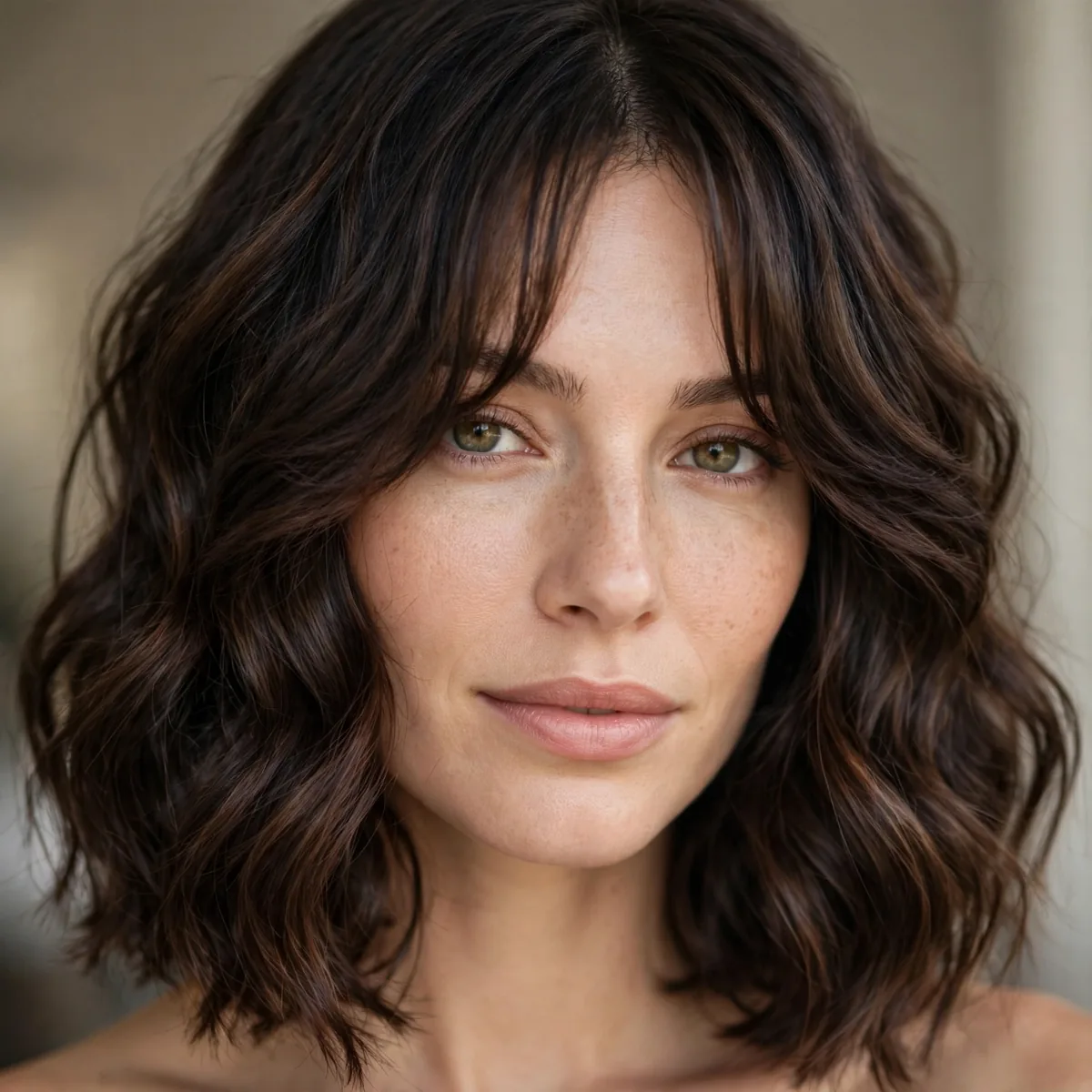
Curtain bangs are genius on thick hair because they break up the solid curtain of hair around your face and create movement right where your eyes land. The rest of the lob can stay long and simple while the front does all the talking. Best for thick hair with a natural wave.
Ask your stylist to cut the curtain pieces starting at cheekbone length so they blend into the lob. Blow-dry them with a small round brush, sweeping each side away from your face. On day two, a quick refresh with dry shampoo at the roots keeps the whole style light.
Oblong and diamond face shapes wear this best, since the parted fringe adds horizontal width across the forehead and temples. It is a forgiving choice for thick hair that misbehaves at the crown — the fringe disguises cowlicks and uneven growth patterns that a solid perimeter would spotlight. Trims are needed every six to eight weeks to keep the curtain pieces from merging into the rest, but the lob itself can grow longer.
For a soft center part, blow-dry the fringe with a medium round brush pulling away from the face on each side. A texturizing spray at the roots keeps the part from looking too severe as the day wears on. If your hair skews wavy, let the curtain pieces air-dry with a dab of curl cream for an undone French-girl finish. This version transitions seamlessly into fall and winter when layered under scarves and turtlenecks without losing its shape.
Blunt Collarbone Cut With Micro-Layers
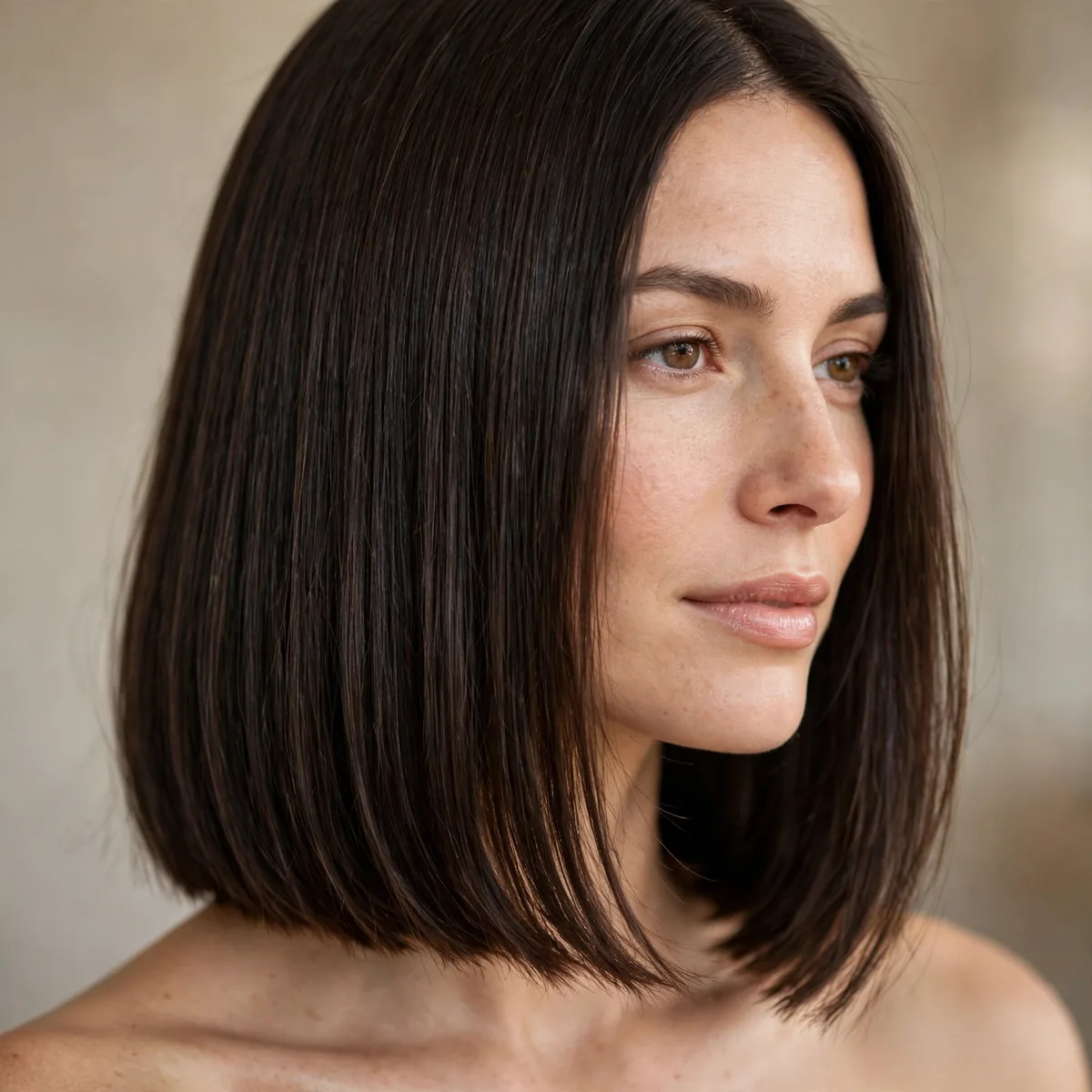
Love the blunt look but your thick hair turns it into a triangle? Micro-layers — tiny, barely visible layers through the ends — fix that. They remove just enough weight that the blunt line sits flat instead of flaring out. Perfect for thick, straight hair and oval or oblong faces.
Tell your stylist: "Blunt perimeter, but soften the last inch with micro-layering so it does not kick out." Flat-iron the ends with a slight inward bend and finish with a pea-sized drop of smoothing serum. Avoid heavy oils, which drag thick ends down.
This is the ideal compromise for oval faces that want structure without bulk, since the micro-layers preserve the graphic line while removing the triangle effect at the bottom. It works across density types — from medium to very thick — because the technique adapts: finer hair gets fewer, higher micro-layers while denser hair gets more. Expect trims every eight weeks to keep the bluntness crisp, though the softened ends forgive a week or two of delay.
To style, rough-dry until eighty percent dry, then finish with a paddle brush for that glassy straight finish. A heat protectant with keratin is worth the investment here — the blunt ends show damage faster than layered cuts. Try a deep side part for evening and a center part for work; the same cut reads completely differently. In spring, the clean line pairs perfectly with statement earrings since nothing competes around the jawline.
The Waterfall Lob
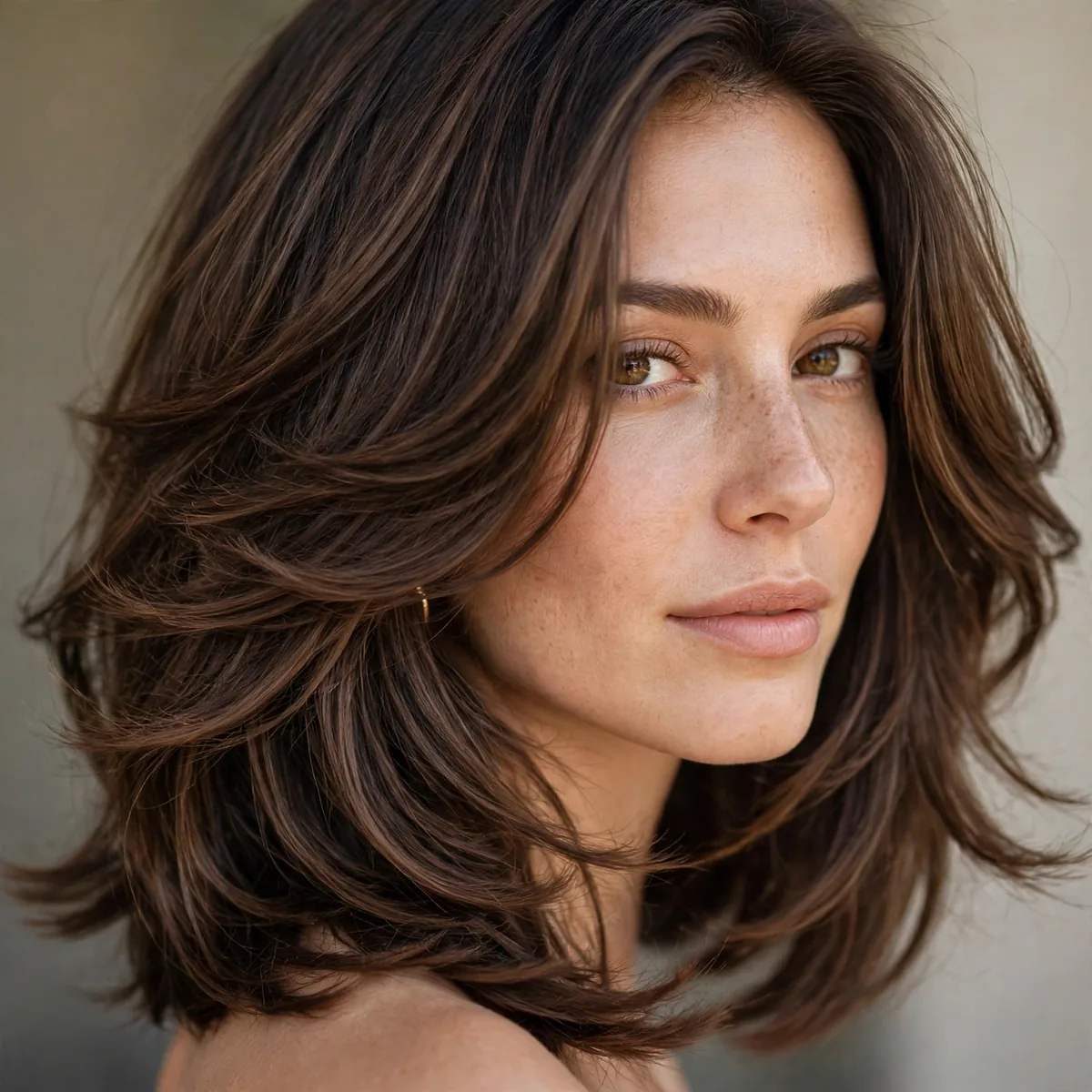
Long, cascading layers that fall like a waterfall from the crown to the ends — this cut takes thick hair from one heavy mass to a shape with real dimension. Each layer is long enough to keep the fullness but staggered enough to let the hair move. Gorgeous on thick hair with natural texture.
Ask for long layers starting at chin length, with the shortest layer no higher than your jawline. Scrunch in a lightweight mousse while damp and diffuse or air-dry. The layers do the styling work for you, which is why this cut shows up in our textured lobs for busy mornings roundup as well.
Heart-shaped faces suit this cut beautifully because the cascading layers add width through the mid-lengths, balancing a wider forehead against a narrower chin. Thick, straight hair gets the most drama from it — the layers create movement where there was none. Fine-textured but thick hair should ask for fewer, longer layers to avoid ends looking wispy. Plan on a trim every ten weeks; the graduated lengths hide regrowth well.
Diffuse the mid-lengths on medium heat to encourage the layers to fall in soft tiers rather than clumping together. A lightweight leave-in with panthenol keeps the layers separate and touchable without stiffness. For weddings or events, curl alternating sections away from the face with a one-inch iron — the waterfall shape turns into elegant, cascading waves. This cut also air-dries beautifully on summer days when humidity adds natural volume.
Razor-Textured Ends
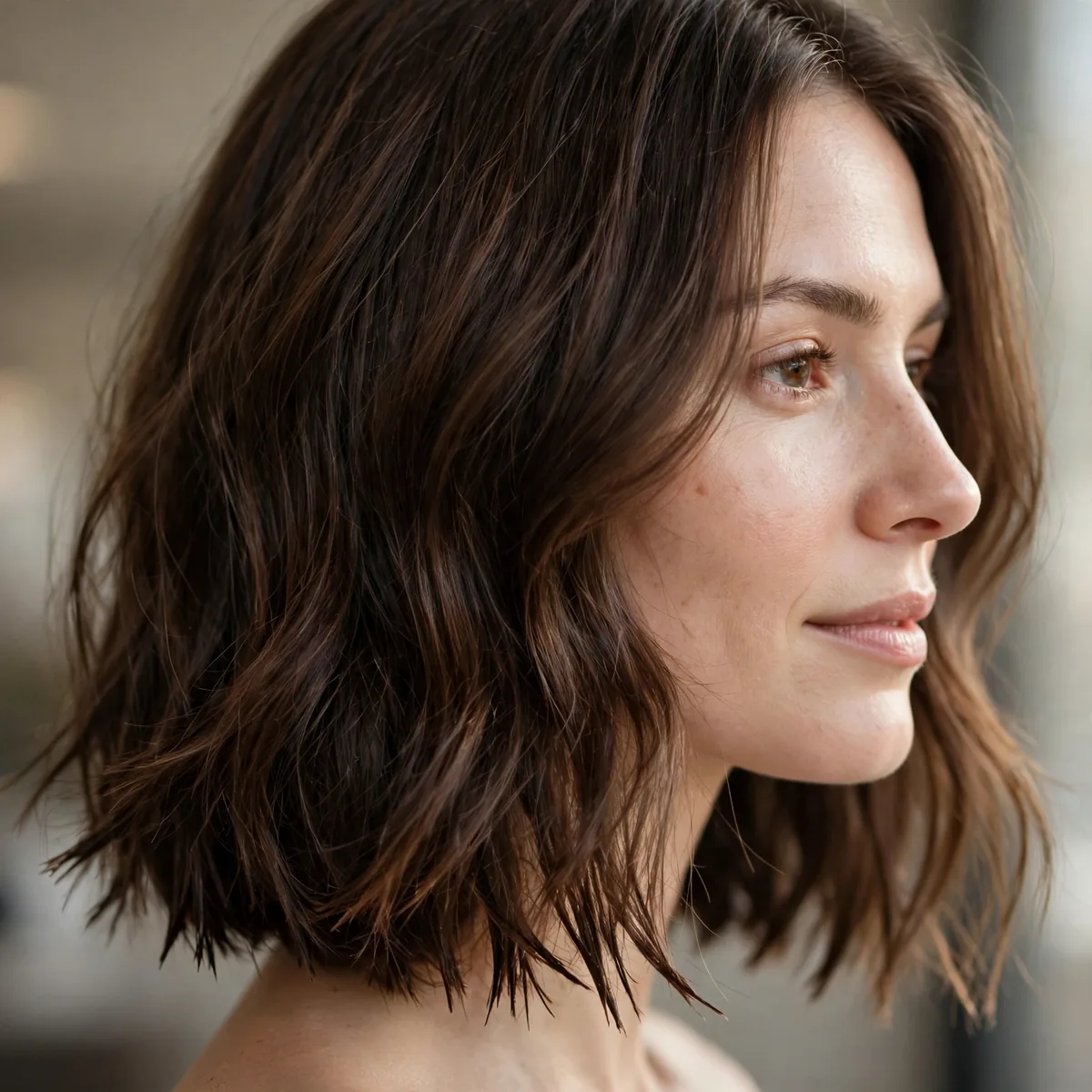
A razor is thick hair's best friend when it is in skilled hands. Razor-cut ends are wispy and piece-y, removing bulk from the bottom third of your hair so it swings instead of sitting. This works especially well for thick, straight to wavy hair that looks blunt and heavy no matter what.
Ask specifically for razor texturizing through the ends only — not the roots, which can create frizz on thick hair. Style with a flat iron, bending random pieces in opposite directions for that expensive undone texture.
Round faces are the biggest winners here — the piece-y, broken ends stop the hair from forming a solid helmet that widens the cheeks. This technique also rescues thick hair that grows out boxy, since the razor softens the bottom edge as length increases. It is not ideal for very fine hair, where razor cutting can thin the ends too much. Ask your stylist to reassess the texture every few appointments rather than automatically re-razoring.
Refresh the texture between salon visits with a sea-salt spray scrunched into damp ends — it mimics the razor's separation. Skip heavy oils here; they clump piece-y ends together and undo the airy effect. For an edgy night-out look, flat-iron the top smooth and let only the razored ends flip and kick naturally. This cut shines in autumn when paired with leather jackets and boots — the undone texture matches the season's mood perfectly.
Deep Side-Part Thick-Hair Lob
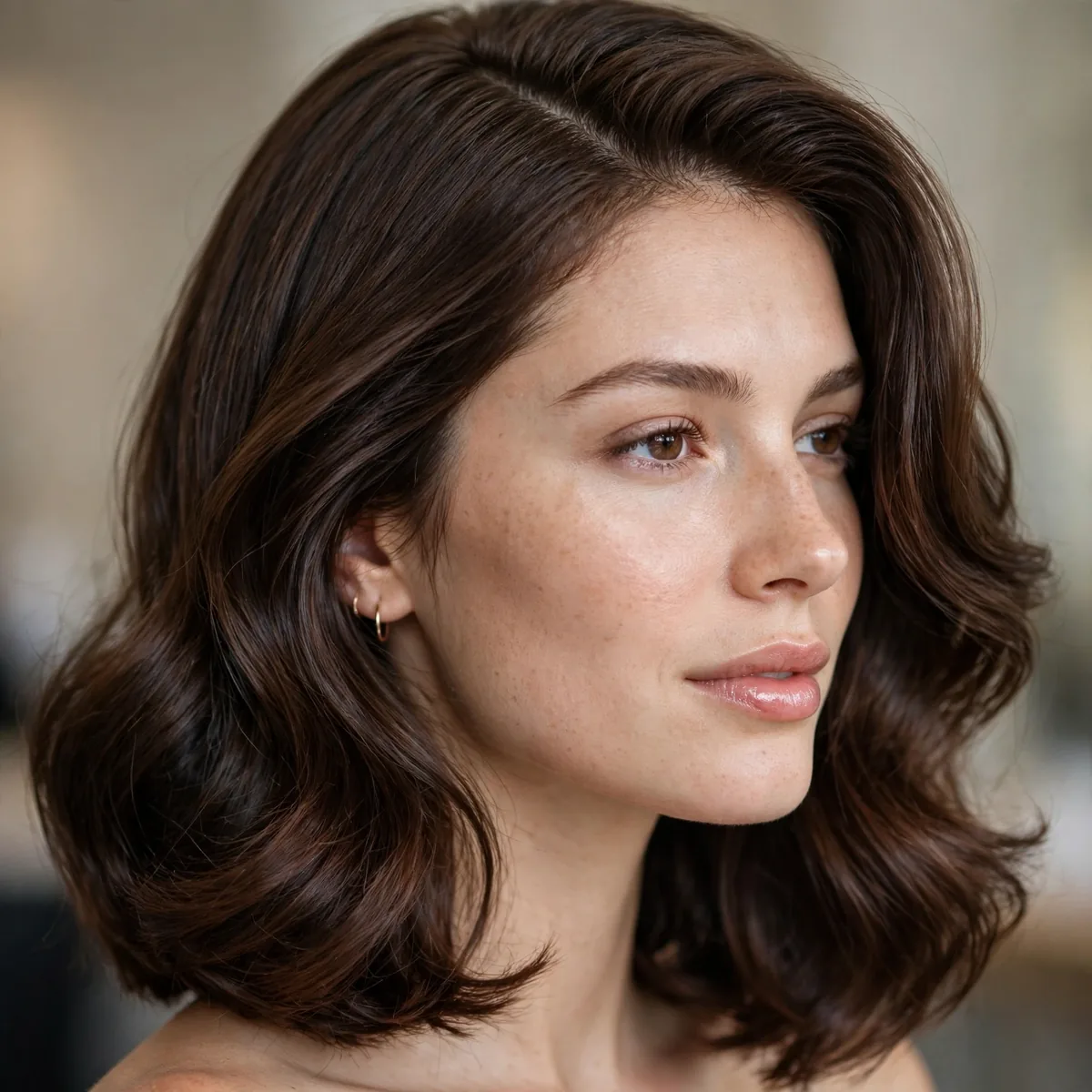
Sometimes the lightest-feeling cut is not a cut at all — it is a part change. A deep side part redistributes your hair's volume so it is not one heavy curtain on each side. Paired with long layers, it makes thick hair feel instantly more manageable and looks incredibly glamorous.
Ask your stylist to layer the hair to fall naturally from a deep side part, with the heavier side getting extra interior thinning. Blow-dry with a side part using a paddle brush for that sleek, editorial finish. Tuck the lighter side behind your ear for an asymmetric, face-slimming effect.
Square faces gain the most from a deep side part, since the diagonal line breaks up a strong jaw and softens angular features. This is also the fastest refresh for thick hair between haircuts — no scissors required, just a part change that shifts volume off the crown. It suits medium to high density best; very fine hair can look lopsided. Restyle the part while hair is damp so it holds, and refresh roots daily with fingertips.
Set the part with a touch of root powder or dry shampoo at the crown for all-day grip and lift. When curling, wind sections away from the face on the heavy side to emphasize the sweep. For formal events, smooth the parted side behind one ear with a decorative clip — the asymmetry looks intentional and elegant. In winter, the deep part keeps hat hair at bay better than a center part, which flattens evenly and looks limp.
The Lob With an Undercut Panel
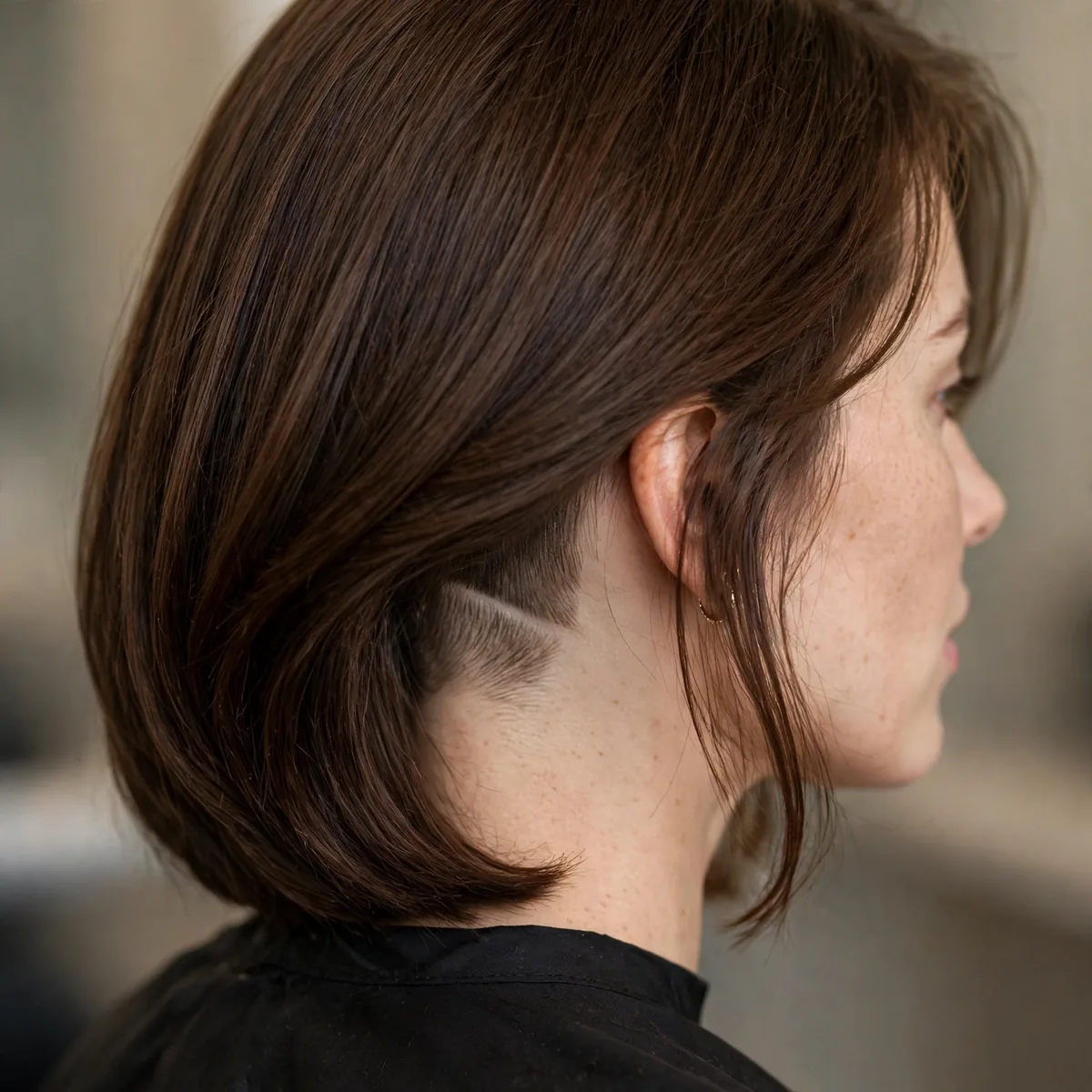
For truly, exceptionally thick hair, nothing removes weight like a hidden undercut. Your stylist shaves or closely clips a panel at the nape, hidden under the top layers. You keep all your length and fullness on top while literally removing a third of the bulk underneath. Nobody knows it is there until you put your hair up.
This is ideal for hot climates and anyone whose neck gets sweaty under thick hair. Ask for a nape undercut that stays hidden when hair is down. Grow-out is easy since it is concealed — just have it cleaned up every 8 to 10 weeks.
This is the boldest option for very dense, coarse hair that stays bulky no matter how much layering you do. Oval and long faces handle it well since the undercut removes width at the nape without shortening the visible length. It requires upkeep — the shaved section needs touching up every four to six weeks or it grows out stubbly. When grown out, it blends into a slightly shorter nape layer, so there is no awkward in-between stage.
Style the longer top section as usual; the undercut stays hidden until you tie your hair up. A high ponytail or messy bun reveals the shaved design — perfect for summer festivals and workouts. Keep the undercut conditioned with a light oil to prevent itching as it grows. For a softer reveal, ask for a faded undercut rather than a hard line; the gradient looks deliberate even weeks later and photographs beautifully when hair is pinned up.
Long Bob With Wispy Bangs

Wispy bangs lighten the whole face-framing area of a thick-haired lob. Because they are sheer and textured, they do not add visual weight the way a heavy fringe would. They are perfect for thick hair paired with long faces or high foreheads.
Ask for bangs that are point-cut and thinned so you can see through them slightly. Style by blow-drying straight down with a small round brush, then piece them out with your fingers. They grow out gracefully into curtain bangs, so the maintenance is forgiving.
Long and oblong faces are the natural match — wispy bangs shorten a long forehead visually without the commitment of a blunt fringe. They also suit fine-textured thick hair that gets overwhelmed by heavy bangs. The upkeep is light: trim the fringe every four to six weeks, but let the lob grow freely. Between appointments, the sheerness means uneven growth looks intentional rather than messy, which buys you time.
Blow-dry bangs with a small round brush, rolling under just at the ends for a feathered finish. A spritz of dry shampoo on the fringe on day two absorbs oil and revives the airiness. For a romantic evening look, curl the lob's ends under while leaving the bangs straight — the contrast frames the eyes beautifully. In spring, wispy bangs pair gorgeously with floral dresses and soft blush makeup for an effortless, fresh-faced vibe.
Sleek One-Length With Invisible Layers
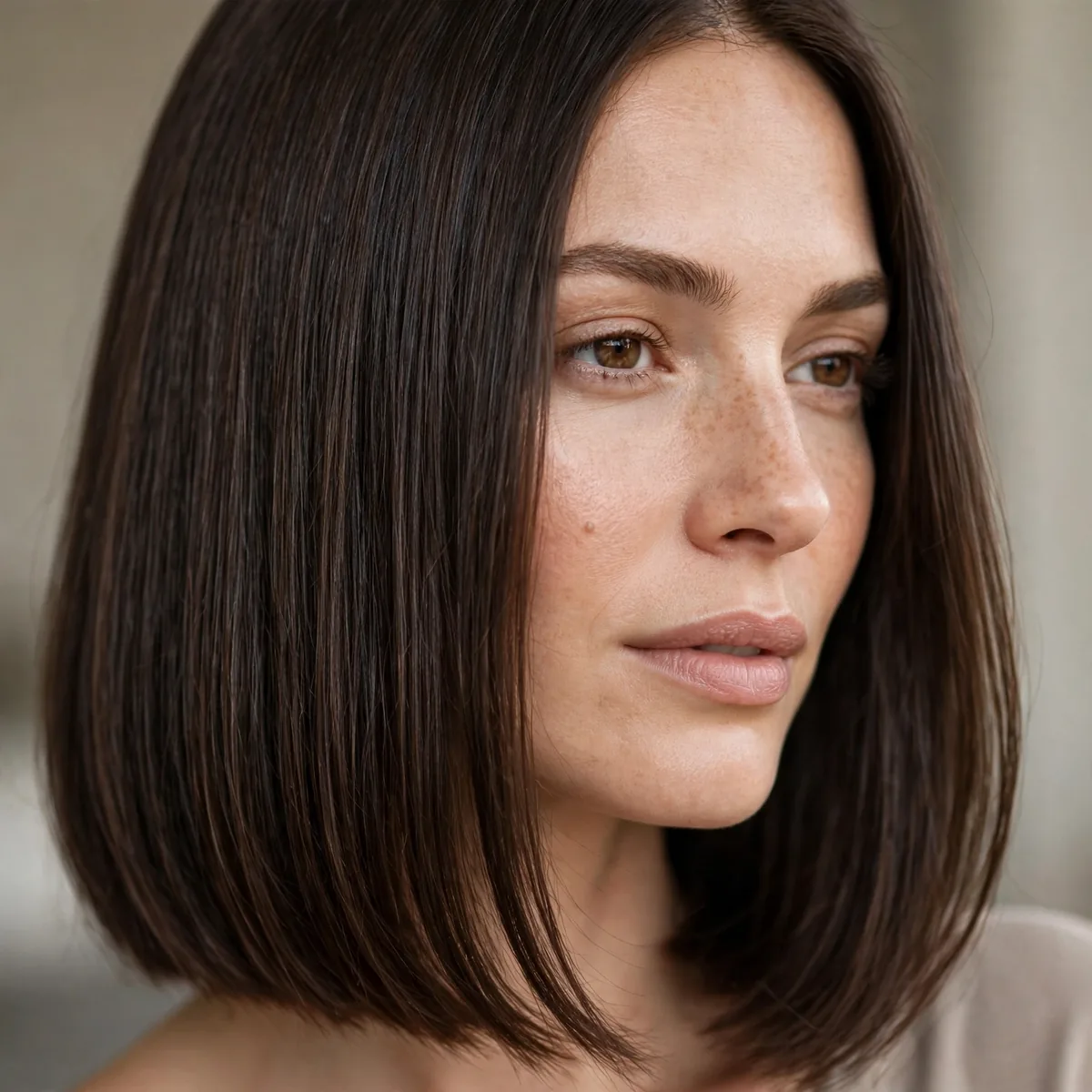
This is the minimalist answer: the outside looks like a perfect one-length lob, but the inside has been quietly carved out with invisible layering. You get the sharp, expensive silhouette of a blunt cut with none of the heaviness. Best for thick, straight hair and anyone who loves a polished look.
The key phrase for your stylist is "one-length perimeter, interior weight removal." Flat-iron in sections and finish with a shine spray rather than oil. This cut looks stunning with the glass-hair finish from our blunt bobs for straight hair collection.
This cut rewards oval and heart-shaped faces, where the clean line emphasizes symmetry and cheekbones. It demands commitment — the perimeter must be trimmed every six to eight weeks or the bluntness turns scraggly. Thick, straight hair holds this shape best; wavy hair needs daily heat to keep the illusion. The payoff is a cut that looks expensive with minimal product: a smoothing serum and a flat iron are all it takes on most days.
For the sleekest result, blow-dry with a boar-bristle paddle brush pulling sections taut, then flat-iron in one-inch ribbons. A shine spray with dimethicone — used sparingly — gives that liquid-glass reflectiveness without greasiness. Try tucking one side behind the ear for meetings to show off earrings, then letting it fall for evening. This minimalist cut also makes color pop: a single-process gloss or subtle balayage reads bolder against the sharp line.
Tousled Air-Dried Lob
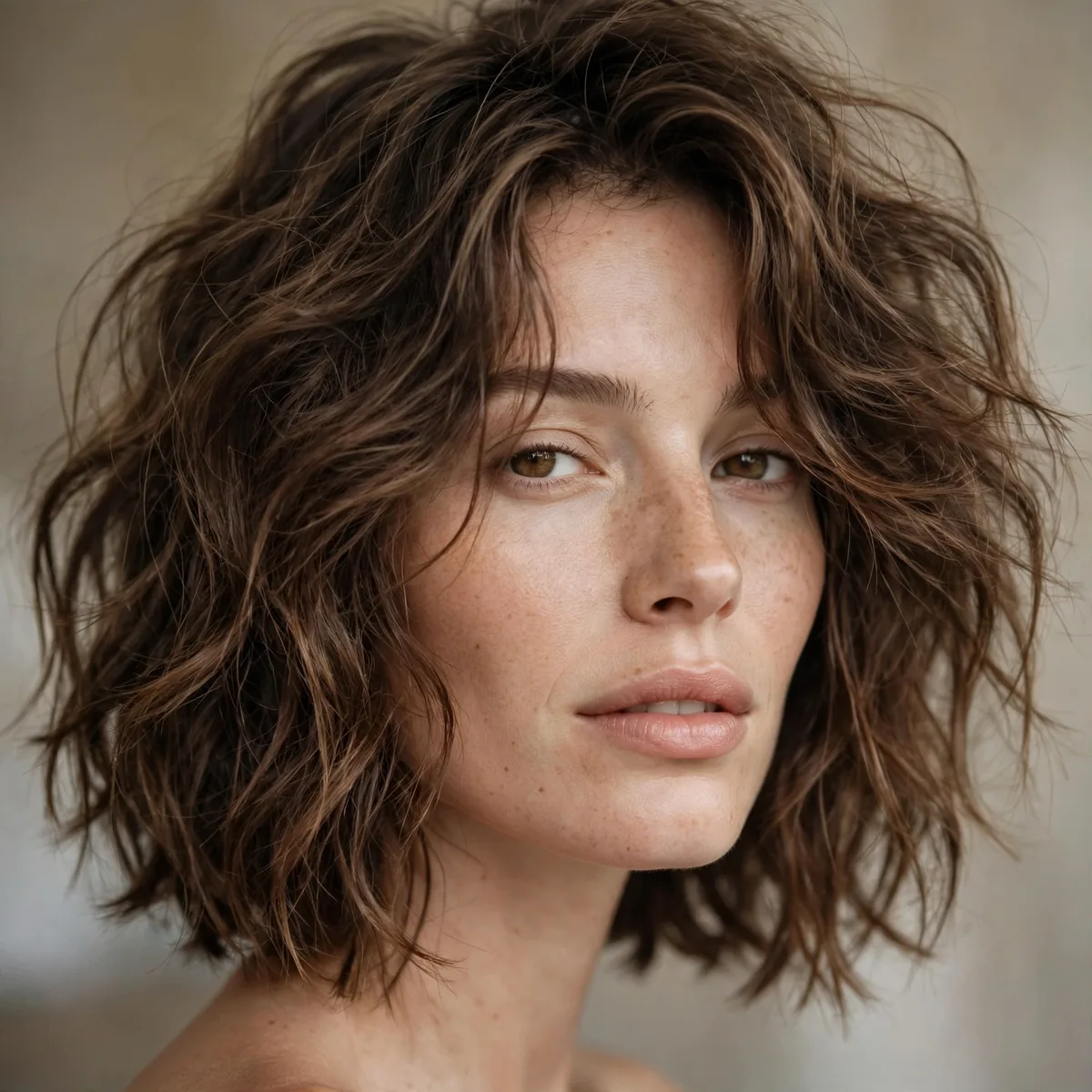
If you would rather not heat-style every day, this lob is cut to work with your natural texture. Long layers and texturized ends mean your thick waves dry into a shape instead of a puffball. The secret is cutting the layers long enough that the waves have room to form.
Ask for long layers and texturized ends, cut to enhance your natural wave pattern. After washing, scrunch in a curl cream and a light gel, then leave it alone. The less you touch thick wavy hair while it dries, the better it behaves.
Wavy and loosely curly hair types get the best results — the cut is designed around your natural pattern, not against it. Round faces benefit from the vertical emphasis, since tousled volume at the ends draws the eye downward. This is the lowest-maintenance option in the lineup: trims every ten to twelve weeks are plenty, and second-day hair often looks better than day one. It is also the kindest choice for damaged hair recovering from heat styling.
On wash day, apply a curl-defining cream to soaking-wet hair, then scrunch upward and let it air-dry without touching it — hands off is the secret. A light diffuser blast at the roots adds lift without disturbing the pattern. For extra beachiness in summer, braid damp hair loosely for an hour before releasing. Skip silicones if your waves fall flat; a salt-free texture foam gives grip and bounce that lasts into the next day.
The Collarbone Cut With Shattered Layers
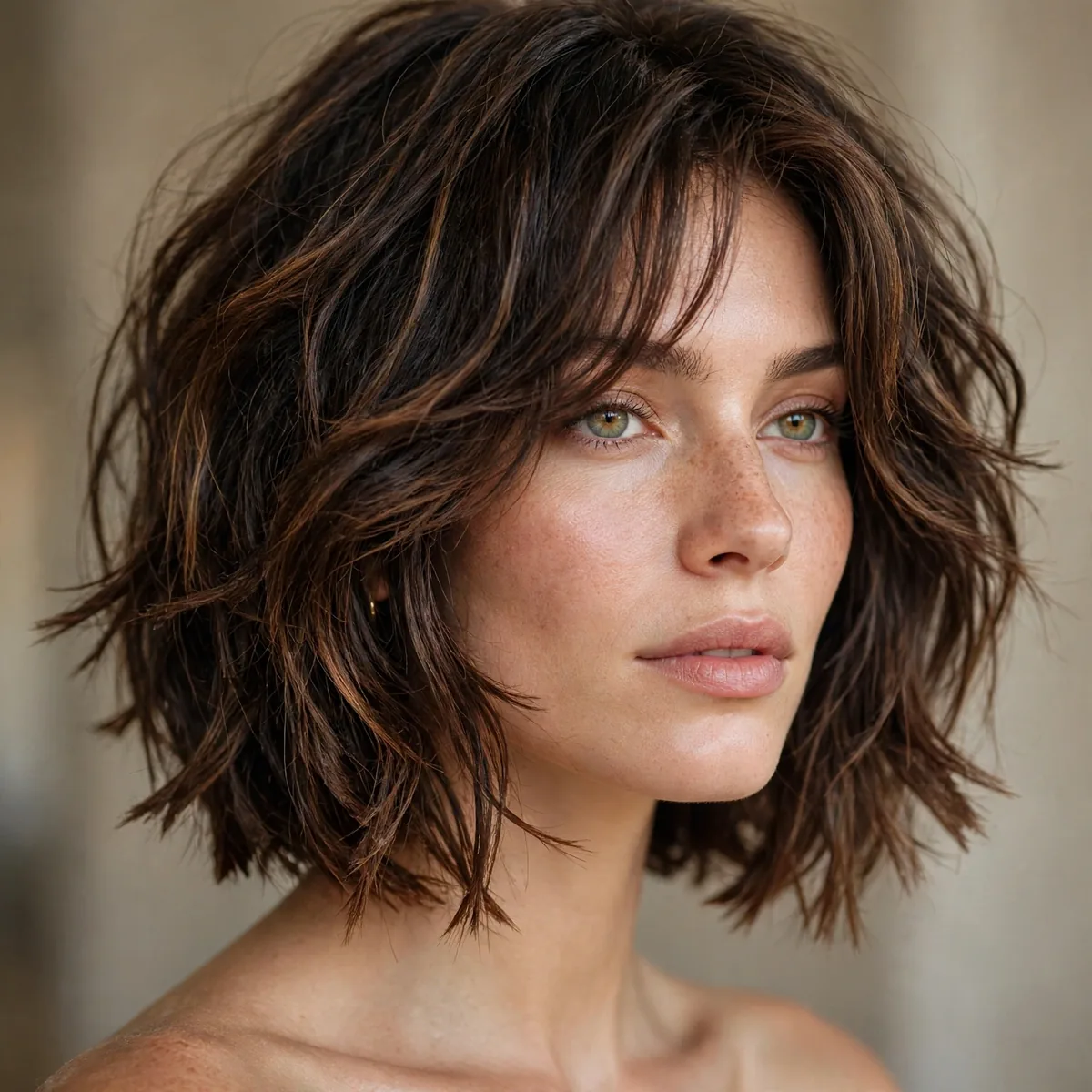
Shattered layers are cut at varied lengths so the ends look piece-y and broken up rather than solid. On thick hair this creates instant lightness and a cool, undone vibe that is very now. It suits oval, heart, and square faces and works on straight to wavy textures.
Ask for shattered, disconnected layers through the bottom half with a collarbone-grazing length. Style with a flat iron, twisting random sections for texture, and finish with a texturizing spray. This is a wash-and-wear-friendly cut that looks better slightly messy.
Thick hair with a strong natural wave is the ideal canvas — the shattered pieces separate naturally and the cut almost styles itself. Square faces appreciate how the broken-up ends soften the jawline without removing length. This cut is forgiving during grow-out since the disconnected lengths blur regrowth, so you can push trims to twelve weeks. Avoid it if your hair is very fine; shattered ends can read thin and stringy.
Revive the pieces on day two with a dry texturizing spray, focusing on the mid-lengths where separation matters most. For a night out, curl random sections in opposite directions with a one-and-a-quarter-inch iron — the asymmetry is the point. In fall, the undone texture layers perfectly under chunky knits and oversized coats. If ends start to look too blunt between cuts, ask your stylist for a quick dusting rather than a full reshape.
Layered Lob With a Money Piece
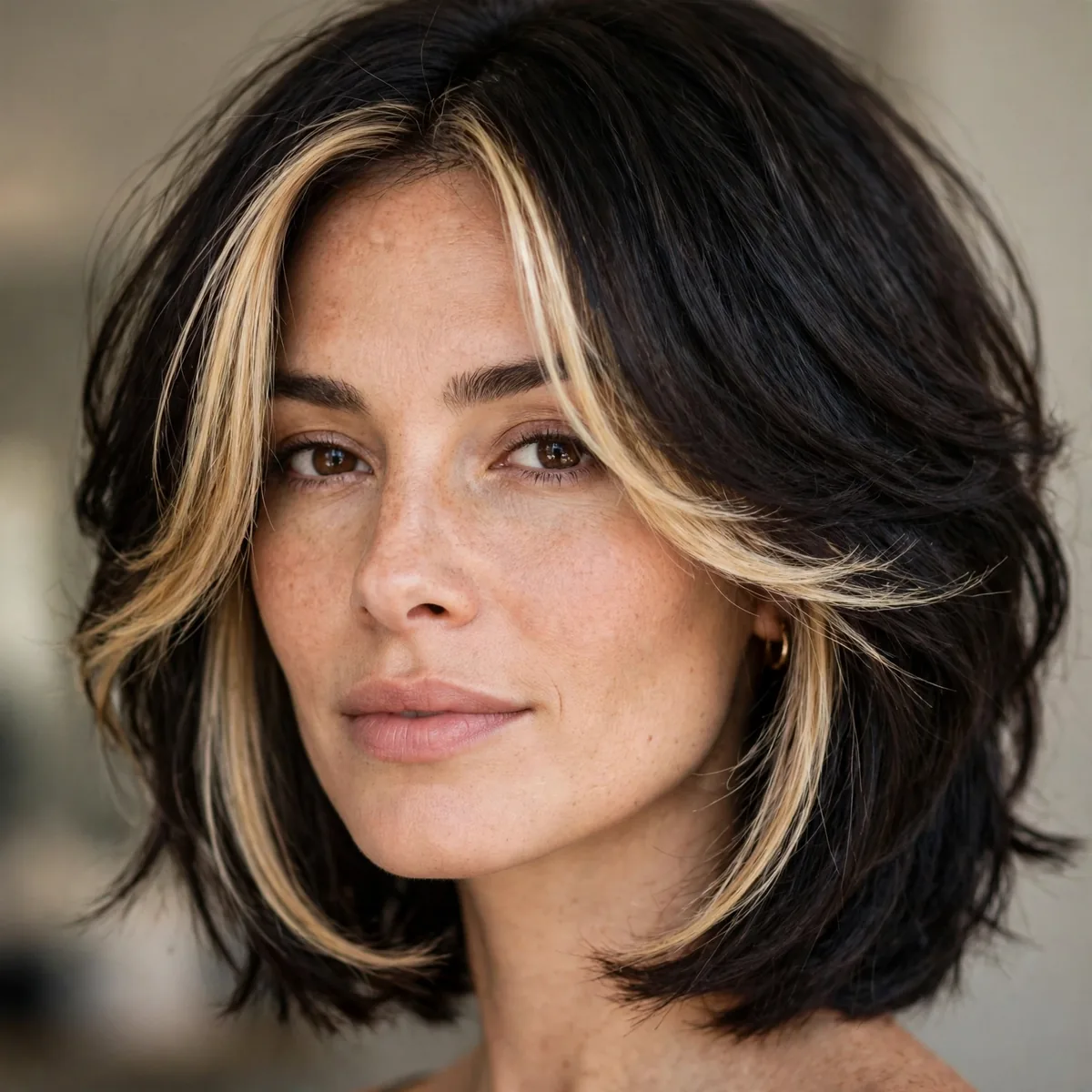
Color can do some of the debulking work visually. A face-framing money piece breaks up the solid mass of thick dark hair and draws the eye to your face instead of the bulk. Combined with long layers, it makes thick hair look lighter and more dimensional.
Ask your colorist for a bright face frame that is two to three shades lighter than your base, plus long layers for movement. The contrast does the visual slimming while the layers do the physical lightening. Maintain the brightness with a purple or blue shampoo every other wash depending on the tone.
The money piece is most striking on medium to thick hair in solid dark shades — chocolate, espresso, black — where the contrast reads intentional. It suits all face shapes because the brightness placement can be customized: wider placement widens a narrow face, closer placement slims a round one. Budget for a gloss refresh every six weeks to keep the blonde luminous, since face-framing pieces fade fastest from washing and sun exposure.
Protect the lightened pieces with a purple-toning mask once a week to prevent brassiness, plus a heat protectant before any hot tools. Style with a one-inch curling iron, turning the money-piece sections away from the face so the color catches the light. For a softer seasonal shift, ask your colorist to melt the money piece into a lived-in balayage come autumn. The brightness also photographs beautifully in natural light — it is made for golden-hour selfies.
Voluminous Blowout Lob
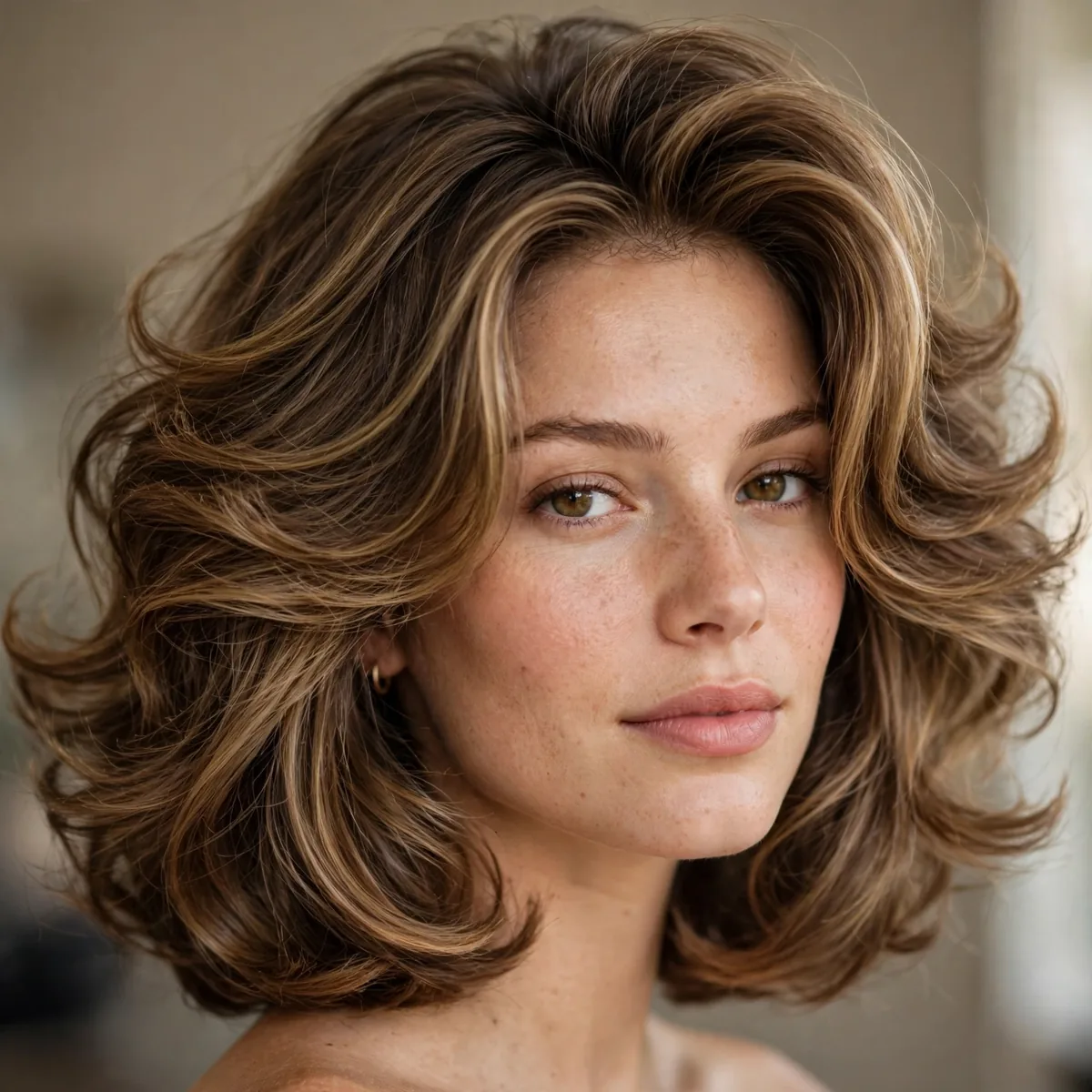
Thick hair was made for the bouncy blowout — you have the density most people fake with extensions. This lob is cut with long layers specifically to support big, bouncy blow-dried volume without collapsing. Perfect for thick hair and round or oval faces.
Ask for long layers and a length that sits at or just below the collarbone. Blow-dry with a large round brush, lifting at the roots, and set each section with a velcro roller while it cools. The volume lasts for days on thick hair, which holds a blowout better than any other texture.
This is the statement cut for women who love volume — fine-but-dense hair gets the biggest transformation since the density finally works in its favor. Oval and long faces carry the height best, while round faces should keep the volume at the ends rather than the crown. It takes effort: expect twenty to thirty minutes of styling, plus a trim every eight weeks to maintain the bounce. The payoff is red-carpet hair on an ordinary Tuesday.
Build the foundation with a volumizing mousse at the roots and a round brush with a ceramic core that holds heat longer. Blow-dry in sections, rolling each under and pinning it to cool — the pin-curl set is what gives the bounce longevity. A flexible-hold hairspray misted from arm's length keeps movement without stiffness. In winter, this blowout looks spectacular under a wool coat; in summer, keep a travel-size dry shampoo handy for humidity touch-ups.
Side-Swept Long Bangs Lob
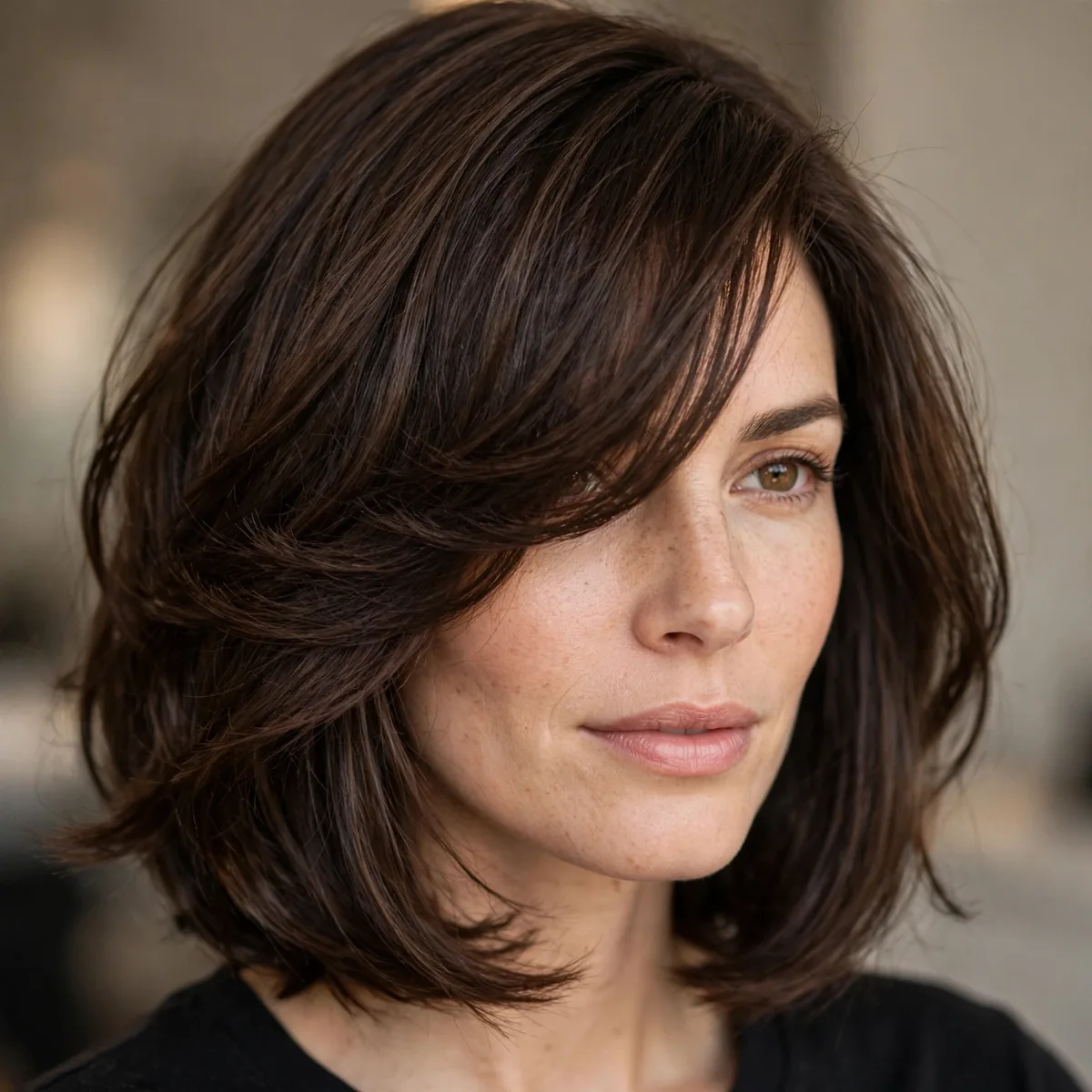
Long side-swept bangs are the most forgiving fringe for thick hair. They blend into the lob's layers, remove visual weight from the forehead area, and flatter every face shape — especially round and square faces that benefit from a diagonal line. They also grow out seamlessly.
Ask for bangs that start at nose length and sweep to one side, blended into the face-framing layers. Blow-dry them across your forehead in the opposite direction first for volume, then sweep into place. One clip at the crown while they cool sets the sweep all day.
This fringe is a gift for high foreheads and heart-shaped faces — the diagonal sweep breaks up forehead width and draws attention to the eyes. It is also the easiest bangs to grow out, melting into the face-framing layers within a couple of months. Thick, straight hair holds the sweep with minimal effort; wavy hair needs a quick blow-dry to direct the bangs. Trim the fringe alone between full haircuts to keep the line fresh.
Direct the sweep with a medium round brush, over-directing the bangs to the opposite side first for natural lift at the root. A pea-sized amount of styling cream on the ends keeps them piece-y rather than plastered. For date night, deepen the sweep and tuck the opposite side behind the ear with a sparkly pin. This fringe works year-round but feels especially fresh in spring, when it pairs with light layers and open-neck tops.
The C-Curve Lob
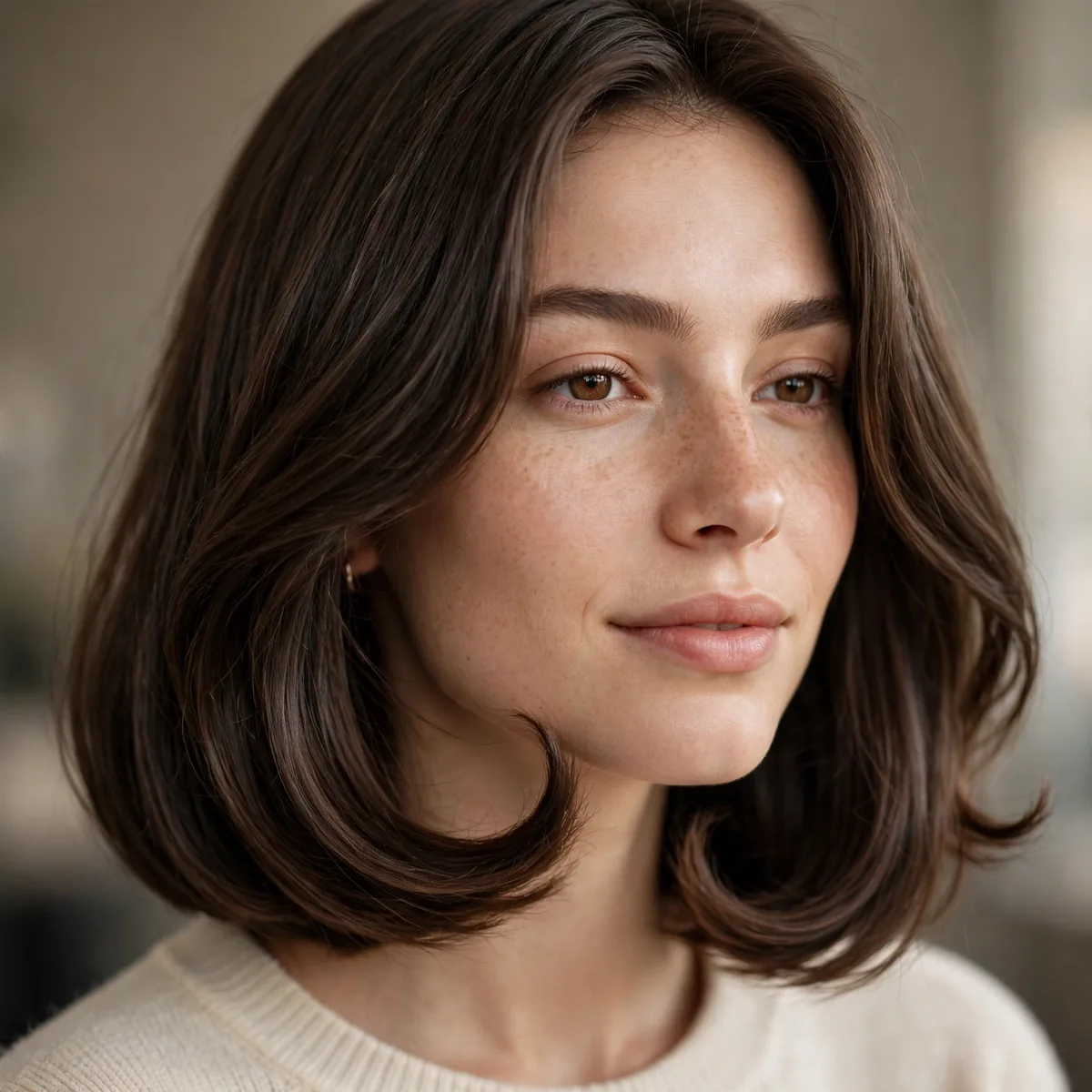
The C-curve cut shapes the ends to turn gently inward, hugging the neck and jawline. On thick hair this prevents the dreaded outward flip and creates a slimming, face-hugging silhouette. It is elegant, timeless, and works beautifully on straight to slightly wavy thick hair.
Ask your stylist to cut the perimeter with a slight inward graduation and texturize the ends. Style by blow-drying under with a round brush, or flat-iron with a flick inward at the ends. The inward curve makes thick hair look controlled and intentional rather than bulky.
The inward curve is tailor-made for square and rectangular faces, softening strong jawlines with its hugging line. It also solves the thick-hair flip problem — ends that used to kick outward now tuck obediently. Medium to coarse textures hold the curve best; very fine hair may need a touch of styling cream for hold. The shape needs reshaping every eight to ten weeks, since grown-out curves lose their tuck and start flipping again.
After blow-drying under with a round brush, lock the curve with the cool-shot button — the temperature drop sets the bend. A smoothing balm through the ends adds weight that encourages the tuck to stay. For a modern twist, flip just the front two pieces outward while keeping the back tucked; the contrast looks editorial. This cut is a winter hero, sitting neatly inside coat collars and scarves without bunching or flipping.
Thinned-Out Beach Wave Lob
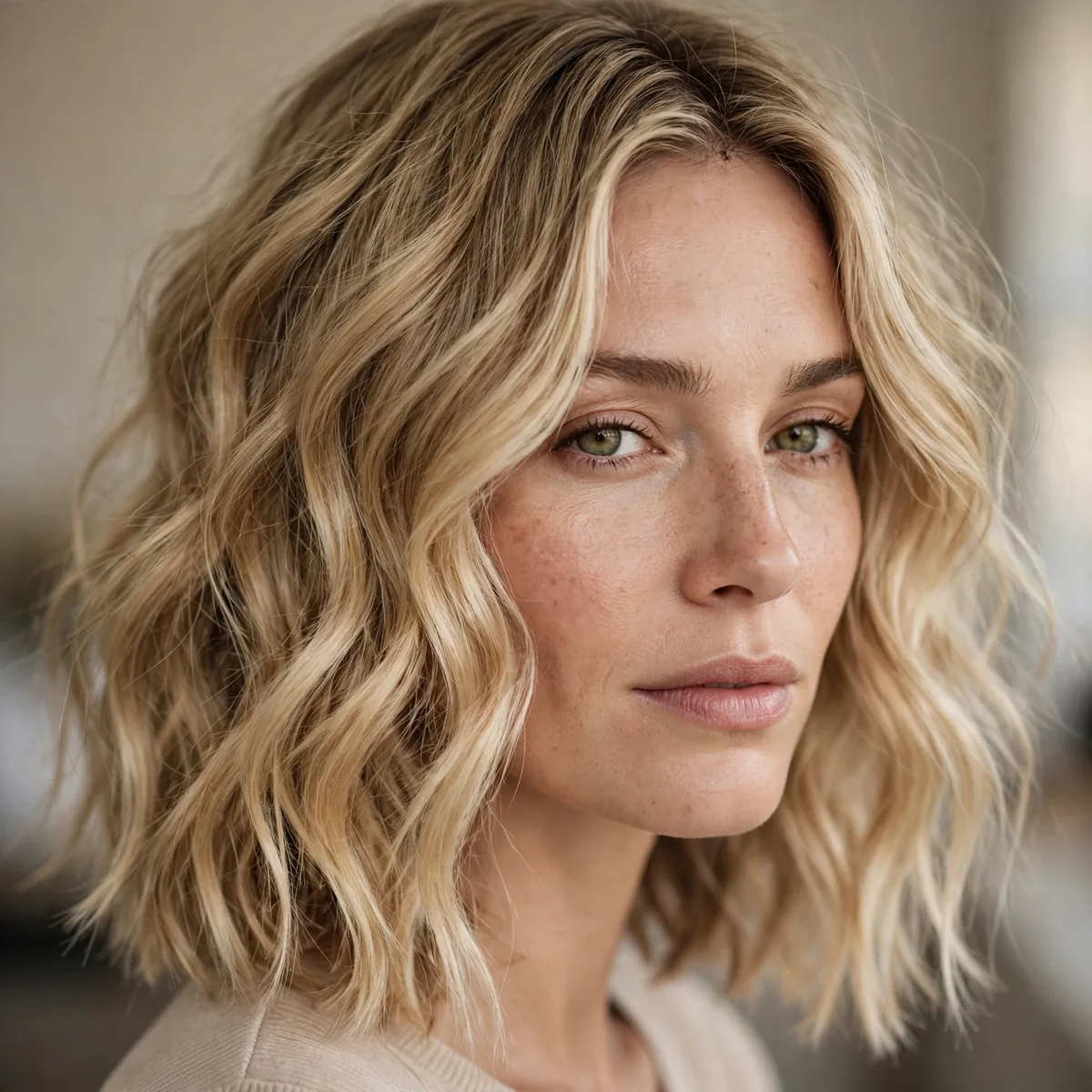
Beach waves and thick hair are a natural match — the texture hides any unevenness and the waves break up bulk. This version adds aggressive thinning through the mid-lengths so the waves look effortless rather than heavy. Ideal for thick, wavy to curly hair.
Ask for long layers with the weight thinned through the mid-shaft, keeping the ends piece-y. Create waves with a large-barrel curling iron, alternating directions, and rake through with your fingers. A sea-salt spray adds that gritty beach texture that makes thick hair look deliberately undone.
This is the ultimate vacation cut — it looks better slightly messy, so ocean air and humidity become styling allies instead of enemies. Oval and heart-shaped faces wear the waves well, with the width hitting at cheekbone level. It is ideal for medium-to-coarse thick hair; very fine hair can look sparse once thinned. The grow-out is graceful — waves disguise uneven lengths for weeks, stretching trims to a comfortable twelve.
Create the waves with a one-and-a-quarter-inch wand, leaving the last inch straight for that undone finish. A sea-salt spray on damp hair before heat styling gives the waves grip and a matte texture. For a polished evening version, brush the waves out with a boar-bristle brush for soft, uniform S-waves. Come autumn, deepen the color a shade or two — richer tones make beach waves look expensive rather than sun-faded.
Asymmetrical Thick-Hair Lob
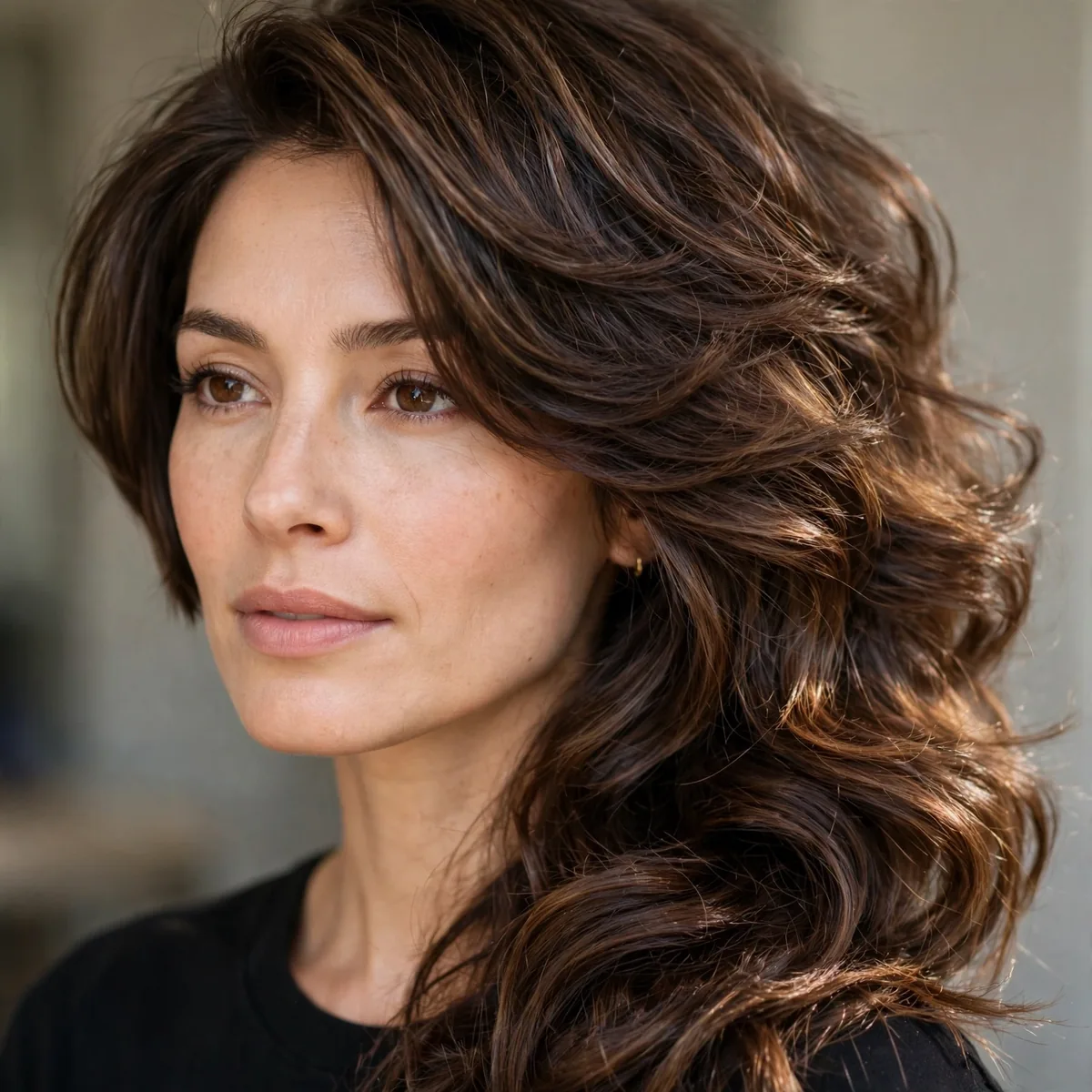
An asymmetric cut — noticeably longer on one side — does two things for thick hair: it removes weight unevenly so the hair falls in an interesting shape, and it creates a striking, fashion-forward silhouette. Best for thick, straight hair and confident oval or heart-shaped faces.
Ask for a clear asymmetry of at least two inches difference between sides, with texturized ends so the longer side does not look heavy. Wear it sleek to show off the sharp line, or add waves for a softer take. This is a statement cut — pair it with simple styling and let the shape talk.
Bold face shapes — strong cheekbones, defined jaws — carry asymmetry best, since the uneven line echoes their structure. It is a statement for confident dressers and creative workplaces rather than conservative offices. The cut needs precision upkeep: the asymmetry must be rebalanced every six to eight weeks or it starts looking like a grow-out mistake. Thick, straight hair shows the line cleanest; waves soften the effect into something more subtle.
Style with a flat iron, bending the longer side slightly under so the asymmetry reads deliberate and sleek. A shine serum on the longer side emphasizes the length difference and catches the light. For evenings, tuck the shorter side behind the ear and add a statement earring — the imbalance looks editorial. This cut pairs brilliantly with minimalist wardrobes: clean lines in clothing echo the haircut's architecture for a cohesive, fashion-forward look.
Long Blunt Bob With Curtain Fringe
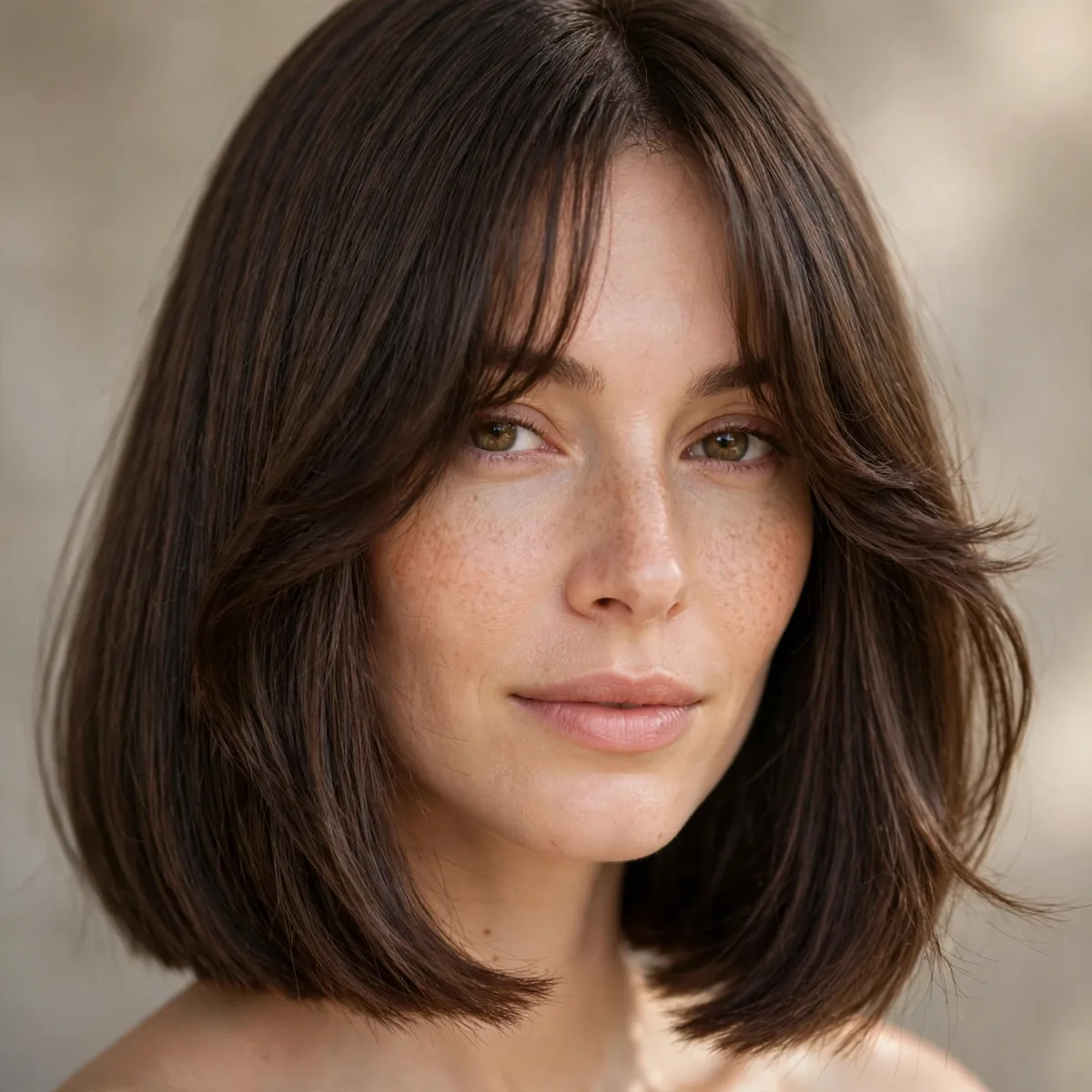
This pairs the polish of a blunt lob with the softness of curtain bangs — structure plus movement. The blunt base keeps thick hair looking expensive and intentional, while the curtain fringe breaks up the front and adds face-framing lightness. Flattering on oval, oblong, and heart-shaped faces.
Ask for a blunt collarbone-length base with the ends lightly texturized, plus curtain bangs starting at the cheekbones. Blow-dry the bangs with a round brush swept outward, and flat-iron the lengths straight. The contrast between the sharp base and soft front is what makes this cut special.
This combination flatters round and square faces in equal measure — the blunt base adds structure while the curtain fringe softens the perimeter. It is the most versatile cut in the roundup: polished enough for the office, relaxed enough for weekends. Thick hair holds both elements well, though the fringe needs a blow-dry to sit right. Schedule bang trims every six weeks and full cuts every ten; the two rhythms keep everything balanced.
Blow-dry the fringe with a round brush pulling outward on each side, then flat-iron the blunt base in thin sections for contrast. A flexible hairspray keeps the curtain pieces in place without stiffness. For a night-out refresh, add loose waves through the mid-lengths while keeping the fringe smooth — the mix of textures looks expensive. This pairing also transitions beautifully into holiday season, photographing well at parties and family gatherings alike.
Thick hair is not a problem to solve — it just needs the right architecture. Start with one of these weight-removing cuts, and browse our textured lobs for busy mornings for low-effort styling ideas, or see how bobs for fine hair use the opposite tricks to build volume.