Thick hair is beautiful — and heavy, hot, and exhausting to style. The right layers change everything.
Strategic layering removes weight from the inside of the haircut, where it does not show, while keeping the length and perimeter you love. The result: hair that moves, dries faster and actually holds a style.
The key word is strategic. Bad layers on thick hair create frizz and triangle shapes; good layers create lightness and flow. Your stylist should thin and layer with intention, not just hack away.
Here are 15 long layered cuts designed specifically for thick hair.
Long Layers with Interior Thinning
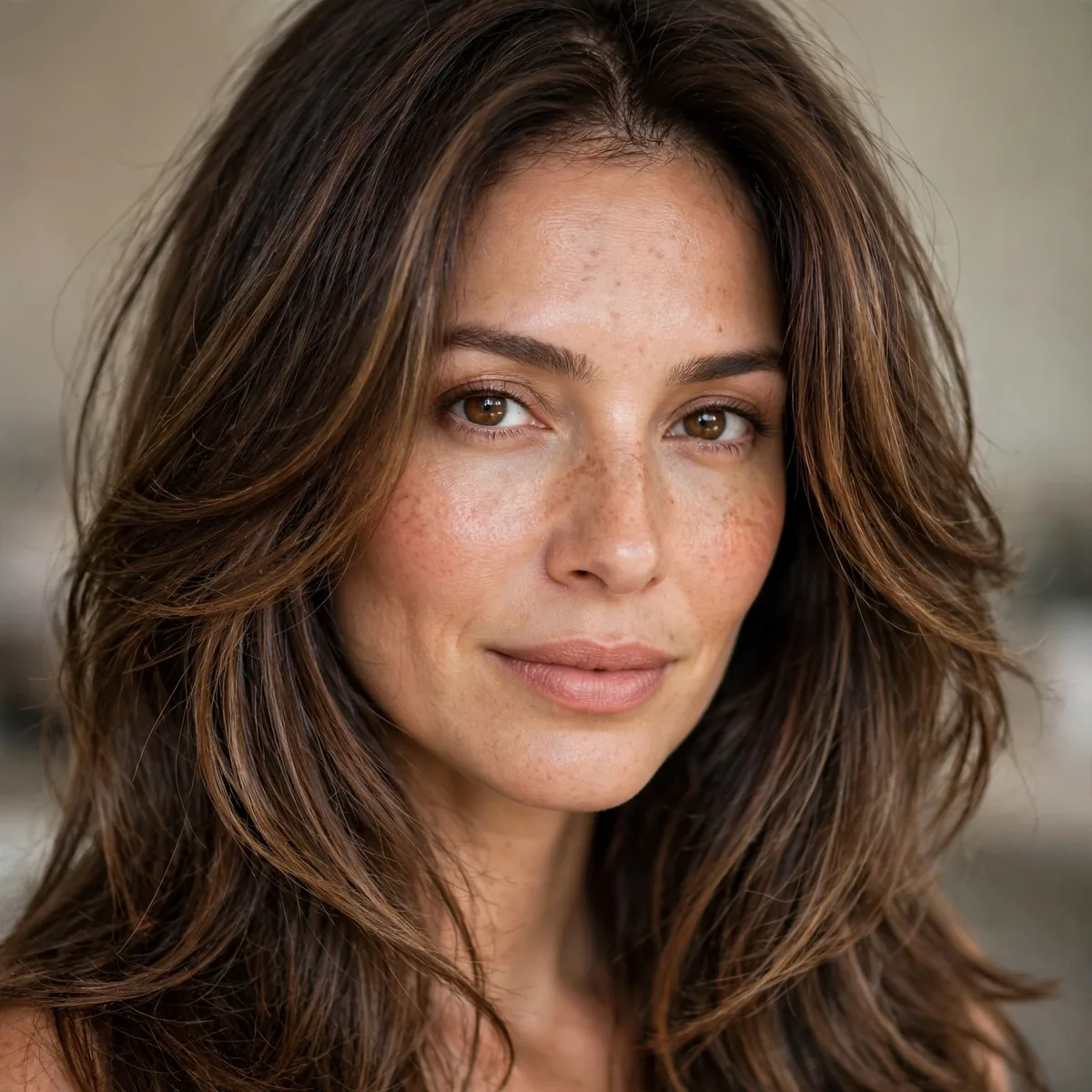
Layers hidden inside the haircut remove bulk where nobody sees it — the exterior stays long and sleek while the interior breathes. It is weight removal without visible layering.
Best for very thick, straight hair. Ask for interior thinning with shears rather than a razor, which can create frizz on thick hair.
Very thick, straight to wavy hair benefits most — the hidden thinning tames bulk without sacrificing the sleek exterior. Women whose ponytails feel like a workout will notice the difference immediately. It also suits those who love one-length looks but secretly battle heaviness. Ask your stylist to concentrate the thinning underneath, around the nape and behind the ears, where bulk collects invisibly.
Shears only — never let anyone razor-thin very thick hair, since razors encourage the frizz this cut is meant to prevent. Maintenance is light: the interior work grows out invisibly, so trims every ten to twelve weeks suffice. Between cuts, a smoothing serum on the mid-lengths keeps the exterior glassy while the interior stays light.
The Face-Framing Layer Cut
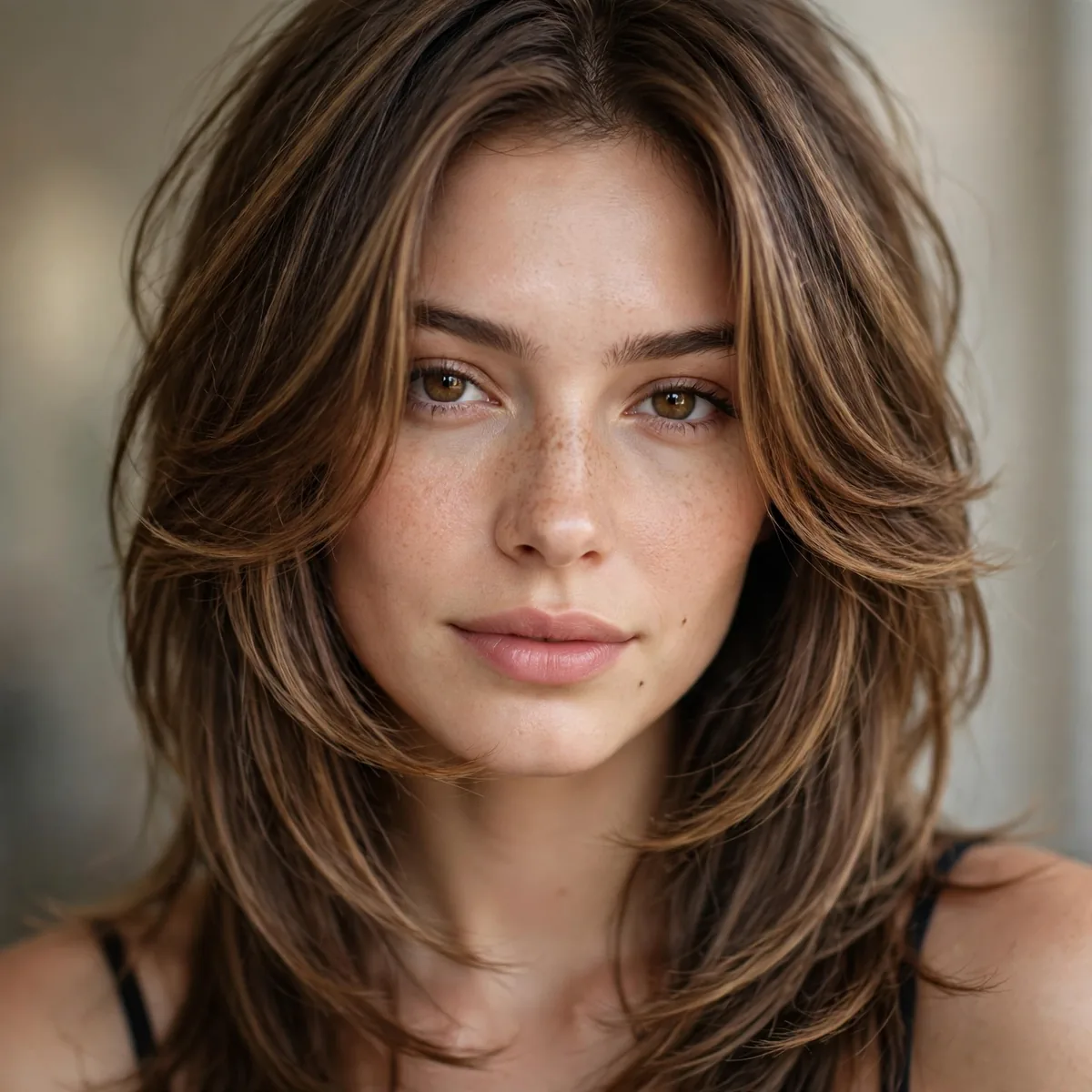
Long layers that start at the chin and frame the face — lightness where it matters most, around your features. The back keeps its full length and weight.
Best for all face shapes; the face-framing pieces can be customized. They also make ponytails and updos look softer and more romantic.
Oval faces can start the framing at the cheekbone; round faces should begin at the chin to keep the slimming effect. The pieces double as built-in styling for ponytails and topknots, softening what would otherwise look severe. Women with strong jawlines find the framing gentler than a full fringe. Blow-dry the pieces forward around a round brush, then flick them back for that effortless swoop.
Trim the face-framing pieces every six weeks — they are the first thing to look shaggy. For heatless styling, twist the damp front pieces away from your face and pin them until dry. If you wear your hair up often, keep two longer tendrils free; they turn a basic bun into something romantic in seconds.
V-Cut Layers
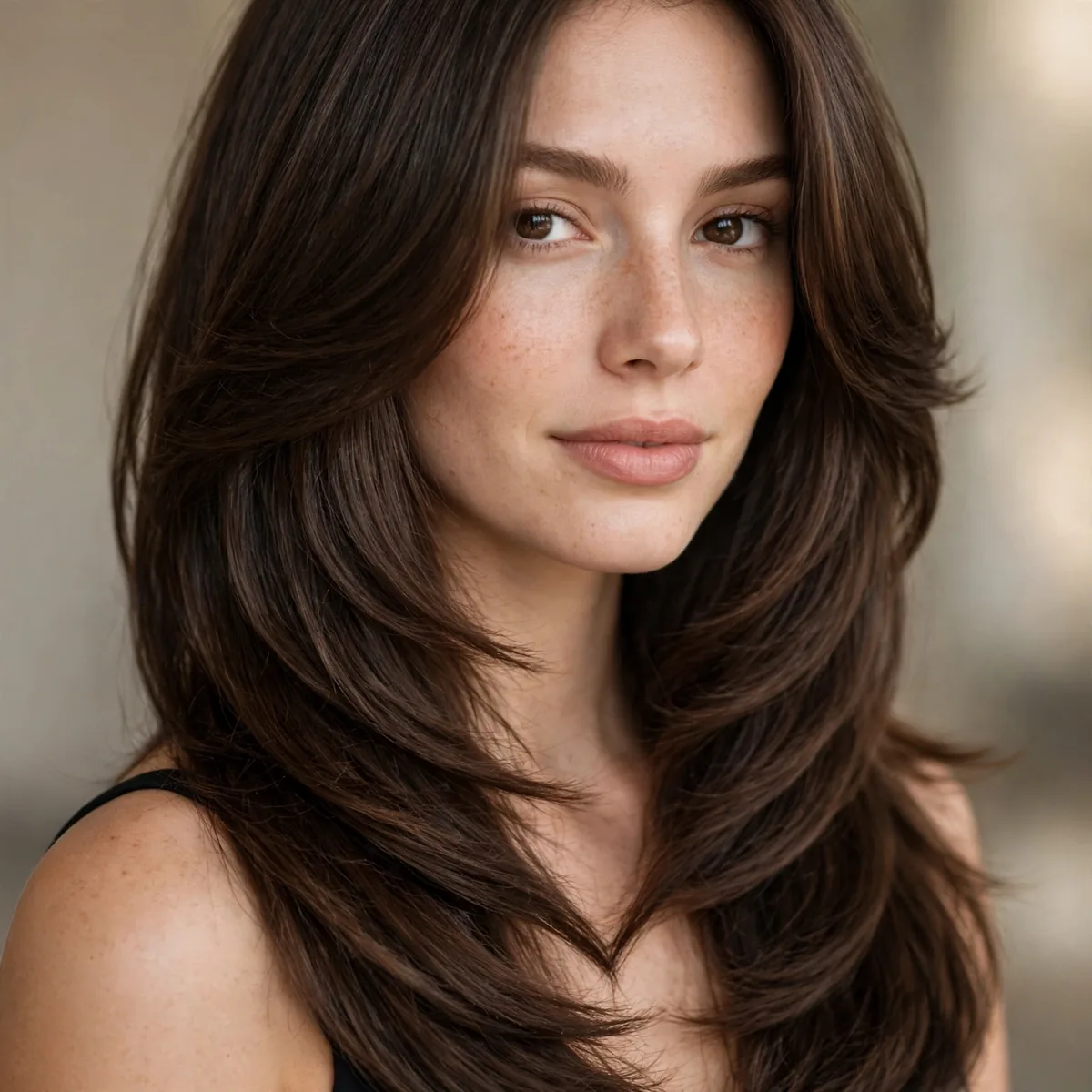
The perimeter tapers to a soft V at the back — dramatic, feminine and great for thick hair because the shape naturally removes weight from the sides.
Best for straight to wavy hair. The V shape shows off length beautifully and makes the hair look intentionally styled even air-dried.
Straight hair shows the V most dramatically — the pointed perimeter is pure geometry. Thick hair sheds side bulk naturally through the shape, which is why it flatters heavy densities. Long faces should keep the V shallow so it does not add more length visually. Pair it with a middle part to showcase the symmetry, or a deep side part when you want movement.
The V needs reshaping every eight to ten weeks or the point blunts into a U. When air-drying, smooth a leave-in cream through the ends to emphasize the taper. Braids look spectacular on a V-cut — the shape feeds the plait beautifully. Avoid blunt bangs with this cut; the strong perimeter plus a heavy fringe overwhelms most faces.
U-Cut Soft Layers
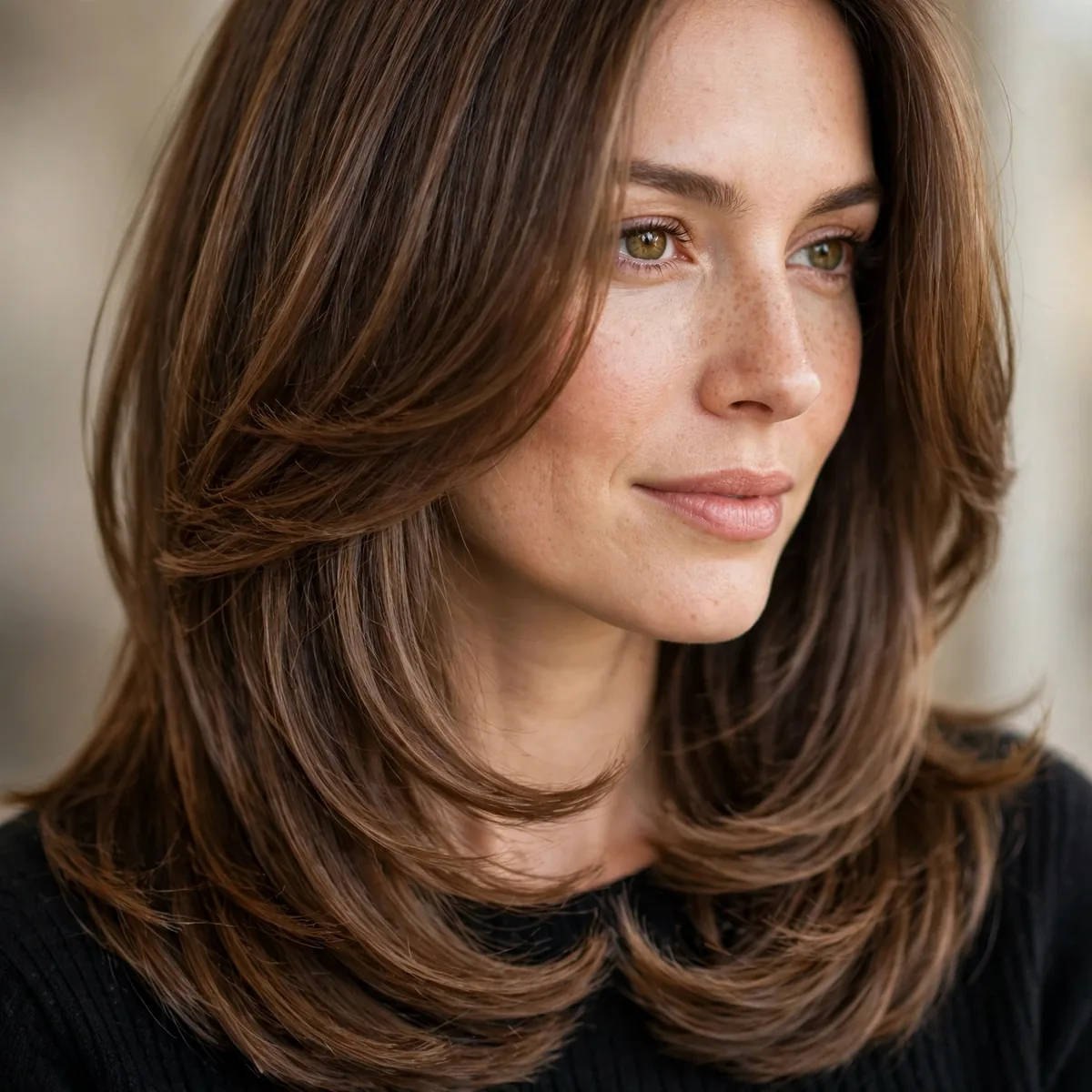
A gentle U shape at the back with soft layers throughout — the most universally flattering long cut for thick hair. The rounded perimeter keeps things feminine and full.
Best for wavy hair where the U shape enhances the natural movement. The soft layers prevent the heaviness that plagues one-length thick hair.
Wavy and curly textures love the U — the rounded perimeter lets the pattern bounce evenly instead of stacking at the bottom. It is the safest long cut for thick hair, flattering every face shape without drama. Women who find V-cuts too severe get softness here. The fullness at the ends also photographs beautifully, giving that coveted thick-ends look in pictures.
Refresh the U every ten weeks; the curve grows out kindly, so there is no urgency. Scrunch a curl-enhancing cream into damp ends and diffuse for definition. For extra polish, curl just the bottom three inches away from the face with a large iron — it accentuates the rounded shape. A shine mist over the finished style makes the fullness gleam.
The Butterfly Cut
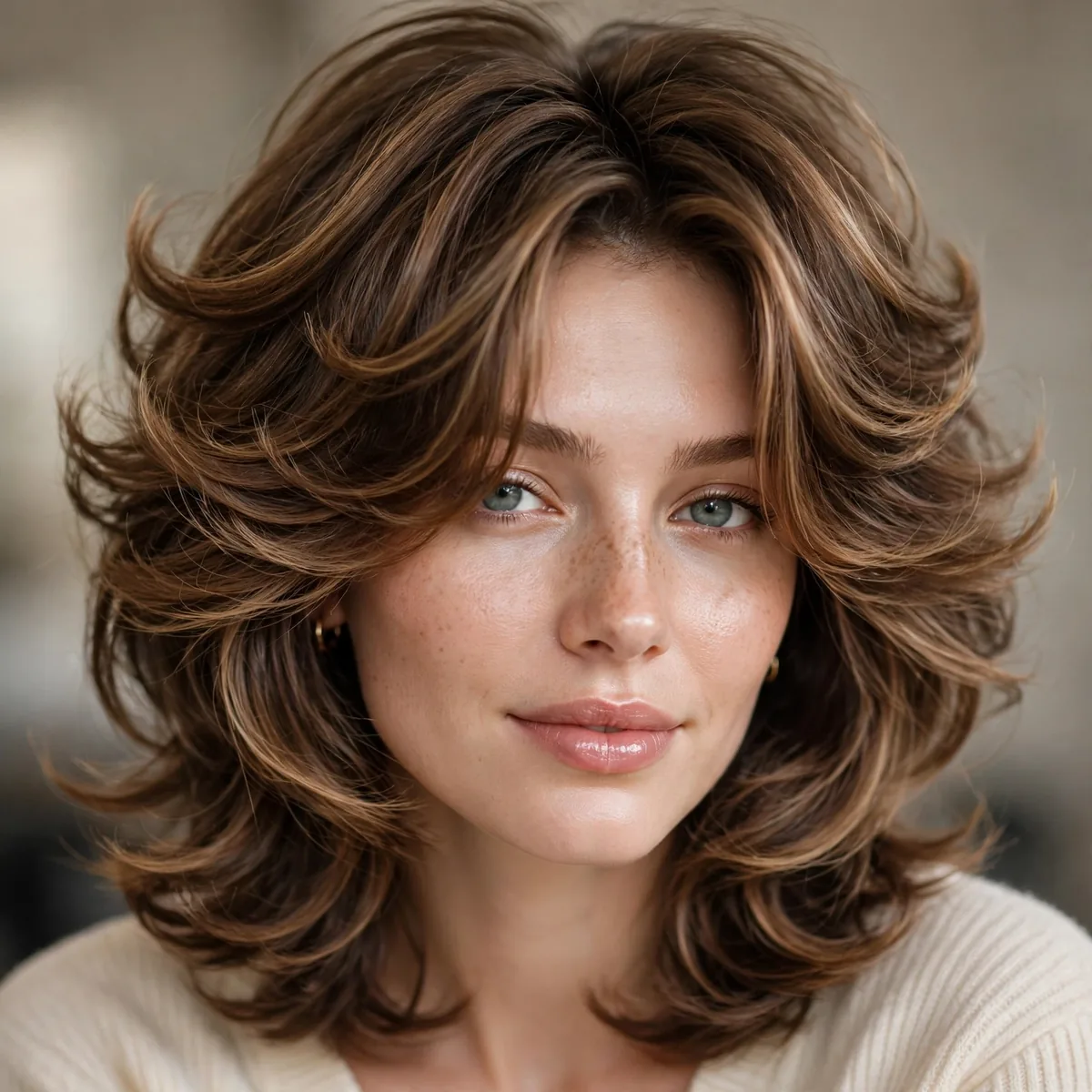
Short, bouncy layers on top with long length underneath — the viral cut that gives thick hair incredible movement. The top layers create volume while the length keeps the drama.
Best for thick hair with some wave. For the full breakdown, our butterfly haircut guide covers every variation.
Thick, wavy hair is the ideal candidate — the short top layers need texture to sit properly, and straight fine hair can look disconnected. Oval and heart faces glow under the bouncy crown layers. The cut photographs with incredible movement, which is half its viral appeal. Women who want drama without losing length get exactly that: the silhouette changes completely while the ends stay long.
Style the top layers with a round brush for the signature bounce, letting the length fall straight beneath. The disconnect between layers needs blending every eight weeks or it starts looking like two haircuts. A texturizing spray on the shorter layers adds the piece-y separation that defines the style. For evenings, flip the top layers outward for extra volume.
Long Shaggy Layers
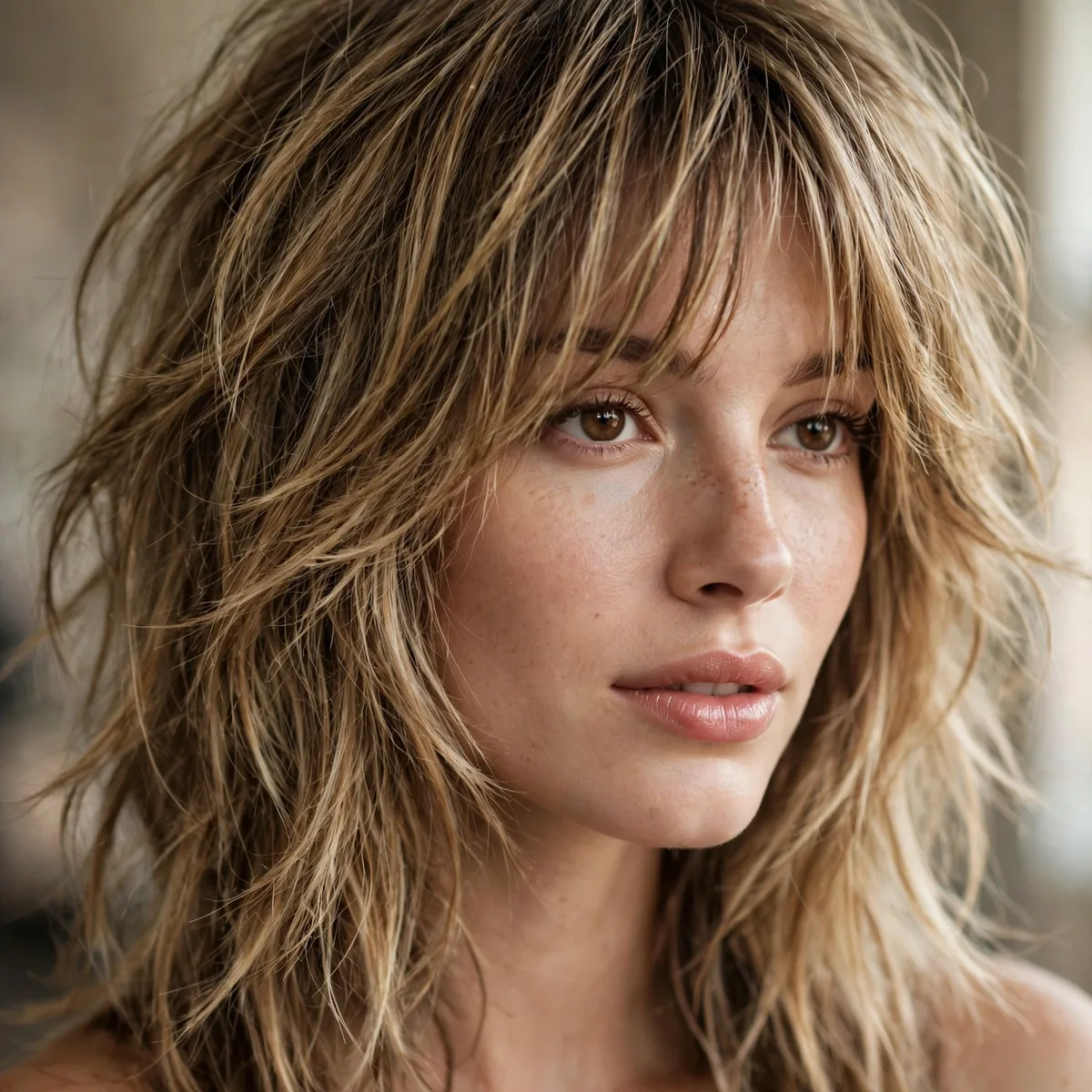
Shag-inspired layers through long thick hair — texture, movement and edge. The layers break up the heaviness that makes thick hair hang like a curtain.
Best for wavy thick hair. The shaggy texture thrives on air-drying with a little product scrunched in.
Wavy, coarse hair carries the shag best — the texture does half the styling work. Square faces soften under the choppy perimeter, while the layers prevent the dreaded curtain effect thick hair suffers. It suits bold personalities who dress with edge. In humid climates the shag actually improves, since moisture amplifies the piece-y separation. Straight-haired women need significant texturizing to fake the same effect.
Air-dry with a salt spray scrunched in — heat styling defeats the purpose. Trims every eight weeks keep the shag intentional; grown-out shags drift toward mullet territory. Refresh second-day texture with dry shampoo at the roots and a water mist on the ends. For a softer take, ask for the layers to start at the chin rather than the cheekbone.
The Waterfall Layer Cut
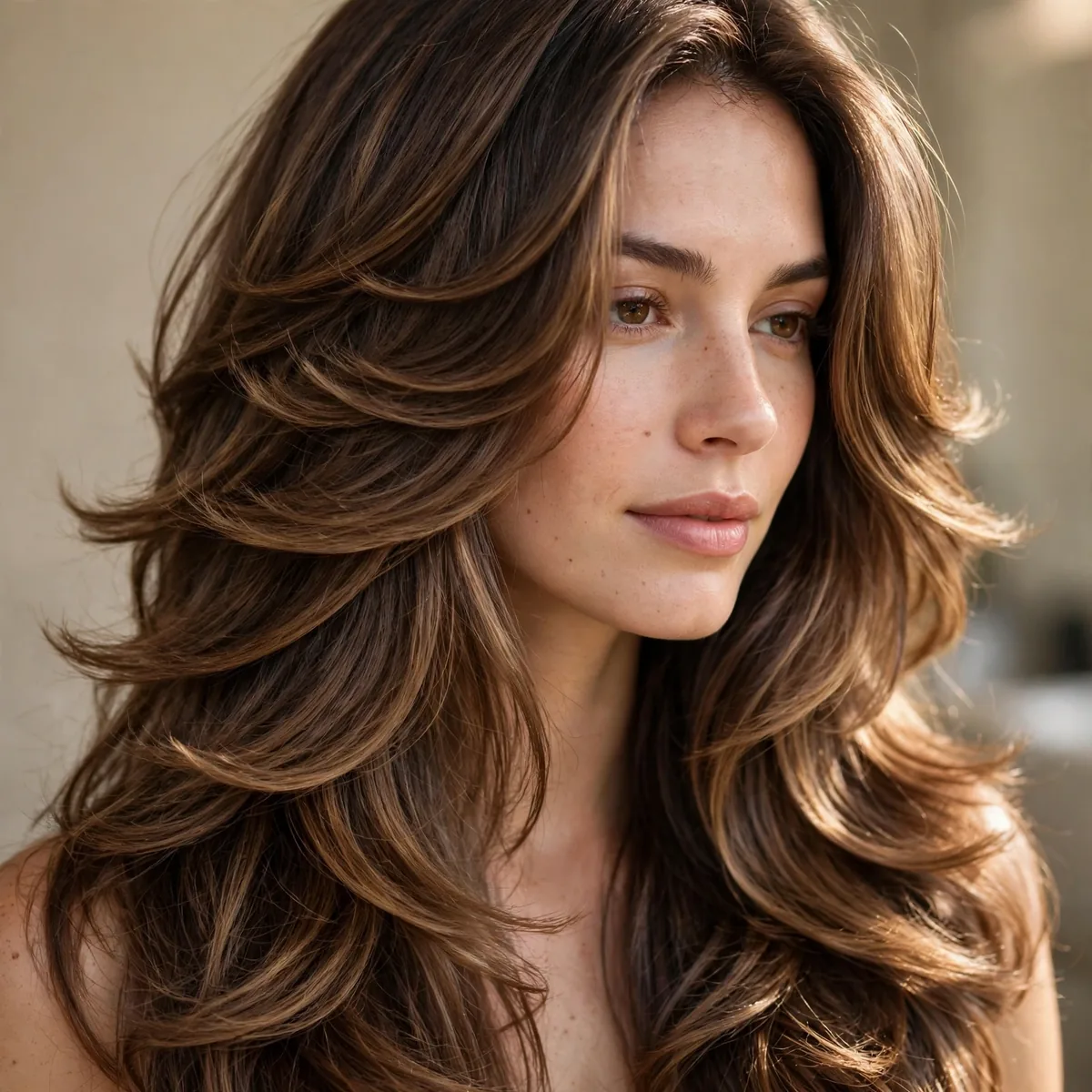
Cascading layers that fall like a waterfall — each layer slightly shorter than the last, creating beautiful downward flow. The graduation removes weight progressively.
Best for straight thick hair where the cascading effect is most visible. The layers catch light differently at each level, creating natural dimension.
Straight, thick hair displays the cascade best — each level catches light differently, creating natural dimension without color. Long faces should keep the shortest layer at the chin to avoid over-elongating. The graduation flatters women who want visible layering rather than hidden thinning. It moves beautifully in wind and photographs with a liquid quality that one-length hair never achieves.
Blow-dry with a paddle brush, working in horizontal sections to emphasize the waterfall effect. The cascading layers need reshaping every eight weeks or the steps grow blunt. A glossing treatment amplifies the light-play between layers. For special occasions, curl alternate layers in opposite directions — the contrast makes the cascade look almost sculptural.
Curtain Bangs with Long Layers
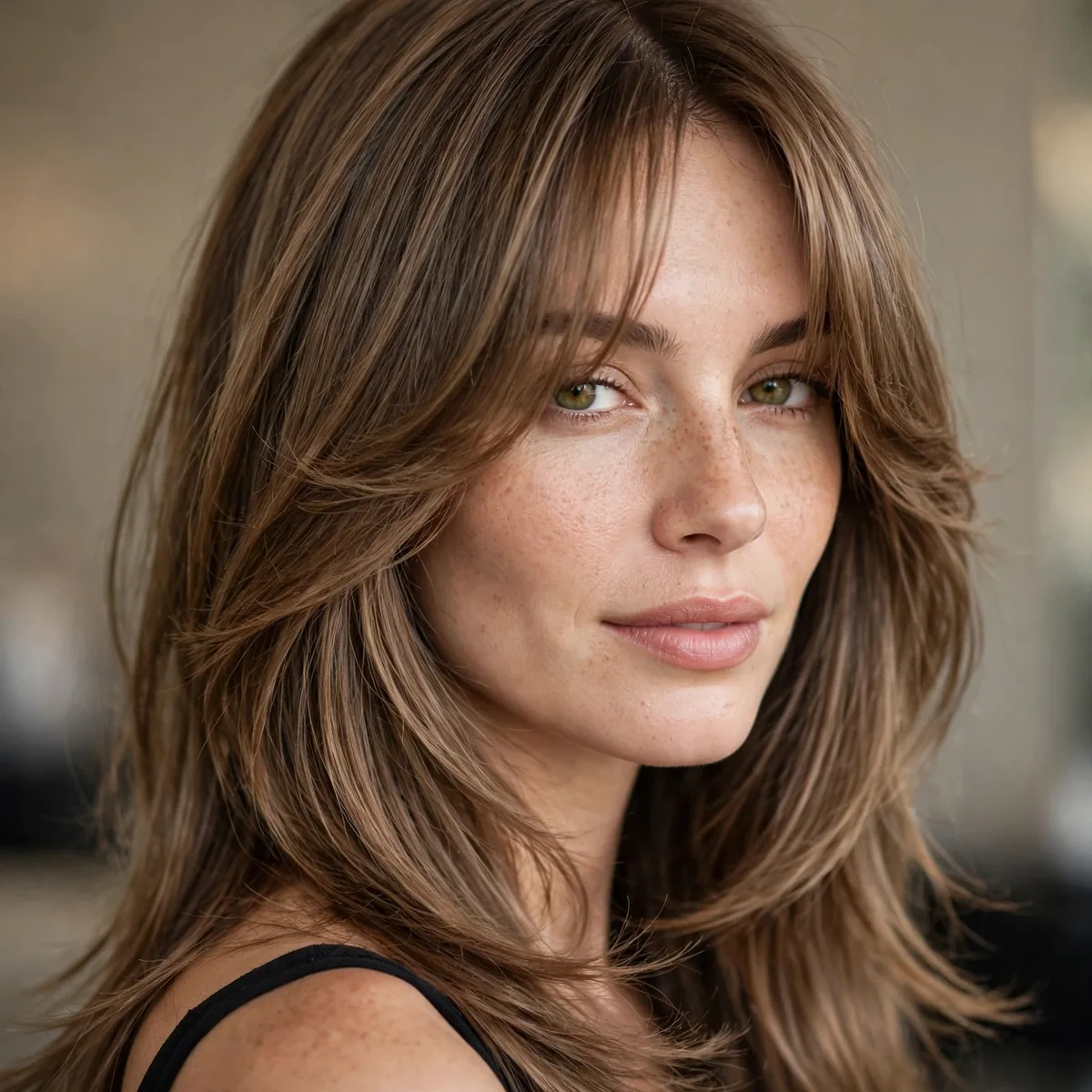
A parted curtain fringe with long flowing layers — the bangs add interest around the face while the layers keep the length manageable. It is the complete package.
Best for oval and long faces. The curtain bangs grow out seamlessly into the face-framing layers.
Oval and long faces wear curtain bangs best — the parted fringe shortens a long forehead visually. Thick hair supports the fringe without it looking sparse, a common problem on fine hair. The bangs grow out seamlessly into face-framing layers, making this the lowest-commitment fringe. Women on the fence about bangs should start here; it is the easiest to reverse.
Style the fringe with a round brush, sweeping each side away from the center part. Between trims — every four to six weeks — train them with Velcro rollers while damp. Dry shampoo along the part keeps the fringe from clumping. If the bangs annoy you on workout days, they pin back invisibly, unlike blunt fringes.
The Thinned-Out Lob
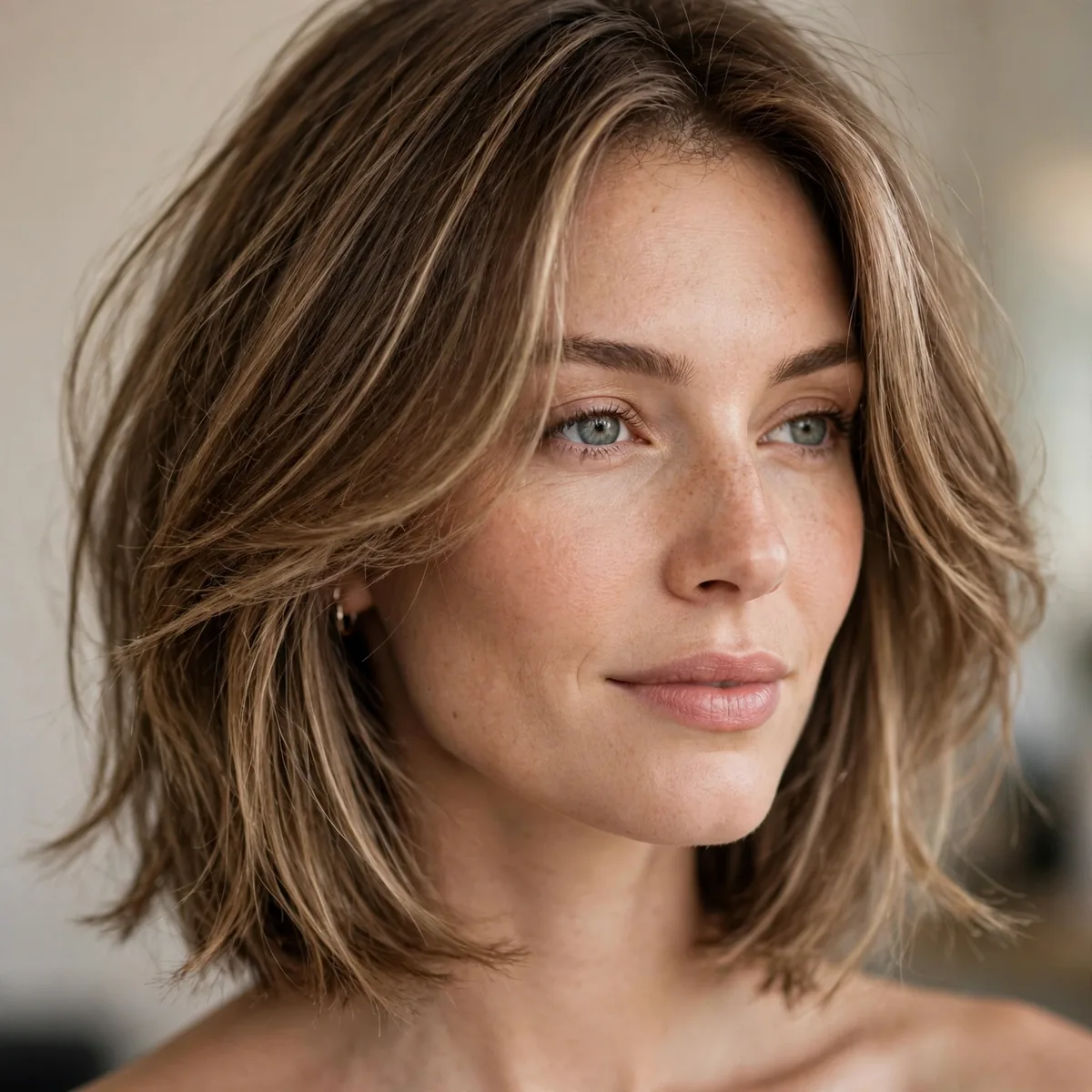
Collarbone length with serious interior thinning — for thick-haired women ready to lose some length along with the weight. It dries in half the time.
Best for those wanting a real change. The shorter length plus thinning means dramatically faster styling.
Thick-haired women craving a real change get the biggest payoff — the shorter length plus interior thinning cuts drying time dramatically. Oval and square faces suit the collarbone length well. It is ideal before summer, when heavy long hair becomes a burden. The cut also transitions beautifully into a bob later if you decide to go shorter still.
Wash-and-go becomes realistic again: the reduced weight means air-drying actually works. Trim every seven to eight weeks to maintain the thinned shape. A leave-in conditioner keeps the thinned ends from feeling wispy. For volume, blow-dry upside down with a volumizing mousse — the thinning lets the roots lift in a way heavy long hair never allows.
Long Layers with Balayage
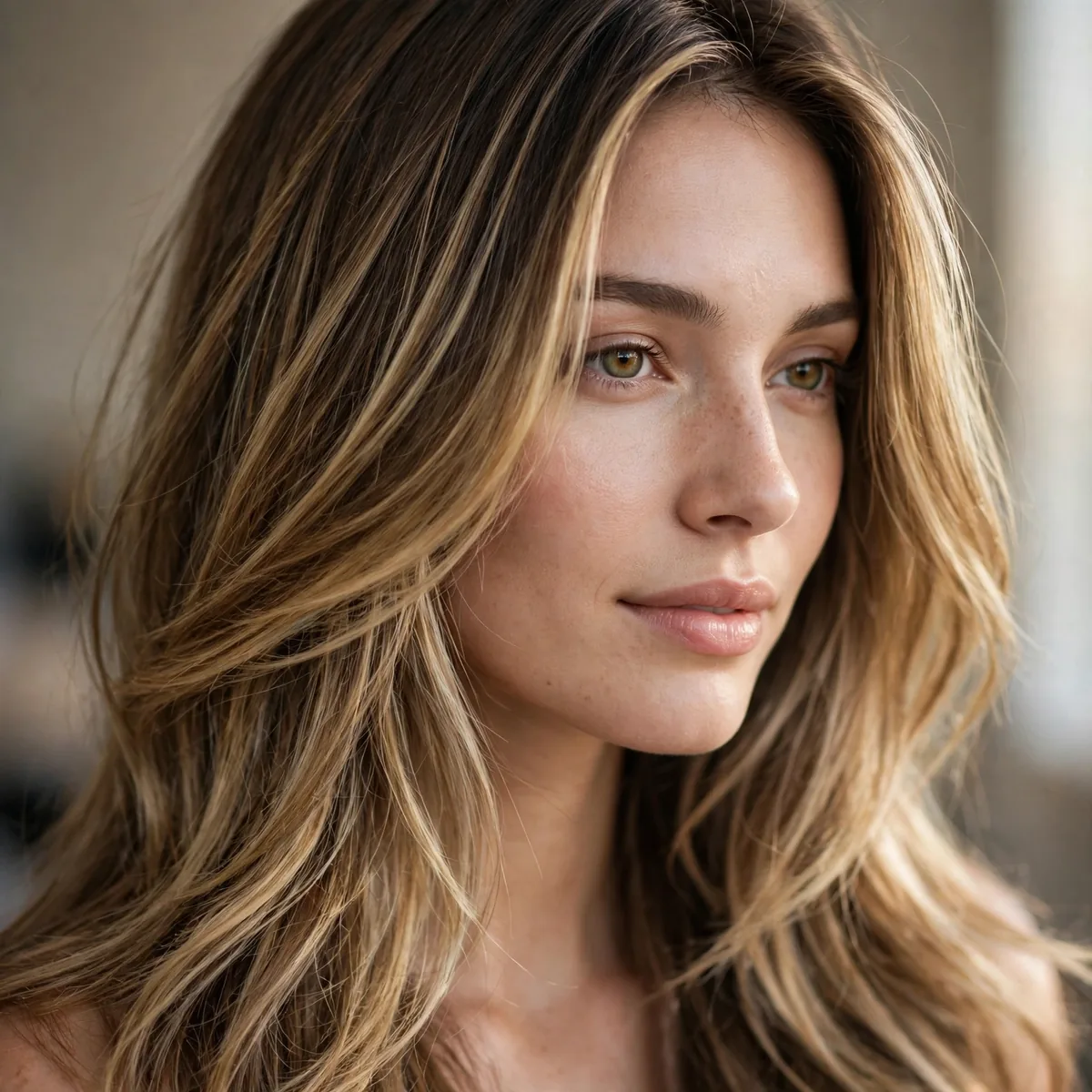
Hand-painted balayage woven through long layers — the color follows the layering, emphasizing every level and making thick hair look dimensional rather than heavy.
The dimension breaks up the solid mass of thick hair visually. Ask for the balayage to concentrate on the mid-lengths and ends where the layers live.
Thick hair with any wave pattern shows balayage best — the layers give the color places to live. Warm skin tones glow with caramel and honey ribbons; cool tones suit ash and mushroom blends. The dimension visually breaks up density, making hair look lighter than it is. It is the rare color service that actually makes thick hair more manageable-looking.
Protect the investment: sulfate-free shampoo and a weekly color mask keep the balayage luminous. Toner refreshes every eight weeks prevent brassiness. The grow-out is graceful by design, so touch-ups stretch to three or four months. Always use heat protectant — lightened ends are more fragile, and thick hair needs more heat to style.
The Bouncy Layered Blowout Cut
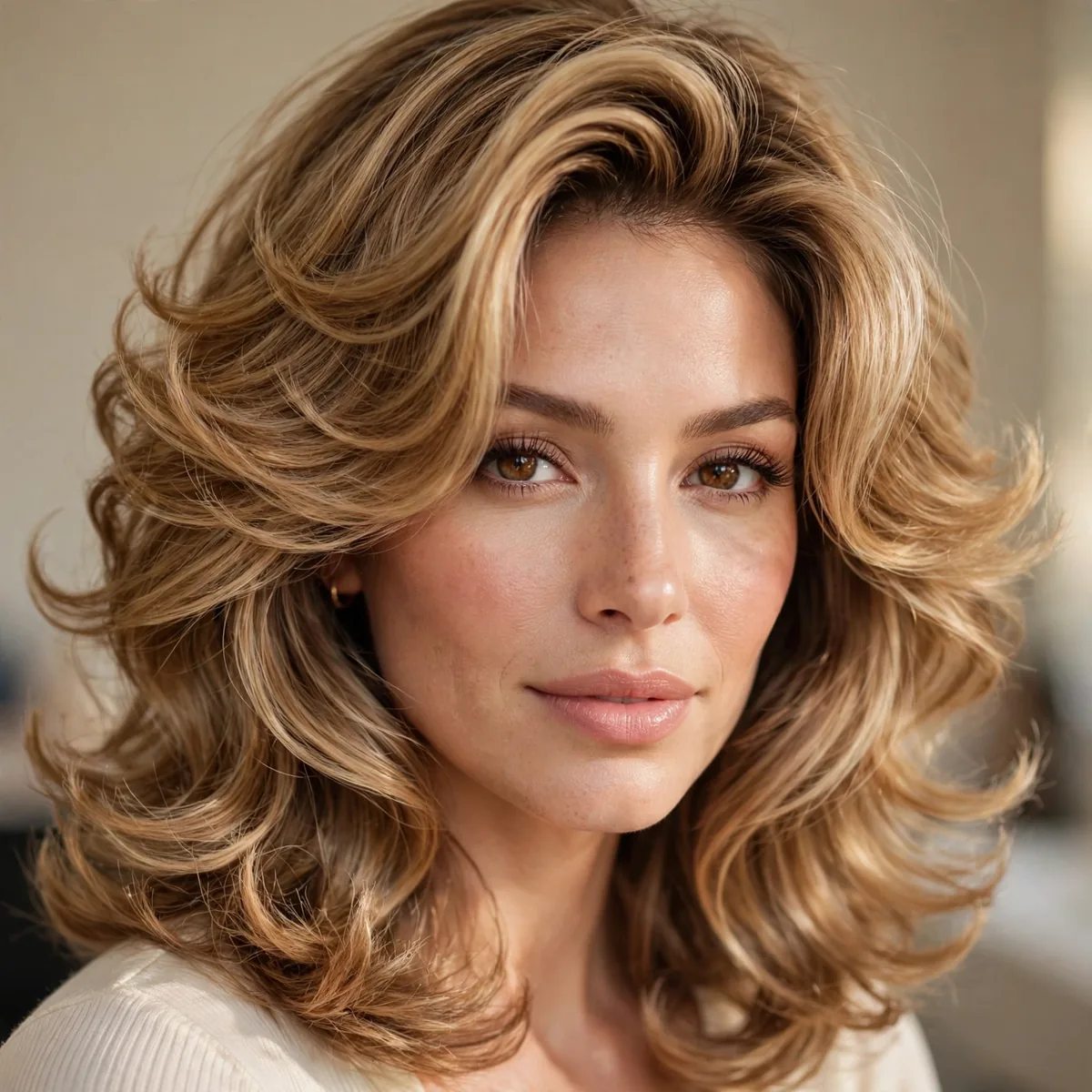
Cut specifically for the bouncy blowout — layers engineered to flip, swing and hold curl. Thick hair holds a blowout beautifully once the weight is managed.
A round brush and fifteen minutes give you salon hair. The layers are cut to cooperate with the brush, flipping exactly where they should.
Thick hair holds a blowout longer than fine hair — the weight that plagues you becomes an asset once styled. Medium to long lengths give the layers room to flip. It suits women who love the salon look enough to recreate it. The cut also photographs with enviable bounce, making it a favorite before events. Invest in a quality round brush; cheap ones snag thick hair mercilessly.
Section hair into four quadrants and dry each with the round brush, rolling the ends under. A cool-shot blast on each section locks the flip in place. Velcro rollers at the crown while you do makeup add staying power. Finish with a flexible hairspray — strong-hold formulas make thick blowouts look helmet-like instead of touchable.
Textured Ends Long Cut
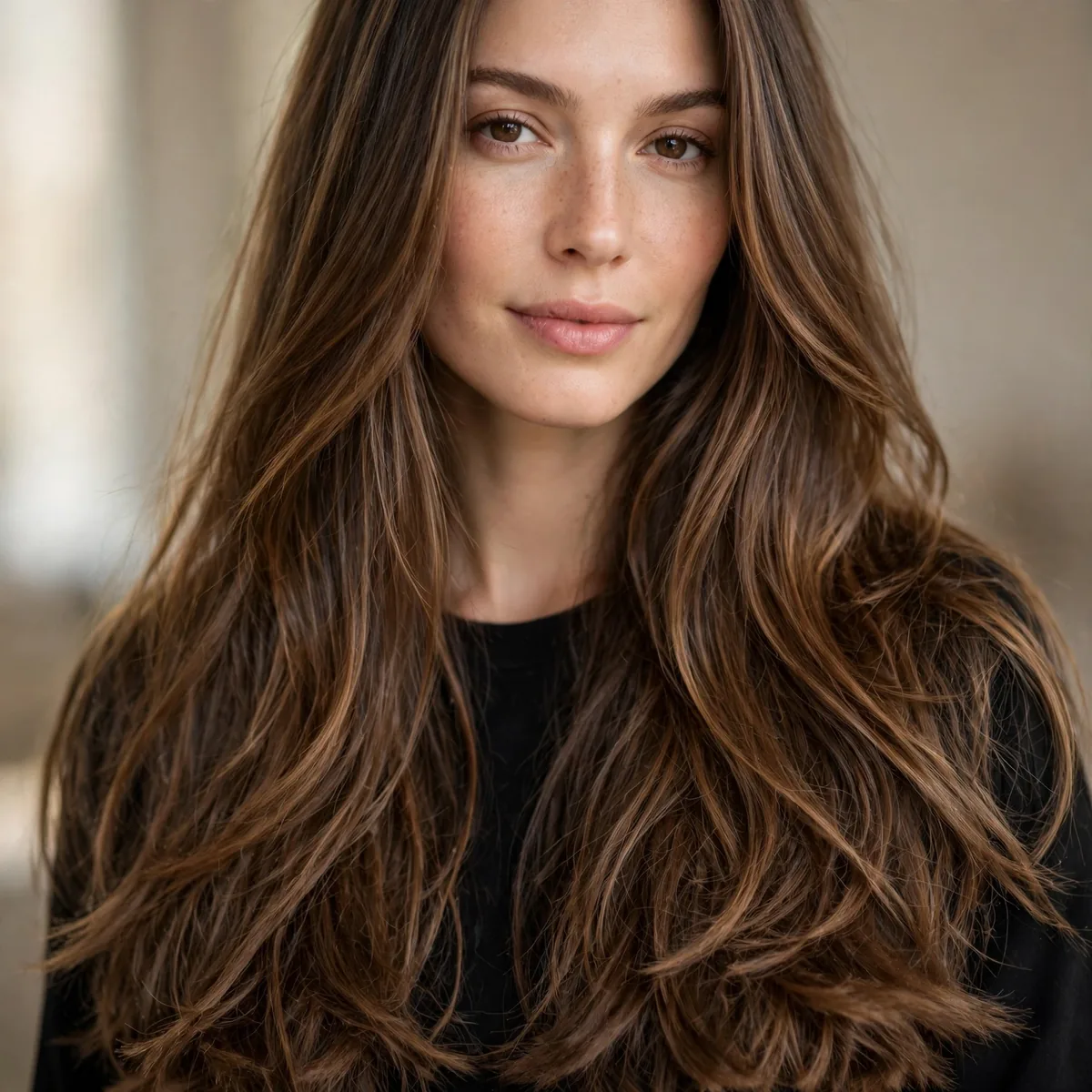
Mostly one length with heavily textured ends — for thick-haired women who fear layers. The textured ends remove weight and add movement without visible layering.
Best for layer-phobes. You keep the solid perimeter you love while the texturized ends prevent the heaviness.
Women who love their length but hate the heaviness — the classic layer-phobe — finally get relief. Thick, straight hair shows the textured ends best, since the separation is visible. The solid perimeter stays reassuringly intact. It also suits those growing out layers who want to keep the bottom full. The effect is subtle from the front, transformative from the side.
Point-cutting needs refreshing every eight weeks or the ends revert to blunt heaviness. A texturizing cream on dry ends enhances the separation. Avoid heavy oils near the ends — they glue the texture together. For extra movement, ask for the texturizing to extend two inches higher at your next appointment; it is easy to increase gradually.
The Long Wolf Cut
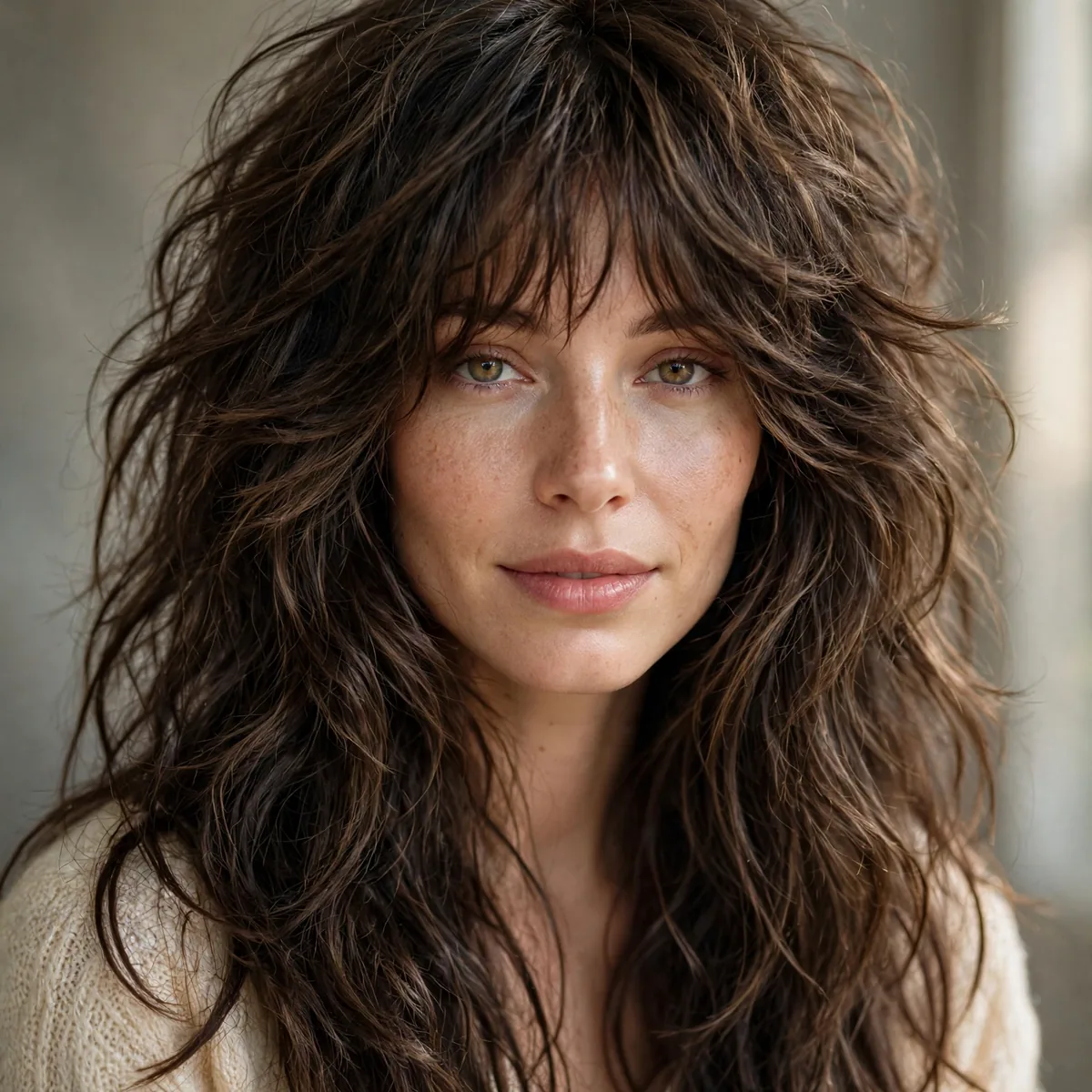
Dramatic short layers on top melting into long length — the wolf’s boldest long variation. On thick hair, the heavy top layering removes serious weight.
Best for thick, wavy hair and bold personalities. Our wolf cut guide has more wild variations.
Thick, wavy hair with natural grit carries the wolf best — the style needs texture to avoid looking like a bad layering job. Bold personalities who enjoy standing out will thrive. Oval faces handle the dramatic top layers well. It is a high-impact choice for women bored with safe hair. In the right hands it looks editorial; in the wrong hands, choppy — choose your stylist carefully.
Style with a diffuser and texturizing spray for the wild, piece-y finish. Trims every six to eight weeks keep the short crown layers from growing into the length. Refresh with dry shampoo and a scrunch — the wolf improves with lived-in texture. For tamer days, smooth the top layers with a flat iron while leaving the ends wavy.
Layered Cut for Updos
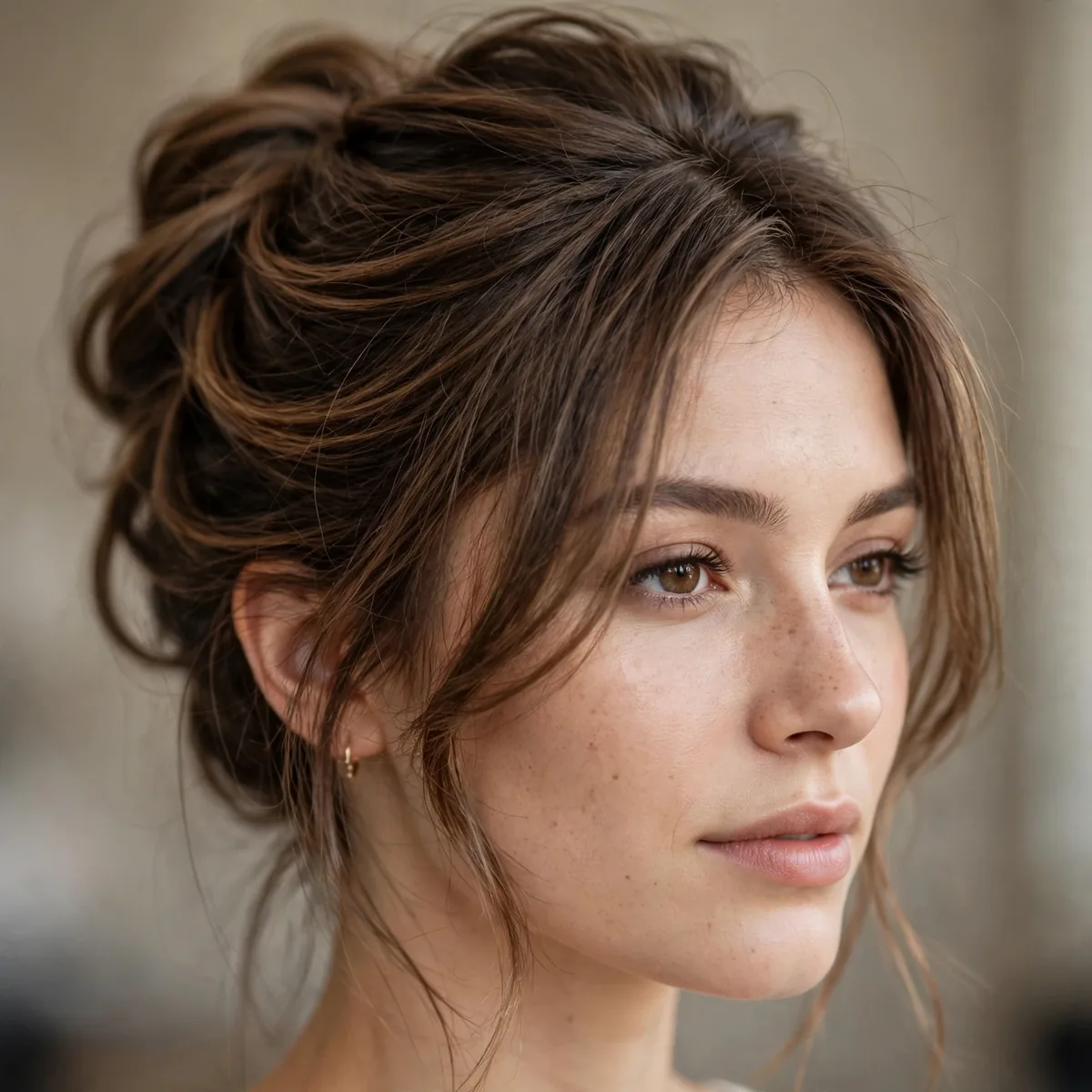
Layers cut to make updos easier — shorter face-framing pieces that soften buns and ponytails, interior thinning that makes hair actually stay in pins. Thick hair finally cooperates.
Mention your updo habits at the consultation. The right layers mean bobby pins finally hold instead of sliding out.
Brides, dancers and anyone who lives in updos — this cut is engineered for you. The face-framing pieces soften buns, chignons and ponytails automatically. Interior thinning means pins actually grip instead of sliding out of dense hair. Thick hair that once fought every updo finally cooperates. Mention your three most-worn styles at the consultation so the layers land exactly where you need them.
Keep bobby pins in the shorter front pieces' reach — they are designed to be styled, not hidden. A light-hold spray secures updos without stiffness. Trim the framing pieces every six weeks so they stay at flattering lengths. For sleek buns, smooth the thinned lengths with serum first; the reduced bulk makes polished styles dramatically easier.
The Light-as-Air Long Cut
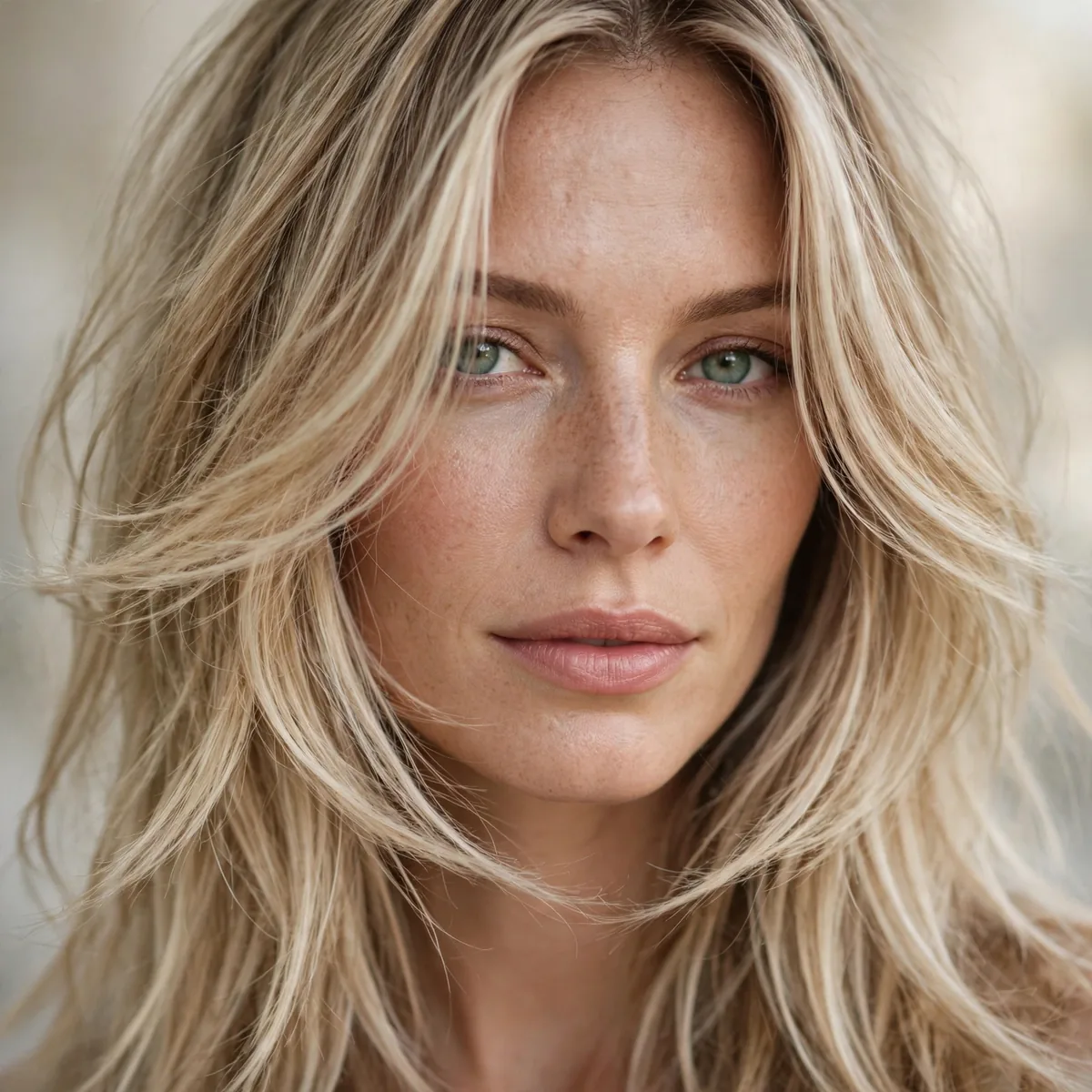
Maximum weight removal with length intact — aggressive interior thinning, long layers, textured ends. The works. Your neck will thank you.
Best for extremely thick, heavy hair. Be honest with your stylist about how much weight bothers you; they can only thin as much as you allow.
Extremely thick, heavy hair — the kind that gives you neckaches — is the true audience. Coarse textures handle aggressive thinning without looking sparse. Women who love length but dread wash day get their life back. The cut also suits athletes, since lighter hair stays put in ponytails better. Be honest at the consultation about how much weight bothers you; stylists can only thin as far as you permit.
Deep-condition weekly, since heavily thinned ends can feel dry. A leave-in cream on the mid-lengths keeps the thinned sections silky. Trims every ten to twelve weeks are enough — the interior work grows out invisibly. Between cuts, a smoothing serum tames any frizz the thinning exposes. The lightness lasts; enjoy hair that finally moves when you do.
Thick hair does not have to be heavy hair. The right layers give you the best of both worlds: the length you love and the lightness you crave. For more thick-hair strategies, see our long bobs for thick hair and butterfly cuts.