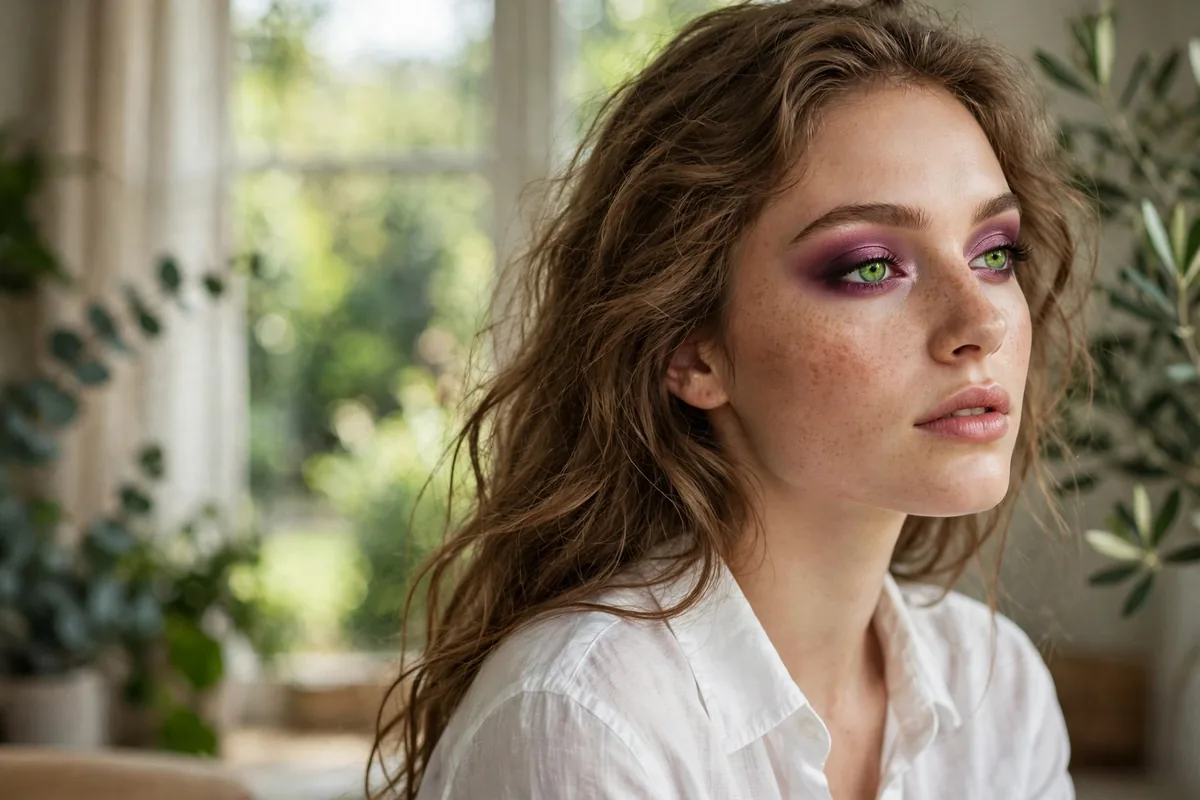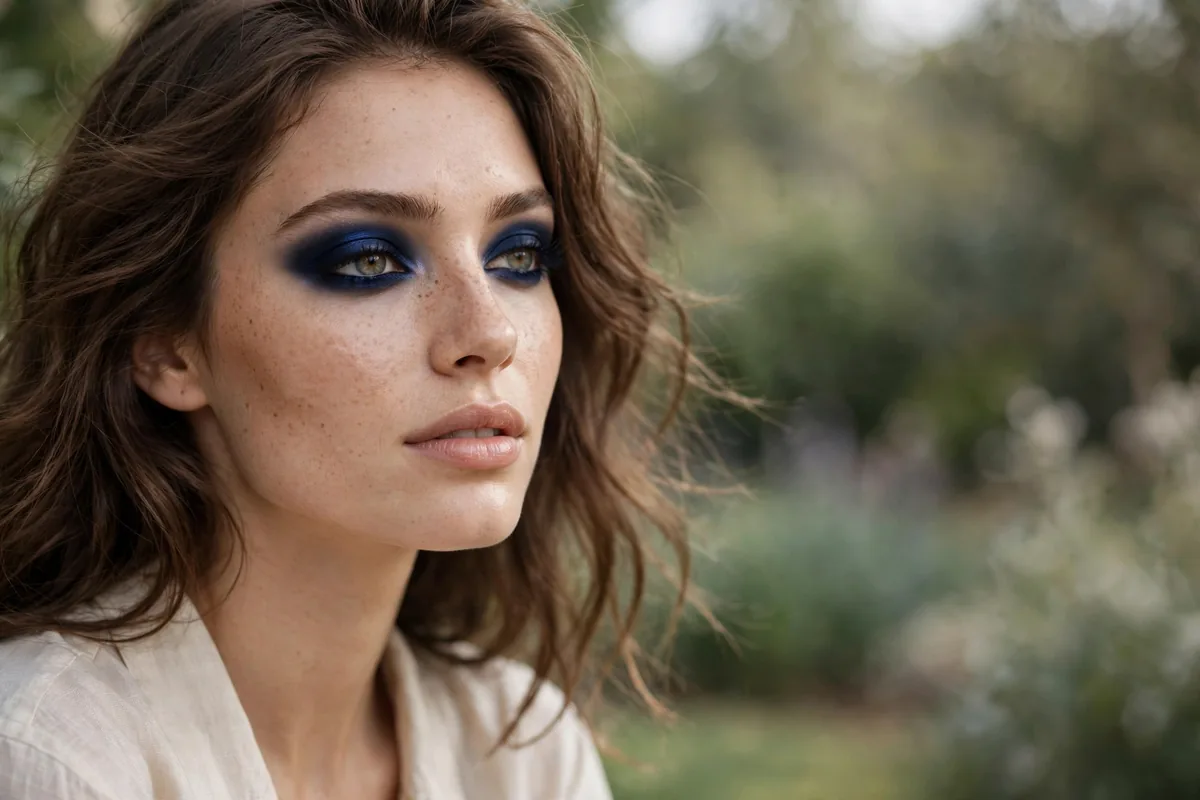
Black eyeshadow can be harsh. Navy does the same job, better.
Navy gives you depth, definition, and drama — but the blue undertone keeps it from reading severe. It’s especially flattering on brown eyes, where the contrast makes both the blue and the brown look richer.
It’s also the most forgiving dark shade to blend. Black shows every mistake; navy melts into skin more gracefully.
Here are 20 ways to wear it. Let’s get into it.
Classic Navy Smokey
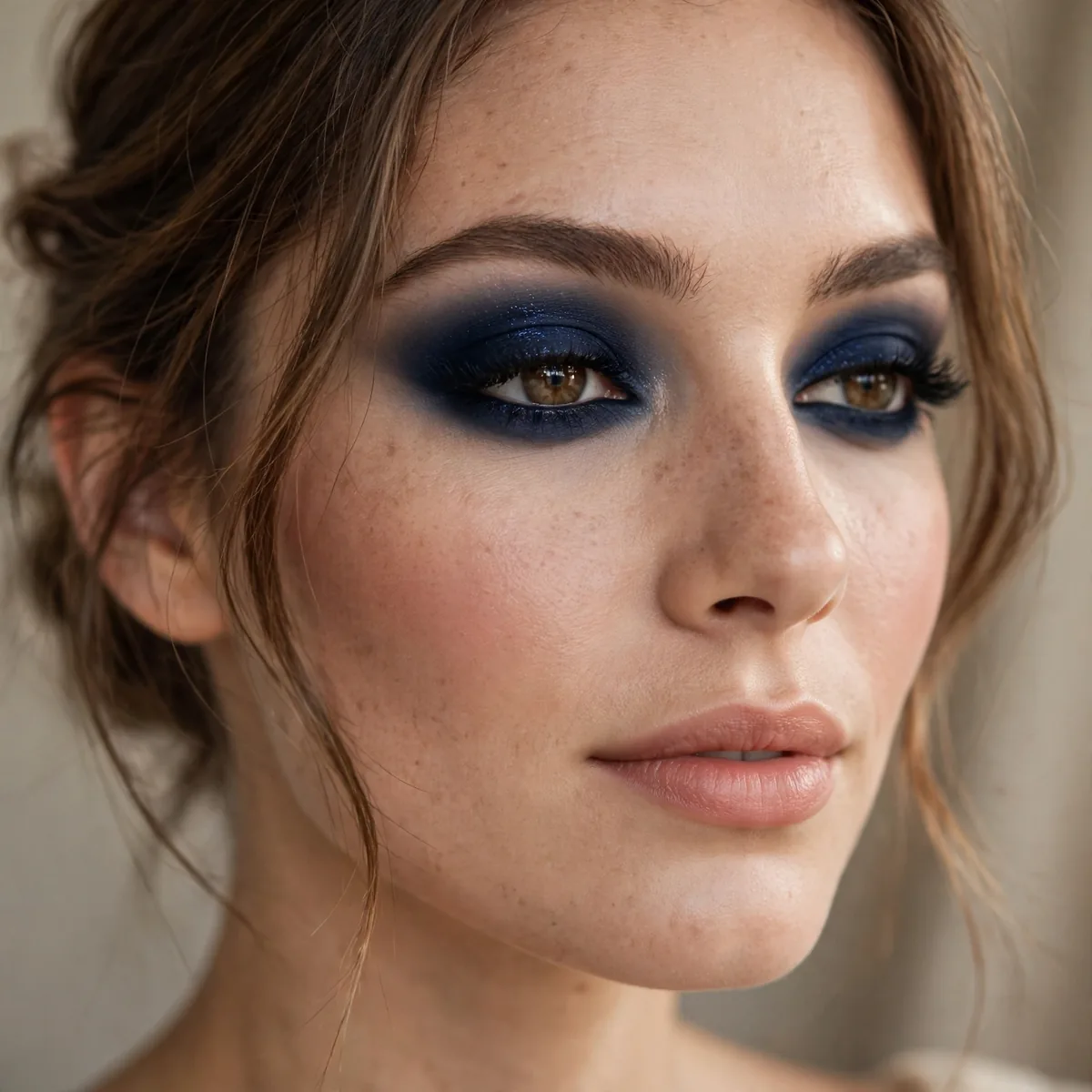
The navy smokey is the evening look that works on everyone. Deep, sultry, and softer than its black cousin.
Build from a medium blue base up to midnight in the outer corner — layers create the dimension.
For a truly seamless blend, start with an eyeshadow primer to grip the pigment — navy can go patchy on bare lids. Work in sheer layers with a fluffy blending brush, using small windshield-wiper motions through the crease. Deepen the outer third and lower lash line last for that classic V shape. Curl lashes and add two coats of mascara so the eye doesn’t get lost under the color.
This is a cocktail-hour and date-night staple, especially in fall and winter when jewel tones feel right. Deep navy flatters warm undertones beautifully, and it makes brown and hazel eyes glow by contrast. For all-night wear, set the lid with a translucent powder before layering shadow, and tuck a navy pencil in your bag for touch-ups. Pair with a nude satin lip so the eyes carry the whole look.
Navy Winged Shadow
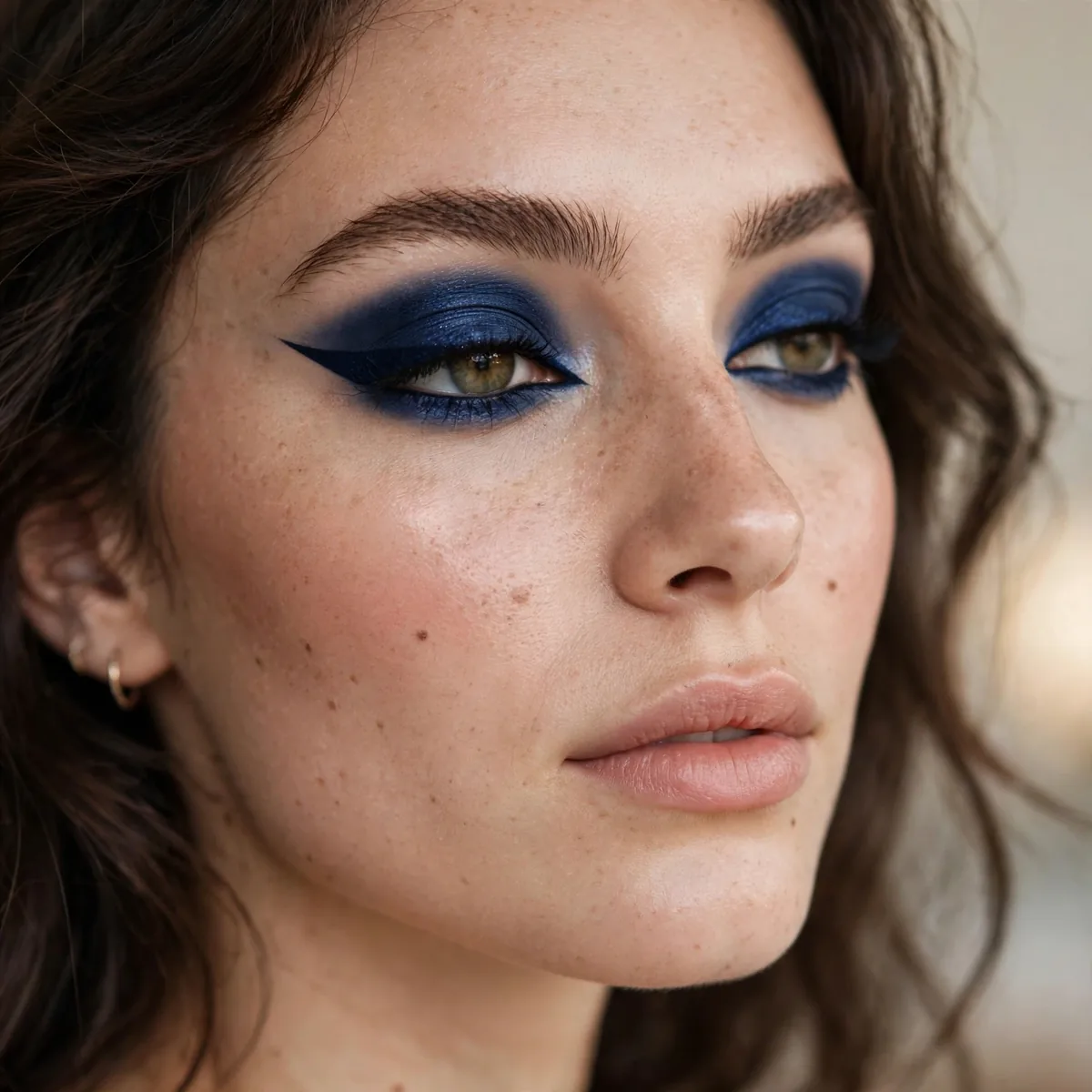
Wing out navy shadow for liner with a twist. Graphic but not severe.
A small angled brush and a steady hand — or cheat with tape for a crisp edge.
Shadow-as-liner needs a slightly damp brush to pack on true color — spritz your angled brush with setting spray first. Draw the wing from the outer corner upward, following the angle of your lower lash line as a guide. Build in short strokes rather than one sweeping line, which keeps both sides even. A small concealer brush cleaned along the lower edge sharpens the shape without starting over.
Navy wings suit hooded and almond eyes especially well because the softer color forgives a thicker line. Wear it sheer and thin for the office, then deepen the flick and add mascara for evening — the same base carries both. Cool undertones get the most out of navy’s blue base, while warm skin should choose a navy with a touch of violet. Skip heavy foundation; a light skin tint keeps the graphic eye modern.
Midnight Blue Wash
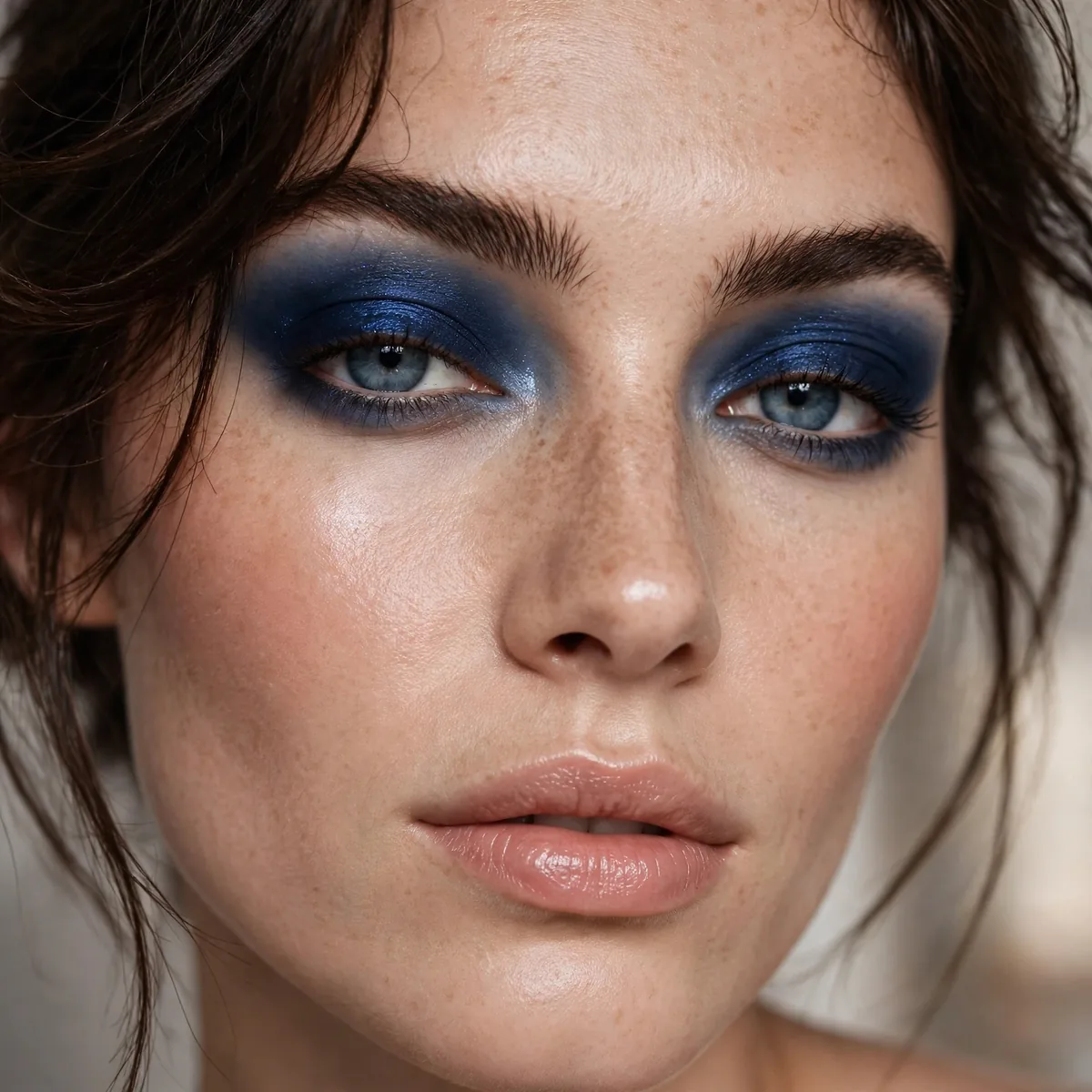
One midnight shade sheer across the lid. Moody, modern, minimal.
Sheer it out well — a heavy wash of dark blue can read bruised instead of chic.
The secret is buffing — sweep the shade across the lid with a clean, fluffy brush until the edges disappear completely. A cream-to-powder formula sheered out with a fingertip gives the most skin-like finish. Keep the color concentrated at the lash line and diffuse upward so it fades like dusk rather than sitting flat. A wash should look like a filter, not a lid of paint.
This minimalist wash shines at gallery openings and creative workplaces where a full smokey feels like too much. Fair and light skin tones can carry the sheer version beautifully since the color reads as a tint, not a statement. Pair it with fluffy brushed-up brows and a balmy nude lip for a modern editorial finish. Remove with a micellar-soaked cotton pad — dark blues stain if you scrub them.
Navy Tightline
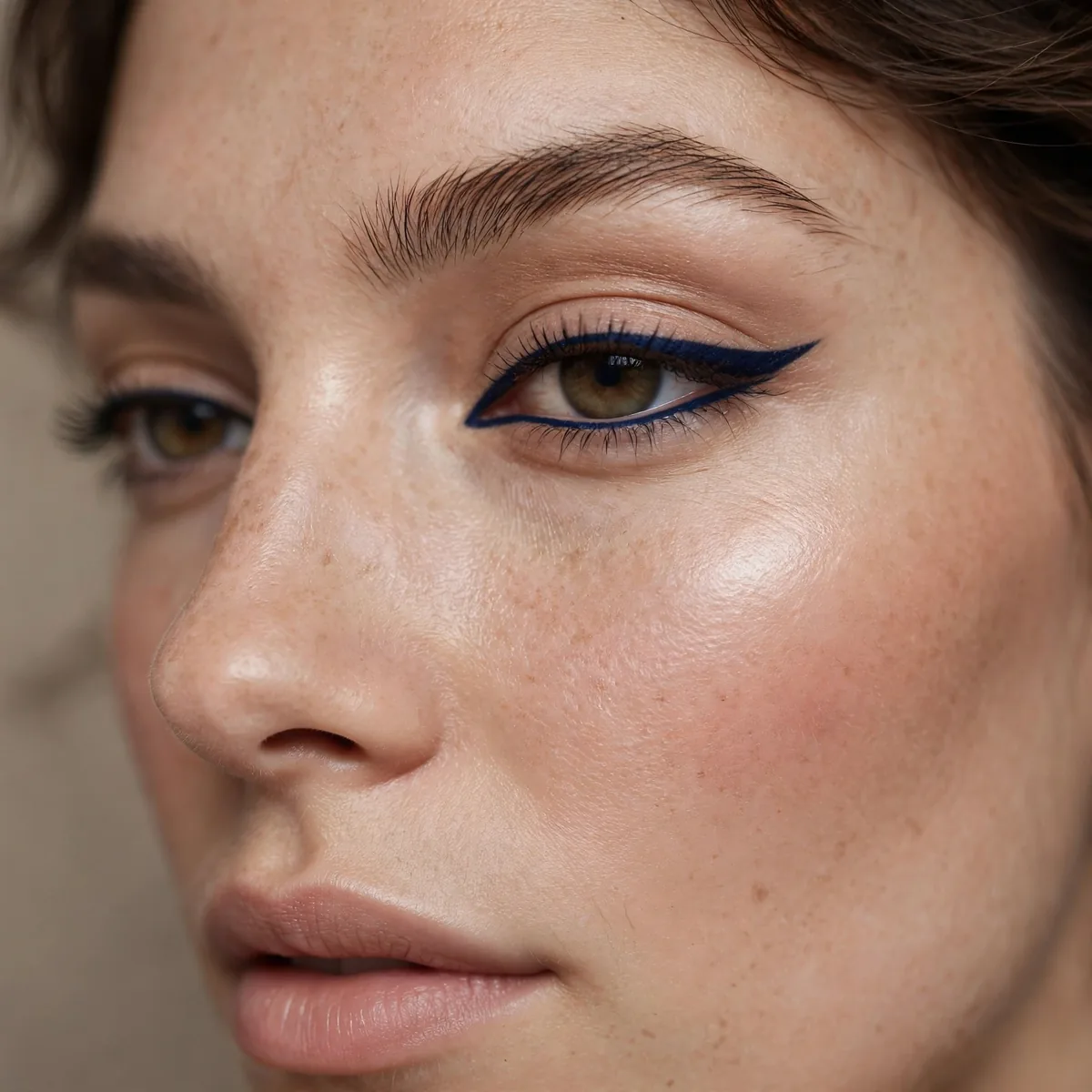
Tightline in navy for lash definition that’s softer than black. Your lashes look fuller; nobody knows why.
Waterproof formula is non-negotiable for tightlining — it has to survive the waterline.
Dot the pencil between the lashes rather than drawing one continuous line — the stippling motion fills gaps without flooding the waterline. Look straight into the mirror and gently lift the upper lid; this exposes the lash roots for precise placement. If the line looks harsh, soften it by pressing a matte navy shadow over the pencil with a smudge brush. Watery eyes should skip the lower waterline and tightline only the top.
Tightlining is the secret weapon for deep-set and small eyes because definition sits at the lash base, not on the lid. It’s also ideal for mature skin — no dragging a pencil across crepey lids. To survive a full workday, dust translucent powder along the lower lash line first; it catches any migration. Remove gently with a bi-phase eye makeup remover rather than tugging, which stresses delicate skin over time.
Sapphire Shimmer Lid
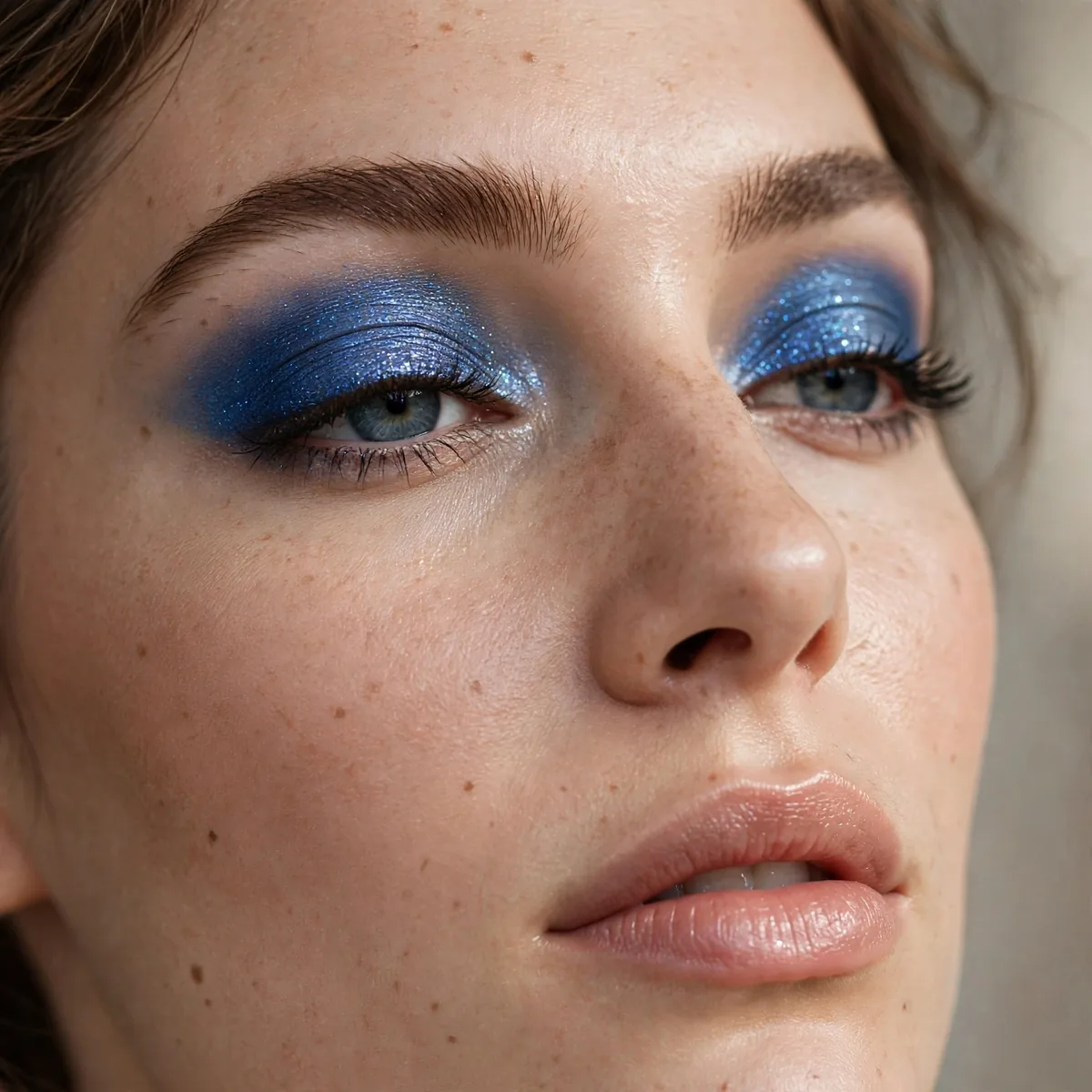
A bright sapphire shimmer on the lid — jewel-toned and eye-catching.
Best for evenings and brown eyes. The shimmer keeps it festive, not goth.
Press the shimmer on with a flat shader brush or fingertip instead of sweeping — patting preserves the foil-like reflect that makes sapphire glow. Concentrate pigment at the center of the lid and blend outward for a spotlight effect that lifts the eye. Layer over a navy cream base to deepen the jewel tone without dulling the sparkle. Keep the crease matte so the shimmer has room to shine.
Sapphire shimmer was made for holiday parties, New Year’s Eve, and winter weddings — cool months are when blue shimmer feels most at home. It flatters deep skin tones richly and gives fair skin a striking jewel-box contrast. For daytime, wear it sheer with just mascara and a glossy lip; after dark, deepen the outer corner and add a black mascara top coat for extra drama.
Navy and Silver Duo
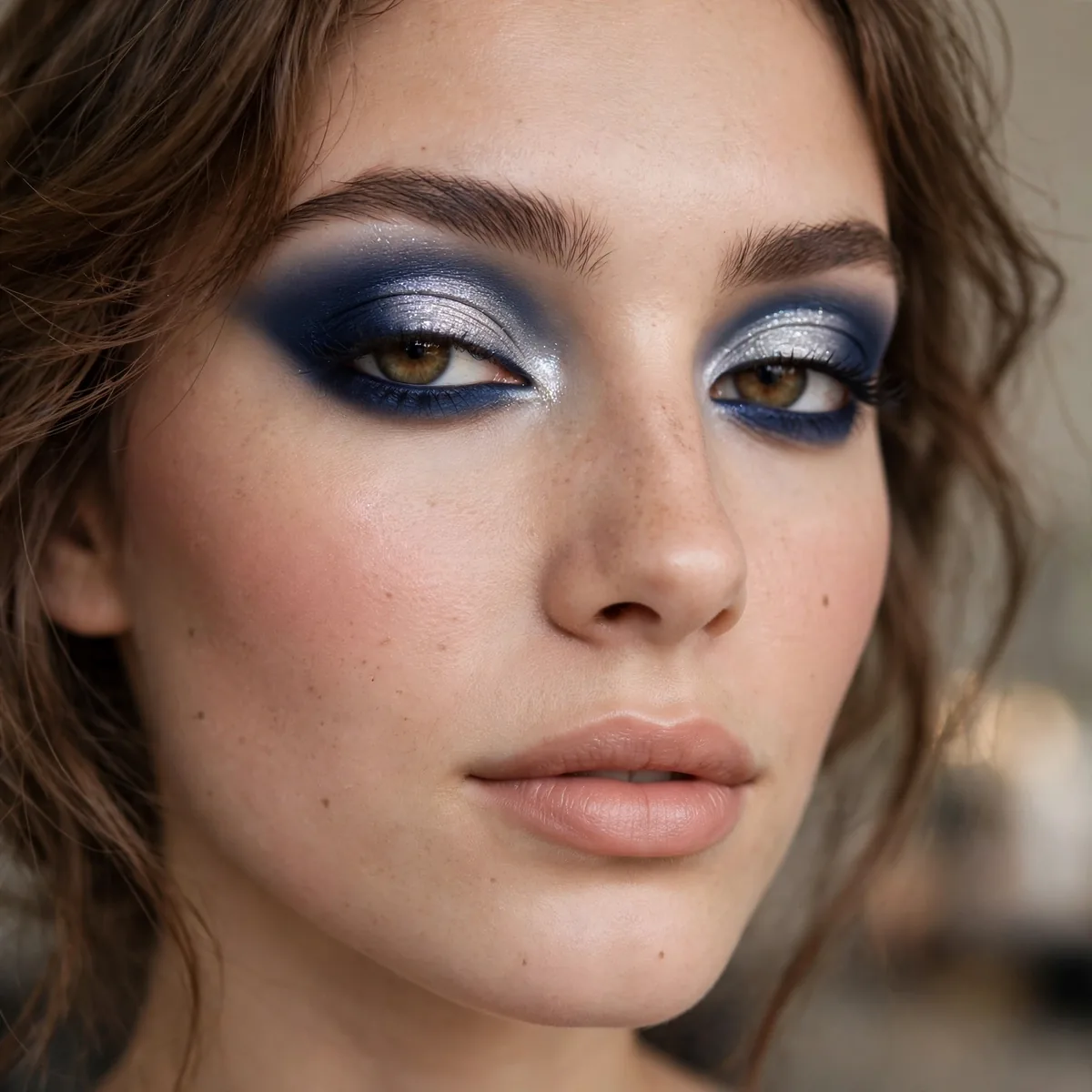
Navy in the crease, silver on the lid — the cool-toned combination that looks like moonlight.
Best for cool skin tones and winter. It’s striking without being warm.
Place the silver with a damp flat brush so it reads metallic rather than chalky — dry silver shadow can go flat and gray. Blend the navy crease color down into the silver at the socket line; that seamless gradient is what sells the moonlight effect. A tiny touch of silver at the brow bone ties the look together. Avoid pairing with warm bronzer, which fights the cool palette.
This duo belongs at winter galas, evening receptions, and any event with low lighting — silver catches candlelight beautifully. Porcelain and fair complexions with pink or neutral undertones wear it most effortlessly. Keep lips cool too: a berry or mauve satin lipstick echoes the palette, while warm nudes clash. Set everything with a fine mist of setting spray so the silver doesn’t fade by midnight.
Smudged Navy Kohl
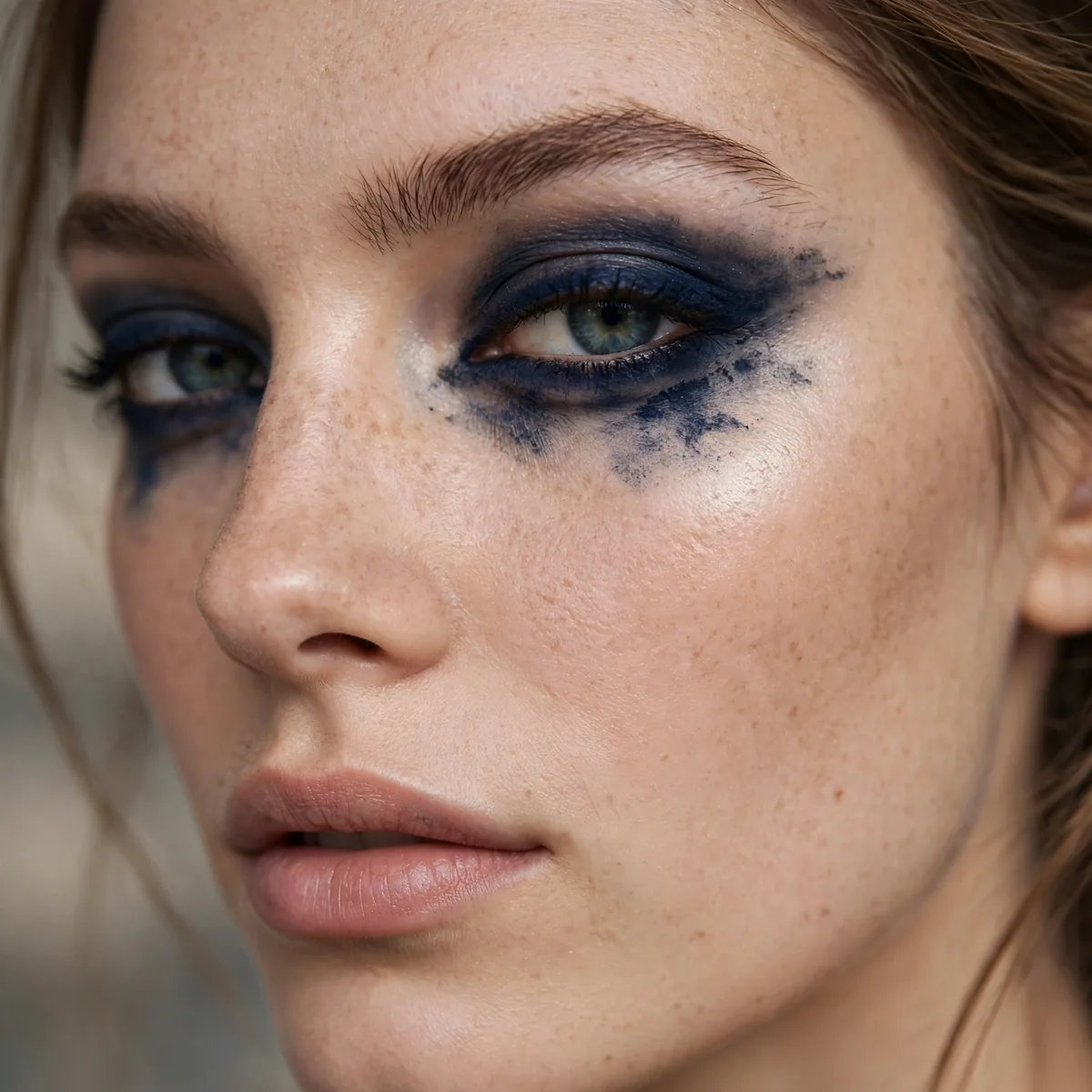
Navy kohl smudged along the lashes — the lived-in liner look that’s effortlessly cool.
Smudge immediately after applying; kohl sets fast. A pencil brush is your best tool.
Speed matters — work one eye at a time so the kohl stays creamy while you smudge. Short, back-and-forth strokes with a dense pencil brush diffuse the line into a soft haze rather than a streaky mess. Concentrate the smudge at the outer third for a cat-eye suggestion without the wing. If you overshoot, a cotton swab dipped in micellar water cleans edges faster than starting over.
The lived-in smudge is forgiving on uneven lids and suits anyone who finds precise liner intimidating — imperfection is the point. It reads effortless at concerts and late dinners, but sheer it out and it works for creative offices too. Hooded eyes benefit from smudging upward rather than outward, which keeps the haze visible. Finish with waterproof mascara so the smudge doesn’t travel.
Deep Indigo Crease
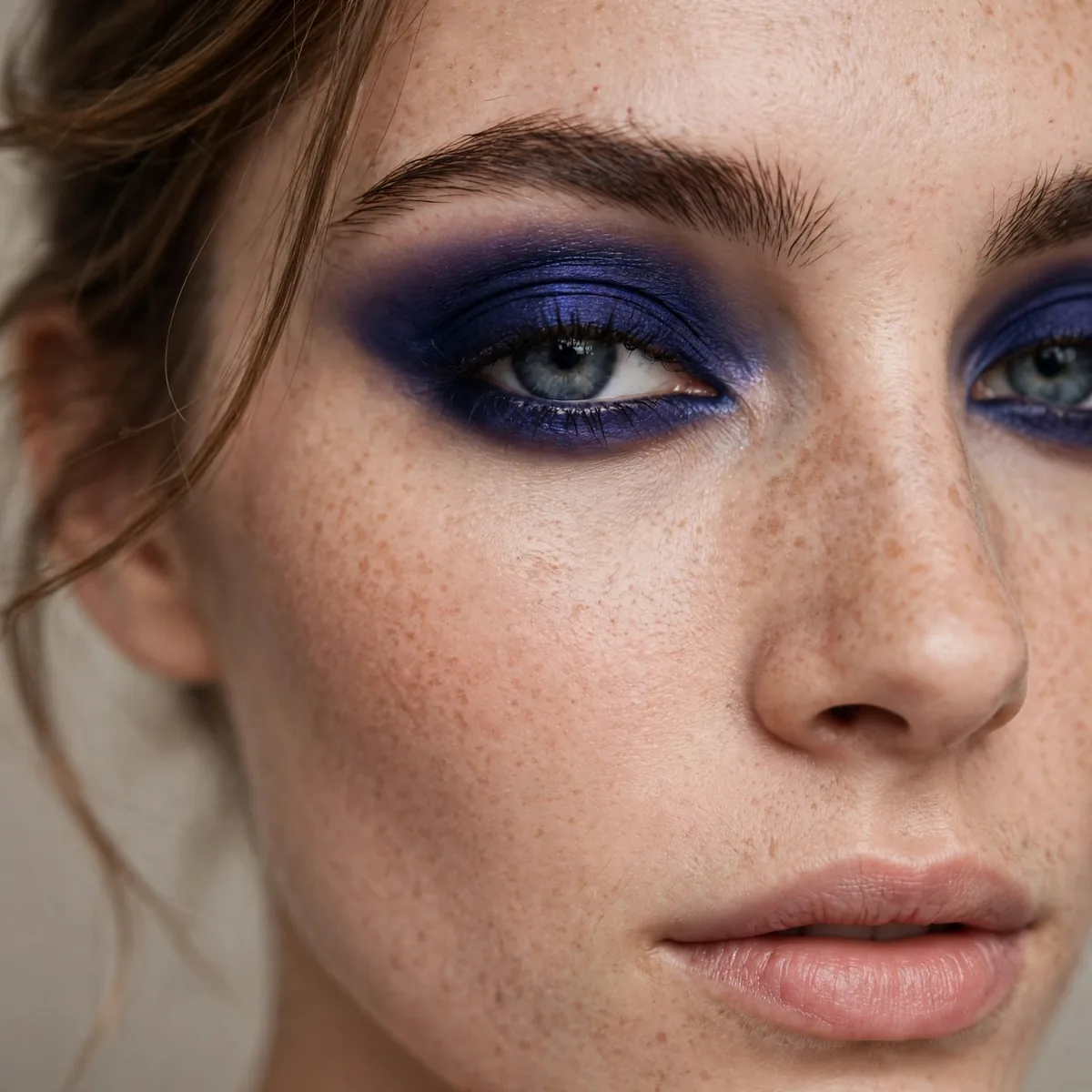
Indigo worked through the crease with a neutral lid — definition with depth.
The most wearable navy on this list. It reads as "defined" before it reads as "blue."
Use a tapered crease brush in light windshield-wiper motions, building the indigo gradually — two sheer layers beat one heavy one. Extend the shade slightly above the natural crease on hooded eyes so the definition shows when the eyes are open. The neutral lid can be anything from bare skin to a satin champagne; just keep it light enough to contrast. Blend until no hard edge remains anywhere.
This is the navy look for blue-shadow skeptics and corporate settings — it defines like a brown crease but with quiet intrigue. It suits every eye shape and flatters green eyes in particular, pulling out their warmth against the cool indigo. Wear it with a rosy blush and a soft matte lip for the office; add a navy tightline after hours for instant evening polish.
Navy Lower Lash Line
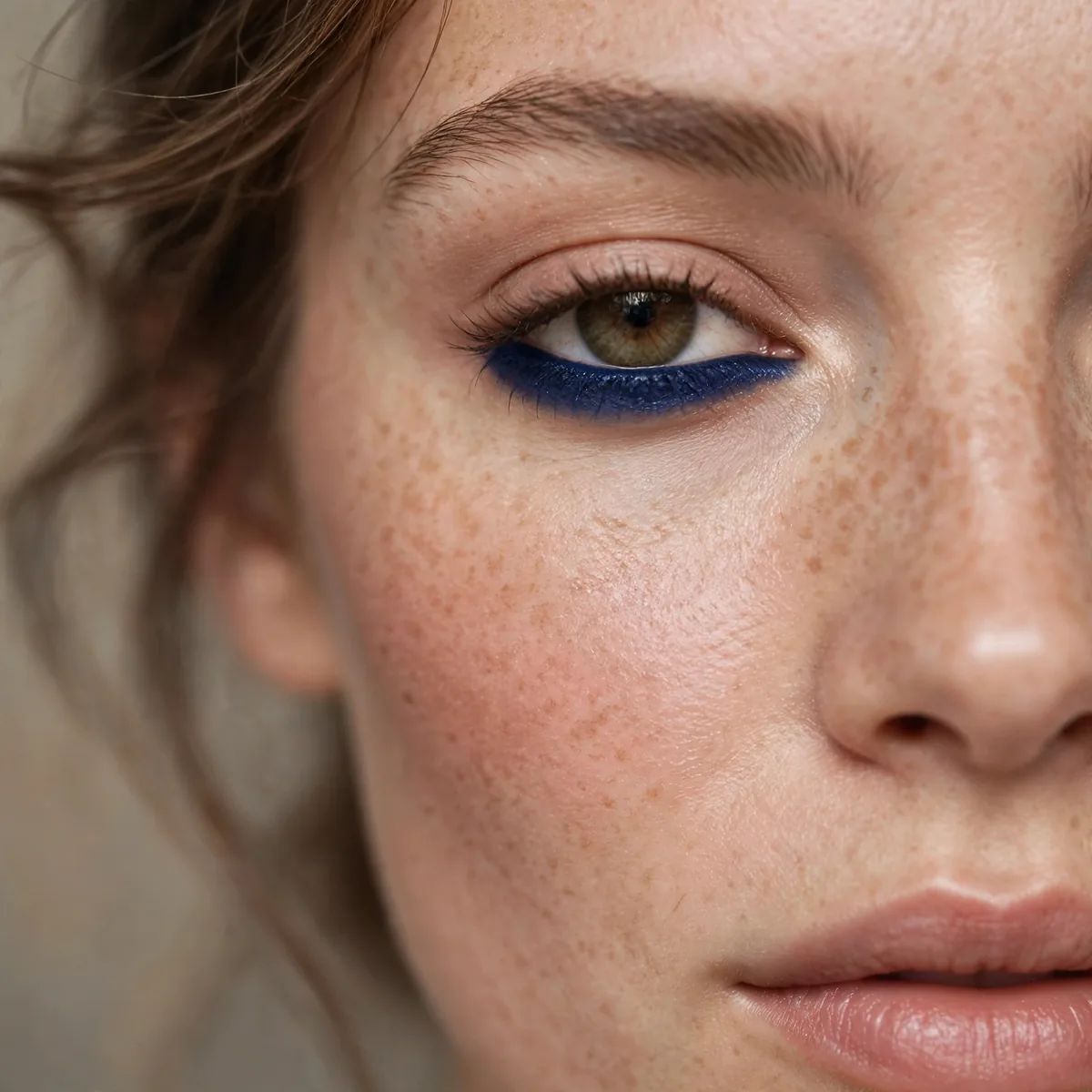
Run navy along the lower lashes with a neutral lid. Instant interest, minimal effort.
Connect it to the outer corner for a cohesive look — floating lower liner looks unfinished.
A small flat definer brush gives the most control along the lower lashes — pencils can drag on delicate under-eye skin. Keep the line thinnest at the inner corner and slightly thicker toward the outer third for a natural gradient. Dust a veil of translucent powder under the eyes first; it prevents fallout from settling into fine lines. Press, don’t sweep, the shadow into the lash roots.
Lower-lash navy opens up round eyes beautifully, adding width without the closing effect of black. The most common mistake is taking the color too far inward — past the halfway point it can read tired rather than defined. Skip it on days when under-eyes are puffy; any lower color emphasizes shadows. Pair with curled lashes and a brightening concealer to keep the whole eye lifted.
Soft Denim Blend
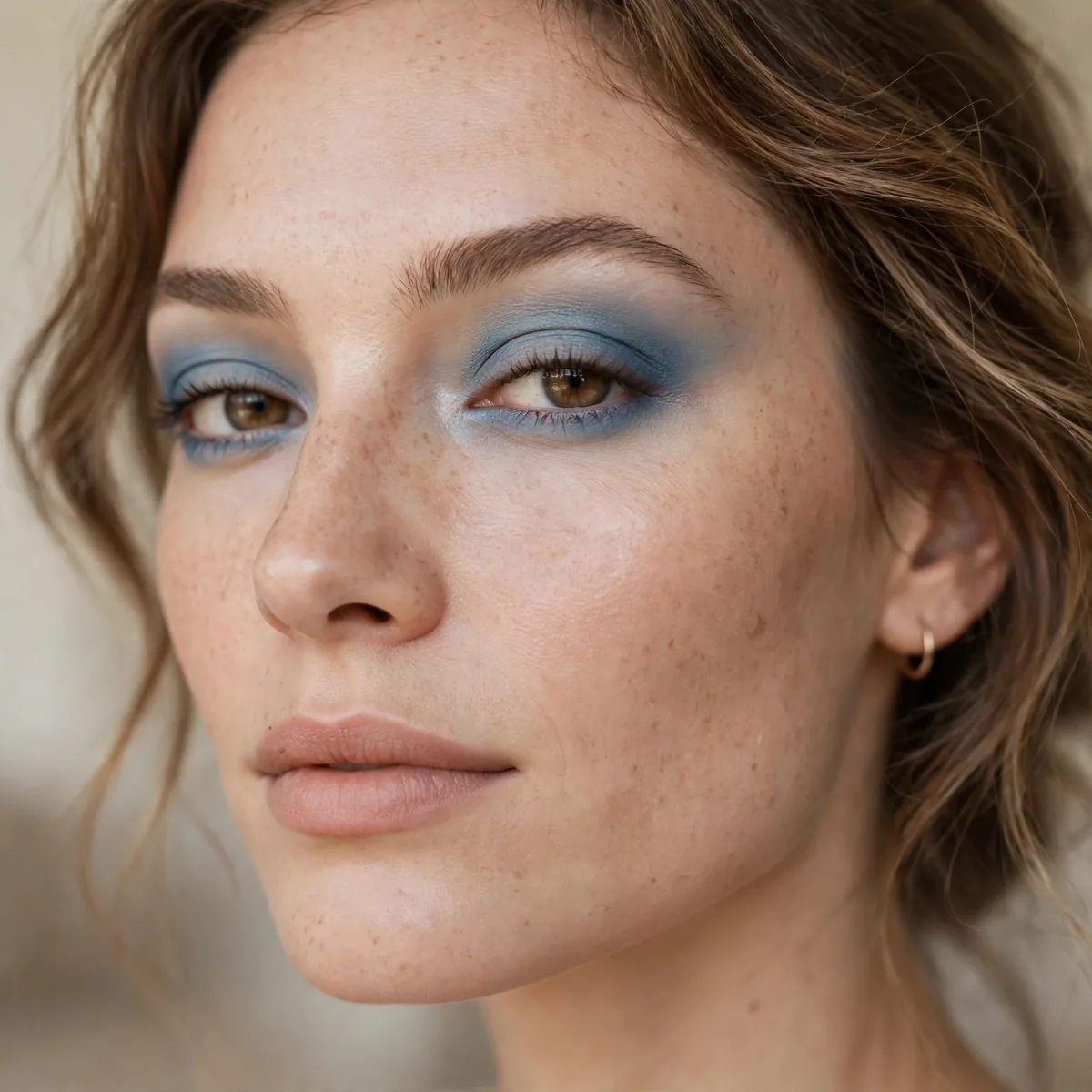
A faded denim blue blended softly — the daytime navy. Casual, pretty, unexpected.
Best for blue eyes — it creates a tonal look that’s very editorial.
Sheer matte formulas work best here — shimmer can push denim into eighties territory. Blend the shade through the crease with a big fluffy brush, letting the color fade completely at the edges for that washed-fabric effect. A touch of the same shade under the lower lashes ties it together. Keep brows soft and feathery; harsh brows fight the laid-back vibe.
Denim blue is a spring and summer darling — it echoes light-wash jeans and feels fresh against sun-kissed skin. Wear it to weekend brunches, outdoor markets, and daytime events where a smokey eye would be overdressed. It flatters warm undertones by contrast and gives medium skin a lit-from-within coolness. Pair with dewy skin, a peachy blush, and a tinted lip balm for effortless polish.
Navy Halo Eye
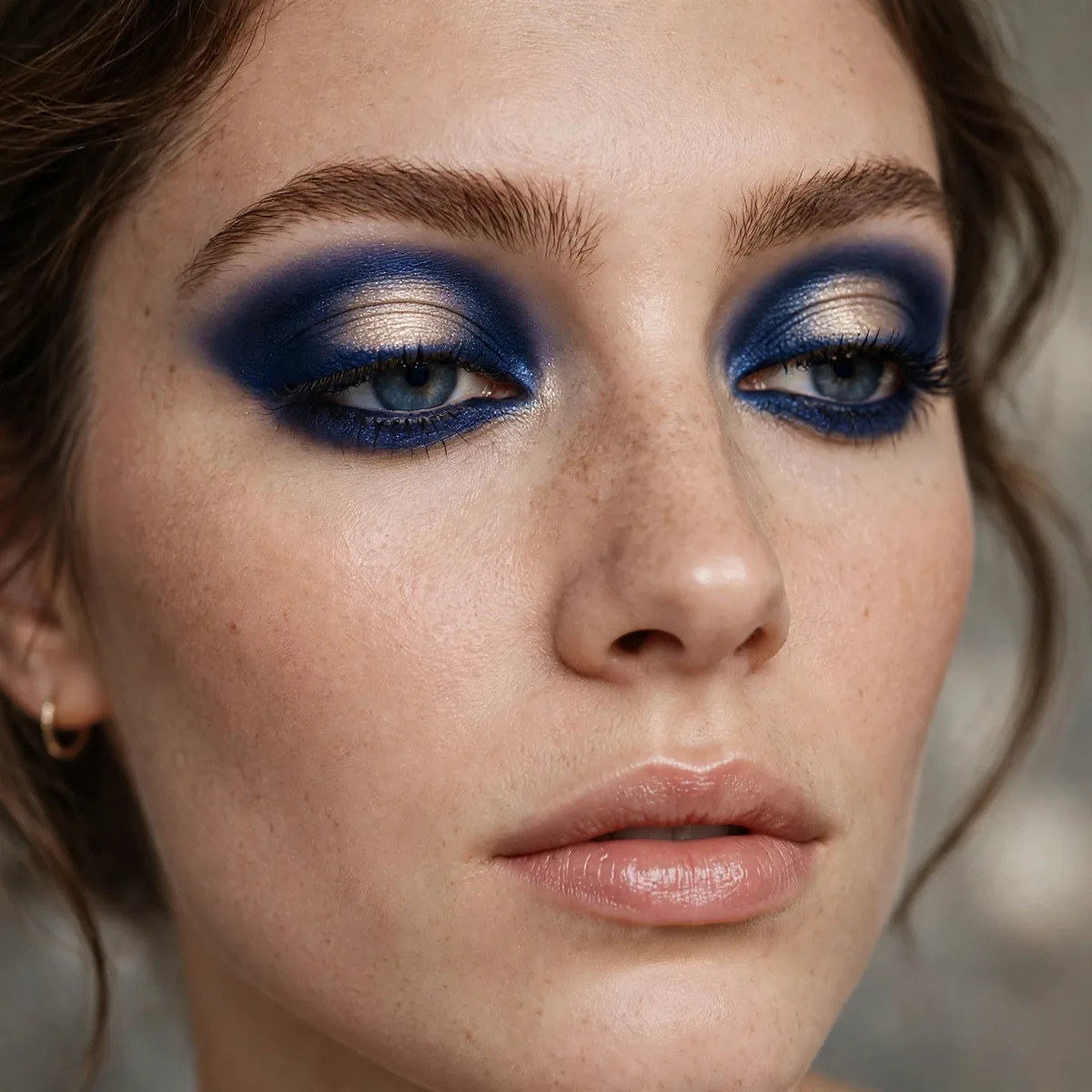
Dark navy edges with a bright center — the halo shape opens up the eye.
Silver or pale blue center keeps it cool-toned and cohesive.
Apply the dark navy to the inner and outer thirds first, leaving the center of the lid bare — that negative space is the halo’s foundation. Then press the light shade into the center with a fingertip, patting gently so it doesn’t mix with the dark edges. Blend only where the two shades meet, using a tiny detail brush. The halo should read as a spotlight, not a stripe.
Halo eyes are a gift for close-set and small eyes — the bright center creates the illusion of width and openness. They photograph beautifully, so save this technique for weddings and nights out where cameras are guaranteed. To keep the center bright all evening, layer the shimmer over a tacky glitter primer. Pair with defined brows and a soft contour so the glowing eye stays the focal point.
Steel Blue Transition
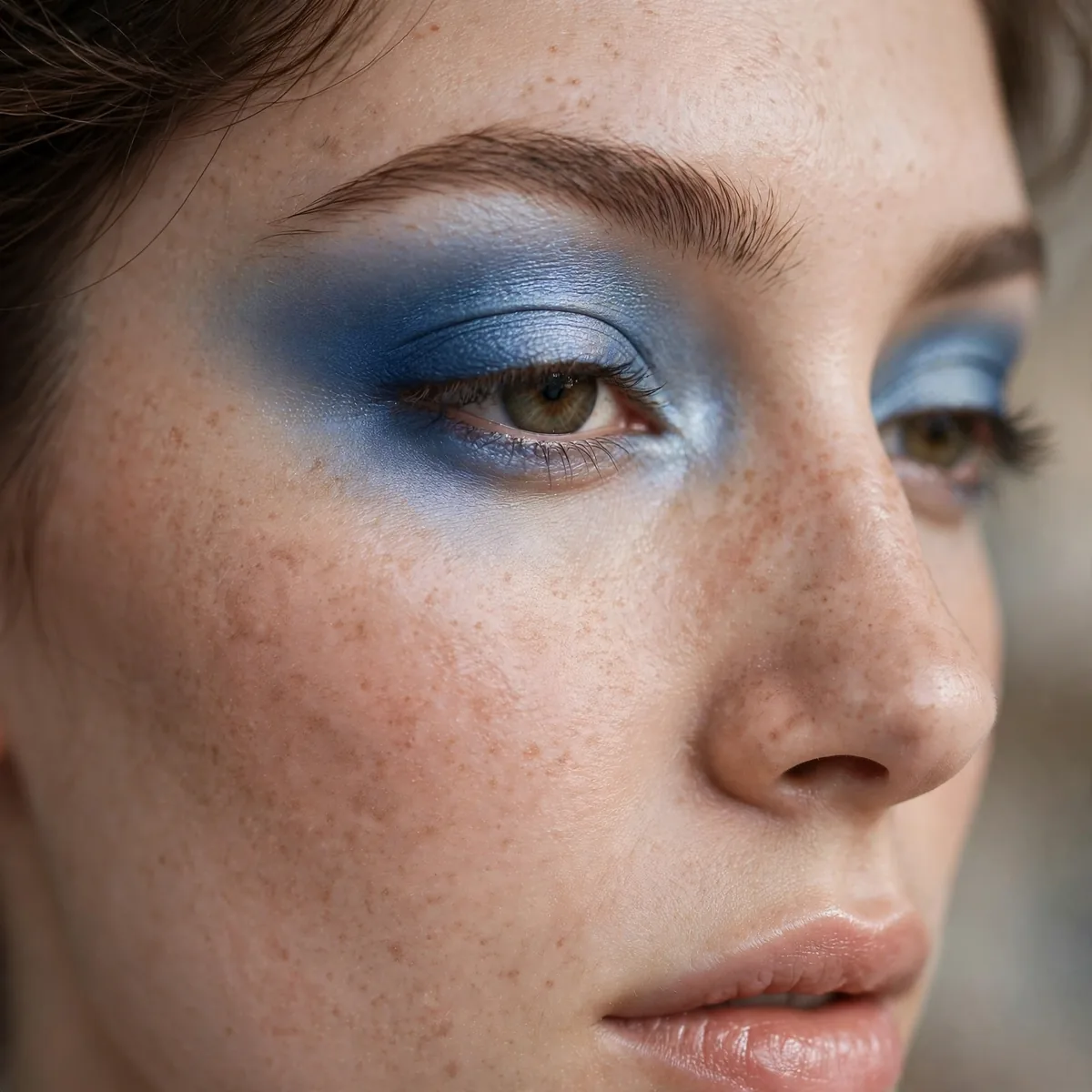
Use steel blue as a transition shade under deeper navies. It adds a dimension that brown transitions can’t.
The cool-toned secret weapon for blue smokey eyes.
Sweep steel blue through the crease with a fluffy blending brush before any darker shade touches the lid — it creates a gradient runway for the deeper colors. Keep it higher than your deepest shade so it peeks through as a distinct cool band. The trick is restraint: the transition should whisper, not shout. A single sheer layer is usually enough to transform the whole smokey.
Steel blue transitions flatter cool and neutral undertones most, but they also sharpen brown eyes by contrast. The common mistake is over-blending — if you buff the transition into oblivion, the depth disappears and you’re left with muddy blue. Build dark shades on top with a patting motion instead. This layering trick also works under teal and slate, making it a versatile cool-tone skill.
Navy Cut Crease
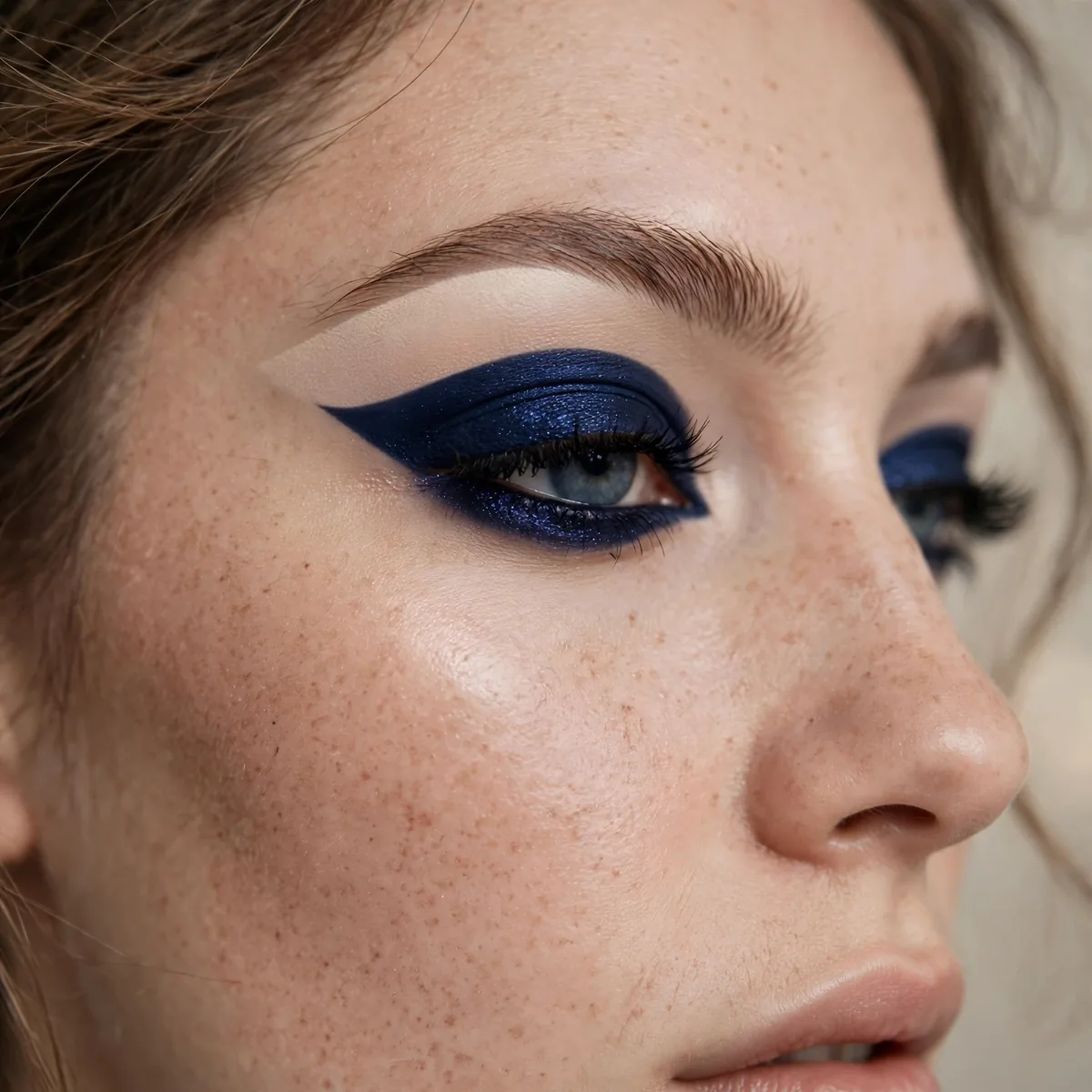
A sharp navy cut crease — graphic, bold, editorial.
Conceal and set the lid first. The contrast between bare lid and navy crease is the whole look.
Map the crease line with the navy first, then carve the lid with concealer on a flat synthetic brush — working backward gives a sharper edge than drawing the line freehand. Set the carved lid immediately with a skin-toned powder so the navy doesn’t bleed into it. Keep the cut slightly above your natural crease if your eyes are hooded, or the graphic line disappears when you open them.
Cut creases are editorial by nature — save them for fashion events, photoshoots, and nights when you want the makeup to be the conversation. The bold graphic line demands balance: keep skin fresh and luminous, brows clean, and lips understated so nothing competes. A crisp white or nude manicure echoes the precision. Practice the carving motion twice before event day; muscle memory makes all the difference.
Ink Blue Outer V
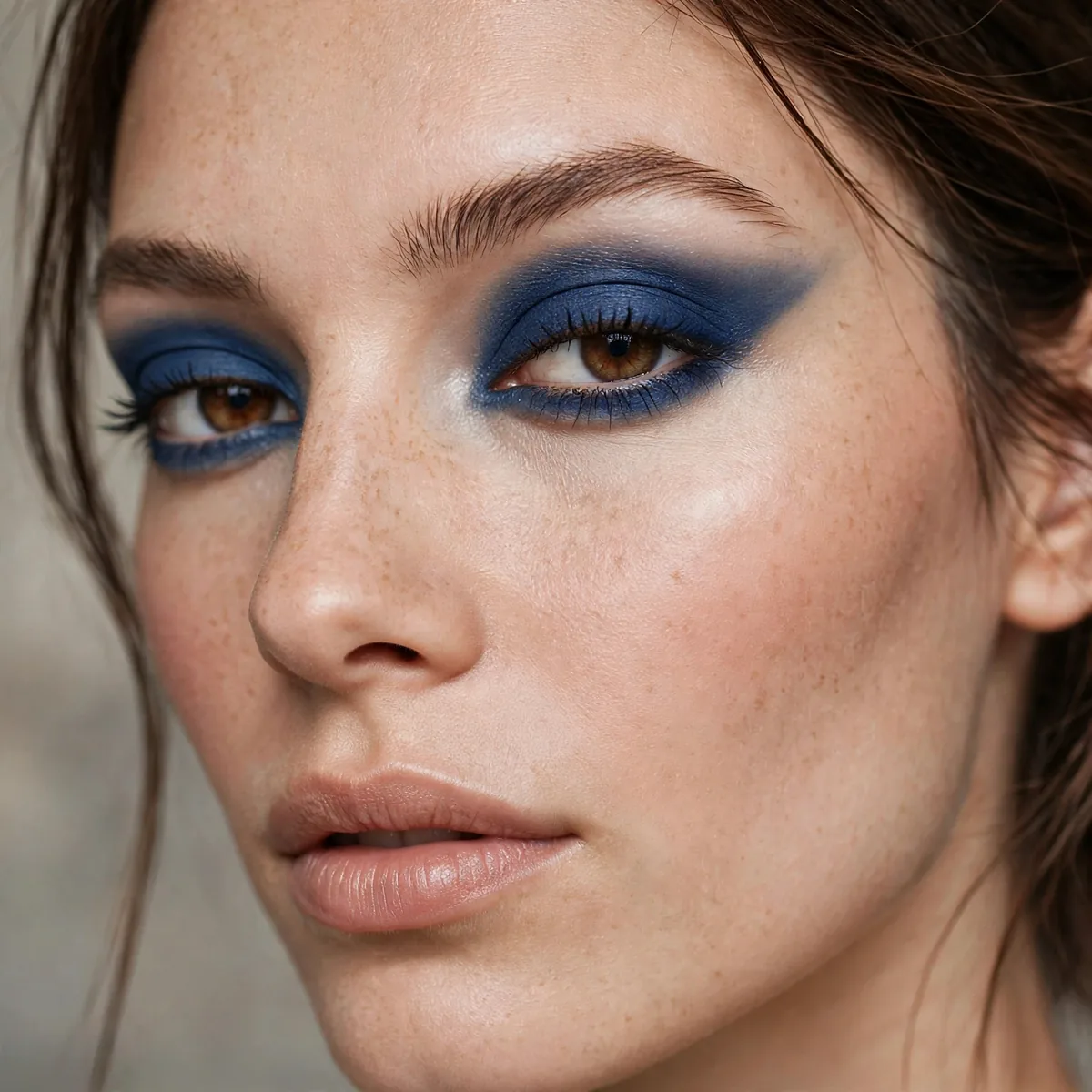
Deepen just the outer V with ink blue. Shape and definition without a full smokey commitment.
Blend the edges into the crease shade — the V should melt, not sit on top.
Draw a small sideways V at the outer corner with a dense pencil brush, then blend inward — never outward past the brow bone. The V should be darkest at the very corner and fade as it travels along the crease and lash line. Think of it as a gradient anchor for the whole eye. A second thin layer deepens the color without widening the shape, which is the key to keeping it precise.
The outer V is the most flattering entry point for navy skeptics — it adds shape without committing to color across the lid. It elongates round eyes and lifts downturned outer corners subtly. Wear it softly blended for daytime definition, then intensify the V and add a navy tightline to take it to evening. Pair with a rosy cheek and a satin nude lip for a balanced finish.
Navy and Champagne Duo
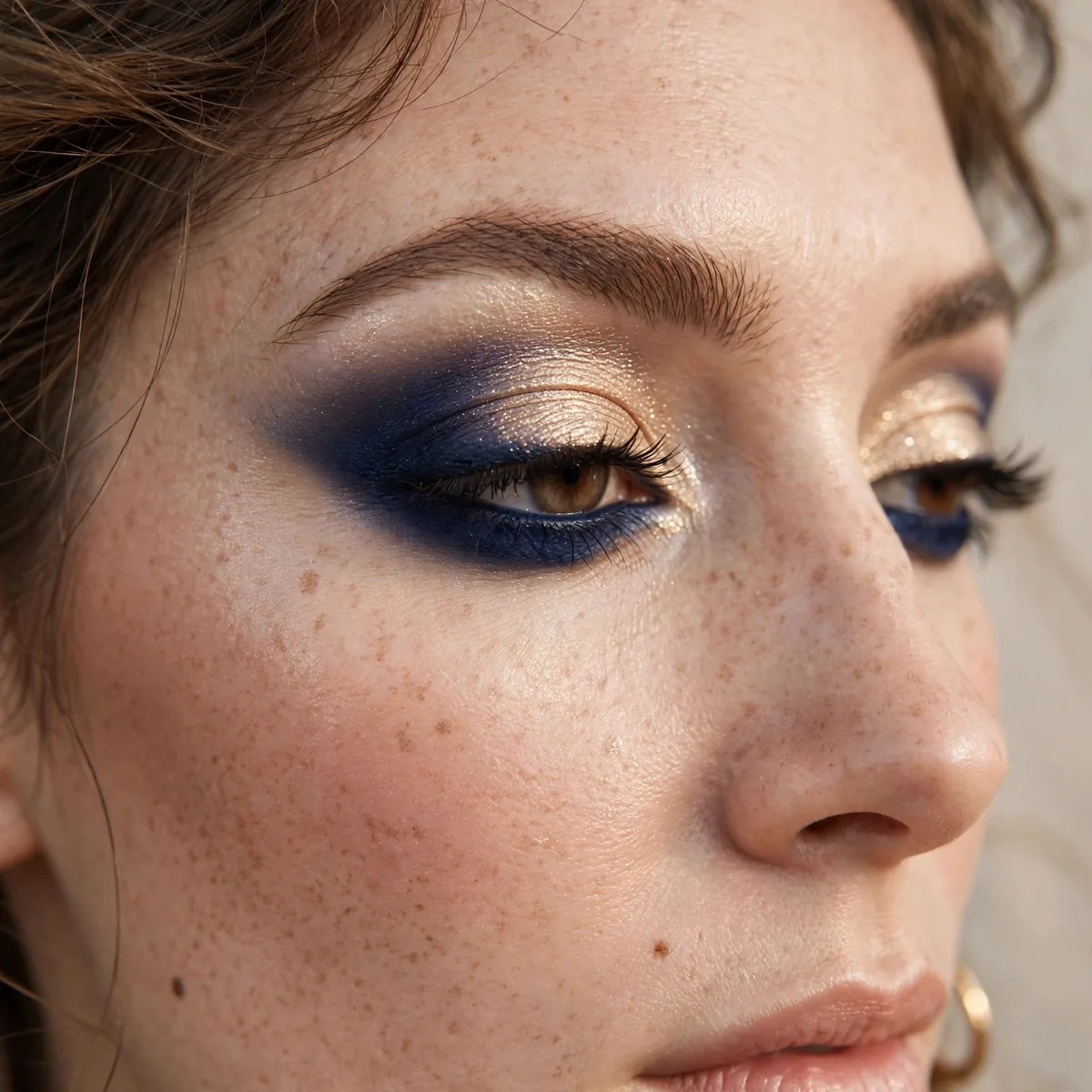
Navy smoked out, champagne on the inner lid and brow bone — the contrast is stunning.
This pairing is why navy beats black: the champagne glows against blue in a way it never does against black.
Apply the champagne with a damp brush for maximum foil payoff — dry application mutes its glow against the navy. Blend the two shades where they meet in the middle of the lid, using tiny circular motions so there’s no harsh dividing line. Keep the champagne concentrated on the inner two-thirds; letting it drift too far out dilutes the smokey depth. A champagne pencil on the waterline amplifies the brightening effect.
This is the red-carpet pairing — it photographs like a dream and flatters every skin tone from porcelain to deep. Wear it to weddings, holiday galas, and anywhere you want polish without predictability. Warm undertones should choose a golden champagne; cool undertones, a pinky one. Balance the luminous eye with a soft matte lip — berry for evening, terracotta nude for day — so the face stays harmonious.
Matte Navy Definition
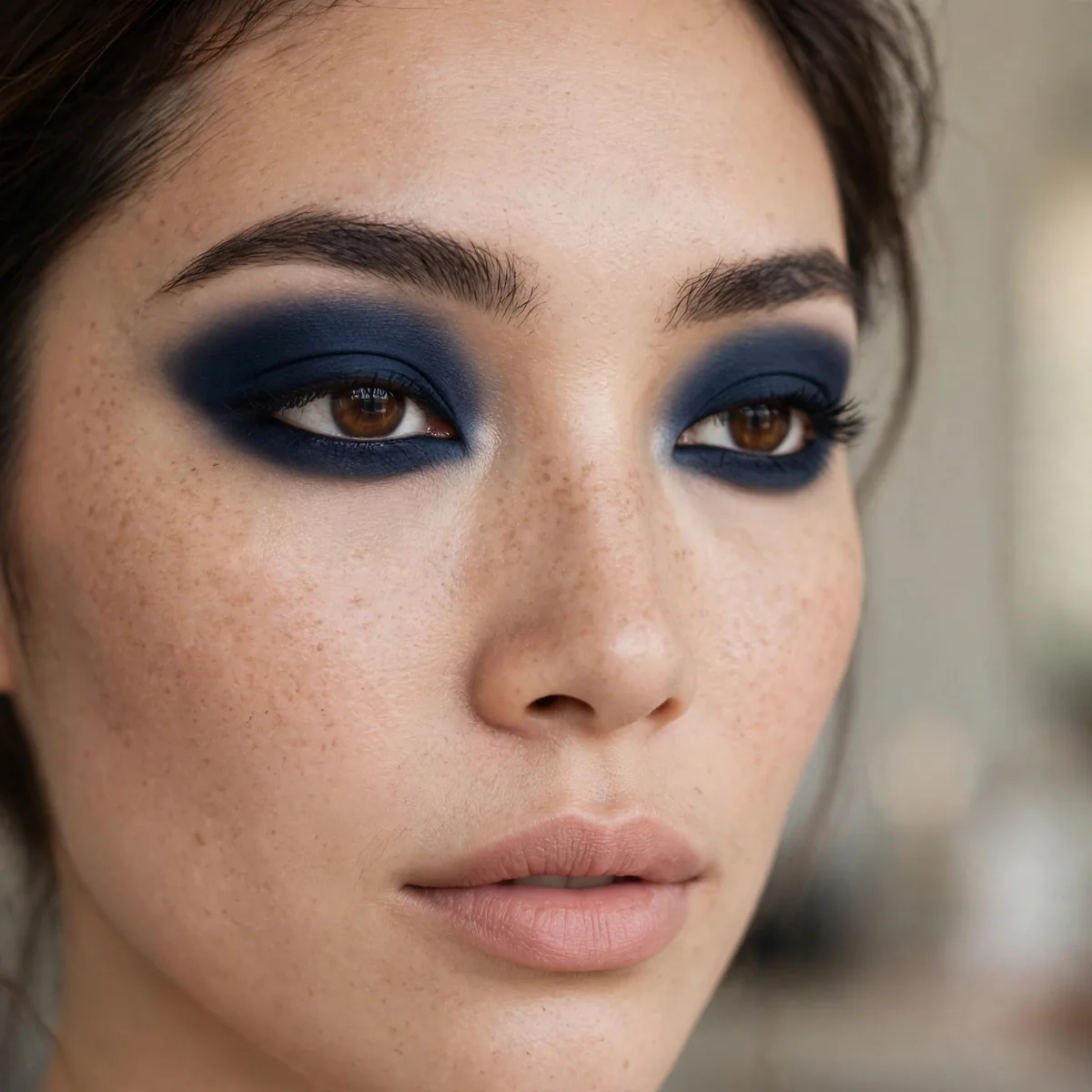
All-matte navy for a velvety, sophisticated eye. No shimmer, all depth.
Matte darks need flawless blending — take an extra minute with a clean fluffy brush.
Matte navy grabs onto dry patches, so start with a well-moisturized lid and a gripping primer — even a dab of concealer set with powder works. Build the color in whisper-thin layers, blending each one fully before adding the next; impatience creates patchiness that no amount of buffing fixes. Keep a clean blending brush dedicated to softening edges without adding product. The result should look like velvet, not chalk.
All-matte navy is the connoisseur’s choice for formal daytime events — gallery openings, winter weddings, upscale lunches — where shimmer feels too festive. It flatters mature lids beautifully since matte doesn’t settle into fine lines the way sparkle does. Deep skin tones get a rich, inky payoff, while fair skin should blend edges extra wide to avoid a heavy look. Pair with a bold brow and a classic red lip for timeless drama.
Navy Glitter Topper
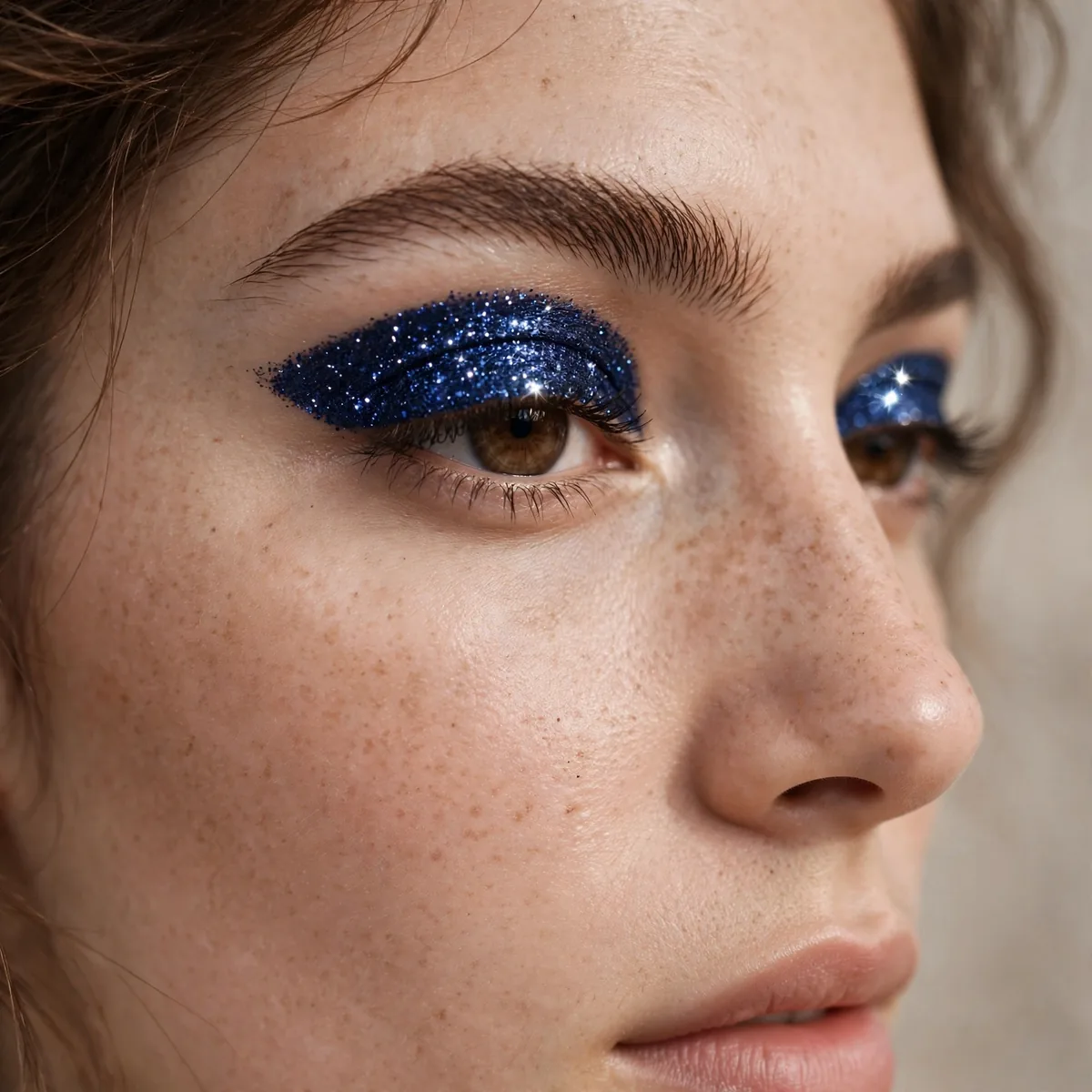
Navy glitter pressed over a matte navy base — dimension and party in one.
Glitter glue underneath is essential. Regular primer won’t hold chunky glitter.
Apply glitter glue only where you want sparkle — the center of the lid is the sweet spot — and press the glitter on while the glue is still tacky, not wet. Use a flat synthetic brush or silicone applicator; fingertips can drag the base shadow underneath. Work in small sections so the glue doesn’t dry before the glitter lands. Less is more — a concentrated patch reads luxe, while all-over glitter reads costume.
Glitter toppers belong at New Year’s Eve, music festivals, and bachelorette nights — anywhere flash is welcome. Fine glitter suits daytime parties; chunky holographic pieces demand darkness and strobe lights. Removal is the real skill: press a bi-phase remover-soaked pad on the lid for thirty seconds, then sweep away — never scrub, which grinds glitter into skin. Follow with a gentle cleanser and a hydrating eye cream.
Dusty Blue Smoke
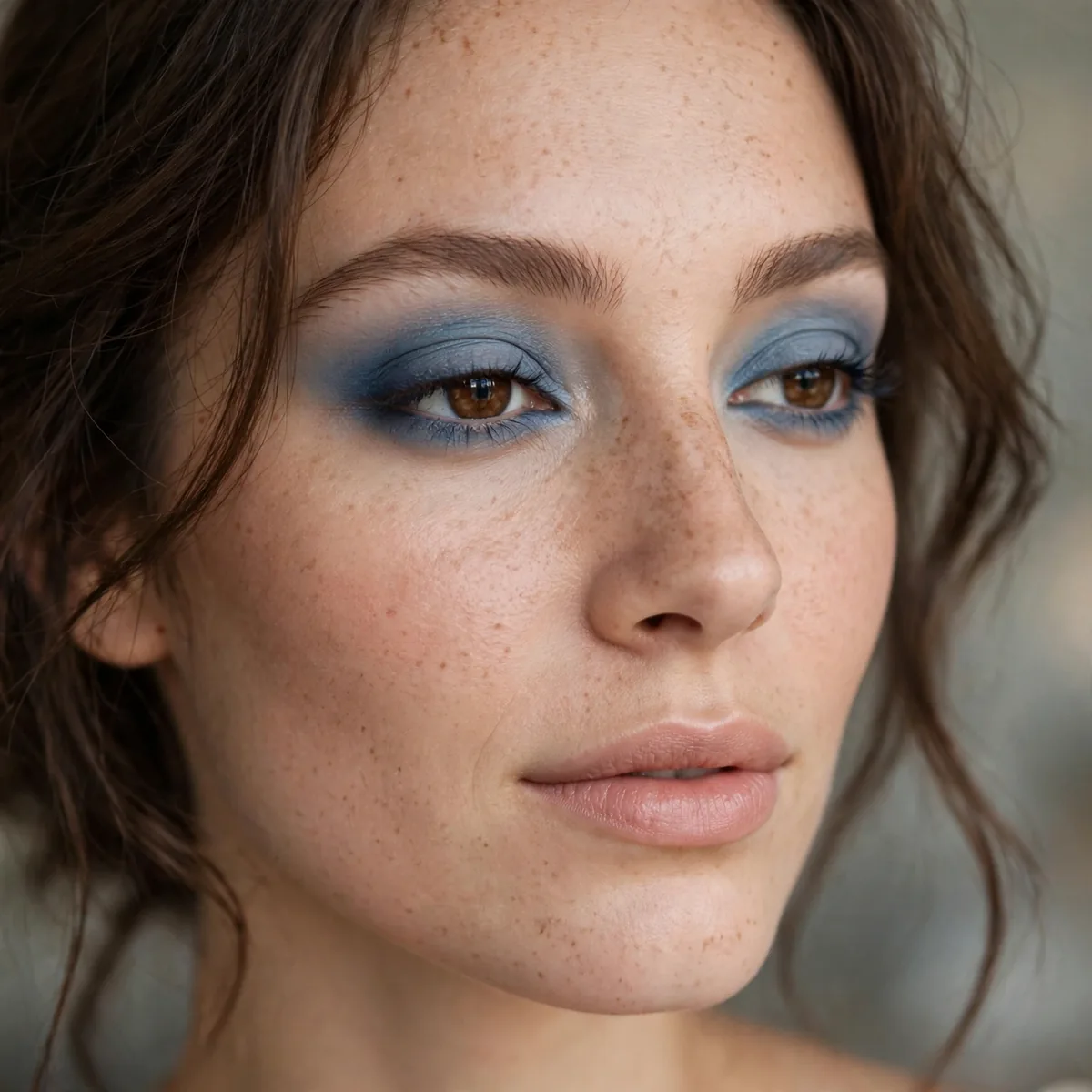
A muted, dusty blue smoke — softer than navy, moodier than gray.
Best for daytime drama. It’s the "I tried but not too hard" smokey.
Dusty blue lives or dies by blending — use a large, soft dome brush and circular motions to keep the smoke cloud-like rather than stripey. Layer it over a gray-beige base to deepen the moodiness without brightening the blue. Keep the lower lash line light, just a whisper of the shade, so the look stays daytime-appropriate. A spoolie through the brows afterward keeps everything soft and cohesive.
Dusty blue is a fall wardrobe staple in makeup form — it echoes foggy mornings and gray-blue denim. It flatters cool undertones naturally and gives warm skin an unexpected editorial edge. Blue eyes wear it tonally; brown eyes get a striking cool contrast. Pair it with a taupe blush and a satin mauve lip for an autumn afternoon, or sheer it out further for a barely-there spring version.
Navy Monochrome Eye
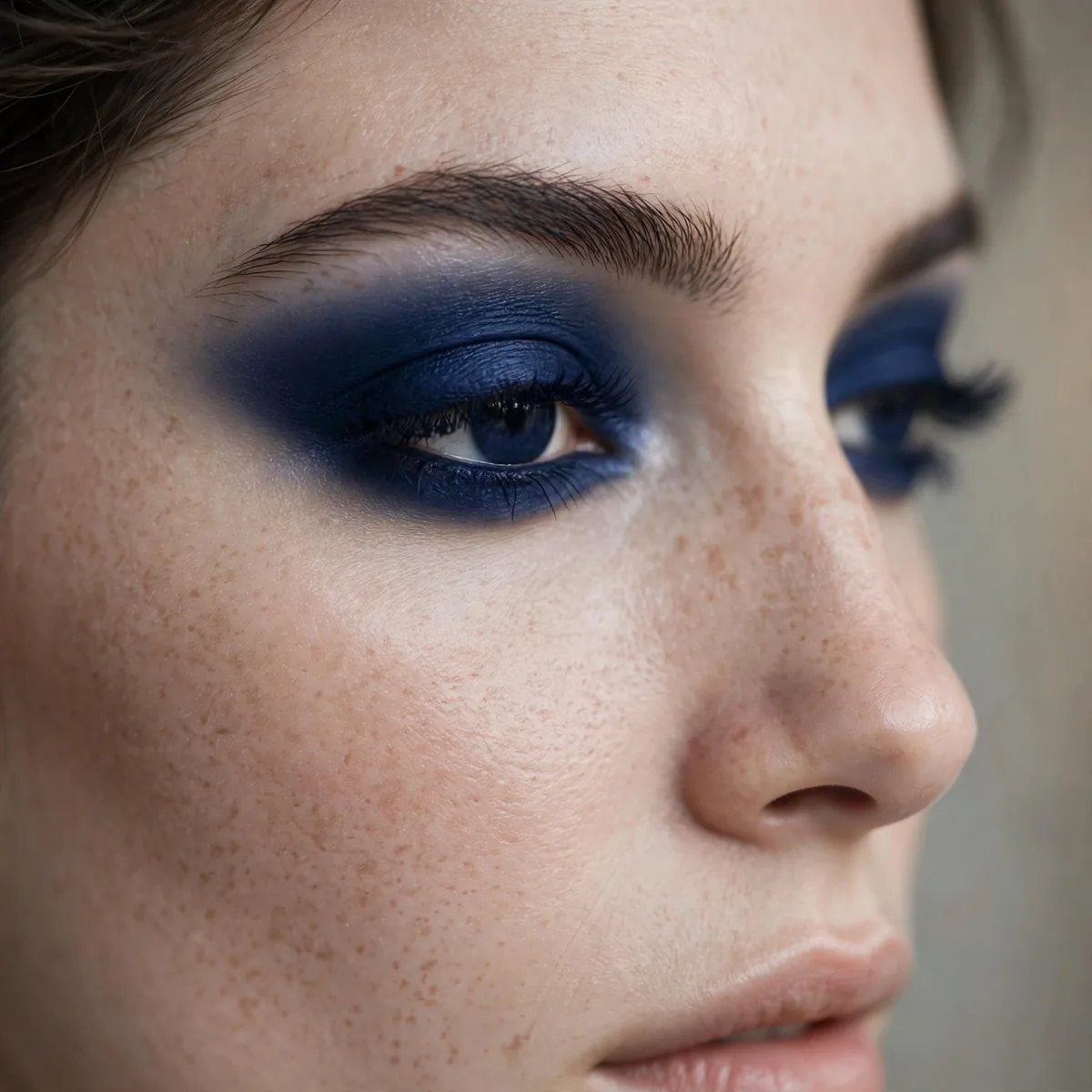
Navy on lids, a hint of blue on lower lashes — tonal and striking.
Keep everything else neutral. Monochrome eyes are the statement; let them talk.
Monochrome works when the tones vary — use a deep matte navy at the lash line, a mid-tone satin across the lid, and just a sheer wash under the lower lashes. That tonal range keeps the look dimensional instead of flat. Blend each shade into the next with a clean brush; visible borders break the monochrome spell. Skip blush or choose the sheerest nude, because cheek color competes with the blue story.
The monochrome navy eye is a fashion-week favorite — bold enough for runway, wearable enough for a night out. It suits confident minimalists who want one strong statement; the rest of the face stays deliberately quiet. A nude lip with a satin finish and softly groomed skin complete the canvas. Deep skin tones can push the navy darker for drama; fair skin should keep the wash sheer to stay elegant.
Icy Blue Inner Corner
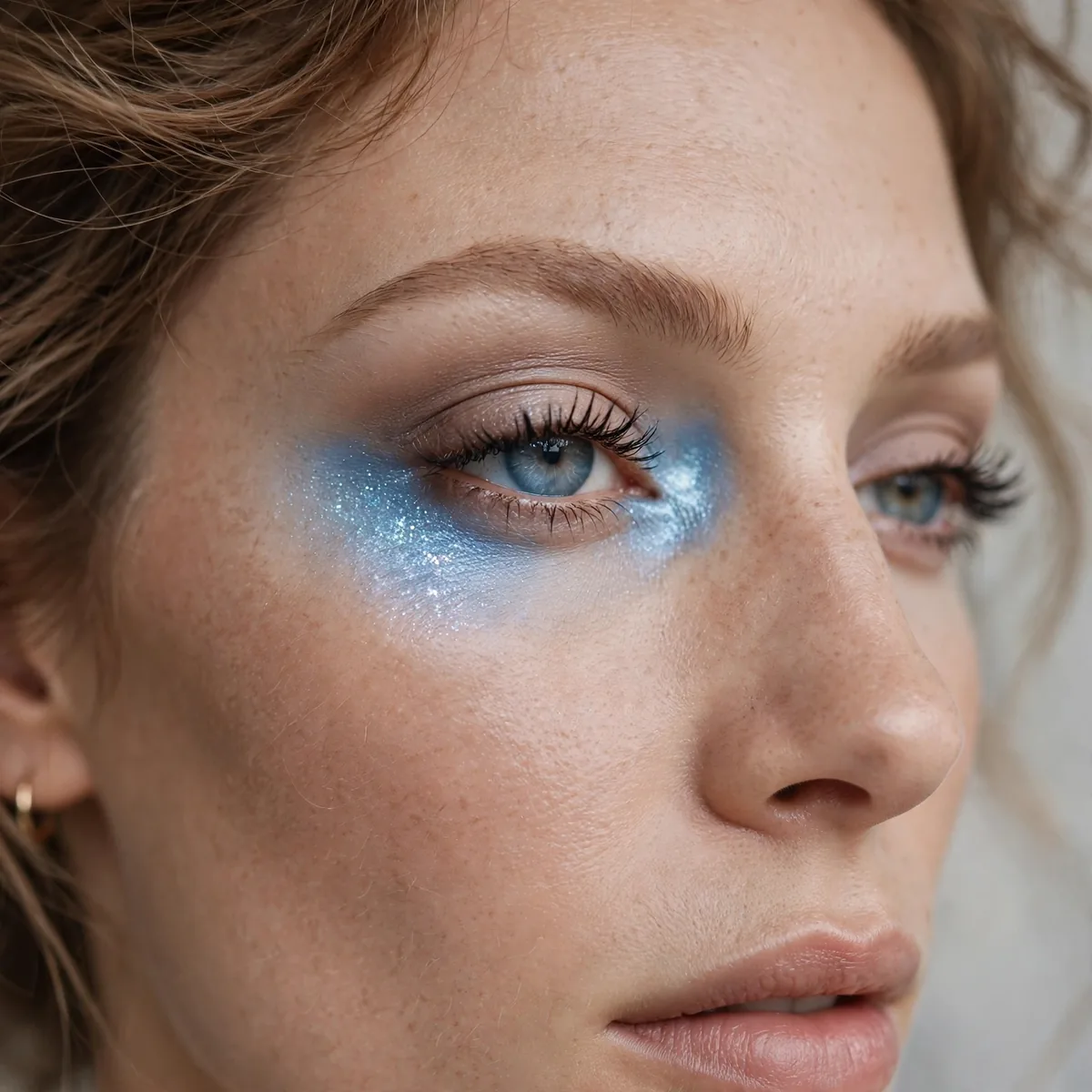
Pale icy blue at the inner corner over any navy look — the brightening finishing touch.
It opens up the eye and adds a frosty dimension that photographs beautifully. See more brightening tricks in our eyeshadow looks for blue eyes.
Use the very tip of a small detail brush or your pinky fingertip — precision keeps the highlight exactly at the tear duct, where it belongs. A cream or liquid icy-blue formula grips better than powder and won’t migrate by midday. Press, don’t sweep, so the pigment stays concentrated and reflective. Too much product creeps toward the nose and looks frosty instead of bright.
Inner-corner highlight is the universal brightener — it wakes up close-set eyes, tired eyes, and small eyes alike. Cool skin tones should choose a true icy blue; warm undertones do better with a pearly champagne-blue so the highlight doesn’t look chalky. It pairs with every navy look on this list, but it also rescues a simple mascara-only eye on low-effort days. One tiny dot genuinely changes the whole face.
Navy is the dark shade that loves you back — pin your favorites. For more depth, try smudged eyeliner looks, or keep it classic with winged eyeliner for beginners.