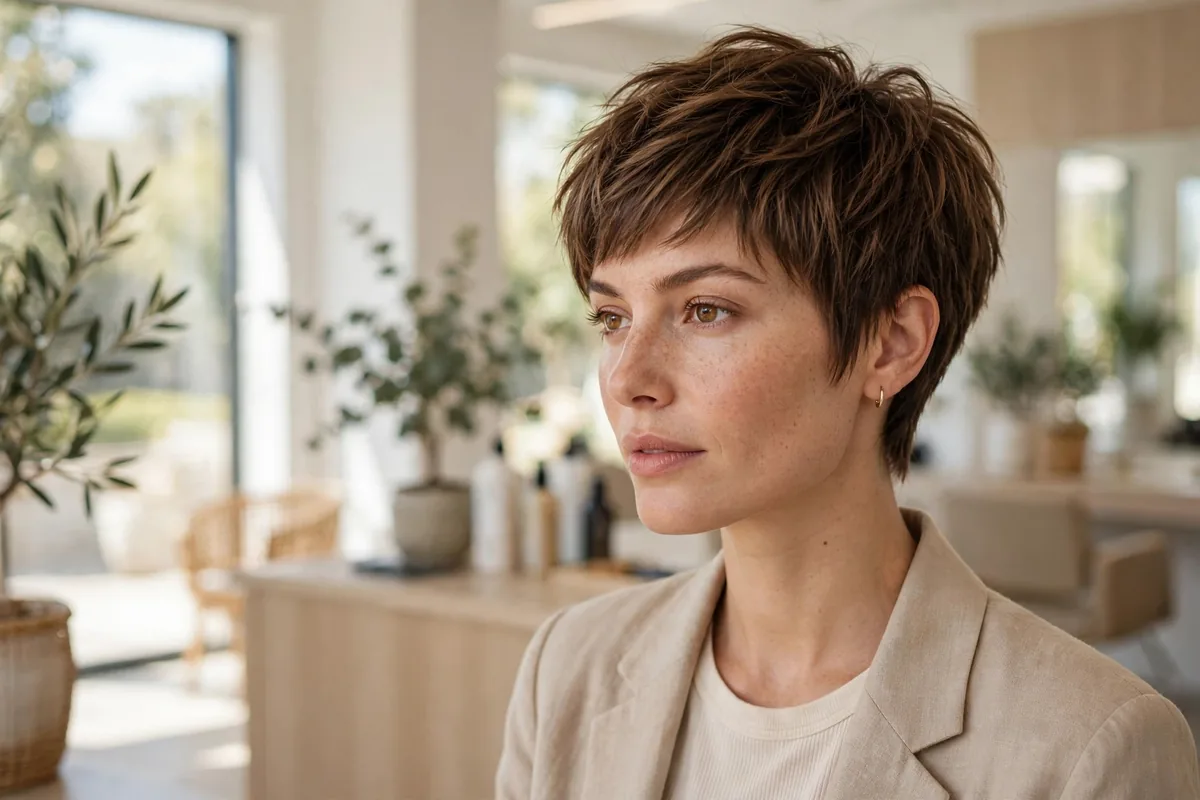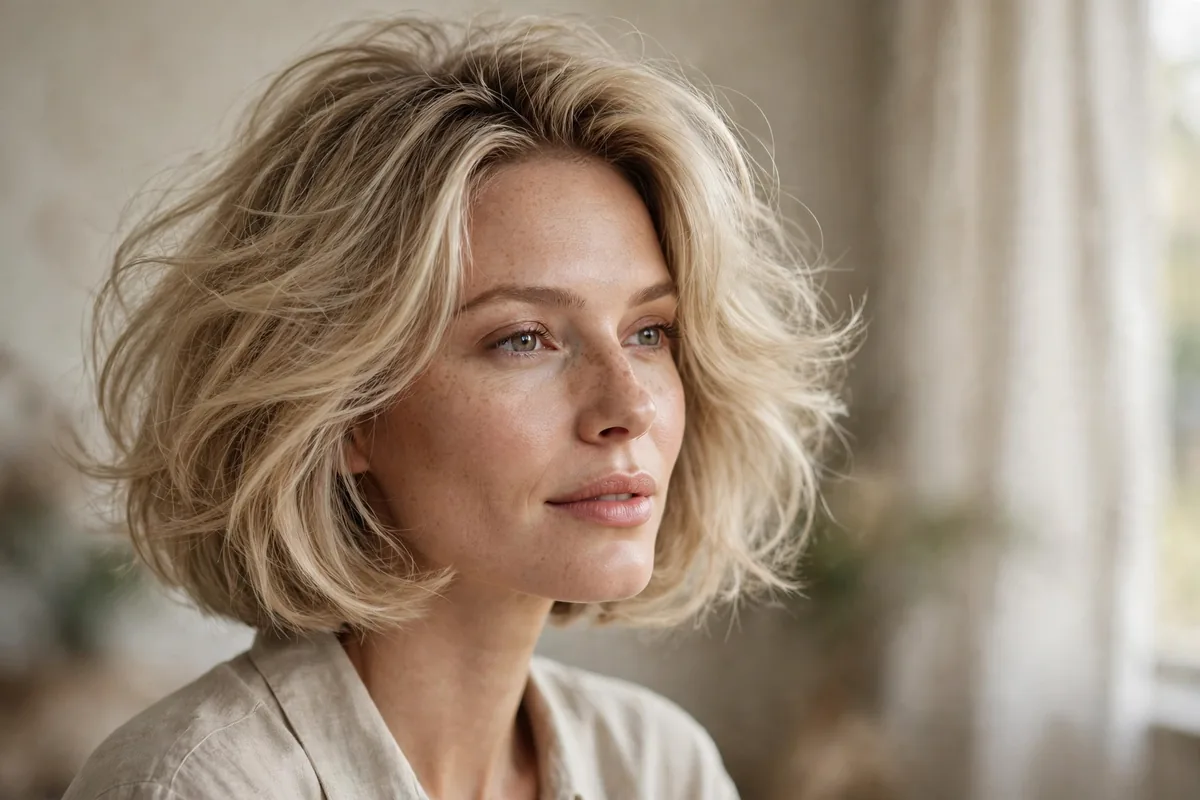
There's a reason stylists call shoulder-length hair the "sweet spot" after 40. It's long enough to feel feminine, short enough to look full and healthy — and it flatters literally every face shape.
But not all shoulder cuts are equal. The difference between "nice haircut" and "wow, you look amazing" is in the details: the layering, the ends, the way it frames your face.
We rounded up the 18 shoulder-length cuts that do the most heavy lifting — movement, volume, softness, polish. Bring your favorites to your next appointment.
Let's get into it.
The Classic Lob with Soft Ends
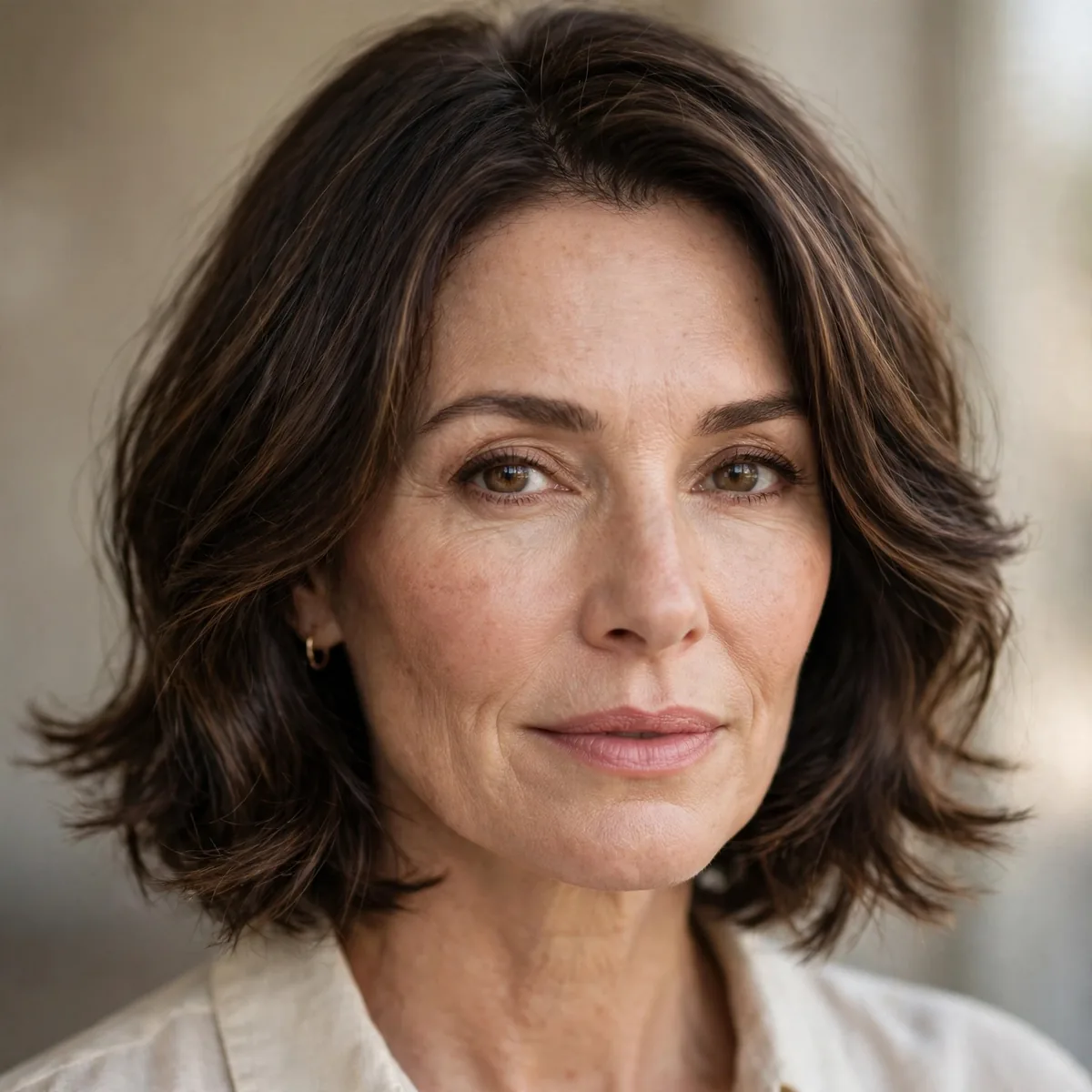
The one-length lob that started it all. Hitting right at the collarbone with softly textured ends, it's the definition of effortless polish.
Best for: straight to wavy hair, oval and heart face shapes. Ask your stylist to point-cut the last inch so the ends never look blunt or heavy.
This lob is one of the most forgiving cuts between appointments. As it grows, the softly point-cut ends simply settle closer to the shoulders, so you can comfortably stretch trims to every eight or ten weeks without losing the shape. For a more polished office finish, sweep one side behind the ear with a small clip. Between trims, a drop of lightweight hair oil on the ends keeps them from fraying or flaring outward.
Weekend styling could not be easier: work a pea-sized amount of texturizing cream through dry hair, twist random sections away from the face, and let them fall into soft bends. For evenings, tuck the front pieces inward with a flat iron for a sleek, editorial finish. Rounder faces look best with a center part to add length, while a subtle side sweep flatters wider foreheads beautifully.
Layered Shoulder Cut with Face-Framing Pieces
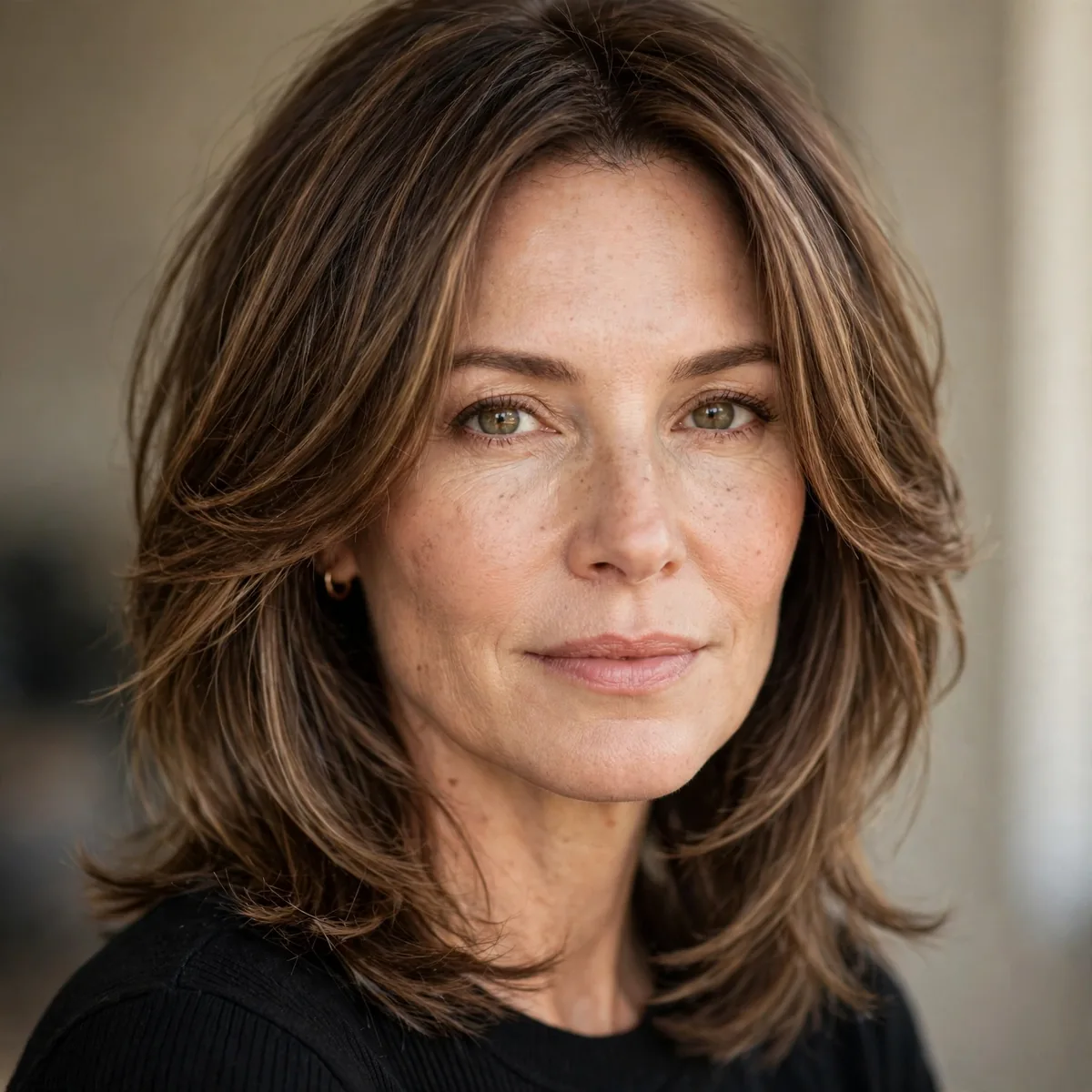
Long layers through the length plus shorter pieces around the face — this cut does what contour does for cheekbones. It lifts, it sculpts, it softens.
Best for: medium to thick hair that needs movement. The face-framing layers should start at the cheekbone, never higher.
The secret of this cut is in how the stylist removes weight. Slide cutting through the interior thins out bulk without creating visible layers, which is exactly why it flatters thick, heavy hair so well. Square and oblong faces benefit most, since the diagonal pieces soften a strong jawline. If your hair runs fine, ask for fewer, longer layers so you never sacrifice precious density.
For workdays, a quick round-brush blowout with the face-framing pieces curled back gives a sleek, finished result in under ten minutes. On weekends, air-dry with a dab of leave-in conditioner and let the layers fall naturally. For weddings or formal events, pin one side behind the ear and add a decorative clip to the other — the shorter pieces frame the face without ever looking undone.
The Bouncy Blowout Lob
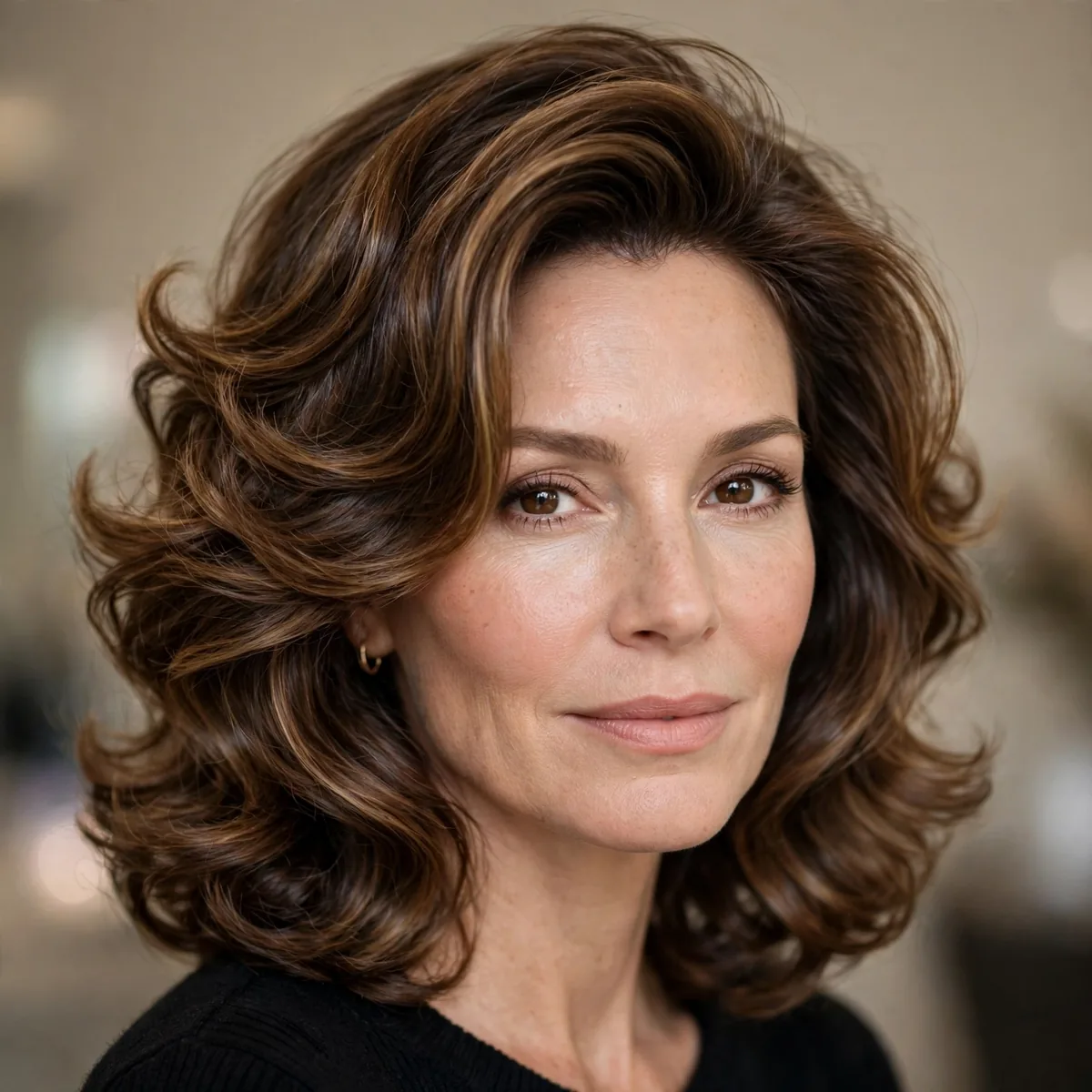
All the drama of a salon blowout, built into the cut. Rounded layers and a bouncy finish make hair look twice as thick.
Best for: fine hair that falls flat. A round brush and five minutes is all it takes — or sleep in a loose topknot and shake it out.
Keeping the bounce between salon visits does not require daily heat. Swap the blow dryer for large velcro rollers a few mornings a week — roll the crown and sides, let them set while you do your makeup, and unroll for instant lift. A spritz of dry shampoo at the roots on day two absorbs oil and adds grit, which actually makes the volume last longer than it does on freshly washed hair.
This is the cut to book before a special event. Shape the waves with a large-barrel curling wand for a glamorous dinner look, or leave them soft and tousled for brunch. Oval and long faces gain the most, since the width at the cheekbones adds flattering fullness. Schedule trims every six to eight weeks, because the rounded shape collapses once the layers grow uneven.
Shoulder-Length Shag with Curtain Bangs
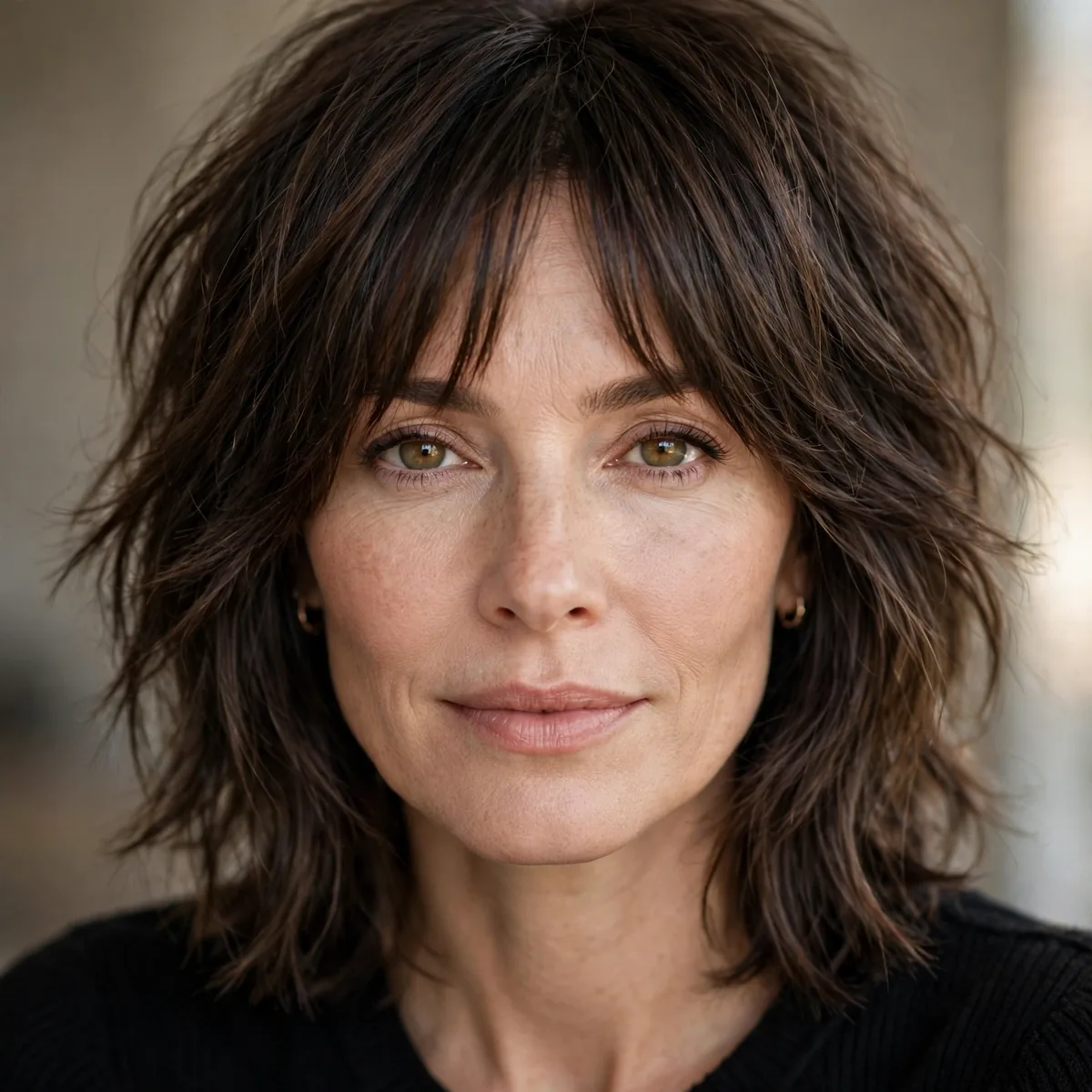
The cool-girl cut that somehow works on everyone. Choppy layers plus curtain bangs give instant texture and edge without trying too hard.
Best for: wavy and curly textures, and anyone who wants a cut with personality. Curtain bangs grow out gracefully — no awkward phase.
The shag rewards a true wash-and-go routine. After washing, scrunch in a golf-ball amount of curl-enhancing mousse and let it air dry — the choppy layers create their own movement. On non-wash days, mist the ends with water and re-scrunch. Ask your stylist to refine the layers with texturizing shears every few months rather than a full recut; a slightly overgrown shag is honestly part of the charm.
One of the best things about this cut is its agelessness — it is not just for twenty-somethings. Women over forty wear it beautifully, because the texture around the face reads softening rather than sharpening. Heart and oval faces look especially good, and thinner hair gains the illusion of real thickness. For formal occasions, gather the back into a low twist and let the curtain bangs frame the face.
The Sleek Straight Lob
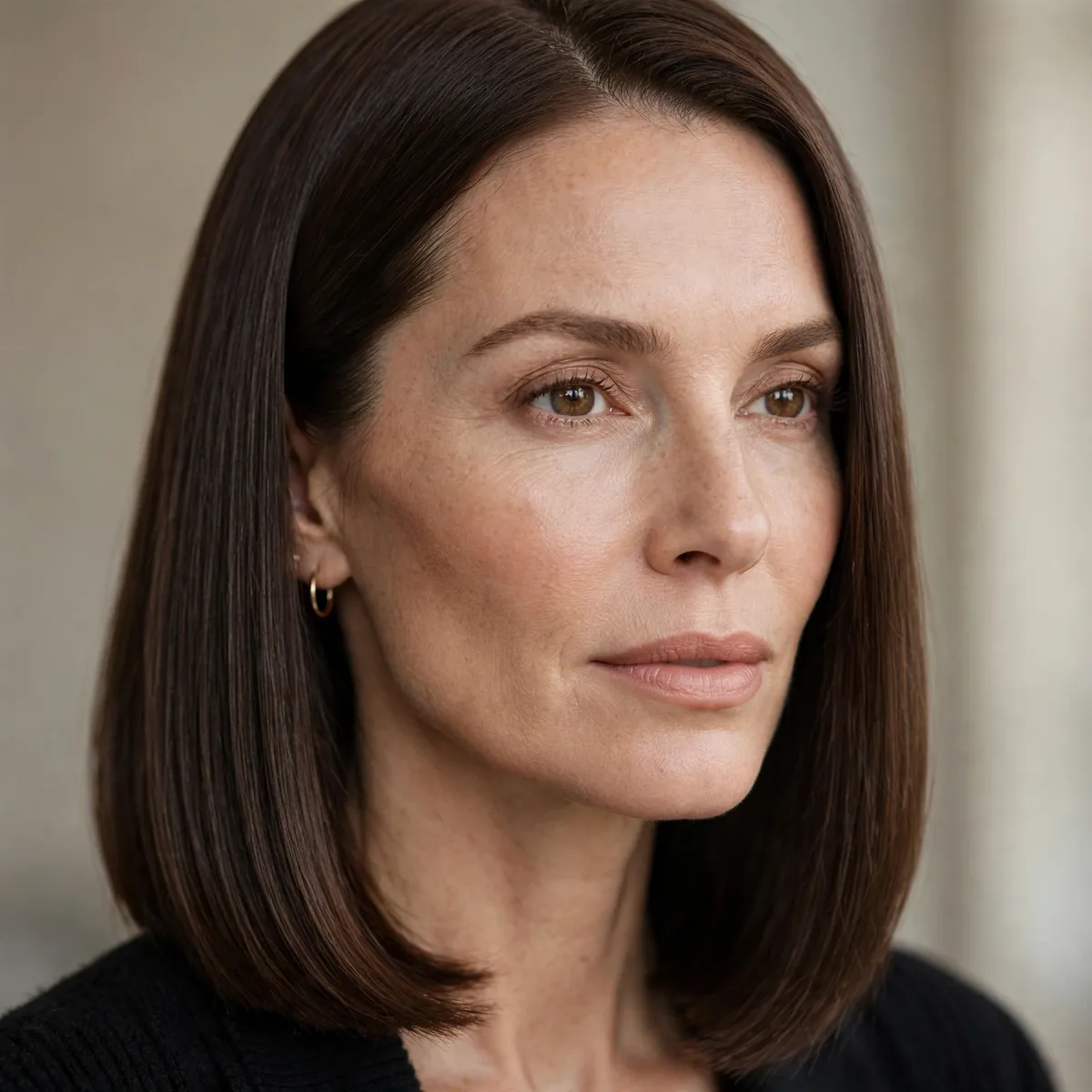
Glass-smooth, sharp, powerful. A sleek straight lob reads confident and modern — it's the haircut equivalent of a perfect blazer.
Best for: naturally straight hair. Keep it healthy with regular trims; split ends show fast on sleek styles.
A glass-like finish starts before the flat iron ever touches your hair. Apply a heat protectant to damp hair, blow it smooth with a paddle brush, then pass the flat iron over one-inch sections in a single slow glide. Repeated passes are what cause damage, so one confident stroke per section is the goal. Finish with a pea-sized amount of smoothing serum pressed through the mid-lengths and ends for that reflective shine.
Straight does not have to mean static. A center part reads modern and editorial, while flipping to a deep side part gives an instant power-dressing edge for the office. Tuck both sides behind the ears to show off statement earrings at evening events. This lob grows out cleanly into a longer bob, so even if you skip a trim, the silhouette stays intentional rather than straggly.
Textured Waves with a Deep Side Part
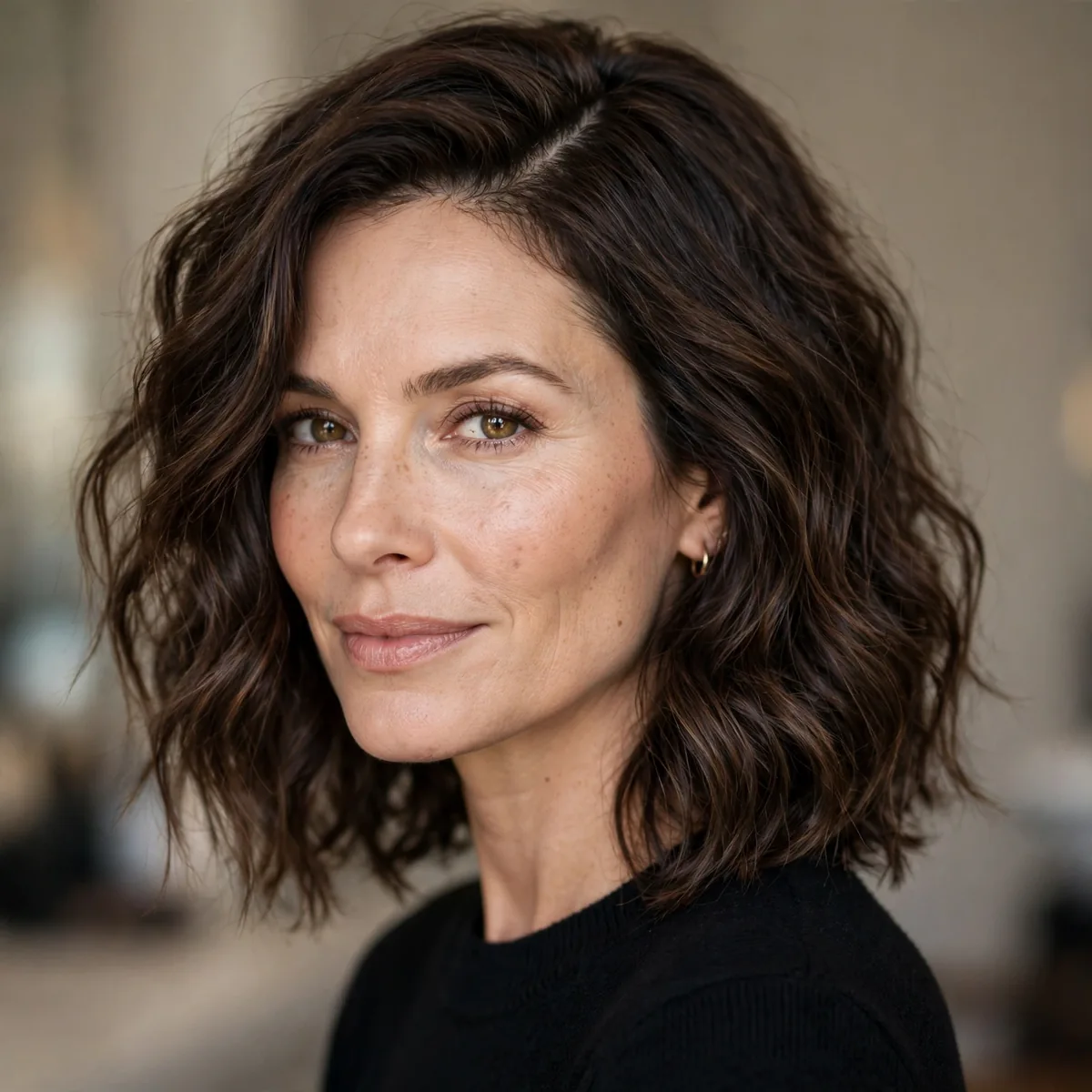
A deep side part is the fastest facelift in hairstyling — it adds volume at the crown and asymmetry that flatters. Add loose waves and you're done.
Best for: anyone. Seriously. If you do one thing from this list, flip your part.
A curling wand is your best friend here. Wrap one-inch sections away from the face, leave the very tips straight for that undone feel, and break up the curls with your fingers once they cool. Mist with texturizing spray for hold without stiffness. Fine hair types should keep the waves loose and chunky — tight curls on the heavy side fall flat by lunchtime, while bigger waves keep their volume all day.
This style shifts with your day effortlessly. Tousled beach waves and minimal makeup make it a weekend staple, while smoothing the top and defining the waves turns it into wedding-guest hair. A dusting of volumizing powder at the crown before an evening out keeps the lift where the part flips. Because the look is about the parting, not the length, it works at every growth stage.
The Curly Shoulder Cut
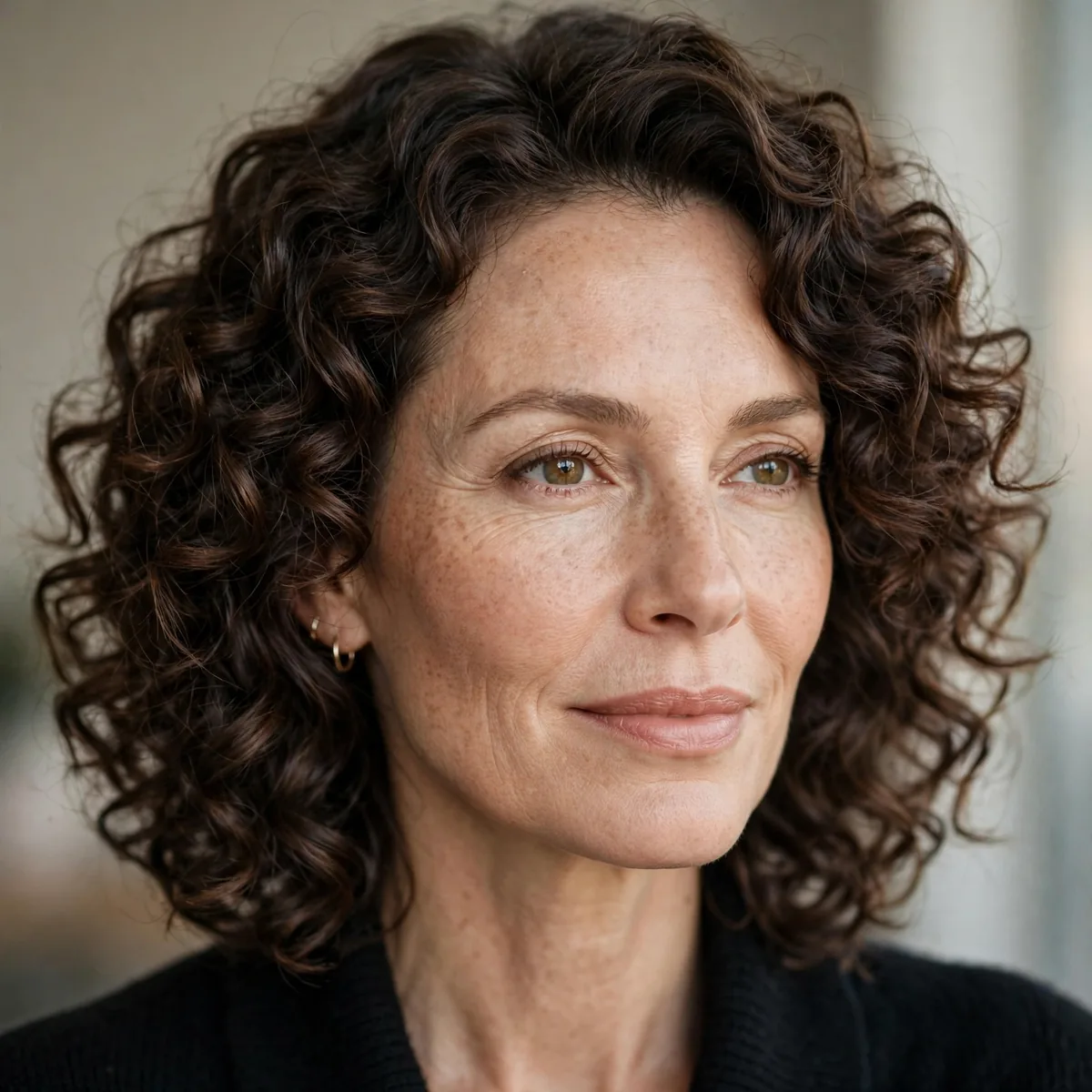
Curls at shoulder length hit the perfect balance — enough weight to prevent triangle hair, enough length to show off the pattern. Layers are non-negotiable here.
Best for: curly and coily textures. Ask for dry cutting so your stylist can see exactly where each curl lands.
Day-two curls just need a little encouragement. Fill a spray bottle with water and a teaspoon of leave-in conditioner, mist the hair until damp, then scrunch in a light curl cream. Pineapple your curls on top of your head at night with a silk scrunchie to protect the pattern. Book trims every ten to twelve weeks — curly hair shows uneven regrowth fast, and regular shaping keeps the shoulder-length silhouette rounded.
Pull the top half into a loose knot and leave the rest free for a casual half-up look that still shows off the curl pattern. For formal occasions, smooth the front with a little edge-control gel and pin one side back — defined curls against a sleek front is a striking contrast. Swapping your part occasionally also lifts the roots, since curls tend to settle where the part has lived.
Angled Lob, Longer in Front
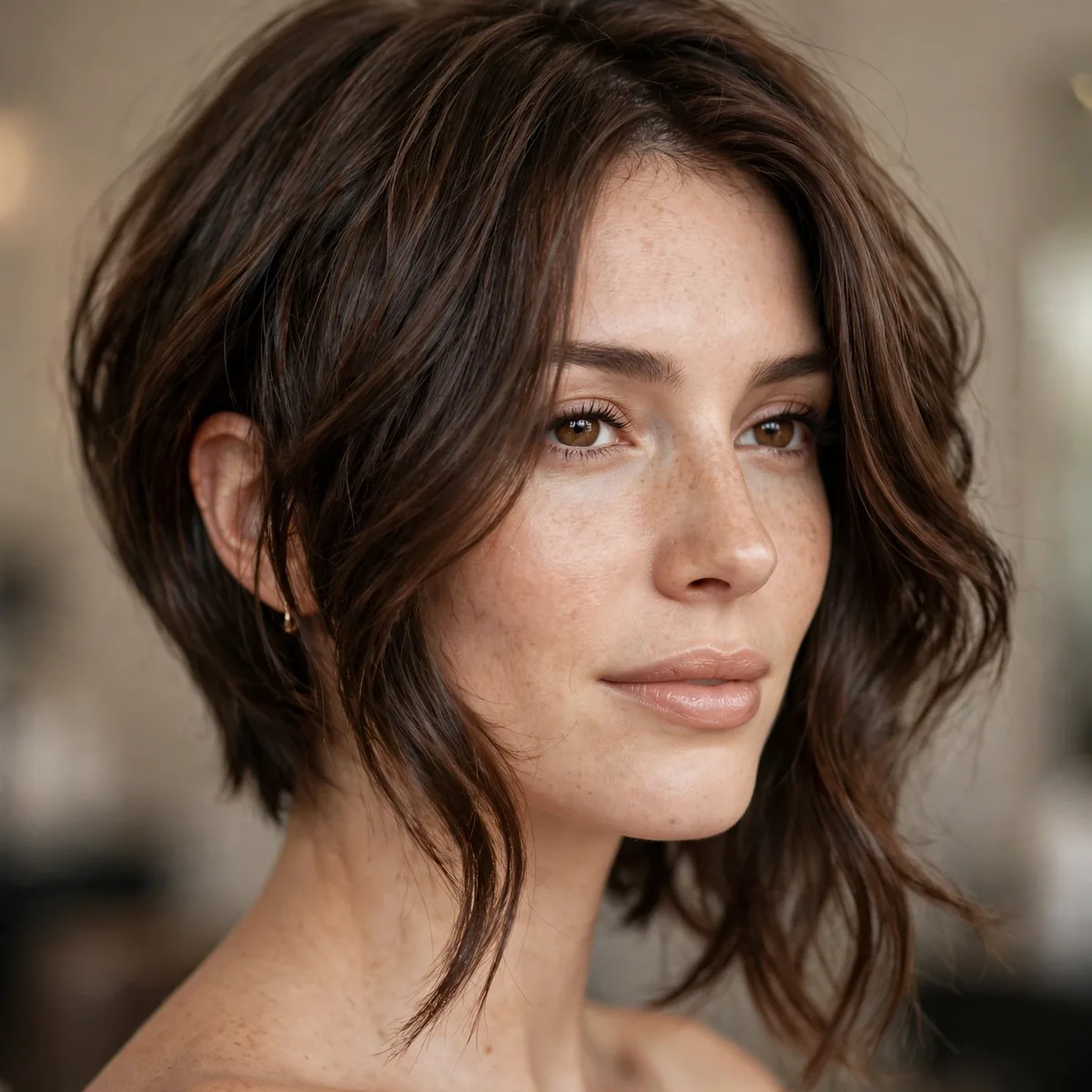
Slightly shorter in back, longer in front — the angle creates a slimming diagonal line along the jaw. It's subtle, but the effect is real.
Best for: round and square face shapes. Keep the front pieces at least collarbone-length for the most flattering line.
The precision of this cut lives in the back, where stacked graduation creates the lifted, angled shape. This is not the cut to book with a first-timer — ask for a stylist who specializes in bobs, because an uneven angle is immediately visible. Between trims, the angle actually deepens as the front grows faster than the back, so plan a clean-up every six to eight weeks to keep the line crisp.
Style with the angle in mind. Glide a flat iron straight down the front pieces to emphasize that sharp diagonal line, or curl the ends under with a round brush for a softer, swingy finish. For the office, tuck the longer front sections behind the ears and let the back do the work. Curled outward with a wand, the front pieces become a glamorous face-framing wave for evenings.
Shoulder Cut with Wispy Bangs

Wispy bangs soften the forehead without the commitment of a full fringe. Paired with shoulder length, the whole look feels fresh and current.
Best for: longer foreheads and anyone curious about bangs. Wispy is forgiving — it grows out beautifully.
Wispy bangs grow fast, so budget a quick trim every three to four weeks — many stylists offer fringe touch-ups free between appointments, so always ask. On styling days, direct the bangs forward with a small round brush while blow-drying, or flick them straight with a mini flat iron for a piecey finish. A touch of dry shampoo on the bangs absorbs forehead oil and keeps them airy instead of clumping together.
Fine and medium hair textures take to wispy bangs best, since the fringe stays light and separated rather than heavy. In humid summer months, a swipe of clear brow gel through the bangs tames frizz without weighing them down. For events, sweep the bangs to one side and pin them flat — the rest of the shoulder-length hair carries the look, and nobody can tell the fringe is even there.
The Voluminous Layered Cut for Fine Hair
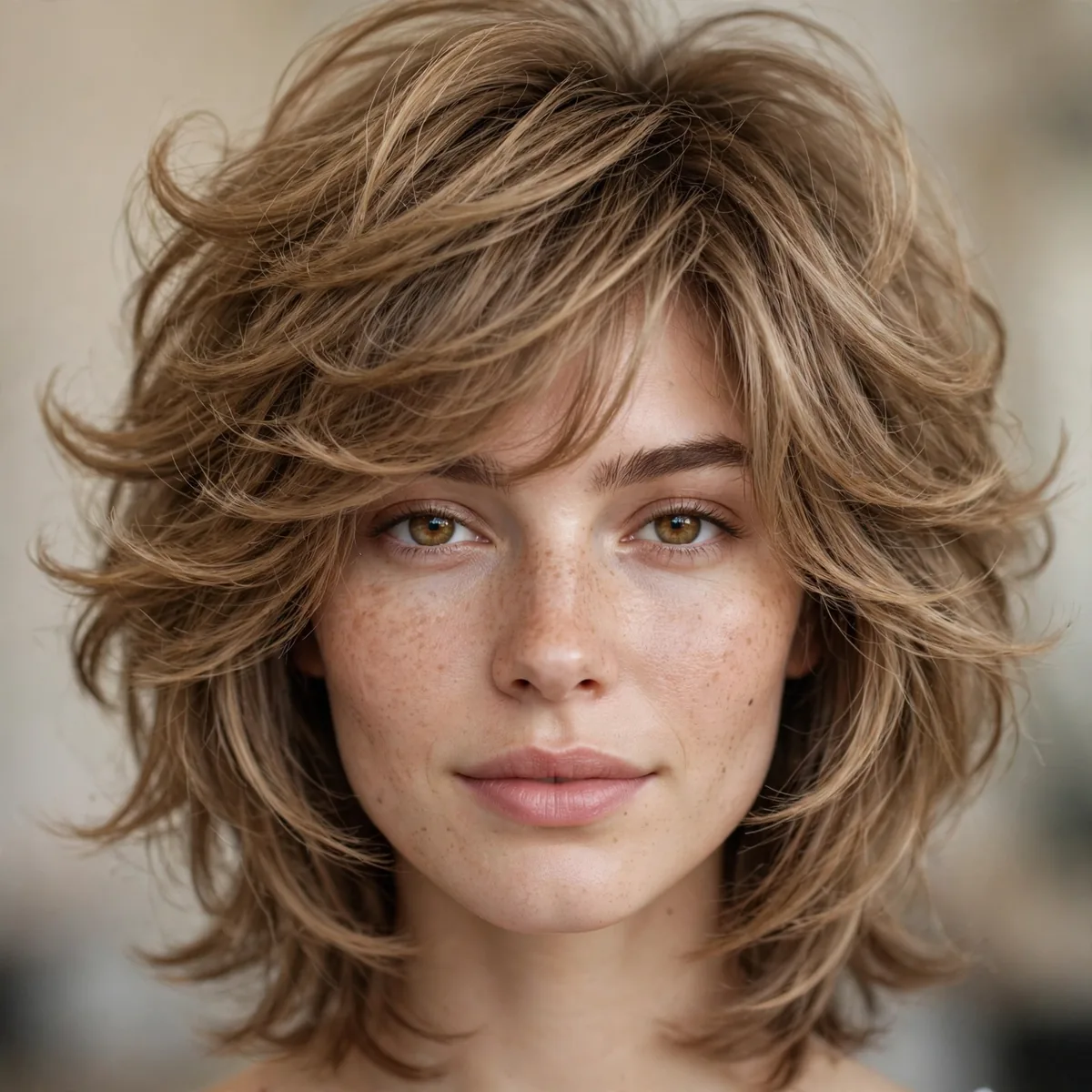
Fine hair's best friend: invisible layers that remove weight without removing length. The result looks thicker from every angle.
Best for: fine, straight hair. Avoid over-layering — too many layers on fine hair does the opposite of what you want.
The real magic happens on wash day: apply a volumizing mousse to damp roots before you do anything else, then rough-dry your hair upside down until it's about eighty percent dry. Flip back up and finish with a medium round brush, lifting each section straight up off the scalp. That upward tension plus the mousse's grip gives fine hair the kind of root lift that a cut alone can't deliver.
This cut is a workhorse across occasions: sleek and blow-dried smooth it reads boardroom-ready, while a few bends from a flat iron make it dinner-party perfect. Between appointments, the layers grow out gracefully, but don't let trims slide past ten weeks — on fine hair, split ends travel upward fast and turn those invisible layers stringy. A quick dusting keeps the thickness illusion intact.
Beachy Undone Waves
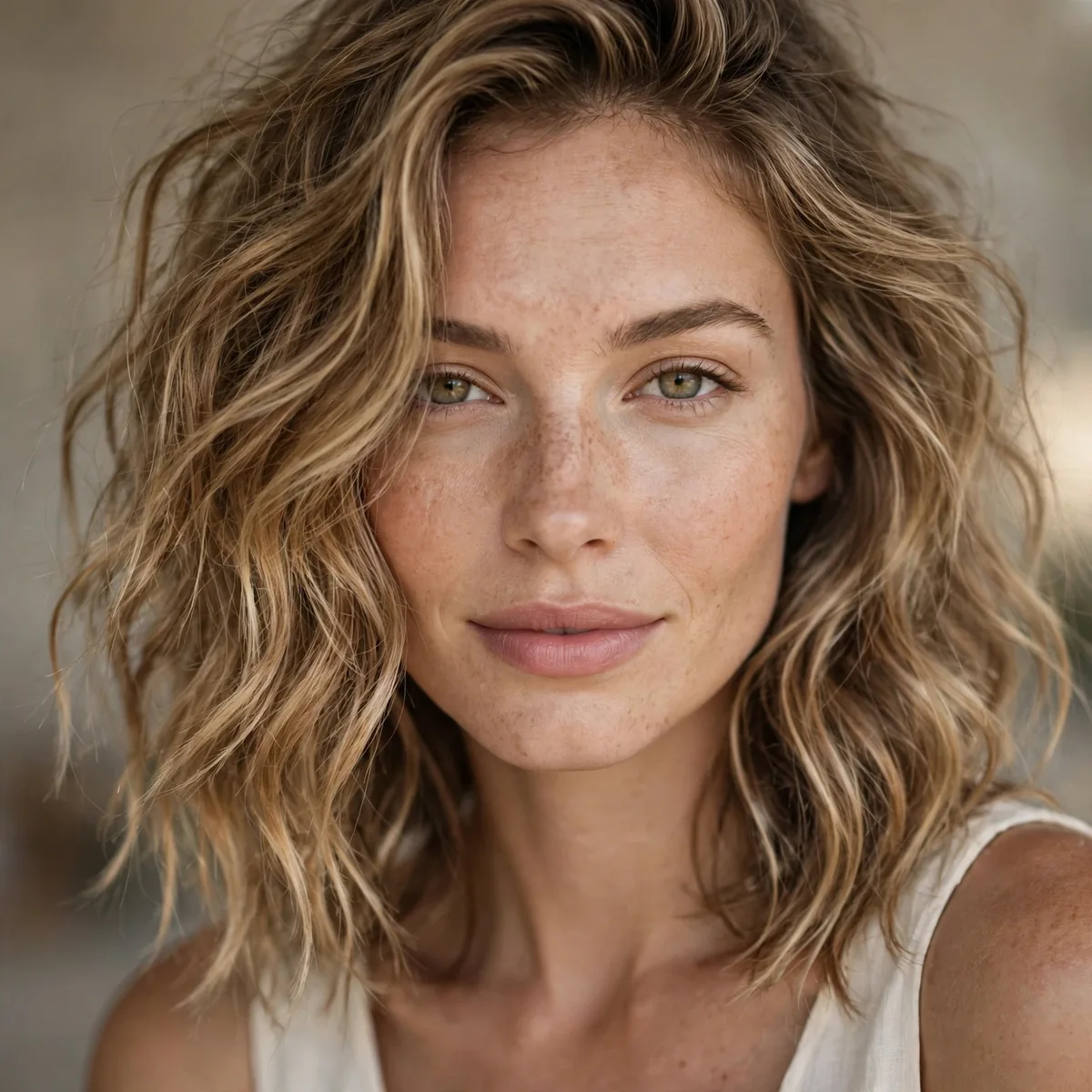
The "I woke up like this" look that actually takes ten minutes. Loose, imperfect waves are the most forgiving style in existence.
Best for: second-day hair, busy mornings, everyone. A flat iron waved through mid-lengths is faster than a curling iron.
Here's the technique that separates beachy from messy: work in horizontal sections with your flat iron and alternate the bend direction every single time — one section curls toward your face, the next away from it. Leave the last inch of every section completely straight, which keeps the look modern instead of pageant. Finish with a few spritzes of salt spray, then rake through with your fingers rather than a brush.
Oblong and narrow faces benefit most, since the horizontal movement adds width exactly where it's needed — rounder faces should keep the waves lower, below the chin, to avoid widening the cheeks. This style genuinely improves on day two: mist dry shampoo at the roots before bed, sleep on it, and the waves settle into something softer and more believable than day one.
The Polished Blowout with Flipped Ends
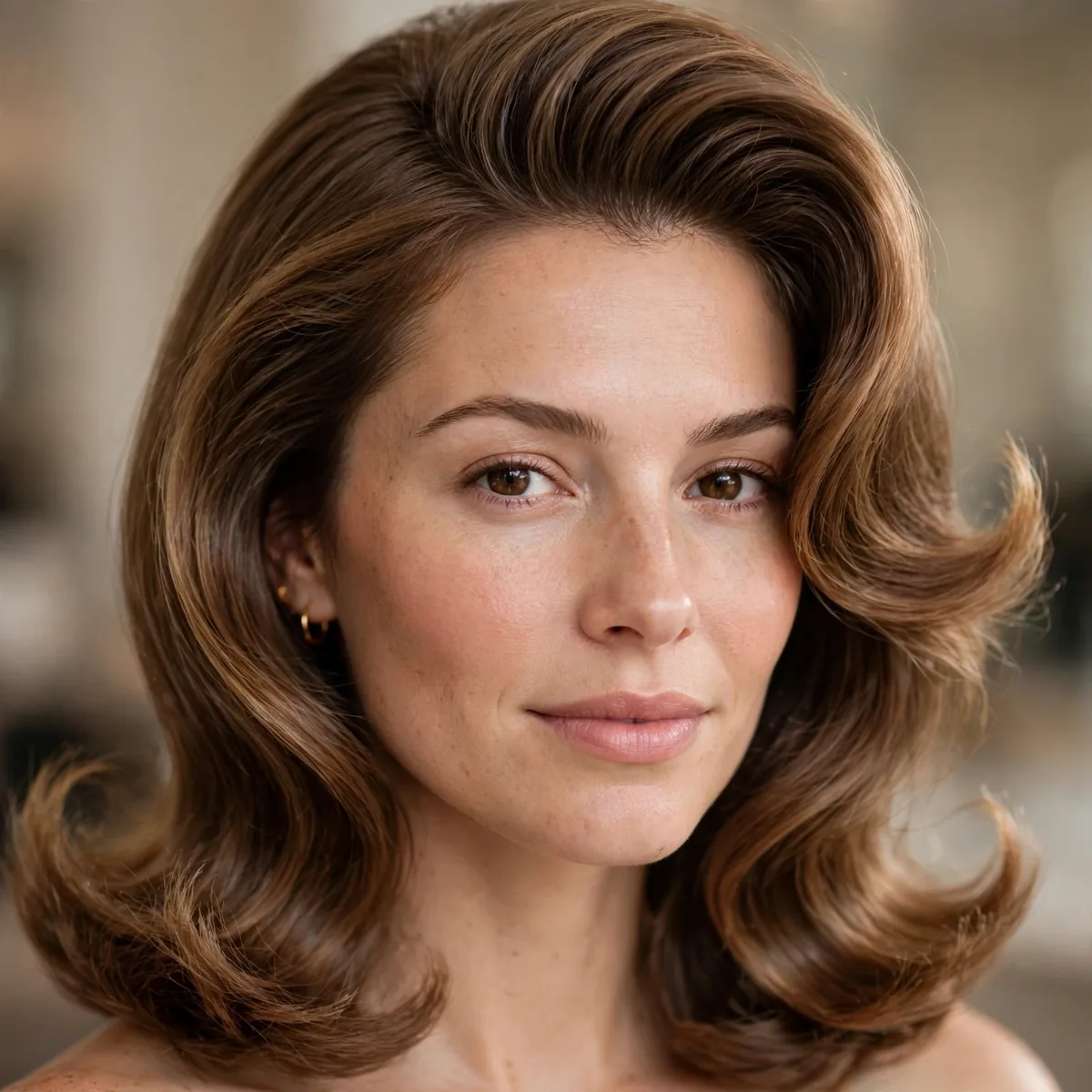
A little retro, totally current. Flipped ends add playfulness and movement — it's the detail that makes people ask who does your hair.
Best for: medium-density hair. A round brush flicked outward at the ends is all you need.
Section the hair into four quadrants and work with a two-inch round brush, wrapping each section under at the mid-lengths and then flicking outward right at the ends. Hit the flick with the cool shot for five seconds to lock it in — heat without the cooldown just falls flat. A pea-sized smoothing cream on the mid-lengths beforehand tames frizz without weighing down that playful flip.
This is the haircut that earns compliments at weddings, galas, and anywhere cameras are flashing — the flipped ends photograph with a bounce that plain blowouts lack. Longer necks and heart-shaped faces wear it best, since the outward movement balances a narrower chin. It's low-maintenance between salon visits too, growing out into a clean one-length lob for weeks before the ends need reshaping.
Shoulder-Length Cut with Dimensional Highlights
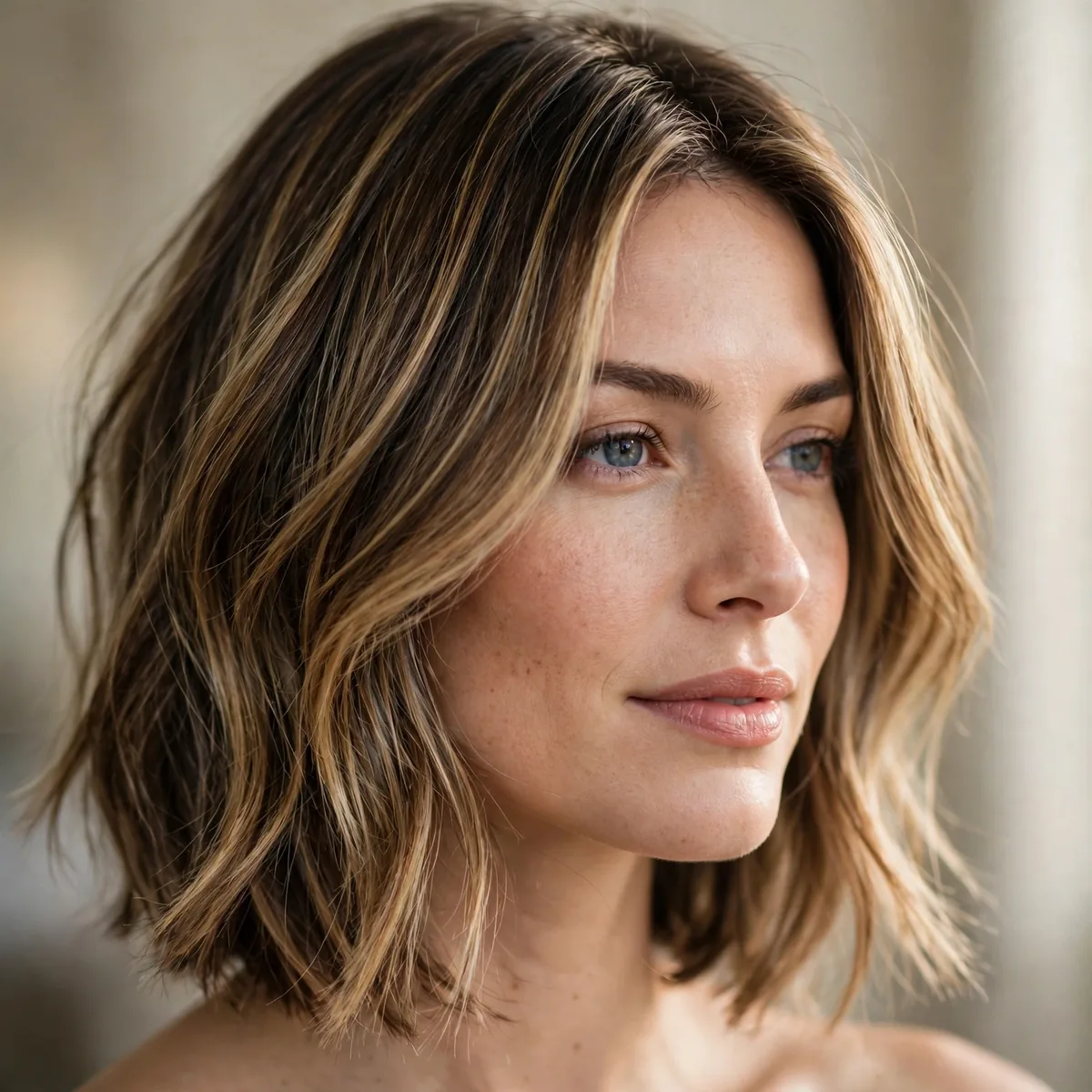
Sometimes the cut is perfect and it's the color doing the work. Soft dimension through the mid-lengths makes any shoulder cut look more expensive.
Best for: anyone whose hair looks "flat" in photos. See our balayage ideas for dark hair for low-maintenance color that grows out seamlessly.
The beauty of dimension placed through the mid-lengths rather than at the root is the grow-out — soft, ribbon-like balayage has no harsh line, so you can stretch color appointments to three or four months. Ask your colorist for a gloss refresh between full appointments to keep the tones from going brassy. Skip purple shampoo unless your dimension runs cool; warm caramels and honeys don't need it.
Warm skin tones glow with caramel and golden dimension, while cooler complexions get lit up by ash and beige ribbons — your colorist should hold swatches to your jawline, not just guess. In winter, ask for a few deeper lowlights woven through the mid-lengths; they add richness when your skin pales and keep the whole shoulder-length cut looking intentional instead of washed out.
The Modern Shag
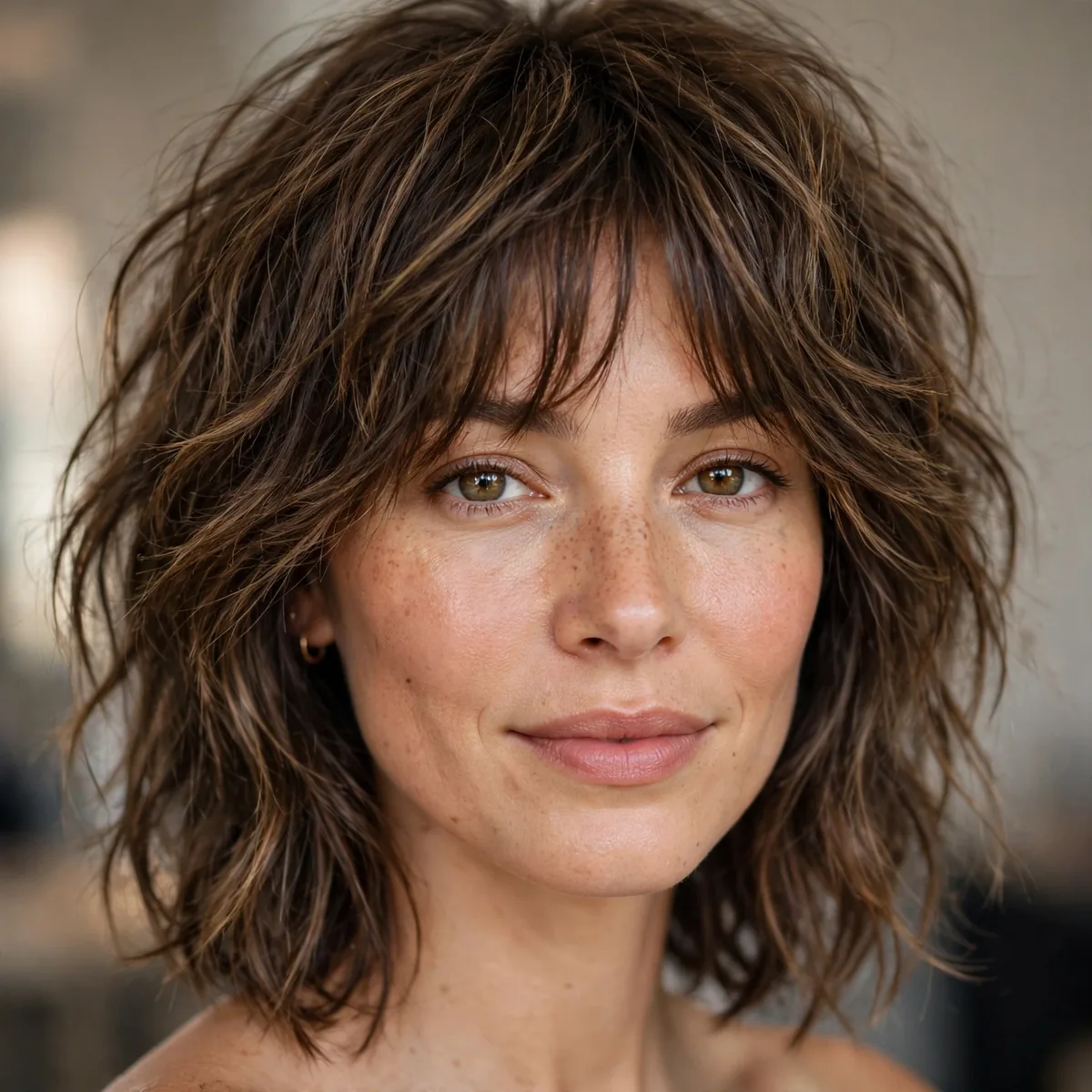
Not the 70s shag — the 2026 version. Softer layers, lived-in texture, zero stiffness. It's the haircut equivalent of laughing easily.
Best for: thick hair that needs weight removed, wavy textures that need encouragement.
Put the brush down for this one — the modern shag looks best when you scrunch a light styling cream through damp hair and let it air-dry or diffuse on low heat. Texturizing shears did the heavy lifting during the cut by removing bulk without visible layers, so your job is simply to encourage that separation. Flip your part every few days; the asymmetry keeps the texture from falling into a routine.
Thick-haired women in their forties love this cut because it grows out better than almost anything — the layers simply lengthen into each other, buying you ten to twelve weeks between trims. For a work-week variation, smooth just the top layers with a flat iron while leaving the ends textured underneath; you get office polish on top and edge everywhere else.
Soft Curls with a Middle Part
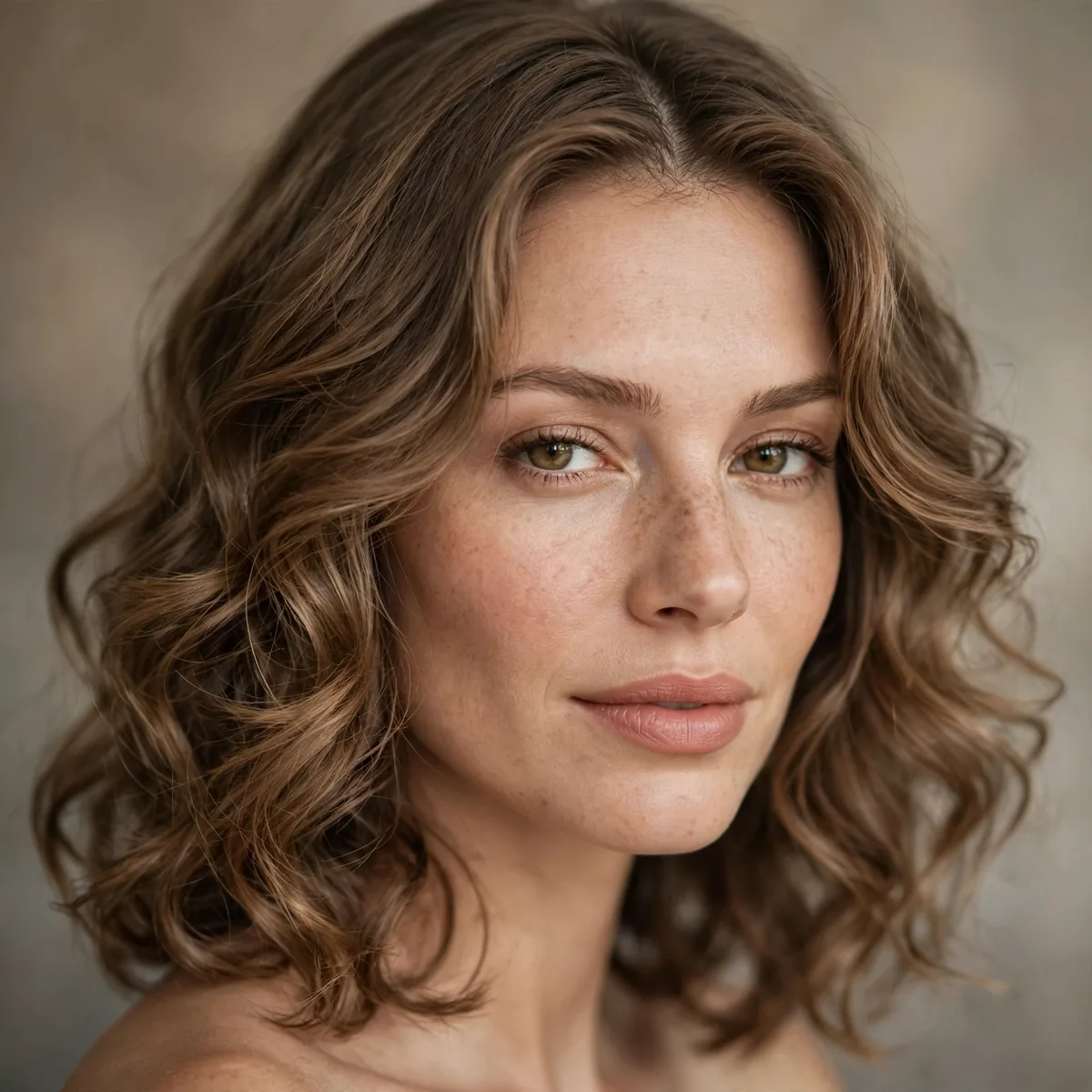
Symmetrical, soft, romantic. A middle part with brushed-out curls frames the face evenly and looks stunning in photos.
Best for: oval and oblong faces. Keep curls loose — tight ringlets with a middle part can read severe.
Day-two curls are easier than you think: mist the mid-lengths lightly with water, smooth a drop of serum through each section, and re-wrap just the front pieces around a large barrel for ten seconds. Brushing out with a boar-bristle brush distributes your natural oils and turns yesterday's definition into today's softness. A silk pillowcase overnight reduces the friction that flattens curls by morning.
This is a natural for events — weddings, anniversary dinners, milestone birthdays — because symmetrical curls photograph evenly from every angle and the middle part keeps them modern rather than retro. Round faces can absolutely wear it; just build volume at the crown and keep the sides brushing past the jawline instead of curling inward, which lengthens rather than widens.
The Asymmetrical Lob
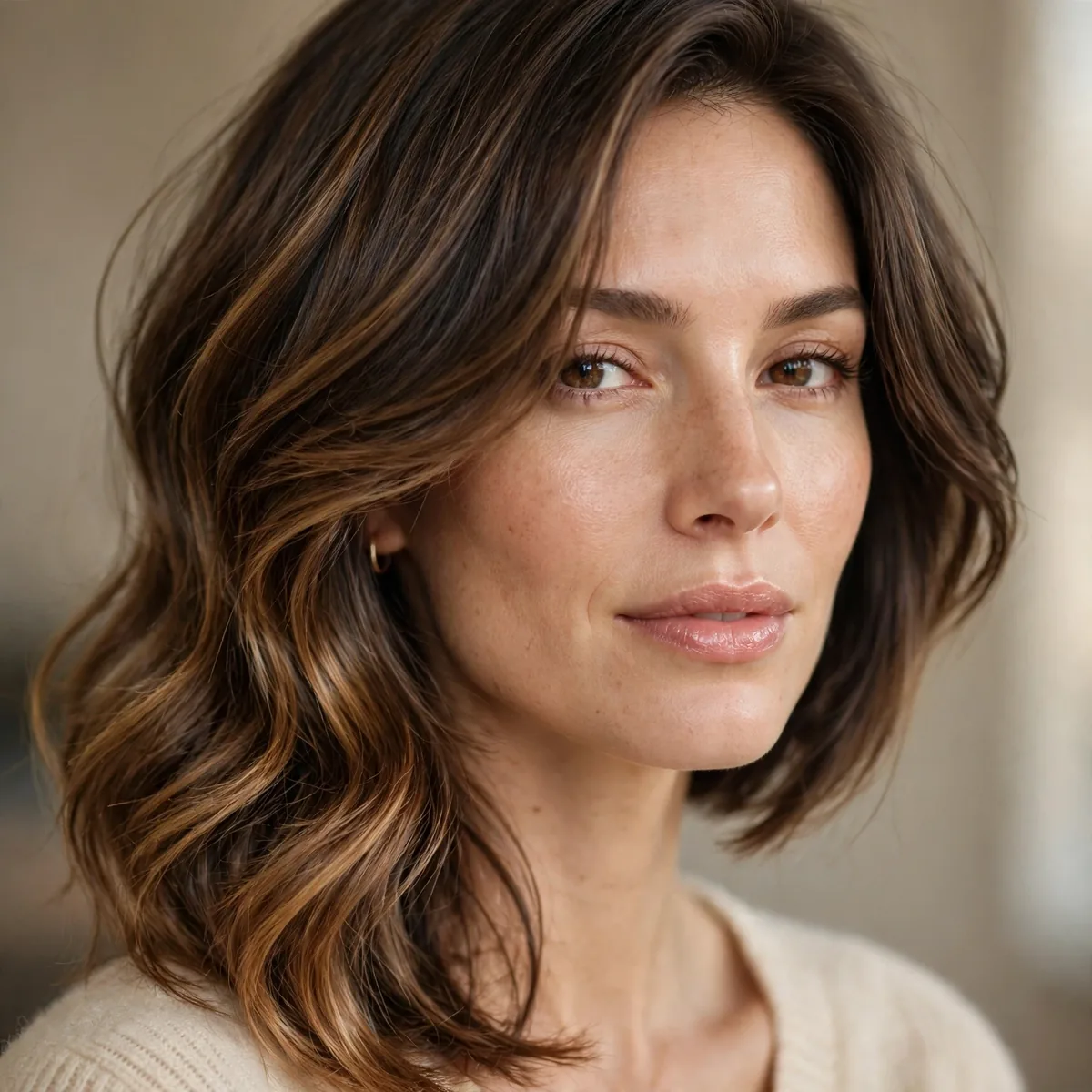
One side slightly longer than the other — barely noticeable, totally intriguing. It's the haircut for women who like a little mystery.
Best for: straight hair where the line shows. The difference should be subtle: half an inch to an inch max.
Where you place your part changes everything here — a deep side part exaggerates the asymmetry for an editorial, fashion-week feel, while a center part softens it into something barely-there. Blow-dry with a paddle brush directing everything toward the longer side to reinforce the line, then tuck the shorter side behind your ear. That single tuck makes the asymmetry look deliberate rather than accidental.
Strong jawlines and square faces get the most from this cut, since the longer side draws the eye diagonally across the face and softens angular corners. It does demand discipline: book a trim every six to eight weeks, because as the shorter side grows, the difference drifts toward looking like an uneven mistake. Ask your stylist for slide cutting along the perimeter to keep the line fluid.
Layered Cut with Face-Framing Balayage
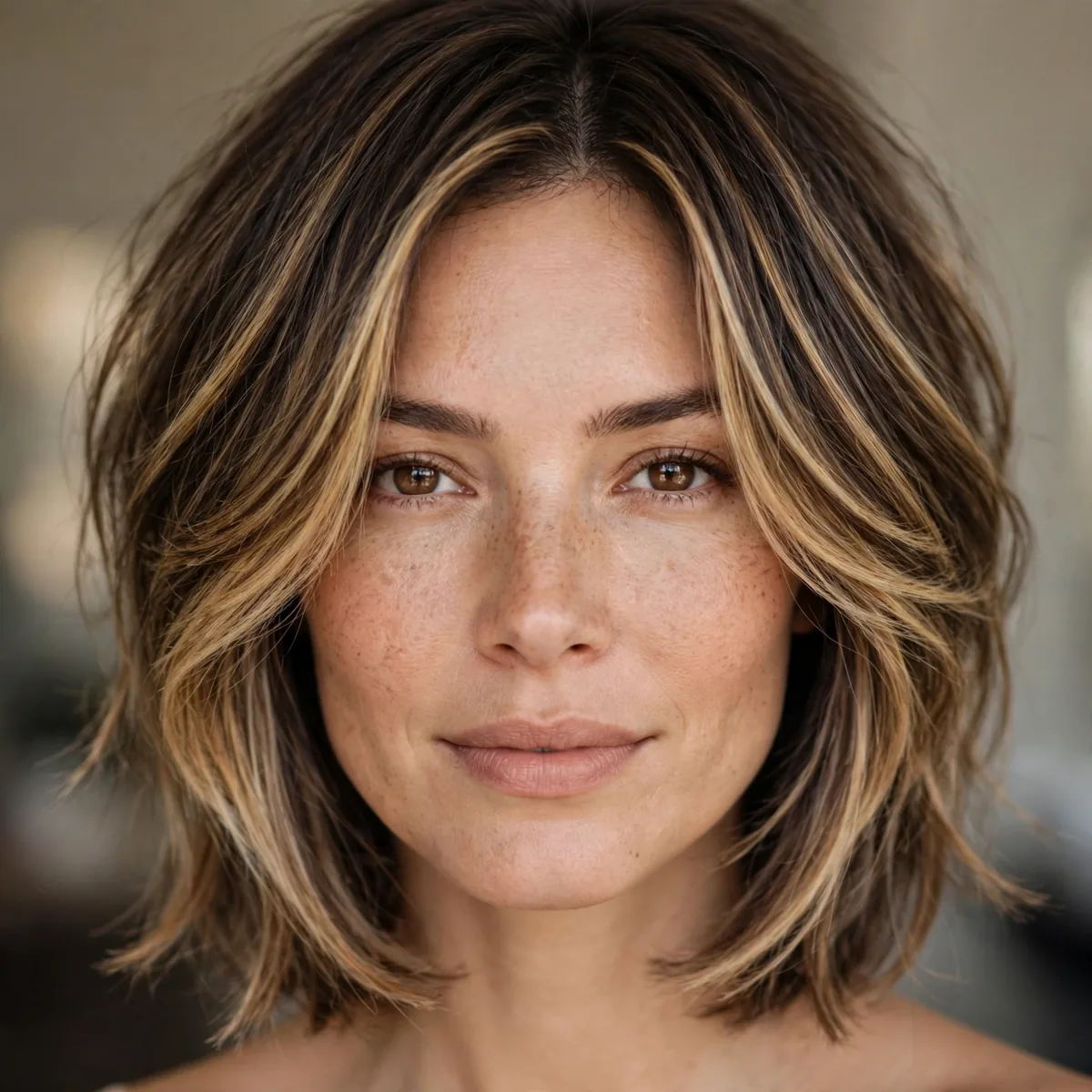
The power combo: face-framing layers + lighter pieces around the face. It brightens your whole complexion — like good lighting, permanently.
Best for: everyone, especially if your hair is one flat color. The money-piece balayage is the lowest-commitment color upgrade there is.
Lightened face-framing pieces are the most fragile part of your hair, so heat protectant isn't optional — mist it on every time before hot tools, no exceptions. The money piece needs a tone refresh every ten to twelve weeks to stay luminous rather than dull, and since the foils sit away from the scalp, the regrowth blends instead of leaving a line. Between visits, a weekly mask keeps those fine pieces from snapping.
Style with the color in mind: curling the front sections away from your face spotlights the money piece and throws light across your cheekbones. For the workweek, wear it sleek and straight — the balayage still creates movement visually even without waves. And if your tone feels too bright by midsummer, ask for a root melt; deepening the base keeps the brightness where it belongs.
The Effortless Air-Dried Lob
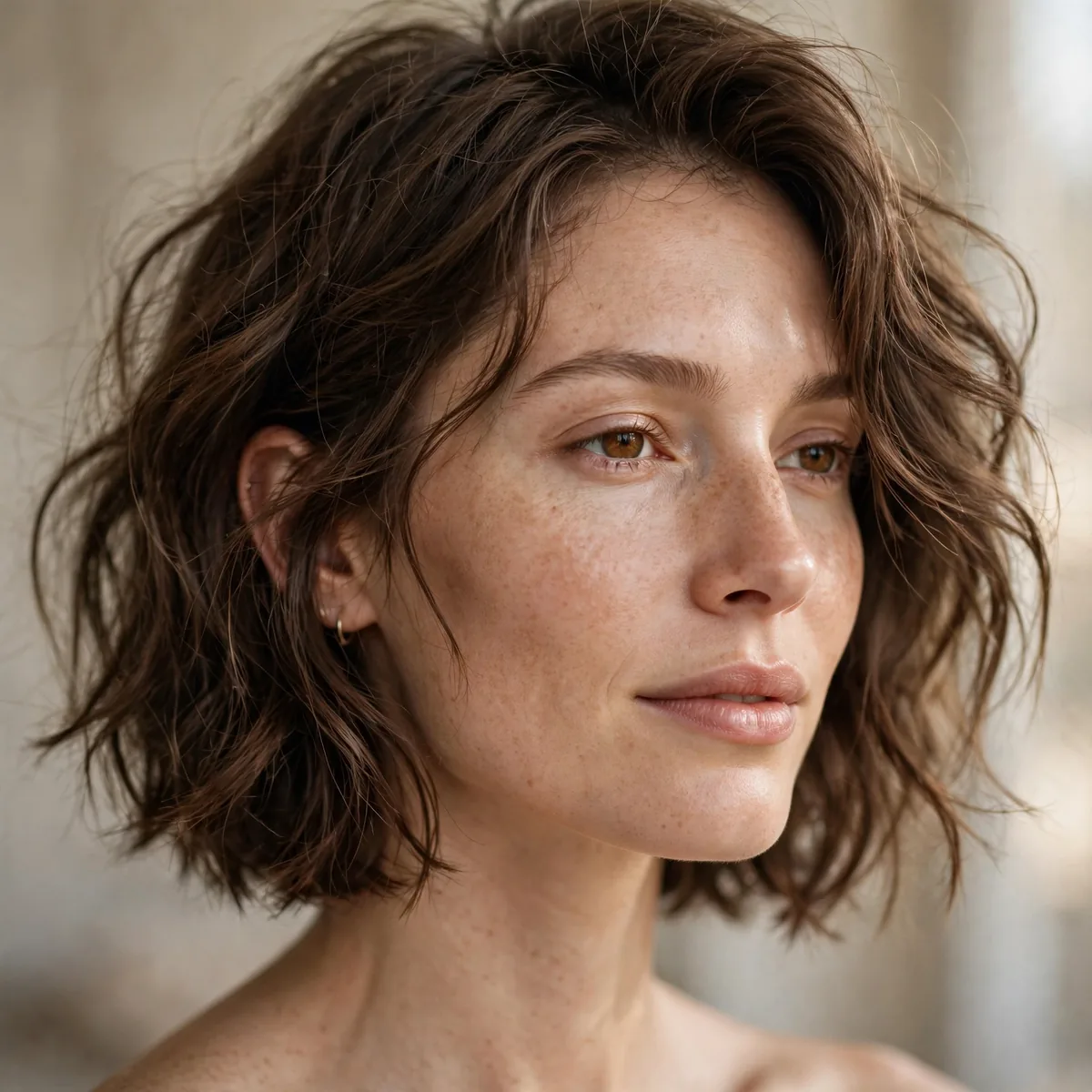
Cut to work with your natural texture, not against it. The right layers mean you can wash, scrunch, and walk out the door.
Best for: wavy textures and low-maintenance lifestyles. Tell your stylist "I air-dry" — it changes how they cut.
The air-dry technique matters more than the products: after washing, squeeze — never rub — with a microfiber towel or an old cotton T-shirt to remove water without roughing the cuticle. Work a pea-sized amount of leave-in cream plus a golf-ball of light mousse through damp hair, scrunch upward a few times, then keep your hands off until it's dry. Touching mid-dry is what creates frizz.
This is the frequent traveler's best friend — no tools, no outlets, just hair that looks intentional after a wash. Humid summers demand an anti-frizz serum layered over the leave-in, while winter dryness calls for a richer cream to prevent the ends from puffing. Coarser wavy textures need slightly longer layers than fine ones, or the silhouette can puff outward instead of falling softly.
Found your next cut? Save this page to Pinterest so it's waiting at your appointment — and if you try one, tell us which number you picked. For color to go with your new cut, browse our 20 balayage ideas for dark hair, or complete the look with soft glam makeup for brown eyes.