Floral nail art is spring’s signature — daisies, blossoms, and botanical details that celebrate the season.
The floral range runs from single dainty daisies to full botanical gardens. The key is scale — tiny florals read chic, large ones read bold.
These 18 designs cover every floral mood.
Here’s your blooming collection. Let’s get into it.
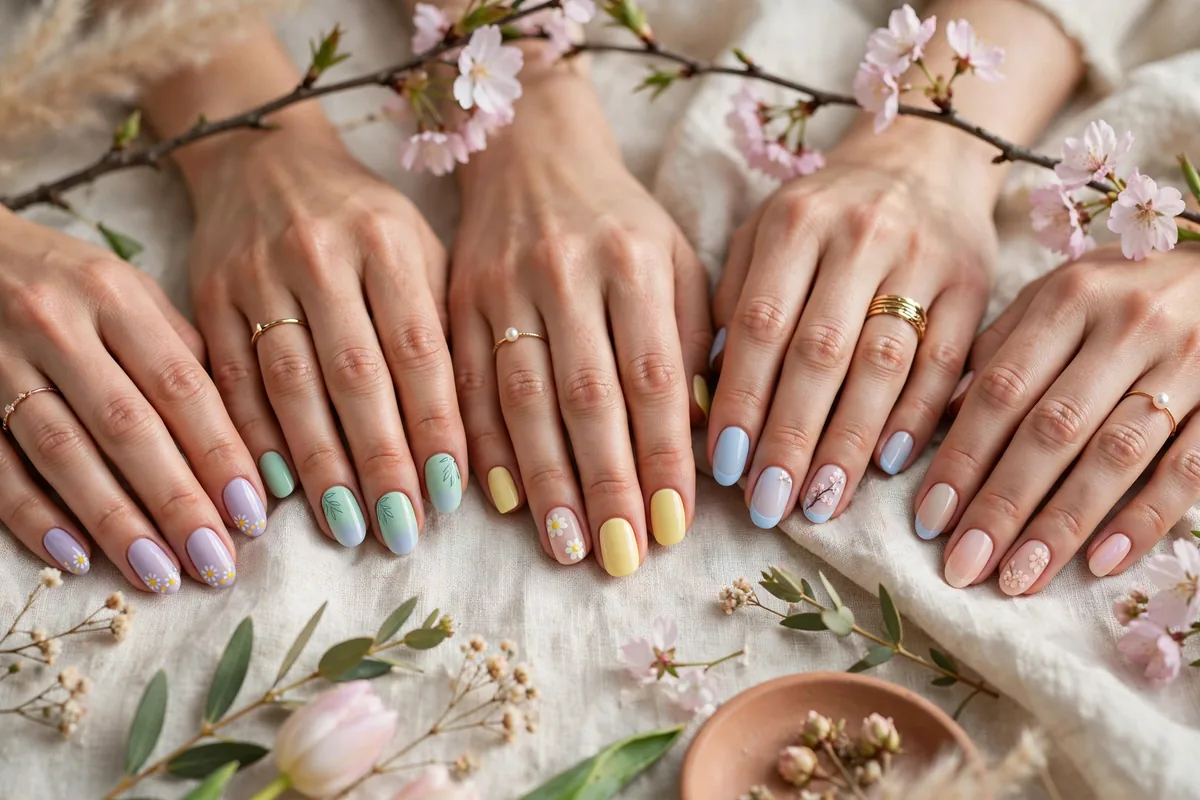
Dainty Daisy Chain
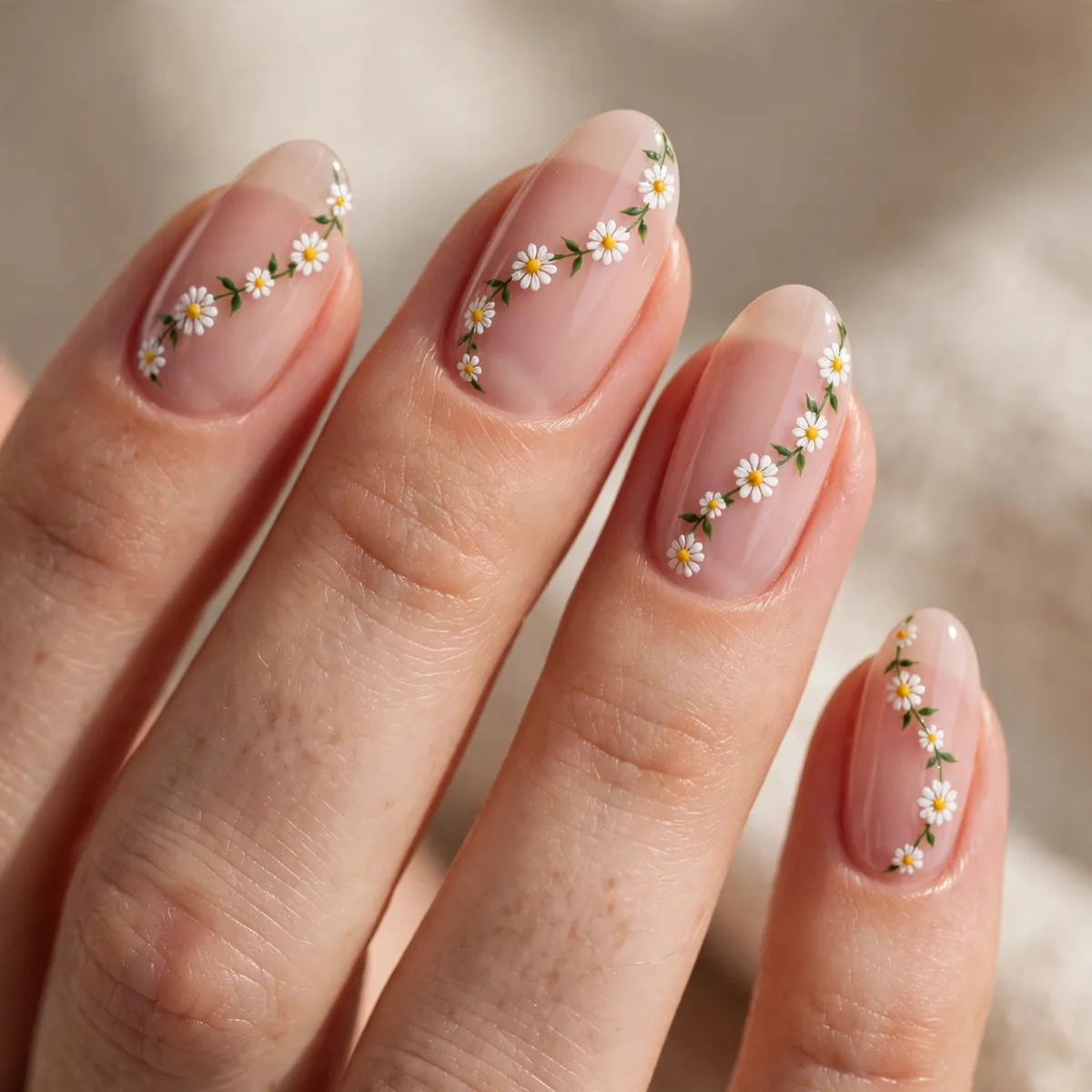
Tiny daisies linked across nails — the spring classic.
Best for: the essential floral. Daisies ARE spring nails.
Dotting tools make daisies effortless: five white dots in a circle for petals, one yellow dot pressed into the center, then connect each bloom with a fine green stem using a striping brush. Work on a fully dry nude or blush base so petal dots stay round instead of dragging. Link daisies diagonally — the diagonal line elongates short nails.
Tiny florals chip less than large art — the dots sit flat under top coat with no raised edges to catch. This classic suits Easter brunch, garden weddings, and spring job interviews alike. Refresh the top coat on day six and the chain stays crisp for a full fortnight. Almond and oval shapes flatter the diagonal flow best.
Cherry Blossom Branch
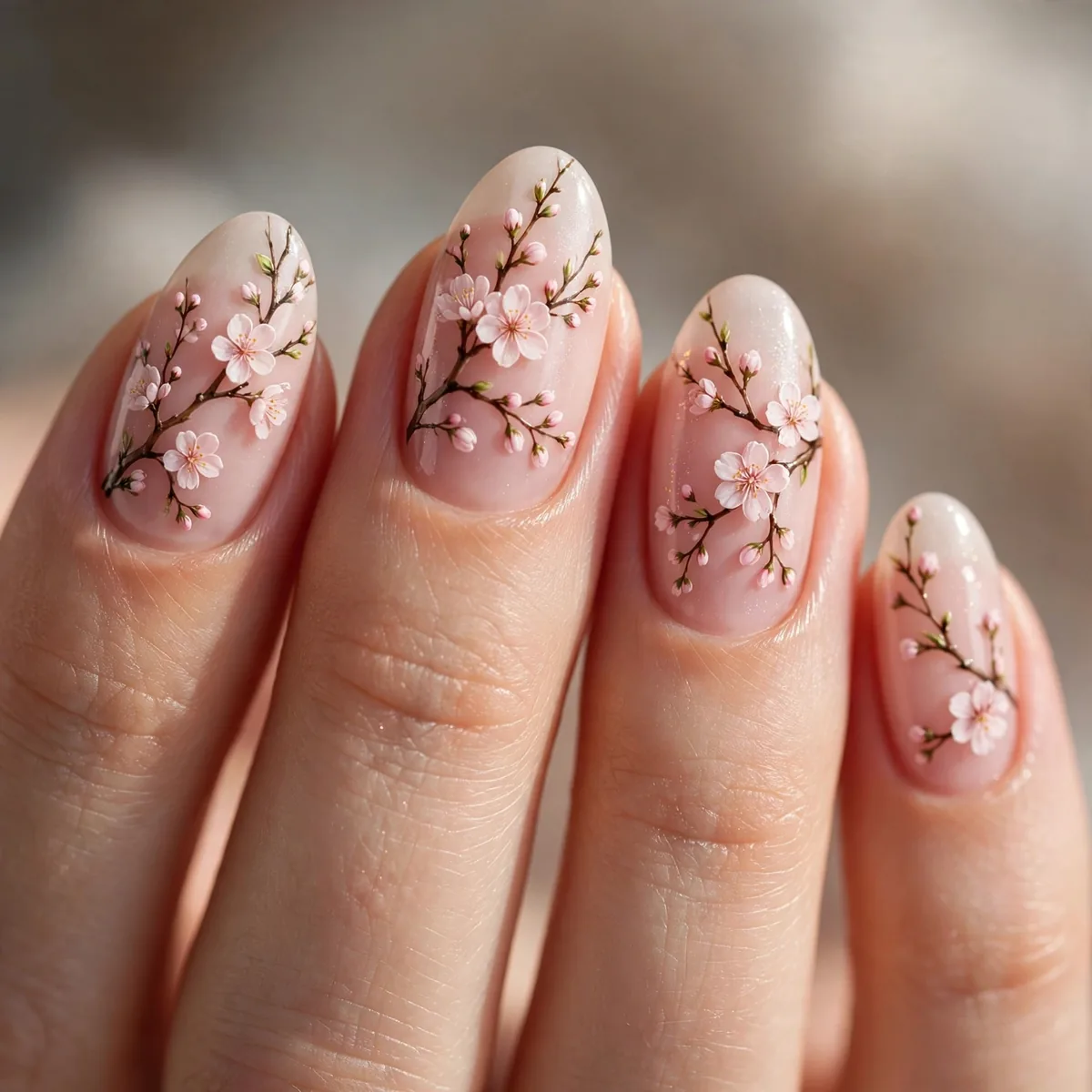
Blossom branches in pink — spring’s most poetic floral.
Best for: the romantic. Our cherry blossom guide goes deeper.
Paint the branch first with a thin brown liner brush in one confident curved stroke — the branch is the skeleton, so let it dry before adding anything. Stamp or dot five-petal blossoms in layered pinks along the branch, deepest pink at the center of each bloom. A few scattered petals near the cuticle suggest blossoms about to fall.
Cherry blossom nails peak from March through May, perfectly timed for spring festivals and hanami-inspired looks. The pink-on-nude palette flatters cool undertones beautifully. Keep blossoms to two accent nails on shorter lengths — full coverage overwhelms small nail beds. This romantic style transitions gorgeously from daytime picnics to evening dates with ease.
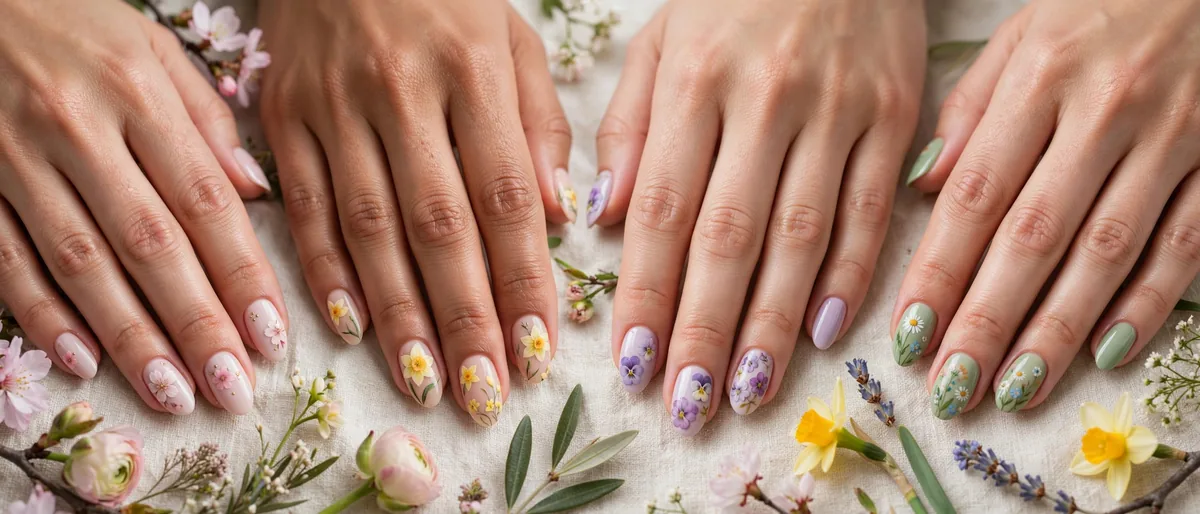
Wildflower Meadow
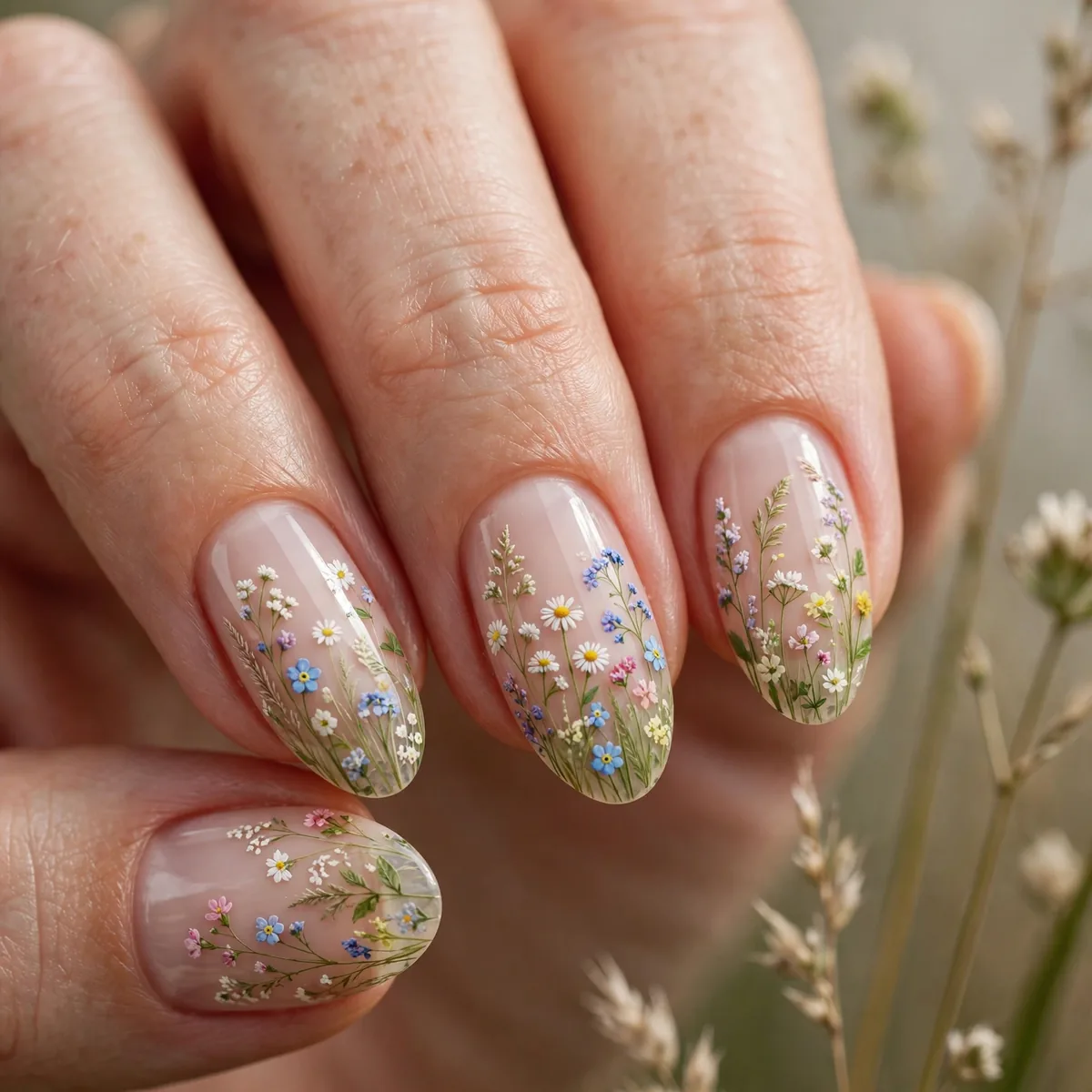
Mixed wildflowers — the natural spring.
Best for: the organic. Wildflowers feel gathered, not arranged.
Mix three or four tiny flower types — mini daisies, lavender buds, small blue forget-me-nots — in different sizes across the nails so the meadow feels gathered rather than patterned. Vary petal colors but keep one unifying element, like the same sage-green leaves, so the mix reads intentional. Negative gaps between blooms keep it airy.
This organic look suits free-spirited spring style — music festivals, farmers markets, outdoor weddings. It forgives shaky hands beautifully since wildflowers are supposed to look imperfect. Medium-length oval nails give each bloom room without crowding. Seal generously; lots of small details mean lots of edges that need top coat protection from chips.
Single Stem Minimal
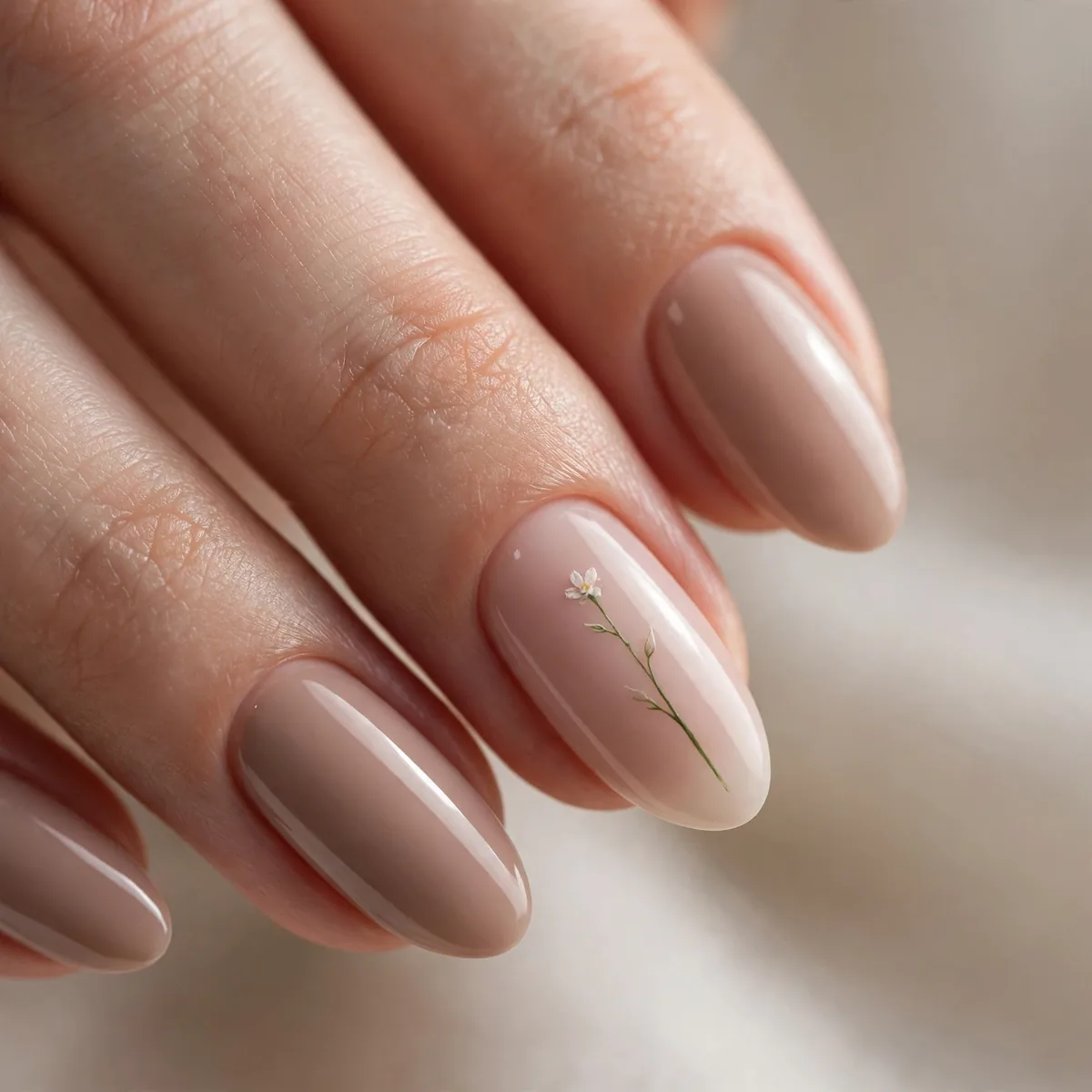
One stem per nail — the minimalist floral.
Best for: the understated. Single stems are floral restraint.
After the striping-brush stem, add just two leaves and one tiny bud — restraint is the entire point of this design. Curve the stem gently toward the free edge so it follows the nail’s natural line instead of fighting it. A matte top coat makes single-stem art look especially modern and gallery-like.
The minimalist floral works anywhere maximalism cannot — conservative offices, courtrooms, formal spring events. One stem per nail wears beautifully for two weeks since there is almost nothing to chip. It flatters every nail length, but looks most striking on short, neat squoval nails where the simplicity reads intentional and chic.
Tulip Bloom Detail
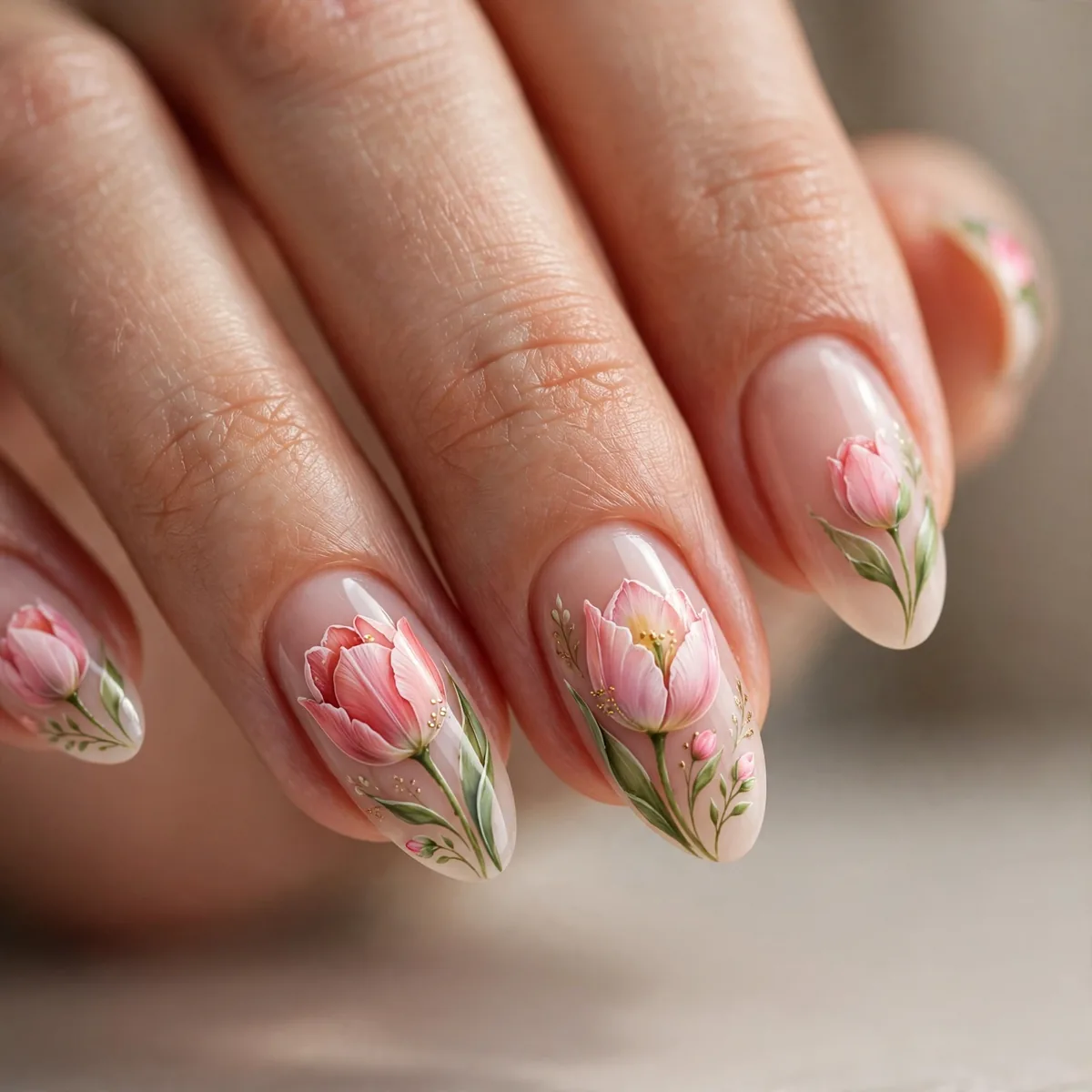
Bold tulips — spring’s showiest flower.
Best for: the vibrant. Tulips demand attention beautifully.
Build tulips in three cupped strokes: two outer petals first, then the center petal overlapping them, using a flat detail brush loaded with coral or red polish. Add a thin darker outline at the petal bases for dimension — tulips look flat without that shadow. Keep blooms large; tiny tulips lose their iconic cup shape.
Coral tulips pop against fair skin while deep reds flatter medium and deep tones — match the bloom intensity to your coloring for the boldest effect. This vibrant design suits spring parties and Easter celebrations. Medium to long nails carry large tulips best; short nails should limit them to one accent finger.
Lavender Sprigs
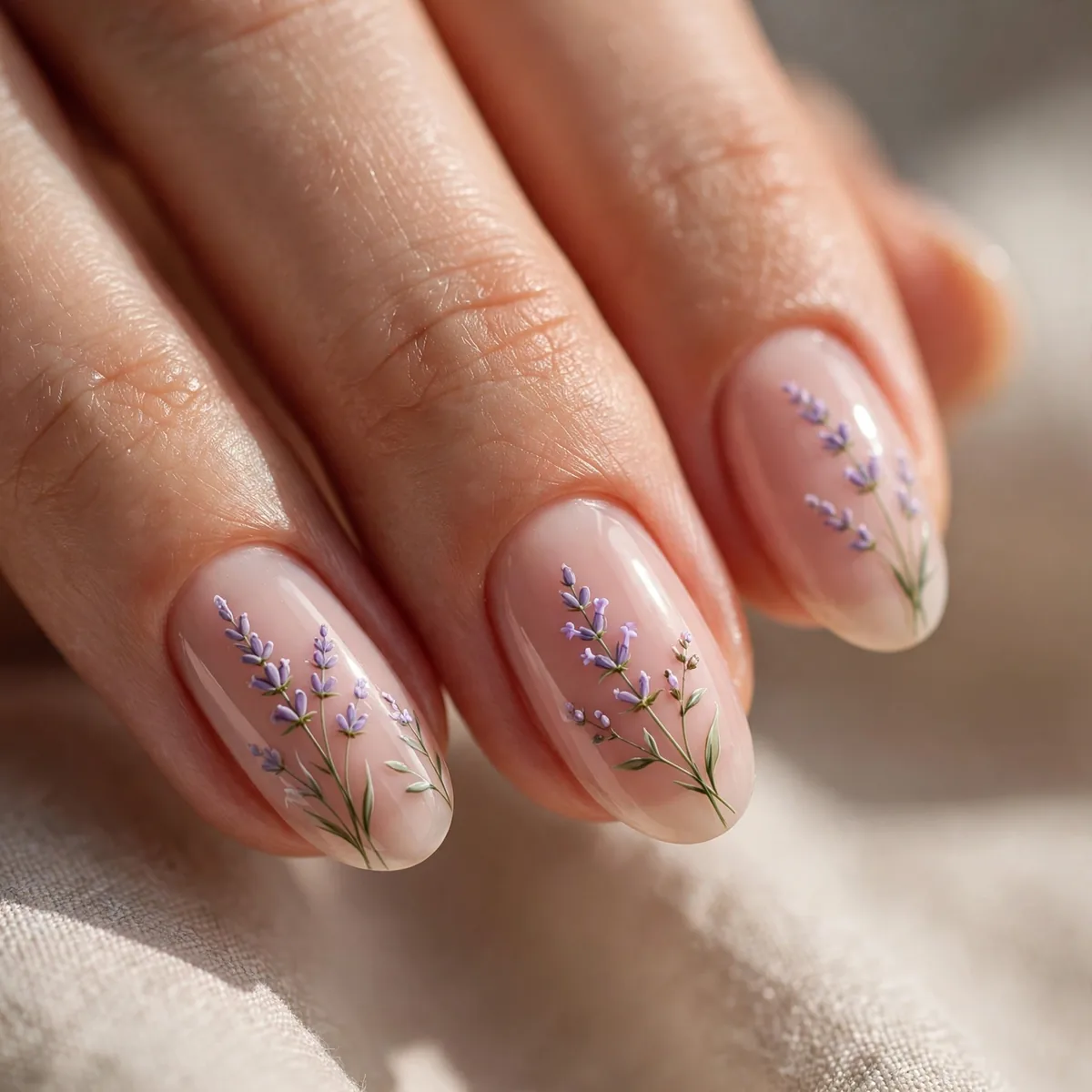
Delicate lavender sprigs — the fragrant floral.
Best for: the serene. Lavender is spring’s calm.
Paint lavender sprigs with a dry-brush technique: wipe most polish off the brush, then flick upward in short strokes for the budded texture. Layer soft purple over a muted grey-green stem — the muted tones keep lavender serene instead of neon. Three sprigs per nail is plenty; more starts to look busy.
Lavender nails carry a calming energy that suits slow spring mornings, spa weekends, and garden strolls. The purple-grey palette flatters neutral and cool undertones. Since dry-brush texture can feel slightly rough, finish with two top coats to level the surface — the smoothness also extends wear past ten days with ease.
Pressed Flower Real
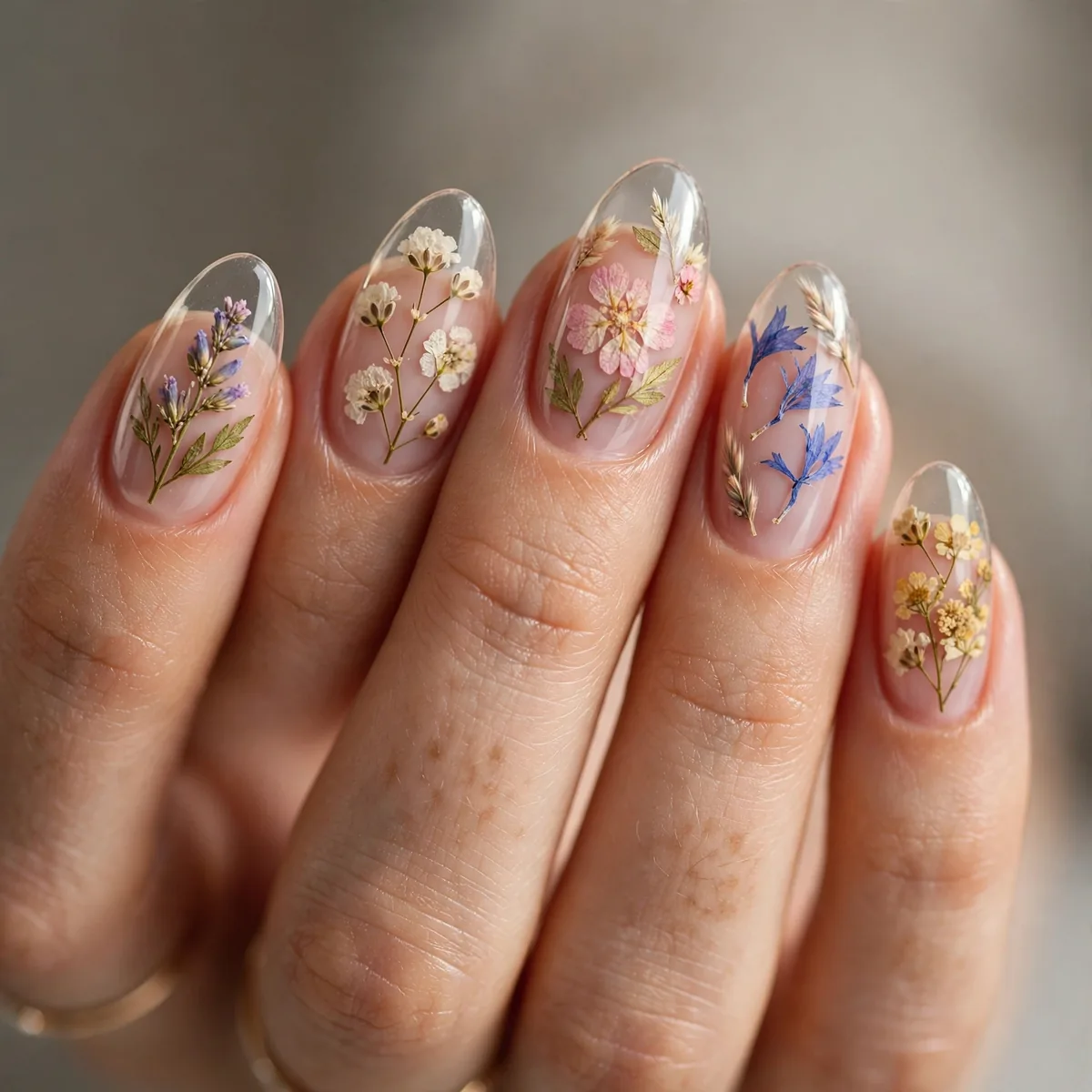
Actual dried flowers sealed in — the true botanical.
Best for: the authentic. Real flowers are unmatched.
Real pressed flowers need completely flat petals — press them in a heavy book for at least a week before use. Place each bloom on a tacky clear base with tweezers, then encapsulate with two thick builder-gel or top-coat layers so no petal edge lifts. Trim overhanging petals with tiny scissors before sealing.
Encapsulated real flowers wear surprisingly well — two to three weeks — but keep nails out of prolonged water since moisture can seep under the seal and dull the petals. This authentic botanical look shines at spring weddings and garden parties. Almond nails showcase the pressed blooms most elegantly with room to breathe.
Sunflower Cheer
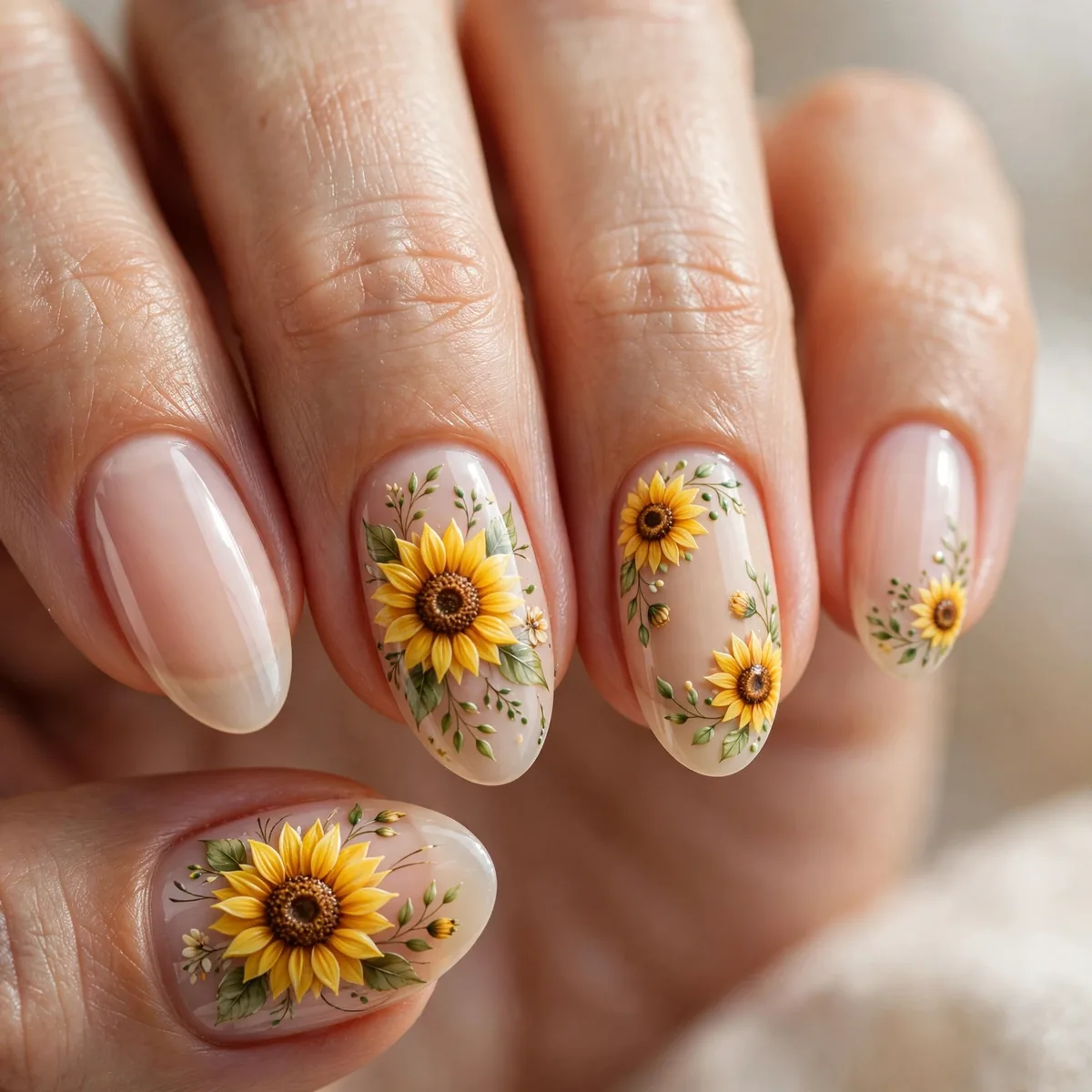
Bright sunflowers — the happiest floral.
Best for: the joyful. Sunflowers are pure sunshine.
Sunflowers start with a textured brown center — stipple dark brown polish with a sponge for that seed-head dimension. Radiate twelve to sixteen thin yellow petals around it using a striping brush; count roughly, since natural sunflowers are never perfectly symmetrical. A touch of orange at each petal base adds realistic depth.
Nothing lifts a mood like sunflowers — wear them to spring picnics, outdoor concerts, and any day that needs sunshine. Yellow flatters warm undertones and olive skin especially. Keep the design to two or three accent nails; full sunflower coverage overwhelms. They pair joyfully with denim and white linen outfits beautifully.
Rose Bud Romance
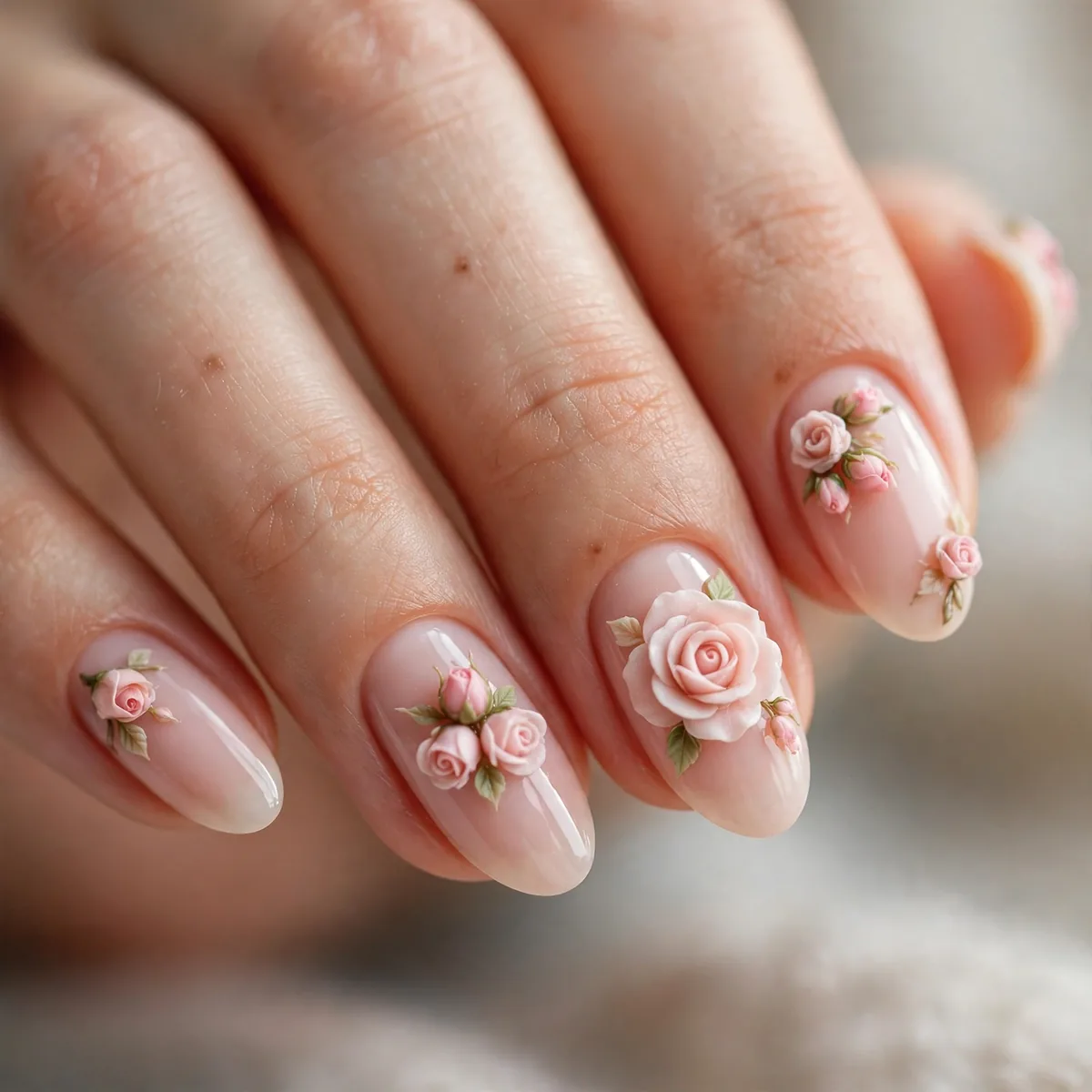
Tiny rose buds — the romantic floral.
Best for: the classic romantic. Roses never leave the floral rotation.
Rose buds build from a single swirl: paint a tight spiral in dusty pink, then add two small outer petals curving around it. A deeper rose shade at the spiral center creates the folded-petal illusion. Keep buds under four millimeters — oversized roses read cartoonish instead of romantic. Add one tiny leaf per bud for balance.
Rose-bud nails are made for romance — date nights, anniversaries, Valentine season bleeding into spring. Dusty pink flatters every skin tone and photographs softly. This delicate art suits short to medium oval nails where the tiny scale feels precious. Refresh top coat weekly; small spirals show wear at their raised centers first.
Negative Space Floral
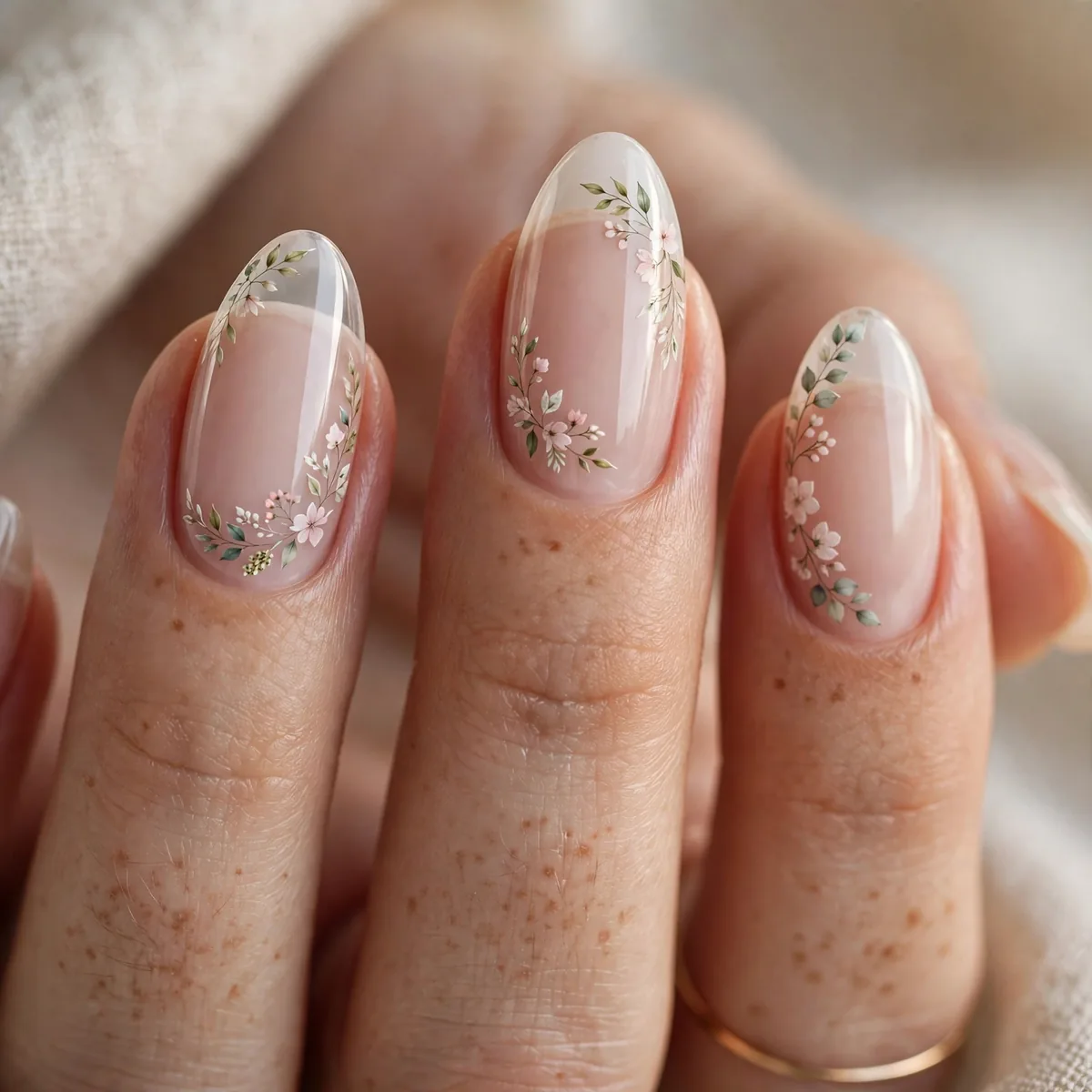
Florals in negative space — the modern bloom.
Best for: the contemporary. Negative space keeps florals current.
Map the flowers before painting: sketch the layout mentally so bare-nail gaps fall where they flatter — usually the center or lower third. Paint blooms in one opaque layer directly on the natural nail, then seal with a glossy top coat that unifies art and bare nail. Sheer bases are not needed; the negative space IS the base.
Bare-nail sections show oil and dehydration first, so push cuticles back and buff gently before starting — the natural nail is on display here. This contemporary style suits gallery openings, modern offices, and minimalist spring wardrobes. Almond shapes enhance the airy composition best. It grows out gracefully since there is no base color line.
Watercolor Petals
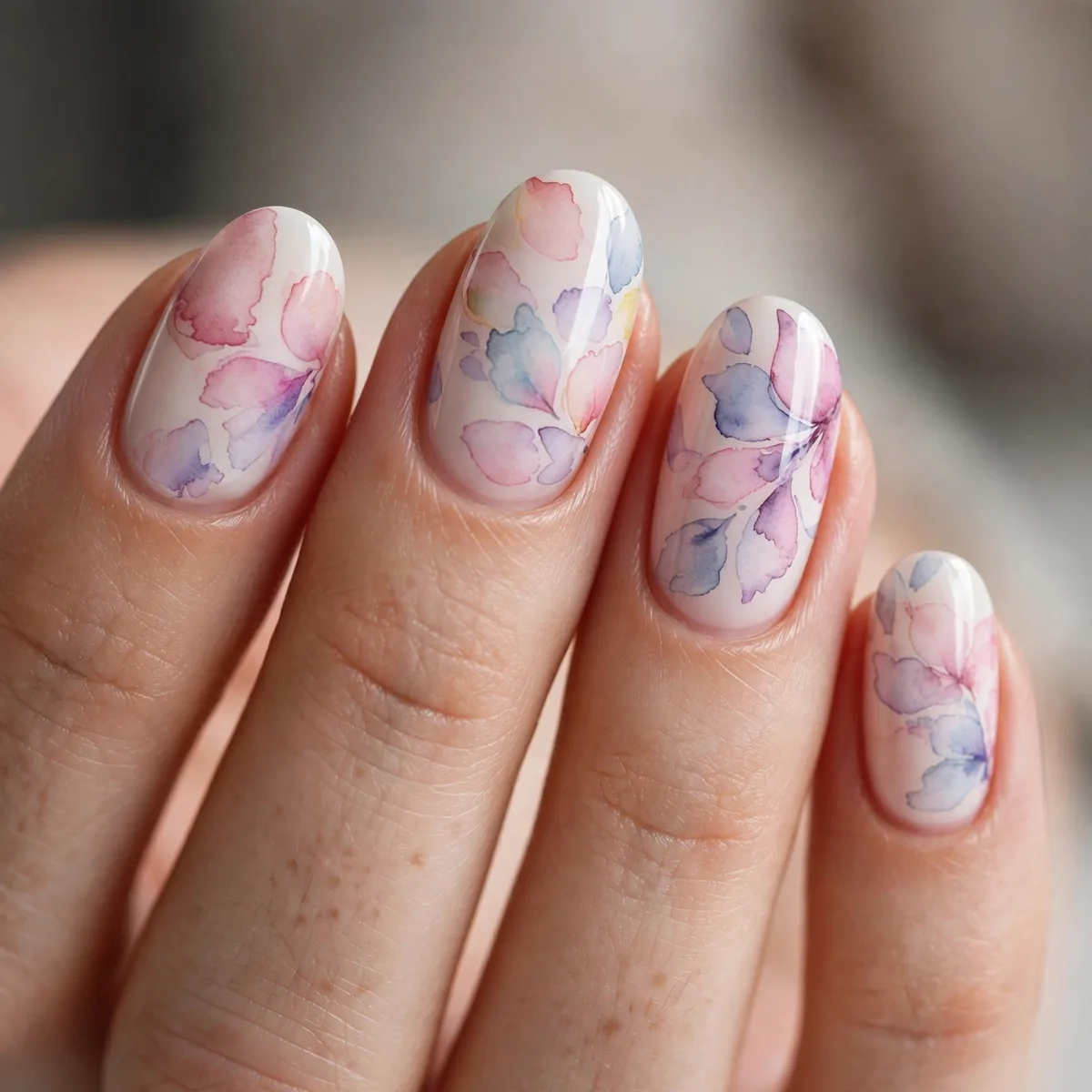
Soft watercolor petals — the dreamy floral.
Best for: the artistic. Watercolor florals look hand-painted.
Thin your polish with a drop of thinner on a palette, then wash petal shapes on with a damp round brush — the watery edges are the goal, not a mistake. Layer a second wash of deeper pink once the first dries for translucent depth. Work quickly; thinned polish sets fast and reworking muddies the transparency.
Longer nails give watercolor washes room to bloom, but short nails work if you keep petals to one or two per nail. This artistic finish suits creative workplaces, spring art fairs, and bridal showers. Because the look is intentionally soft, tiny chips barely register — the most forgiving floral style for beginners.
French Floral Tips
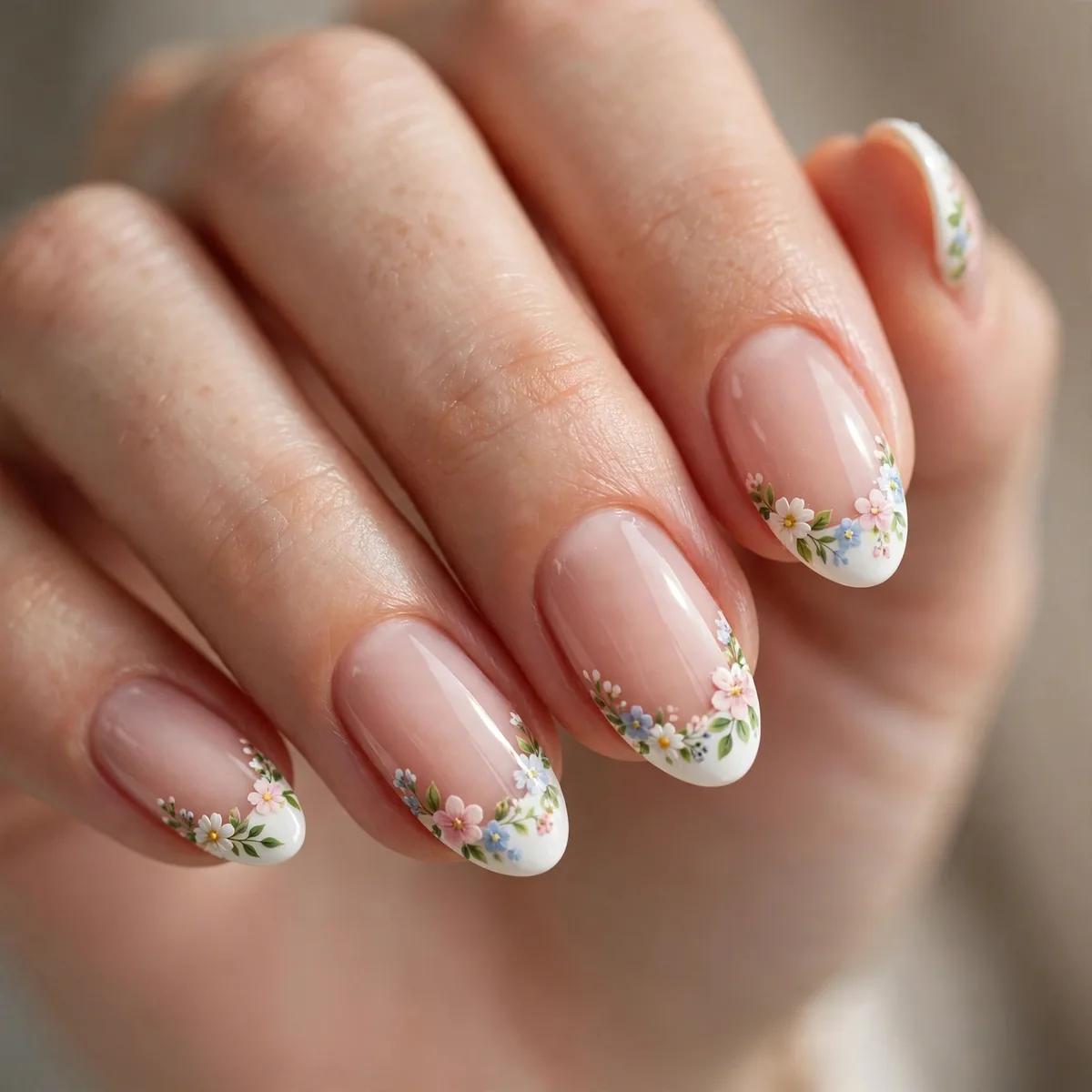
Florals on French tips — the blooming French.
Best for: French lovers. Florals refresh the classic.
Paint the French smile line first and let it set, then trail tiny blossoms along the tip edge so the florals sit inside the white, not floating above it. Use a dotting tool for uniform mini blooms — five dots per flower keeps the scale delicate. Keep the nail bed sheer pink so the tip remains the focus.
The blooming French bridges classic and seasonal — perfect for spring weddings, Easter services, and bridal parties. White tips chip at the smile line first, so cap the free edge with each coat and reseal midweek. This style flatters medium almond nails most, where the smile line has room to curve gracefully.
Monochrome Bloom
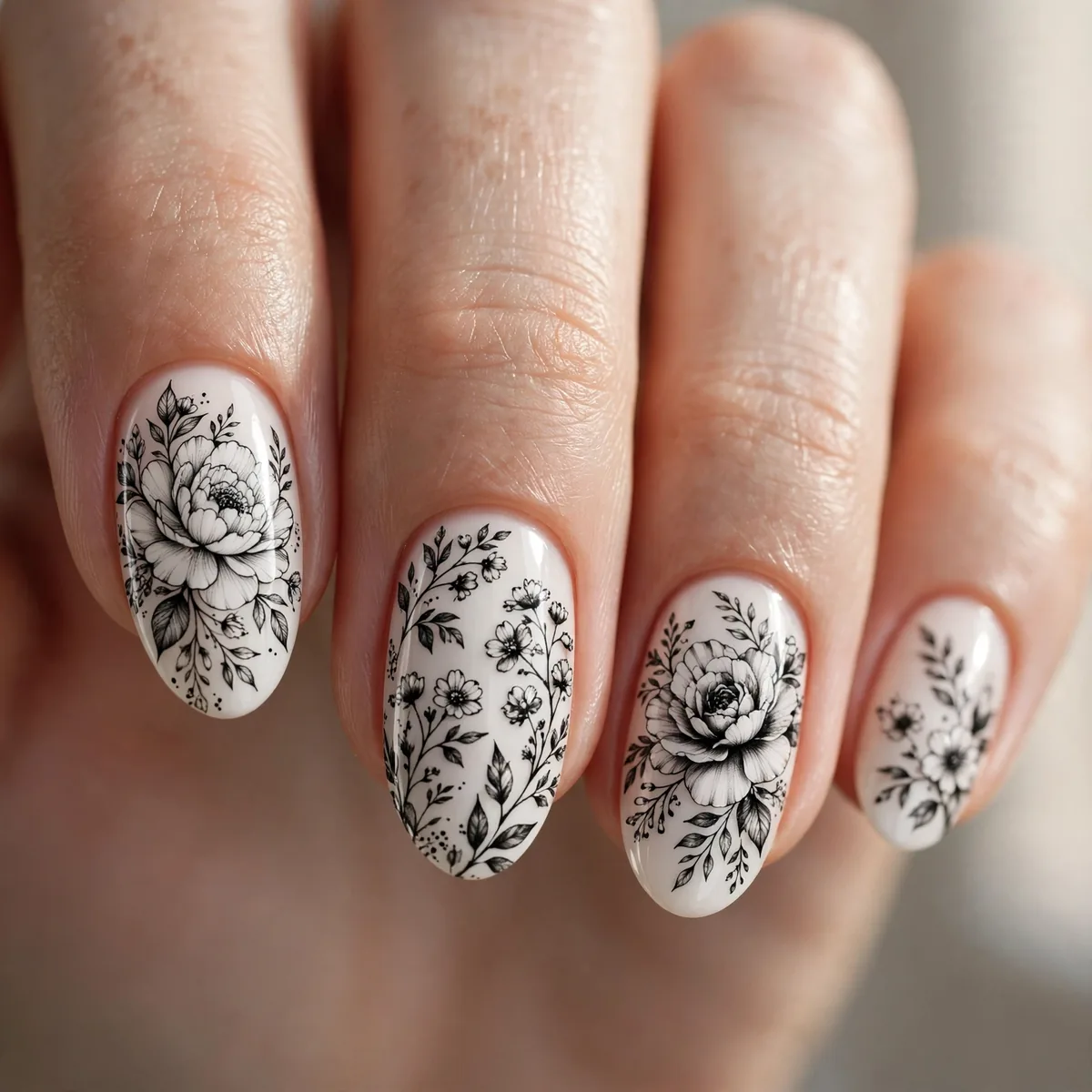
Single-color florals — the chic bloom.
Best for: the sophisticated. Monochrome florals are quietly stunning.
Monochrome florals rely on tone, not color: paint blooms in two shades of the same hue — a mid-tone base flower with a deeper shade for petal shadows. White-on-white works beautifully on a milky base; the texture difference carries the design. Keep petals slightly oversized so the tonal layering stays visible.
Single-color florals read sophisticated at formal spring events — think charity galas and upscale brunches. The restrained palette flatters every skin tone since there is no color clash to manage. This chic style wears long, too: tonal art hides tip wear better than high-contrast designs. Oval nails suit it best beautifully.
Garden Party Mix
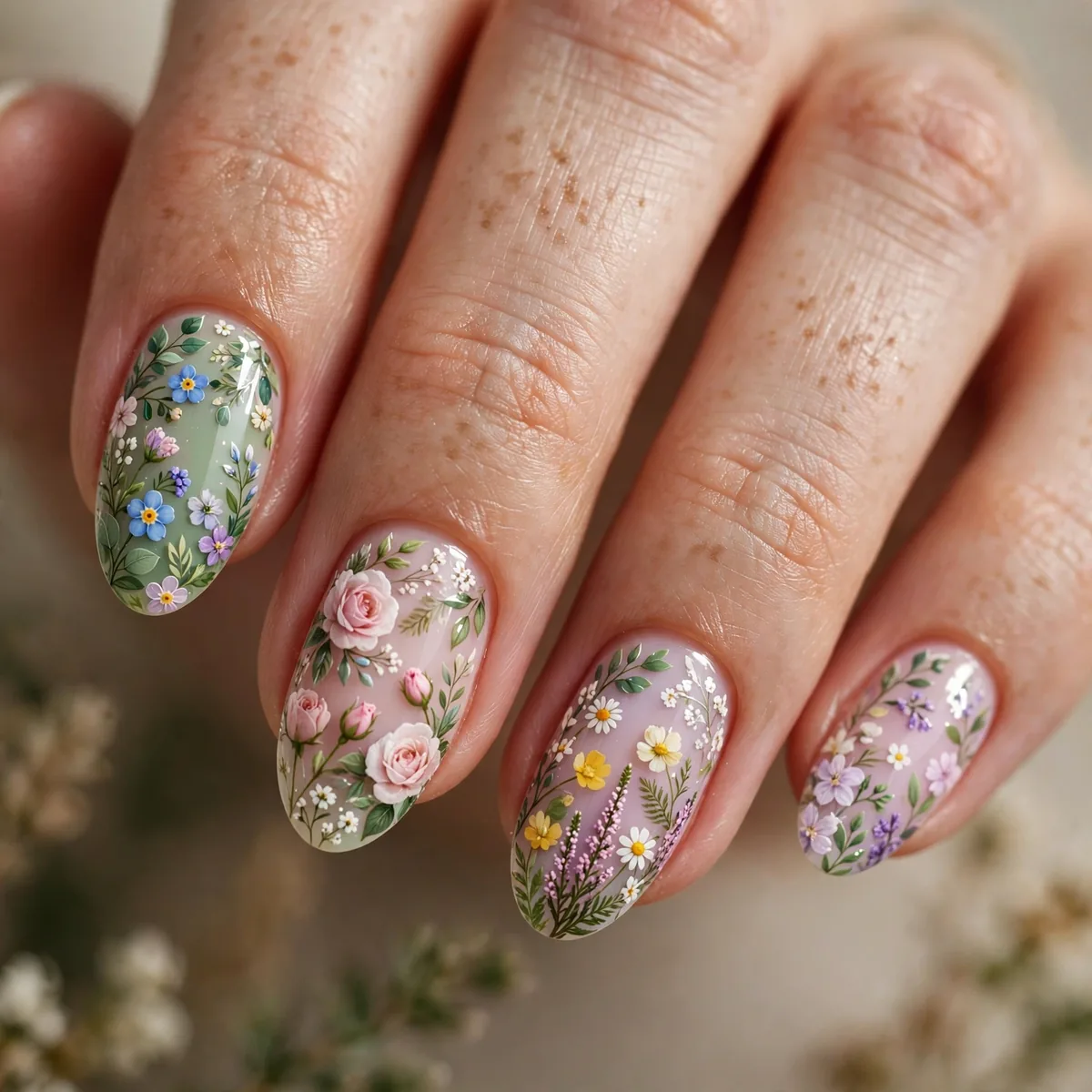
Different flowers per nail — the full garden.
Best for: the maximalist. A garden on every fingertip.
Cohesion saves maximalist nails from chaos: repeat one flower type on at least three nails and echo the same leaf green everywhere. Assign the boldest bloom — the peony or sunflower — to the middle finger as the anchor, and let smaller flowers orbit it. This planned asymmetry reads curated, not random.
The full-garden set is made for spring celebrations — garden parties, Easter weekend, bridal showers. With so much detail, seal with two top coats and refresh on day five; busy art shows wear at every edge. Medium to long nails give each flower breathing room. Keep outfits simple so the nails stay the statement.
Tiny Bud Accents
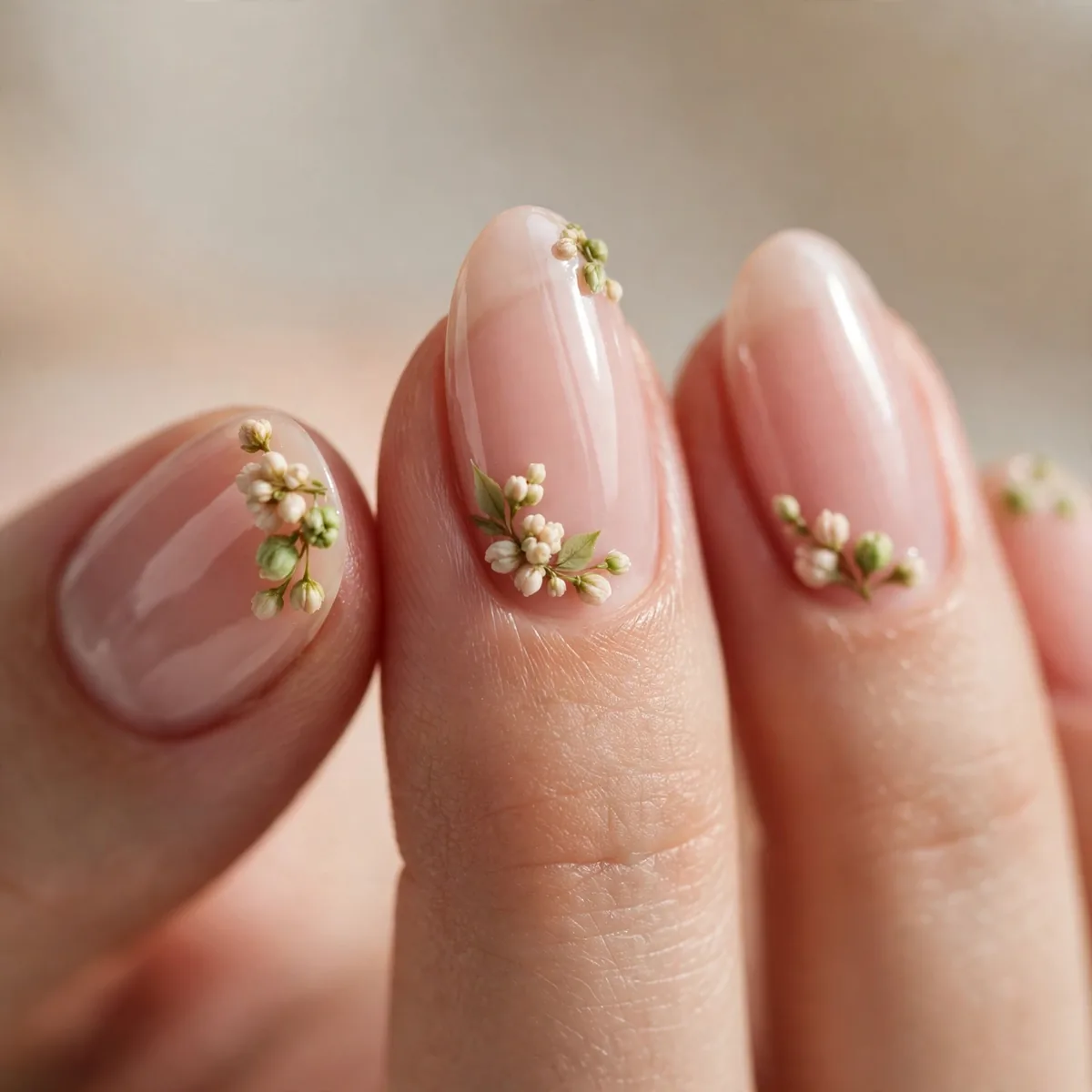
Micro buds as accents — floral restraint.
Best for: the subtle. Tiny buds whisper spring.
Micro buds need the smallest dotting tool you own — dip once and touch down lightly; pressing hard spreads the bud into a blob. Place one bud near the cuticle of each nail, slightly off-center, so the accents feel scattered naturally. A single green leaf-dot beside every third bud adds rhythm without adding clutter.
Micro-bud accents are the quietest floral — ideal for job interviews, conservative offices, and anyone easing into nail art. The tiny scale chips almost invisibly and lasts a full two weeks. Short round nails suit this restraint best. It layers beautifully under sheer jelly top coats for a dimensional, dewy finish.
Peony Lush Detail
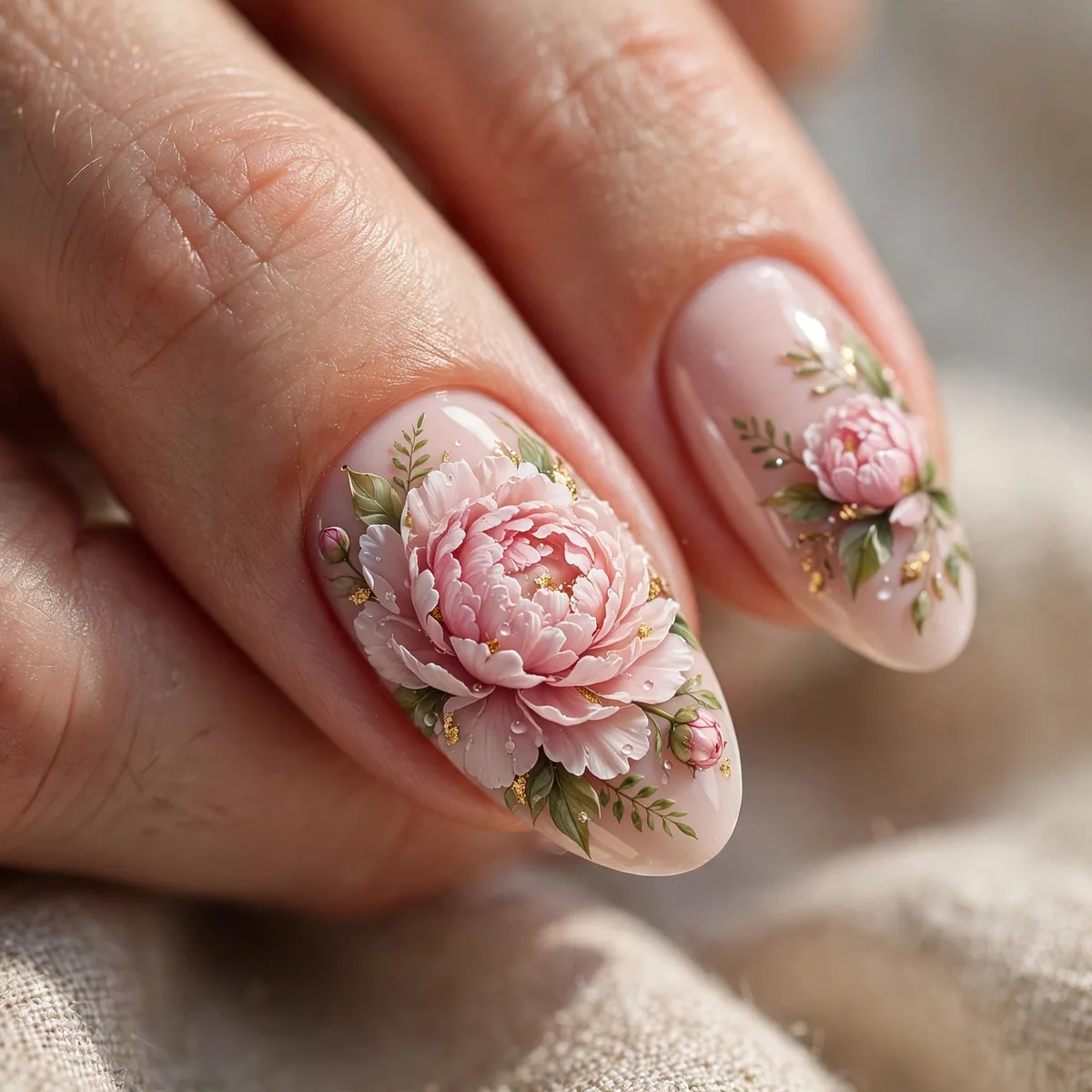
Full peonies — the lushest floral.
Best for: the opulent. Peonies are floral luxury.
After layering petals from dark to light, finish with a dry-brush pass of the lightest shade across the petal tops — this catches light like real ruffled petals. Add tiny white dots at the flower’s heart to suggest stamens. Keep peonies large and limited to two nails; lush means generous, not crowded.
Peonies signal luxury — wear them to spring weddings, upscale brunches, and milestone birthdays. Blush and coral peonies flatter fair to medium skin; deeper berry peonies glow against rich skin tones. Long almond or coffin nails carry the lush scale best. This opulent art deserves a glossy, glass-like top coat finish.
Vine Trail Design
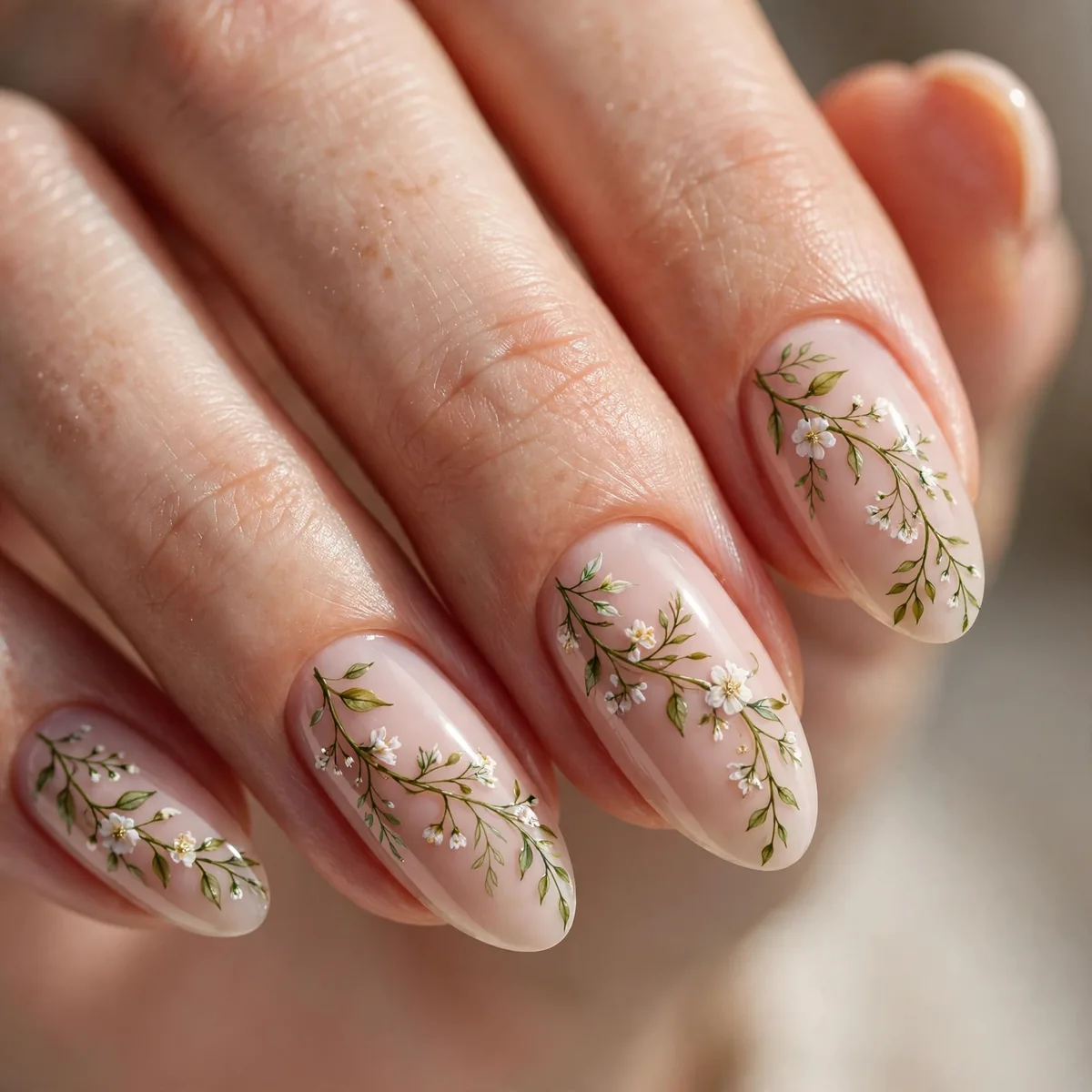
Vines trailing across nails — the growing garden.
Best for: the organic. Vines suggest life in motion.
Paint the vine as one continuous wavy line flowing from cuticle to free edge — lifting the brush breaks the organic flow. Branch tiny leaves off alternating sides with quick flicks of a detail brush, and dot two or three micro buds along the trail. Thinner lines read more elegant; resist the urge to thicken.
Vines need length to trail — medium to long almond nails let the design breathe, while short nails should keep the vine to one slim accent finger. This growing-garden style suits earthy spring wardrobes: linen, florals, woven textures. The vertical line visually lengthens fingers, a flattering trick for wider nail beds.
The Bloom Capsule
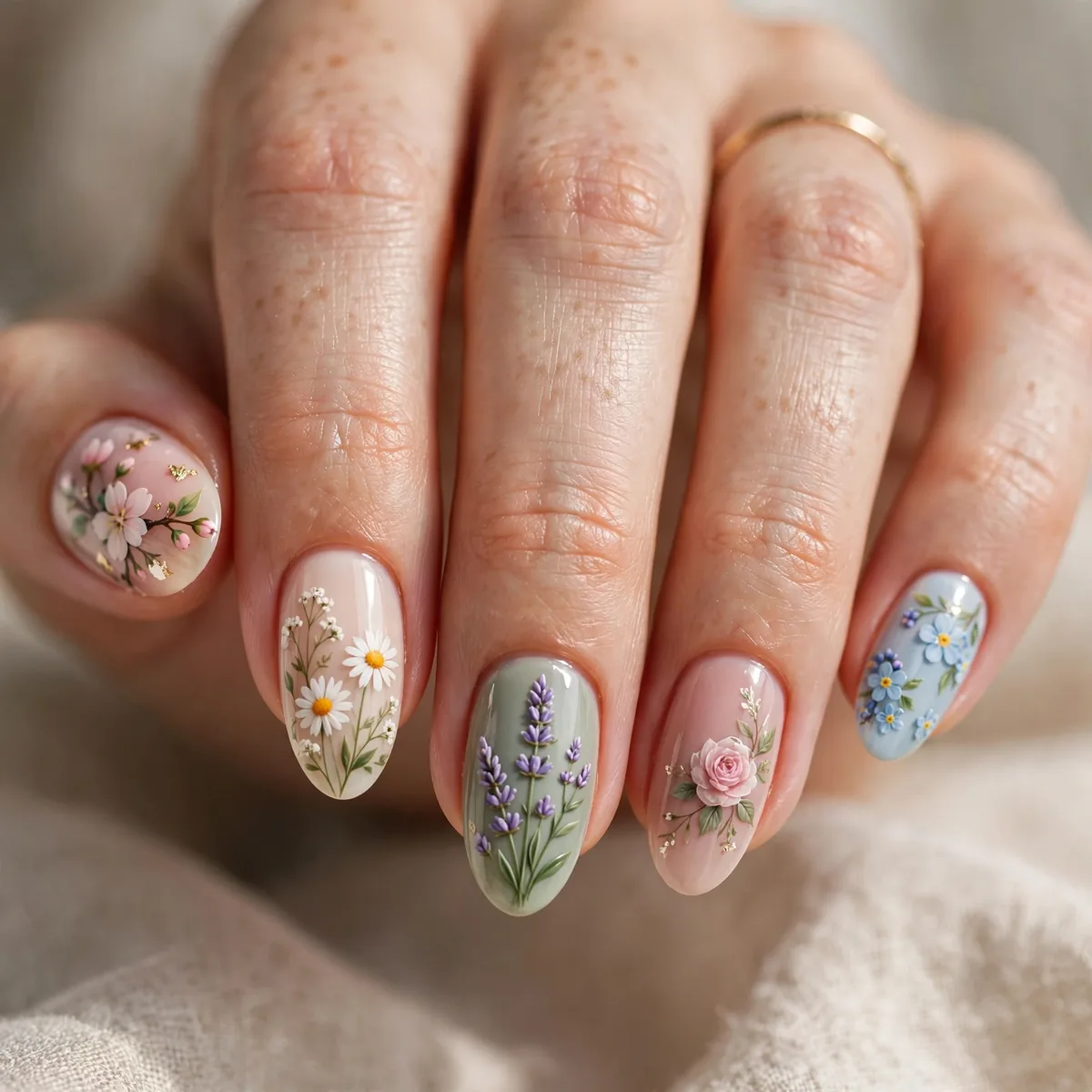
Nude base, white, pink, green — the four-bottle garden.
Best for: the season. Four essentials, endless blooms.
Four bottles cover every floral in this guide: a sheer nude base, opaque white for petals and daisies, a mid pink for blossoms and peonies, and a leaf green for stems. Choose the white in a one-coat formula — petal dots need full opacity. Minis work for pink and green; buy the nude full-size since it doubles as an everyday neutral.
A capsule keeps spring nail spending sensible — four coordinated shades mix into dozens of combinations without a drawer of single-use bottles. The palette stretches from March through June, and the nude and white stay useful year-round. Store bottles upright away from heat so they pour smoothly next spring season too.
Bloom beautifully. Save your floral favorites — and for spring’s full palette, see our spring nail ideas and Easter pastels.