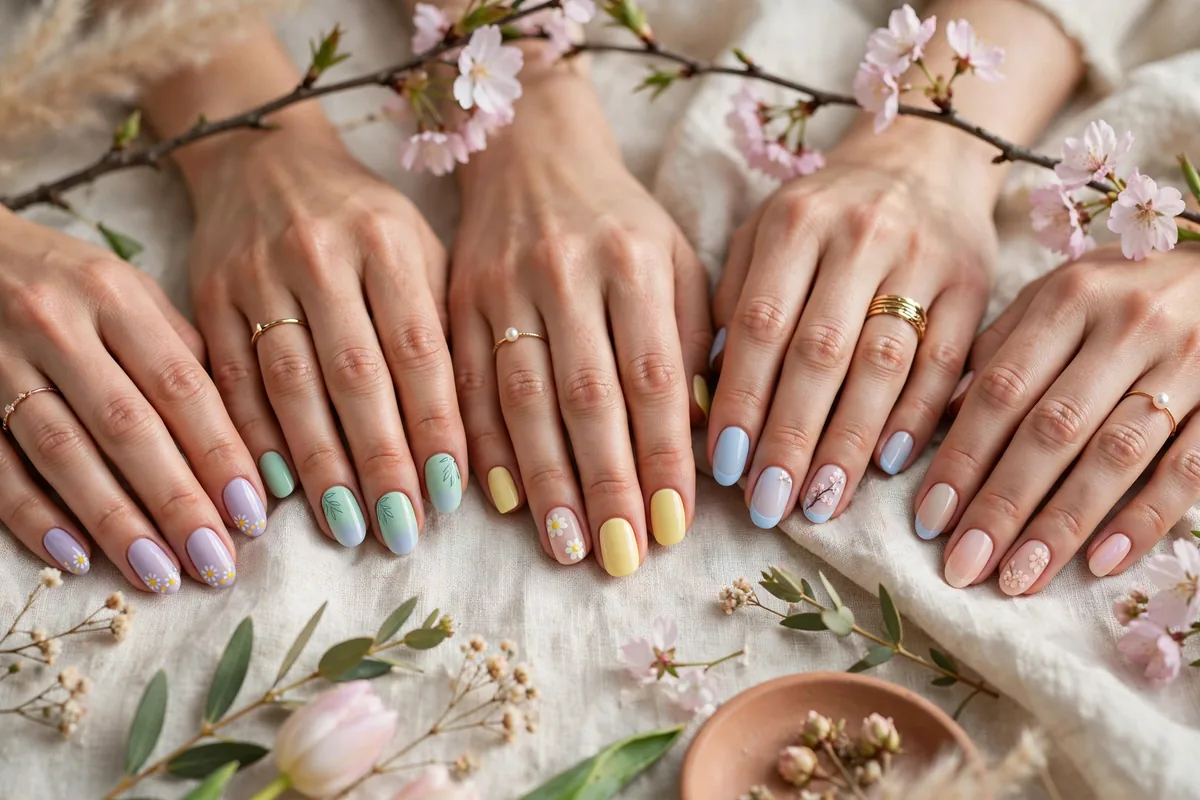
Spring nails are a fresh start — pastels return, florals bloom, and everything gets lighter and brighter.
The spring palette: lilac, mint, baby pink, butter yellow, and sky blue. Designs lean floral and fresh — the manicure equivalent of opening windows.
These 20 ideas capture everything lovely about the season.
Here’s your spring manicure menu. Let’s get into it.
Lilac Dream
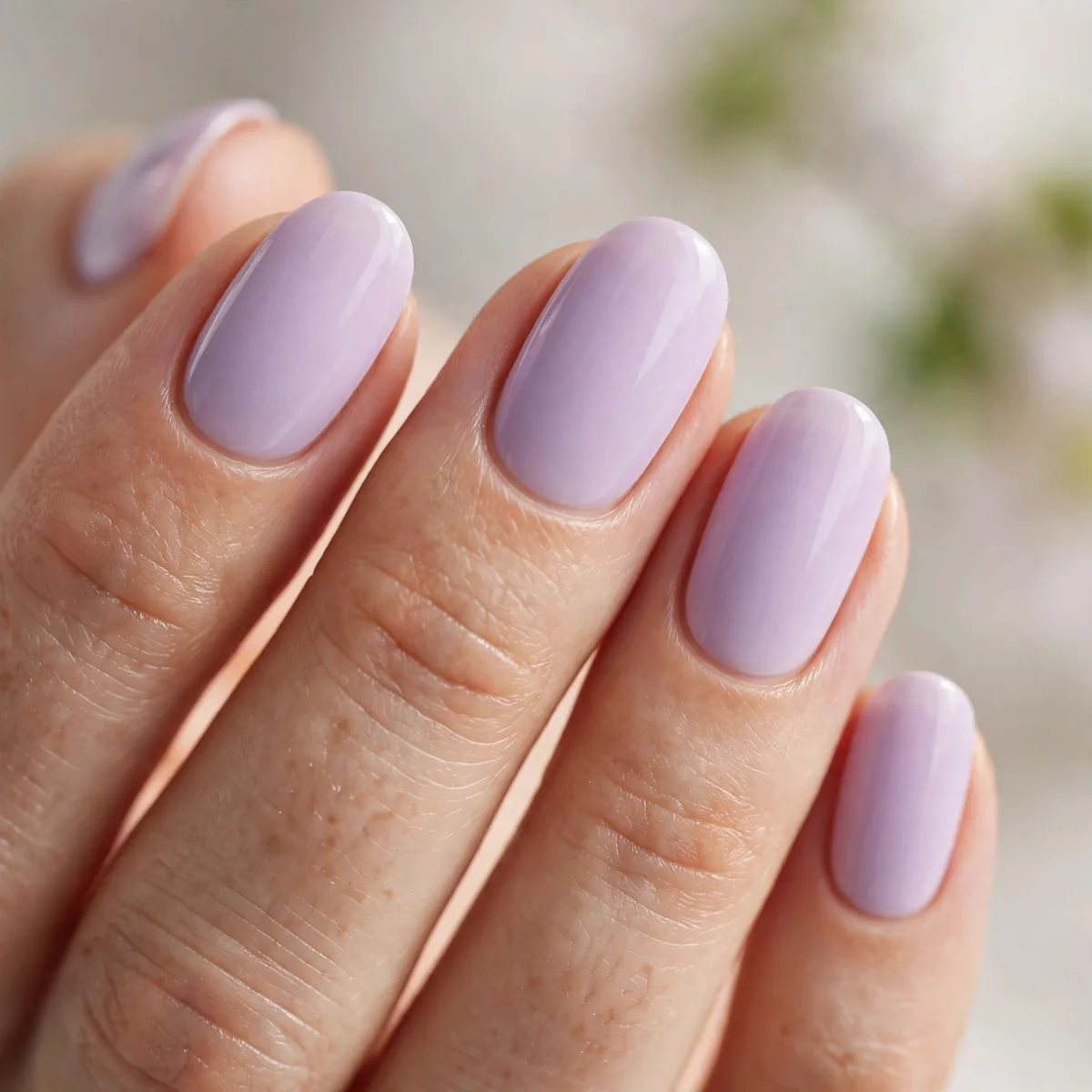
Soft lilac — spring’s signature shade.
Best for: the seasonal essential. Lilac IS spring in a bottle.
Lilac polish is notorious for patchy first coats, so always reach for an opaque crème formula rather than a sheer jelly if you want even coverage in two layers. A white base coat underneath makes the violet pop brighter and stops the pigment staining your natural nail. Paint in three thin strokes — center first, then the sides — and let each coat flash-dry for a full two minutes before adding the next.
On nail shape, lilac loves a soft almond or oval tip — the rounded lines echo the petal-soft color and keep the look feminine rather than harsh. Seal everything with a high-shine gel-effect top coat, then reapply the top layer on day three to stretch wear toward a full week. A nightly swipe of cuticle oil keeps the polish flexible at the free edge, which is where spring manicures usually start to chip first.
Baby Pink Fresh
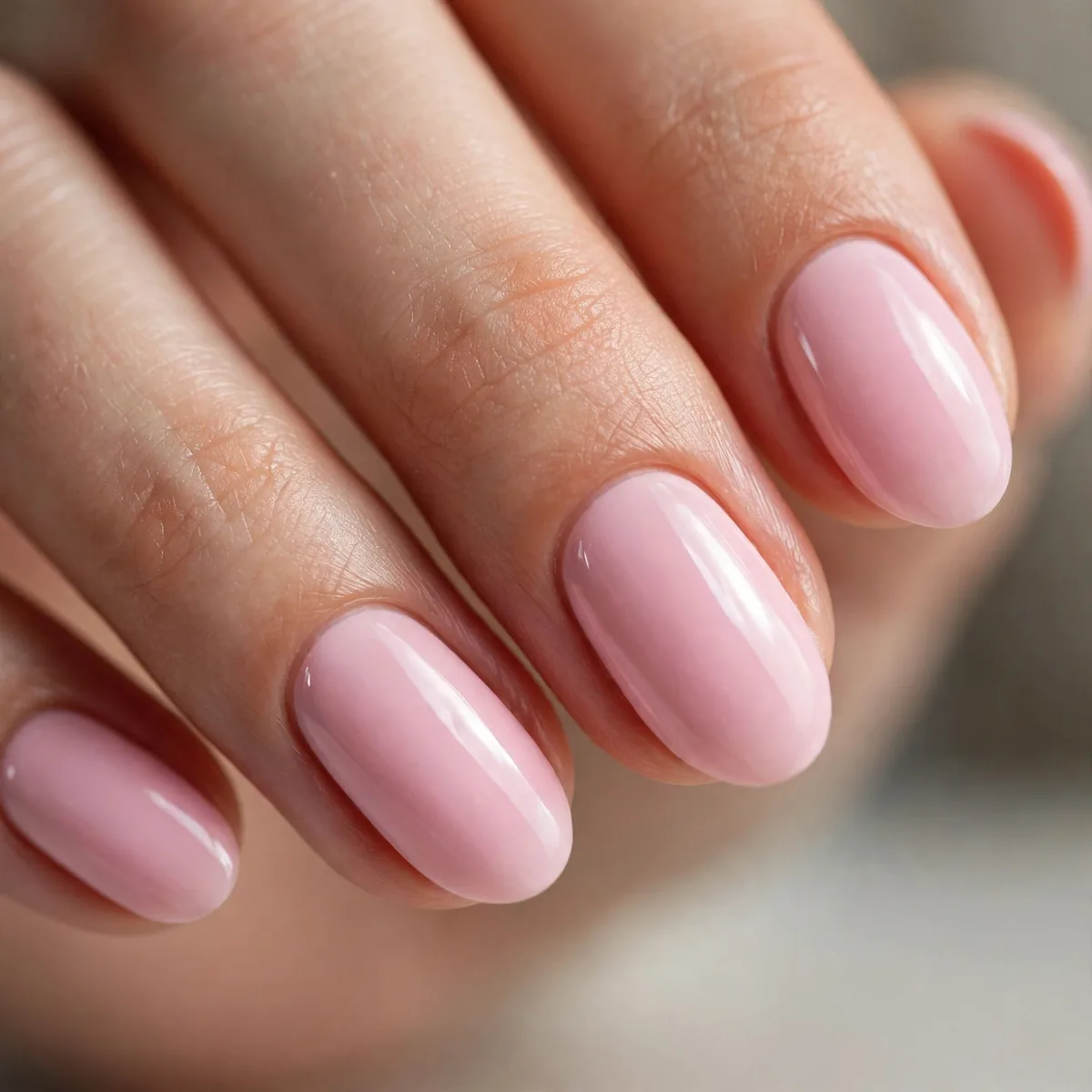
Delicate baby pink — fresh and feminine.
Best for: the classic spring. Pink never leaves the seasonal lineup.
Picking the right baby pink comes down to undertone: blue-based pinks flatter cool skin and make whites of the nails look brighter, while peachy pinks warm up olive and deeper complexions. Two thin coats of a quality crème usually deliver full opacity without the chalkiness cheap pastels suffer from. If the shade pulls too sheer, sandwich a coat of milky white between your base and color to deepen the tint evenly across all ten nails.
Baby pink is the ultimate event-proof shade — wedding guest, baby shower, job interview, it reads polished without ever shouting. Keep nails short to medium in a neat squoval shape so the look stays crisp instead of saccharine. For maximum longevity, cap the free edge with every coat including top coat, then slide on cotton gloves for evening chores; water and detergent are the two fastest killers of a pastel manicure’s shine.
Mint Revival
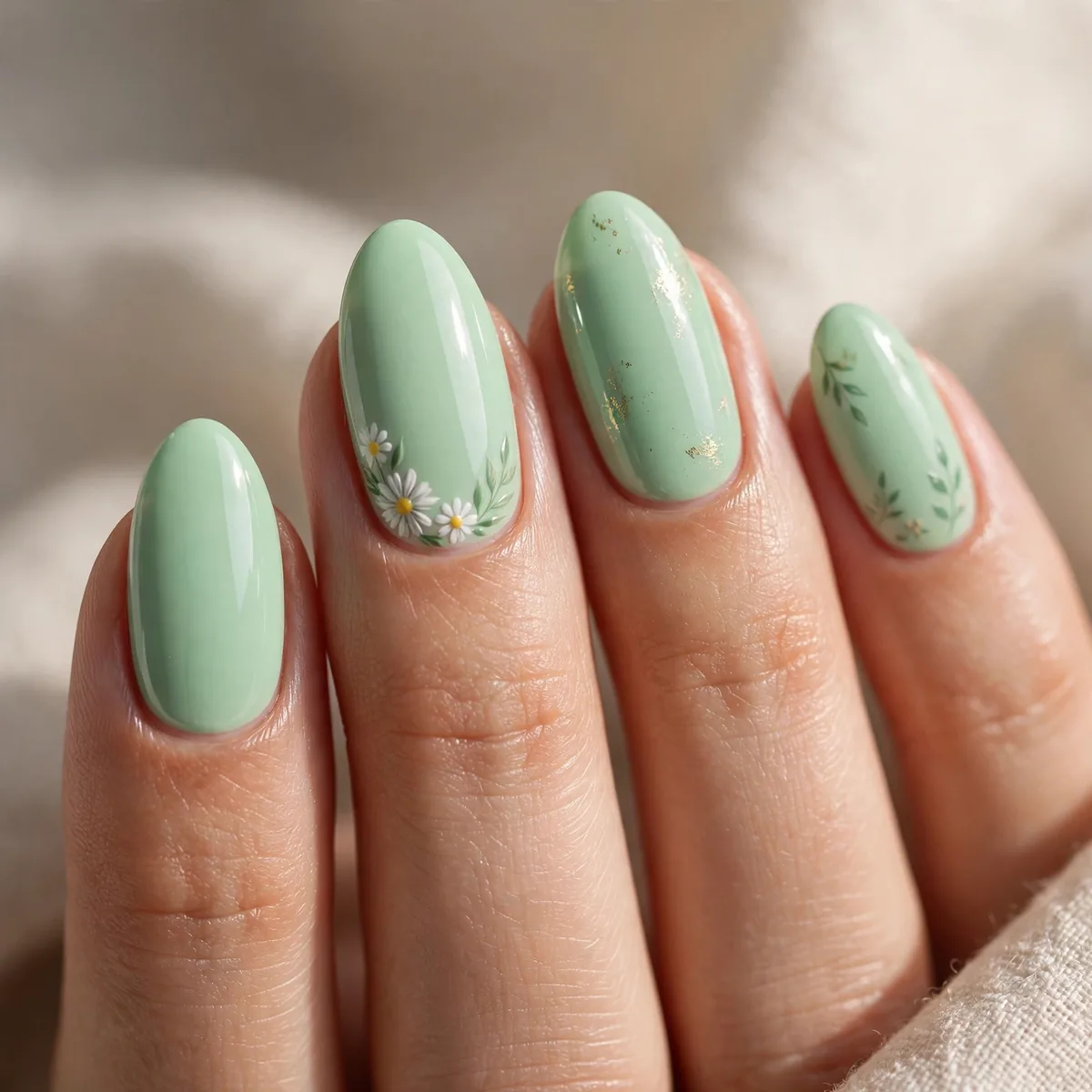
Cool mint — crisp and refreshing.
Best for: the fresh pop. Mint is spring’s cool surprise.
Mint shades are streak-prone because the pigment load is light, so the trick is floating thin coats without going back over wet polish — reworking the brush drags color and leaves visible lines. Work one nail at a time from cuticle to tip in three deliberate strokes, then clean any flooding around the cuticle with an angled brush dipped in acetone before it sets. A ridge-filling base coat also helps, since mint magnifies every ridge and uneven surface underneath.
Color-theory fans know mint is the complementary partner of soft coral and blush pink, so it pairs beautifully with those shades in alternating-nail or tip designs. It shines brightest on medium-length oval or almond nails where the cool tone has room to read, though short squoval nails keep it fresh and sporty. If full mint feels bold, try it as French tips over a sheer nude base — all the freshness, half the commitment, and regrowth stays nearly invisible.
Butter Yellow Joy
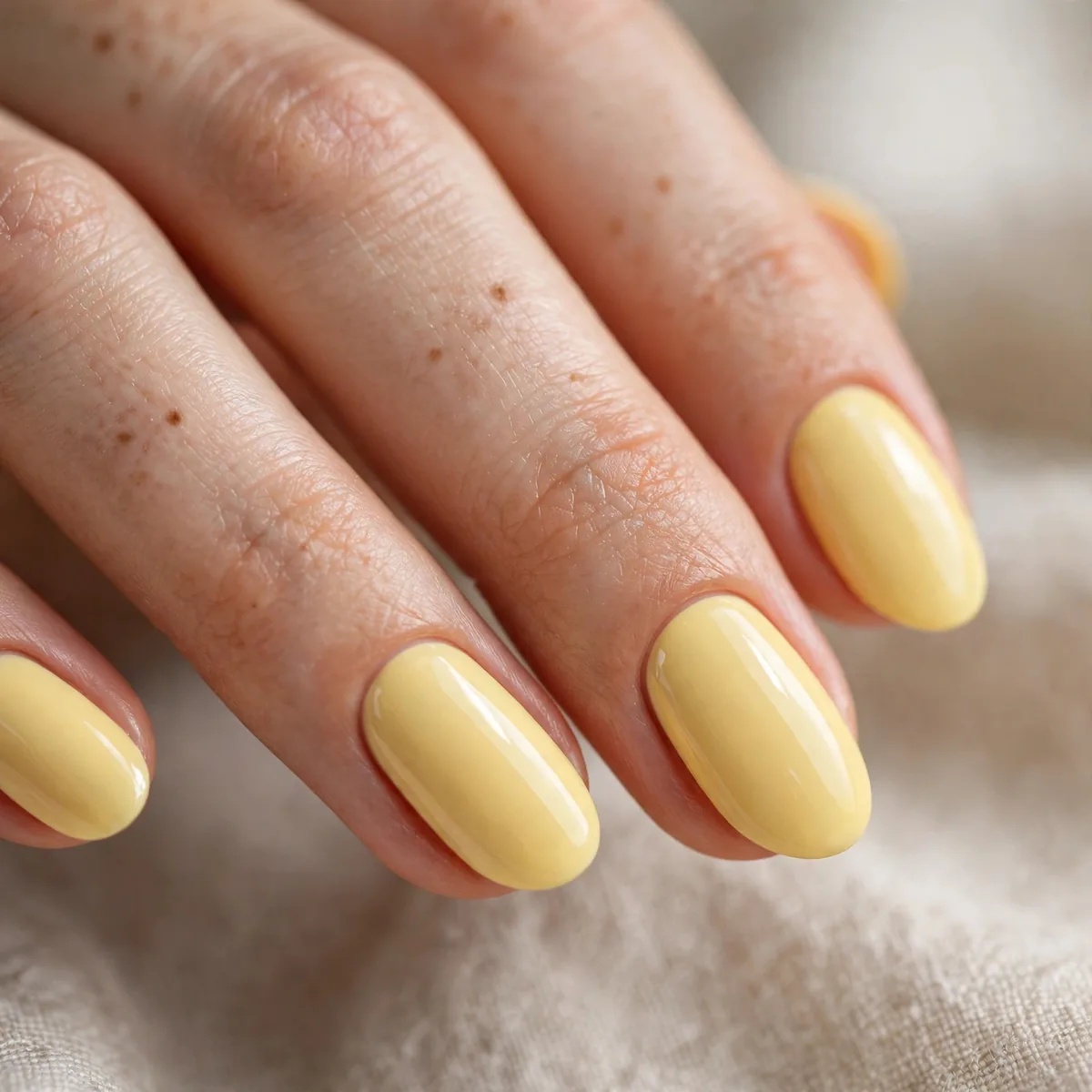
Soft butter yellow — sunshine on your fingertips.
Best for: the cheerful. Yellow is spring’s happiest shade.
Yellow polish stains the nail plate faster than any other pastel, so a solid double layer of base coat is non-negotiable with butter shades. Let the base dry completely, then float the color on in thin, even passes; thick coats trap solvents and shrink away from the free edge as they cure. If staining still sneaks through, buff gently and soak fingertips in lemon water for two minutes — the mild acid lifts the yellow cast before your next manicure.
Butter yellow flatters warm and golden undertones most, but cooler skin can wear it confidently if the shade leans creamy rather than neon-bright. A soft crème finish reads sophisticated, while a subtle shimmer version catches spring sunlight beautifully for outdoor events. Keep nails at a medium length with rounded tips — the cheerful color already brings the energy, so a graceful shape keeps the overall look balanced instead of costume-like.
Daisy Nail Art
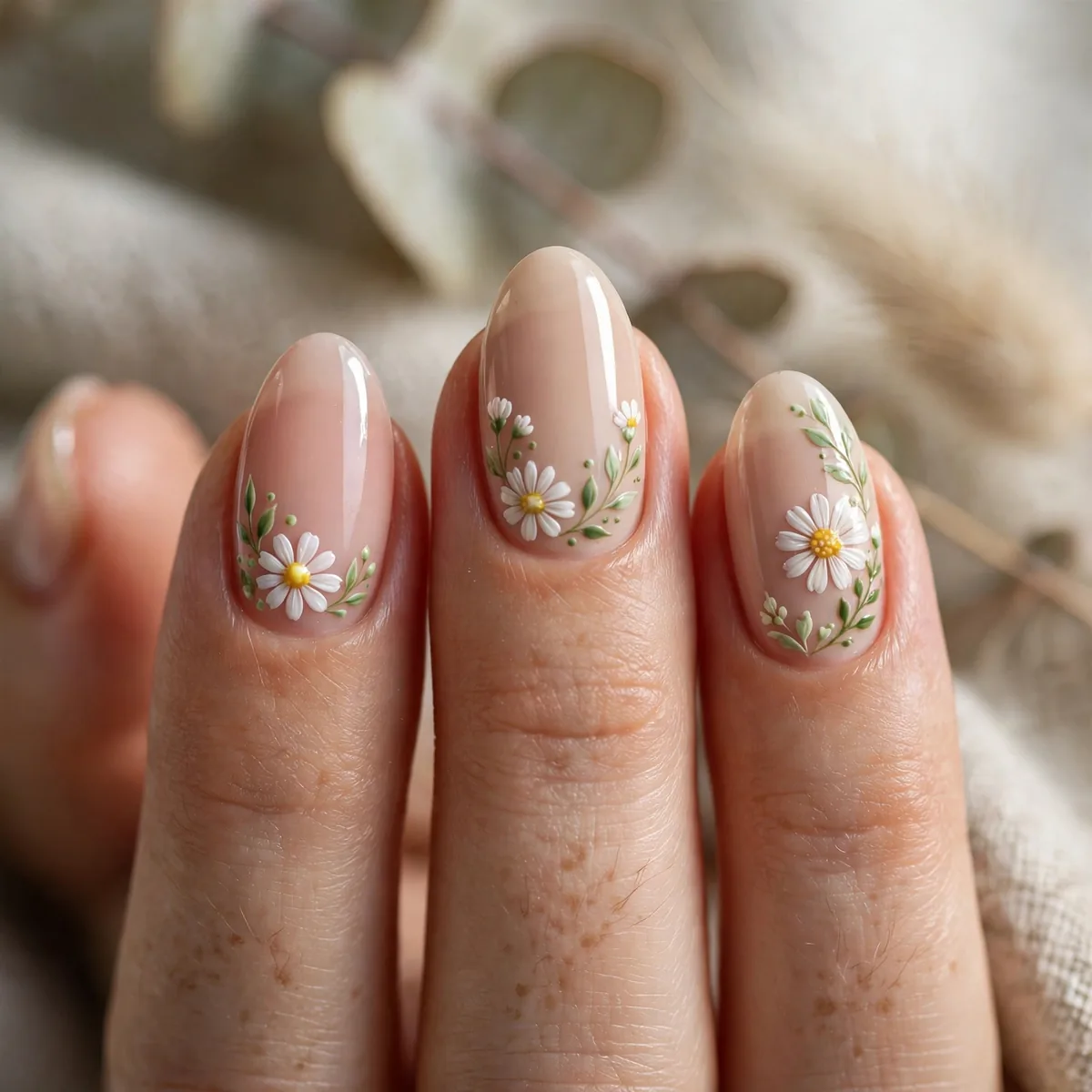
Tiny daisies on a nude base — the quintessential spring design.
Best for: floral lovers. Daisies are spring’s mascot flower.
For the base, choose a sheer milky nude rather than opaque — it mimics the natural nail and makes white petals look like they’re floating. Paint daisies after the base is fully dry: five white dots in a ring, then a golden center dot pressed on while the petals are still tacky so it bonds. A common mistake is dotting with a loaded brush; wipe most of the polish off first so each dot sits crisp instead of bleeding outward.
Dotted art chips first, so seal the design with two thin layers of glossy top coat, wrapping the free edge to lock every dot down. The look suits any length, but short almond or rounded nails keep daisies looking delicate rather than busy. Wear it to garden parties, Easter brunch, or spring weddings — it photographs beautifully beside bouquets — and keep a dotting tool handy for quick touch-ups when a petal wears thin.
Sky Blue Calm
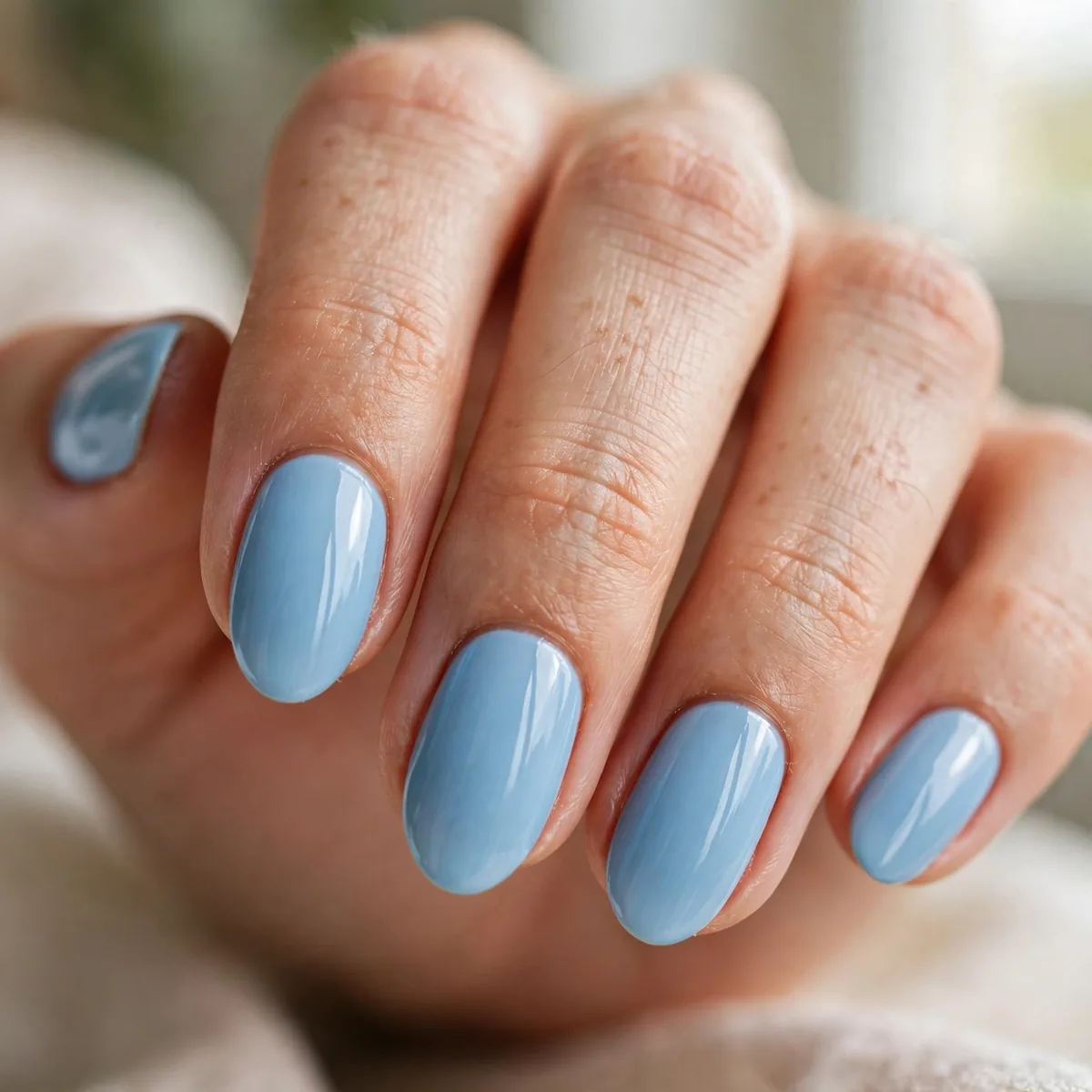
Clear sky blue — fresh air in a bottle.
Best for: the serene. Sky blue is effortlessly pretty.
Cool-toned blues expose every brush stroke, so apply your sky shade in three slim passes and resist the urge to touch up mid-coat — patience gives a smoother finish than fussing. A jelly version layered over a pale blue crème creates gorgeous depth, like looking through spring water. Because blue pigments can tint the nail plate slightly, always use a stain-blocking base coat, and push cuticles back gently first so color doesn’t pool in the creases.
Sky blue is a stylist’s secret for spring wardrobes — it acts almost like a neutral next to white denim, chambray, and floral prints. On wear time, expect four to six days from regular polish if you cap edges and refresh top coat midweek. The shade flatters medium-length coffin or oval shapes best, where the cool tone elongates the finger, though short squoval nails give it a crisp, sporty energy perfect for weekend errands.
Cherry Blossom Art
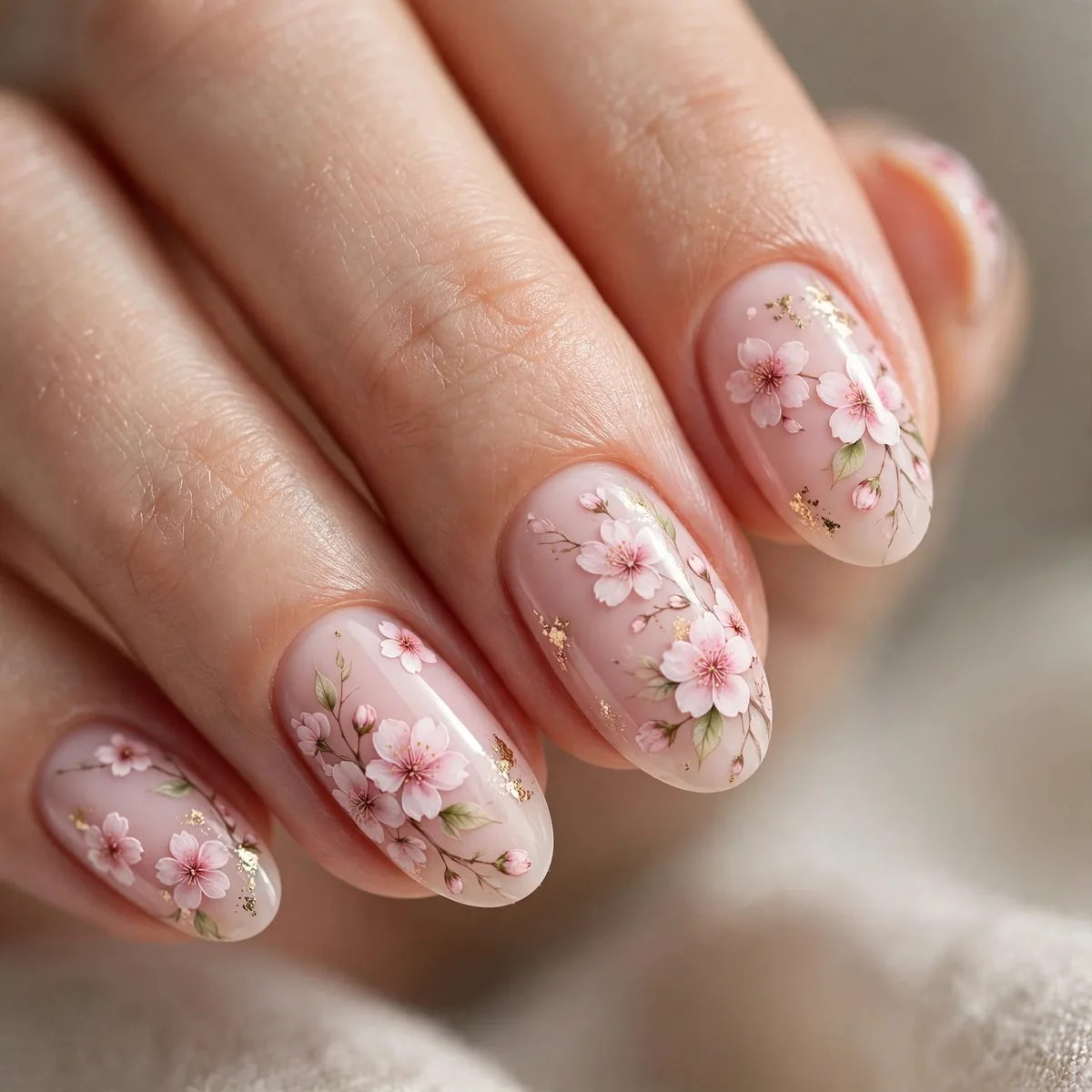
Delicate blossom branches — spring’s most poetic design.
Best for: the romantic. Our cherry blossom guide has 15 variations.
Cherry blossom branches need a fine detail brush, not a dotting tool — drag short, curved strokes in pale pink for petals, then add a deeper rose center and tiny dark stamens once dry. Paint the branch first in a soft brown, let it set completely, then layer the blossoms on top so nothing smears. The classic mistake is overcrowding the nail; two or three blossoms per nail read elegant, while ten look like wallpaper.
Placement matters: blossoms climbing from one corner of the nail look refined, while a centered branch suits longer almond or coffin shapes with room to spare. Seal the art with a matte top coat for a watercolor effect or gloss for a lacquered look — both protect the fine lines from chipping for about a week. This design shines at spring weddings and garden events, where it echoes real blooms without competing with them.
Sage Green Earth
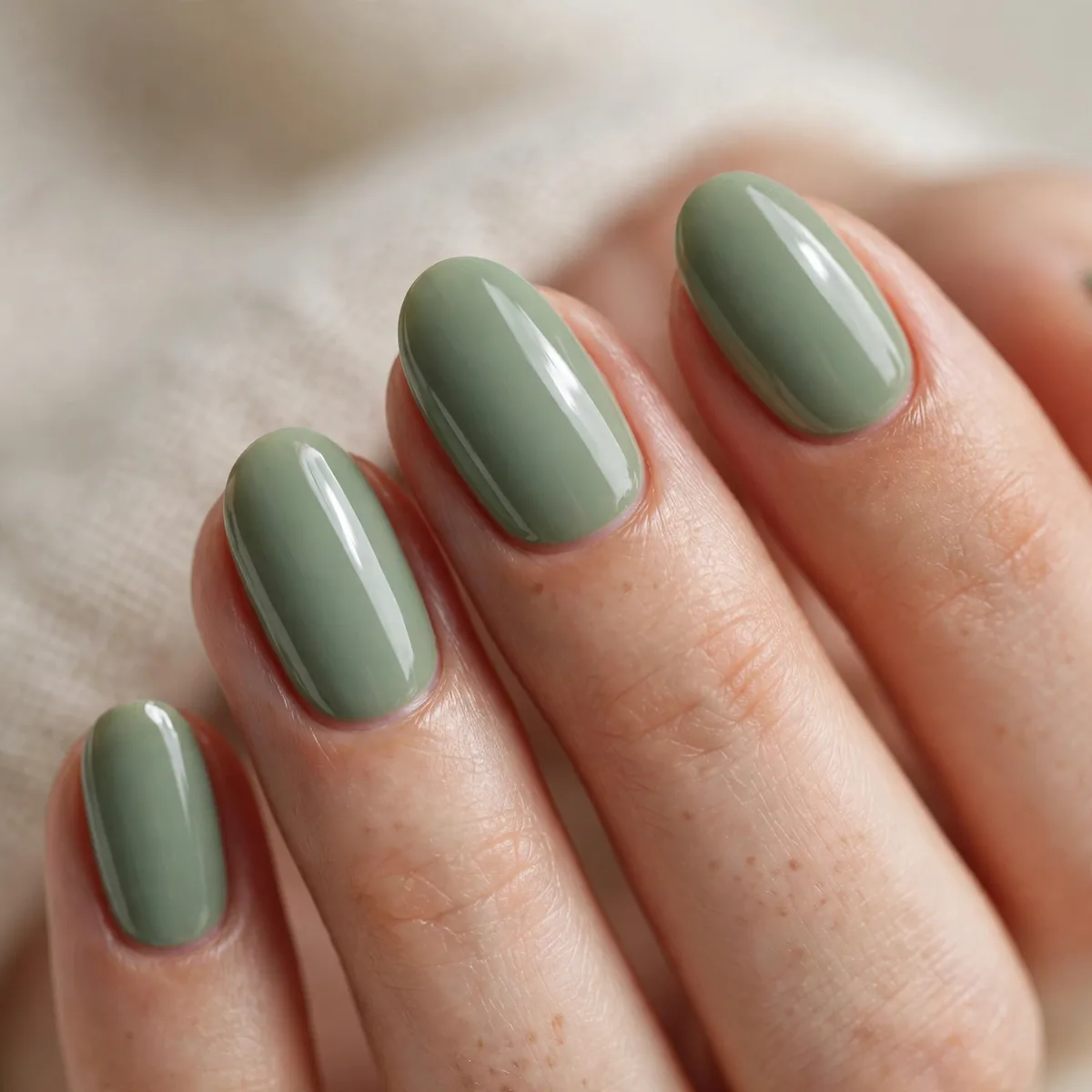
Muted sage — the sophisticated spring green.
Best for: the understated. Sage is spring for minimalists.
Muted sage applies like a neutral, which makes it one of the easiest spring shades for beginners — the grey undertone forgives uneven strokes that brighter colors would broadcast. Two coats of a good crème deliver full coverage, and a velvet-matte top coat transforms it into something truly editorial. Before you start, dehydrate the nail plate with alcohol or a prep wipe; sage’s earthy pigments bond better to a squeaky-clean surface and last noticeably longer.
Sage is the spring shade that slides straight into a work wardrobe — muted enough for conservative offices yet fresh enough to feel seasonal. It flatters every skin tone because the grey-green balance sits between warm and cool, and it pairs with gold jewelry better than almost any pastel. Keep nails short to medium in a squoval or oval shape for a modern minimalist look, and expect a solid week of wear since the muted tone hides tip wear gracefully.
Peach Sorbet
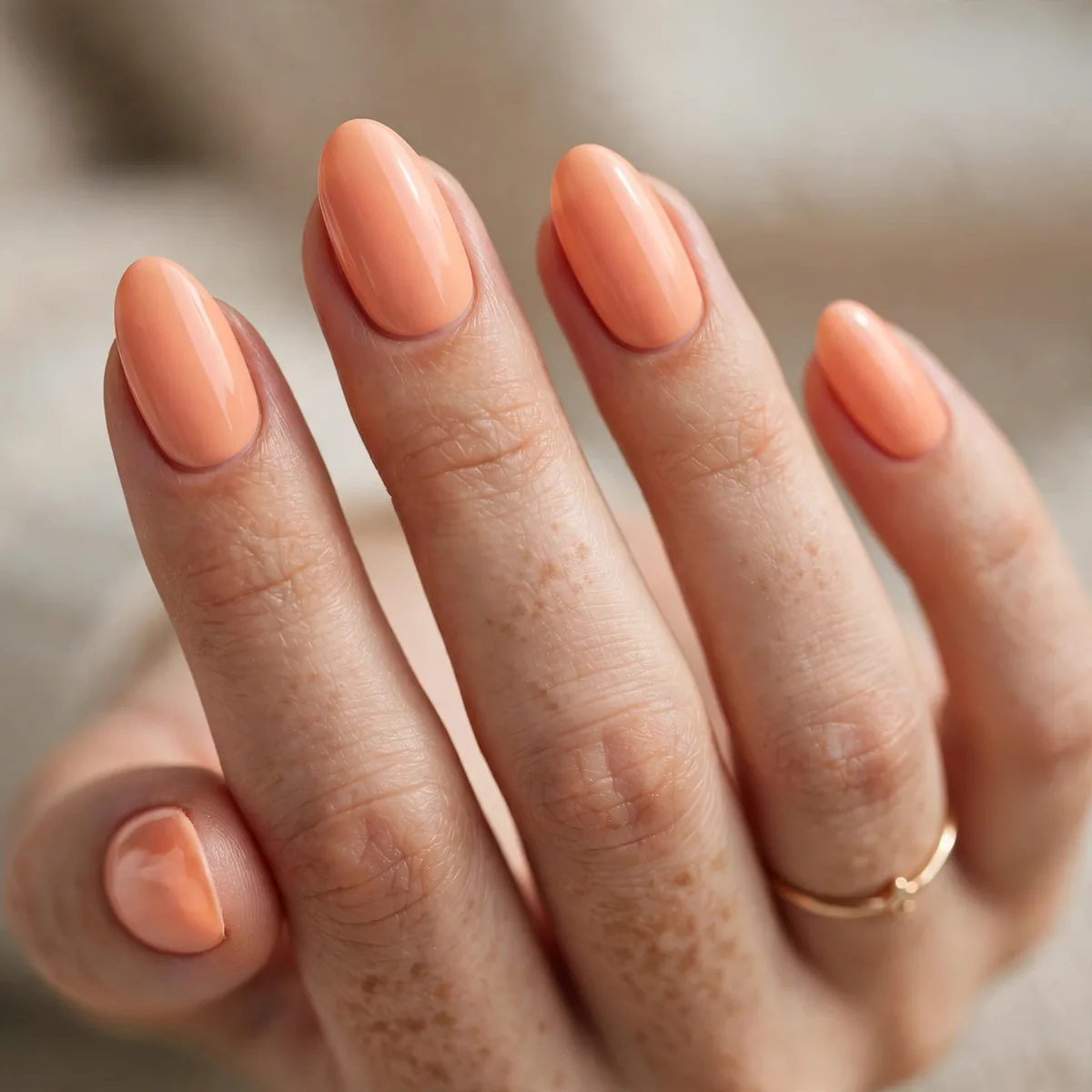
Juicy peach — sweet and fresh.
Best for: warm undertones. Peach flatters like spring sunshine.
Peach polish often applies sheer, so build it in three whisper-thin coats rather than two thick ones — thin layers self-level and cure harder, preventing the dents thick coats collect. For extra juiciness, try the jelly sandwich: sheer peach, a coat of fine shimmer, then sheer peach again for a sorbet-glow depth you can’t get from one bottle. Push cuticles back and moisturize them well first; peach shades spotlight ragged cuticles more than deeper colors do.
For nail art lovers, peach is the perfect base for a sunset ombré — blend it upward into coral or soft pink with a makeup sponge for a seamless spring gradient. It glows on medium almond nails where the warm tone catches light along the curve, but also looks fresh and juicy on short rounded nails. Finish with a glass-like glossy top coat; matte mutes peach’s warmth, while shine amplifies that just-bitten sorbet freshness.
Lavender Fields
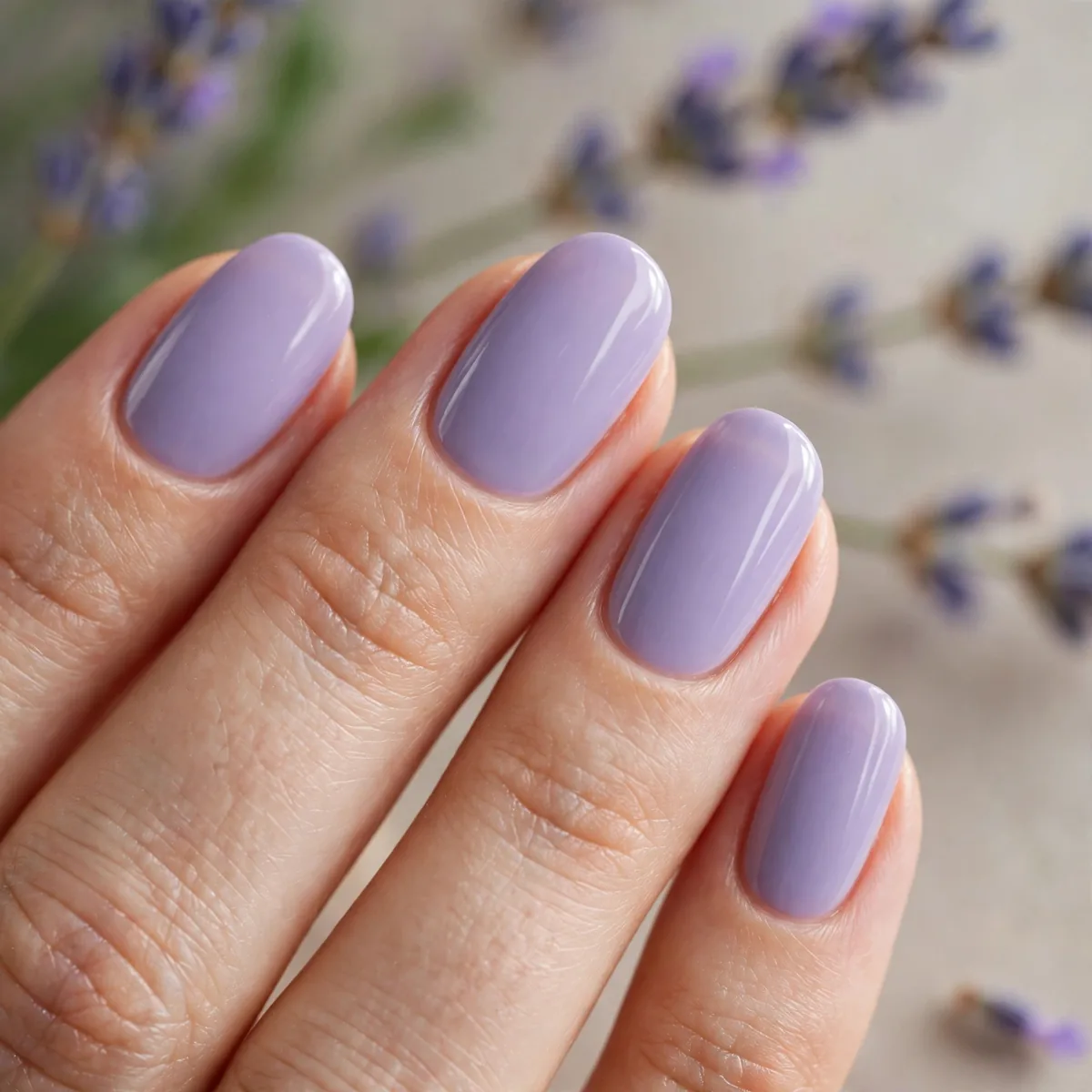
Deeper lavender — lilac’s sophisticated sister.
Best for: the elegant spring. Lavender has more depth than lilac.
Deeper lavenders are the easiest purples to apply — the richer pigment load means two coats give flawless, streak-free coverage where pale lilac needs coaxing. For dimension, layer a holographic or iridescent topper over one accent nail; the shimmer shifts in spring light and elevates the whole manicure. Skip the urge to add nail art on every finger — lavender’s sophistication comes from restraint, so let the color itself carry the look.
Lavender transitions beautifully from day to evening — it’s soft enough for the office yet rich enough for dinner dates when paired with silver jewelry. The shade flatters cool and neutral undertones especially, making pale hands look luminous. Wear it on medium to long oval or almond nails for maximum elegance, and refresh the top coat after four days; deeper purples show tip wear faster than pale pastels, but a quick reseal keeps them flawless.
Tulip Tips
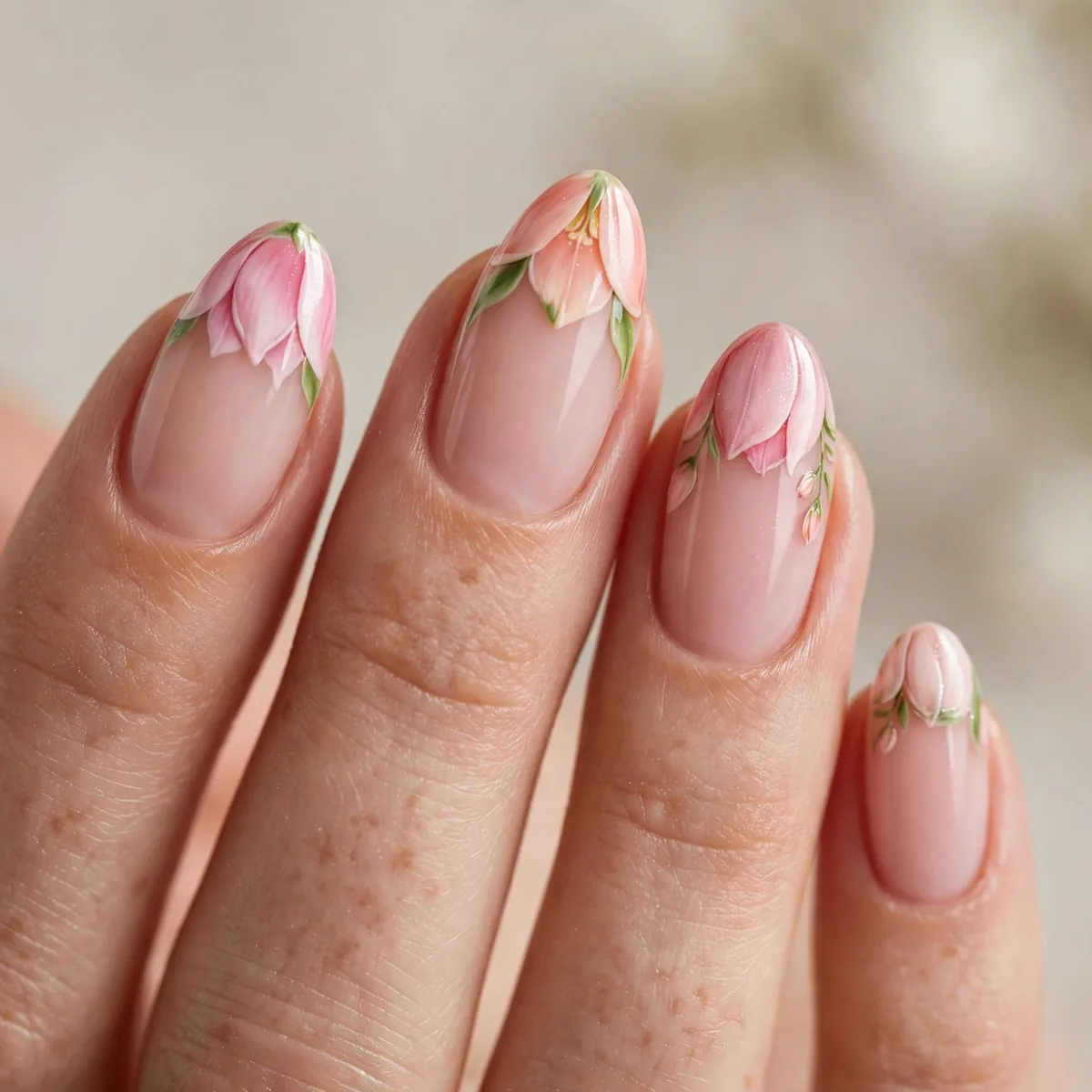
French tips in spring pastels — the seasonal French.
Best for: French lovers. Pastel tips refresh the classic.
The secret to crisp pastel tips is painting the smile line with the brush’s edge, not the flat — load the corner of the brush and sweep it along the free edge in one motion per side. French guides or thin striping tape help beginners, but remove them while the polish is still slightly tacky to avoid lifting. A cleanup brush dipped in acetone perfects the curve afterward; even pros tidy every tip, since eyes read the smile line first.
Pastel French tips flatter short to medium nails best — on very long nails the colored band needs thickening to stay proportional, which can look heavy. Try alternating tip colors across the hand, or keep all ten in one shade for a cleaner statement. Because the tip takes the most abuse, expect it to be the first area to chip; a gel-effect top coat with extra edge-capping buys two to three more days of crisp, salon-looking wear.
Butterfly Accents
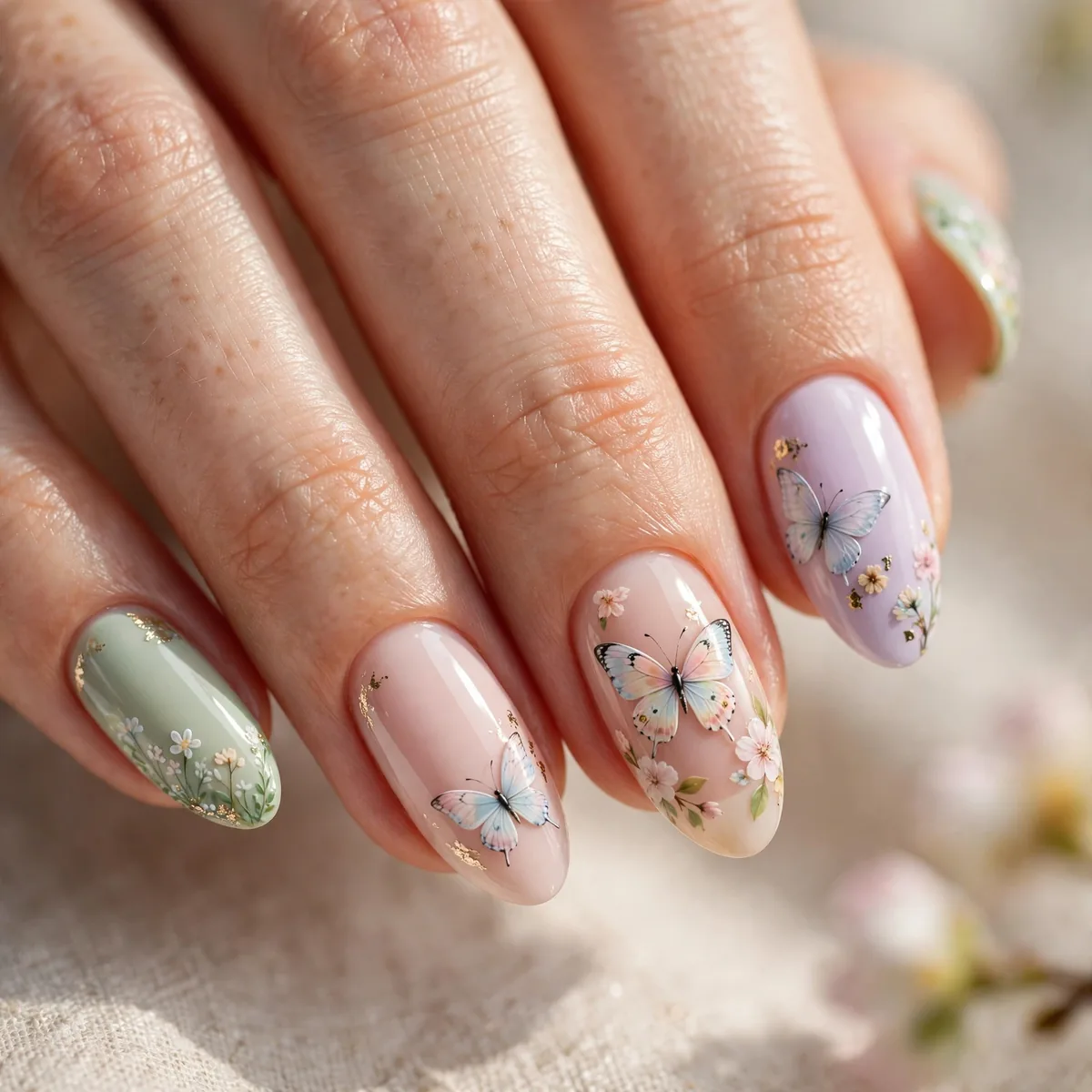
Tiny butterflies — spring’s most charming accent.
Best for: the whimsical. Butterflies mean transformation and spring.
You have three routes to butterflies: water-slide decals for zero skill required, stamping plates for crisp repeatable wings, or hand-painting for one-of-a-kind art. Decals look best sealed under two top coats so their edges disappear; stamping needs a sticky base and a firm, rocking press to transfer cleanly. If hand-painting, sketch the wings with a striper brush in white first, then fill with pastel — outlining before filling keeps the delicate wing shapes symmetrical.
Butterflies work best as a single accent nail — usually the ring finger — surrounded by a coordinating solid pastel so the design stays charming instead of chaotic. Place the butterfly slightly off-center toward the cuticle for a modern look, or centered for classic symmetry. These delicate designs last about five days under regular top coat; refresh the seal on day three and avoid using nails as tools, since lifting starts at the decal edges first.
Nude Blossom Base
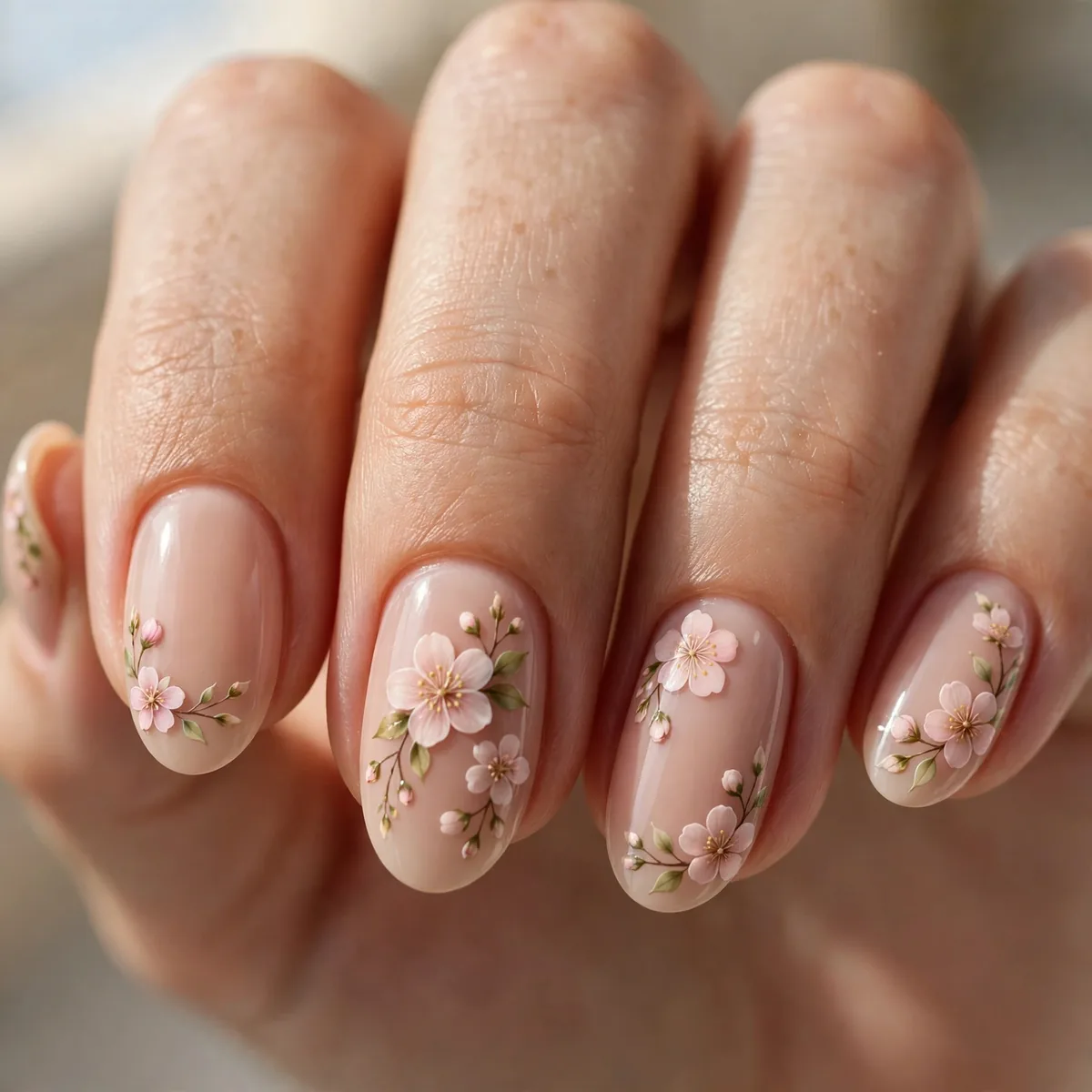
Sheer nude with floral details — the elegant spring.
Best for: professionals. Florals can be office-appropriate.
Build the sheer nude base in two to three thin coats until it evens the nail bed without hiding it — the translucency is the whole point. Keep the blossoms tiny and sparse: one small five-petal flower near the cuticle or a sprig trailing along one side, painted with a detail brush in white and soft pink. Let each element dry before adding the next layer; rushing causes the delicate petals to drag and blur into the nude base.
This is the spring floral that survives a conservative dress code — from a distance it reads as a polished nude manicure, with the blossoms revealing themselves up close. It suits short to medium oval nails best, where the negative space keeps everything refined. Expect five to seven days of wear since regrowth blends into the sheer base; keep a matching nude on hand for tiny touch-ups, and re-oil cuticles nightly to keep the whole manicure looking freshly done.
Mint French Twist
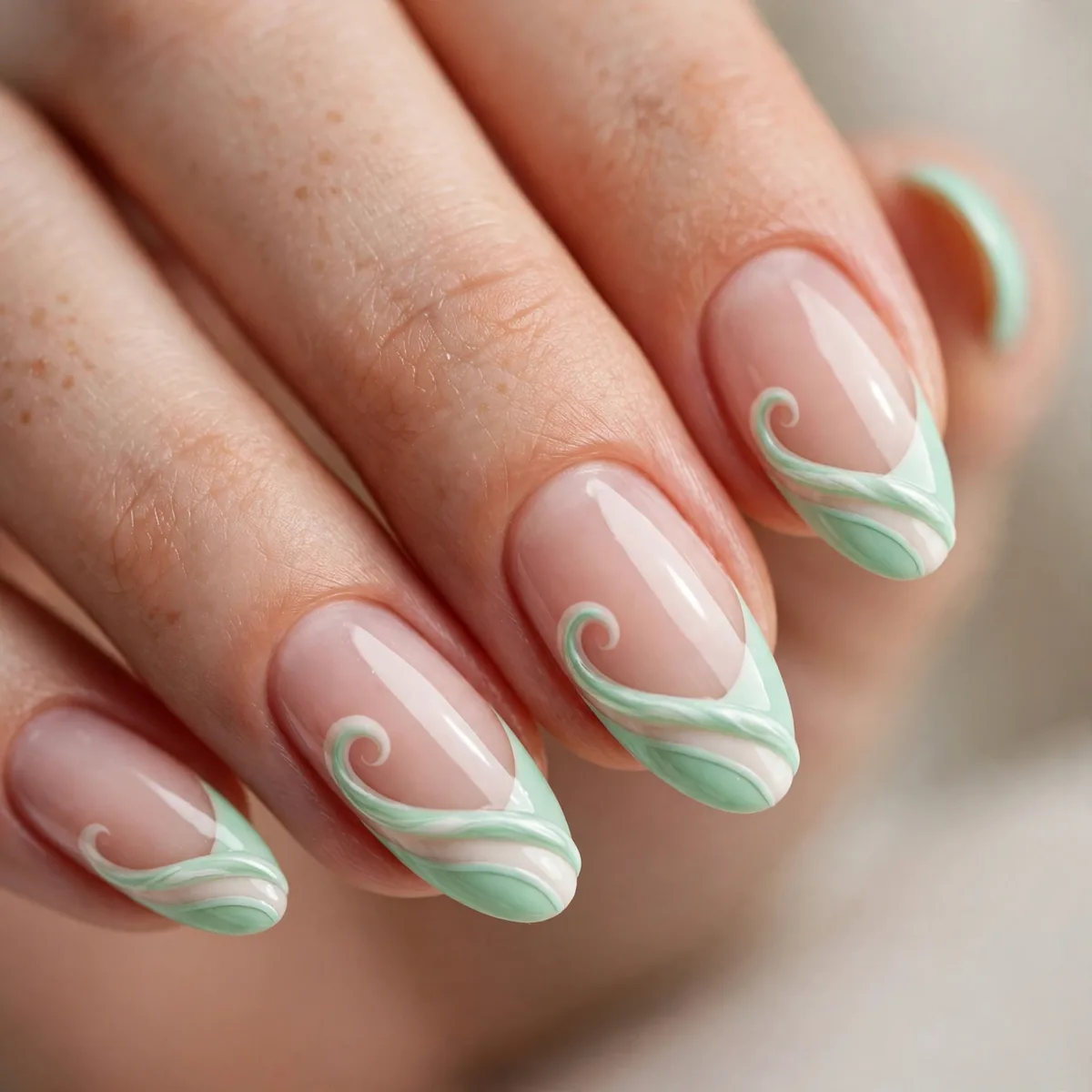
French tips in mint — fresh take on the classic.
Best for: the modern French. Mint tips are unexpectedly chic.
Start with a milky or sheer pink base that flatters your skin tone — the mint tip pops harder against a warm nude than a stark white. Paint the tips slightly thicker than a classic French; pastel tips need a bit more presence to register as intentional color rather than a mistake. If freehanding feels shaky, anchor your painting hand on the table and rotate the finger, not the brush — the steadier the nail, the cleaner the curve.
Mint French tips love medium-length almond or oval nails, where the curved tip mirrors the smile line beautifully. For a trend-forward twist, add a whisper-thin white line beneath the mint or finish with a chrome topper for an icy spring shimmer. Style it with silver jewelry and crisp white outfits — the cool palette reads fresh and modern. Cap the tips generously with top coat, since colored French edges show wear before the base does.
Rainbow Pastel Mix
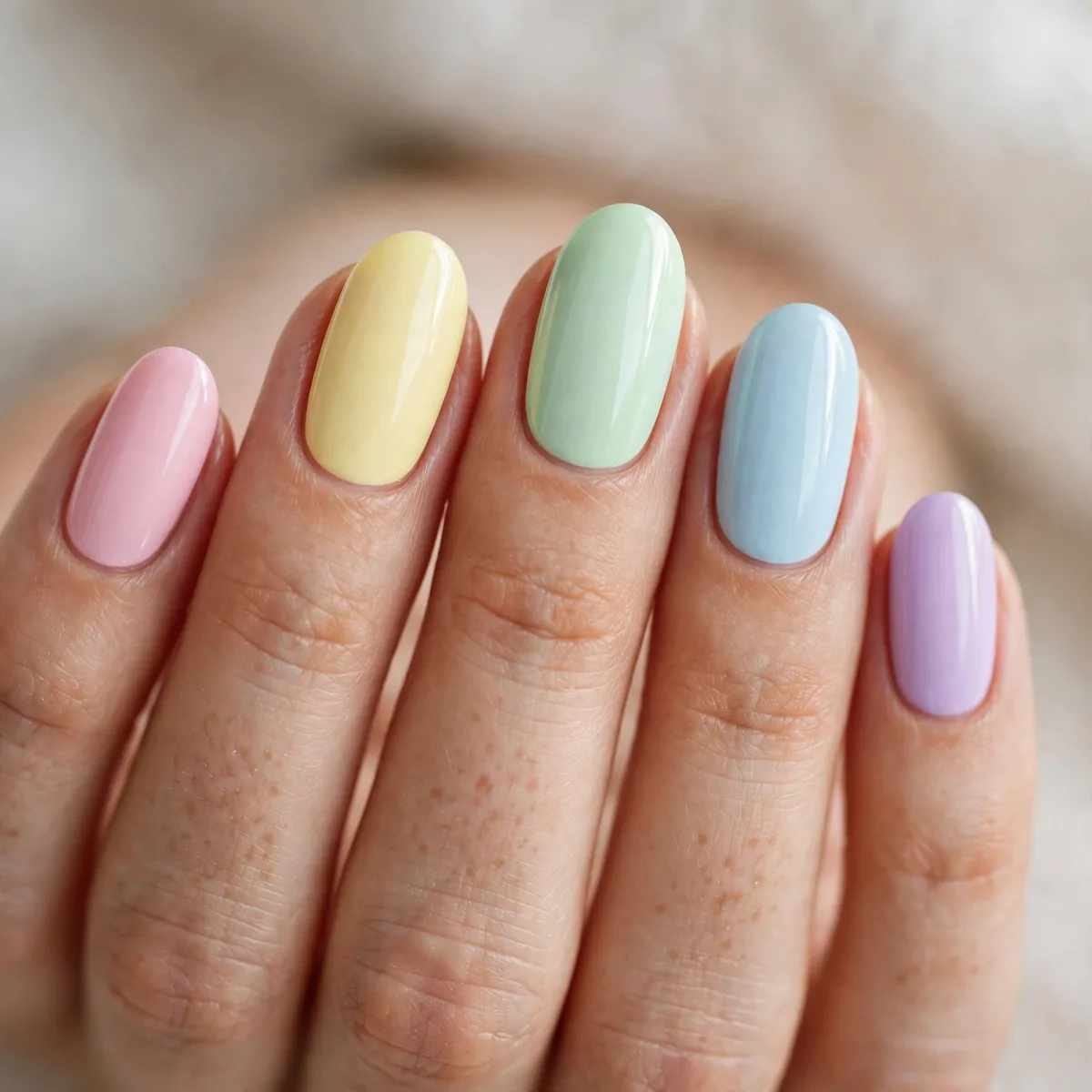
Different pastel on each nail — the spring skittle.
Best for: the indecisive. Why choose one pastel when you can wear five?
Paint all nails of one shade before moving to the next — working color by color keeps brushes clean and prevents muddying pastels on the brush. Wipe the brush on the bottle neck between nails so each coat stays thin; pastel skittles look best with crisp, even coverage on every finger. Order your shades from lightest to darkest across the hand or mirror them (thumb matches pinky) for a deliberate, balanced rainbow rather than a random scatter.
Choose pastels that share the same undertone family — all cool (lilac, mint, sky) or all warm (peach, butter, blush) — so the mix feels curated rather than clashing. The skittle looks fantastic on short to medium squoval nails, where each color gets its own little canvas. Since you’re opening five bottles, work quickly and cap each one between nails; pastels thicken fast in air, and gloopy polish ruins the smooth finish this look depends on.
Floral Accent Nail
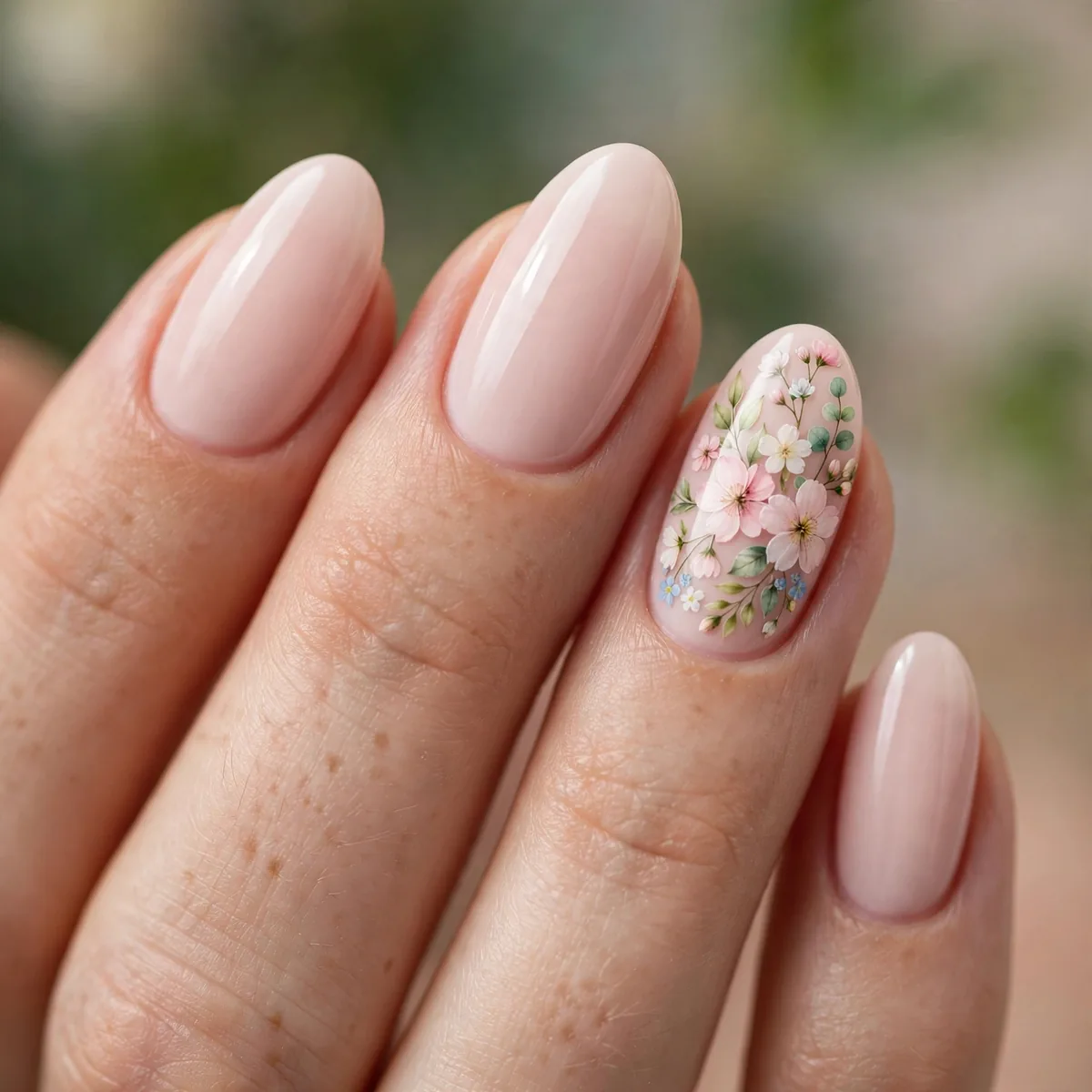
One floral accent among solid pastels — restrained romance.
Best for: the subtle. One accent keeps florals chic.
The ring finger is the traditional accent, but the middle finger showcases floral art better — it’s the longest nail and sits center-stage when you gesture. Keep the artwork in the same color family as your solid shade: white daisies on lilac, pink blossoms on mint. Paint the accent art after the solid color is bone-dry, and keep the design toward the tip so the cuticle area stays clean and regrowth looks intentional.
One accent nail is the sweet spot for offices and formal events — you get the romance of florals without a full garden on your hands. The solid nails will outlast the art, so seal the accent with an extra layer of top coat and refresh it midweek. If a petal chips, a tiny dot of matching polish touched up with a toothpick hides the damage invisibly; nobody will know but you.
Green Meadow
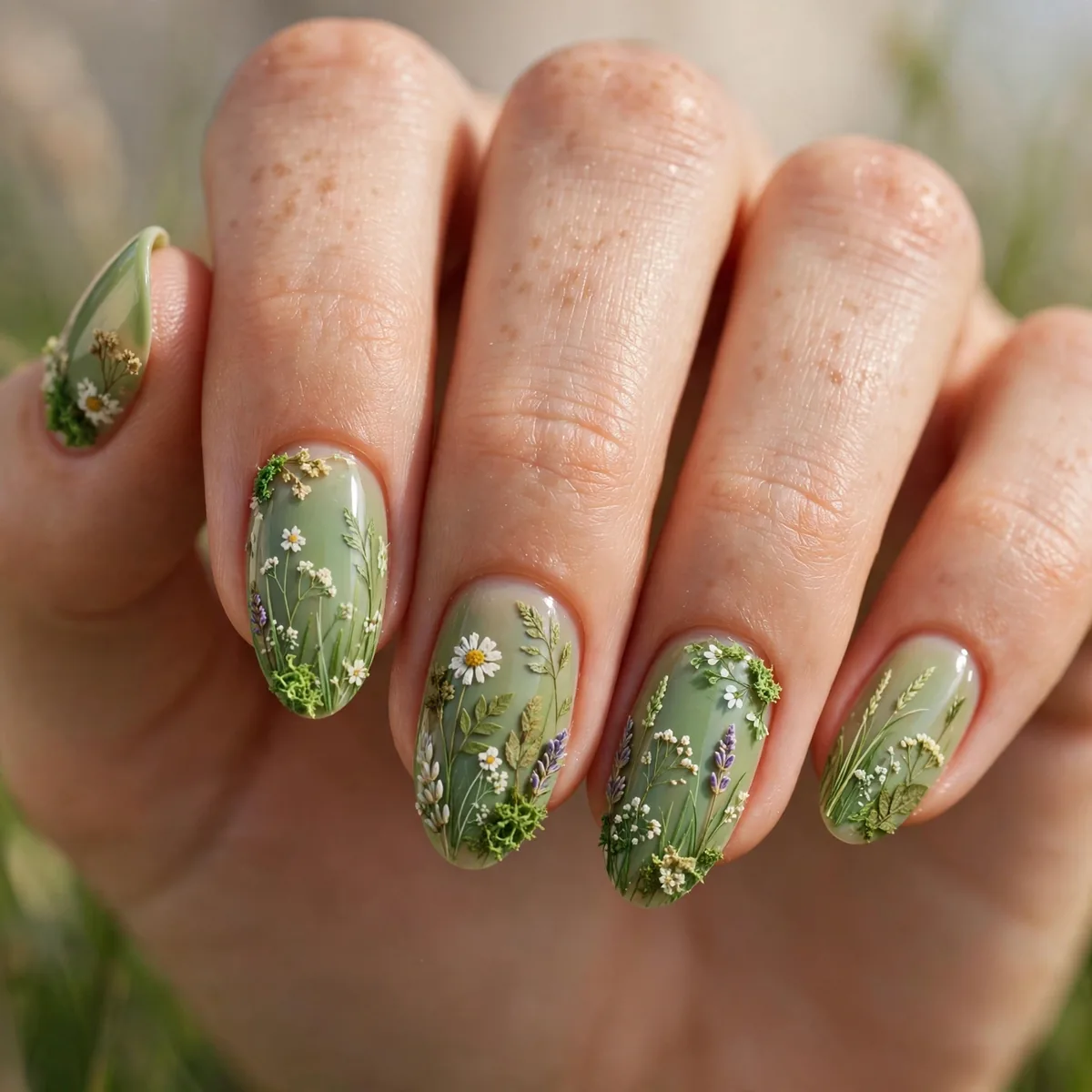
Fresh leaf green — spring’s most vibrant.
Best for: the bold spring. Green is nature’s spring color.
Vibrant greens are pigment-heavy, which means great coverage in two coats but a real staining risk — a double base coat is essential, and consider a peel-off base if you change colors often. Apply with confident, full strokes; hesitant dabbing leaves texture in these saturated formulas. If green floods the cuticle, clean it immediately with an orangewood stick wrapped in acetone-soaked cotton — dried green pigment around the nail bed is stubborn to remove later.
Leaf green is bold, so balance it with a refined shape — medium almond or oval keeps the look botanical rather than brash. It flatters warm undertones beautifully and makes gold rings pop, a lovely combination for spring. Because the color is a statement on its own, skip additional nail art and let the saturated shade do the talking; a high-gloss top coat is the only accessory this manicure needs.
Pearl Spring Shine
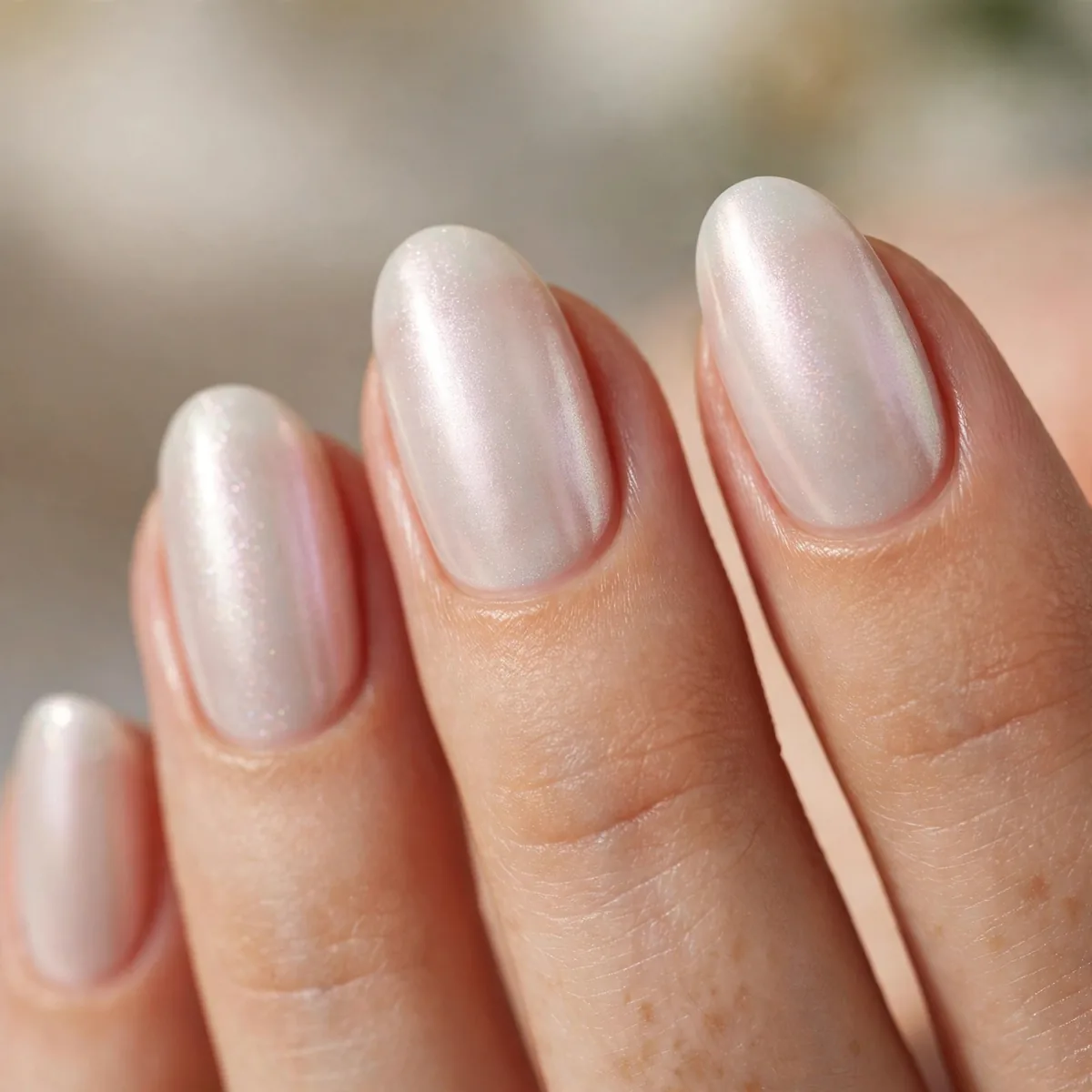
Pearly, iridescent finish — spring light captured.
Best for: the luminous. Pearl finishes glow like spring mornings.
Pearl and iridescent polishes are all about thin, even layers — the shimmer particles align best when the polish self-levels, so never overwork the brush. Layer the pearl topper over different base colors to customize the effect: over white it glows icy, over pink it turns rosy, over nude it looks like candlelight. Two coats of the pearl itself usually suffice; a third can go cloudy and mute the very luminosity you’re chasing.
Pearl finishes come alive in natural daylight, shifting between pink, blue, and gold as you move — they’re made for spring mornings and outdoor events. The ethereal effect suits short to medium oval nails best, where the light play reads delicate rather than disco. Seal with a glossy top coat to amplify the glow, and expect four to five days of wear; iridescent particles show tip wear sooner than cremes, so cap those edges carefully.
Coral Bloom
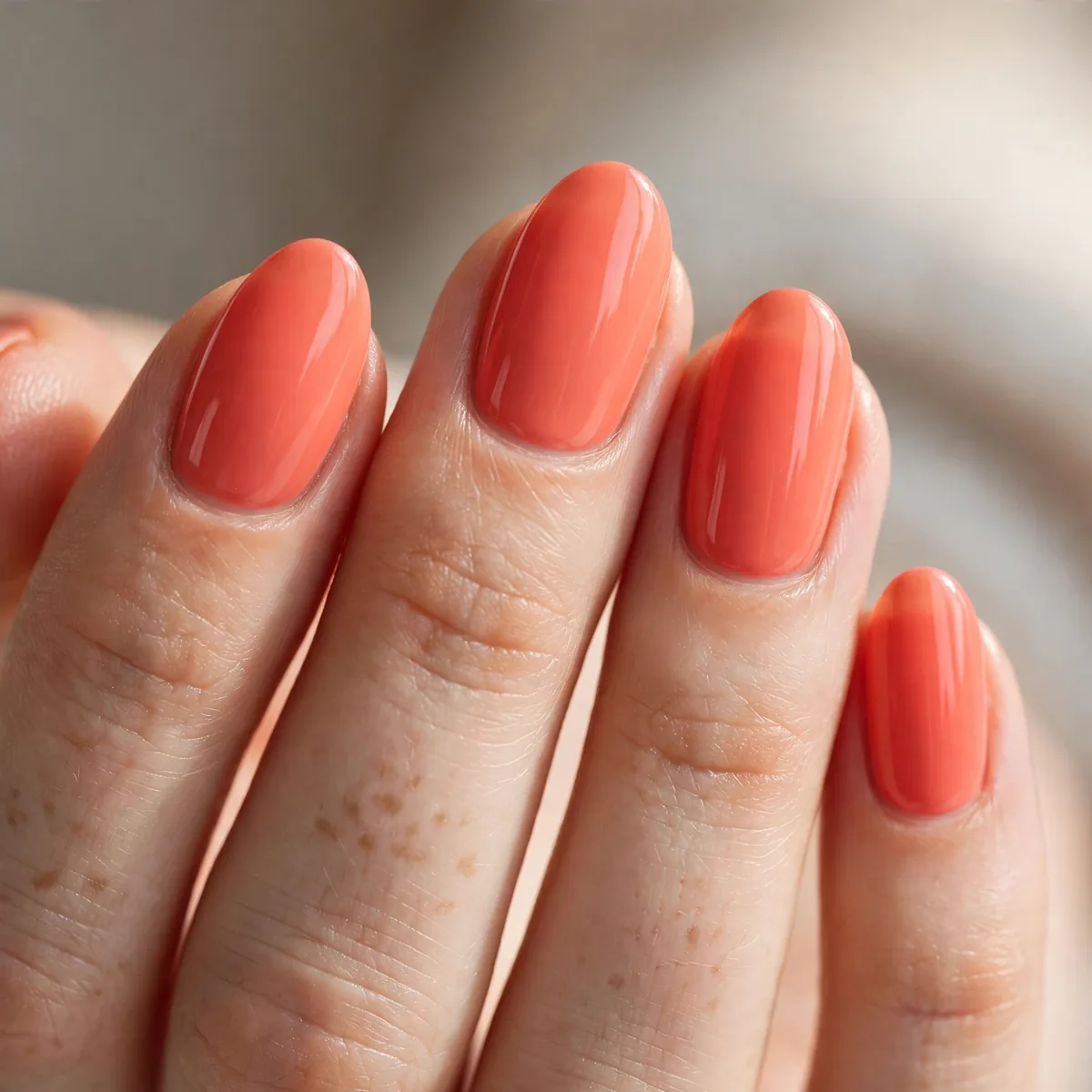
Bright coral — spring’s energy in a bottle.
Best for: the vibrant. Coral bridges spring and summer beautifully.
Coral sits between pink and orange, so check the bottle against your skin before committing — pink-leaning corals flatter cool undertones, orange-leaning ones love warm skin. Most corals apply beautifully in two coats, but neon-bright versions can look patchy; if yours does, a white base coat underneath evens everything out. The biggest mistake is pairing coral with clashing red accessories — let the nails be the warm pop and keep jewelry gold or neutral.
Coral is the ultimate spring-to-summer bridge shade — fresh enough for April, vibrant enough for July, which makes it the hardest-working bottle in a seasonal wardrobe. It energizes medium-length coffin or almond nails and looks electric against a tan, so it’s a natural pick as the weather warms. Expect five to six days of wear; brighter pigments actually hide tip wear better than pale pastels, so coral stays looking fresh longer.
The Spring Capsule
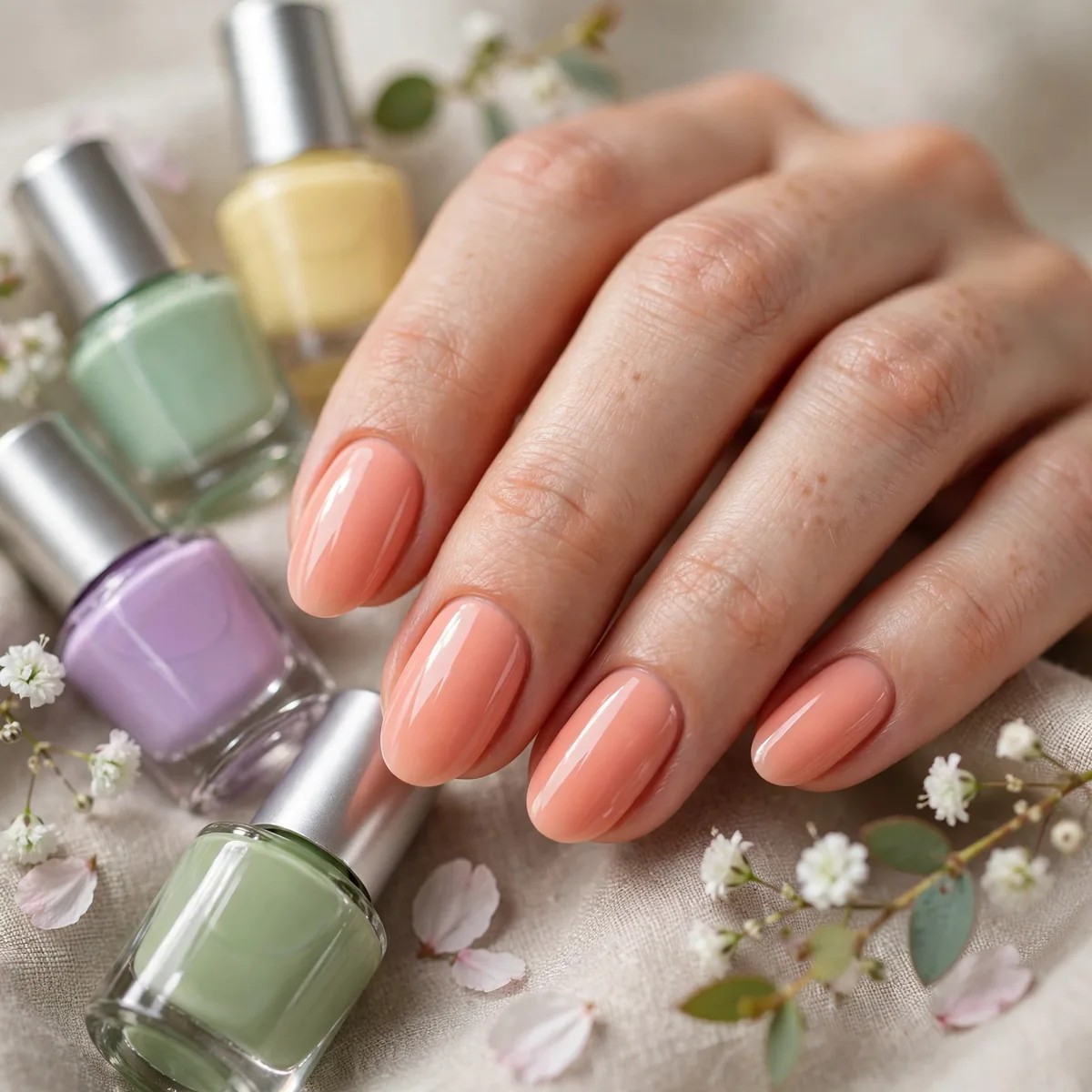
Lilac, pink, mint, peach, sky — the five-bottle spring wardrobe.
Best for: the season. Five shades, endless spring combinations.
Store your five bottles upright in a cool, dark drawer — heat and sunlight thicken pastel formulas fast, and nobody wants gloopy lilac. Roll bottles between your palms instead of shaking; shaking whips air bubbles into the polish that transfer straight onto the nail. When a shade starts thickening, add two drops of polish thinner (never remover) and roll again — it restores the flow and extends each bottle’s life by months.
The capsule approach saves real money — five versatile shades replace a drawer of impulse buys you’ll wear once. Mix and match them across the season: lilac with mint tips, peach with sky accents, or all five as a skittle when you can’t decide. Rotate shades weekly and your manicures always feel new, and keep the set together in a small pouch so spring’s palette is always within reach.
Fresh as spring itself. Save your seasonal picks — and for spring’s flowers in detail, see our floral nail art and Easter pastels.