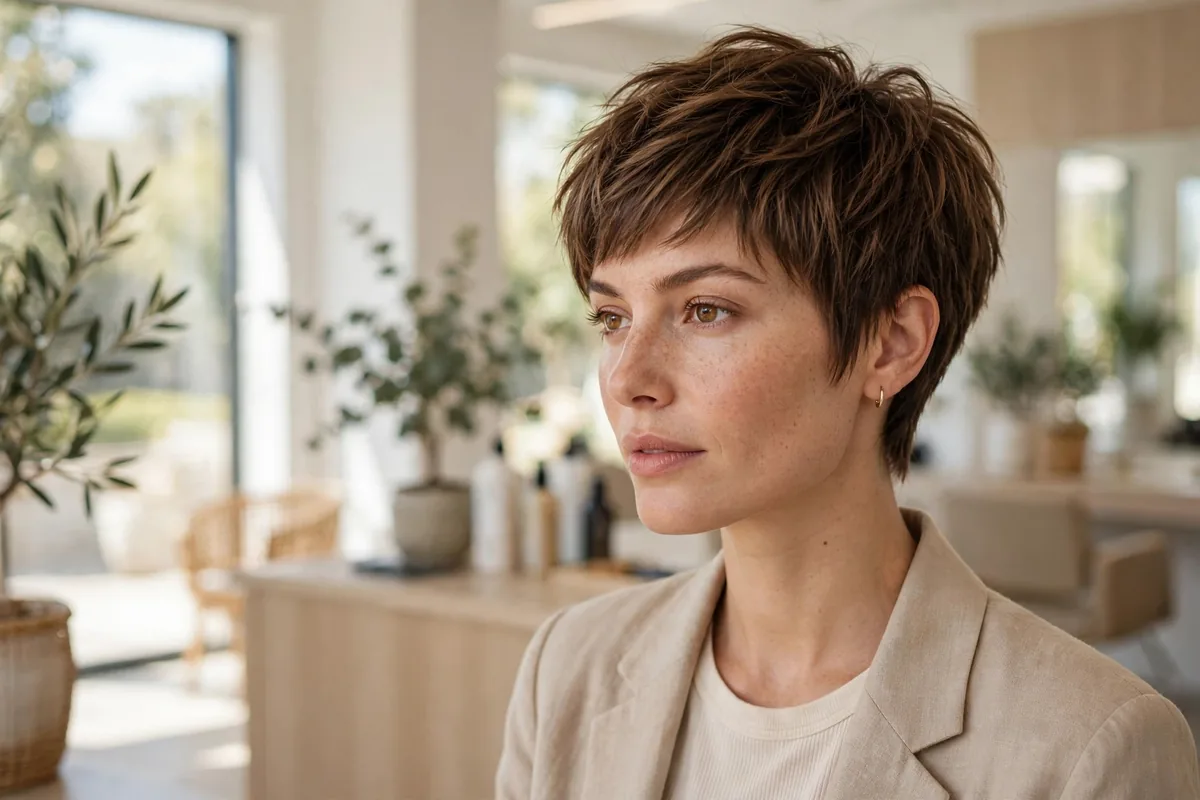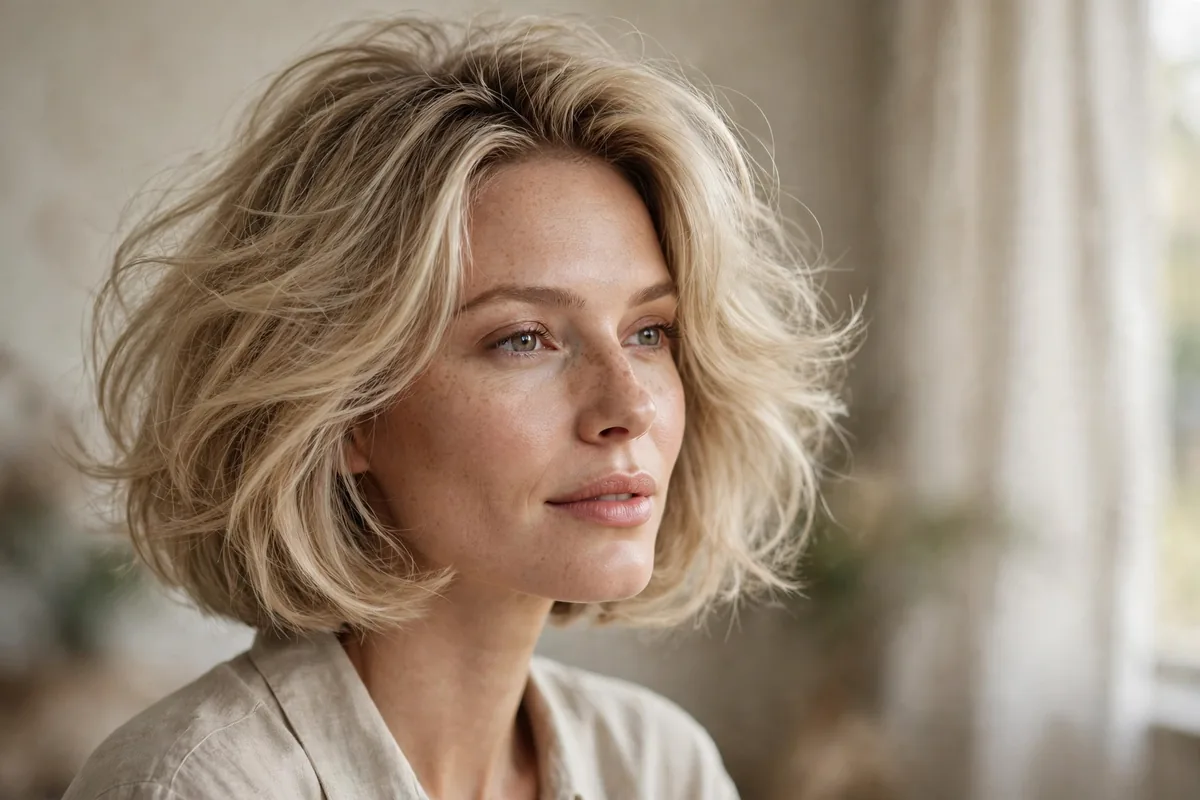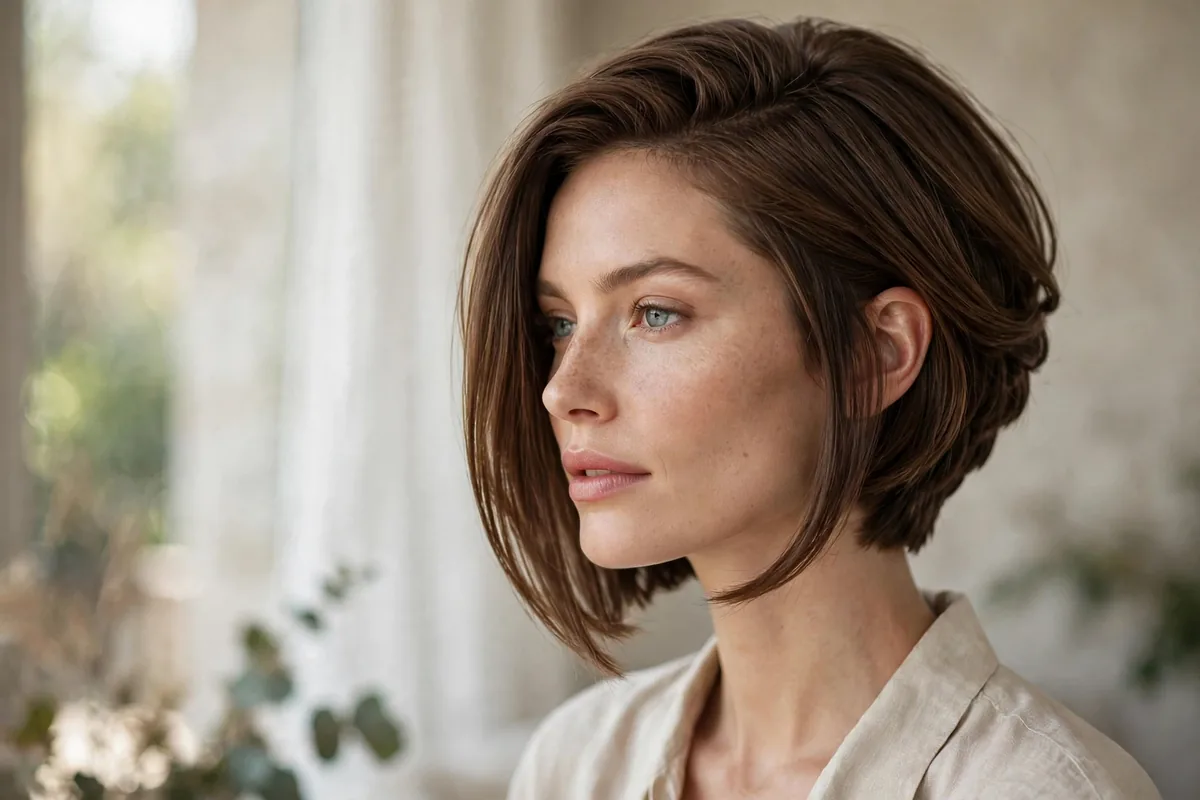
The inverted bob is optical illusion as haircut.
Shorter stacked layers at the back, longer pieces framing the front — that signature angle does two flattering things at once. It builds volume where hair tends to fall flat (the crown and nape) and creates long, slimming lines where faces need them (the jawline and cheeks).
It is one of the most versatile bobs ever designed. The angle can be subtle or dramatic, the length can graze the chin or the collarbone, and it works on straight, wavy, thick, and fine hair alike. There is genuinely an inverted bob for every face.
These 15 cuts show the full range, with guidance on choosing your angle and length for your specific face shape. Bring your favorite to your stylist and watch the transformation.
The Classic Graduated Inverted Bob
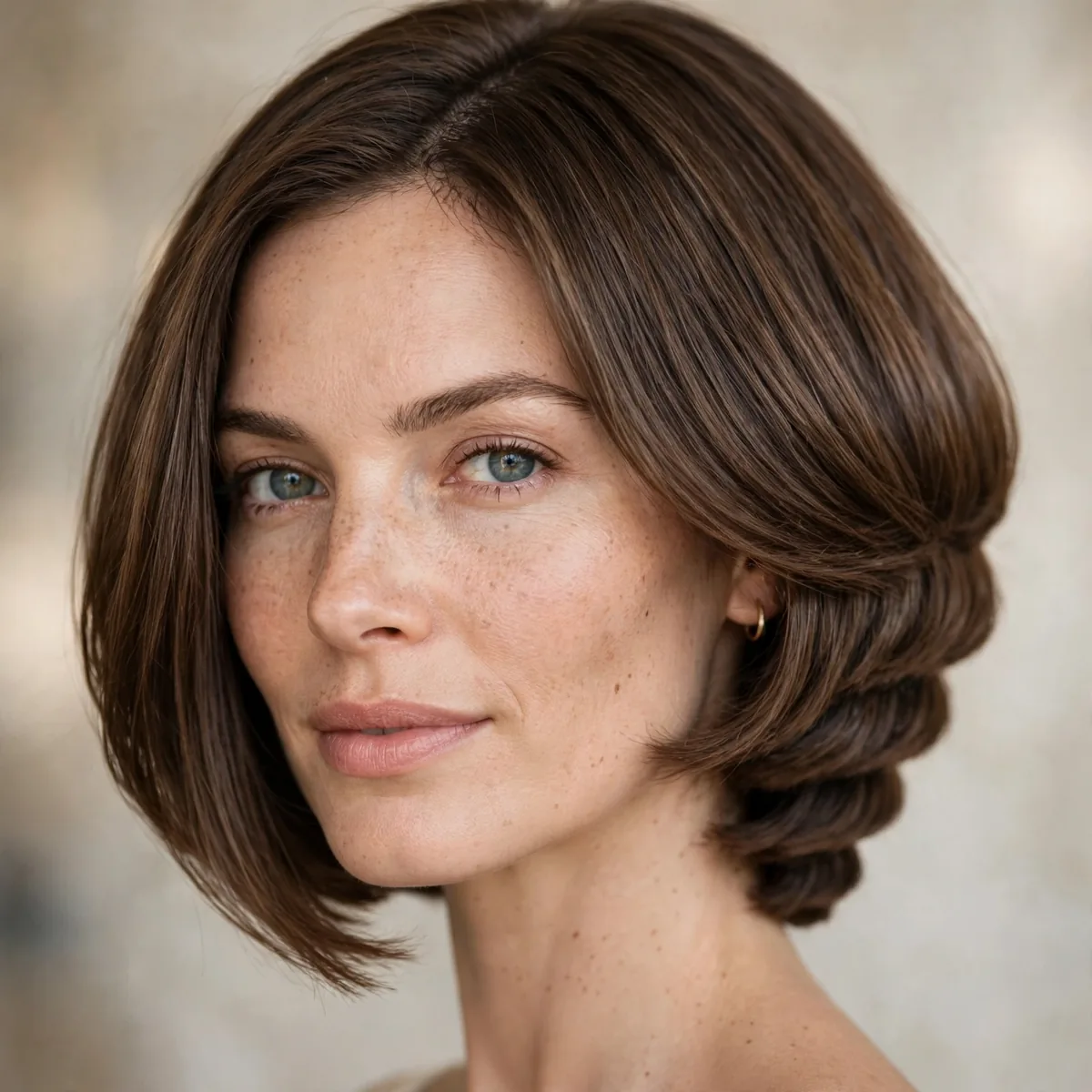
The original: precisely graduated layers stacking up the nape, blending into longer front pieces that hit at the chin or jaw. The graduation creates beautiful rounded volume in back while the front stays sleek and face-framing. Ideal for straight to slightly wavy hair.
Ask for graduated stacking at the nape with a clear but wearable angle to the front. The back needs trims every 6 weeks to keep the stacking crisp — when it grows out, the shape collapses. Style smooth with a round brush for the classic polished finish.
This shape flatters oval, heart, and long faces most, since the stacked back adds width where the face is narrow and the longer front keeps cheeks framed. Fine to medium density works best; very thick hair needs internal thinning to avoid a shelf at the nape. It's a polished, boardroom-ready look that also dresses down easily, and women in their forties and fifties love its lift at the back.
For a softer take, swap the round brush for a flat iron and bend the front pieces slightly inward for a rounded finish. At night, a loose low bun preserves the shape; a silk pillowcase fights frizz on the stacked layers. Variation: add a deep side part for evening events. With regular trims, the silhouette transitions gracefully into a longer lob rather than growing out awkwardly.
Inverted Bob With Long Front Pieces
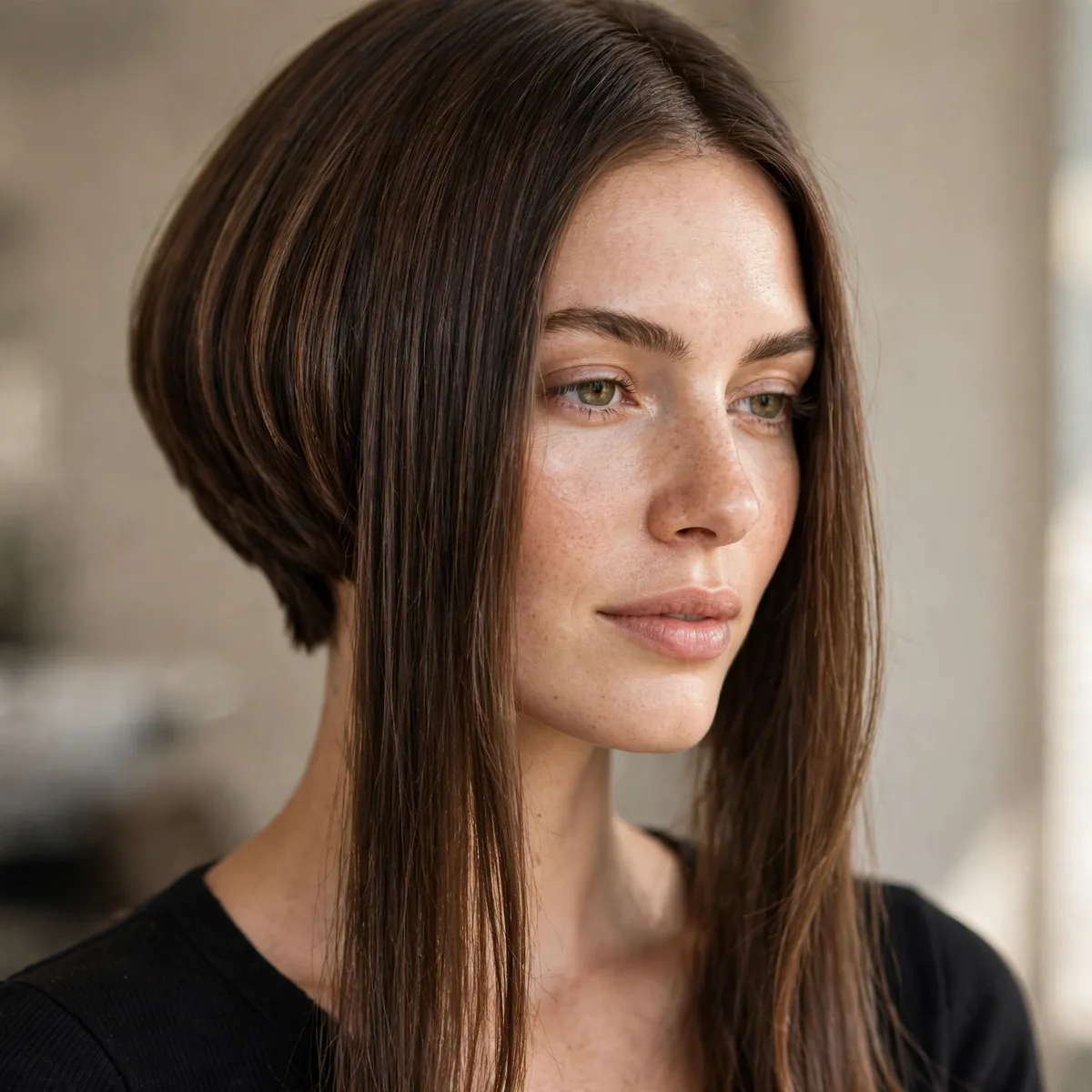
For maximum slimming, the front pieces go long — grazing the collarbone while the back stays stacked and short. The extreme angle creates the longest possible face-framing line, which is incredibly flattering on round and square faces.
Ask for a dramatic angle: stacked nape in back, collarbone-grazing pieces in front. The contrast is the point, so keep the front pieces sleek to emphasize the line. This is the inverted bob that photographs most dramatically — the angle reads beautifully in photos.
Round and square faces benefit most, since the extra-long front creates a vertical line that counters width through the cheeks and jaw. Oval faces wear it well too, but those with long, narrow faces should ask for a softer angle to avoid over-elongating. Straight and sleek hair shows the geometry best; wavy textures blur the line, though a good blow-dry smooths most natural bend away.
A center or off-center part lets the front pieces drape evenly, while a deep side sweep turns up the drama for evenings out. Protect those long ends with a heat-protectant spray before every blow-dry, since they're the oldest part of the cut and prone to splits. A gloss treatment every couple of months keeps them glossy. Come summer, the front tucks behind ears for heat without losing the silhouette.
The Stacked Inverted Bob
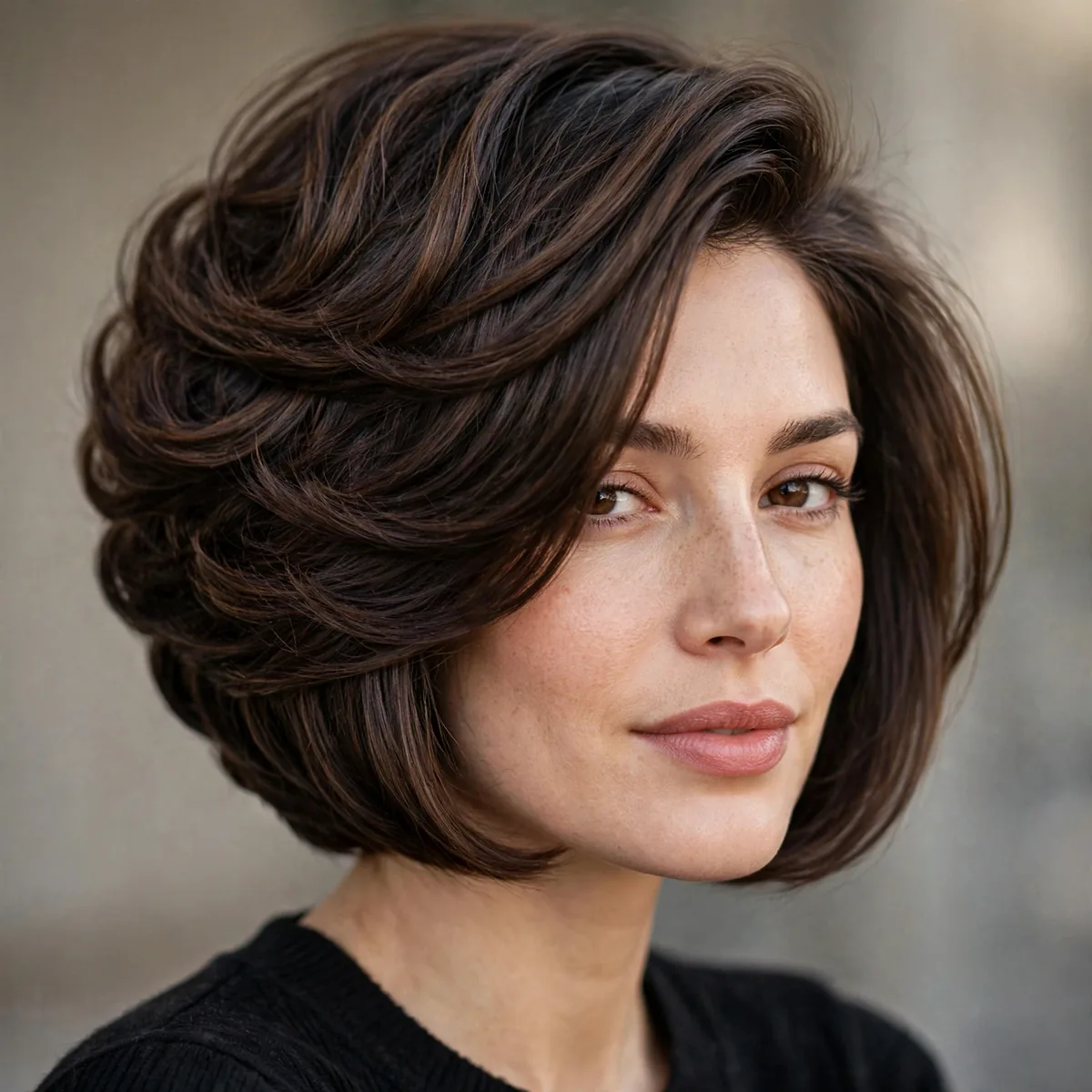
The stacked version piles on the graduation for serious volume at the back of the head. It is the inverted bob for fine hair that needs lift, and for anyone who loves that rounded, full silhouette from behind. Gorgeous on straight hair where the stacking shows.
Ask for aggressive stacking through the nape and crown. Back-comb the crown lightly and smooth the surface for that classic stacked fullness. This cut is at its best with a smooth, polished finish — the stacking is the texture. Fine-haired women should also see our bobs for fine hair for more volume builders.
Fine, limp hair is the ideal candidate — the stacking engineers volume no product alone can deliver. Round faces should request a gentler stack to avoid extra width at the cheeks, while oval and oblong faces carry the fullness beautifully. It also flatters shorter necks, since the tapered nape reveals the neckline. Thick-haired women need aggressive debulking inside, or the back balloons instead of tapering.
Blow-dry the nape with a small round brush, rolling each section under and up to build the stack's curve. A light root-lifting spray at the crown keeps the height through evening plans, and it photographs beautifully from behind at events. Sleep on your back or refresh the crown with dry shampoo in the morning — the shape flattens where your head meets the pillow. This is a high-maintenance romance, not a fling.
Inverted Lob for Round Faces
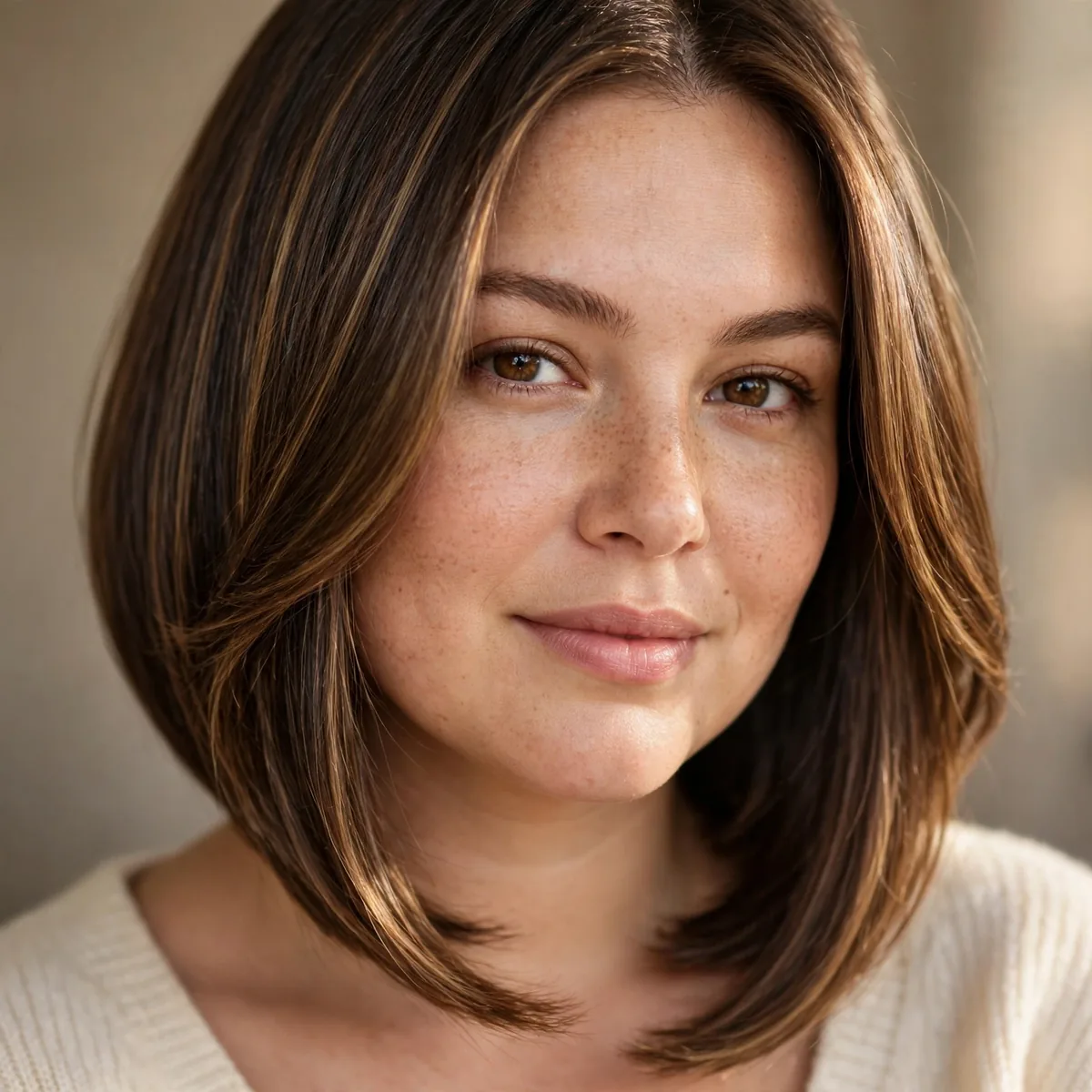
Round faces get the most slimming power from a longer inverted cut. The collarbone-grazing front pieces elongate the face while the stacked back keeps the silhouette from widening at the cheeks. It is geometry working in your favor.
Ask for an inverted lob — longer overall, with the angle preserved. Keep the front pieces in front of your shoulders rather than tucked behind your ears; the hair framing your jaw is what creates the slimming effect. A deep side part amplifies the asymmetry and the slimming.
Obviously made for round faces, but square faces get the same elongating magic since the long front bypasses the jaw's corners. If your hair is curly, the collarbone length works beautifully — the weight pulls curls into elongated spirals rather than a wide triangle. Petite women should keep the length right at the collarbone, not below, to avoid swamping their frame. It's a rare cut that suits both fine and thick textures.
Blow-dry the front pieces forward and down with a paddle brush, letting the cool shot lock in the sleek line. In humid summer months, a keratin-infused serum is your best friend — frizz at the cheeks widens the face visually. Come fall, the length is perfect for tucking into scarves and turtlenecks without bunching. Trim every eight weeks to keep the collarbone length exact; longer kills the effect.
Chin-Length Inverted Bob
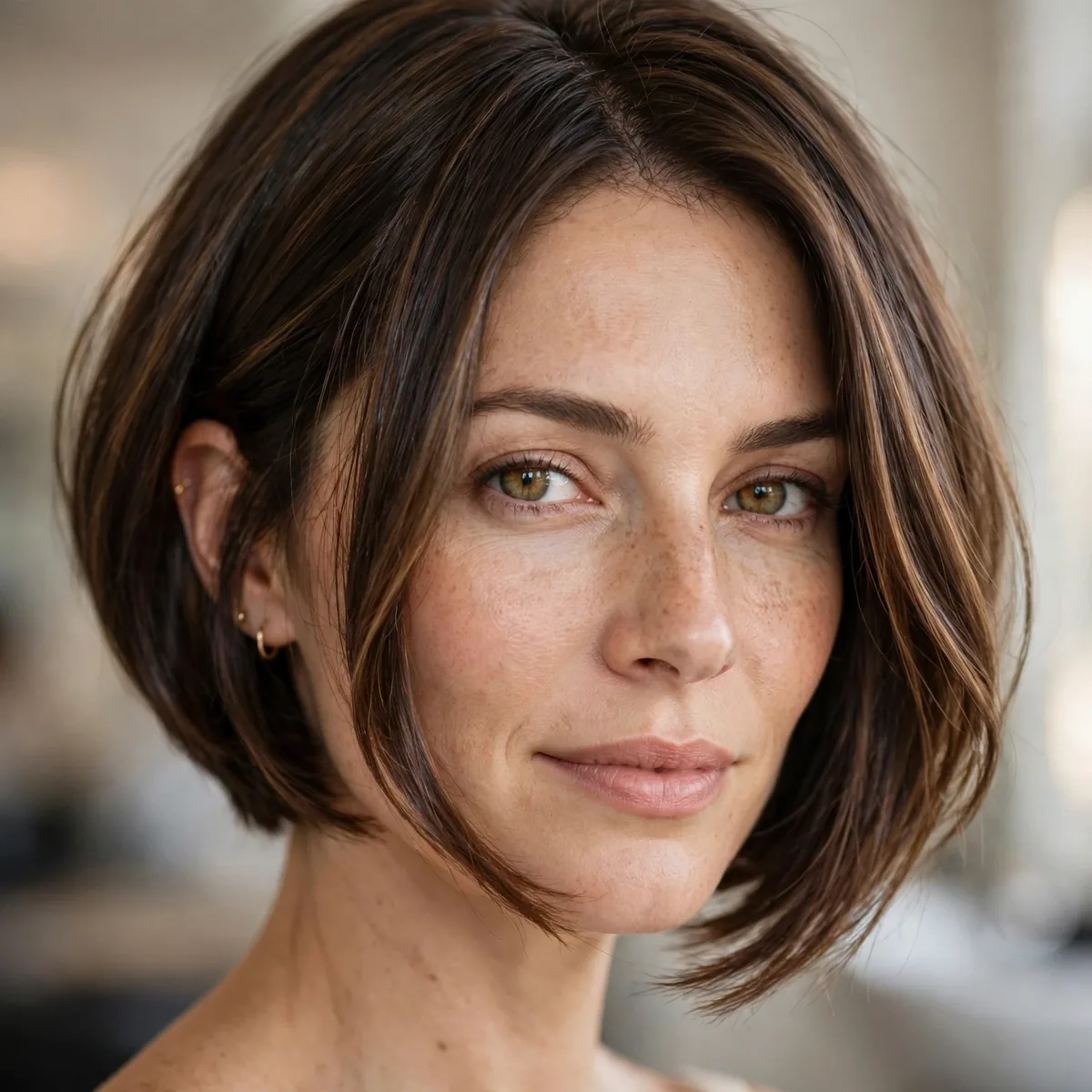
The chin-length inverted bob is the most wearable version — short enough to feel like a real bob, long enough to be versatile. The gentle angle from a stacked nape to chin-grazing front pieces suits oval, heart, and oblong faces beautifully.
Ask for a soft angle rather than a dramatic one. This length tucks behind the ears easily and grows out gracefully into a classic bob. Style with a slight bend at the ends for softness, or sleek and straight to emphasize the angle.
Oval, heart, and oblong faces wear this length best, since the chin-grazing front balances foreheads and narrows through the jaw. It flatters women in their thirties through sixties equally — youthful without being girlish, polished without being severe. Fine hair looks denser at this length, and it's one of the few short cuts that curly girls can wear without fighting shrinkage. Universally easy, genuinely hard to get wrong.
For weekdays, blow-dry smooth and tuck one side behind the ear with a statement earring showing — instant polish. Weekend version: scrunch in sea-salt spray for piece-y, undone texture. The cut also takes a French twist or low chignon for weddings since the front pieces can be pinned loosely around the face. Maintenance is forgiving: stretches to ten weeks between trims, and grows out into a soft, wearable lob.
Inverted Bob With Bangs

Bangs plus an inverted bob is a bold, graphic combination — the fringe adds a strong horizontal line that contrasts beautifully with the diagonal angle. It works best on oval and long faces, where the bangs shorten the forehead and balance the cut's length in front.
You can pair the inverted shape with full straight bangs, curtain bangs, or a side-swept fringe. Ask your stylist to cut the bangs to complement the angle — usually a softer, textured fringe works better than a severe one against the sharp diagonal.
Oval and long faces are the sweet spot — the fringe shortens a high forehead while the angled front adds length below, keeping everything in proportion. Round faces should go for a side-swept or curtain fringe instead of full bangs, which can widen the forehead visually. Thick-haired women get the best fringe density; fine hair can still work with a lighter, wispy version that doesn't demand much hair.
Blow-dry bangs straight down first, before the rest — they're the shortest and most stubborn section. A mini flat iron tames cowlicks, and a light dry shampoo at the roots keeps the fringe fresh between washes. Evening twist: sweep the bangs to one side with a bobby pin for a faux side-fringe. Plan bang trims every four weeks; the cut itself can stretch to eight.
The Dramatic Inverted Bob
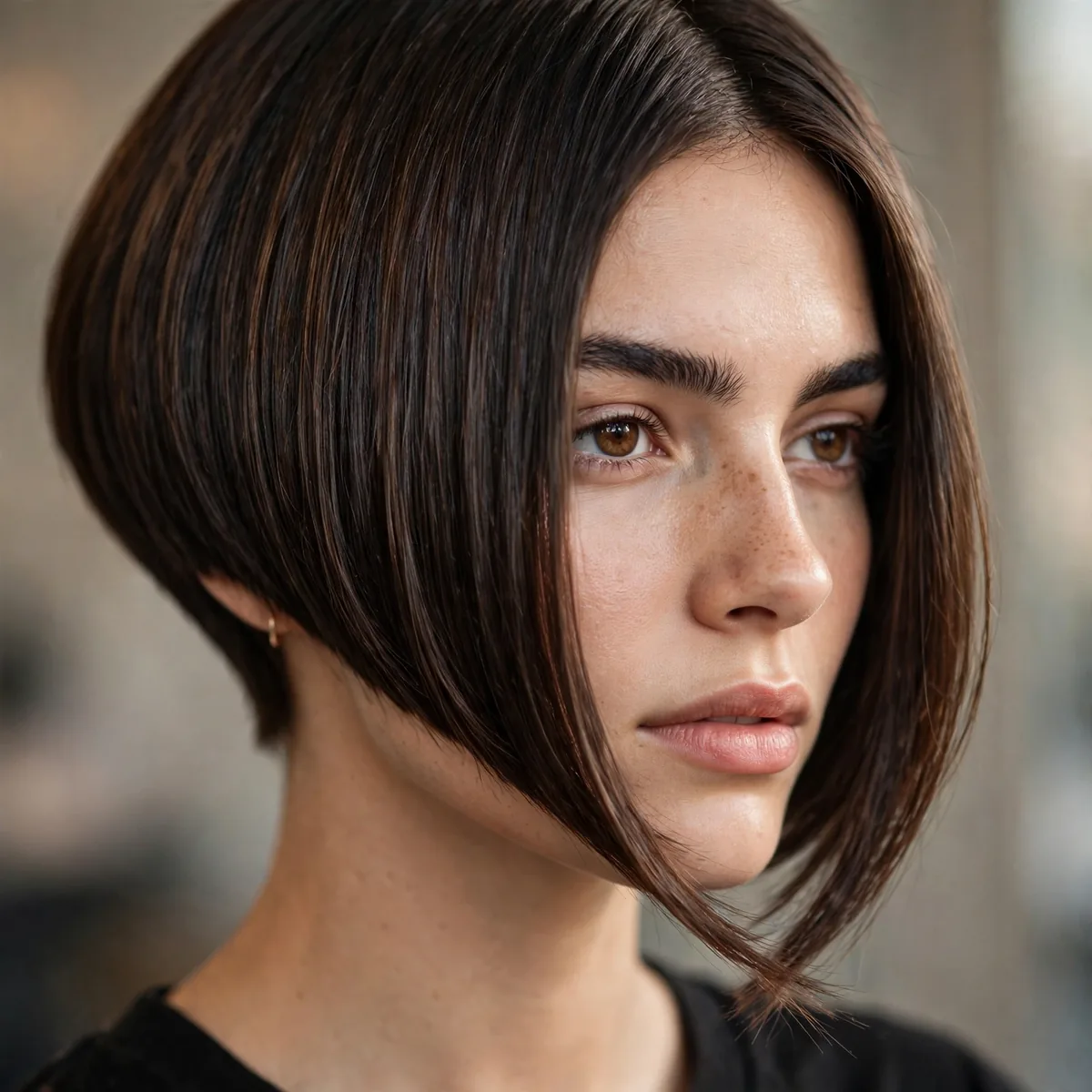
This is the inverted bob turned up to eleven: a steep, unmistakable angle from a very short stacked back to very long front pieces. It is editorial, eye-catching, and not for the shy. Best on straight hair where the angle reads crisply, and on oval or heart-shaped faces.
The dramatic angle needs precision cutting and regular maintenance — every 5 to 6 weeks. Wear it sleek to show off the geometry; waves soften the angle and dilute the drama. This is a statement cut, so keep the rest of your styling simple and let the shape talk.
This is a statement cut for women who want their hair noticed — creatives, fashion-forward professionals, and anyone bored with safe hair. Oval and heart faces handle the extreme angle best; round faces need the front truly long to avoid the steep slope emphasizing cheek width. Pair it with bold styling — sharp brows, a red lip — because a cut this architectural begs for a finished face. Not the choice for conservative offices.
The drama demands upkeep: book a trim every five weeks or the angle softens into a regular bob. For maximum sharpness, flat-iron the front pieces straight down with a smoothing serum. On off days, pin one long front piece back for an asymmetric twist. Winter static is the enemy — a drop of argan oil on the ends keeps them sleek. This cut rewards commitment and punishes neglect.
Inverted Bob for Thick Hair

Thick hair loves the inverted bob because the stacked nape removes an enormous amount of bulk exactly where thick hair bunches up. The graduation carves out weight while the long front keeps your length and density where it shows.
Ask for heavy interior thinning through the stacked section — this is essential, or the back will look bulky instead of sleek. The front pieces can stay thick and lush. Style smooth with a paddle brush. For more weight-removing cuts, our long bobs for thick hair roundup is full of them.
Thick, coarse, and dense hair types are the target audience — this cut was practically invented for them. It works for straight, wavy, and even loosely curly thick hair, since the nape stacking removes bulk regardless of pattern. Women with strong jawlines love how the sleek front softens their angles. Avoid it if your hair is thick but extremely curly (3C and up); the angle gets lost in shrinkage and the nape needs a specialist's hand.
A ceramic flat iron is your best friend for keeping the front pieces glossy — run it over small sections with a heat protectant. In the shower, a weekly deep-conditioning mask tames the density; skip heavy oils at the nape, which flatten the stack. Air-dry works surprisingly well if you smooth the front while damp. For workouts, a low ponytail keeps the nape cool — the hidden undercut option helps here too.
Inverted Bob for Fine Hair

Fine hair gets a double benefit from inversion: the stacking builds volume at the crown that fine hair cannot achieve on its own, and the angled front pieces make the ends look thicker. It is one of the best bobs for fine hair, period.
Ask for stacking through the back with minimal thinning — fine hair needs to keep every strand. A volumizing mousse at the roots and a round-brush blow-dry maximize the stacked fullness. The angle also means the front pieces fall forward, covering any sparseness at the temples.
Fine, straight to slightly wavy hair gains the most — the cut manufactures fullness that products alone can't fake. It's lovely for women over fifty, since the lifted back counteracts the flattening that comes with finer aging hair. Round faces benefit from the slimming diagonal; very thick roots with fine ends should ask the stylist to preserve weight at the perimeter. If your hair is baby-fine and pin-straight, the angle stays razor-sharp all day.
Root lift is everything: apply a pea-sized amount of volumizing mousse to damp roots and blow-dry the crown upward with a vent brush. Avoid heavyweight serums — a featherlight texturizing spray on dry ends adds grip without collapse. For evening volume, velcro rollers at the crown while you do makeup work magic. Refresh day-two roots with dry shampoo, and never over-condition: fine hair drowns in rich masks.
The Soft Inverted Bob
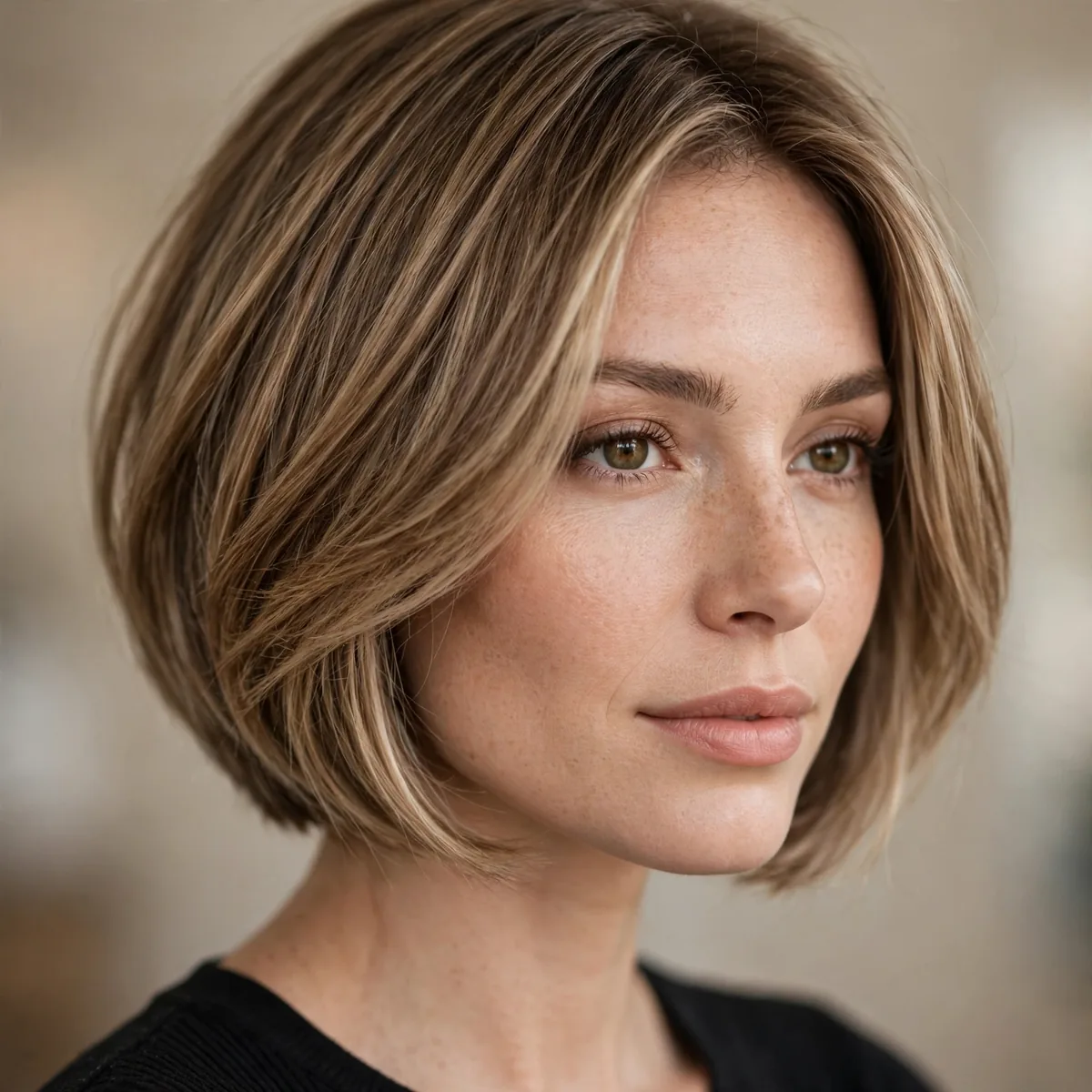
Not every inverted bob needs a sharp angle. The soft version uses gentle graduation and blended layers for a subtle slope that reads as effortlessly flattering rather than obviously "inverted." It is the inverted bob for women who want the benefits without the drama.
Ask for a gentle angle with soft, blended graduation. This version grows out beautifully and suits wavy hair, since the softness works with natural texture. It is also the most office-friendly inverted bob — polished but not severe.
Wavy and naturally textured hair types shine here — the gentle slope works with movement instead of fighting it. It's the most forgiving inverted bob for round faces, since the blended line slims without a harsh diagonal. Professional women who want polish without edge love it, and it suits every age gracefully. If you've always found the classic inverted bob too severe, this is your entry point.
Enhance the softness: scrunch a curl-defining cream into damp waves and diffuse on low for touchable definition. Straight-haired wearers get a gentle bend by wrapping front sections around a one-inch curling wand away from the face. In winter, the blended layers sit beautifully under beanies without denting. It transitions into spring effortlessly — just add a touch more texture spray as humidity rises.
Inverted Bob With Side Part
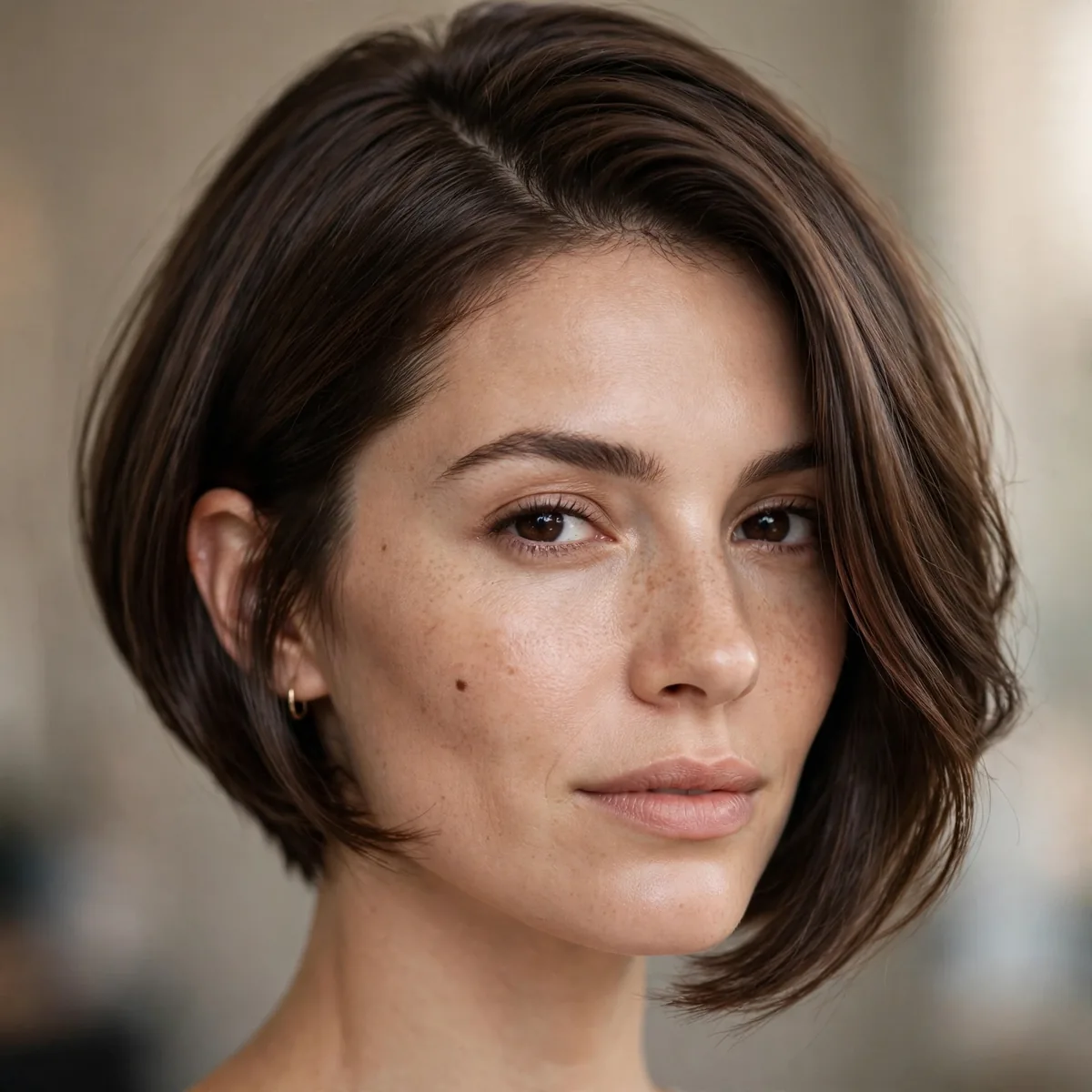
A deep side part amplifies everything great about the inverted bob: more volume on the heavy side, a longer diagonal line across the face, and extra asymmetry that slims. It takes the cut from pretty to striking with zero additional cutting.
Ask your stylist to layer the cut to fall from a side part. To style, create the part while damp and blow-dry the heavy side with lift at the roots. The combination of the side part and the inverted angle creates the longest possible face-framing line — maximum slimming.
Almost every face shape wears a side part well, but round and heart faces get the biggest payoff — the asymmetry breaks up symmetry and the deep sweep slims. Women with fine hair love the instant root lift it creates. It's also a savior for anyone with a cowlick at the crown: a strong side part works with the growth pattern instead of against it. Works across all ages and textures.
Train the part on damp hair — where you part it wet is where it stays. Blow-dry the heavy side with a round brush, directing roots upward for lift that lasts through the day. A touch of root powder along the part disguises regrowth between color appointments. For formal events, smooth the sweep with a shine spray. Switching the part to the opposite side instantly refreshes the cut's look.
The Inverted Bob With Highlights
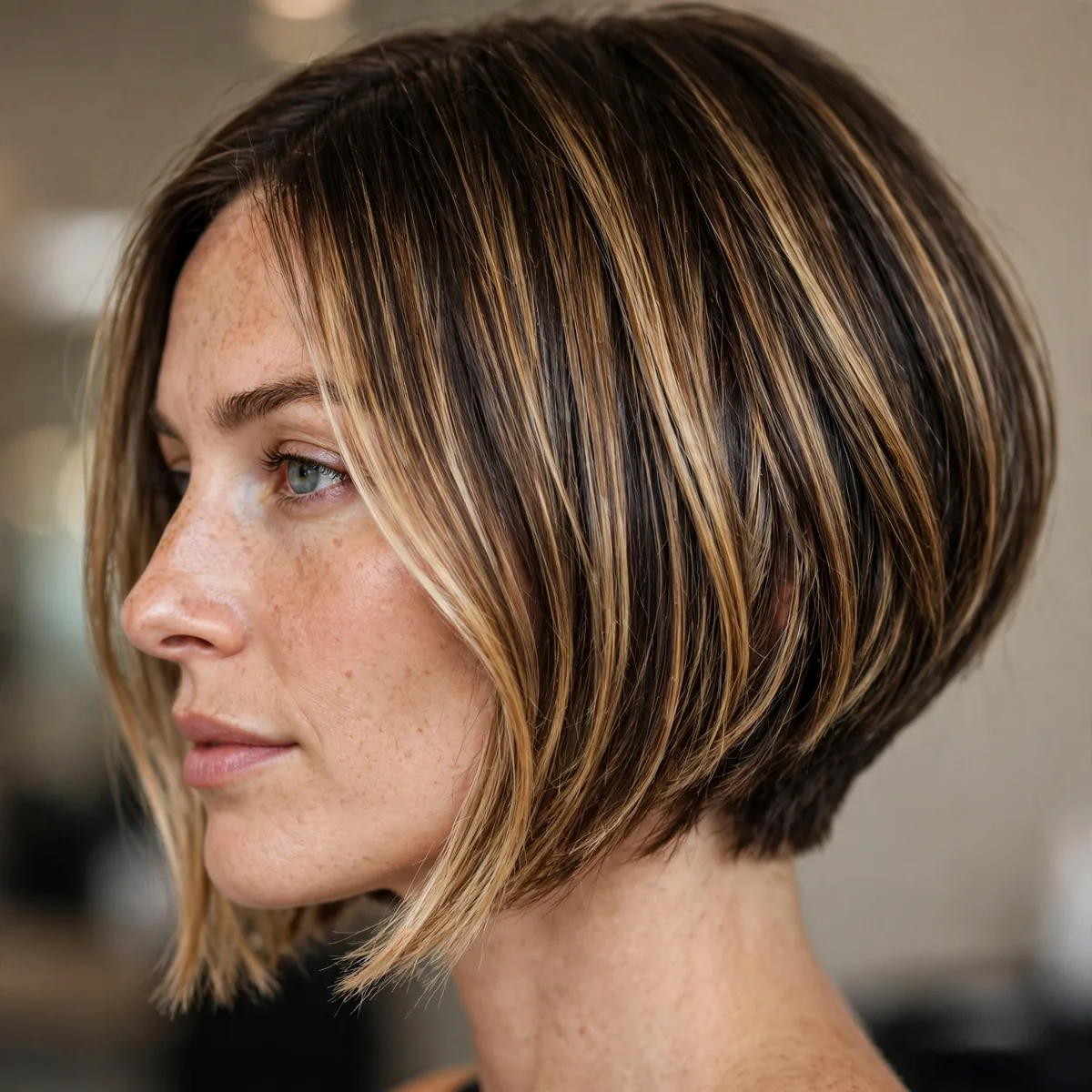
Highlights are the perfect partner for an inverted bob because they trace the angle — lighter pieces in front, depth in the stacked back — making the shape visible from every direction. The color literally draws the eye along the flattering diagonal.
Ask your colorist for face-framing brightness through the long front pieces with slightly deeper tone in the stacked back. The contrast emphasizes the cut's architecture. A gloss every 8 weeks keeps the dimension luminous.
This color-cut combo suits everyone, but it's transformative on brunettes — the contrast between dark roots and bright front pieces makes the angle pop. Warm skin tones glow with caramel and honey ribbons; cool tones suit ash and platinum pieces. Women growing out gray find the dimension camouflages silver beautifully. Fine hair gains visual thickness from the light-and-shadow play of highlights.
Highlights mean upkeep: book a partial refresh every eight to ten weeks, and use a sulfate-free color-safe shampoo to protect the brightness. A weekly gloss or glaze keeps the tone from going brassy — at home, a purple conditioner works for blondes. Style the front pieces smooth so the color ribbons read clearly; texture blurs them. In summer sun, a UV-protectant spray prevents fading.
Curly Inverted Bob
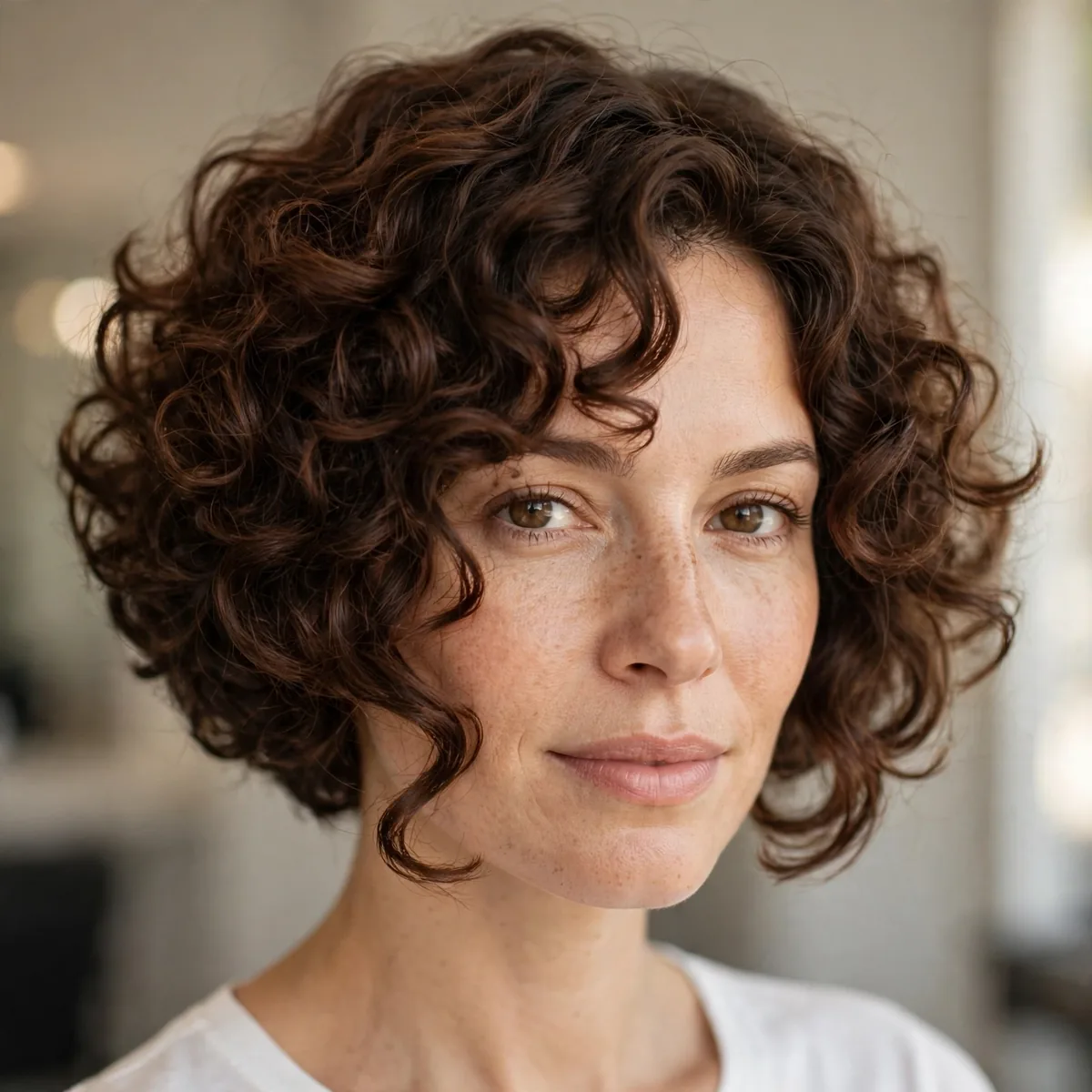
The inverted bob works on curls when it is cut dry by a curl specialist. The stacked back encourages curls to spring up into a rounded shape while the longer front pieces elongate the face. The result is a curly bob with beautiful architecture.
The key is cutting each curl where it lives — never cut curly hair wet for this shape. Ask for a dry cut with the inversion built into the curl pattern. Style with curl cream and gel, diffusing for definition. The angle gives curly bobs a sophistication that one-length curly cuts sometimes lack.
Type 2C to 3B curls are the sweet spot — enough spring for the stacked back to round beautifully, enough length for the front pieces to frame the face. Round faces love the elongation; the inverted angle prevents the dreaded wide triangle. It's also brilliant for women transitioning from relaxed to natural hair, since the shorter back grows out evenly. Tight 4C coils need a very experienced curl specialist for this shape.
Curly cuts need specialist maintenance: see your stylist every ten to twelve weeks for curl-by-curl reshaping. Nightly, pineapple the hair or wear a silk bonnet to protect the stacked shape. Refresh curls with a water-and-leave-in mist rather than daily washing — the cut's architecture holds between wash days. In humid weather, a strong-hold gel cast locks definition; scrunch it out once dry.
The Inverted Bob With Undercut Nape
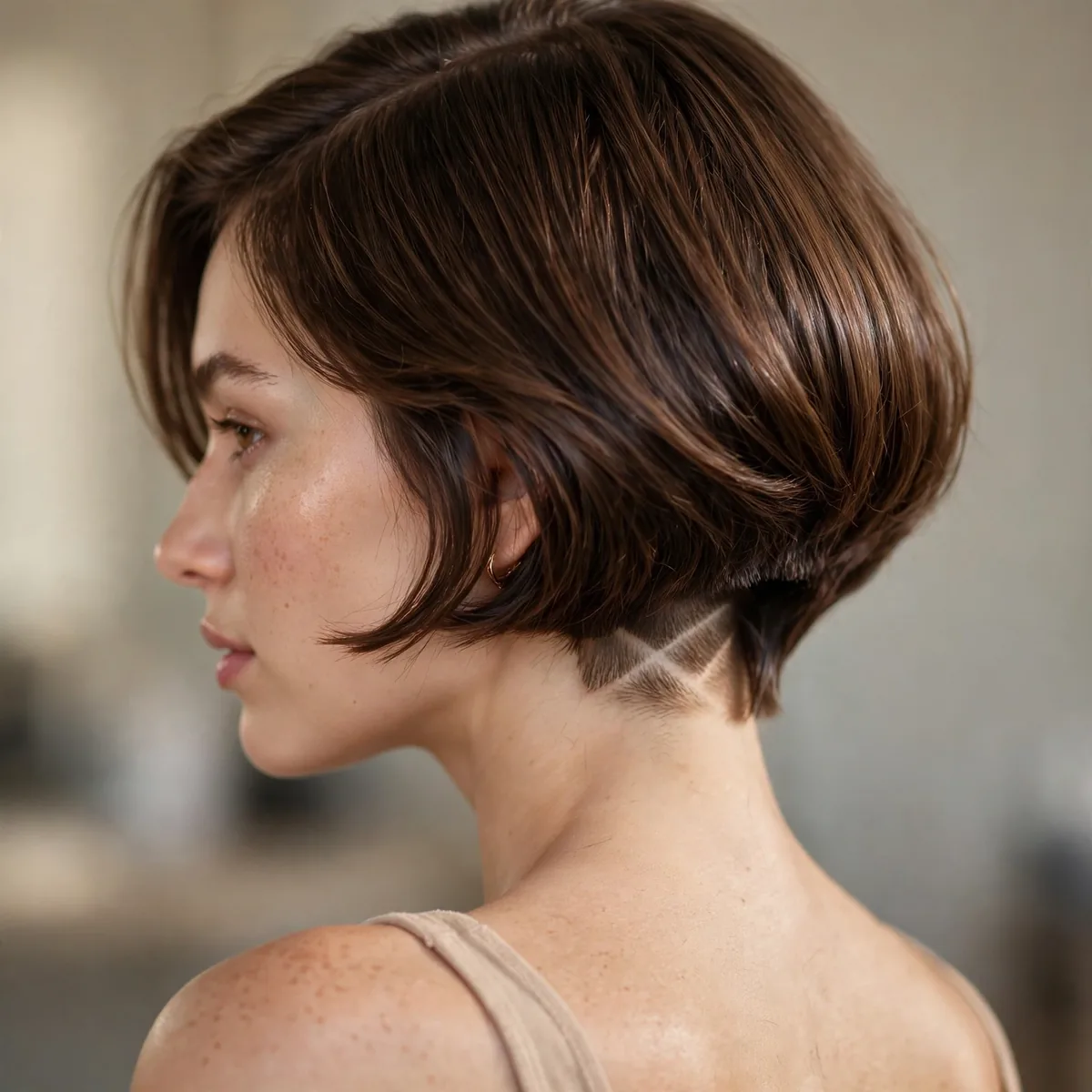
A hidden undercut at the nape takes the inverted bob's weight removal to the maximum. The undercut sits beneath the stacked layers, invisible when hair is down, removing bulk and keeping you cool. Ideal for very thick hair in warm climates.
Ask for a nape undercut that stays completely hidden under the stacked layers. It needs cleaning up every 8 to 10 weeks. The undercut also makes the stacked back lie flatter and sleeker — a practical upgrade with an edgy secret.
Very thick, coarse, or heat-trapping hair is the prime candidate — the undercut removes pounds of weight and keeps the neck cool. Athletes and hot sleepers love the practicality. It's also perfect for women who want an edgy secret: the undercut hides completely under the stacked layers. Not ideal for fine hair, where removing that much weight leaves the nape sparse-looking when hair is pulled up.
The undercut needs a cleanup every six to eight weeks — book it as a quick standalone appointment. Between visits, a trimmer pass at home keeps the lines crisp if you're confident. Styling is easy: the reduced bulk means the stacked layers lie flatter and dry faster. Design option: shave a subtle geometric pattern for a hidden reveal when hair goes up. In summer, the airflow at the nape is genuinely life-changing.
Textured Inverted Bob
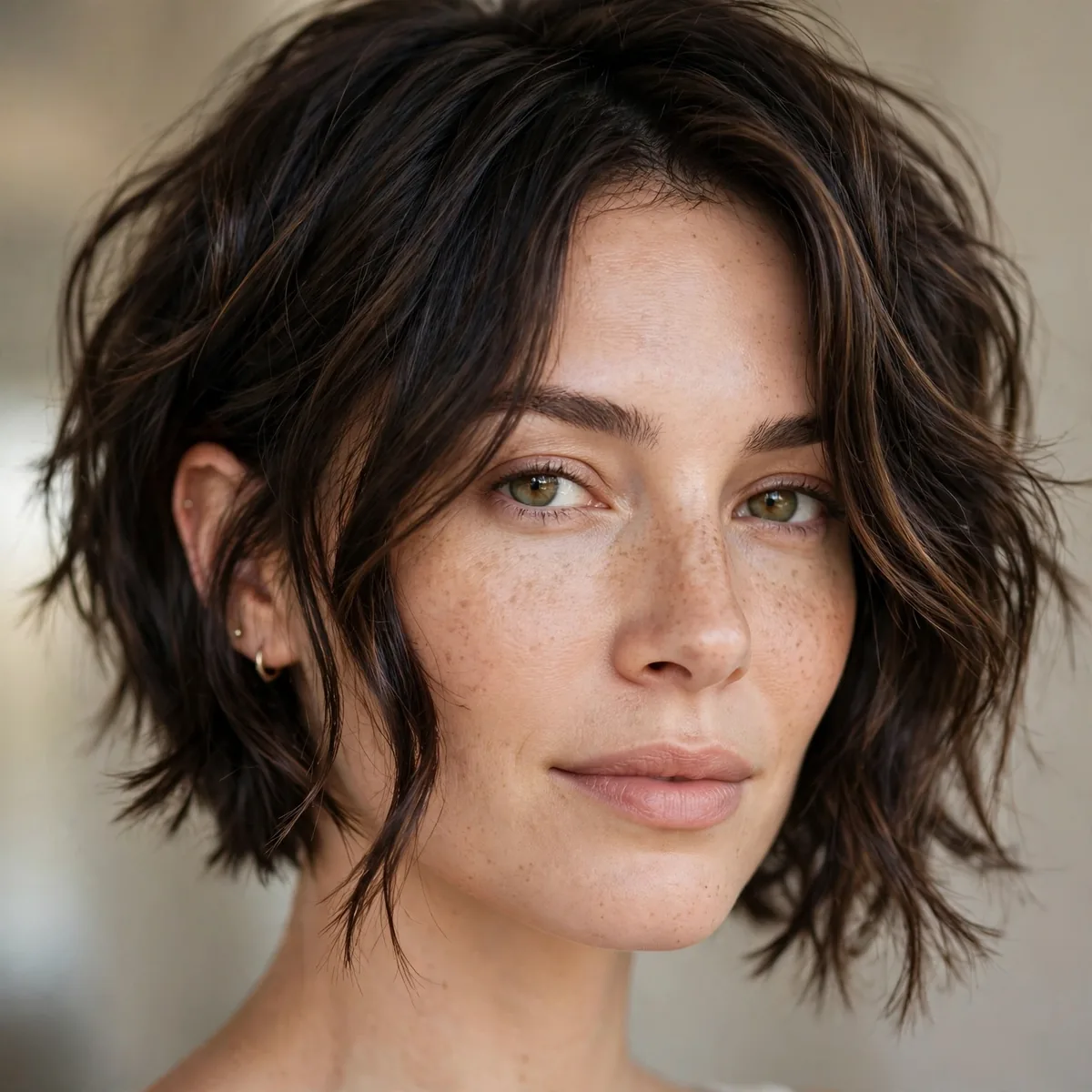
Add choppy texture to the inverted shape and you get a bob that is both architectural and undone. The angle provides the flattering structure; the texture provides the modern, touchable finish. Great for wavy hair and anyone who finds the classic inverted bob too polished.
Ask for the inverted shape with point-cut texture through the ends and front pieces. Style with a texturizing spray and your fingers — sleek is not the goal. This is the inverted bob for weekends, creative workplaces, and anyone whose personal style leans relaxed. For more undone texture, see our choppy bobs for wavy hair.
Wavy hair and medium density are the natural home of this cut — texture enhances what the hair already wants to do. It's the friendliest inverted bob for oval, round, and square faces alike, since the piece-y ends soften every jawline. Creative types and busy moms share it: both want style without a styling session. Fine hair can wear it with light point-cutting only; heavy texture removes too much weight.
Style in minutes: work a dime-sized amount of texturizing paste through dry ends, twisting random pieces for definition. For evenings, smooth just the front pieces with a flat iron while leaving the back piece-y — polished front, party back. It survives hats, helmets, and humidity gracefully. Grow-out is gentle too; the texture disguises the angle softening, so trims stretch to ten weeks easily.
The inverted bob proves that the right angle changes everything. If you loved the face-framing front pieces, explore our A-line bobs for round faces for a similar slimming effect, or go shorter with our French bob haircuts.