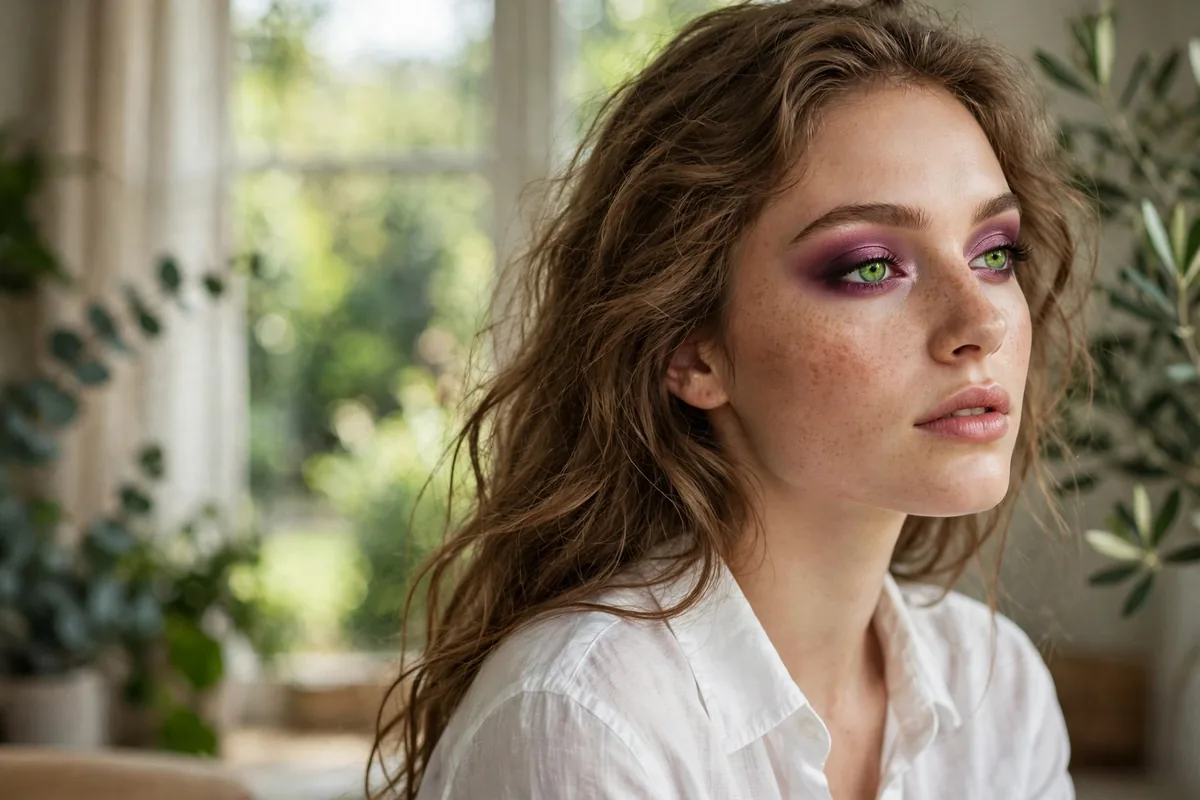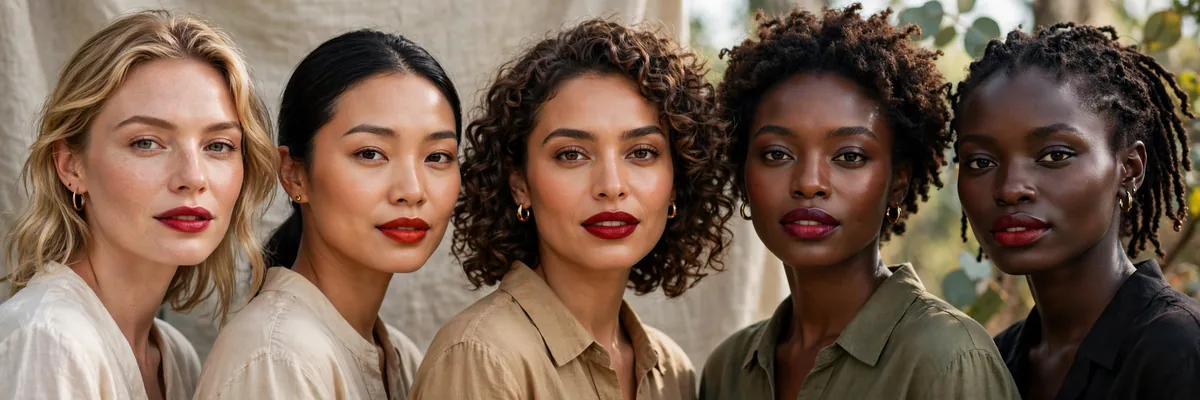
The myth: red lipstick doesn’t suit everyone. The truth: you haven’t found your red yet.
Red lipstick is about undertone matching. Cool skin needs blue-based reds; warm skin needs orange-based reds; neutral skin can wear both. Get the undertone right and any red works.
It’s also the highest-impact single product in makeup. One red lip transforms everything.
Here are 20 shades by skin tone. Let’s get into it.
Blue-Red for Fair Cool
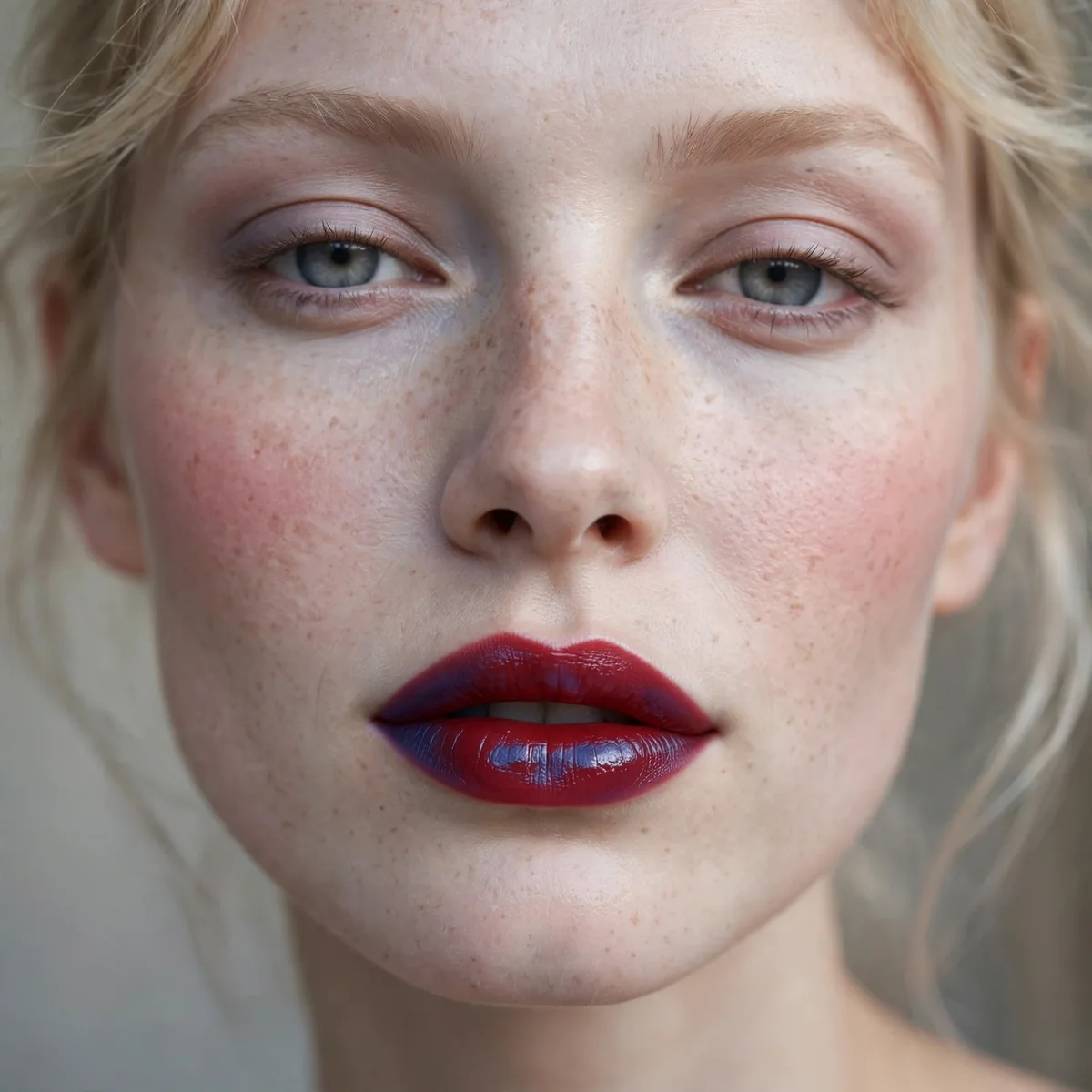
Cherry and raspberry reds flatter fair cool skin spectacularly.
The blue base brightens fair skin and whitens teeth. It’s the classic red-lip look.
The blue base does quiet optical work — it neutralizes any sallowness in fair skin and makes teeth look noticeably whiter by contrast. Keep the rest of the face cool-toned to match: a soft pink blush and minimal bronzer prevent the warm-cool clash that cheapens the look. On very pale skin, a blue-red can read intense fast, so start with one layer and build only if you want more drama.
The common mistake is pairing a blue-red with warm, peachy blush — the two undertones fight and the lip looks disconnected from the face. Stick to berry or true-pink cheeks instead. Also watch your foundation undertone: a yellow-based base under a blue-red lip creates a visible mismatch at the mouth border that no amount of blending will hide.
Orange-Red for Warm Skin
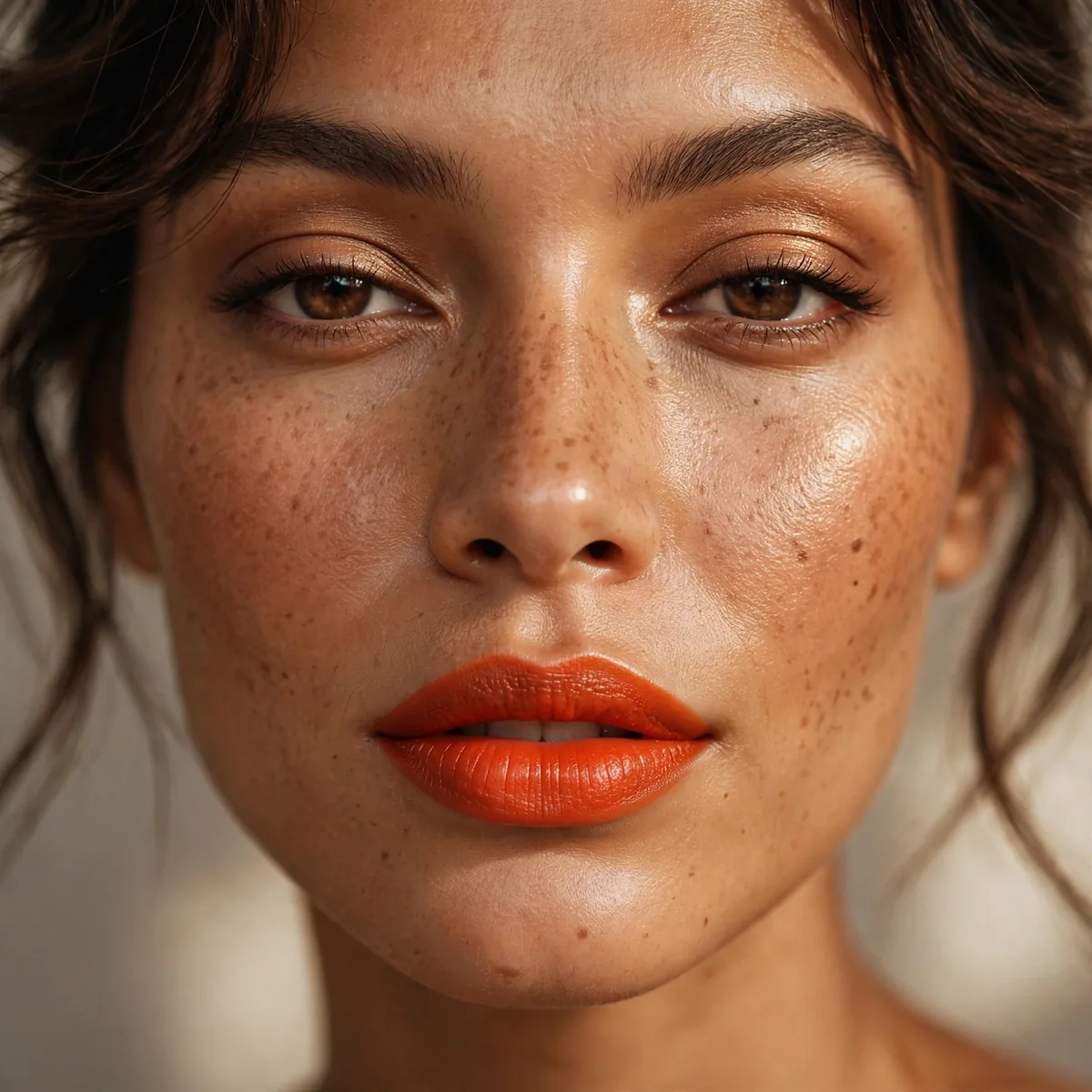
Tomato and poppy reds harmonize with warm undertones.
Orange-reds glow against warm skin. The harmony is what makes them flattering.
Application matters with orange-reds because their brightness exposes every edge flaw — line just inside your natural lip line first, then fill, to avoid the clown-mouth effect brighter shades can cause. A lip brush gives the control these vivid tones demand. If the color feels too loud on first wear, blot once with tissue; the remaining stain keeps the warmth without the shout.
Orange-reds shine brightest in spring and summer daylight, when their citrusy energy matches the season. In winter, the same shade can look startling against pale, cool-toned skin that has lost its summer warmth — switch to a deeper brick or true red until spring returns. Let the season, not just your undertone, vote on the shade.
True Red Universals
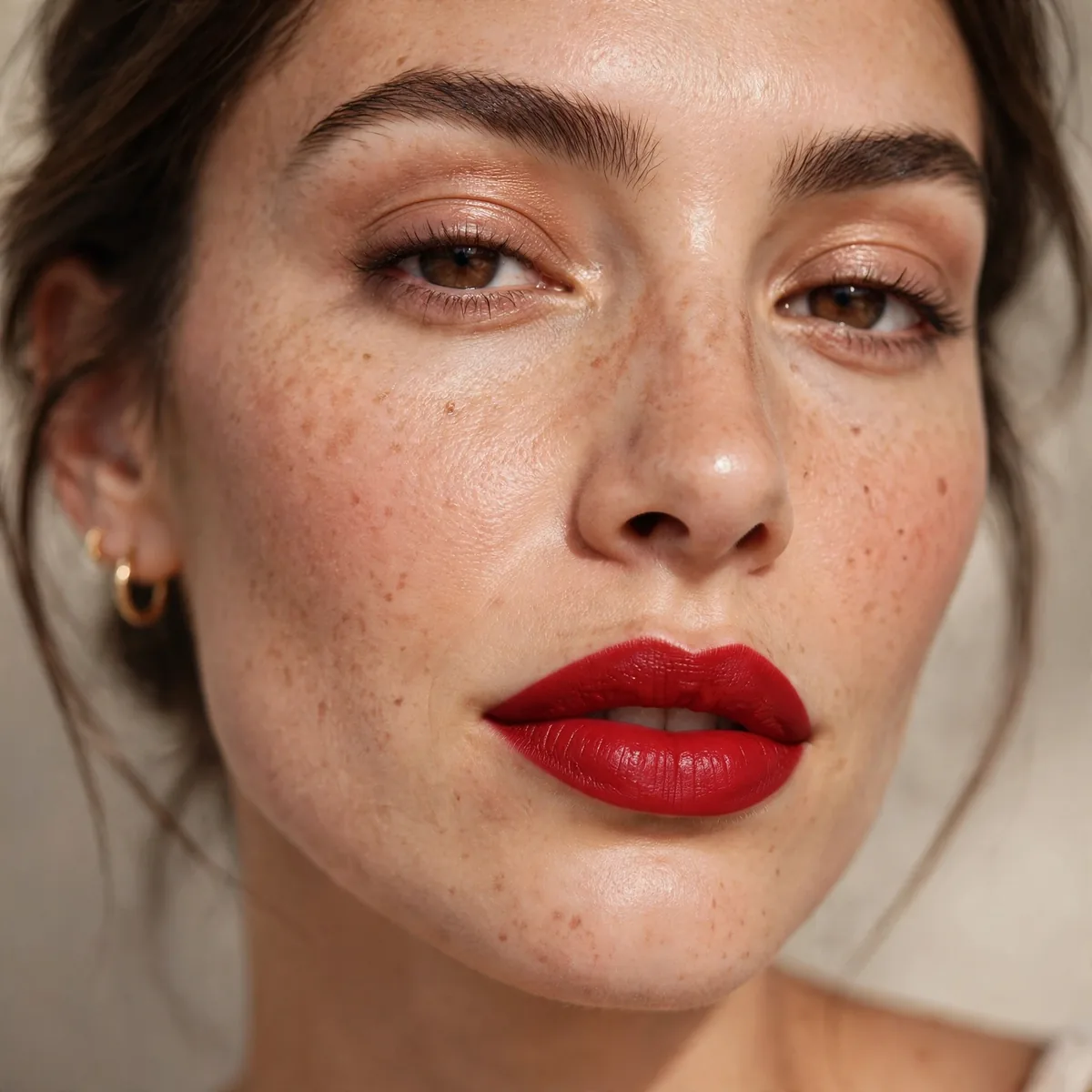
Balanced true reds suit most skin tones — the safe reds.
When in doubt, true red. The balanced undertone is universally flattering.
Shopping for one is simpler than it sounds: swatch three candidates on your lips, not your hand, and wear each for ten minutes before deciding. Hand skin is a different color and texture, and it lies. True reds should look neither orange nor fuchsia on you — if you can spot a strong lean either way, keep looking. The right one will look balanced, almost boring, in the tube.
Finish changes everything about a true red — the same shade in matte reads classic and powerful, in satin reads polished and modern, in gloss reads fresh and youthful. If you are buying your first red, choose satin: it is the most forgiving finish, comfortable for all-day wear, and easy to touch up without a mirror. You can always blot it matte or top it with gloss later.
Deep Wine Reds
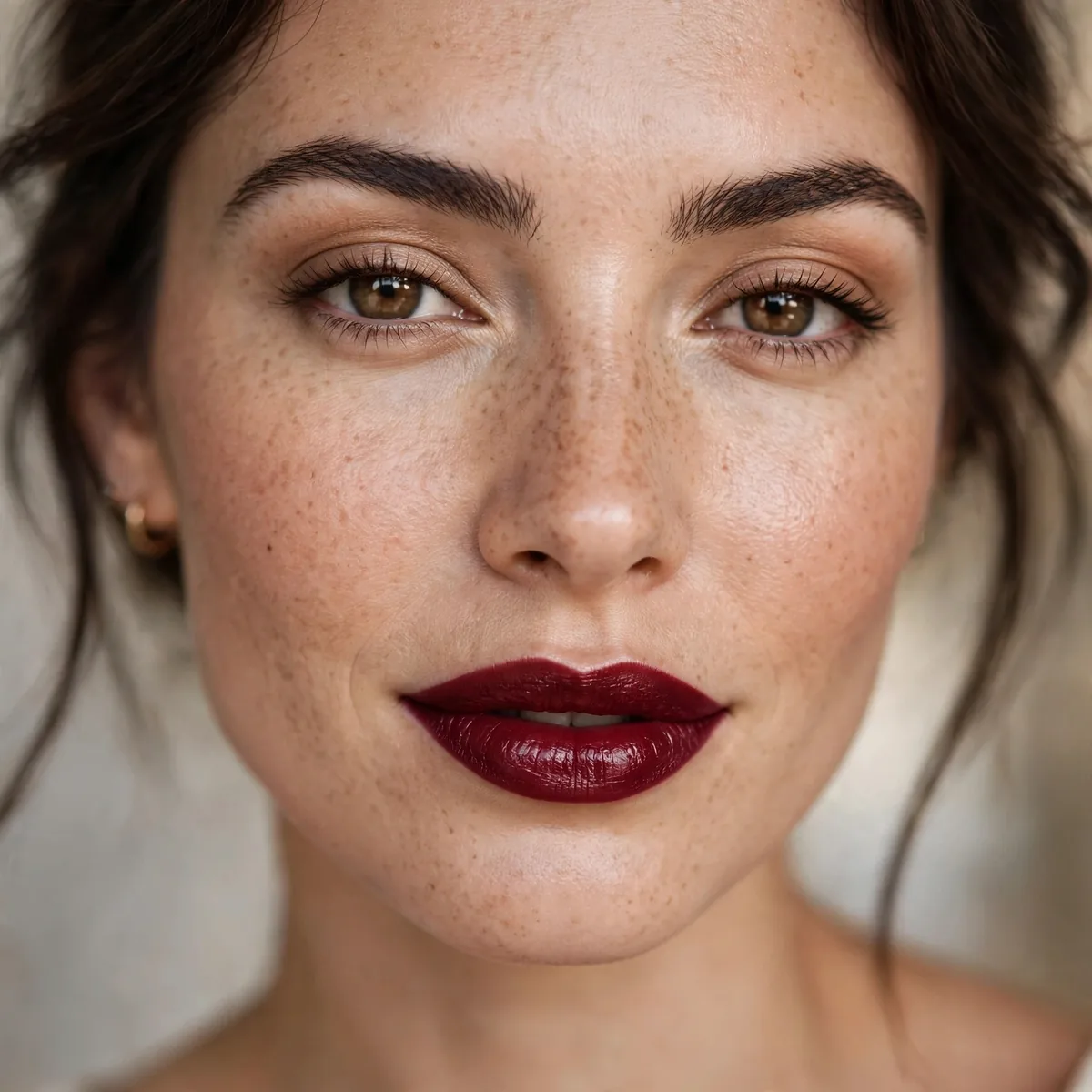
Oxblood and wine reds for medium to deep skin — rich and sophisticated.
Deep reds add drama without brightness overload. They’re the evening reds.
Deep shades feather at the edges more visibly than bright ones, so precision is non-negotiable — use a matching lip liner to draw the full shape first, slightly overdrawing the cupid's bow if you want fuller-looking lips. Fill the entire lip with liner as a base, then apply the wine shade over it. The liner base grips the color and prevents the dark pigment from bleeding into fine lines.
Wine reds own the evening — dinner dates, holiday parties, and winter weddings are their natural habitat, where dim lighting makes the depth look rich rather than heavy. In harsh daylight they can read almost black on some skin tones, so save them for after dark unless you love the drama. Pair with simple gold jewelry; the combination is timeless for a reason.
Bright Coral-Reds
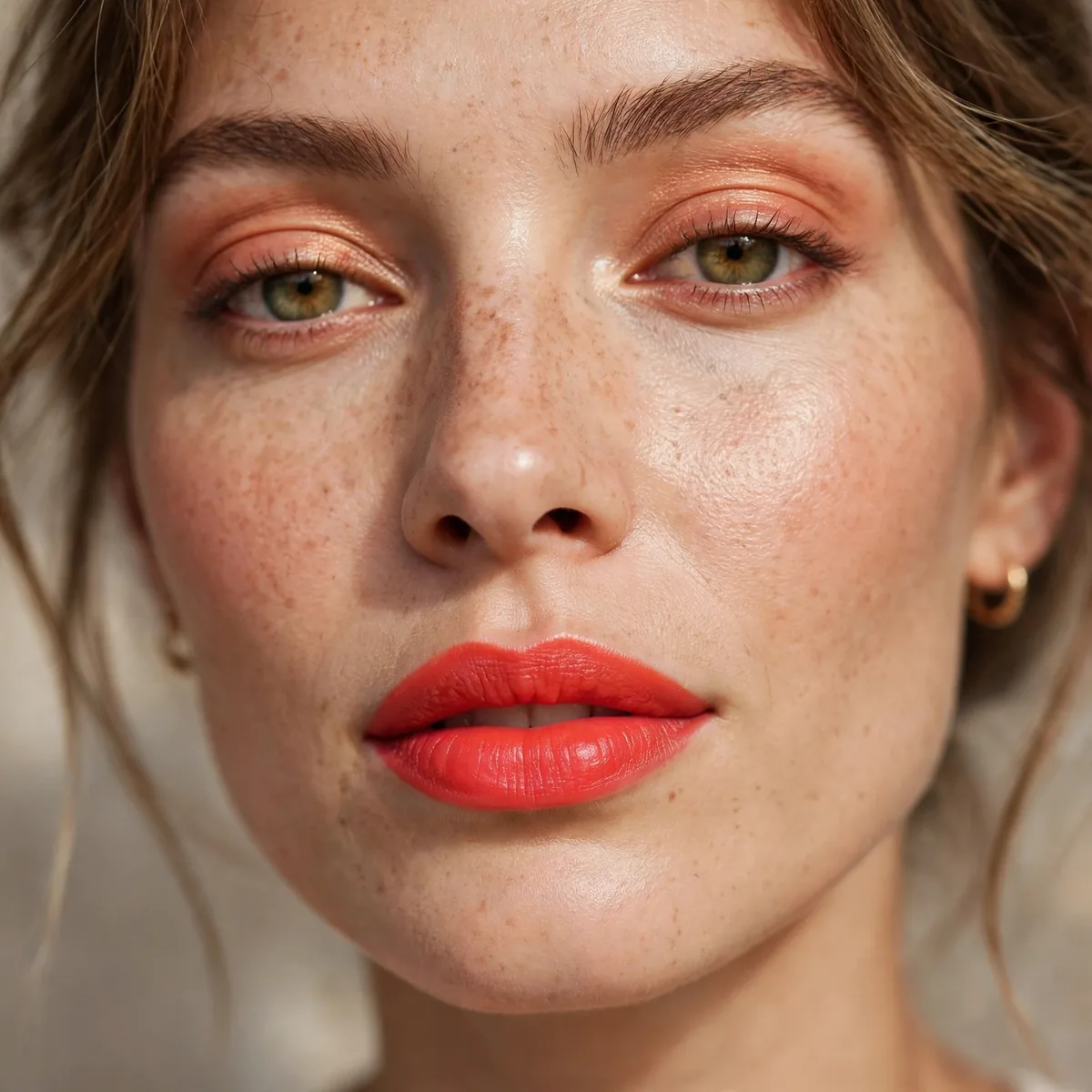
Coral-reds for a fresh, modern red lip.
The daytime red. Coral-reds are playful where true reds are serious.
Coral-reds are the most daytime-friendly reds because their brightness reads as fresh rather than formal — they work for brunch, office days, and outdoor events where a true red might feel overdressed. Keep the application slightly sheer, even blotted, to lean into the casual energy. They pair beautifully with minimal eye makeup and glowing skin, the uniform of modern daytime polish.
Bright shades punish dry lips mercilessly, so prep is half the battle — exfoliate gently the night before and wear lip balm until minutes before application. Coral-reds settle into cracks faster than deeper tones because every flaw contrasts with the brightness. Carry the tube for touch-ups after eating, since vivid shades fade unevenly and leave an obvious ring if you ignore them.
Brick Red Classics
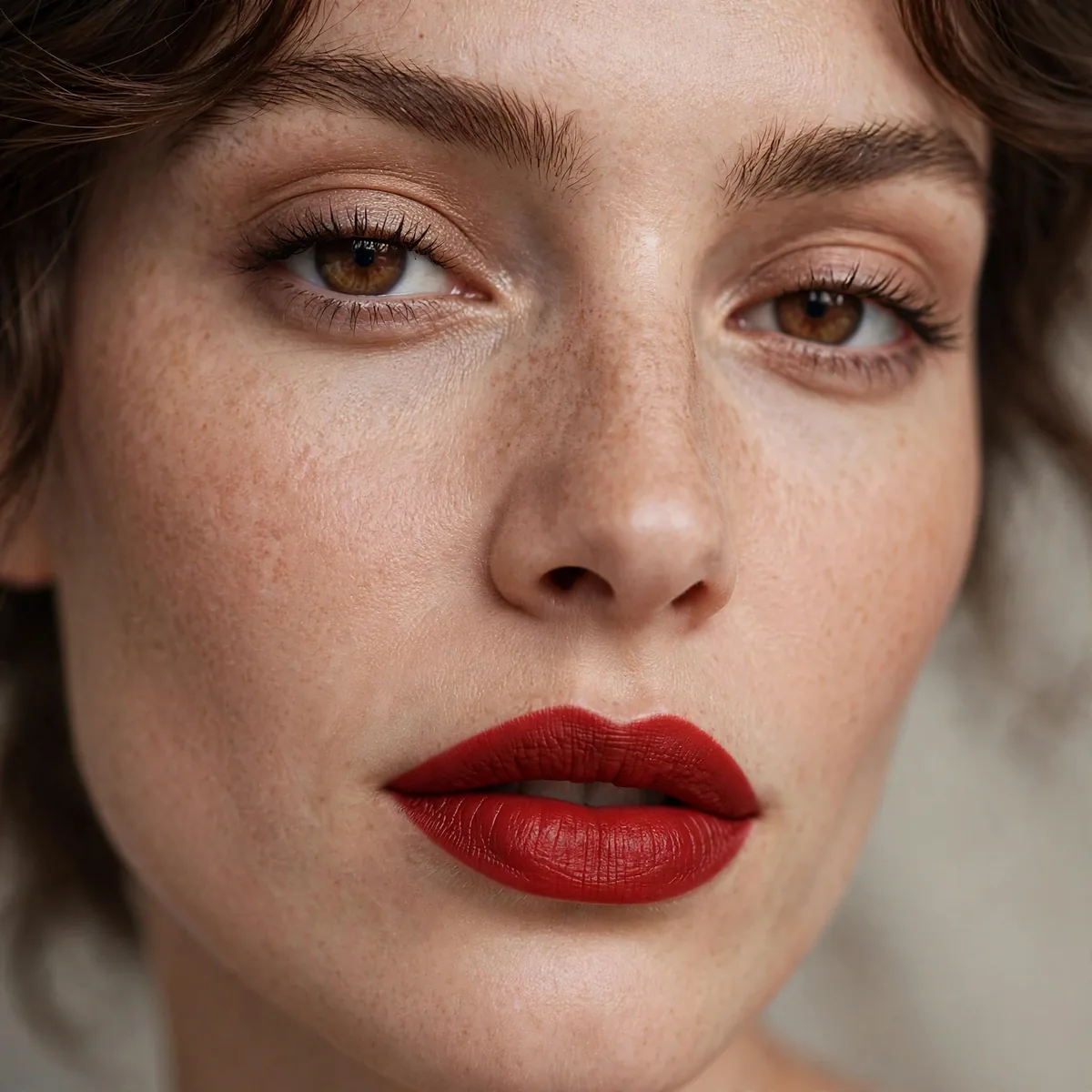
Muted brick reds — the wearable vintage red.
Brick is red’s sophisticated cousin. Understated but unmistakably red.
Brick reds carry vintage energy — think old-Hollywood glamour without the costume feel — and they flatter warm and neutral undertones especially well. Style them with soft waves, a crisp winged liner, or a tailored blazer to complete the retro mood. Because the tone is muted, brick reds rarely clash with patterned clothing the way brighter reds can, making them the easiest red to wear with a bold outfit.
For the office, brick red is the safest red to wear — its muted depth reads as polished rather than provocative, even in conservative workplaces. Keep the rest of the makeup quiet: groomed brows, one coat of mascara, and a neutral cheek. Blot after application to knock back any shine, since a satin-matte brick looks more professional than a glossy one under office lighting.
Classic Hollywood Red
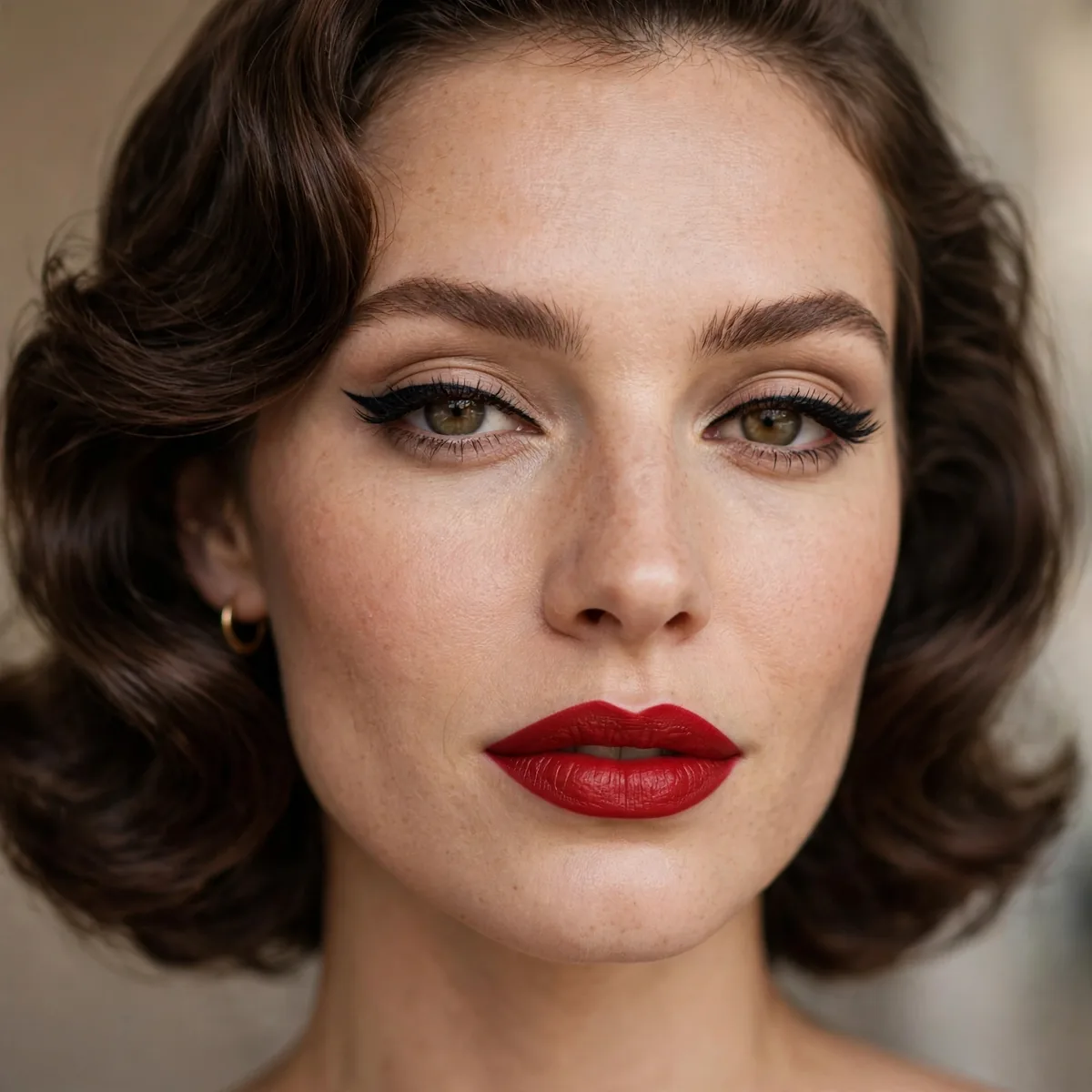
The timeless blue-red — Marilyn’s shade, still perfect.
Some reds are eternal. The Hollywood red transcends trends and suits most.
The iconic pairing is winged eyeliner — a crisp black wing with a blue-red lip is the most referenced makeup look in history for good reason, since the two balance each other perfectly. Keep skin matte but not flat, with a soft contour rather than heavy bronzer. The look demands neatness everywhere: smudged liner or feathered lipstick unravels the whole effect instantly.
The fastest way to ruin a Hollywood red is competing blush — heavy pink or coral cheeks plus a blue-red lip reads as theatrical rather than timeless. Choose a barely-there neutral blush and let the lip own the color story. Also mind your teeth: blue-reds whiten, but any lipstick on teeth destroys the illusion, so do the finger trick after applying and check before photographs.
Sheer Red Options
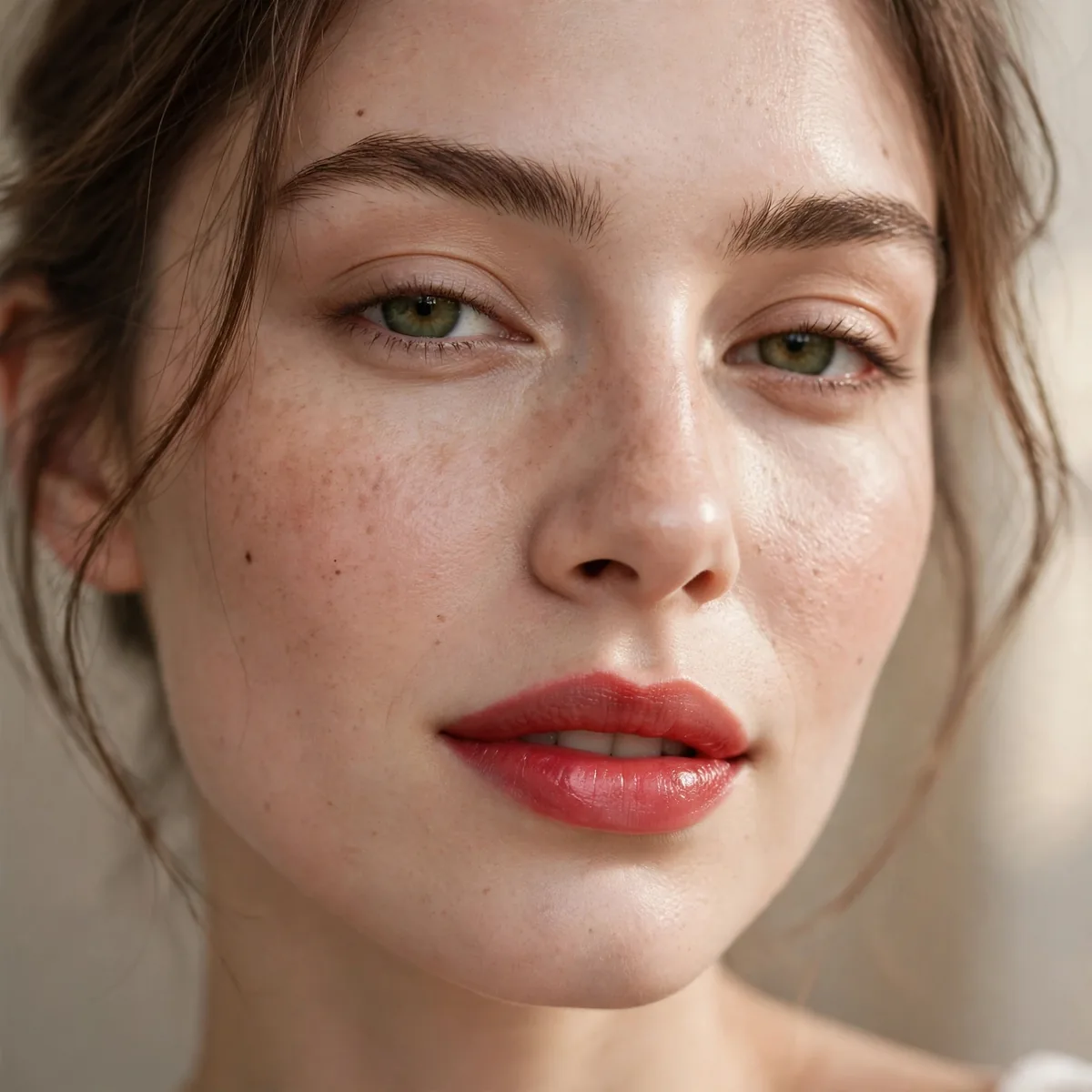
Sheer reds for the red-curious — color without commitment.
Blot full red for a sheer effect, or buy a sheer formula. The gateway red.
Build sheer reds in layers — one swipe for a just-bitten tint, two for a soft wash of color, three for near-full impact — so you control the intensity instead of the formula controlling you. Layering also extends wear, since each thin layer bonds better than one thick one. This makes sheer reds ideal for red beginners: the stakes of each application are low, and mistakes sheer out with a fingertip.
Sheer reds suit anyone hesitant about bold lips — younger wearers, minimal-makeup devotees, and anyone whose coloring gets overwhelmed by full pigment. They also flatter textured or lined lips better than mattes, since sheer formulas do not settle into cracks. If full reds have always felt like too much, a sheer red is not a compromise; it is simply the right red for your comfort level.
Matte Red Power
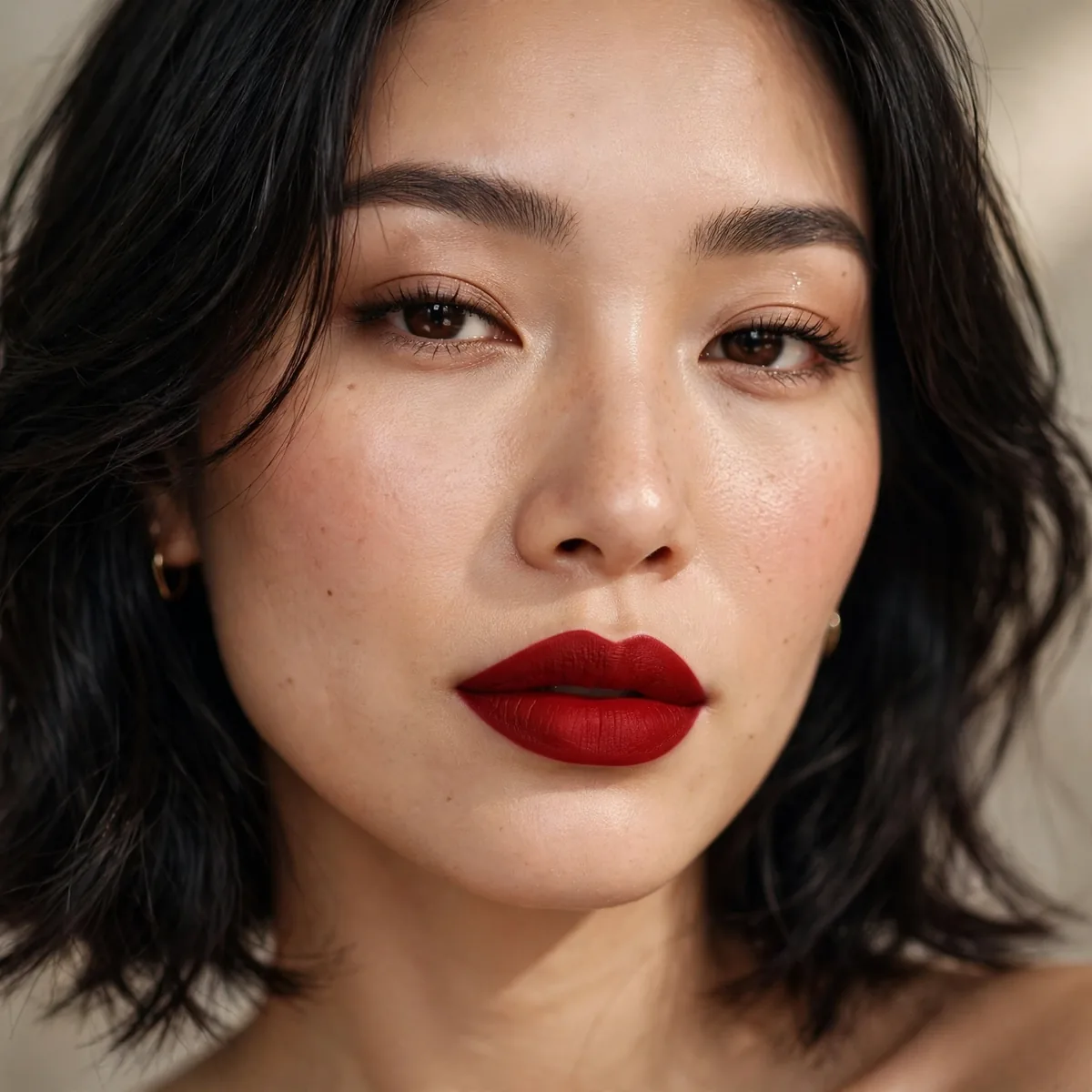
Matte reds for maximum impact and longevity.
Matte red is the power move. It demands attention and keeps it.
Matte formulas demand the most prep of any finish — exfoliate lips the night before, apply a thin layer of balm ten minutes before lipstick, then blot the balm off so the matte has a smooth, dry-ish canvas to grip. Skip waxy balms that leave residue; a lightweight squalane-based balm absorbs cleanly. Matte over chapped lips cracks within the hour, but matte over prepped lips lasts through dinner.
The classic matte mistake is applying straight from the bullet in one heavy pass, which deposits too much product and guarantees cracking. Instead, press the color on in thin layers with a lip brush, blotting between coats — two thin coats outlast one thick coat every time. Never layer balm over matte during the day; it breaks the formula down. Touch up with more lipstick, not moisture.
Glossy Red Freshness
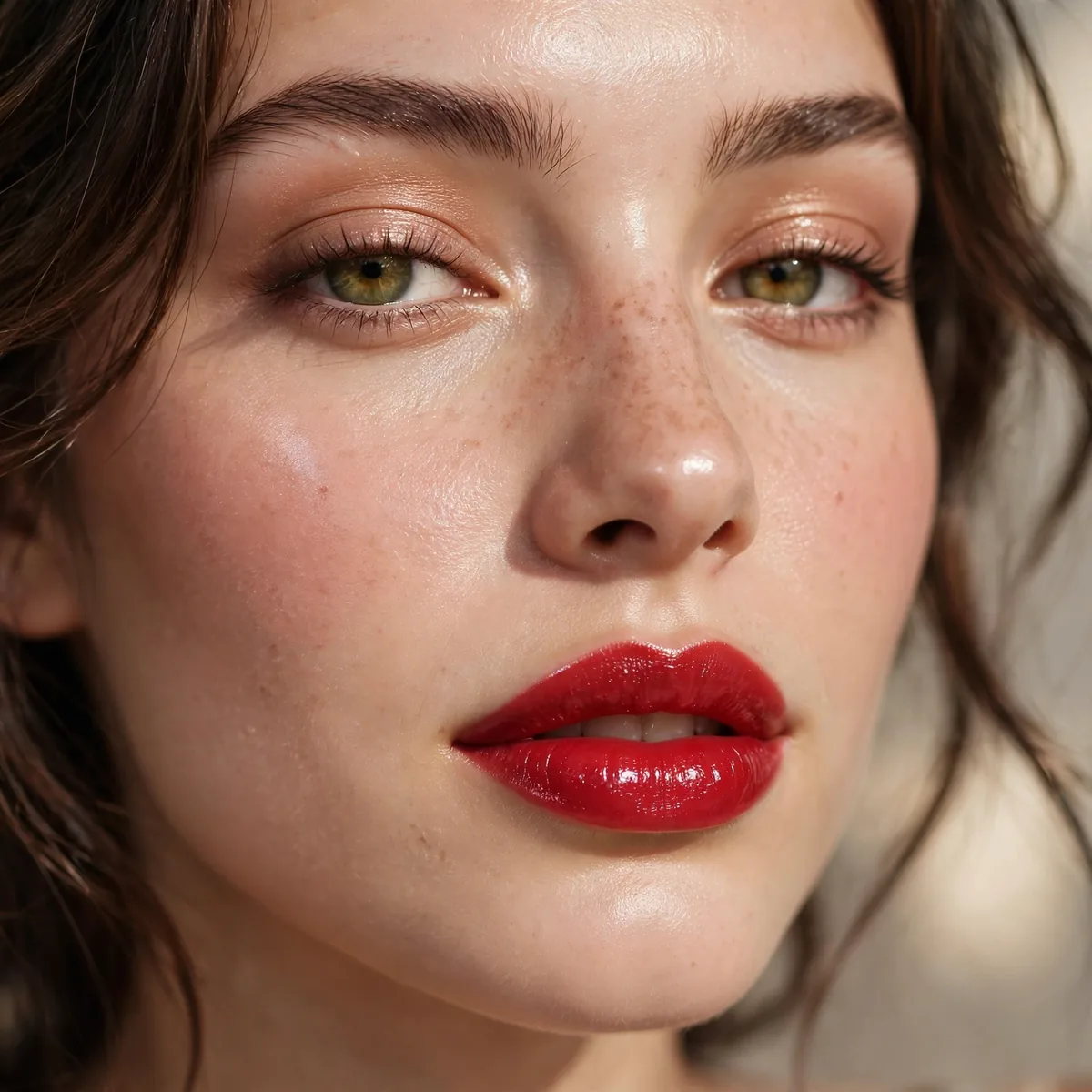
Glossy reds feel modern and fresh.
Our glossy lip guide has techniques. Gloss softens red’s severity beautifully.
The easiest glossy red is a DIY: apply your favorite red lipstick, blot once, then press a clear or red-tinted gloss over the center of the lips only. Keeping gloss centered creates dimension and avoids the sticky outer-edge migration that full-gloss application causes. The lipstick underneath provides the staying power while the gloss supplies the fresh, light-catching finish.
Glossy reds have one notorious enemy — hair. On windy days, a glossy red becomes a hair magnet, and strands stuck to lips ruin the look fast. Tie hair back or choose a satin finish when wind is in the forecast. Also expect more frequent touch-ups: gloss fades faster than matte, so carry both the lipstick and the gloss for a proper midday refresh.
Red for Deep Skin Tones
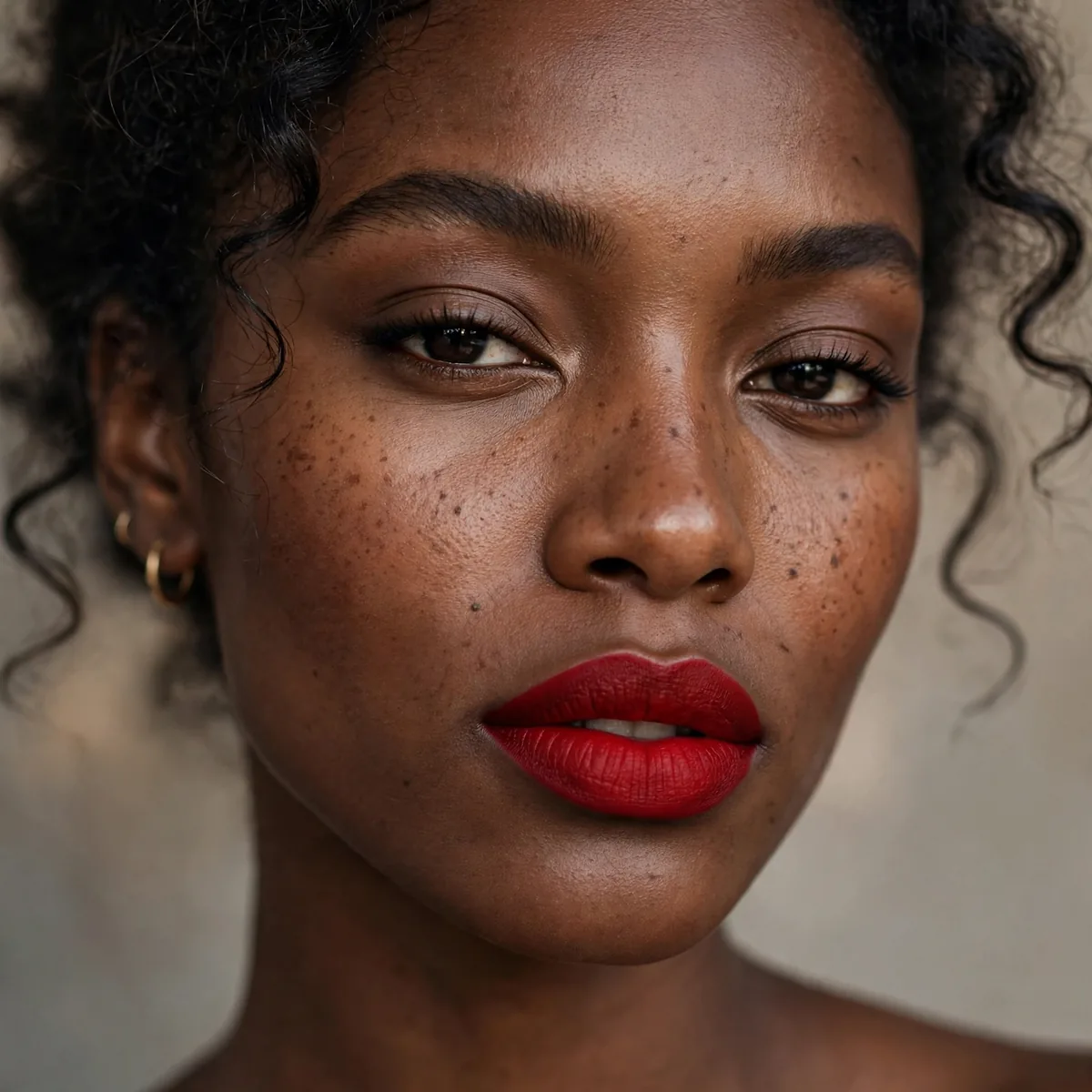
Rich, saturated reds glow against deep skin.
Deep skin carries the brightest reds beautifully. Don’t shy away from intensity.
Deep skin tones carry vivid, high-pigment reds — bright cherry, fiery orange-red, even true scarlet — with a luminosity that lighter skin cannot replicate. The contrast between rich skin and saturated color is genuinely striking, so do not default to dark shades out of caution. Vivid reds also photograph spectacularly on deep skin, glowing rather than washing out under camera flash.
Match your lip liner to the lipstick, not to your skin — a liner darker than the lipstick creates a harsh, dated ring on deep skin especially. If you cannot find an exact match, a clear or transparent liner works as a barrier against feathering without adding color. Line the full lip, fill it in, and the red will wear evenly for hours without migrating.
Red for Medium Skin
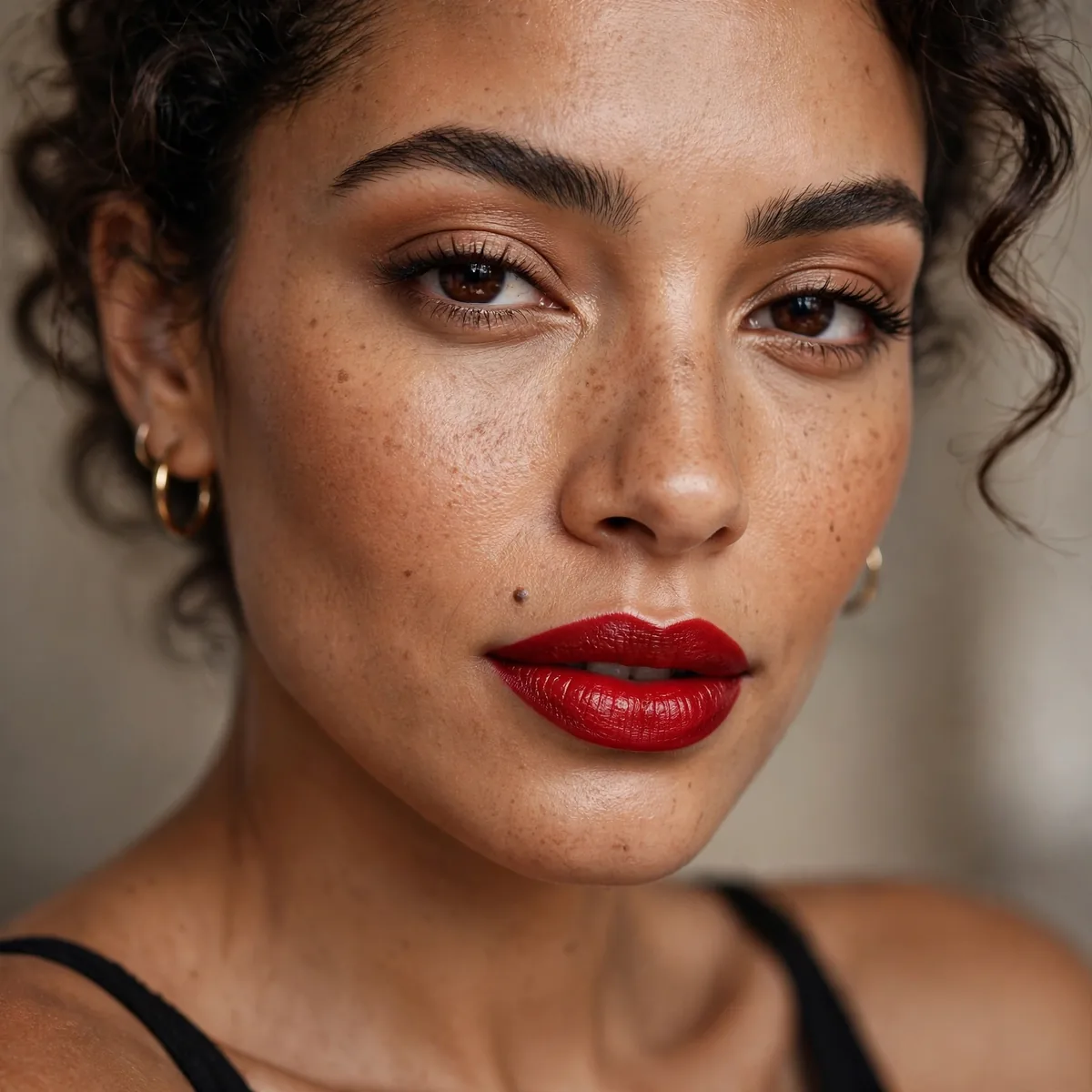
Warm true reds and brick shades flatter medium skin.
Medium skin has the most red options. Experiment freely.
Medium skin truly has the widest red wardrobe — cool blue-reds, warm tomato shades, deep wines, and bright corals can all work, which makes experimentation genuinely fun rather than risky. The best strategy is to buy minis or value sets and test widely before committing to full sizes. Keep notes on what you loved; with this many options, you will forget which tube was the winner.
Undertone still narrows the field: golden-medium skin glows in warm reds like poppy and brick, while pink-medium skin looks striking in blue-based cherry and raspberry. Neutral-medium skin — the luckiest category — can genuinely wear nearly everything. If a red ever looks off, check the undertone mismatch first; nine times out of ten, that is the culprit, not the depth of the shade.
Red for Olive Skin
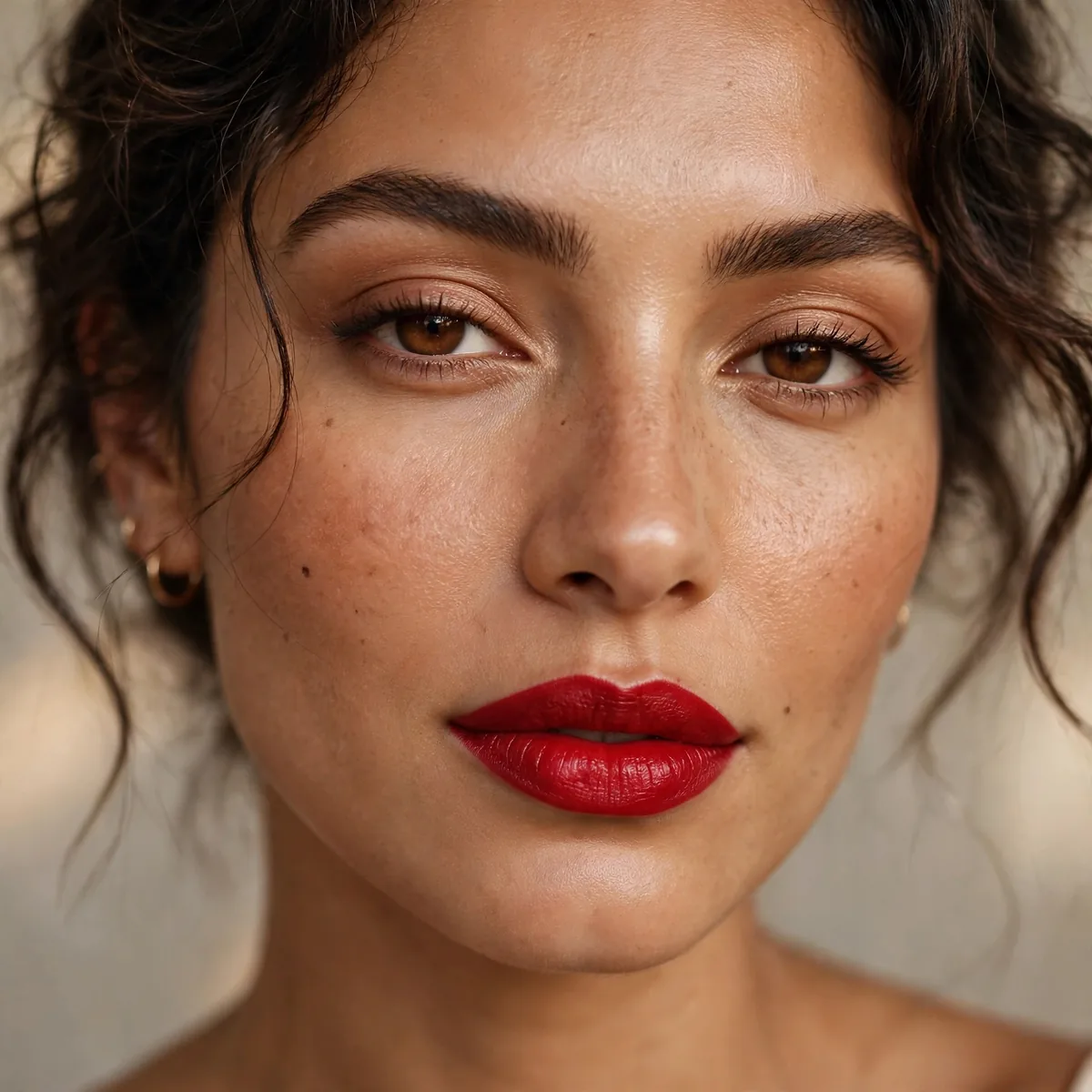
Warm brick and tomato reds harmonize with olive undertones.
Avoid very blue reds on olive skin — they can clash. Warm reds are safer.
Olive undertones have a green-gold cast that harmonizes with warm reds — tomato, brick, terracotta-leaning reds all sit beautifully against olive skin. These shades enhance the skin's natural warmth instead of fighting it. A true neutral red can also work, but lean warm when choosing between options; the warmth bridges the gap between the lip color and the skin's unique undertone.
Very blue or fuchsia-leaning reds are the risk on olive skin — the cool pigment clashes with the skin's warmth and can make the complexion look sallow or tired. If you love a cooler red, test it in daylight before committing, and keep the rest of the face warm to anchor it. When in doubt, reach for brick: it is the olive-skin red that almost never fails.
The Red Lip Technique
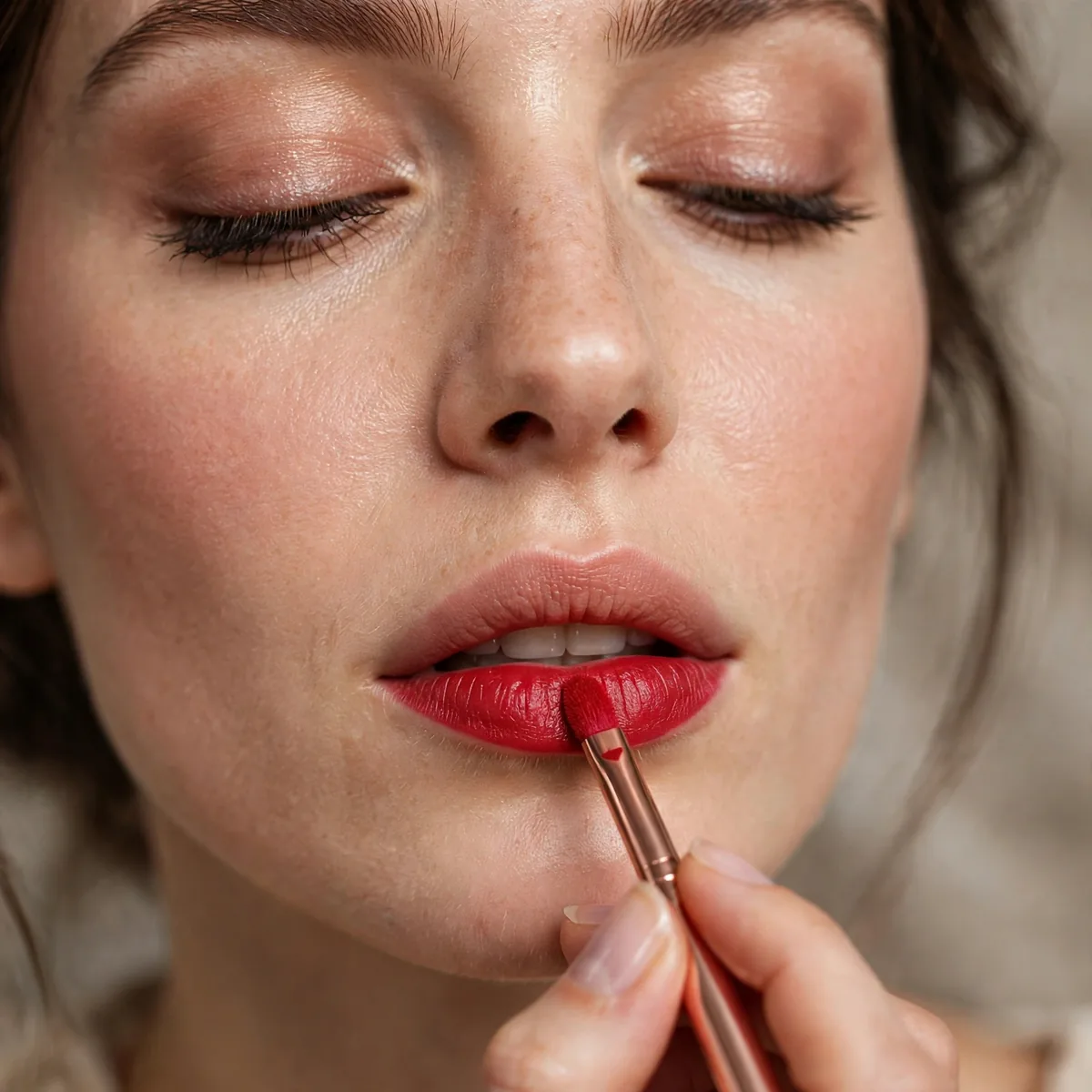
Line, fill, apply, blot, reapply — the red-lip ritual.
Technique matters as much as shade. Crisp edges make red look intentional.
Crisp edges separate intentional red from messy red — after applying lipstick, trace just outside the lip line with a small concealer brush to carve a sharp border. This cleanup step fixes wobbles without requiring surgeon-steady hands during application. Use a concealer that matches your skin exactly; too light creates a visible halo, too dark looks like shadow. The carved edge is what makes red look expensive.
Symmetry matters more with red than with any other lip color because the high contrast exposes every imbalance. Step back from the mirror and check both sides at arm's length — close-up application lies about proportion. Slightly overdraw the thinner side if your lips are uneven, but keep it subtle; more than a millimeter outside the natural line reads as obvious in daylight.
Blotted Red Daytime
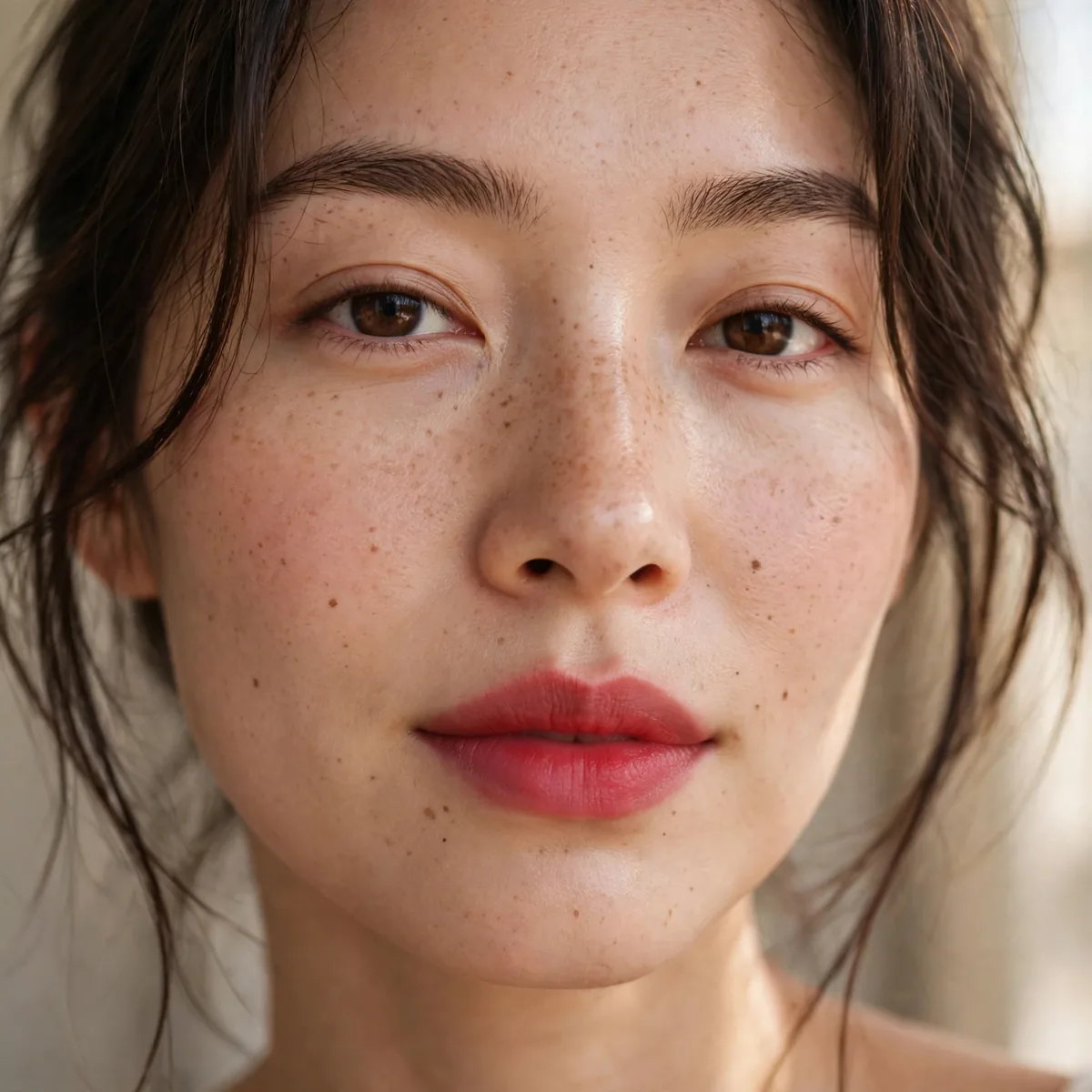
Blot red down for a wearable daytime stain.
The blotted red is the office-appropriate red. All the color, half the intensity.
The blotting method is simple but specific: apply one full layer of lipstick, press a single tissue ply between your lips, then dust the faintest whisper of translucent powder through the tissue for staying power. Remove the tissue and assess — one blot usually leaves the perfect daytime stain. If you want it sheerer, blot twice; the second blot pushes the color toward a true just-bitten tint.
Blotted red pairs with the most minimal makeup of all red techniques — groomed brows, one coat of mascara, and bare glowing skin let the soft stain be the single point of color. This is the red for people who claim they cannot wear red: the intensity drops so far that it reads as your lips, only better. It works for parent-teacher conferences, client lunches, and every low-key occasion in between.
Red With Minimal Eyes
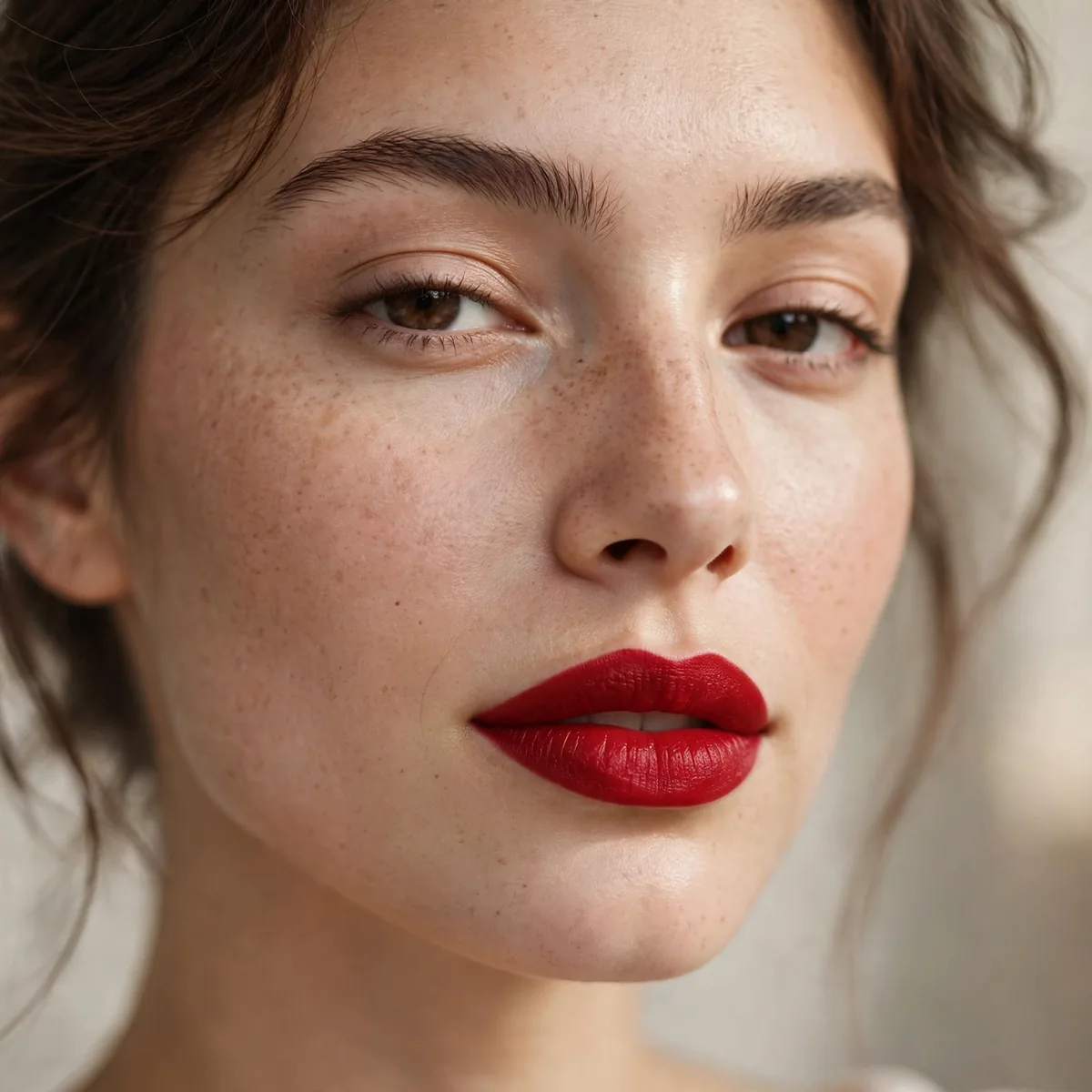
Red lips plus bare eyes — the classic balance.
Let the lip lead. Minimal eyes keep red sophisticated, not costume.
Minimal does not mean neglected — curl lashes with a lash curler and apply one coat of lengthening mascara so eyes hold their own against the bold lip. Groomed, filled brows frame the face and keep the look balanced; bare brows plus red lips can look unfinished. Skip eyeshadow entirely or use a single wash of matte nude — the lip is the star, and the eyes are its supporting cast.
Keep the skin finish natural and luminous rather than heavy-matte — a red lip with flat, full-coverage skin can look severe, while glowing skin softens the whole effect. A touch of cream blush in a neutral tone adds life without competing. The formula is simple: bold lip, fresh skin, quiet eyes. Every element knows its role, and nothing fights for attention.
Red for Evenings
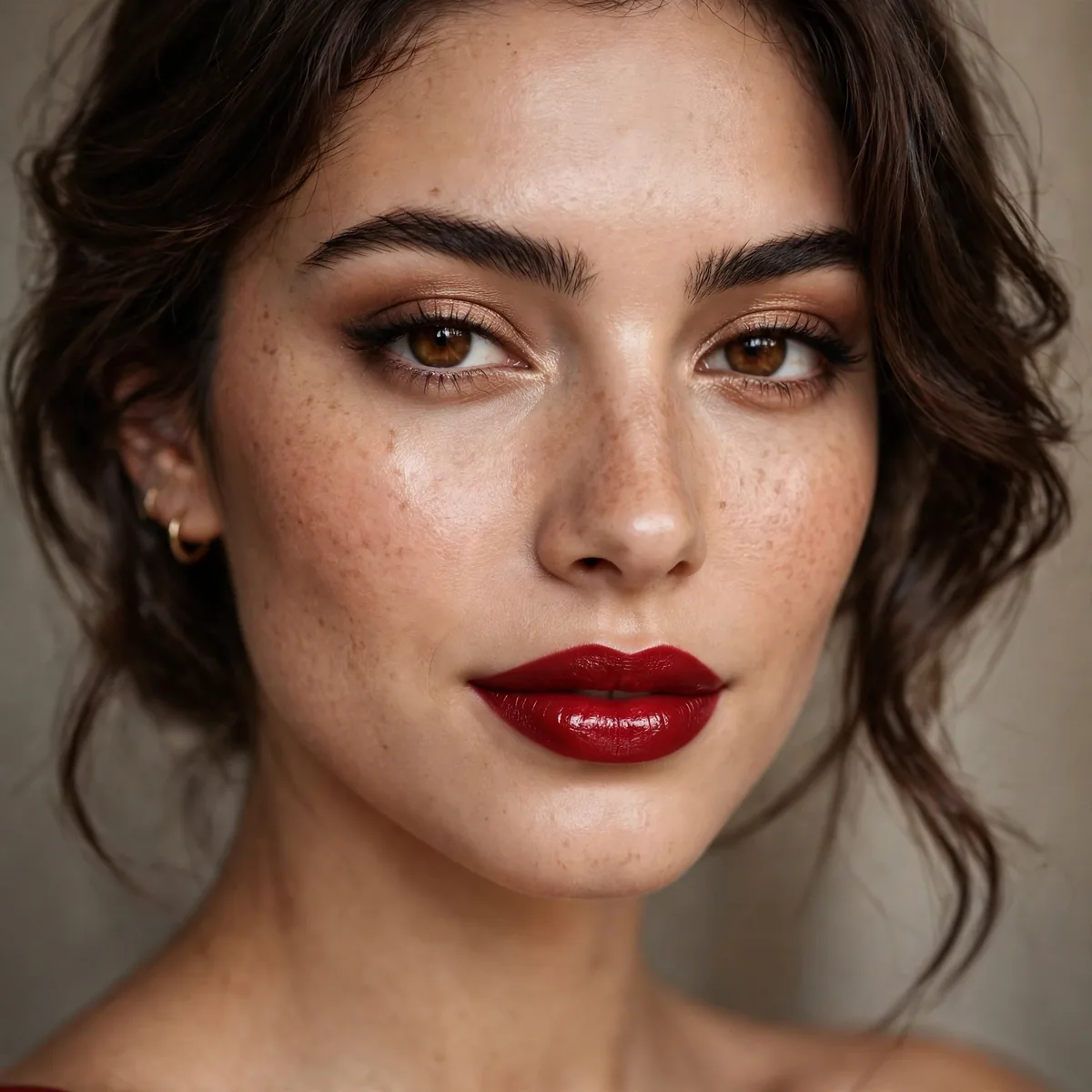
Full-intensity red for evening drama.
Evening is red’s natural habitat. Go bold without apology.
Evening is the one time a red lip can share the stage — a soft smoky eye in bronze or taupe with full-intensity red is dramatic without being chaotic, as long as the eye stays blended and diffused rather than harsh. Keep blush minimal and let the two features balance each other. This combination suits weddings, galas, and nights out where the lighting is forgiving and the mood is celebratory.
Pack a touch-up kit: the lipstick itself, a matching liner, tissues, and a small mirror — red demands maintenance after dinner and drinks, and evening events offer no graceful exit for a faded lip. Check teeth after every course; red migrates in candlelight just as it does at noon. Five minutes in the restroom between courses keeps the look flawless all night.
Long-Wear Red Strategy
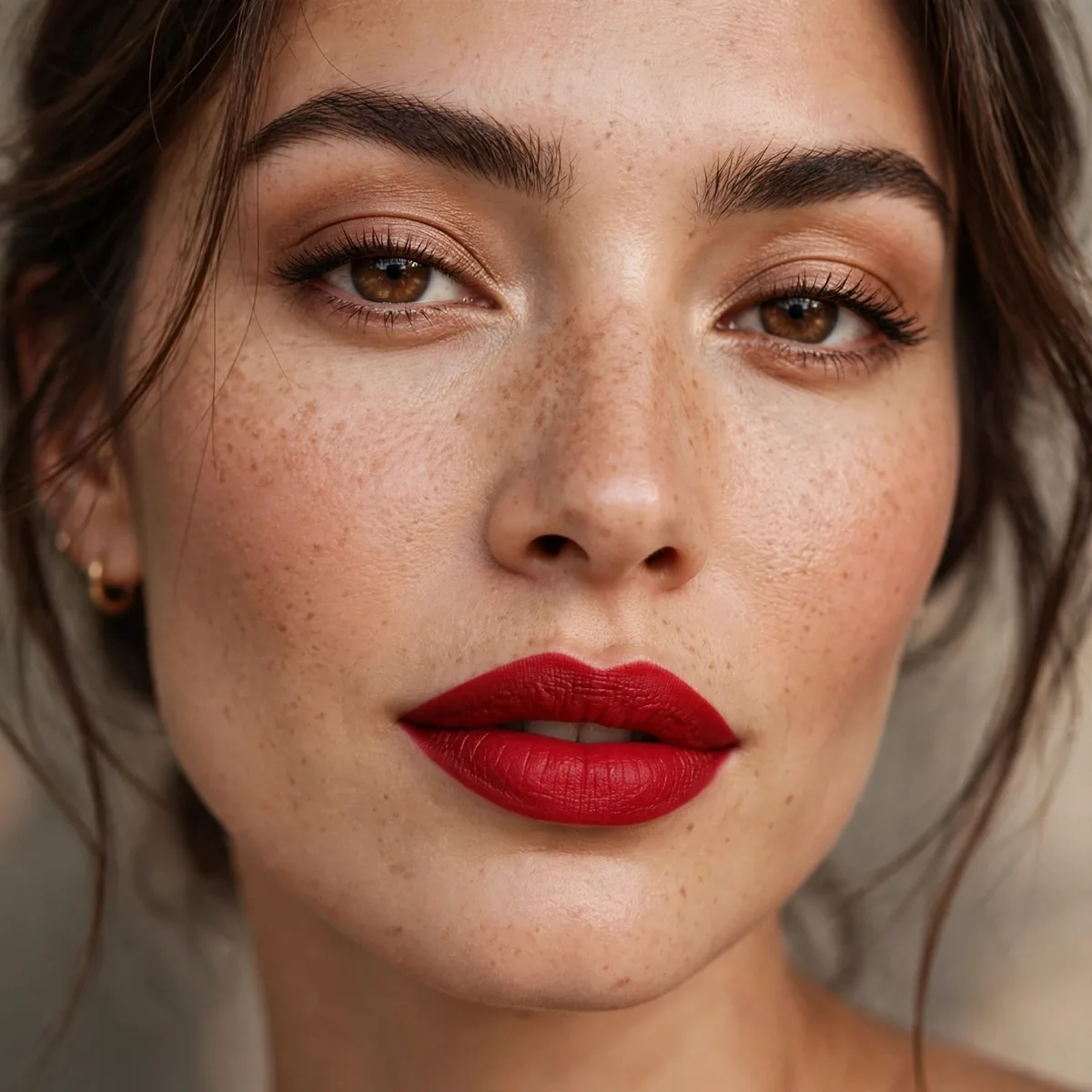
Lip liner base plus matte red equals all-night wear.
Our long-wear lip guide details the method. Red demands longevity — plan for it.
The liner-fill method is the backbone of longevity — fill the entire lip with a waxy lip liner in a matching shade before applying lipstick, creating a grippy base that color adheres to for hours. Choose a long-wear or matte lipstick over the liner base, and blot between two thin coats. This double-anchor system routinely survives four to six hours, including talking, without significant fading.
Eating and drinking are where reds die — mitigate by drinking through a straw when possible, taking small bites, and avoiding oily foods that dissolve lip color on contact. After eating, blot gently and reapply one fresh coat rather than layering over the remnants, which pills. A quick teeth check after every meal is non-negotiable; faded red on teeth is worse than no red at all.
Finding YOUR Red
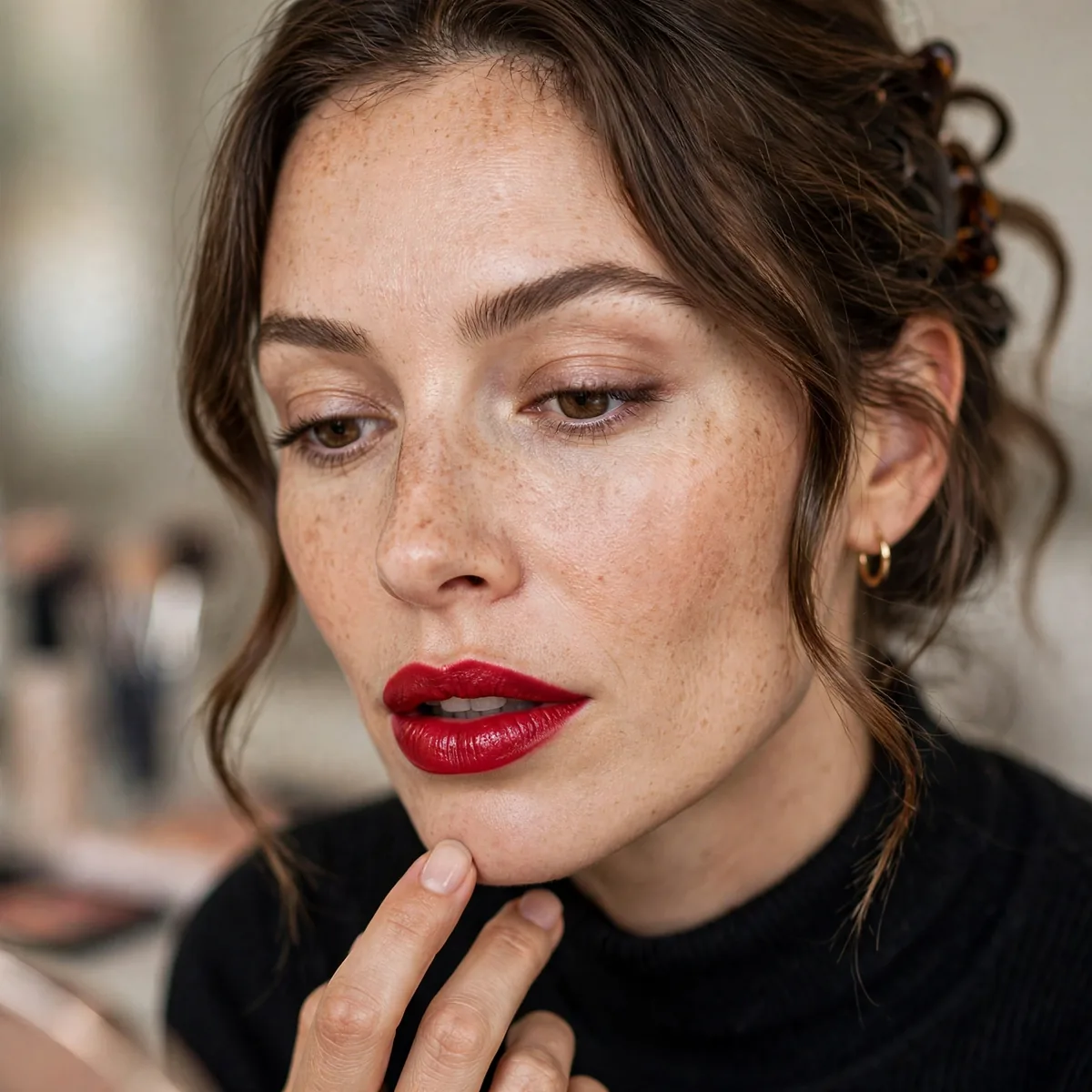
Test three: one cool, one warm, one neutral — your face will choose.
For the full lip wardrobe, our nude lipstick guide covers the other essential. The right red makes you gasp a little. Trust that reaction.
Your natural lip color is the best guide — if your bare lips lean pink, blue-based reds will feel harmonious; if they lean brown or peach, warm reds will look like you, elevated. Hold shades against your lips in daylight rather than trusting the tube color, which lies under store lighting. The red that echoes your natural lip tone, intensified, is almost always your winner.
Always swatch on your lips, never just your hand — hand skin differs in tone, texture, and undertone, and it has misled countless shoppers into buying the wrong red. Ask for a disposable applicator or a sanitized tester, apply to clean lips, and wear it for at least ten minutes while you browse. A red that still delights you after ten minutes of wear is the one to buy.
Red Lip Confidence
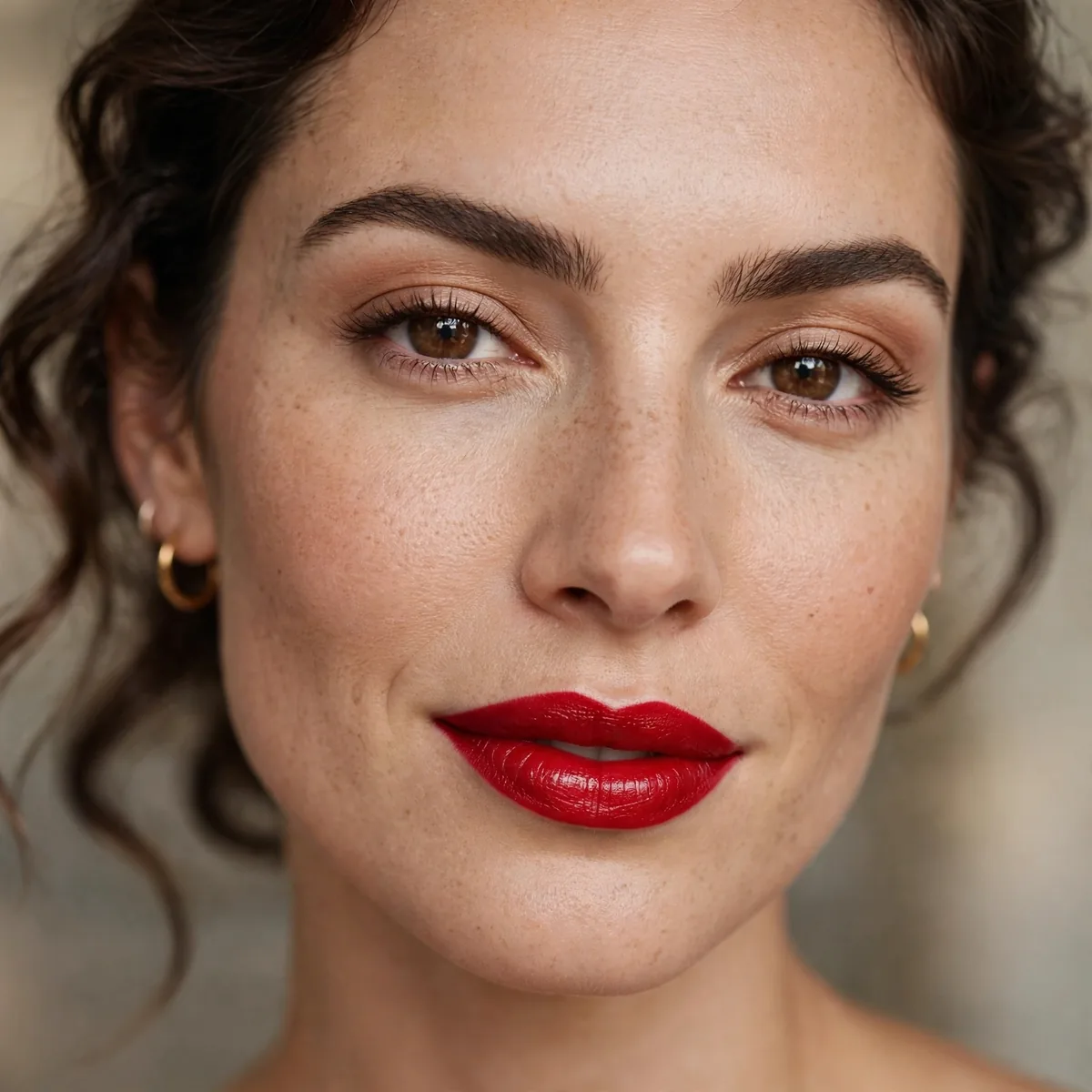
Wear it around the house first — confidence makes red look natural.
The final tip is psychological. Comfort with red is what makes it work.
Build up gradually: start with a sheer red tinted balm for a week, graduate to a blotted stain, then try full pigment on a low-stakes day like a weekend errand run. Each step normalizes the color on your face a little more. By the time you wear full red to an event, it will feel like yours — because you will have earned it in stages, not forced it in one leap.
Escalate the occasions deliberately — sheer red for daytime errands, blotted red for work, full red for dinner out, and finally full red for a daytime event, which is the true confidence milestone. Notice how people react: almost universally, the response is compliments, not stares. That feedback loop is what converts red from a costume into a signature, and signatures only need one bold decision to begin.
Your red is out there — pin these shades. For everyday lips, see nude lipstick shades, or make it last with long-lasting lipstick tips.