
The shag is having its biggest moment since the seventies, and here is the best part: it might be the most flattering haircut a woman over 40 can choose.
Those choppy layers, the feathered ends, the effortless texture — everything about the shag works in your favor after 40. It adds volume where fine hair starts to thin, movement where heavy hair drags you down, and an instant edge that no blowout can fake.
The trick is in the customization. A great stylist will tailor the length, the bang shape and the layering to your face shape and texture, so the cut looks intentional and polished rather than messy. Below are twenty versions that prove the shag belongs to women who know exactly who they are.
Here are 20 shag variations worth showing your stylist. Let’s get into it.
The Classic Shag With Curtain Bangs

This is the shag that started the comeback: chin-to-collarbone layers, feathered ends and curtain bangs that part softly in the middle. It flatters oval, square and heart-shaped faces beautifully, and the fringe draws attention to your eyes rather than forehead lines.
Ask your stylist for long layers starting at the cheekbone and point-cut ends so everything falls with movement. Style with a round brush or a quick flat-iron bend through the ends, and finish with a light texturizing spray.
Women in their forties often want texture without looking like they're chasing trends, and this shag nails that balance. The cut softens jawline definition that sharpens with age, while the middle part keeps the fringe modern rather than mumsy. It works especially well on medium-density hair that's starting to lose its youthful thickness. Bonus: the layered crown hides the odd grey that pops up between color appointments, making regrowth far less obvious.
For daily styling, blow-dry the bangs first — they set fastest and a crease-free fringe frames everything. A boar-bristle round brush adds polish, or rough-dry with your fingers for a weekend, rocker feel. Trim the fringe every five to six weeks to keep it skimming the cheekbones, and ask for dusting trims on the layers twice a year. This shag transitions beautifully from office blazer to evening dress with nothing more than a deepened part.
Choppy Bob Shag

Part bob, part shag and all attitude — this chin-length cut stacks choppy layers through the crown for instant volume. It is a brilliant choice if your hair is thinning at the top, because the short layers lift the roots and create the illusion of density.
It suits straight to wavy textures best. Ask for a disconnected, piecey finish rather than a blunt line, and use a pea-sized amount of pomade on the ends for definition.
This cut is a secret weapon for women over 40 whose hairline is receding slightly at the temples or whose part is widening. The stacked crown layers create fullness exactly where it's needed, while the chin-grazing length keeps the silhouette youthful without trying too hard. Oval and oblong faces benefit most, since the width at the jaw balances longer face shapes. It also photographs beautifully — every angle has texture.
Refresh the chop with a trim every six to eight weeks, since blunt regrowth kills the piecey effect. Between appointments, a dime-sized amount of matte clay worked through dry ends revives separation on second-day hair. For evenings out, tuck one side behind the ear and add a statement earring — the asymmetry shows off the layers. Come summer, this cut air-dries into the easiest wash-and-go style you'll ever own.
Long Feathered Shag

Love your length but hate how flat it hangs? This long shag keeps everything past the shoulders while carving feathered layers from the cheekbones down. The result is swing and bounce without sacrificing a single inch of length.
It works beautifully on thick hair because the layers remove weight. Tell your stylist you want the shortest layer at jaw level and the ends razor-cut for that airy, feathered finish.
If you've worn the same long hair for a decade, this shag is the gentlest way to modernize without losing the length you love. The feathering removes that heavy, curtain-like drape that can drag mature faces downward, replacing it with lift around the cheekbones. It's particularly flattering on oval and heart-shaped faces. Women with coarse, wavy hair will find their texture finally has a shape instead of just bulk.
Maintenance is refreshingly simple: the long layers grow out gracefully, so trims every ten to twelve weeks suffice. Ask your stylist to slide-cut the ends rather than blunt-trimming, which keeps the feathered effect alive. In humid months, a smoothing serum on the mid-lengths prevents the layers from puffing. For a quick evening refresh, wrap random sections around a large-barrel curling iron away from the face.
Shag With Side-Swept Bangs
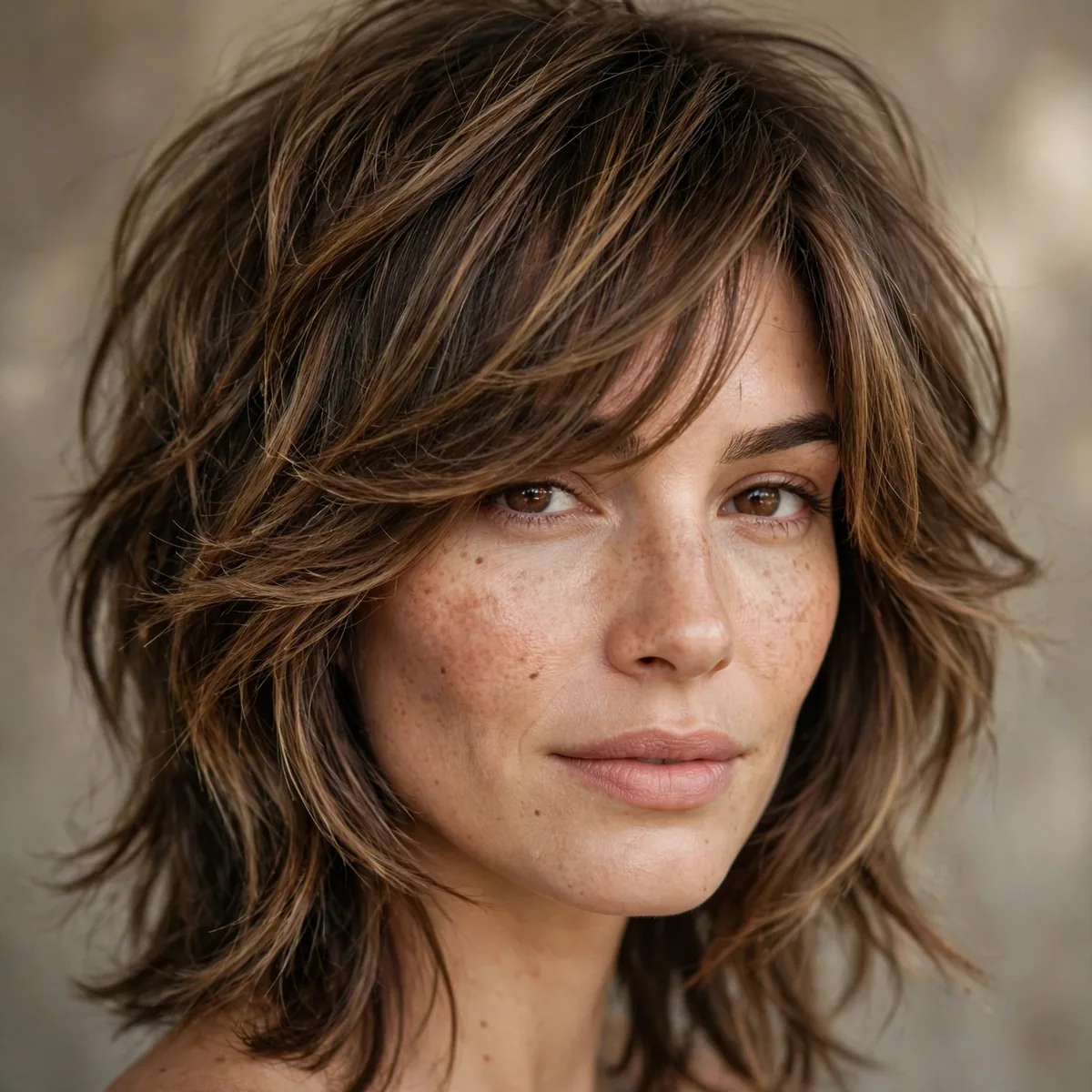
If curtain bangs feel too trendy, a soft side-swept fringe is the timeless alternative. It skims across the forehead, softening the eye area, and blends seamlessly into the cheekbone layers of the shag.
This version is especially kind to high foreheads and round faces. Ask for the bangs to be cut dry so your stylist can see exactly where they fall with your natural part.
Side-swept bangs are the diplomat of the fringe world — they flatter nearly everyone and never look severe. For women over 40, the diagonal line across the forehead subtly camouflages crow's feet and softens the brow area without hiding it. This version pairs beautifully with glasses, since the sweep works around frames instead of fighting them. It's also ideal if your hairline has an uneven growth pattern that resists center parts.
Style by blow-drying the bangs to the opposite side first, then sweeping them into place — the counter-direction builds natural volume at the root. A flexible-hold hairspray keeps the sweep in place through windy days. Trim every four to six weeks, as overgrown side bangs fall into the eyes. In winter, when static strikes, smooth a tiny drop of argan oil through the fringe to keep it lying flat.
The Curly Shag

Curly hair and shags were made for each other. Rounded layers through the crown give curls a beautiful shape instead of the dreaded triangle, and the built-in texture means your wash-and-go days get dramatically easier.
Ask for a curl-by-curl dry cut if your stylist offers it, keeping length around the shoulders. A diffuser and curl cream are all you need — the cut does the styling for you.
Curly hair over 40 often gets cut into safe, shapeless bobs — this shag is the joyful alternative. The rounded layering lifts curls off the shoulders, which is flattering when necks and jawlines are changing. Tighter curl patterns get the most dramatic transformation, but loose waves benefit too. One caveat: very fine curls may need fewer layers, so bring photos of your actual curl type to the consultation.
Refresh curls on day two with a water-and-leave-in spray mix, scrunching the crown layers upward to revive lift. Sleep on a satin pillowcase to keep the shag's shape intact overnight. Schedule trims every eight to ten weeks — curly shags forgive slow growth, but split ends travel fast in textured hair. For special occasions, diffuse with your head flipped for maximum crown volume and defined, bouncy ends.
Lived-In Wavy Shag

This is the undone, second-day-hair shag that looks like you spent the weekend at the coast. Medium-length layers, loads of texture and zero precision required — it actually looks better slightly messy.
Perfect for natural waves. Ask for internal layers rather than heavy surface cutting, and style with a salt spray scrunched into damp hair. Air dry and go.
This is the shag for the woman who has better things to do than fuss with her hair. Natural waves between 2A and 2C get maximum payoff, since the cut amplifies the texture you already have. It suits round and square faces particularly well — the soft, irregular layers break up strong jawlines. If you're transitioning from a sleek corporate bob, this cut marks the perfect liberation: polished enough for work, wild enough for weekends.
The beauty here is genuine low maintenance: wash, scrunch, go. On day three, revive the waves with a light mist of sea-salt spray rather than a full wash. Avoid heavy conditioners at the roots, which flatten the lived-in volume. Trim every eight to twelve weeks to keep the ends from looking ragged. In summer humidity, swap the salt spray for a humidity-resistant wave cream to prevent frizz.
Shag With Face-Framing Balayage

Color can take a shag from great to unforgettable. Hand-painted balayage through the face-framing pieces and ends makes every layer pop, and the brightness around the face has a genuinely lifting effect.
Ask your colorist for a lived-in balayage one to two shades lighter than your base, concentrated around the cheekbones and tips. It grows out softly with no harsh line.
For women over 40, strategic lightness around the face does what expensive serums promise — it brightens and lifts. The balayage works with your natural base, so regrowth never shows a harsh line, which means fewer salon visits and less chemical stress on maturing hair. Warm caramel and honey tones flatter warm undertones beautifully; cooler ash-beige suits pinker complexions. Ask your colorist to keep the brightest pieces exactly where sunlight would hit.
Protect your investment with a color-safe, sulfate-free shampoo and a weekly glossing mask to keep the balayage luminous. Purple or blue toning shampoo once a week prevents brassiness in lighter pieces. Refresh the balayage every three to four months — the lived-in technique means you can stretch appointments. Pair the color with the shag's texture and you'll look sun-kissed year-round, even in February.
Razor-Cut Shag

A razor is the shag’s best friend. Instead of blunt scissor lines, razor cutting creates wispy, separated ends that move like water. This technique is ideal for thick, heavy hair that needs weight removed without looking thin.
Make sure your stylist is experienced with razor work — it requires skill on fine hair. The payoff is a cut that air-dries into perfect piecey texture.
The razor shag is made for women whose thick hair eats regular haircuts for breakfast. Where scissors leave blunt weight, the razor carves airy channels through the interior, so your hair finally moves. It's also surprisingly kind to wavy textures, encouraging natural separation. One honest warning: if your hair is fine or chemically fragile, insist on scissors — razor work on delicate strands causes the very frizz you're trying to avoid.
Razor-cut ends need moisture to stay wispy rather than frizzy, so use a leave-in conditioner on the mid-lengths after every wash. Style with a diffuser on low heat or simply air-dry — heat styling can rough up razor-cut ends over time. Trim every eight weeks to keep the wispy texture fresh. In dry winter air, a weekly deep-conditioning mask keeps the feathered ends from looking parched.
The Shaggy Pixie Hybrid

Not ready for a full pixie but love short hair? This hybrid keeps pixie-short length at the back with longer, shaggy pieces on top and around the ears. It is edgy, feminine and incredibly easy to style.
It flatters oval and heart-shaped faces and looks fantastic on fine hair. If you love short styles, our pixie cuts for women over 50 offer even more inspiration.
This hybrid is the power move for women over 40 who want to look bold, not invisible. The cropped back elongates the neck — instantly elegant — while the longer top pieces keep it feminine and styling-flexible. It flatters petite frames especially well, since the height on top adds perceived stature. Fine hair thrives here: short layers stack into volume that longer cuts can never achieve on delicate strands.
Style in under five minutes: work a pea-sized amount of texturizing paste through the top with your fingertips, lifting pieces in different directions. Grow-out is graceful — the top layers simply blend into a longer pixie. Trim the nape every four to five weeks to keep the silhouette crisp. For evening, slick the sides with a touch of pomade and let the crown stay piecey for contrast.
Shag With Barely-There Bangs

Commitment-phobic about fringe? These whisper-light bangs are cut long and sparse, so they read as soft texture rather than a full bang. They soften the forehead and blend into the layers within weeks.
Ask for the fringe to hit just below the brow, cut with vertical snips for airiness. They grow out invisibly, which makes them the lowest-maintenance bang option in this list.
These gossamer bangs are perfect for the fringe-curious woman who's been burned before. Because they're cut sparse and long, they never commit you to the full-bang lifestyle — on days you hate them, they vanish into the shag's layers. They suit every face shape and are especially kind to long foreheads. If you're growing out a heavier fringe, this is your elegant exit strategy: thin it out, lengthen it, done.
Style them with almost nothing — a quick pass of the blow dryer aimed downward is plenty. Avoid heavy styling products, which make sparse bangs look stringy; a dry-texture spray at the roots adds invisible lift. Trim every six to eight weeks, or simply let them grow into face-framing layers. They're the rare bang that looks better slightly overgrown, so perfectionists can finally relax.
Fine-Hair Shag

The right shag can make fine hair look twice as thick. Shorter layers through the crown build volume at the roots, while keeping the perimeter just past the shoulders preserves the appearance of density.
The key is restraint: ask for fewer, longer layers rather than aggressive thinning, and avoid razors on very fine hair. A root-lifting mousse before blow-drying multiplies the effect.
Fine hair after 40 often means dealing with both thinning and texture changes — this shag addresses both. The crown layering creates the illusion of density where hair is sparsest, while the preserved perimeter keeps ends from looking see-through. Straight fine hair gets the most visible lift, though fine waves work too. Ask your stylist to cut the layers slightly shorter than you think; fine hair always falls longer than it looks in the chair.
The golden rule for fine hair: less product, more technique. Apply mousse only at the roots — anything on the lengths weighs fine strands down. Blow-dry upside down for the first two minutes to lock in crown volume, then finish upright with a round brush. Wash every other day at most; over-washing strips the natural oils that give fine hair its grip. A clarifying shampoo once a month prevents product buildup from flattening your volume.
Thick-Hair Shag

Thick hair can overwhelm a shag if the weight is not managed. Deep internal layers and point-cut ends remove bulk from the inside, so the silhouette stays shaggy and light instead of puffy.
Ask your stylist to debulk with thinning shears at the mid-lengths, never at the roots. This version works at almost any length and makes thick hair genuinely easier to style.
Thick-haired women over 40 know the struggle: hair that's heavy, hot, and takes forever to dry. This shag is genuine relief — the internal debulking can cut drying time nearly in half. The cut works at every length, from jaw-grazing to mid-back, and it's especially transformative on thick, wavy hair that previously had only two settings: triangle or ponytail. Coarse textures get the softest, most manageable result.
Invest in thinning-shear-friendly maintenance: trims every eight to ten weeks keep the internal layers from growing into bulk again. Use a lightweight leave-in rather than heavy creams, which re-add the weight you just removed. For quick styling, rough-dry to eighty percent, then smooth only the top layer with a paddle brush. In summer, this cut keeps you noticeably cooler — the airflow through the layers is real.
Grey-Blending Shag
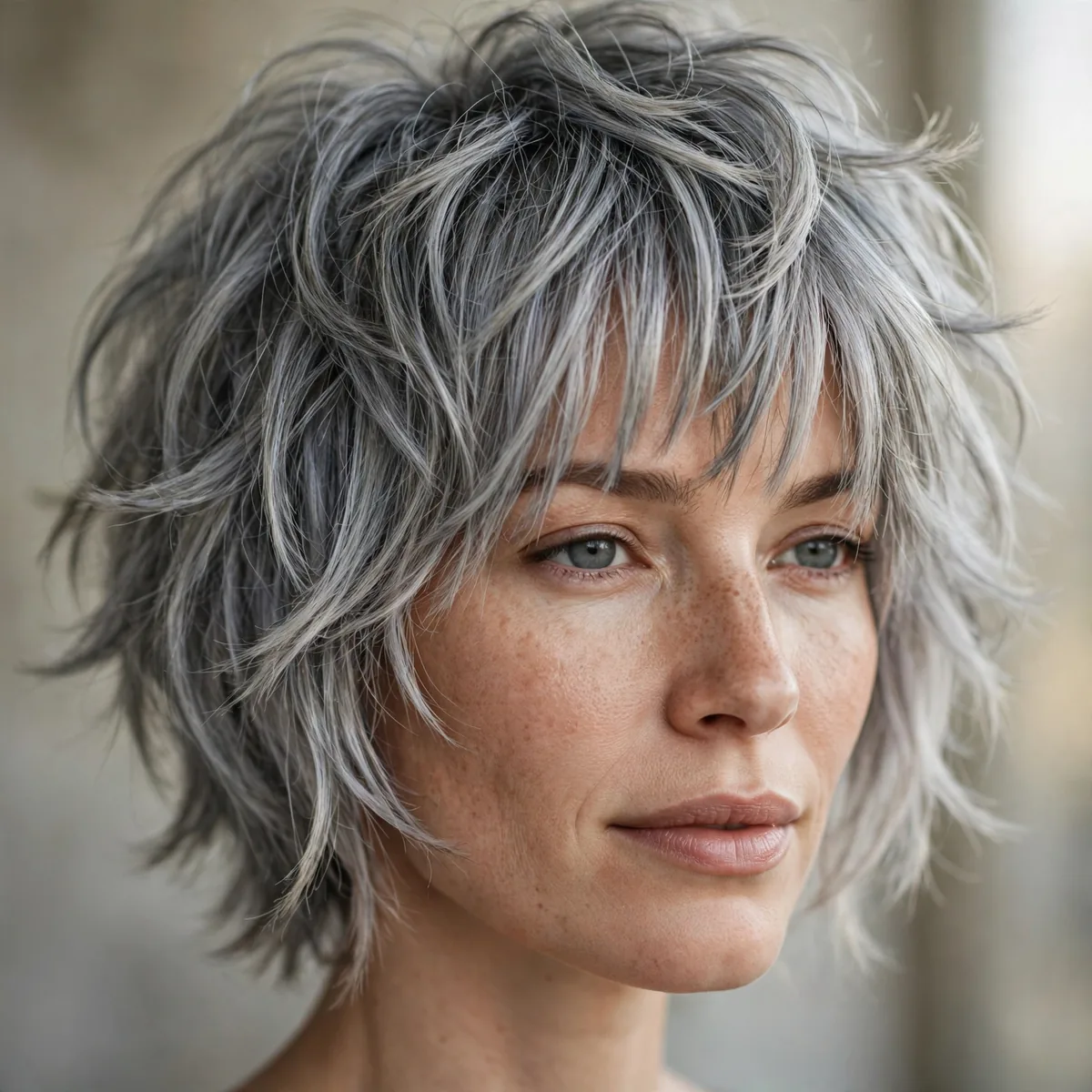
If you are growing out your grey, a shag is the perfect partner. The choppy texture camouflages the grow-out line, and layered ends catch the light so silver tones look luminous rather than flat.
Ask for highlights or lowlights that mimic your natural salt-and-pepper pattern through the top layers. Pair it with a purple shampoo once a week to keep grey bright.
Going grey gracefully is a journey, and this shag is the ideal traveling companion. The choppy layers break up the demarcation line where dyed hair meets silver, making the awkward in-between stage look intentional. Women with fifty-plus percent grey get the most seamless blend. The texture also catches light beautifully on silver strands, which can otherwise look flat and wiry. It's confidence in haircut form.
Keep silver luminous with a purple shampoo once weekly — overuse can dull, so alternate with a moisturizing shampoo. Grey hair tends toward dryness, so a weekly hair mask is non-negotiable. Ask your stylist for a gloss treatment every other appointment to add shine that grey sometimes lacks. Trim every eight weeks; healthy ends make silver look deliberate and chic rather than neglected.
Shoulder-Length Modern Shag

The most wearable shag of all: it sits right at the shoulders, with soft layers starting at the chin and a fringe that can be worn as bangs or swept aside. Professional enough for the office, cool enough for the weekend.
This length suits nearly every face shape and texture. It is also the easiest shag to grow out if you ever change your mind, since the layers simply blend into longer hair.
If you're shag-curious but risk-averse, start here. Shoulder length is the universal sweet spot — long enough to pull back for workouts, short enough to feel fresh. It suits every face shape and every hair texture from straight to coily, which is why stylists recommend it as the default. For women over 40 re-entering the dating scene or job market, it reads modern and capable without a whisper of trying too hard.
This is the easiest shag to style: a ten-minute blowout with a round brush, or air-dry with wave spray for weekends. The fringe can be worn straight down, parted, or swept aside depending on your mood. Trims every eight to twelve weeks keep it tidy. It layers beautifully under winter hats and scarves without bunching — a practical bonus the shorter shags can't claim.
Asymmetric Shag
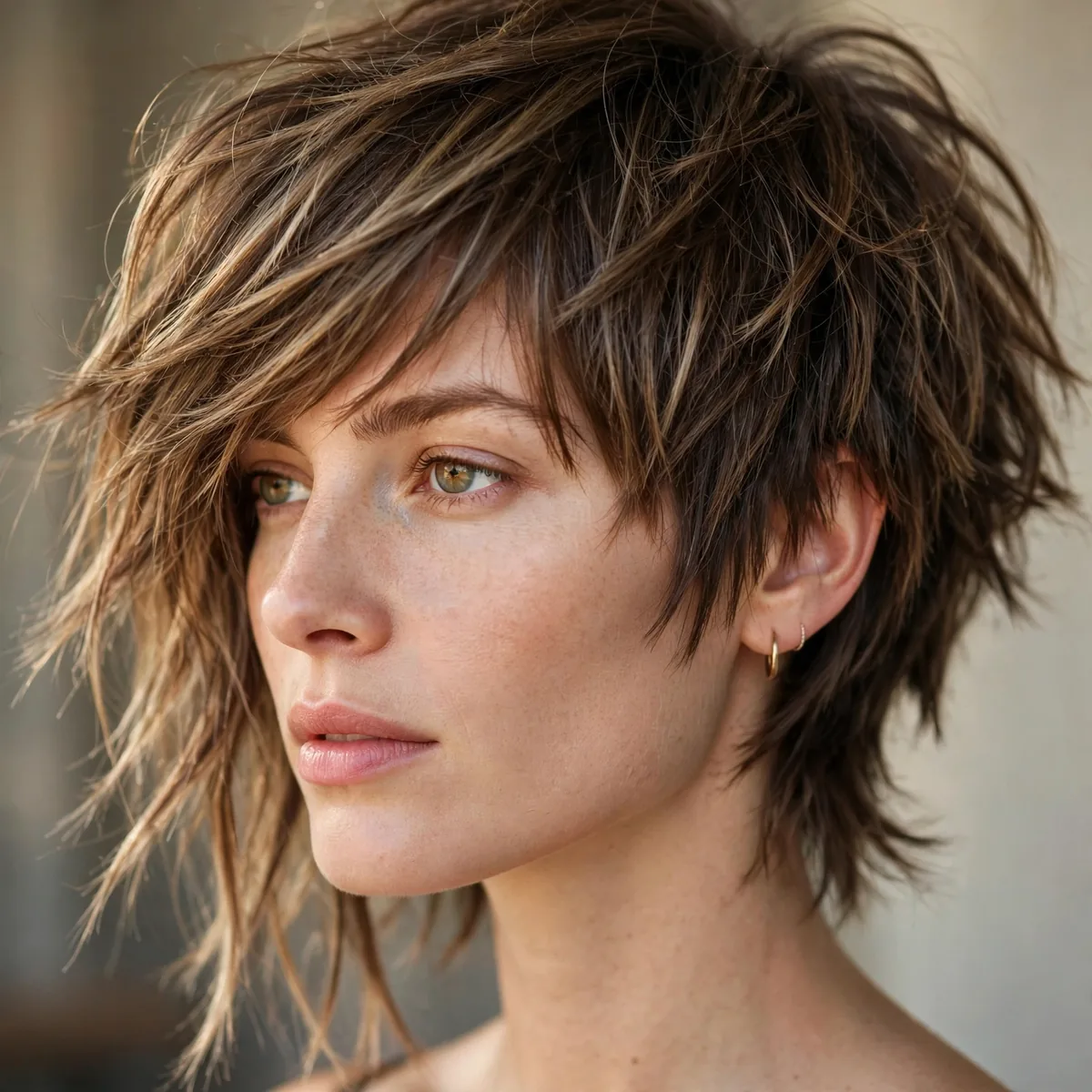
One side slightly longer than the other, layers that refuse to be symmetrical — this is the shag for women who never played it safe. The asymmetry creates diagonal lines that slim the face and add serious drama.
Ask for the difference to stay within an inch or two so it reads as intentional. This cut demands a confident stylist and a confident wearer, and it delivers both.
The asymmetric shag is for the woman who's earned the right to break rules. The diagonal lines are genuinely slimming — they draw the eye across the face rather than down, which flatters fuller cheeks and softening jawlines. It works best on straight to wavy hair where the asymmetry reads clearly; very curly textures can blur the effect. Pair it with bold earrings on the shorter side to emphasize the deliberate imbalance.
This cut demands precision maintenance: trims every five to six weeks keep the asymmetry intentional rather than lopsided. Style by blow-drying the longer side smooth and adding texture to the shorter side for contrast. A strong-hold pomade defines the piecey ends. Fair warning — growing this out requires a plan, so commit to the shape or discuss the exit strategy with your stylist before the first cut.
The Lob Shag

The lob meets the shag in this collarbone-grazing cut with shattered ends and hidden layers. It has all the polish of a classic lob with twice the personality, and it flatters wider jawlines by keeping weight below the chin.
Style it with a flat iron, bending random sections in opposite directions for that lived-in bend. If you prefer cleaner lines, our textured lobs for busy mornings are worth a look.
The lob shag is the corporate rebel's haircut — boardroom-appropriate from the front, full of personality in motion. Collarbone length is universally flattering after 40: it doesn't drag features down like longer hair can, yet still feels feminine. It suits wide faces beautifully, as the shattered ends break up width at the jaw. Fine to medium hair gets the most from the hidden layers, which build body without visible choppiness.
For the signature bend, clamp the flat iron mid-shaft and twist your wrist alternately — the irregular pattern is the whole point. A heat protectant is essential since you'll heat-style often. Trim every six to eight weeks to maintain the collarbone length; lobs lose their shape fast when overgrown. On no-heat days, braid damp hair loosely overnight for soft, believable waves by morning.
Shag With Caramel Dimension

Brunettes, this one is yours. Ribbons of caramel and toffee woven through a layered shag give flat brown hair instant dimension, and the lighter pieces around the face warm up the complexion beautifully.
Ask for the highlights to be placed on the top layers and ends where they catch the most light. A gloss treatment every couple of months keeps the caramel tones rich.
Brunette hair over 40 can start to look flat and one-dimensional, especially as natural pigment fades. These caramel ribbons restore the dimensional richness of younger hair without a full color commitment. The warmth around the face is genuinely youth-enhancing — it mimics the glow of sunlit hair. This works on every brunette depth from dark chocolate to medium brown. Cooler skin tones should ask for toffee over golden caramel to avoid brassiness.
Caramel tones fade fastest with heat styling and sun, so a UV-protectant spray is worth the investment. Refresh with a gloss every eight to ten weeks rather than full highlights — it's cheaper, faster, and kinder to maturing hair. Wash in cool water to slow color fade. Between appointments, a color-depositing conditioner in a warm brunette shade keeps the ribbons rich and expensive-looking.
Textured Shag for Round Faces

Round faces get the most flattering shag when the layers start below the chin and the crown has height. Vertical, elongated layers draw the eye down and create the illusion of length, while a center part adds symmetry.
Avoid width at the cheeks — ask your stylist to keep the sides close and the volume on top. Long curtain bangs that graze past the cheekbones complete the slimming effect.
Round faces and shags are a better match than most women realize — the key is all in the layer placement. Starting the texture below the chin keeps fullness away from the widest part of the face, while crown height creates the vertical line that elongates. This cut flatters double chins too, since the elongated silhouette draws eyes downward. Medium to thick hair holds the crown volume best; fine hair may need root powder for the same lift.
Blow-dry the crown with a round brush, lifting straight up from the roots for maximum height. Keep the sides sleek — flat-ironing just the cheek sections reinforces the slimming effect. Avoid center-parted volume at the ears, which widens. Trim every seven to nine weeks. For evenings, a deep side part amplifies the elongating diagonal, making this cut even more flattering after dark.
Shag With an Undercut Nape
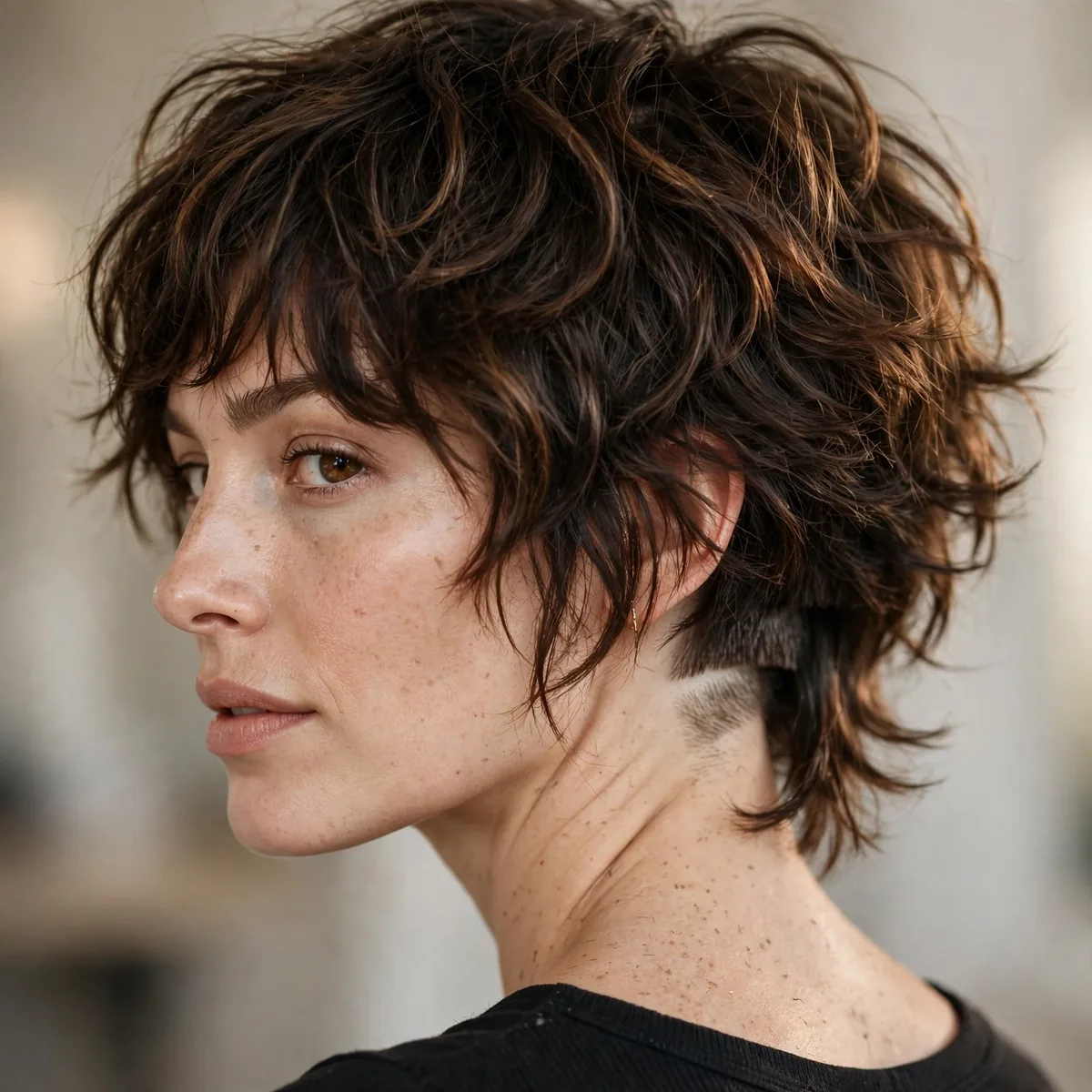
Here is the secret-weapon shag: everything looks like a normal layered cut from the front, but the nape is clipped short underneath. It removes serious weight from thick hair and feels incredible in warm weather.
The undercut stays hidden when your hair is down and shows off when you pin it up. Ask for it to be subtle — about an inch high — so it grows out without an awkward stage.
The hidden undercut is the best-kept secret for thick-haired women over 40 who overheat. Removing that dense wedge at the nape improves airflow dramatically — you'll feel the difference on the first warm day. From the front, nobody knows; it's your private rebellion. It suits anyone with enough density that the top layer fully covers the clipped section. Fine hair should skip this one — the undercut would peek through.
Maintain the undercut with a quick clipper touch-up every three to four weeks, or let it grow — the top layers disguise regrowth completely. Style the visible hair exactly like a normal shag; the undercut needs no attention. In summer, wear your hair up to show off the cool detail and stay comfortable. If you ever want it gone, growing it out is painless since it's fully hidden throughout.
The Low-Maintenance Grow-Out Shag
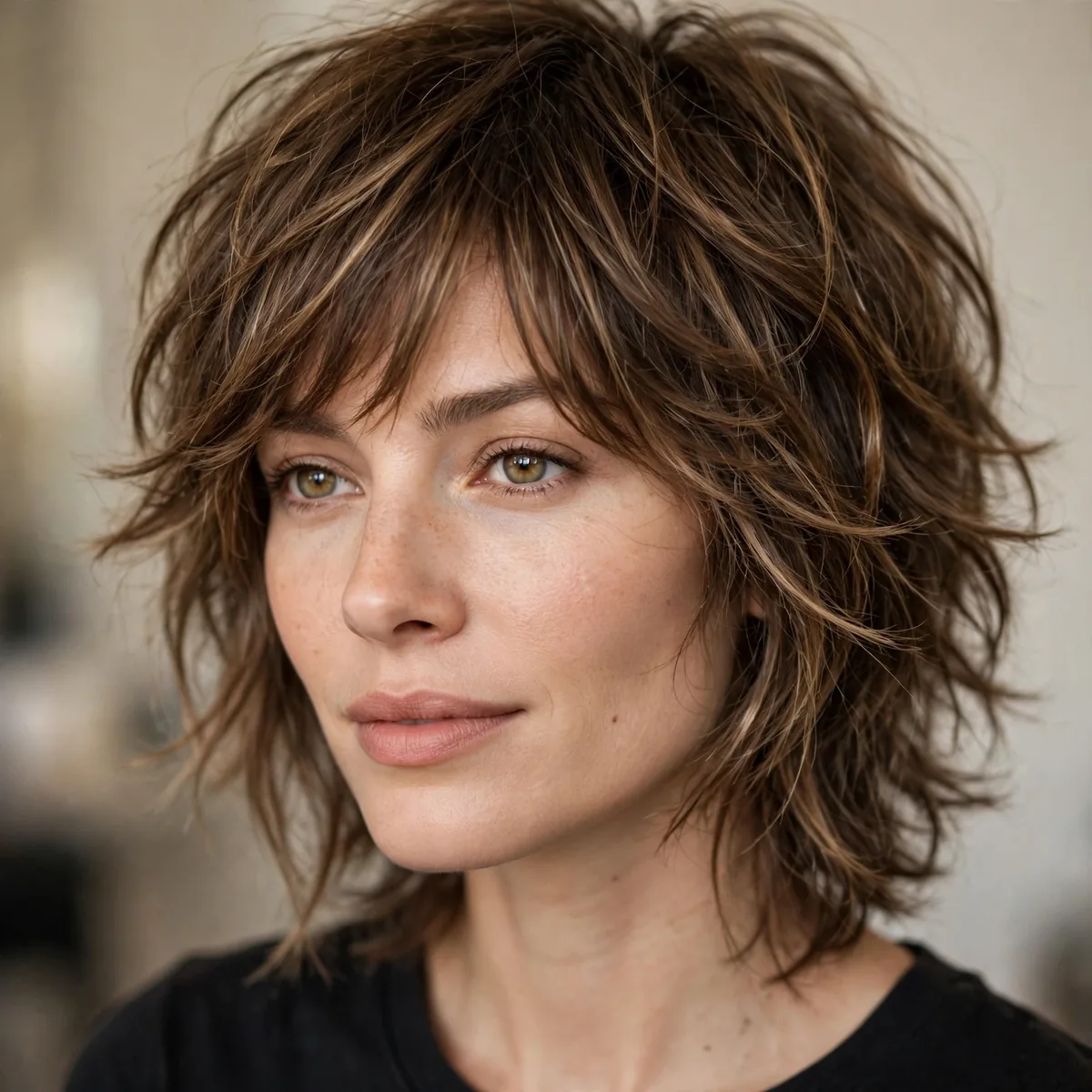
Designed to look good between appointments, this shag uses long, soft layers that blend as they grow. There is no harsh fringe and no precise shape to lose, so it stays attractive for months.
Book trims every 12 weeks instead of 6, and let the layers do the work. It is the perfect shag for women who want the style without the salon commitment.
This is the shag for women who love great hair but not salon schedules. The genius is in the layer design: long, soft graduation means there's no harsh line to outgrow, so the cut looks intentional at every stage. It suits busy professionals, frequent travelers, and anyone who's ever cancelled a trim three times. Every texture works, from pin-straight to coily — the grow-out grace is built into the architecture.
Stretch appointments to twelve or even fourteen weeks without guilt. Between visits, a hydrating mask keeps the older ends looking fresh as they grow. Dust the very tips at home only if you're confident — otherwise leave it to the pros. This shag pairs beautifully with air-drying, which minimizes damage over the long grow-out. It's proof that the best haircut is the one that respects your real life.
The shag rewards confidence — pick the version that matches your texture and lifestyle, bring reference photos to your stylist, and enjoy the easiest cool-girl hair of your forties and beyond. For more age-defying length ideas, see our shoulder-length cuts for women over 40 and effortlessly chic pixies.