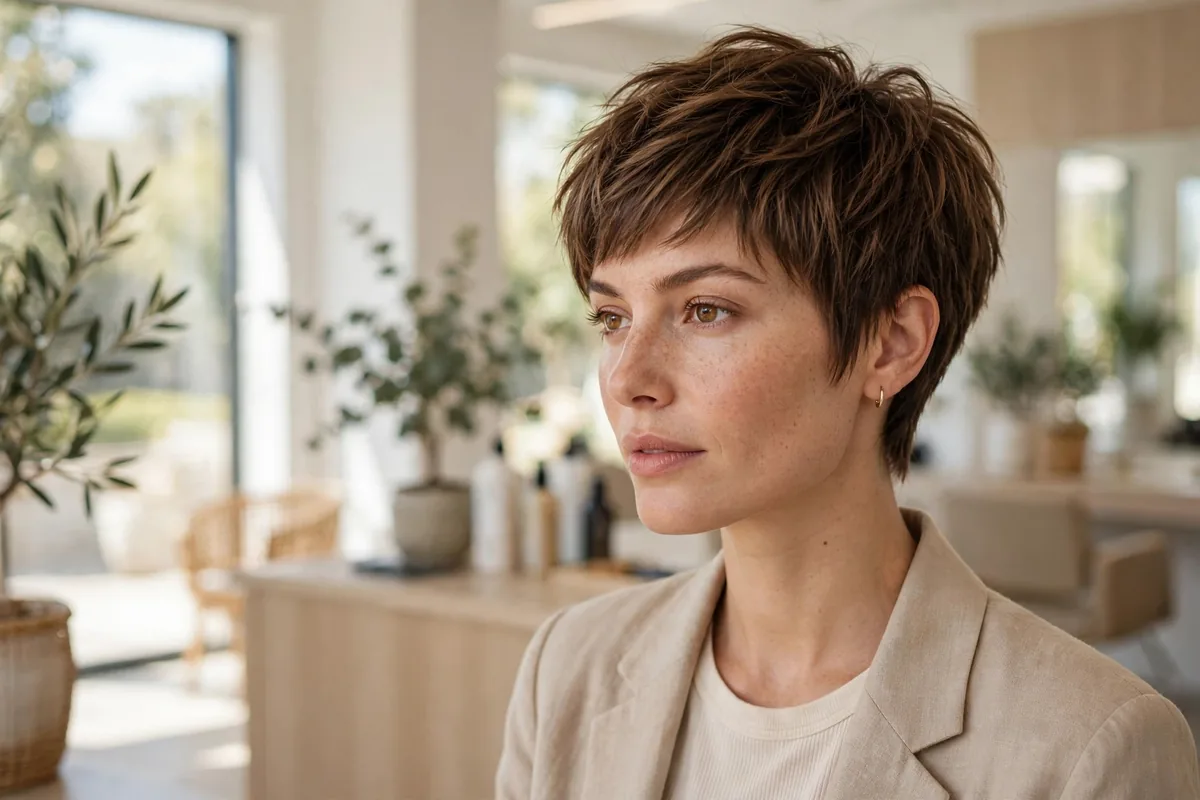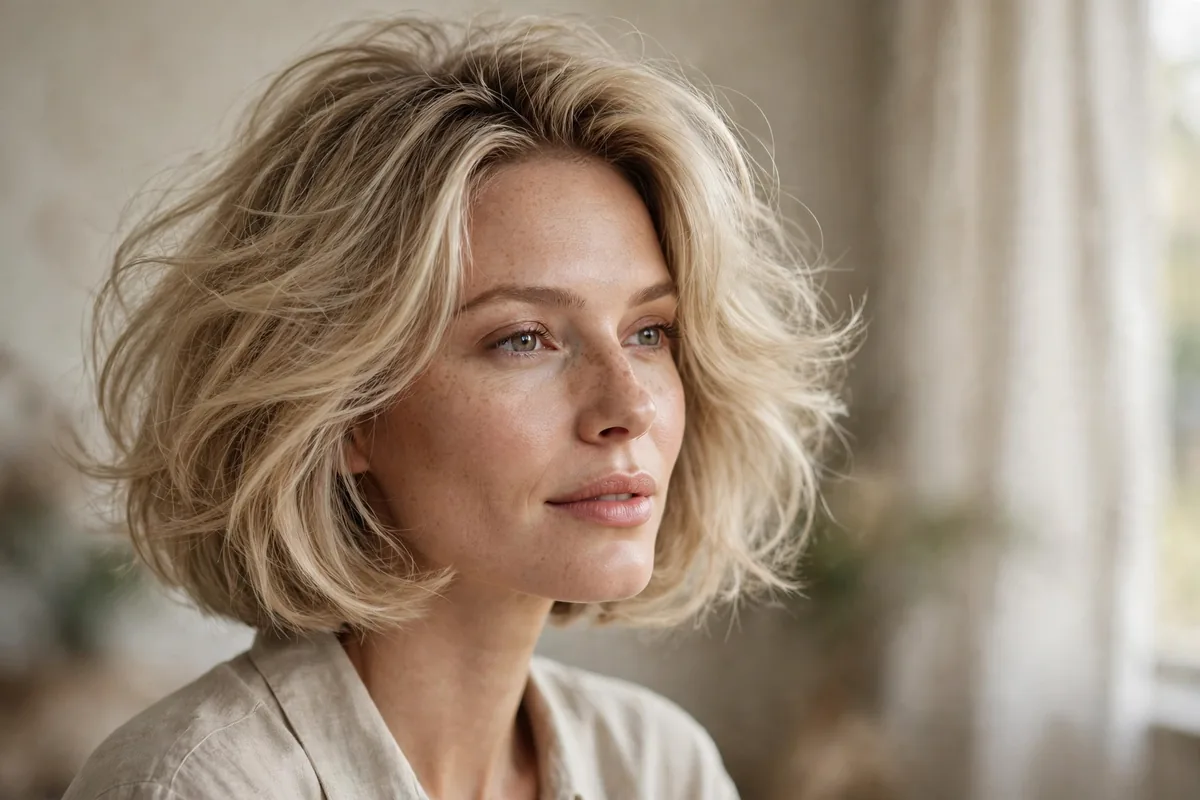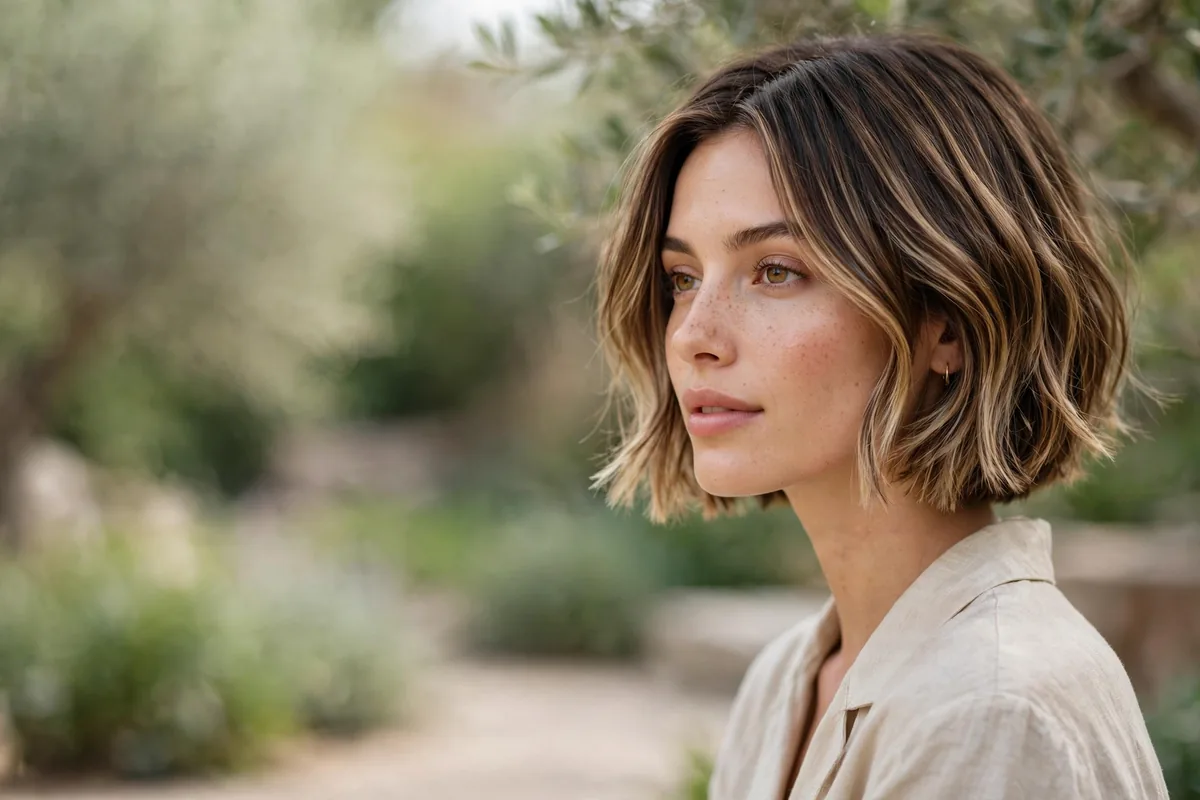
Wavy hair and the shag were made for each other — the cut is literally designed to enhance the texture you already have.
The short shag is layers with intent: shorter pieces on top for volume, longer pieces framing the face, and ends that are textured rather than blunt. On wavy hair, those layers fall into natural, tousled perfection.
What makes the shag special is how little it asks of you. Air-dry, scrunch in some product, and your waves do the rest. It is the rare cut that looks better the less you try.
Here are 18 short shag variations — from soft and wearable to full rock-star.
The Classic Wavy Shag
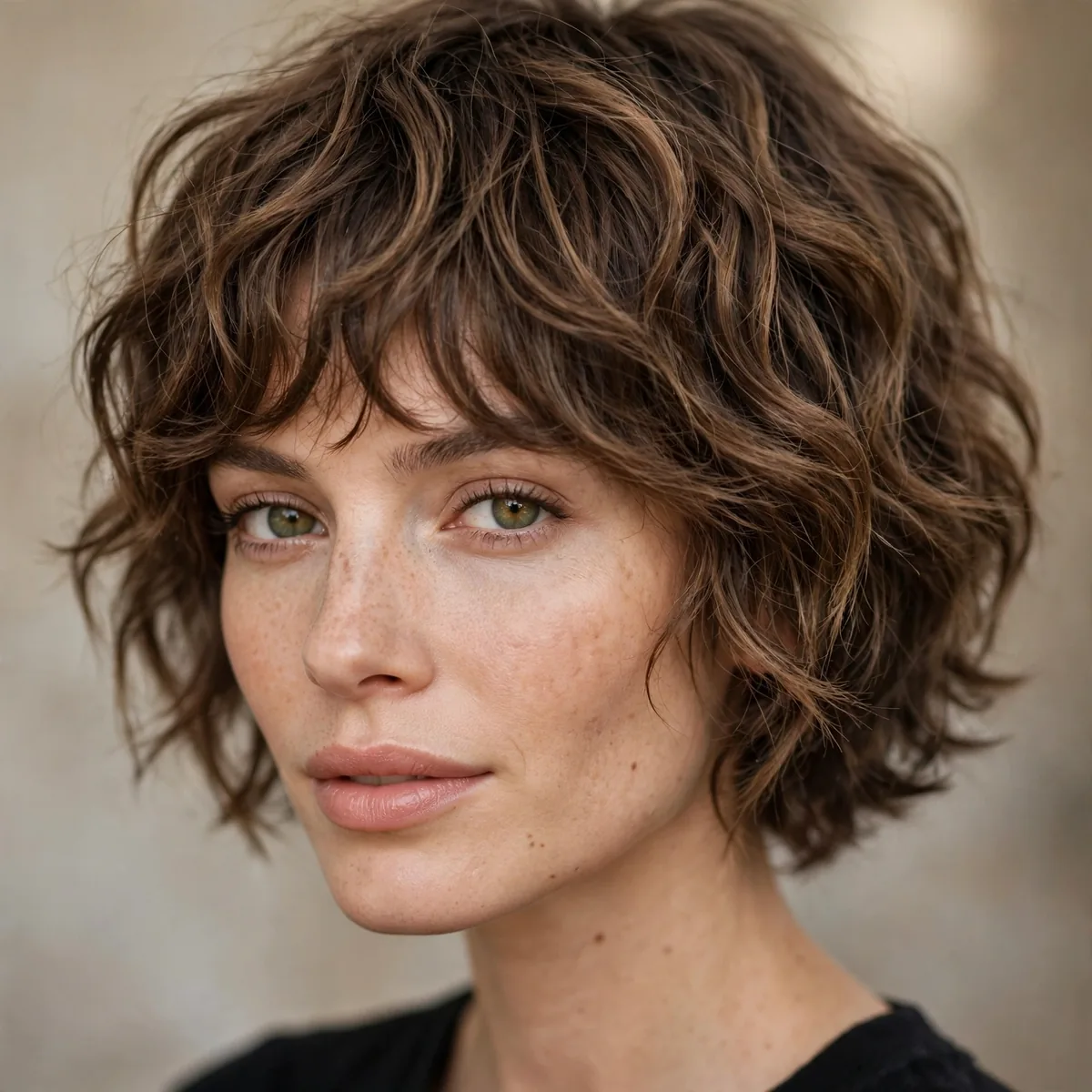
The original: layered all over with textured ends and natural wave doing the heavy lifting. It is effortlessly cool, endlessly wearable and flattering on nearly every face shape.
Ask for layers that start at the cheekbones and texturizing through the ends. Air-dry with a curl cream for the most natural finish.
This cut genuinely suits almost everyone, but it shines brightest on oval, heart, and square faces where the cheekbone layers open up the features. Medium-density wavy hair (think 2A to 2C patterns) holds the shape best — straight hair needs more styling work, while very tight curls turn it into a different animal. It is also one of the rare cuts that flatters across ages, from college students to women in their sixties.
Maintenance stays refreshingly low: a trim every eight to ten weeks keeps the layers bouncy rather than stringy. For styling, scrunch a pea-sized amount of curl cream into damp hair, then diffuse on low heat — or simply air-dry for maximum nonchalance. In humid summer months, a light anti-frizz serum on the ends keeps the silhouette intentional instead of puffy. The classic shag practically styles itself; your job is mostly to get out of its way.
Shag with Curtain Bangs
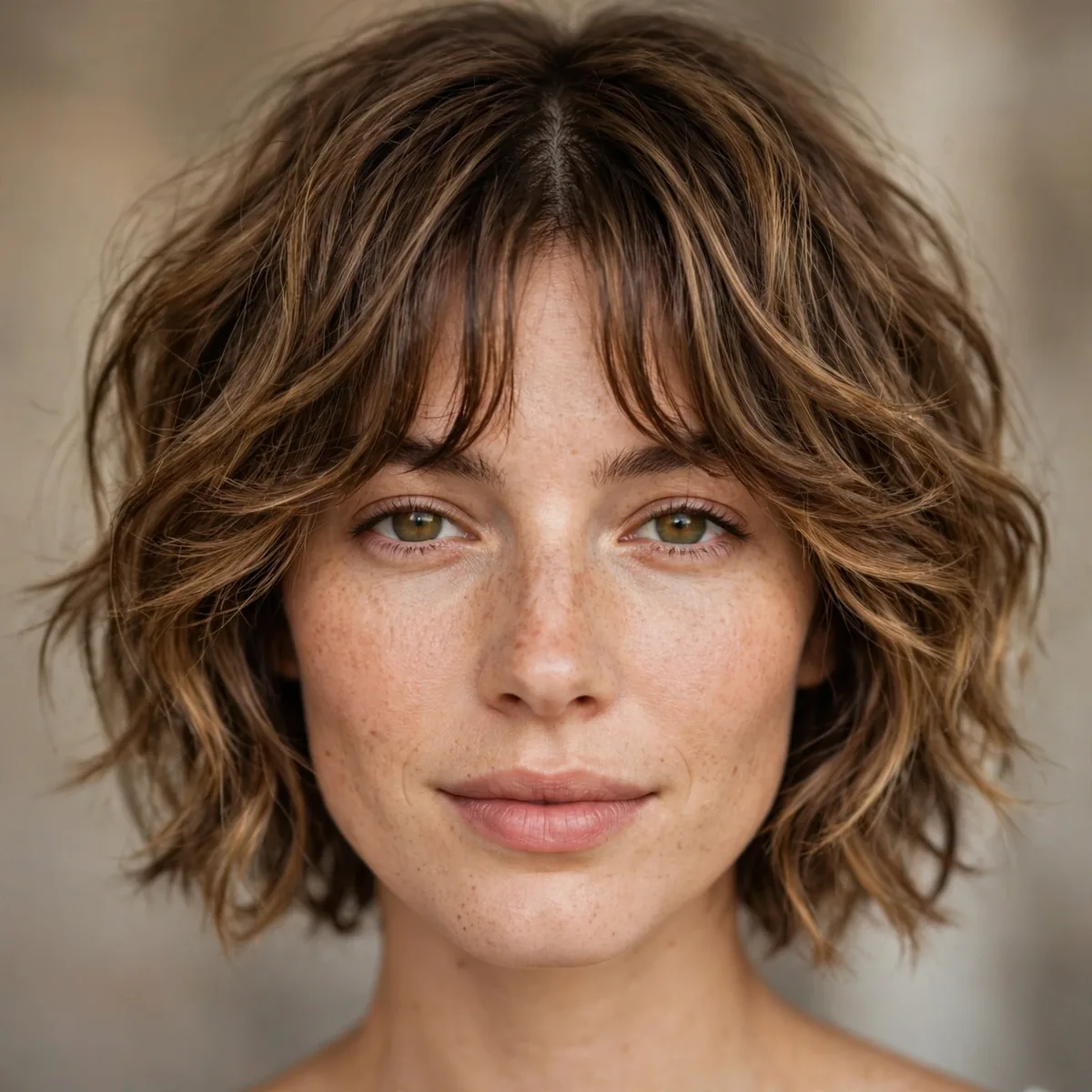
Curtain bangs melt into the shag’s face-framing layers for the ultimate 70s-inspired look. The parted fringe softens the forehead while the shaggy body keeps everything modern.
Best for oval and long faces. Style the bangs with a round brush, flicking them away from the face for that signature curtain sweep.
Long and oval faces benefit most — the parted fringe visually shortens the forehead and balances length. Round faces can wear it too, provided the bangs stay long enough to skim the cheekbones rather than sitting above them. Fine hair works fine here since the bangs themselves are wispy, though very thick hair may need the fringe thinned to keep it from looking heavy and helmet-like.
For the sweep, blow-dry the bangs on a medium round brush, rolling each side away from the center part, then lock them with a flexible-hold hairspray. Between washes, revive flattened bangs with a touch of dry shampoo at the roots. The 70s vibe peaks in autumn — pair it with suede jackets and warm-toned makeup for full effect. Expect a trim for the fringe every four to six weeks.
The Choppy Micro-Shag
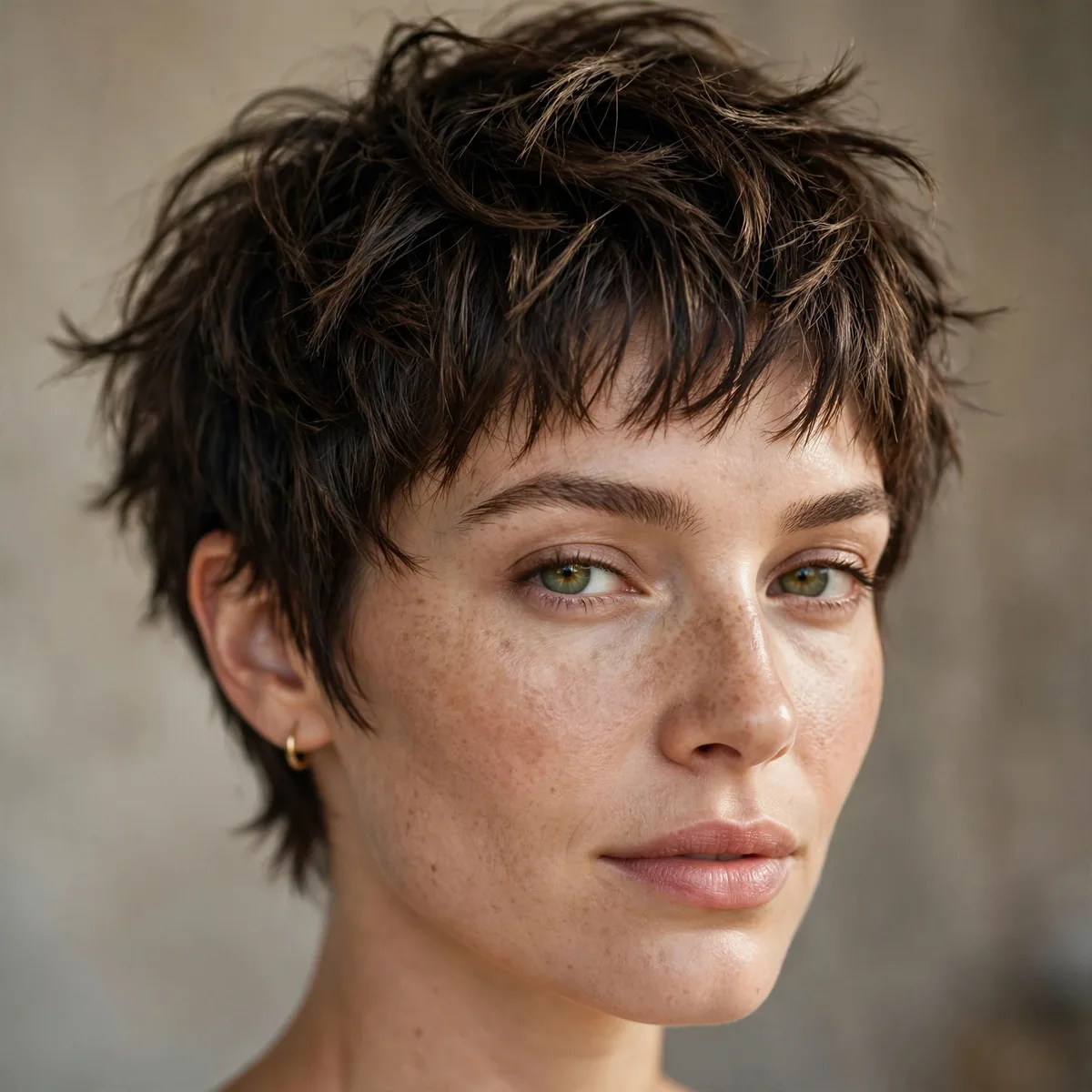
A shag taken short — chin-length or above with lots of choppy texture. It is edgy, playful and full of movement, proving the shag works beautifully at shorter lengths.
Best for fine wavy hair that needs maximum texture to look full. The choppy ends create separation that fakes density.
Petite frames and delicate features are the sweet spot — the cropped length throws attention to your eyes and bone structure. It flatters fine wavy hair most dramatically, since the choppy texture manufactures volume that simply is not there naturally. Confidence matters more than face shape here, though oval and heart faces take to it effortlessly. Women over forty love it too; the texture reads modern rather than severe.
Styling is a ninety-second affair: work a dab of matte clay or texturizing paste through dry hair, pinch random sections for separation, and go. Because the cut is so short, even a slightly grown-out version looks intentional, so you can stretch appointments to ten weeks. This cut thrives in spring and summer when low-maintenance routines rule — it air-dries beautifully and survives humidity with its shape intact.
Soft Shaggy Bob

A bob with shag DNA: the clean perimeter of a bob softened by interior layers and textured ends. It is the perfect compromise for anyone who wants edge without full commitment.
Best for professional settings where a full shag might feel too wild. The shape reads polished; the texture reads cool.
This is the boardroom-safe rebel: refined enough for conservative offices yet textured enough for weekends. It suits round faces particularly well, since the interior layers create vertical movement that counteracts width. Medium to thick hair holds the shape with the least effort, while fine hair benefits from a volumizing mousse at the roots. Women returning to short hair after years of long lengths find it an ideal transitional cut.
Blow-dry with a paddle brush for polish, then ruffle the mid-lengths with your fingers to wake up the texture — that tension between sleek and tousled is the whole point. A pea-sized drop of smoothing serum on the ends prevents the perimeter from fraying. Schedule shaping trims every six to eight weeks; the bob length shows growth faster than a longer shag. It dresses up beautifully for evening events with a deep side part.
Shag with Bottleneck Bangs
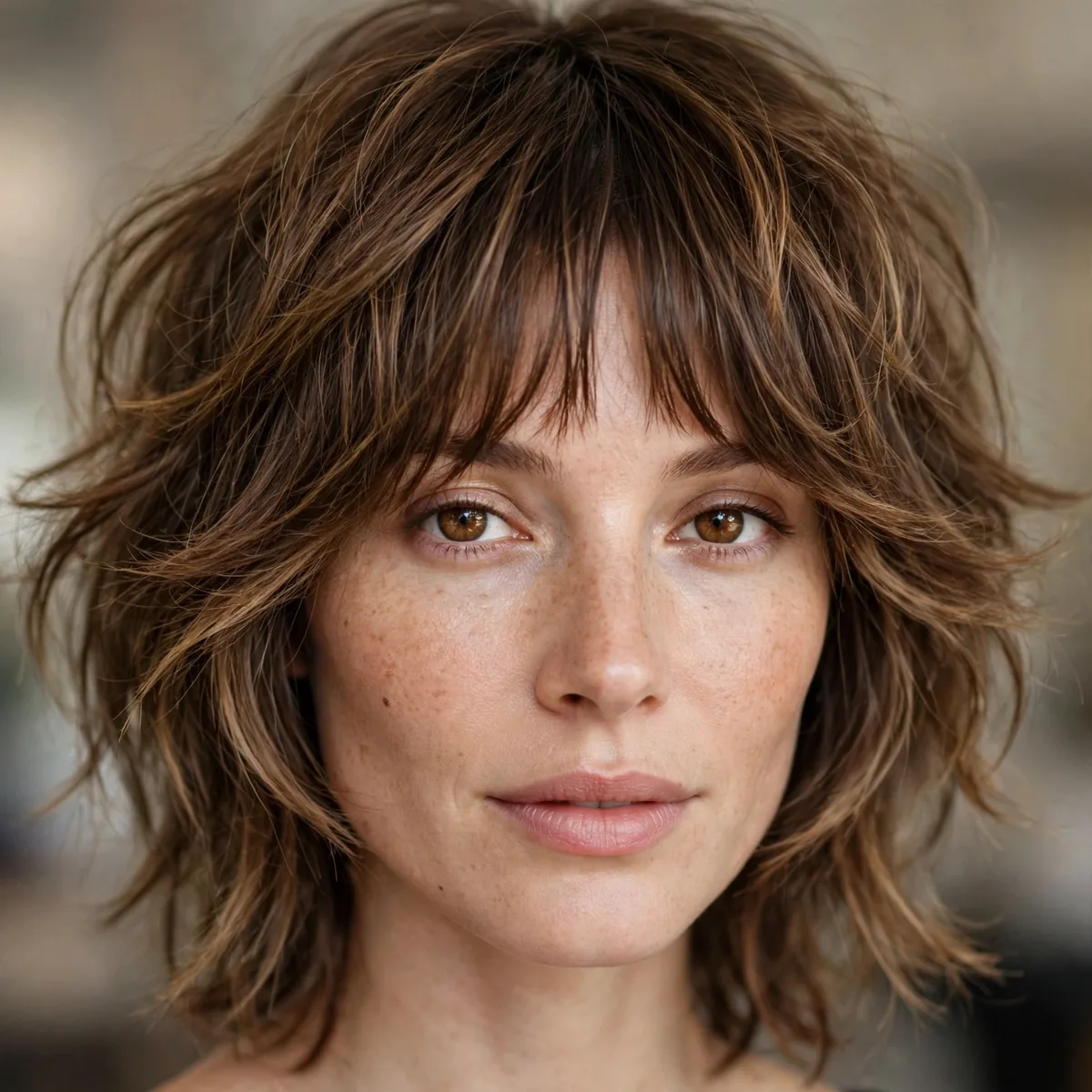
Bottleneck bangs — narrow at the top, widening at the cheeks — pair beautifully with a shag’s layered frame. They are softer than blunt bangs and more interesting than curtains.
Best for heart and oval faces. The shape draws attention to the eyes and cheekbones while blending into the shag layers.
Heart-shaped and oval faces get the best mileage, since the narrow-then-wide silhouette mirrors their natural contours. The style also works on long faces, where the bangs visually reduce forehead length. They demand a bit more daily attention than curtain bangs, so be honest about your morning routine — if you will not spend five minutes styling, choose a longer, more forgiving fringe instead.
To style, wrap the bangs around a small round brush, directing the center down and the sides outward along the cheekbones. A fine mist of flexible hairspray holds the shape without stiffness. Refresh limp bangs with dry shampoo rather than restyling from scratch. The look pairs beautifully with autumn wardrobes — think knit turtlenecks that let the fringe frame your face as the season's centerpiece.
The Undone Rocker Shag
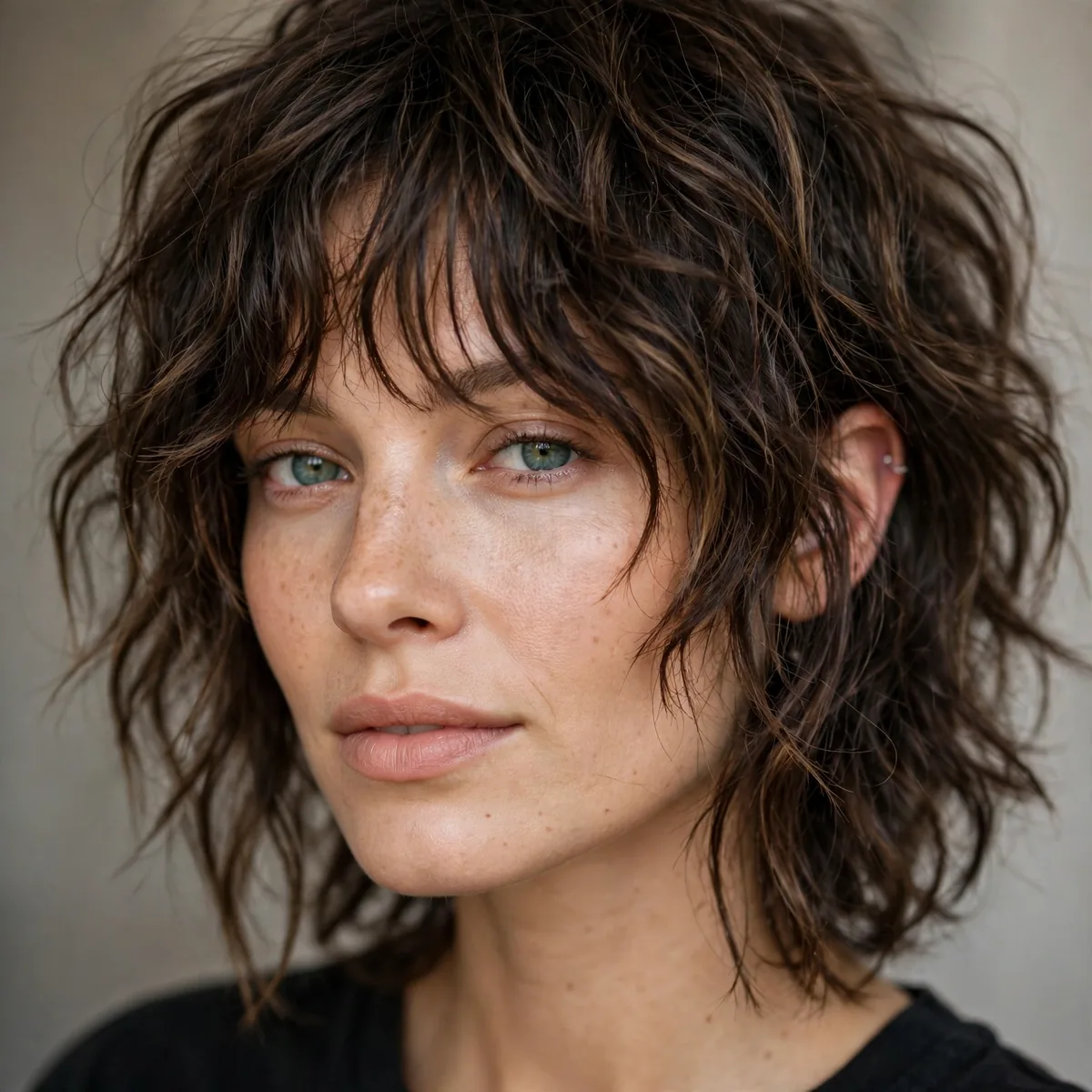
Maximum texture, minimum effort — the rocker shag is gloriously undone. Heavy layering and piece-y ends create that just-rolled-out-of-bed cool that takes confidence to pull off.
Best for thick wavy hair that can support the heavy layering. Thin the interior if your hair is very dense so the shape does not become triangular.
Thick, coarse wavy hair is the natural canvas — the cut removes bulk through strategic layering rather than thinning shears alone. Oval, square, and heart faces all carry it well, since the volume balances strong jawlines and narrow chins alike. This is not the cut for polished corporate environments, but for creatives, musicians, and weekend warriors, it reads effortlessly confident rather than unkempt.
The styling ritual is gloriously lazy: mist damp hair with sea salt spray, twist random sections, and let it air-dry or diffuse loosely. A texturizing powder at the crown adds gritty volume on second-day hair. Because intentional messiness hides regrowth, you can push trims to twelve weeks. The rocker shag peaks at summer festivals and outdoor concerts, where sweat and wind only improve it.
Shaggy Pixie Hybrid
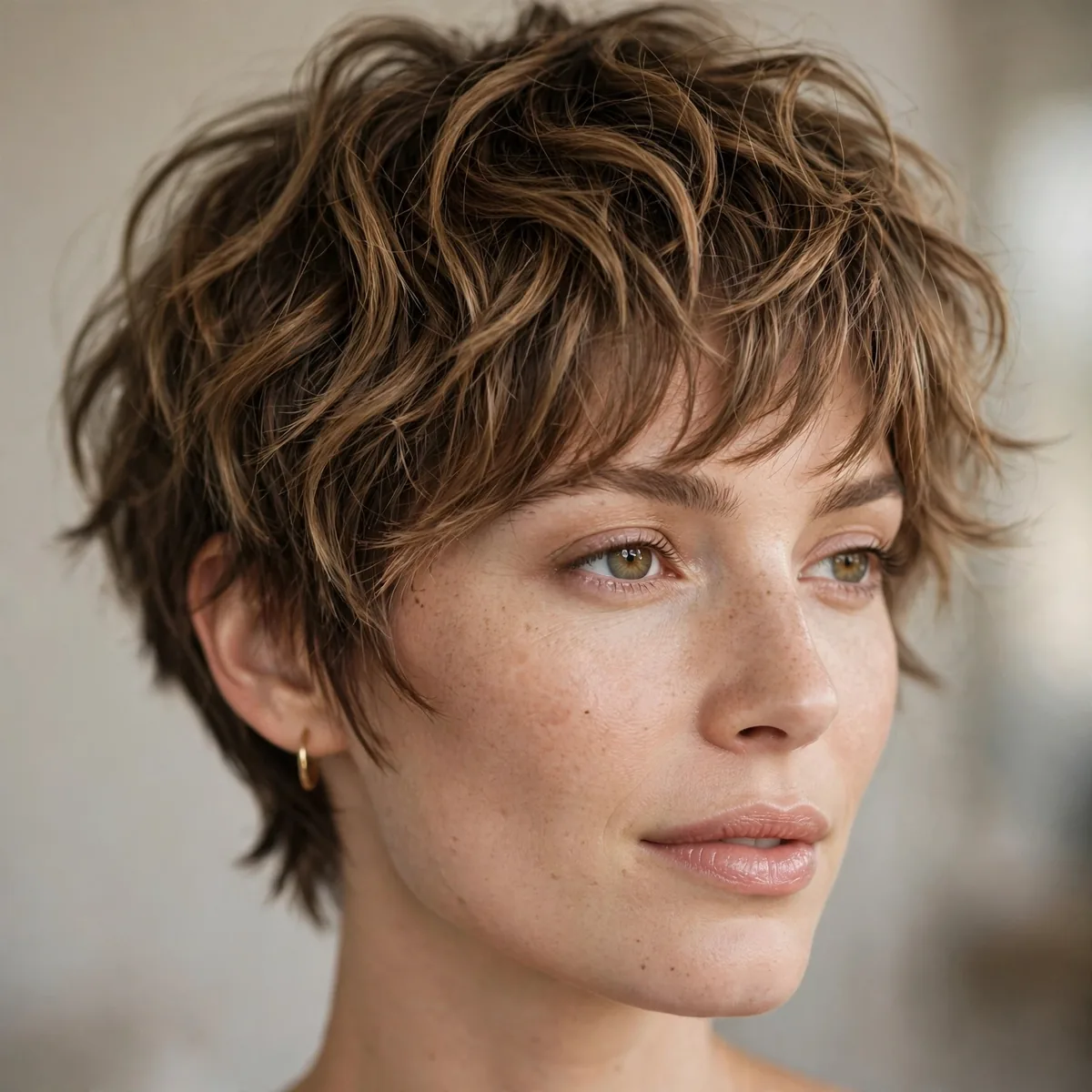
Where the shag meets the pixie: short, layered and full of wispy texture. The waves give the pixie length beautiful movement that straight pixies cannot match.
Best for oval and heart faces. Style with a little wax on dry hair to piece out the layers and emphasize the shaggy texture.
Oval and heart-shaped faces are the natural fit — the cropped length showcases cheekbones and eyes while the waves soften the silhouette. Small features benefit most, since longer cuts can overwhelm petite faces. The hybrid also flatters women embracing grey, as the texture distracts from harsh grow-out lines. If you have a very round face, ask for extra height on top to add length visually.
Style on dry hair: warm a pea-sized amount of styling wax between your palms, then pinch and twist individual pieces to emphasize the shaggy layers. A matte finish looks modern; a light pomade gives evening polish. Trims every four to six weeks keep the shape crisp — pixies grow out fast. In winter, pair it with statement earrings, since the short length puts your accessories and neckline on full display.
The Wolf-Shag Blend
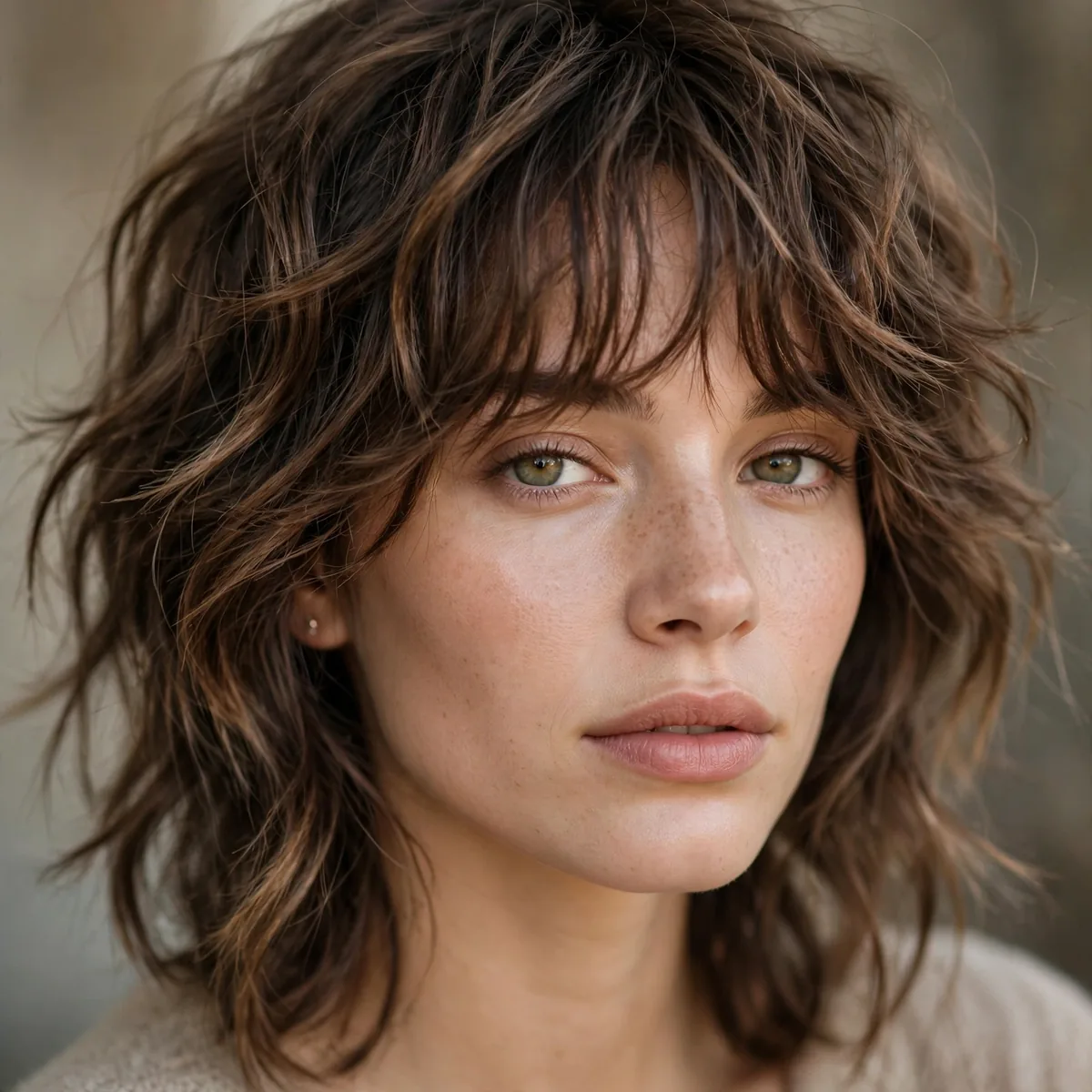
Borrowing the wolf cut’s dramatic top layers and the shag’s textured ends, this hybrid is wild in the best way. It is bold, fashion-forward and made for wavy texture.
Best for thick hair — the heavy layering removes weight while creating shape. For more wild ideas, see our wolf cut hairstyles.
Thick wavy or curly-leaning hair carries this hybrid best; fine hair can look sparse under such aggressive layering. Oval and long faces suit the dramatic top volume, which balances length nicely. This is a statement cut for the fashion-forward — think art students, stylists, and anyone whose personal style runs toward streetwear and vintage. It photographs incredibly well for social media.
To style, apply a volumizing mousse to damp roots, flip your head upside down, and diffuse until nearly dry for maximum lift at the crown. Finish with a texturizing spray through the ends. The bold shape holds up for ten to twelve weeks, though the heavy layers mean less frequent trims will not look sloppy. Spring is its season — the wild texture mirrors the season's carefree energy perfectly.
Shag with Face-Framing Highlights
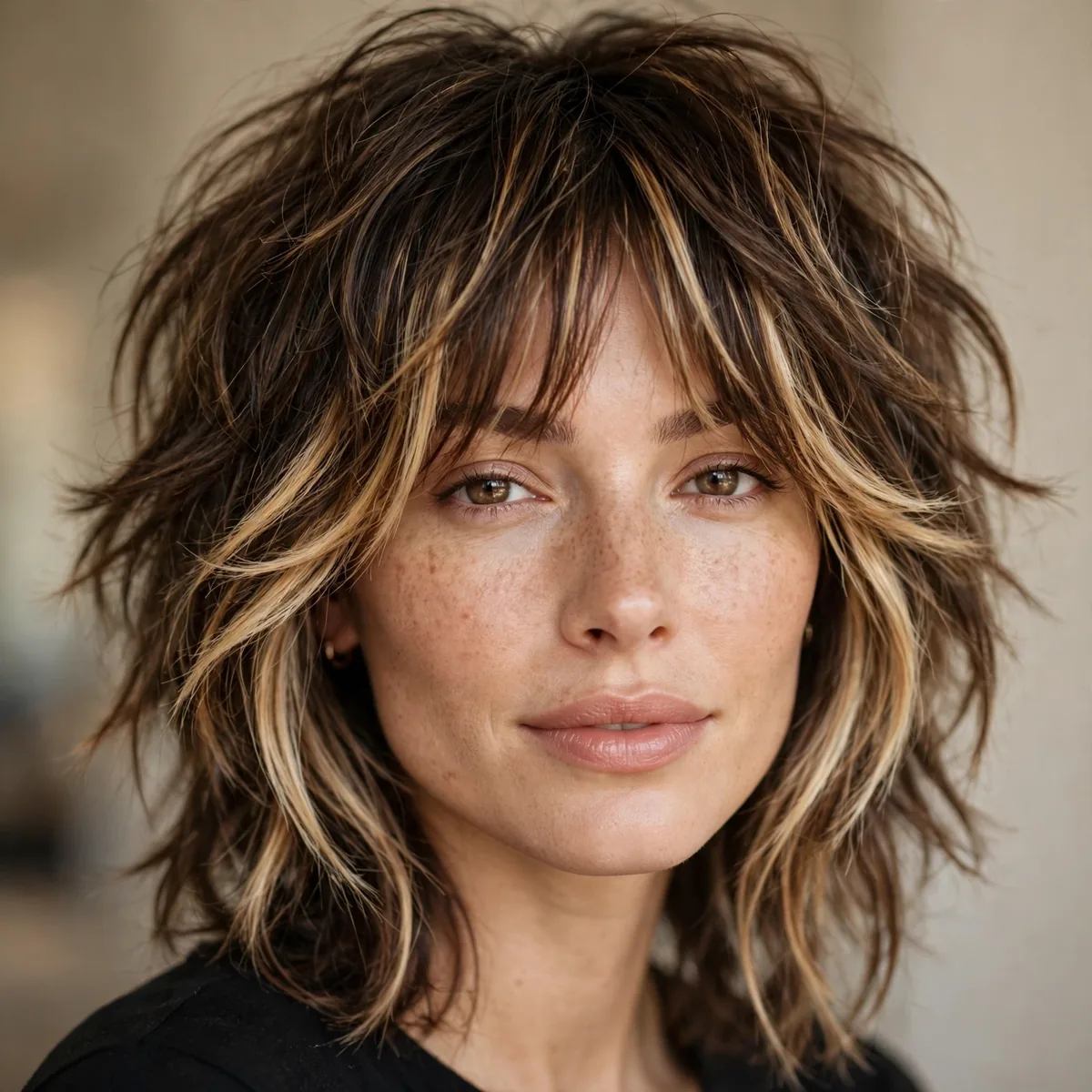
Lighter pieces around the face make the shag’s layers pop — the color traces the texture, emphasizing every wave and piece. It is dimension that works as hard as the cut does.
Ask for balayage or babylights concentrated around the face and through the top layers. The grow-out is soft and forgiving.
Every face shape benefits, since the light pieces literally draw the eye to your features. They are especially kind to mature women — the brightness around the face mimics the softening effect of good lighting. Warm skin tones glow with honey and caramel ribbons; cooler complexions shine with ash and champagne. Even first-time color clients find this low-commitment, since the grow-out is practically invisible.
Ask your colorist for balayage painted onto the surface layers, concentrating on the pieces that frame your face and crown. Maintain the tone with a color-safe, sulfate-free shampoo and a purple or blue toning mask every other week depending on your shade. Gloss treatments every eight weeks keep the dimension luminous. These highlights photograph beautifully in golden-hour light, making them a Pinterest favorite year-round.
The Polished Shag
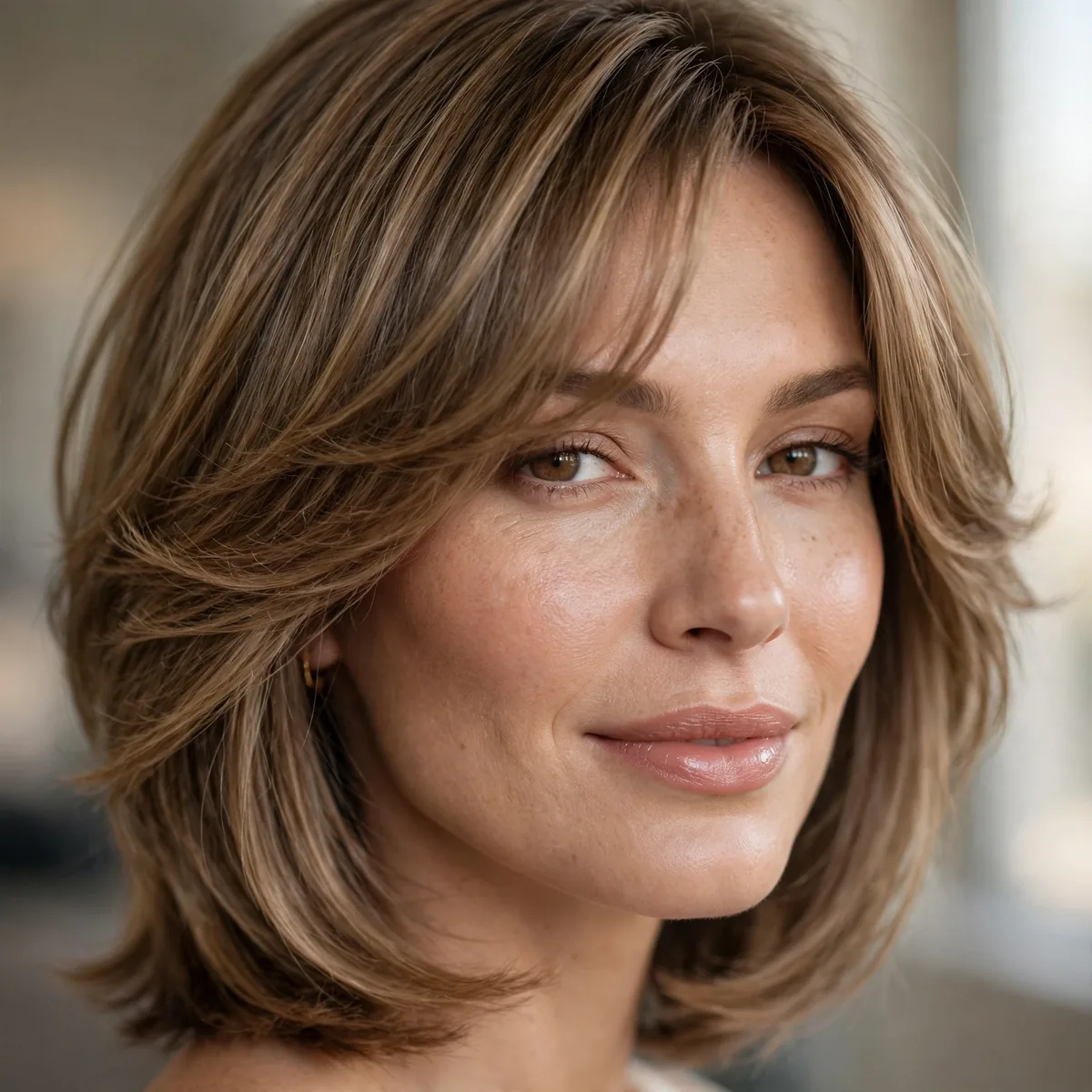
A shag worn smooth and polished — blow-dried with a round brush for a sleek finish that still has the shag’s signature layers. Proof that texture is a choice, not a requirement.
Best for work environments or anyone who wants the shag shape with a refined finish. A smoothing serum keeps it sleek without losing the layer definition.
Professional women who love texture but answer to a dress code find their sweet spot here. Round faces benefit from the sleek vertical lines, while square faces soften under the smooth finish. Medium to thick hair takes to round-brush styling most readily; fine hair needs a root-lifting mousse to keep the shape from collapsing. It is also ideal for first dates and job interviews, where effort should look effortless.
Blow-dry in sections with a medium round brush, over-directing the crown for lift and smoothing the ends under for polish. Finish with a shine-enhancing serum — just a drop, warmed in your palms, to avoid greasiness. Touch up with a flat iron on the top layers only, preserving the textured ends. The polished shag is at its best in autumn and winter, when sleek hair complements tailored coats and structured outfits.
Curly-Girl Shag
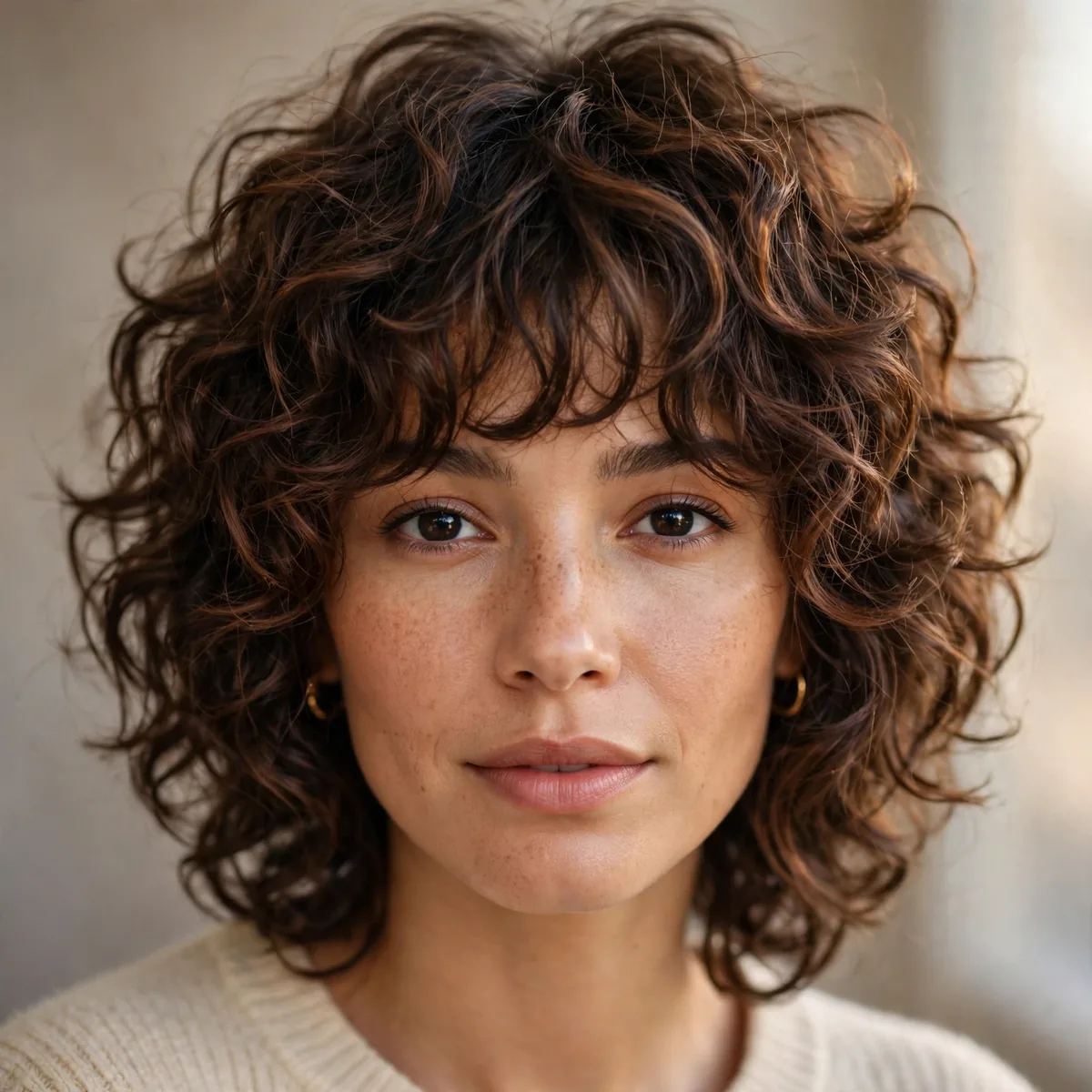
For waves that lean curly: a shag cut dry, curl by curl, so each layer lands perfectly in your pattern. The result is defined, voluminous and beautifully shaped.
Find a stylist experienced with curly cutting techniques. The dry cut is essential — wet curls shrink unpredictably and layers land wrong.
Waves that border on curly (2C to 3A patterns) are the ideal candidates — the cut honors the curl pattern instead of fighting it. Oval, round, and heart faces all work beautifully, since the volume can be customized to balance any shape. If you have spent years straightening your waves into submission, this cut is permission to embrace them. Curly-cut specialists understand how shrinkage affects every layer.
Never let a stylist cut this wet — insist on a dry, curl-by-curl cut so each layer lands at its true shrunken length. Style with the LOC method (leave-in, oil, cream) on soaking-wet hair, then diffuse or air-dry without touching. Refresh curls on day two with a water-and-conditioner spritz. Trims every twelve weeks keep the shape lively. Summer humidity becomes an ally rather than an enemy with this cut.
Shag with Wispy Ends
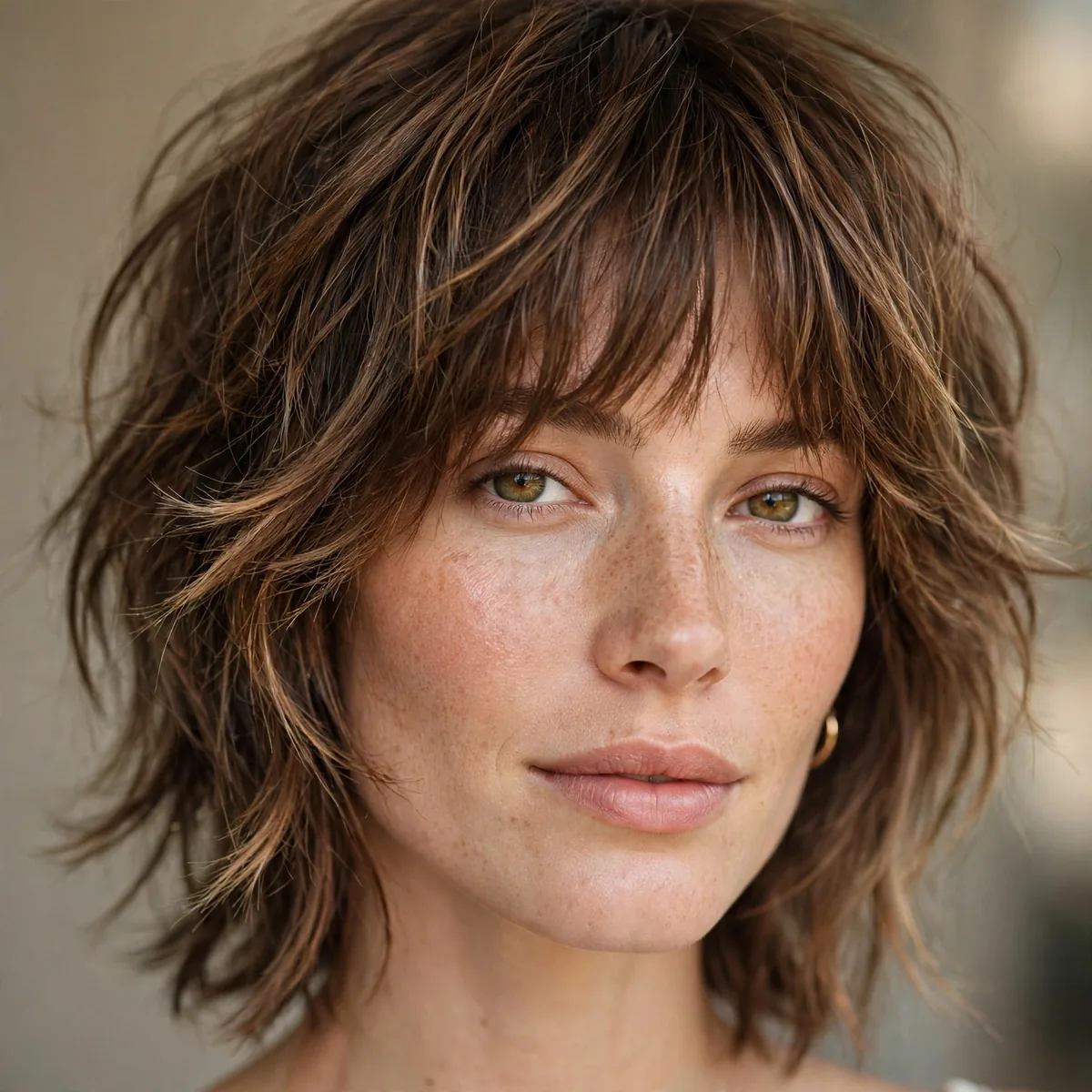
Feathered, wispy ends give the shag a lighter, more romantic feel. The softness at the perimeter contrasts beautifully with the volume on top.
Best for fine wavy hair — the wispy ends remove weight so the waves spring up instead of hanging down.
Fine wavy hair is the prime beneficiary — feathering the ends removes the weight that drags waves flat. Oval and long faces love the airy softness, while the romantic feel suits wedding seasons and gentle aesthetics. Women who find blunt ends harsh will appreciate how the wisps soften the entire silhouette. It is a forgiving choice for growing out a bob, since the feathery perimeter hides uneven lengths.
Style with a light hand: heavy products will crush the delicate ends. A weightless wave spray on damp hair, scrunched gently, is usually enough. Avoid over-layering at the salon — too much feathering on already fine hair reads thin rather than wispy. Trim the perimeter every six to eight weeks to keep the wisps intentional rather than straggly. This romantic variation shines at spring weddings and garden parties.
The Asymmetrical Shag
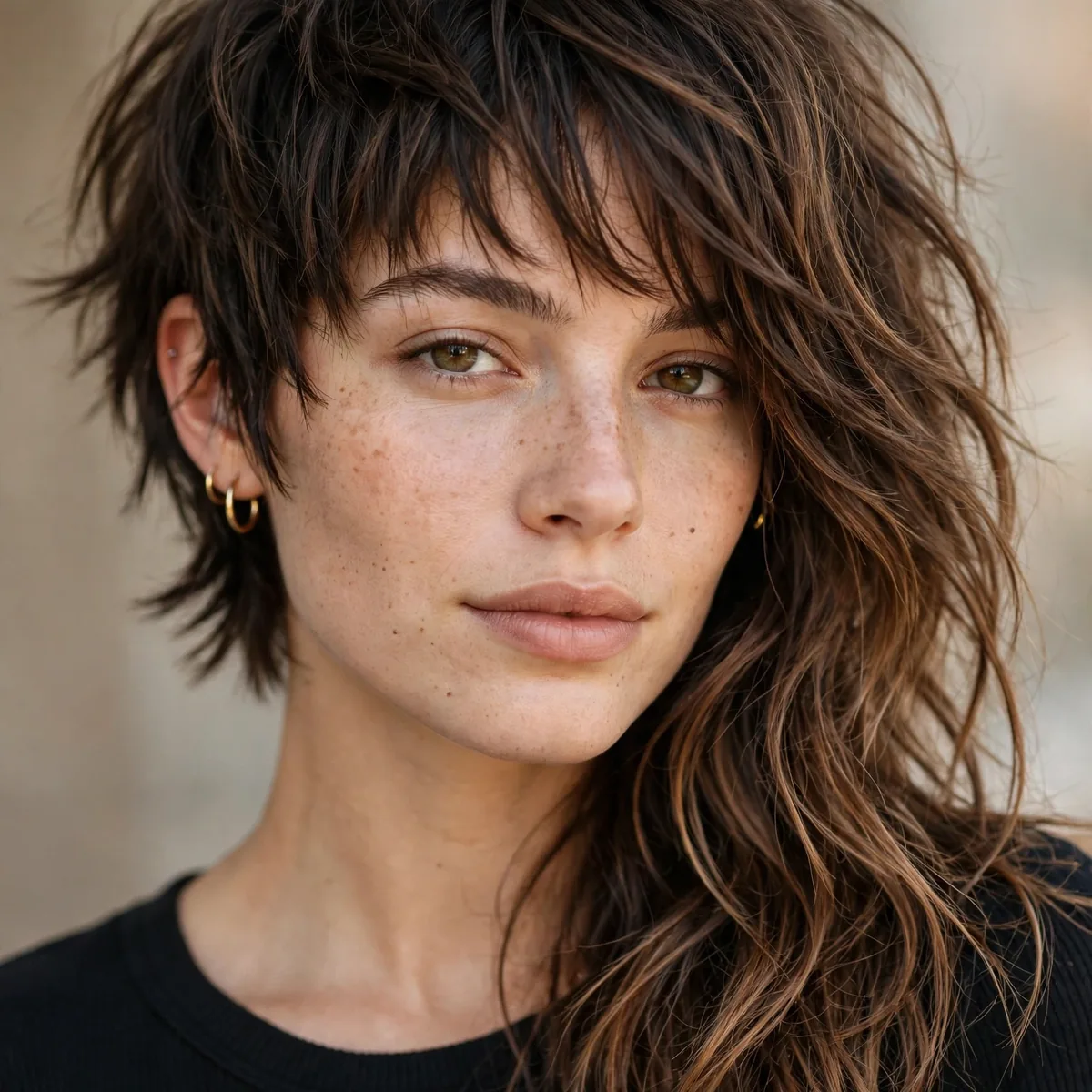
Longer on one side for an off-center, artistic take on the shag. The asymmetry adds edge and makes the cut feel custom and fashion-forward.
Best for oval faces that can handle asymmetry without imbalance. Keep the difference to an inch or two for wearable edge.
Oval faces handle asymmetry with ease, since their natural balance absorbs the unevenness gracefully. Long faces benefit too, as the longer side visually fills space. This cut suits bold personalities and creative professions — it is a conversation starter. If you prefer symmetry or low-maintenance routines, skip this one; the deliberate imbalance requires confidence and regular upkeep to look intentional.
Keep the length difference modest — an inch or two reads edgy without looking like a mistake. Style the longer side forward over the shoulder for maximum drama, or tuck it behind the ear to reveal the architecture. A strong-hold texturizing spray locks the asymmetric silhouette in place. Trim every six weeks to preserve the precise imbalance; grown-out asymmetry drifts toward accidental. It is a standout choice for gallery openings and fashion events.
Shaggy Bob with Undercut
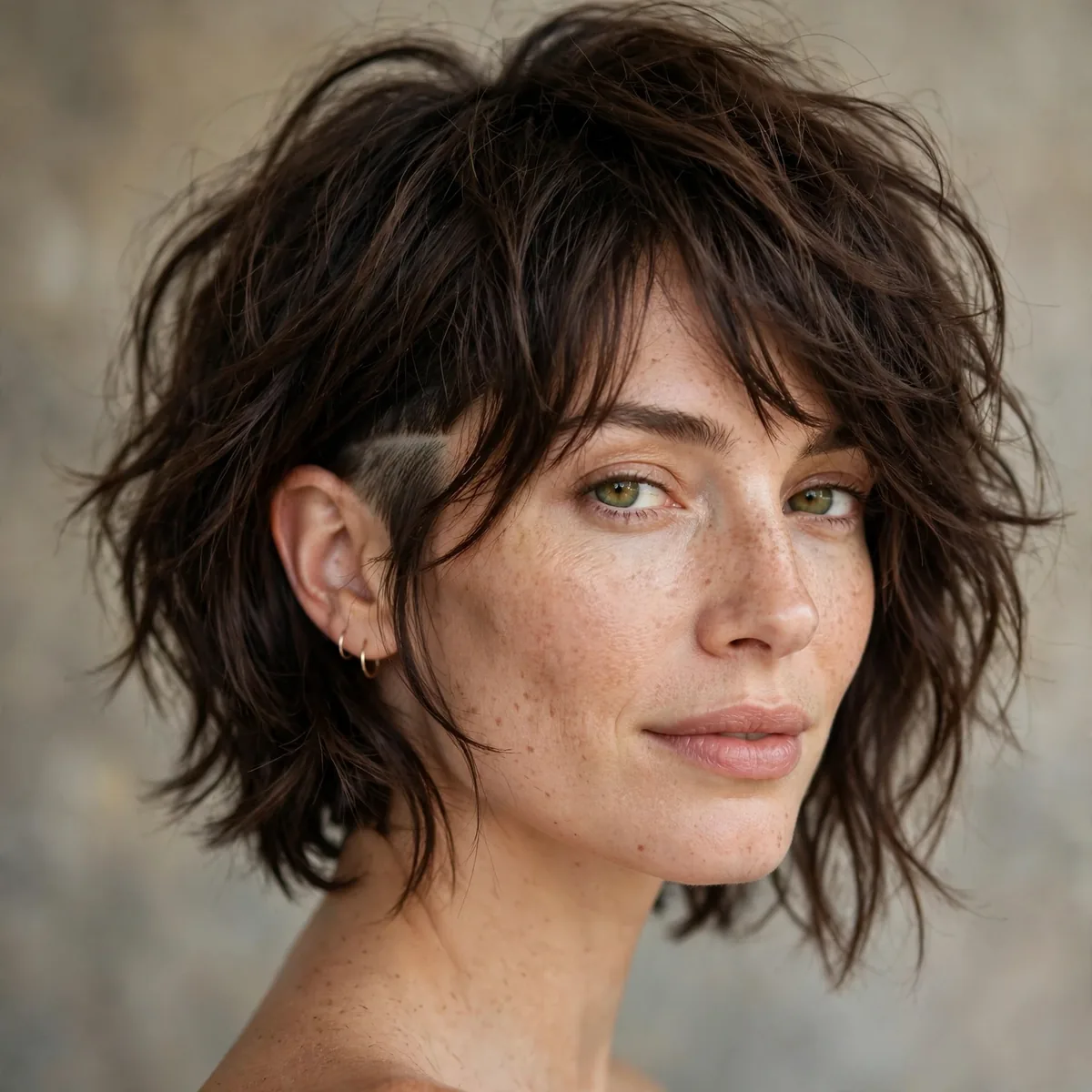
A hidden undercut removes bulk from thick wavy hair while the shaggy top keeps all the style. Nobody knows it is there — they just wonder why your hair moves so well.
Best for very thick hair. The undercut is your secret weapon against the dreaded triangle shape.
Very thick, dense wavy hair finally meets its match — the hidden undercut removes up to half the bulk without sacrificing visible length. Square and round faces benefit as the reduced volume slims the silhouette. It is also a summer lifesaver for anyone whose thick hair becomes unbearable in heat. The secret nature of the cut means conservative workplaces never need to know.
Maintain the undercut with a buzz every three to four weeks — it grows in noticeably faster than the top layers. Ask your barber or stylist for a disconnected undercut, faded or blunt depending on your preference. Between appointments, the shaggy top camouflages any grow-out. In peak summer, the undercut's cooling effect is genuinely life-changing; in winter, it simply means faster drying and lighter-feeling hair.
The Retro 70s Shag
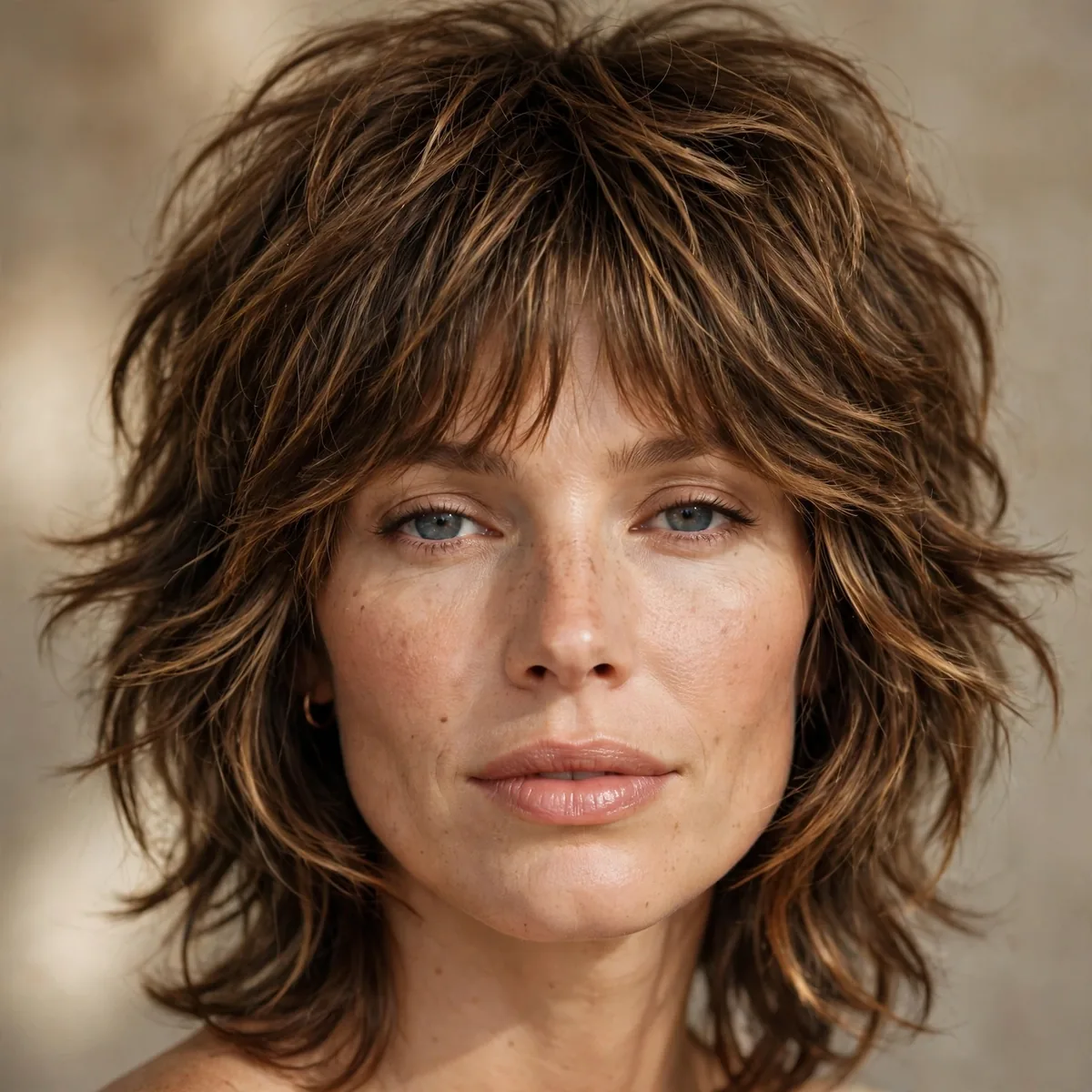
Full commitment to the era that invented it: feathered layers, curtain bangs, and that iconic flipped shape. On wavy hair, the 70s shag looks authentically vintage rather than costume.
Style with a round brush, flipping the ends outward at the bottom layers and inward at the top. A center part completes the retro effect.
Long and oval faces channel the era most authentically — the feathered layers and center part echo the decade's icons. Medium to thick hair holds the flipped shapes best; fine hair may need hot-roller assistance. This is a commitment to a vibe: vintage wardrobes, winged liner, and wide-leg denim complete the picture. Halloween and themed parties aside, it is a legitimate everyday look for the retro-devoted.
Master the flip: wrap bottom layers around a large round brush, rolling outward, while directing top layers inward for that classic feathered curve. Hot rollers set for ten minutes give all-day hold with authentic bounce. A flexible-hold hairspray preserves movement without crunch. The retro shag pairs perfectly with autumn — the season's warm palettes and textured fabrics mirror the decade's aesthetic. Trim every eight weeks to keep the feathering crisp.
Short Shag with Deep Side Part
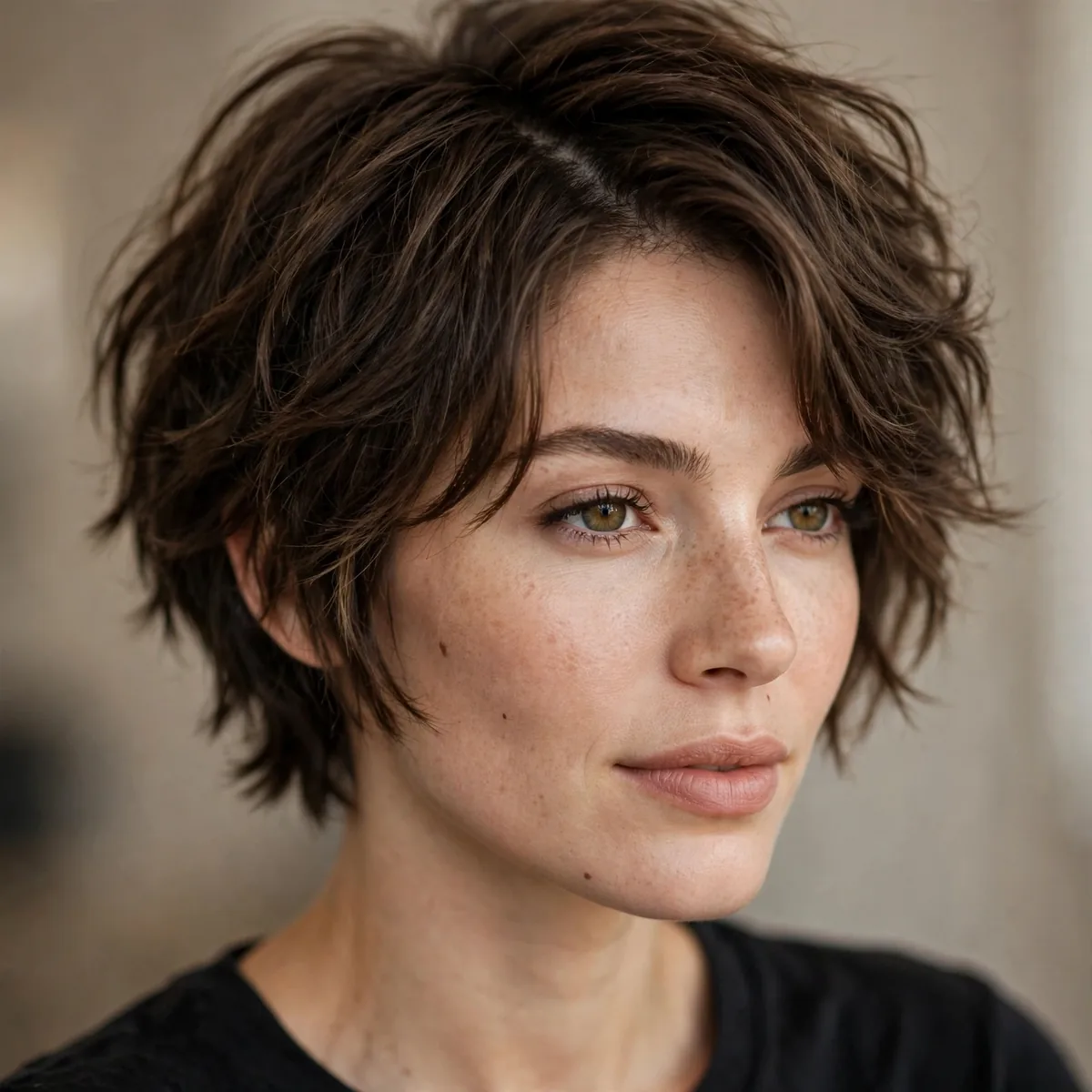
Sweeping the shag into a deep side part adds drama and volume on top. The asymmetry of the part plays beautifully against the shag’s textured layers.
Best for fine wavy hair that needs a volume boost — the deep part doubles the hair on one side instantly.
Fine wavy hair gets an instant volume upgrade — shifting the part deep to one side literally doubles the hair's presence on top. Round faces benefit as the diagonal line breaks up width, while heart faces gain balance from the fuller side. It is also the easiest refresh for anyone bored with their current shag: no scissors required, just a new part placement that transforms the entire silhouette.
To train the part, blow-dry the roots in the new direction while damp — hair has memory, and heat sets it. A root-lifting spray at the crown keeps the volume from collapsing by midday. Flip the part occasionally to prevent the hair from going flat along the habitual line. The deep side part brings red-carpet drama to holiday parties and evening events, elevating the shag from casual to captivating.
The Grown-Out Shag

The shag’s greatest trick: it grows out beautifully. The layers simply get longer and more blended, drifting toward a longer shag or wolf cut without an awkward phase.
Maintain the shape with trims every ten to twelve weeks rather than growing it wild. If you love the evolution, our shags for women over 40 show where the style goes next.
Anyone between salon visits lives in this phase — and the shag makes it the best-looking awkward stage in hairdressing. It suits those growing out shorter cuts toward medium lengths, since the layers blend seamlessly as they lengthen. Low-maintenance personalities thrive here; the whole point is a cut that improves with neglect. If you are growing toward a wolf cut or long shag, simply let the layers keep evolving.
Resist the urge to chop — instead, book a light dusting every ten to twelve weeks to remove split ends while preserving length. As the layers lengthen, shift your styling toward looser waves and add a texturizing spray for piece-y definition. Headbands and claw clips become your best friends during the transition. The grown-out shag is the ultimate travel cut: it looks good in every climate and forgives skipped wash days gracefully.
Shag with Bold Color
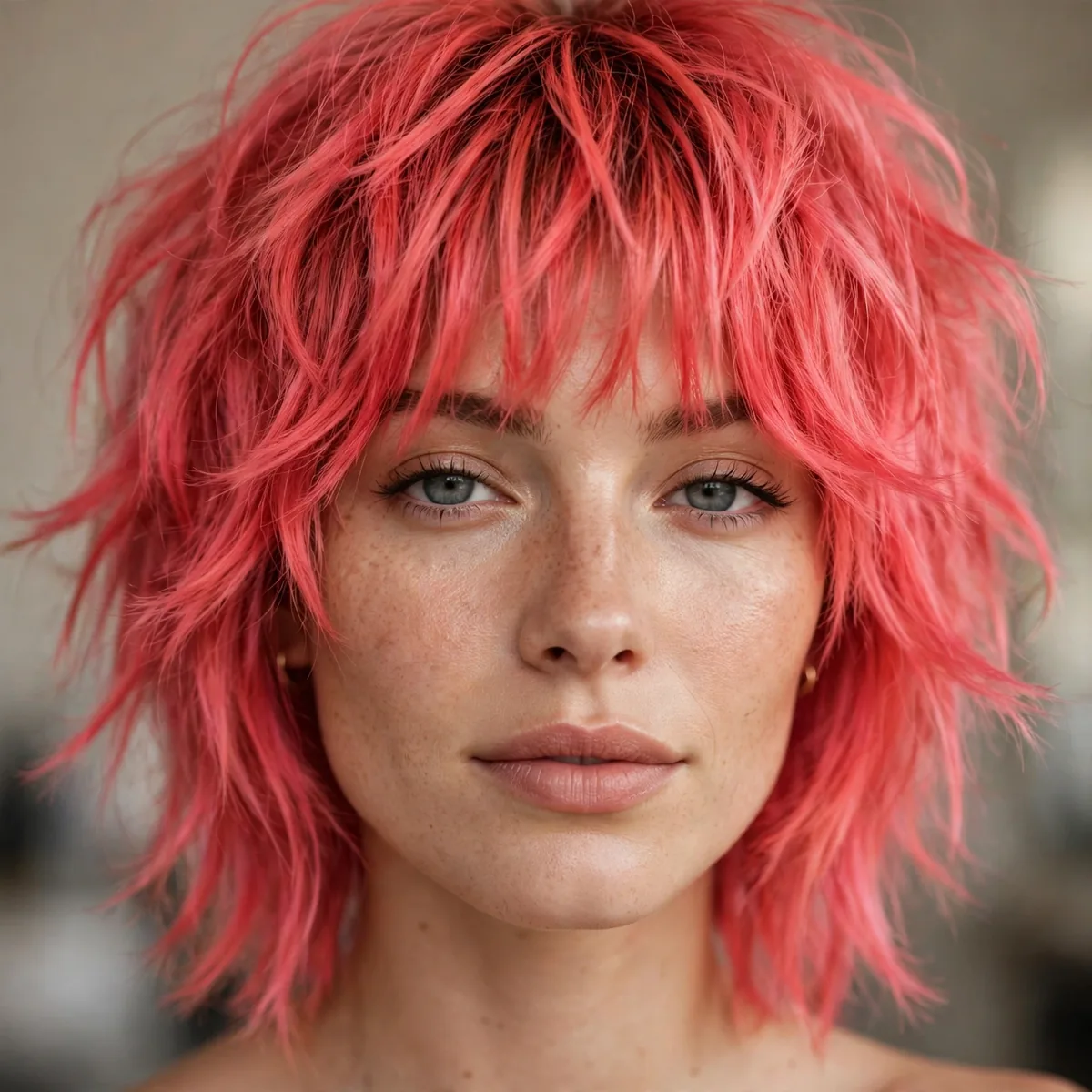
Copper, red, platinum — bold color on a shag is a double statement. The texture shows off dimensional color beautifully, and the color makes the texture pop.
Dimensional color works best: balayage or lived-in color that moves with the layers. Single-process flat color can deaden the shag’s texture.
Copper flatters warm and neutral skin tones spectacularly, while platinum demands cooler undertones and serious upkeep commitment. Red shades glow on fair to medium complexions. Bold color suits confident personalities at any age — there is no expiry date on statement hair. The shag's texture is the perfect canvas since every wave catches light differently, multiplying the color's dimension. Patch-test any vivid shade before full commitment.
Protect your investment: wash with cool water and a sulfate-free, color-safe shampoo, limiting washes to two or three times weekly. A color-depositing conditioner between salon visits keeps vivid shades from fading to murky. Book gloss refreshes every six to eight weeks. Copper and auburn tones peak in autumn, harmonizing with the season's palette, while platinum and pastels feel freshest in spring and summer's bright light.
The short shag is permission to stop fighting your waves and start celebrating them. Pick your level of wild, find a stylist who loves texture, and let the layers do the work. For more textured inspiration, explore our wolf cuts and shags over 40.