The wolf cut is not for the faint of heart — and that is exactly why it is so good.
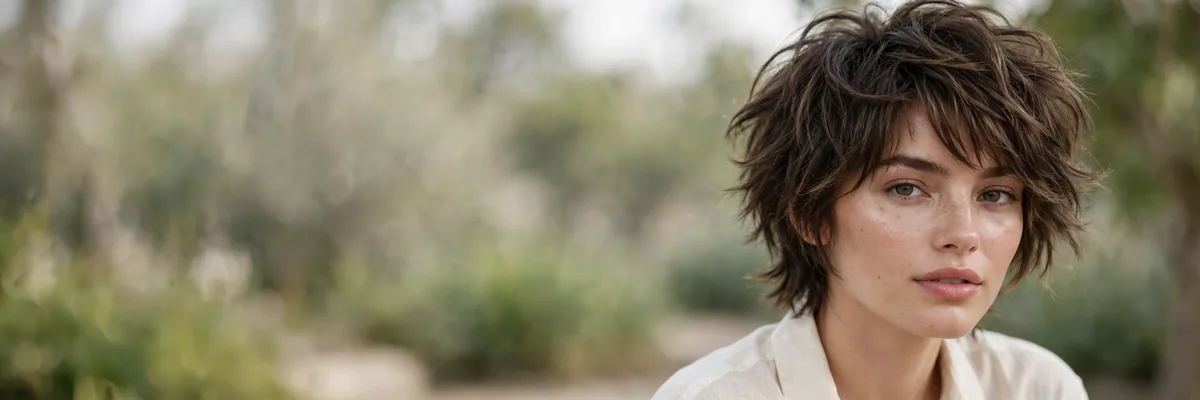
Born from a shag and a mullet having a beautiful baby, the wolf cut stacks short, choppy layers on top with longer, wispier lengths below. The result is wild volume at the crown, piecey texture everywhere and an edge that no other cut delivers.
It works best on medium to thick hair with natural wave or curl, and it demands a stylist who understands disconnected layering. If you are ready to be a little feral, these eighteen versions are your starting pack.
Here are 18 wolf cuts ranked from wearable to wild. Let’s get into it.
The Classic Wolf

The original: heavy layers through the crown, a curtain fringe and long, textured lengths at the back. It has that perfectly undone, rockstar quality that made the cut famous.
Ask for short layers starting at the cheekbones on top, keeping the back long and piecey. A texturizing spray scrunched into dry hair is the entire styling routine.
The classic wolf suits the bold-hearted: oval and heart-shaped faces wear the heavy crown layers best, while the long back elongates rounder faces. Thick, wavy, or coarse hair gives the most authentic rockstar texture — the cut was practically designed for unmanageable hair. Fine hair can work with a softer interpretation, but the full classic needs density. It's also surprisingly ageless; the undone energy reads confident rather than young.
This is a wash-and-go champion: scrunch texturizing spray into dry hair and you're done. Refresh the crown layers with dry shampoo on day two to maintain the lift. Trim every eight to ten weeks to keep the disconnection intentional rather than overgrown. For concerts and nights out, add a tiny bit of wax to the ends for extra piecey definition — the wilder, the better.
Soft Wolf for Beginners
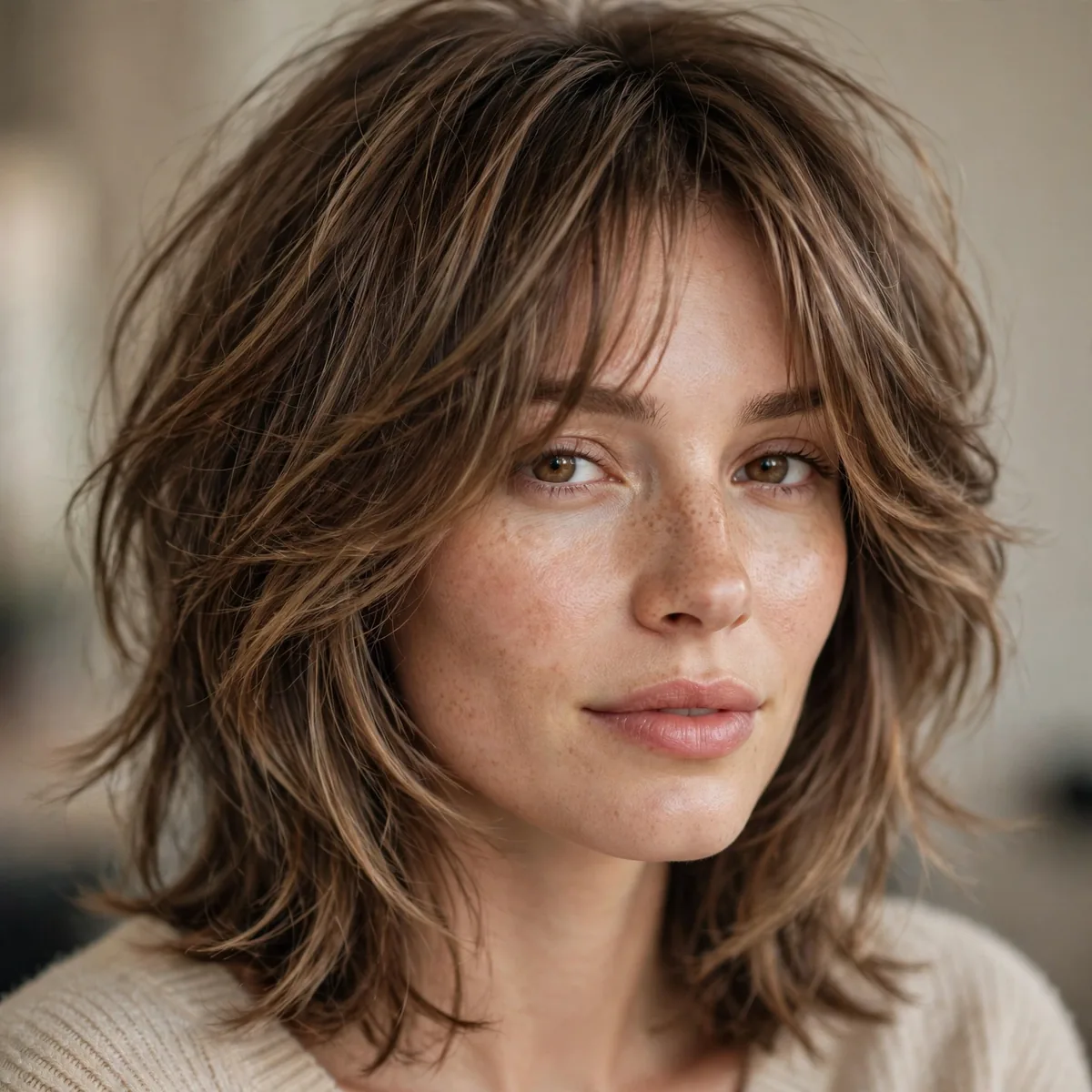
Wolf-curious but nervous? This toned-down version keeps the disconnected layering subtle and the lengths blended, giving you the vibe without the full commitment. Think shag with a wilder streak.
Ask for the crown layers to start at chin level rather than cheekbone, and keep the back nearly one length. You can always go choppier at the next appointment.
Consider this the wolf with the volume turned down — perfect if you love the aesthetic but work in a conservative office. The subtler layering suits fine to medium hair beautifully, and it's the safest entry point for straight hair that might look choppy in the full version. Round and square faces benefit from the chin-level crown start, which avoids adding width at the cheeks. Think of it as a shag with ambitions.
Because the layers are blended, you can stretch trims to ten or twelve weeks. Style with a round brush for polish or air-dry with wave spray for weekends — it's genuinely versatile. If you decide you want more edge later, your stylist can deepen the disconnection at your next appointment. This version also grows out into a beautiful long shag with zero drama.
Curly Wolf
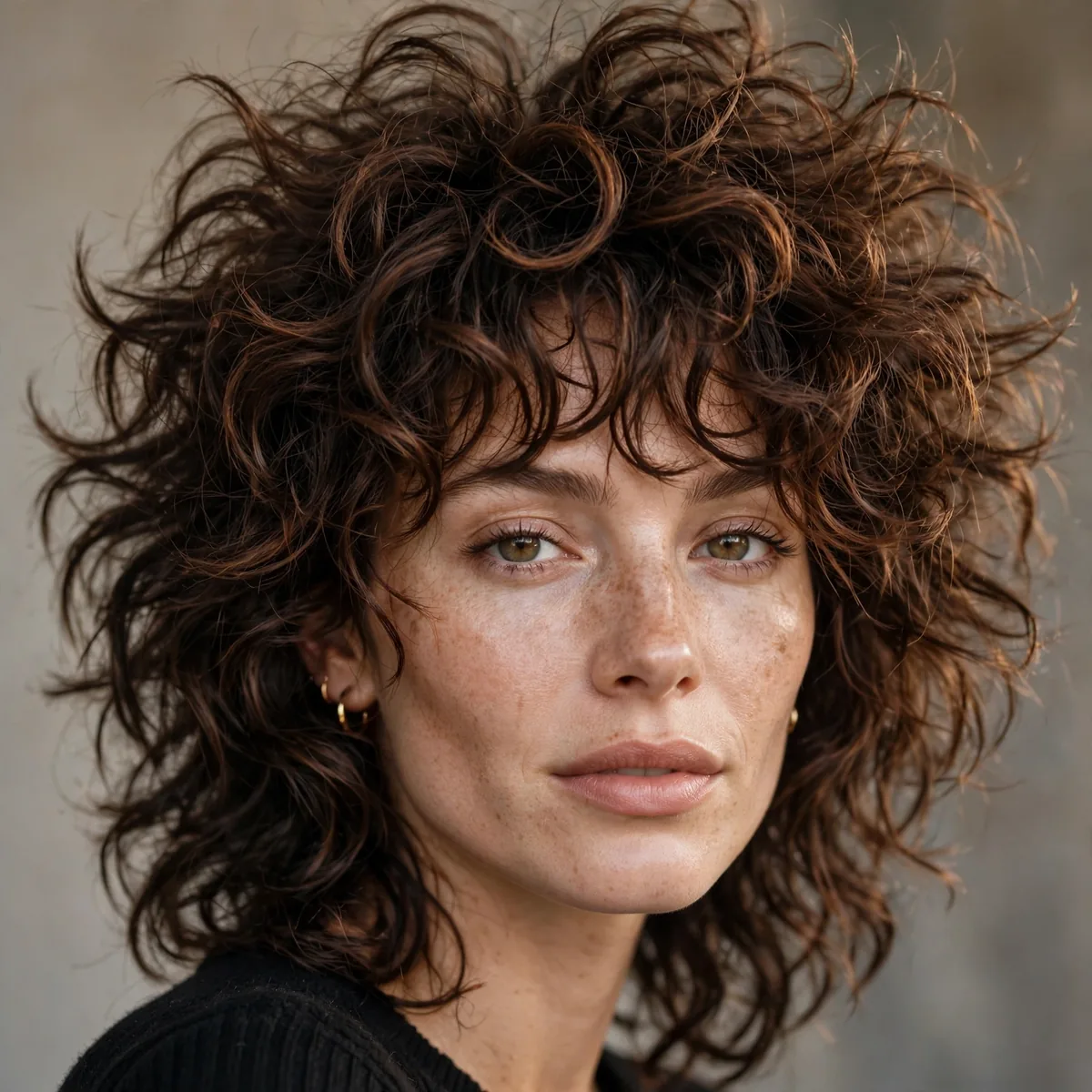
Curls turn the wolf cut into pure magic. The short top layers give curls lift and shape while the longer back keeps the length, creating a gorgeous rounded-meets-elongated silhouette.
A dry curl-by-curl cut is essential. Ask your stylist to keep the crown full and let the back taper naturally — your curl pattern does the rest.
Curls and the wolf cut are a match written in the stars — the short crown layers solve the flat-top problem that plagues curly cuts, while the long back preserves precious length. It works across curl patterns, though 3B to 3C curls get the most dramatic silhouette. Round faces should keep the crown high rather than wide. One honest note: very tight coils may need a looser interpretation so the shape doesn't shrink upward excessively.
A dry curl-by-curl cut is non-negotiable — wet cutting can't predict where each curl will land. Refresh with a curl cream on damp hair, then diffuse the crown first for lift. Pineapple at night to protect the shape. Trim every ten to twelve weeks; curly wolves forgive slow growth gracefully. For definition, finger-coil the crown pieces — they're the frame of the entire cut.
Wolf Cut With Curtain Bangs
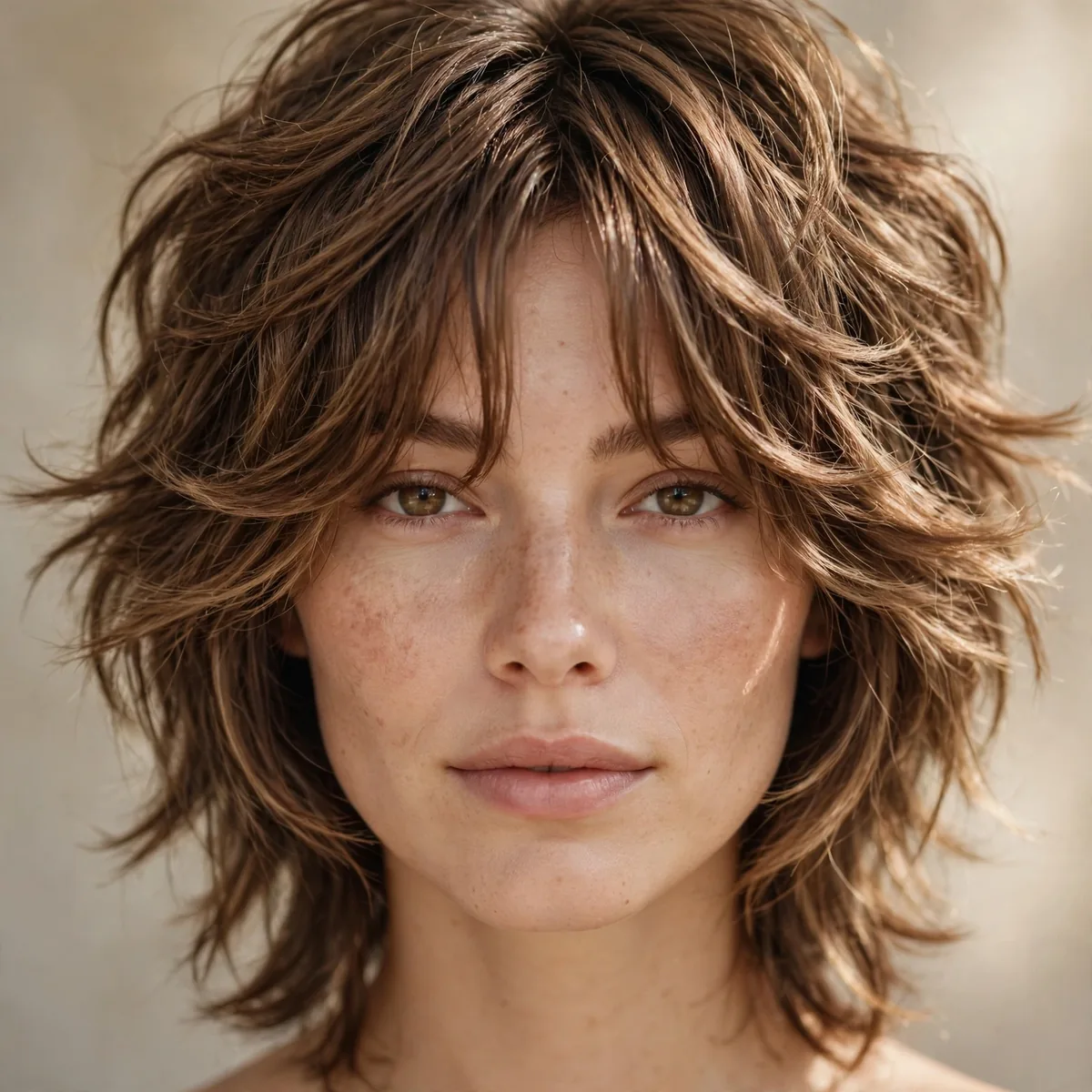
Curtain bangs melt into the wolf’s choppy top layers, framing the face in soft, winged pieces. They balance the wildness of the cut with a touch of nineties polish.
Ask for the bangs to blend into the shortest crown layers so there is no visible line. Style them with a round brush, flicking outward.
Curtain bangs soften the wolf's wildness just enough to make it wearable for the fringe-curious. The bangs melt into the choppy crown, creating a continuous frame that flatters high foreheads and long faces beautifully. Round faces should keep the part slightly off-center to avoid emphasizing width. This pairing works on every texture, though straight hair shows the winged blend most crisply.
Style the bangs and crown layers together with a round brush, flicking outward for the signature wings. Trim the bangs every four to six weeks — overgrown curtain bangs lose the blend. A light texturizing spray through the fringe keeps it piecey rather than flat. In humidity, smooth an anti-frizz serum over the bangs first; they're the first place frizz shows.
The Mini Wolf
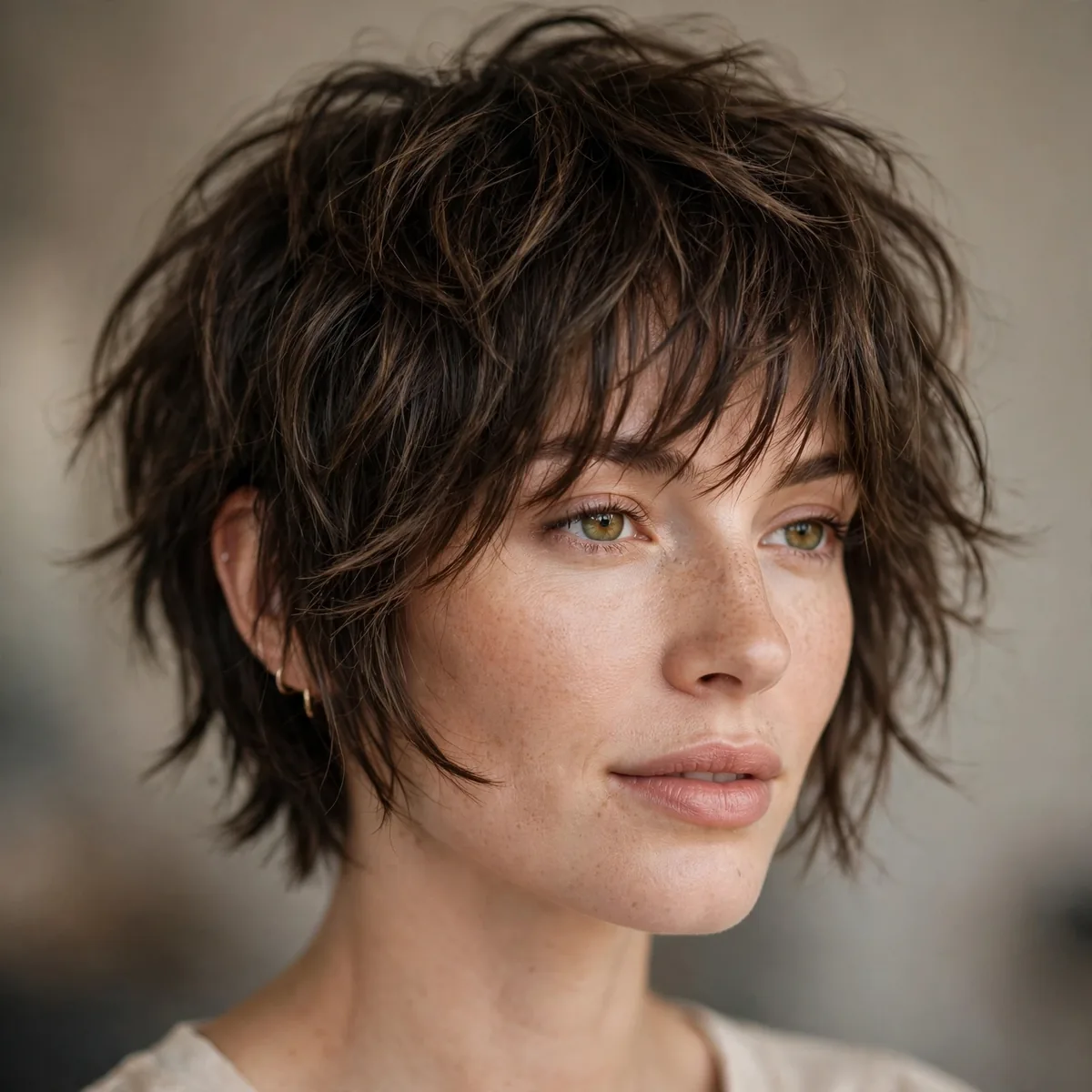
All the wolf attitude in a jaw-length package. The mini wolf keeps the choppy crown and textured fringe but ends at the jaw, making it bold, graphic and incredibly striking.
Best on straight to wavy hair with enough density to support the layers. If short and choppy appeals to you, our shag cuts include similar cropped versions.
The mini wolf is pure attitude in a compact package — jaw-length, graphic, and impossible to ignore. It suits petite frames beautifully, since the short length adds presence without overwhelming. Oval and heart-shaped faces wear it best; round faces need the crown height emphasized to avoid widening. You'll need medium to thick density — fine hair can look sparse at this length with heavy layering.
This bold cut needs trims every five to six weeks to stay graphic; overgrowth softens the impact fast. Style with texturizing paste, piece by piece, for maximum definition. Tuck one side behind the ear to show off the asymmetry of the layers. It's a statement cut, so own it — pair with bold brows or a red lip and let the hair do the talking.
Long Wolf
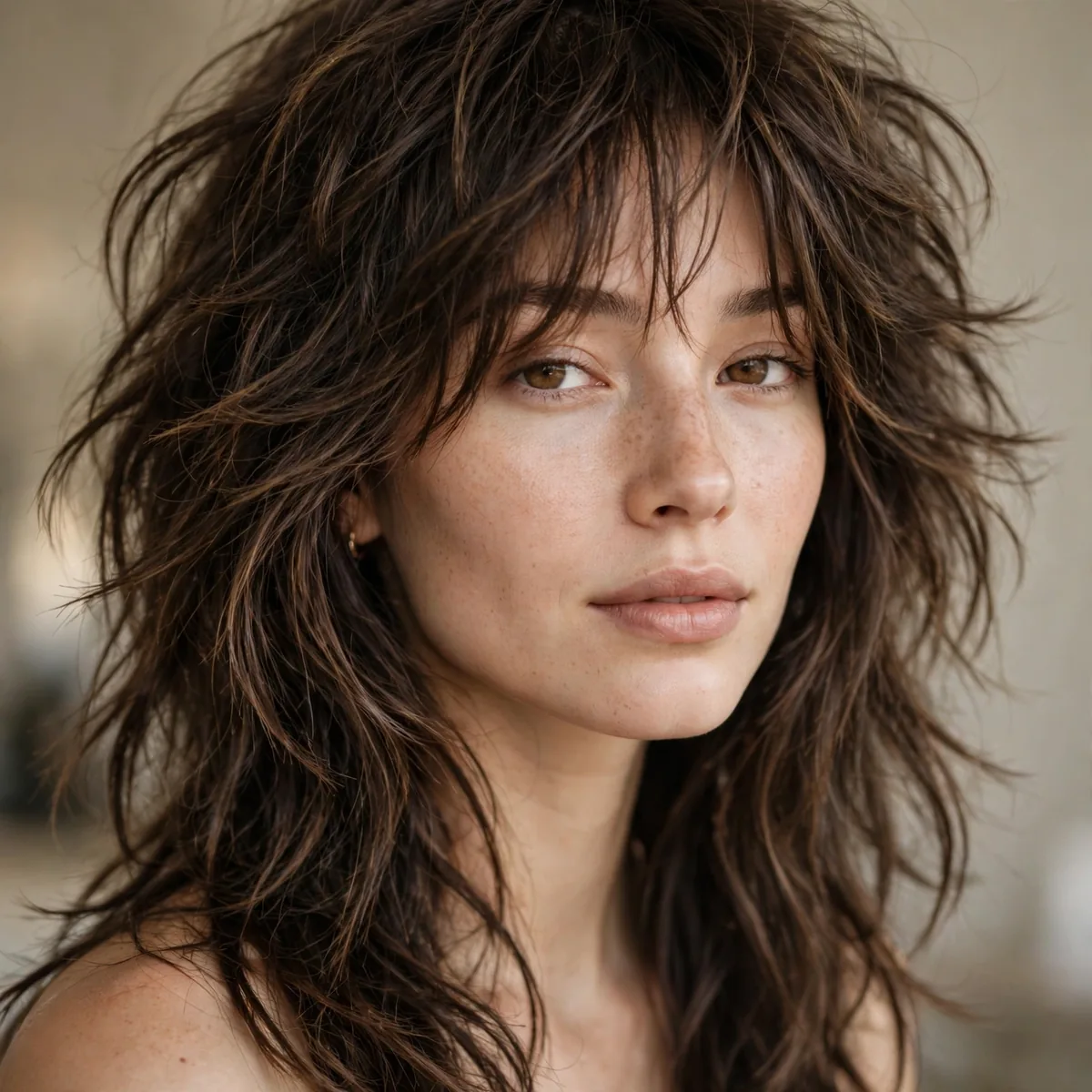
Keep your mermaid length and get the wolf too. The long wolf concentrates the choppy layers at the crown and lets everything below the shoulders flow long and piecey.
This version needs the least courage and delivers the most drama. Ask for the shortest layers at cheekbone level and the back left long with shattered ends.
The long wolf is the commitment-phobe's dream: keep your mermaid length, gain all the texture. The cheekbone-starting crown layers frame the face dramatically while everything below flows long and piecey. It suits tall frames and oval faces best, and thick hair carries the contrast most convincingly. If you've been growing your hair for years and fear the chop, this is your gateway.
Maintain the drama with trims every eight to ten weeks, focusing on the crown layers. Use a strengthening mask on the long lengths — they're old hair and need support. Style by scrunching texturizing spray into the crown and letting the back air-dry. For evenings, wrap the long back sections loosely around a large iron for soft, undone waves that show off the layering.
Wavy Wolf
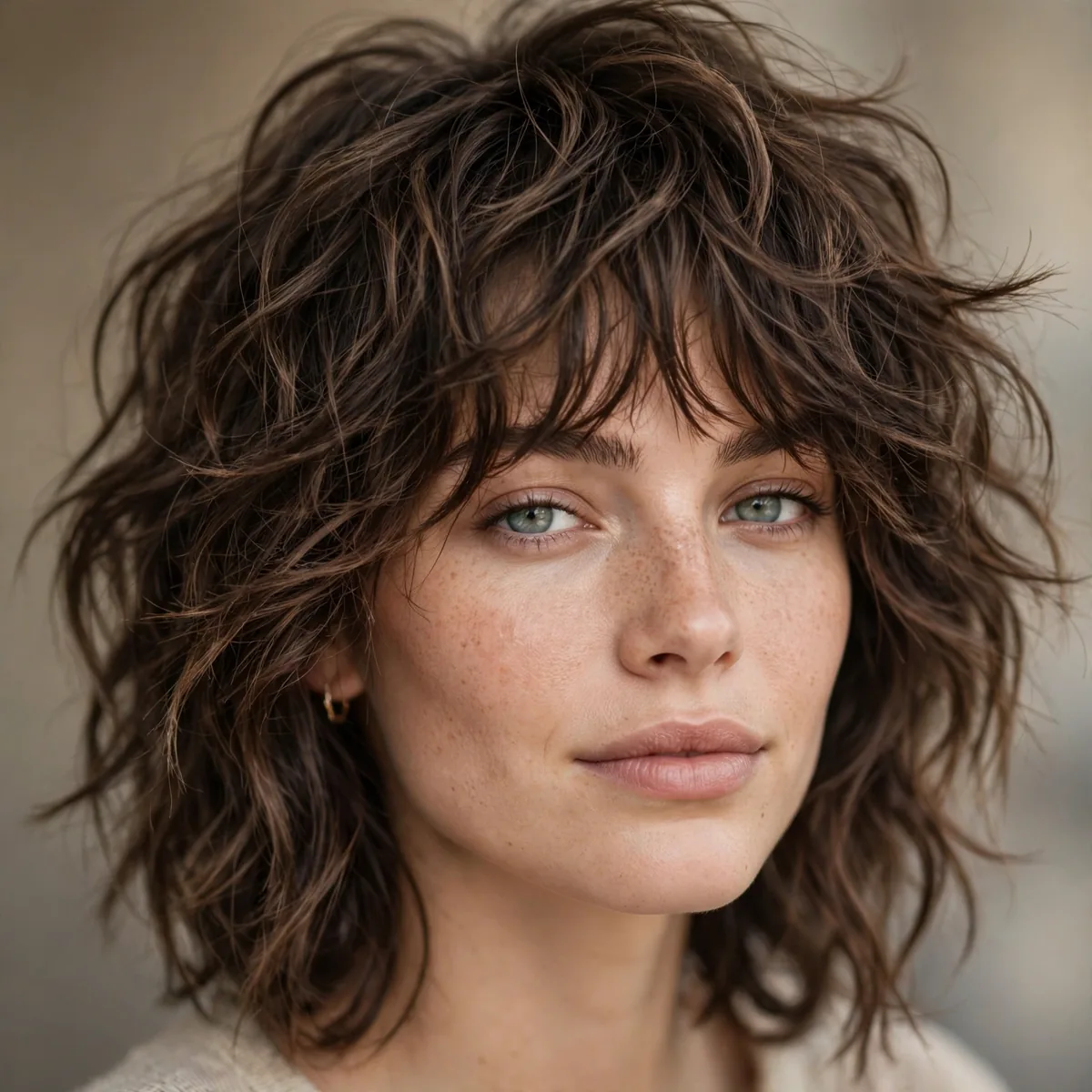
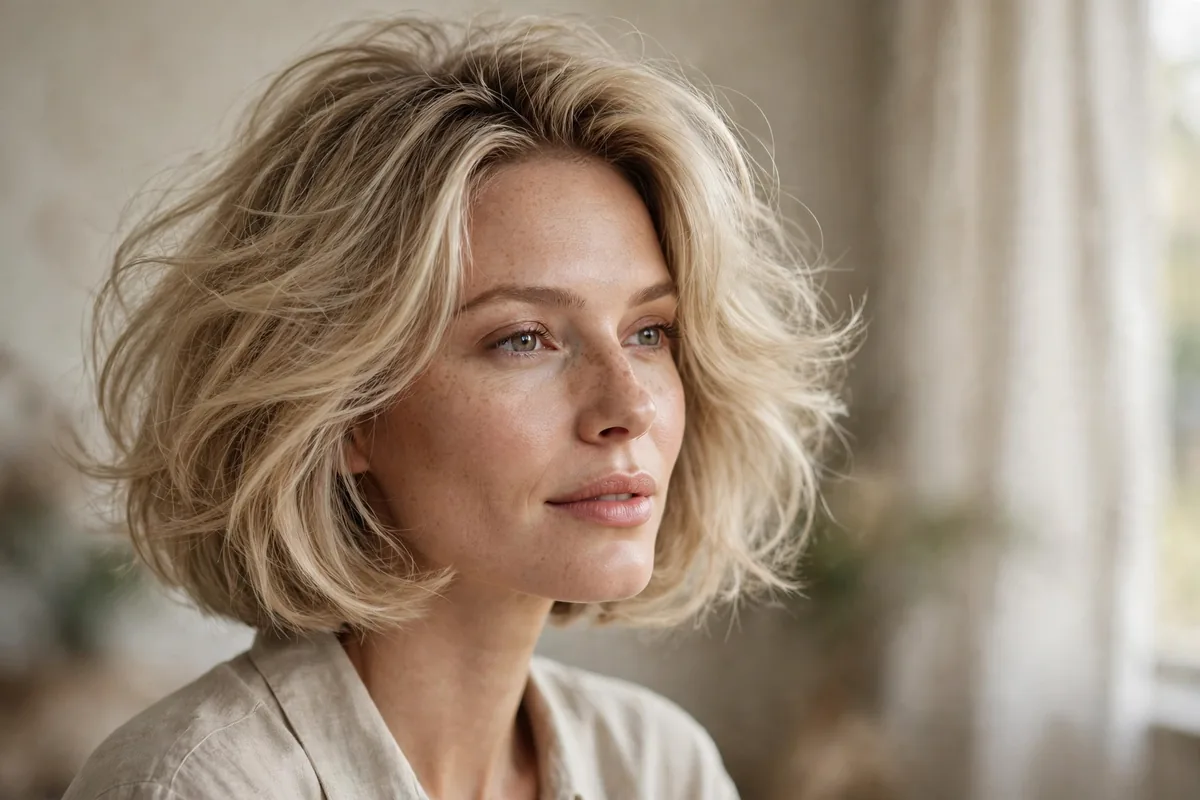
Natural waves are the wolf cut’s ideal canvas. The wave pattern enhances every disconnected layer, and the cut in turn gives waves shape and direction they never had before.
Air drying with a salt spray is genuinely all the styling this needs. Ask for layers cut to follow your natural wave for the most effortless result.
If you have natural waves, the wolf cut might be the easiest haircut you'll ever own. The wave pattern enhances every disconnected layer automatically, and the cut gives waves the shape they never had. This suits 2B to 2C textures perfectly and flatters every face shape. It's the rare edgy cut that's genuinely wash-and-go — the waves do the styling while you sleep.
Air-dry with a salt spray scrunched in — that's the entire routine. On day two, revive with a water mist rather than rewashing. Avoid heavy creams that weigh the layers down. Trim every eight to twelve weeks; wavy wolves grow out beautifully. In humid months, swap salt spray for a humidity-resistant wave cream to keep the layers defined instead of frizzy.
Wolf Cut With Baby Bangs
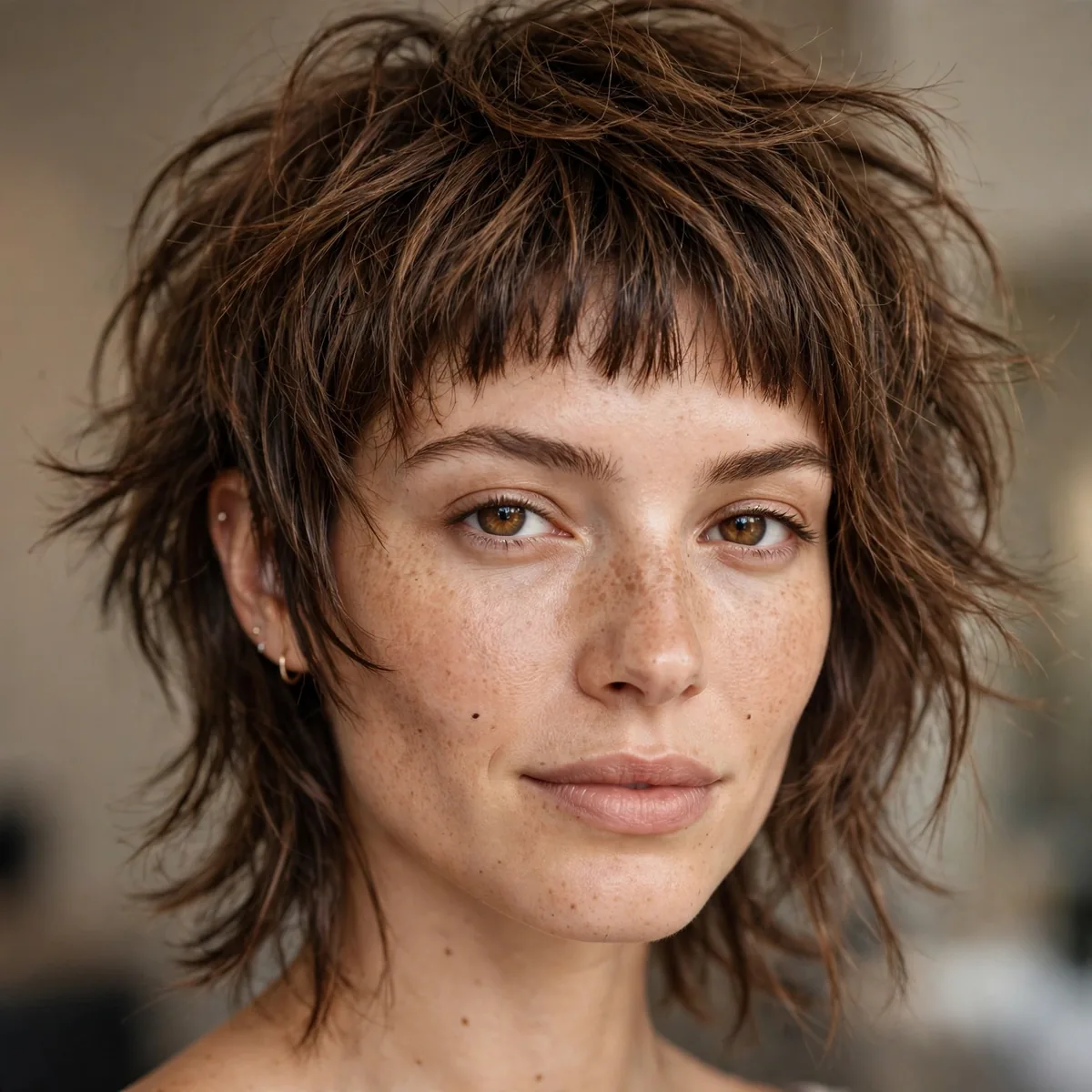
For maximum edge, pair the wolf with micro baby bangs. The contrast between the tiny, graphic fringe and the wild layers is fashion-editorial in the best way.
This is a high-commitment fringe that needs trimming every 3 to 4 weeks. It suits oval and heart-shaped faces best and looks incredible with bold makeup.
Baby bangs plus wolf cut is not for the faint of heart — it's fashion-editorial, striking, and unforgettable. The micro fringe suits oval and heart-shaped faces best, emphasizing cheekbones and eyes dramatically. You'll need confidence and a tolerance for frequent trims. Straight to wavy hair shows the graphic line most crisply; very curly hair will fight the precision.
Trim the bangs every three to four weeks — baby bangs grow out of the graphic zone fast. Style them with a tiny flat iron for crispness or leave them textured for softness. Bold makeup balances the strong fringe beautifully. Growing them out requires patience and headbands; commit fully or choose a longer fringe. This is hair as a statement piece.
The Shullet

The shullet leans harder into mullet territory: shorter and rounder on top, longer and straighter at the back. It is the most fashion-forward version of the wolf family and not for wallflowers.
Ask for a clear distinction between the cropped crown and the longer back. Keep the back piecey rather than blunt for a modern finish.
The shullet is the wolf family's avant-garde cousin — shorter and rounder on top, longer at the back, unapologetically bold. It suits oval and oblong faces best, the cropped crown adding width where long faces need it. You'll need thick, straight to wavy hair for the clear crown-to-back distinction. This is for women who treat hair as art and have the stylist to execute it.
Precision matters: trims every five to six weeks keep the distinction sharp. Style the crown with texturizing powder for lift and let the back fall piecey and straight. A strong-hold wax defines the separation between the two zones. Fair warning — this is the hardest wolf to grow out, so discuss the long-term plan with your stylist before committing.
Wolf Cut for Thick Hair
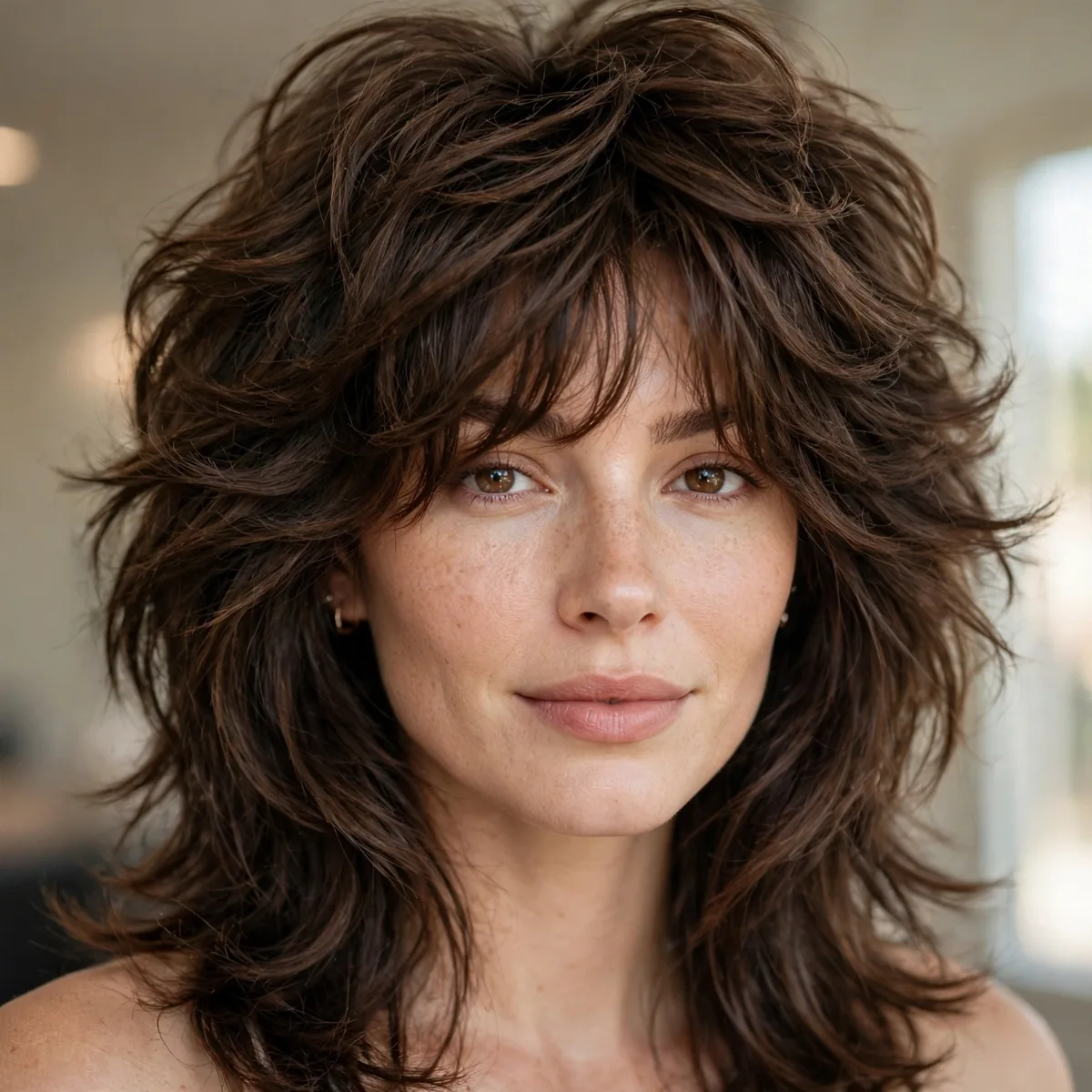
Thick hair was born for the wolf cut — all that density becomes glorious volume instead of a heavy curtain. The key is aggressive interior layering so the crown lifts instead of puffing.
Ask your stylist to remove serious weight from the mid-lengths while keeping the ends piecey. This is one cut where thick hair is a genuine advantage.
Thick hair and the wolf cut are a match made in heaven — all that density becomes glorious, intentional volume instead of a heavy curtain. The aggressive interior layering finally lets thick hair move, and drying time drops noticeably. It suits every face shape when the crown height is adjusted accordingly. Coarse, dense hair that once meant daily straightening finally gets to be itself.
Ask for interior weight removal at every trim, roughly every eight weeks, or the bulk creeps back. Use lightweight products — heavy creams re-add the weight you just removed. Rough-dry to eighty percent, then detail the crown with a round brush. In summer, the airflow through the layers keeps thick hair noticeably cooler. This cut genuinely makes thick hair easier.
Fine-Hair Wolf

Fine hair can do a softer wolf with careful layering. Keep the layers long and minimal, focusing the texture at the crown where fine hair needs the lift most.
Avoid over-thinning, which is the enemy of fine hair. A volumizing mousse at the roots and a light texturizing powder give fine wolves their edge.
Fine hair can wear the wolf with one crucial adjustment: keep it soft. Long, minimal layers focused at the crown create lift where fine hair needs it most, without the aggressive thinning that destroys density. This suits oval and heart-shaped faces, and straight fine hair shows the texture most clearly. If your hair is very sparse, keep the disconnection subtle — the vibe without the risk.
Apply volumizing mousse at the roots only; anything on the lengths flattens fine layers. A texturizing powder at the crown adds grip and lift that fine hair lacks. Avoid over-washing, which strips the natural texture fine hair needs. Trim every eight weeks to keep ends looking thick. Blow-dry the crown upside down for maximum lift, then finish with a light flexible-hold spray.
Wolf Cut With Bold Color

The wolf’s choppy texture is the perfect canvas for bold color — every layer catches the light differently. Think copper, vivid red or a full platinum transformation.
Ask your colorist to place the boldest shade on the top layers where the texture shows most. Fashion colors need sulfate-free care to stay vivid.
The wolf's choppy texture makes it the ultimate canvas for bold color — copper, vivid red, or full platinum, every layer catches light differently. The disconnected cutting creates natural dimension that solid colors can't achieve on blunt cuts. This suits anyone ready for commitment; fashion colors demand maintenance. Warm skin tones glow in copper and red, while platinum flatters cooler undertones dramatically.
Fashion colors need sulfate-free, color-safe shampoo and cool-water washes to stay vivid. Refresh the boldest shade on the top layers every six to eight weeks — that's where fading shows first. A weekly color-depositing mask maintains intensity between appointments. Always use heat protectant; bleached or vivid hair is more vulnerable. The payoff is a head-turning combination of cut and color.
The Textured Pixie Wolf
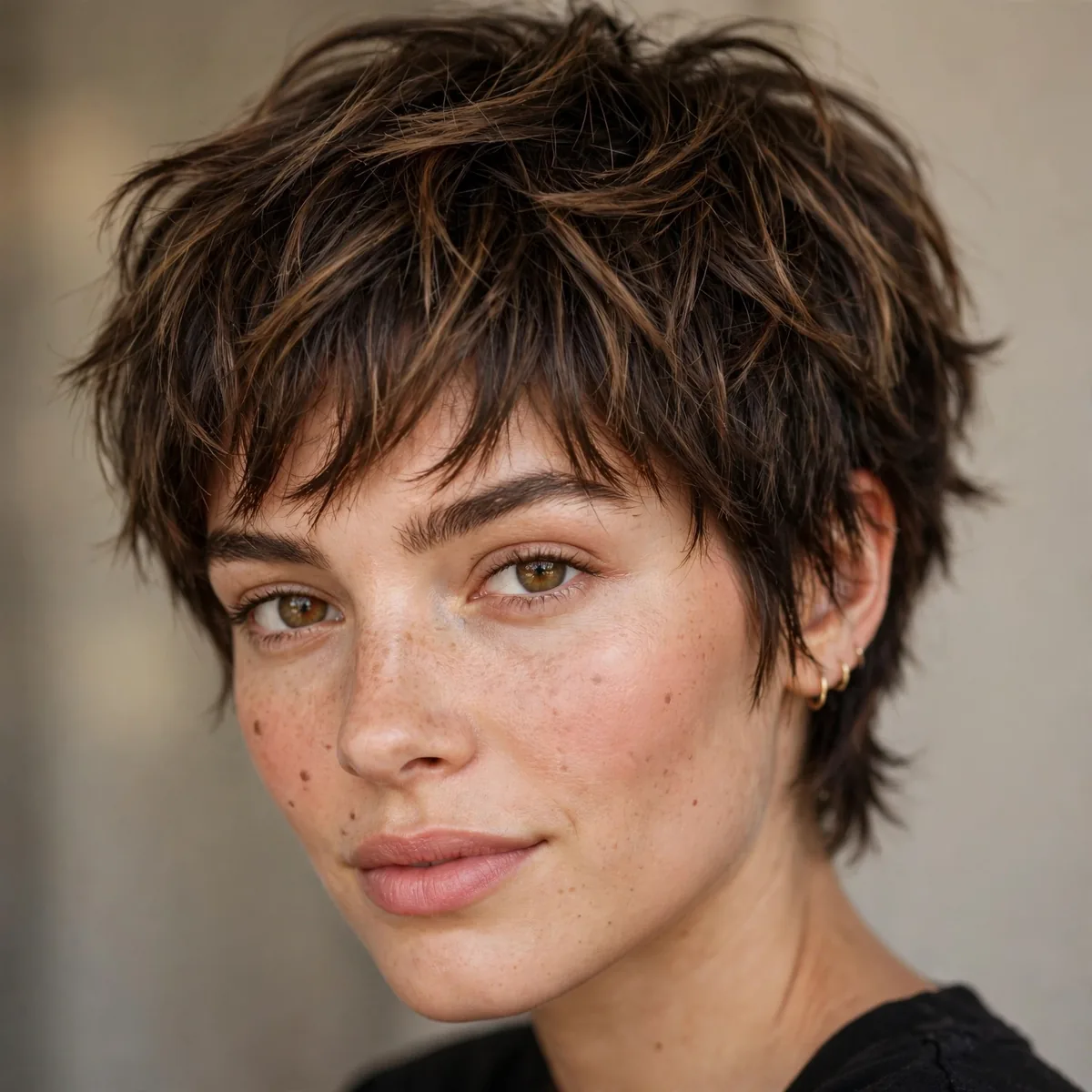
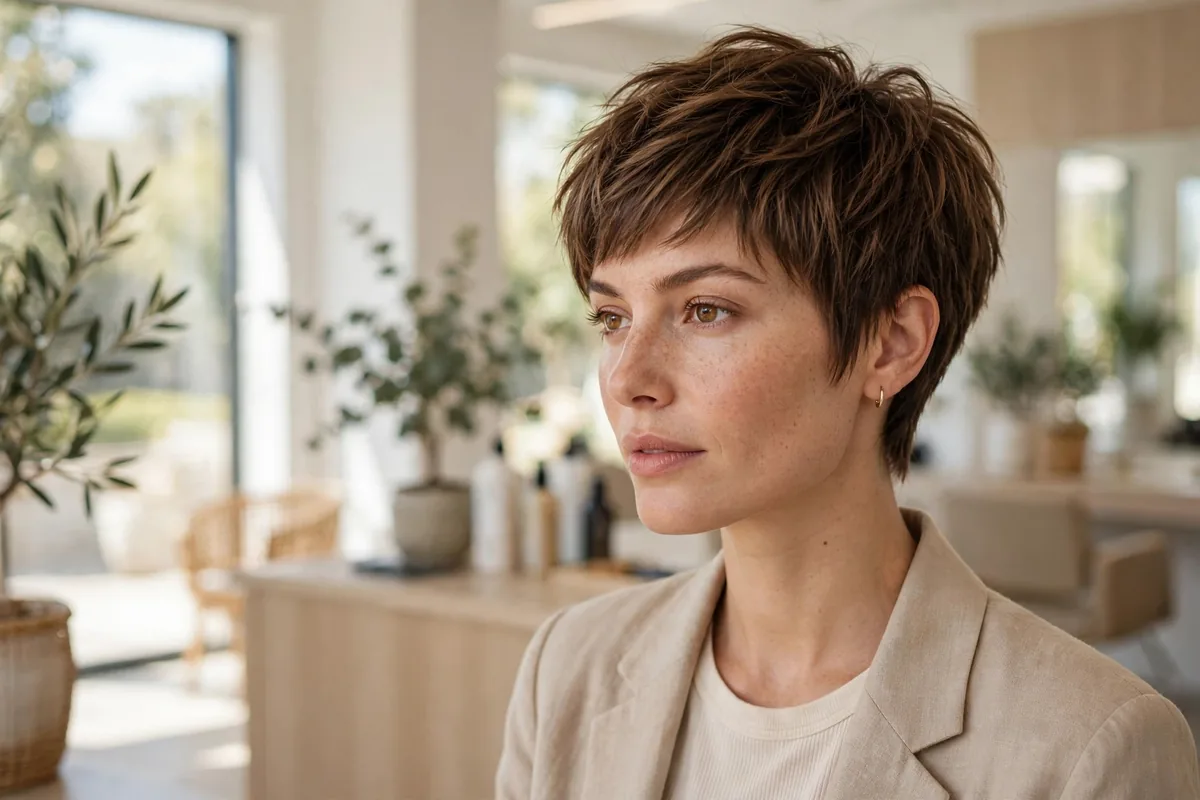
Take the wolf all the way short and you get something between a pixie and a mullet: cropped sides, a textured crown and wispy length at the nape. It is daring, sculptural and unforgettable.
This needs a stylist who truly understands short, disconnected cutting. Bring multiple reference photos and be prepared for grow-out trims every 5 weeks.
The pixie wolf is the boldest move in this list — cropped sides, textured crown, wispy nape length. It's sculptural, daring, and unforgettable. Petite frames and oval faces wear it best; the height on top elongates beautifully. You'll need thick enough hair to support the texture — very fine hair can look sparse. This is for women who've done short before and want the next level.
This needs a stylist who truly understands short, disconnected cutting — bring multiple reference photos. Trims every four to five weeks keep the sculpture crisp. Style with texturizing paste, working pieces in different directions. Grow-out requires a plan, so discuss the transition before the first cut. Pair with statement earrings; the cropped sides frame them perfectly.
Wolf Cut With Face-Framing Highlights

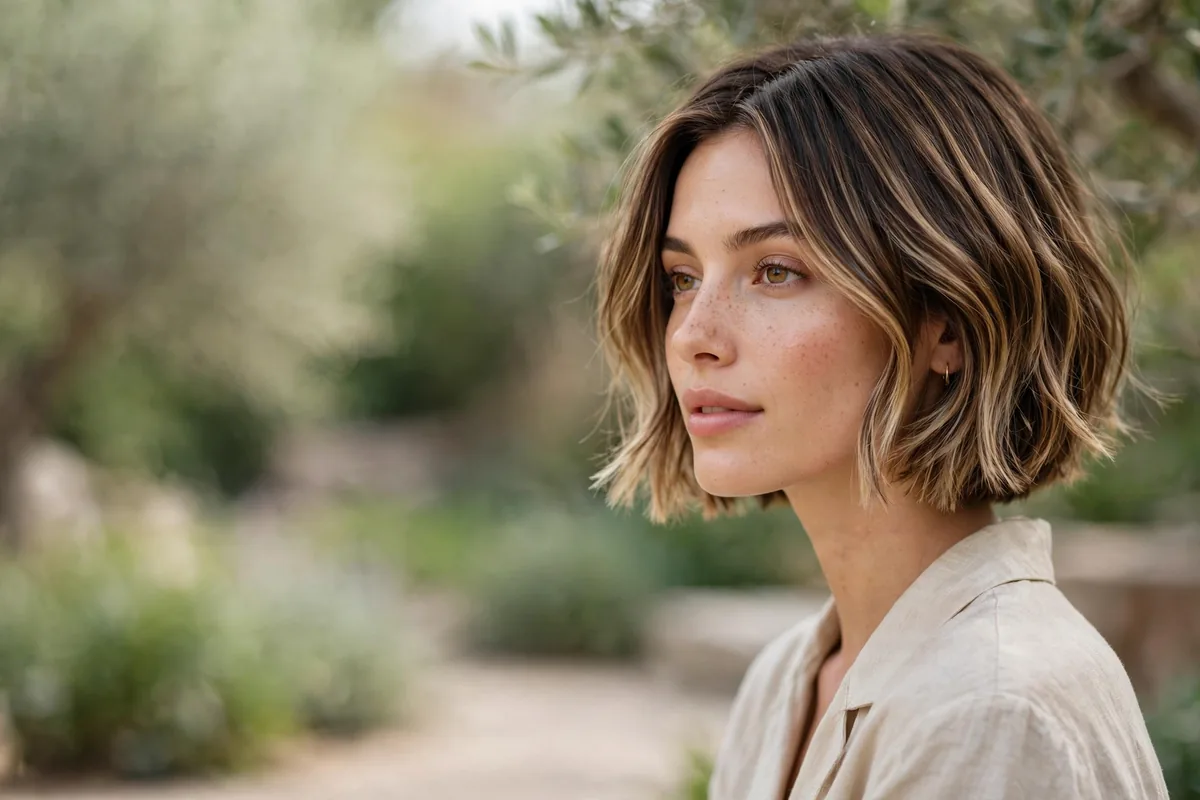
Strategic highlights through the wolf’s top layers emphasize the choppy texture and draw light to the face. The contrast between bright pieces and a deeper base makes every layer visible.
Ask for the highlights concentrated on the crown and face-framing sections. A gloss keeps the contrast soft and expensive-looking.
Highlights through the wolf's top layers turn texture into visible art — bright pieces against a deeper base make every chop and flick pop. The contrast emphasizes the cut's architecture beautifully. This suits every skin tone when tones are matched: warm honey for golden undertones, cool beige for pinker complexions. Dark bases get the most dramatic, head-turning contrast.
Concentrate the highlights on the crown and face-framing sections where the texture shows most. A gloss treatment keeps the contrast soft and expensive-looking. Refresh every eight to ten weeks; the lived-in placement stretches longer than traditional highlights. Use purple or blue toning shampoo weekly to prevent brassiness. Heat protectant is essential — highlighted layers are more fragile.
The Grown-Out Wolf
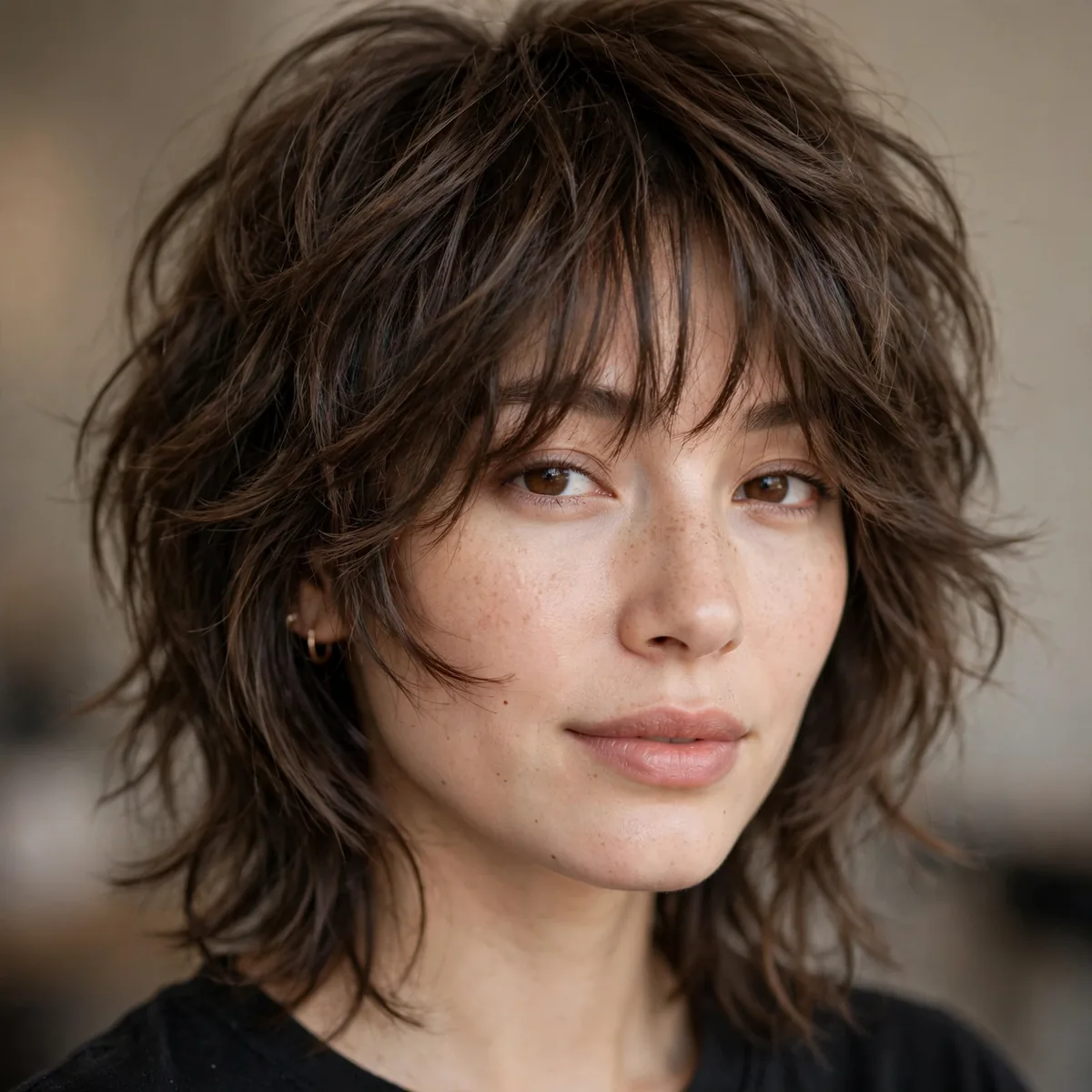
Wolves grow out better than you would expect. As the crown layers lengthen, the cut softens into a shaggy, lived-in shape that many people actually prefer to the fresh cut.
Maintain it with dusting trims every 10 weeks that blend rather than re-chop the layers. Eventually it becomes a long shag — no awkward phase required.
Here's the wolf's best-kept secret: it grows out beautifully. As the crown layers lengthen, the cut softens into a shaggy, lived-in shape that many women prefer to the fresh cut. The disconnection simply mellows into texture. This suits anyone nervous about commitment — the grow-out is a feature, not a bug. Every texture transitions well, though wavy hair blends the fastest.
Maintain with dusting trims every ten weeks that blend rather than re-chop the layers. A hydrating mask keeps the older layers healthy as they grow. Style with soft waves to disguise any unevenness during transition. Eventually you'll land on a gorgeous long shag — no awkward phase, no headbands, no regret. It's the rare edgy cut with a graceful exit.
Wolf Cut for Round Faces
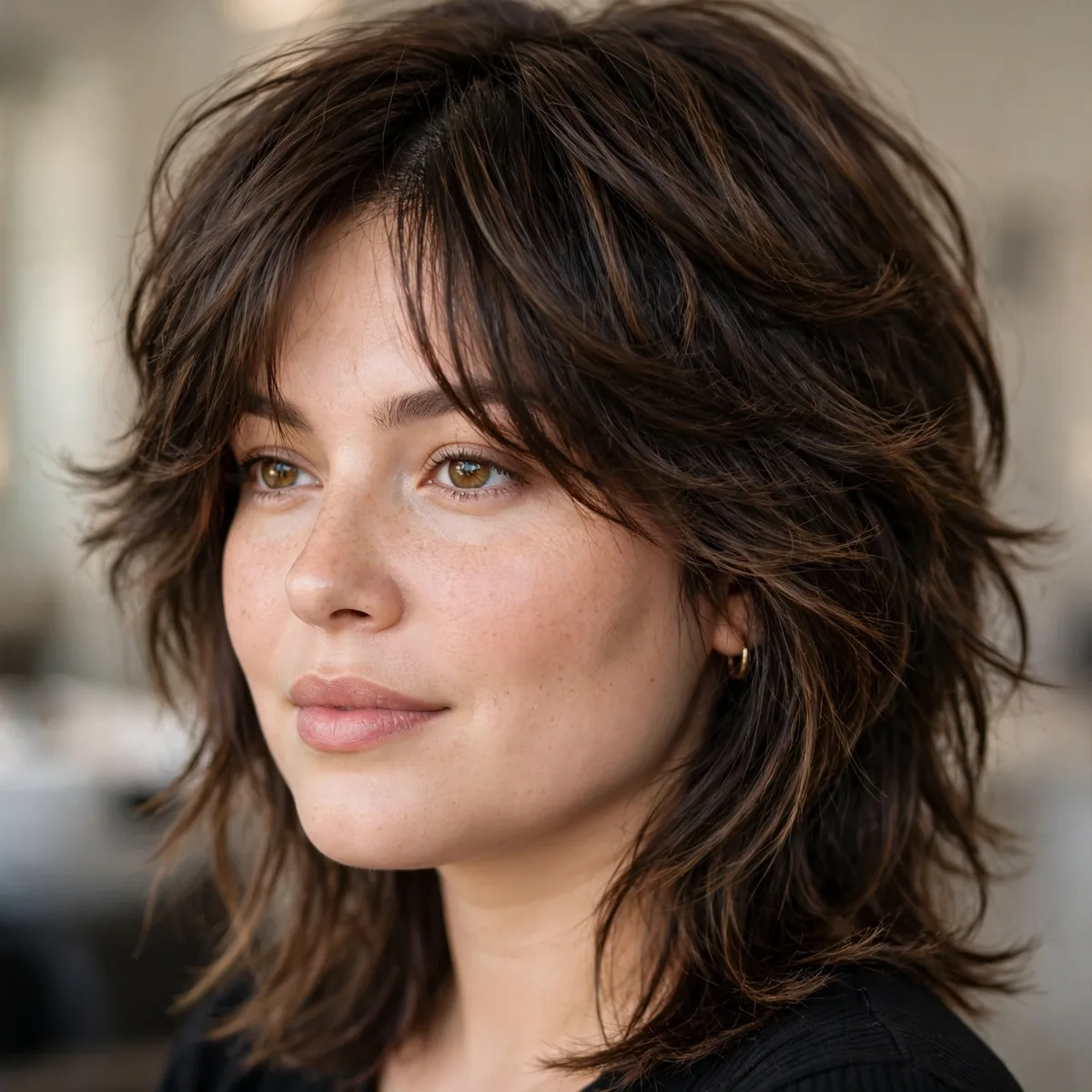
Round faces wear the wolf best with height at the crown and length at the back — both elongate the face. Keep the sides close rather than wide, and let the top layers create vertical lift.
Ask for the shortest layers at the crown, not the cheeks, and a center or deep side part. The long back pieces slim the jawline beautifully.
Round faces wear the wolf best with two rules: height at the crown, length at the back. Both elongate the face, while keeping the sides close avoids adding width where you don't want it. The long back pieces slim the jawline beautifully. A center or deep side part enhances the elongating effect. Medium to thick hair holds the crown height best; fine hair may need root powder.
Blow-dry the crown with a round brush, lifting straight up for maximum height. Keep the cheek sections sleek — flat-ironing just those pieces reinforces the slimming. Avoid tucking hair behind the ears, which emphasizes roundness. Trim every eight weeks. For evenings, the deep side part version adds an extra slimming diagonal that photographs beautifully.
Asymmetrical Wolf
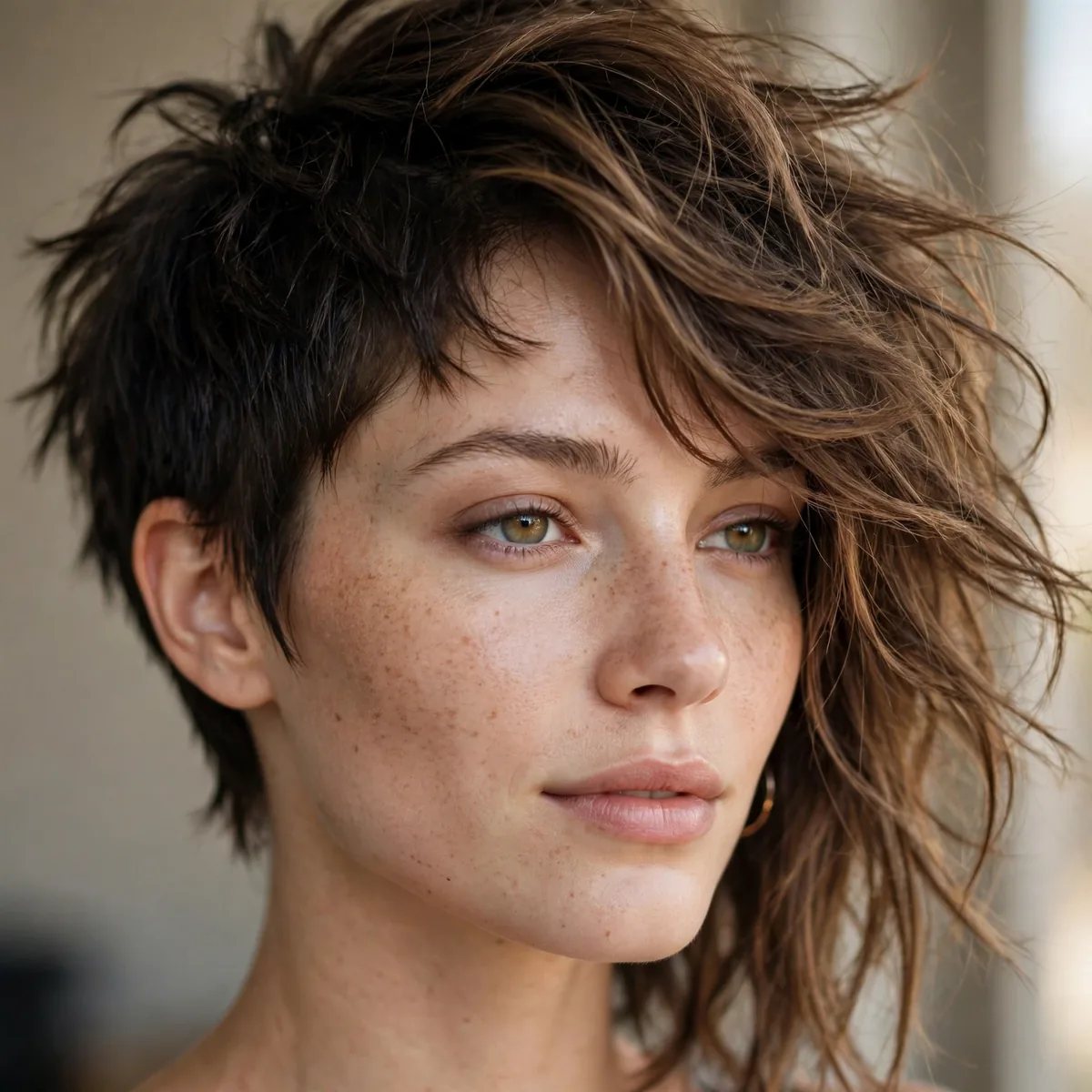
Take the wolf’s rule-breaking one step further with deliberate asymmetry — one side clipped closer, the other left longer and piecey. It is avant-garde but surprisingly wearable.
The asymmetry should look intentional, not accidental, so precision matters. This version is for women who treat hair as art.
The asymmetrical wolf takes rule-breaking to gallery level — one side clipped closer, the other left longer and piecey. It's avant-garde yet surprisingly wearable, the imbalance creating a striking frame. Oval and heart-shaped faces wear it best. You'll need medium to thick hair for the contrast to read clearly, and a stylist with genuine precision skills.
The asymmetry must look intentional, so trims every five to six weeks are essential. Style the longer side smooth and the shorter side textured for maximum contrast. A strong-hold pomade defines the piecey ends. This is hair as art — pair it with minimalist styling elsewhere and let the cut be the statement. Growing it out needs a plan; discuss it upfront.
The Polished Wolf
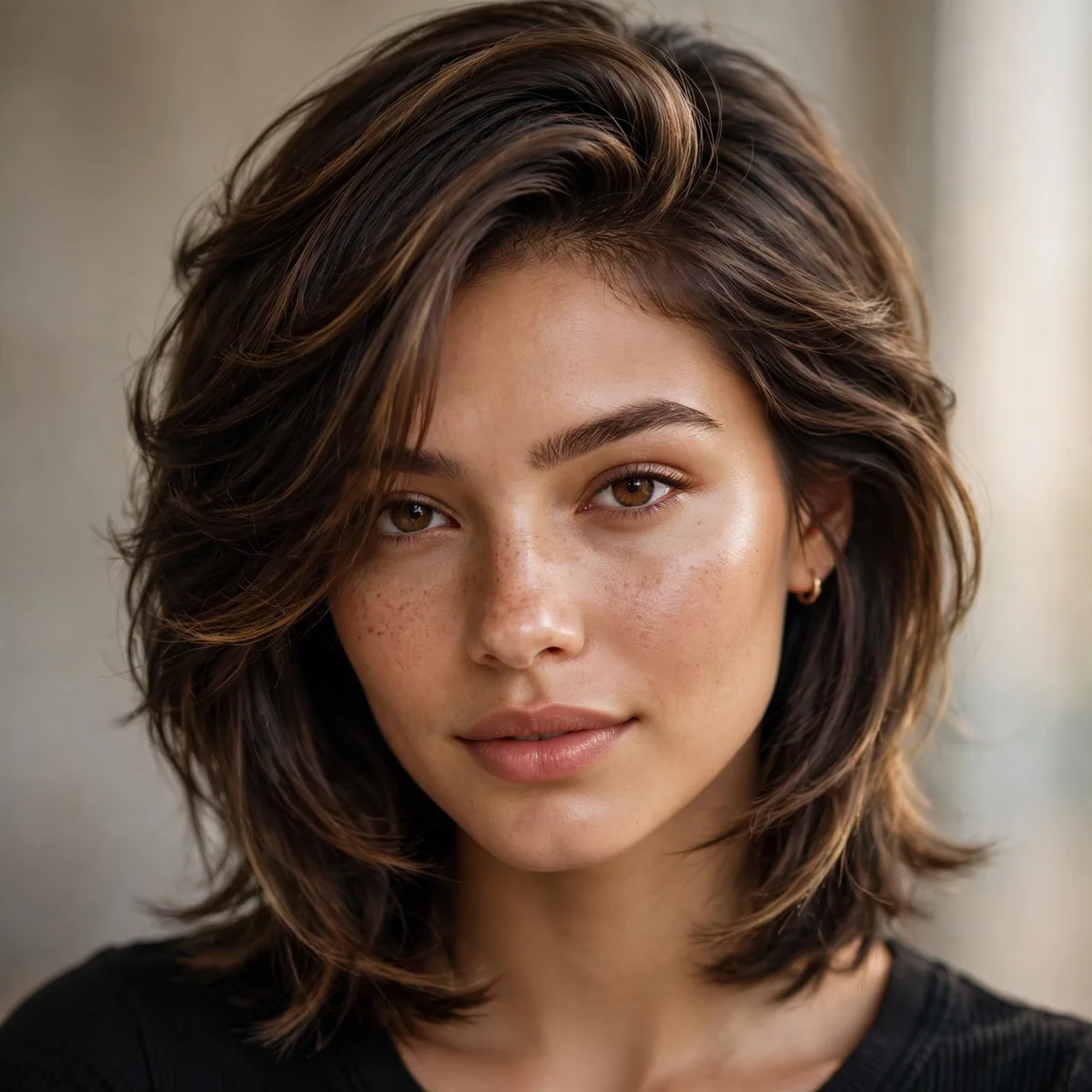
Proof that wild can be refined: blow the wolf smooth with a round brush, tuck the front pieces behind the ears and let the layers fall in soft, controlled waves. Same cut, completely different energy.
A smoothing cream before blow-drying tames the texture without removing it. This styling trick makes the wolf office-appropriate in under fifteen minutes.
The polished wolf proves wild can be refined — same cut, completely different energy. Blow it smooth with a round brush, tuck the front pieces behind the ears, and let the layers fall in soft, controlled waves. It suits professional settings beautifully while keeping the cut's personality. Oval and square faces wear the sleek version especially well. Medium to thick hair smooths most convincingly.
Apply a smoothing cream before blow-drying to tame texture without removing it. Work in sections with a large round brush for the polished finish. Tuck the front pieces behind the ears for instant office-appropriateness. A shine serum adds the glossy finish that sells the refinement. In under fifteen minutes, the weekend wolf becomes the weekday professional — true versatility.
The wolf cut is a commitment to texture, volume and a little bit of beautiful chaos. Find a stylist who gets it, embrace the mess, and let your wild side show. For tamer-but-textured alternatives, browse our shag haircuts and butterfly cuts for long hair.