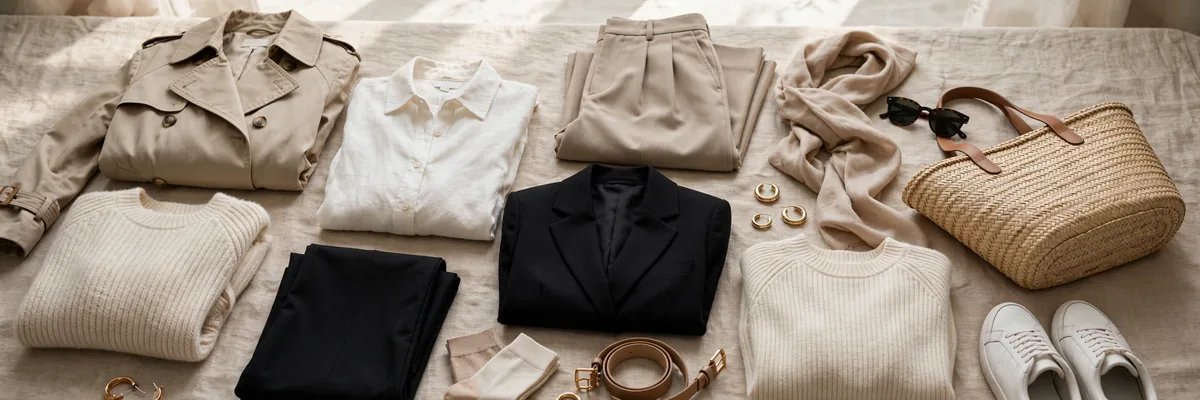
A minimalist wardrobe isn’t about owning nothing — it’s about owning the right things.
The average woman wears 20% of her closet 80% of the time. Minimalism just makes that official: keep the pieces you reach for, release the rest.
The formula: a tight color palette (mostly neutrals), quality fabrics, and silhouettes that mix with everything. Every piece should earn its hanger.
Here are 20 ideas to build yours. Let’s get into it.
The Perfect White Shirt

A well-cut white shirt goes under blazers, over jeans, knotted with skirts — it’s the hardest-working top you’ll own.
Invest in cotton with a bit of structure. It should look crisp, not flimsy.
Beyond the classic poplin, try an oxford weave for weekend texture — it wrinkles beautifully and looks intentional, never sloppy. Button stance matters more than brand: lower-set buttons flatter a fuller bust, while a back yoke with small pleats gives room through the shoulders. Push the sleeves to the forearm and half-tuck the front for an off-duty silhouette that still reads polished.
Care extends a shirt's crisp life by years. Wash inside-out on cool with a touch of white vinegar to dissolve deodorant buildup, and iron the collar, placket, and cuffs while slightly damp for that sharp finish. Hang on contoured hangers — wire ones crease shoulders permanently. A second shirt in pale blue or a hairline stripe multiplies outfits without breaking your neutral palette.
Dark Indigo Jeans

One great pair of dark jeans dresses up or down endlessly. Straight-leg is the most versatile cut right now.
No distressing, no fading — clean dark denim reads polished in almost any setting.
Fit details separate good jeans from great ones: the waistband should sit without a belt, and the seat should skim rather than pull across the back pockets. Petite? A 28-inch inseam shows ankle with boots; tall frames can wear a full-length straight leg with loafers for a long line. Raw denim fades into a personal map of wear — beautiful, but pre-washed dark indigo stays uniform season after season.
Wash these as rarely as possible — every ten to fifteen wears, inside-out in cold water, then air-dry flat to preserve the dark dye. Skip the dryer entirely; heat fades indigo fastest. A quick steam refreshes the waistband between washes. Cuff once over a low-profile sneaker or let the hem kiss a pointed flat — both keep the silhouette clean.
The Camel Coat
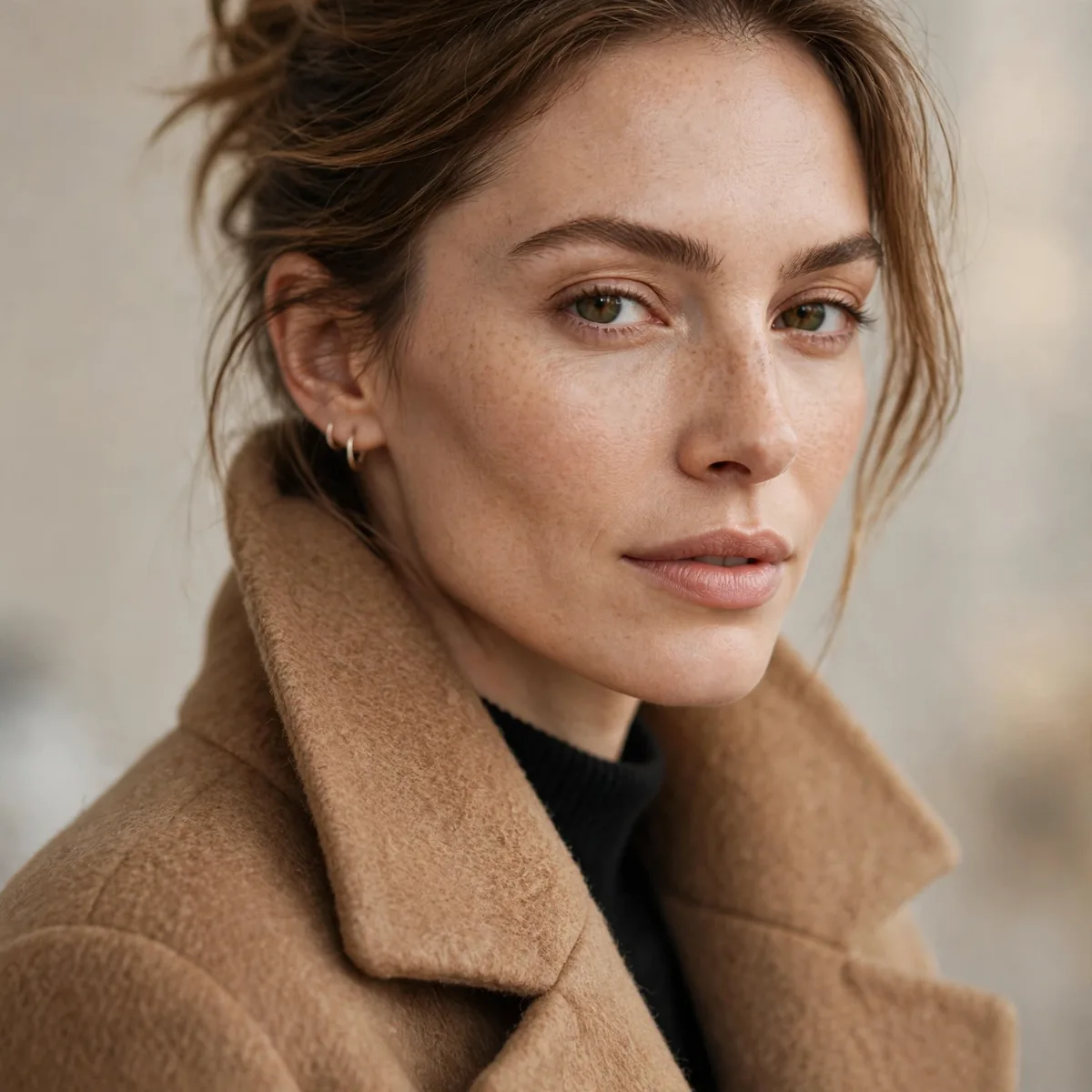
A camel coat elevates literally everything underneath it. It’s the minimalist’s statement piece.
Choose a classic cut slightly oversized — it’ll look current for a decade.
Lapel style sets the coat's personality: a wide notch lapel reads classic and professional, while a shawl collar softens the whole look for evening. Check the undertone against your skin — warm, golden camels flatter olive and warm complexions, while cooler, taupe-leaning camels suit fair, pink-toned skin. The coat should close over your thickest blazer without pulling at the buttons.
A camel coat loves texture contrast: drape it over a charcoal turtleneck and cream trousers for tonal dressing, or throw it across a slip dress with boots for night. For rain-prone cities, a wool-blend with a storm flap holds up better than pure wool. Store on a wide, padded hanger with the pockets empty so the hip line never sags.
Black Ankle Boots
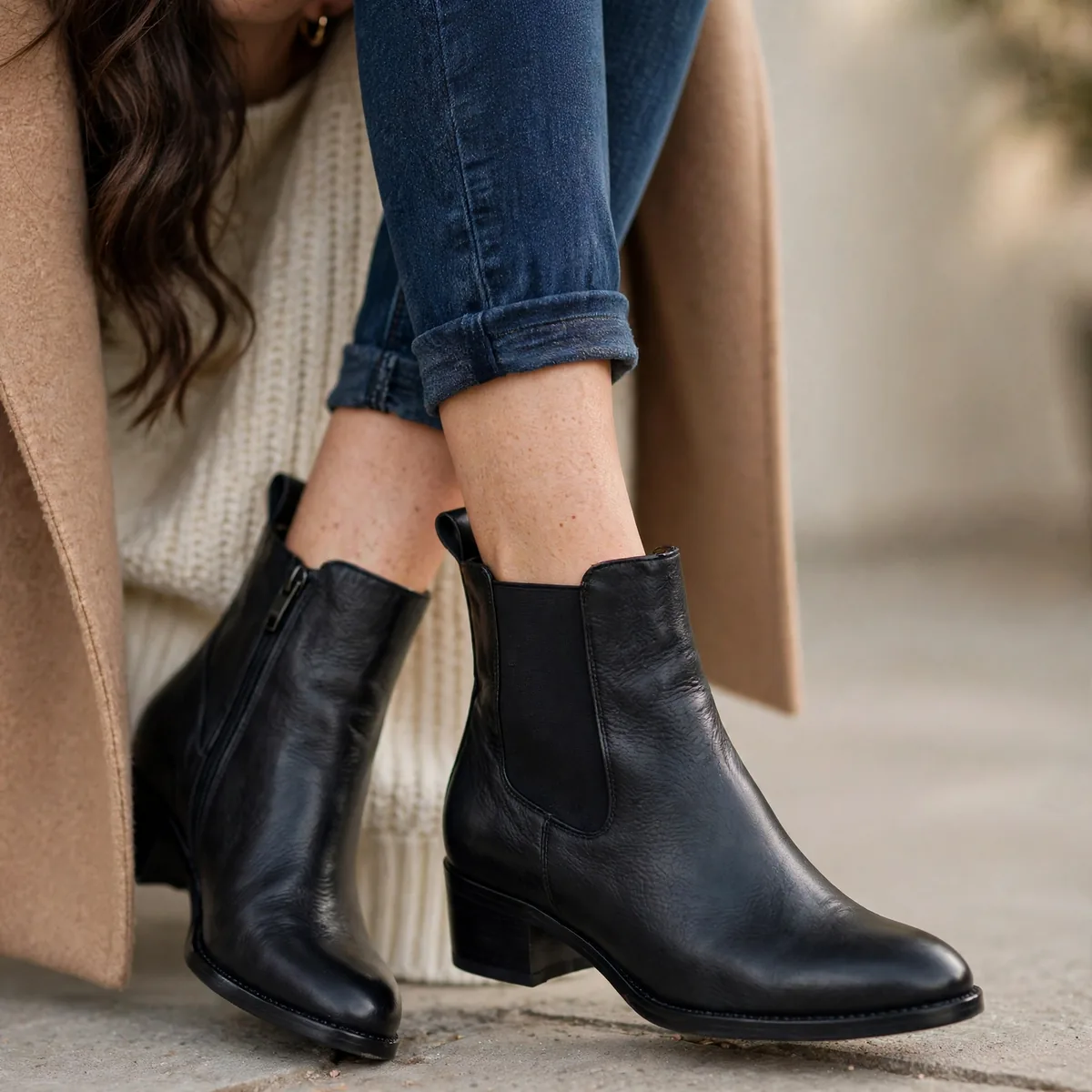
One pair of sleek black ankle boots handles work, weekends, and evenings. Look for a walkable heel.
Chelsea or sleek pointed styles are the most versatile.
Choose your shaft height deliberately: a low-cut bootie exposes the ankle and shortens the leg, while a taller shaft that disappears under a cropped trouser creates one unbroken line. Block heels around two inches handle cobblestones and long days; a stacked leather heel develops character with scuffs. Smooth calfskin reads dressier than suede, which is better saved for dry weather.
Break them in with thick socks around the house for two evenings before committing to a full day. A gel insole and a cobbler's stretch on tight spots cost little and save your feet. Re-heel promptly — worn heels throw off your gait and wear the sole unevenly. Polish monthly with cream, not wax, to feed the leather without building up a dull layer.
The Gray Crewneck

A gray crewneck layers under everything and over everything. It’s the Switzerland of sweaters.
Merino wool resists odor and holds its shape — worth the upgrade from cotton.
The magic of a gray crewneck is its chameleon quality: heather gray leans casual, while a fine-gauge charcoal reads almost formal under a blazer. Layer it over a white shirt with the collar and a half-inch of cuff showing for instant polish, or wear it backward — the higher back neckline becomes a boat neck that frames collarbones beautifully. A half-tuck into high-rise trousers defines the waist without a belt.
Merino's natural odor resistance makes this the ideal travel sweater — rinse it in a hotel sink and it dries overnight. De-pill with a cashmere comb every few wears rather than pulling fuzz by hand, which stretches the knit. Store folded with cedar blocks, never on a hanger, so the shoulders never develop points.
Tailored Black Trousers

Well-fitting black trousers are the backbone of a minimalist work wardrobe. Get them hemmed perfectly.
Flat-front, mid-rise, tapered leg — the most universally flattering formula.
A single pleat adds room through the hip without bulk, and a cropped length that grazes the ankle bone shows off loafers and low boots. Press a sharp crease down the front for boardroom polish, or skip it for a softer, modern line. The waistband should fasten without strain — a tailor can take in the waist for a fraction of the trouser's price, which transforms off-the-rack into made-to-measure.
Shoe pairings shift the whole mood: pointed pumps for presentations, white sneakers for creative offices, heeled boots for evening. Petite frames should hem to a slight crop to avoid fabric pooling; tall wearers can embrace a full break with a wider leg. Dark-soled shoes disappear against the hem, keeping attention on the tailored line.
White Leather Sneakers

Clean white sneakers bridge casual and polished. They work with dresses, trousers, and denim alike.
Keep them clean — magic erasers work wonders on leather sneakers.
Silhouette decides versatility: a slim, low-profile cupsole pairs with tailoring and dresses, while a chunkier retro runner shape belongs with denim and relaxed trousers. Full-grain leather molds to your foot and wipes clean; coated canvas looks similar new but cracks within a year. Match the laces — flat cotton laces read minimal, while swapping in tonal leather laces dresses the pair up surprisingly.
Rotate two pairs if you wear them daily — leather needs 24 hours to dry out and recover its shape. Stuff with paper or use cedar shoe trees to prevent toe collapse. A magic eraser handles scuffs, but for yellowing soles, a paste of baking soda and water left for twenty minutes lifts the dinginess. Resole before the midsole wears through.
The Slip Dress

A simple black slip dress layers under sweaters and blazers, or stands alone in summer. Endlessly adaptable.
Silk or satin elevates it; the cut should skim, not cling.
Bias-cut slips move like liquid because the fabric is cut on the diagonal, which also means the hem can twist after washing — hang to dry and reshape while damp. Adjustable straps are non-negotiable for a perfect neckline; the V should sit at the sternum, not gap at the bust. A knee-grazing length works for day, while a midi length with a side slit carries evening without trying too hard.
Style it as a layering piece: a fitted turtleneck underneath plus knee boots makes it autumn-ready, and a cropped cardigan over the top softens it for family dinners. For support, a strapless or adhesive bra keeps lines clean. Belt it at the natural waist with a slim leather belt to create an hourglass from a straight cut.
Striped Breton Top

The one pattern minimalists allow: the Breton stripe. It adds interest without breaking the palette.
Navy/white or black/white — both mix with everything.
Authentic marinières follow a precise recipe: a boat neckline, three-quarter sleeves, and a body cut slightly boxy through the torso. Stripe width changes the effect — narrow stripes read refined and Parisian, while wider bands lean nautical and playful. Tuck the front into high-rise trousers with the back left loose for that insouciant French drape, or layer it under a blazer with the collar popped.
Cotton jersey pills under arms first; a mid-weight knit around 180 GSM holds its shape through dozens of washes. Navy stripes fade gracefully, while black-and-white stays graphic longer. Size up for a slouchier, borrowed-from-him feel that works beautifully over a slip skirt. Replace when the neckline stretches — a sagging boat neck cheapens the whole look.
The Structured Tote
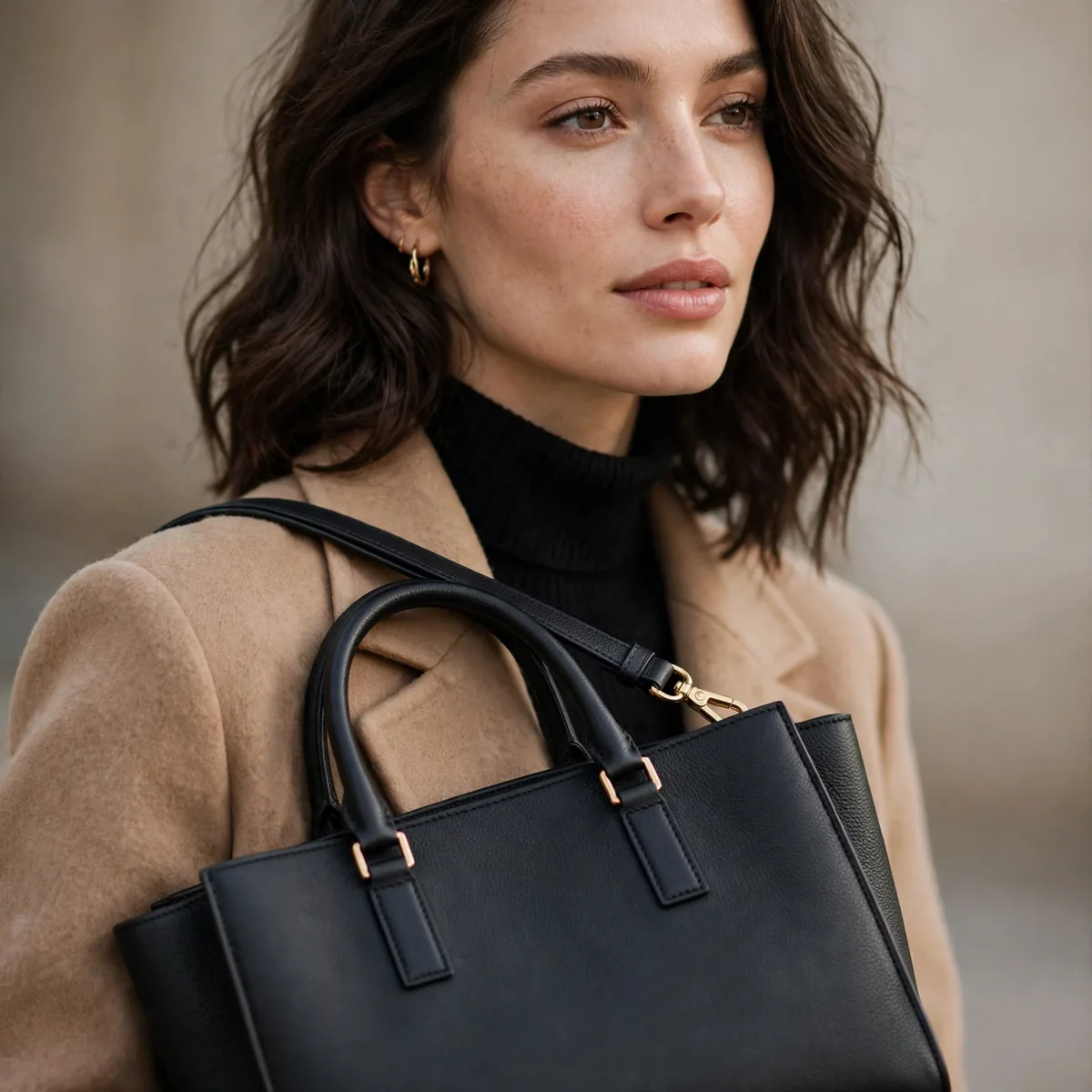
One quality tote in black or cognac handles work and life. Structure is what makes it look expensive.
Our handbag essentials guide covers what to look for.
Hardware sets the tone: gold zips and feet read classic luxury, while gunmetal or matte black hardware skews modern and understated. Check that the base has protective feet and reinforced corners — a tote that collapses when set down will never look expensive. Interior layout matters daily: a zip pocket for valuables, slip pockets for a phone, and a key leash save endless rummaging.
A structured tote earns its keep at work and weekends alike: it swallows a 13-inch laptop, a water bottle, and a makeup pouch without losing shape. For travel, it doubles as a personal item that slides over a suitcase handle. Condition the leather twice a year and store stuffed with tissue in its dust bag, handles upright, to hold the silhouette.
Cashmere-Blend Sweater

One beautiful neutral sweater in cashmere or a cashmere blend — the luxury you’ll reach for daily.
Cream, camel, or gray. Hand-wash and it’ll last years.
Not all cashmere is equal: longer fibers (36mm and up) pill less and survive years of wear, which is why two-ply knits feel denser and last longer than single-ply. A cashmere-wool or cashmere-cotton blend actually outperforms pure cashmere for daily wear — it's more resilient and less prone to stretching at the elbows. Choose a neckline that flatters: crewnecks suit long necks, while a shallow V opens up shorter ones.
Fold — never hang — with the sleeves crossed over the body to distribute weight evenly. A cedar-lined drawer or lavender sachets deter moths far better than mothballs, which leave a lingering smell. De-pill with an electric fabric shaver on the lowest setting, working in one direction. Hand-wash in cool water with a drop of hair conditioner to keep fibers soft.
The Midi Skirt

A simple black midi skirt pairs with every top you own, from tees to turtlenecks.
A-line or straight — both work. The midi length is the most versatile.
Hem length should be chosen against your height: just below the knee elongates petite frames, while a true midi grazing mid-calf suits taller wearers and pairs beautifully with knee boots. A back vent or kick pleat isn't just a design detail — it's what lets you stride, climb stairs, and sit without the skirt riding up. High-rise waistbands define the waist under tucked blouses and cropped knits alike.
Fabric decides the skirt's personality: a fluid crepe drapes for evening, while a structured ponte or scuba knit holds a crisp A-line for the office. For travel, a wrinkle-resistant jersey midi packs flat and emerges ready to wear. Pair with a fitted top to balance the volume, or a boxy shirt half-tucked for relaxed polish.
Pointed Flats
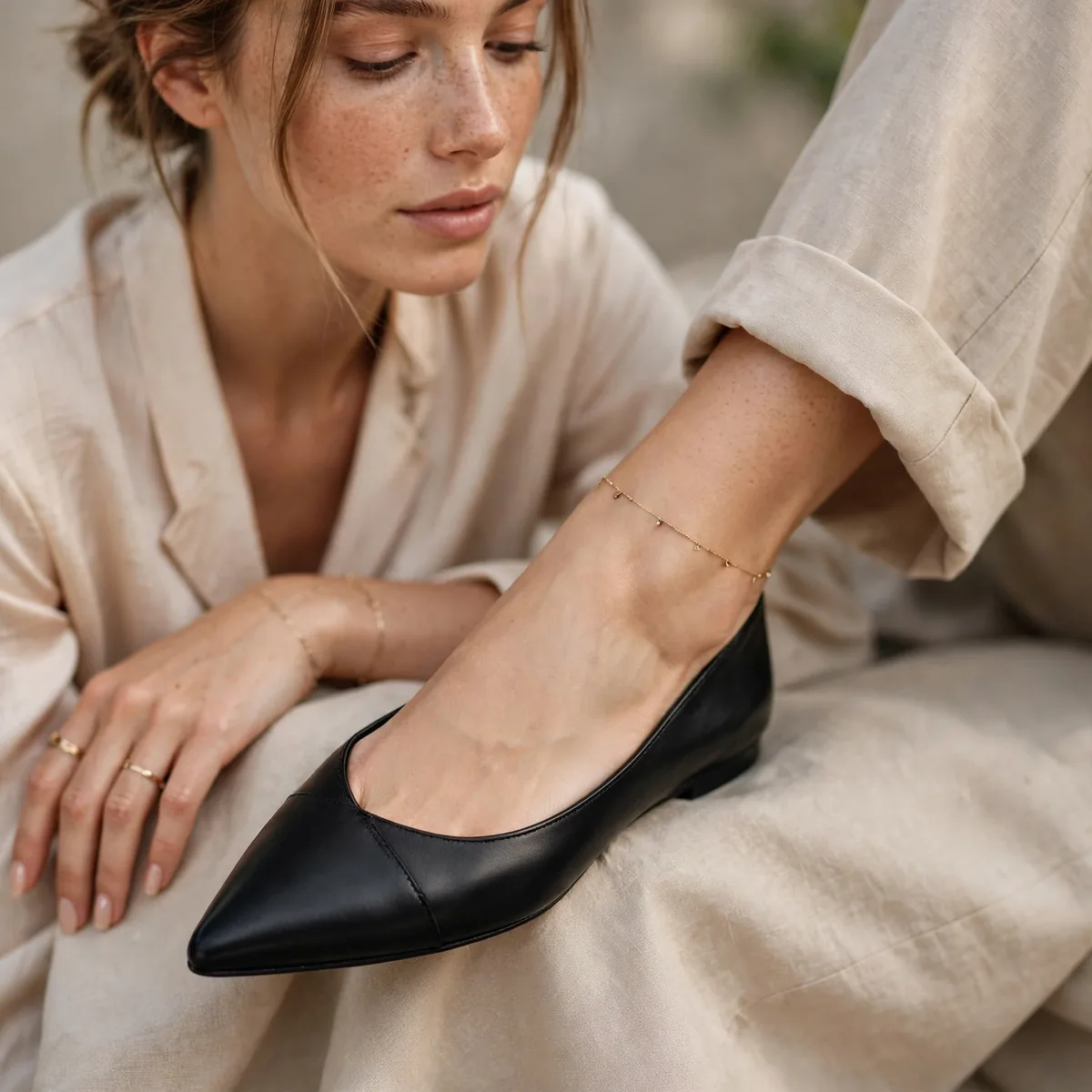
Pointed flats are the minimalist’s heel alternative — polished, comfortable, timeless.
See our ballet flat ideas for styling inspiration.
The pointed toe visually extends the leg by inches — especially powerful in nude tones matched to your skin, which create one unbroken line. Look for a slightly cushioned insole and an elasticized topline that grips the heel; ballet flats that slip off mid-stride will live unworn in your closet. A low-cut vamp elongates the foot, while a d'Orsay cutout adds evening elegance.
These carry you from desk to dinner: pair with cropped trousers to show the pointed line, or with a midi dress for effortless polish. For all-day comfort, add a thin ball-of-foot pad — it changes everything on hard floors. Rotate with loafers to extend their life, and resole the thin ballet sole before it wears through to the upper.
The Trench Coat

A classic trench is outerwear perfection — waterproof-ish, timeless, and flattering on everyone.
Knee-length in classic beige is the forever choice.
The details make a trench: a storm flap across the shoulder, epaulettes, a buckled cuff strap, and a D-ring on the belt for hanging gloves or keys. Traditional cotton gabardine is tightly woven to shed light rain, while bonded or water-resistant finishes handle real downpours. The classic double-breasted cut allows you to button it two ways — fully closed against wind or loosely belted for style.
Wear it open over a suit for a cinematic entrance, or belt it tightly with the collar popped for that timeless silhouette. Tie the belt in a back knot for a relaxed look, or thread it through the front for polish. Push the sleeves to show a shirt cuff, and let the hem hit just at or below the knee over dresses and trousers alike.
Quality White Tee

Not all white tees are equal. A thick, well-cut tee with a reinforced collar looks intentional, not basic.
Buy the best you can afford — you’ll wear it weekly.
Fabric weight is the tell: look for 180–220 GSM cotton with a tight, smooth knit — it drapes without clinging and stays opaque in white. A ribbed collar with a touch of elastane keeps its shape through fifty washes, while a bound neckline lies flat under blazers. Sleeve length matters too: a slightly longer sleeve that hits mid-bicep looks more refined than a cap sleeve.
The half-tuck is this tee's best friend — front tucked into high-rise denim, back left loose for ease. Layer it under a blazer with the sleeves pushed up, or knot the hem over a high-waisted skirt for summer. Wash cold and skip fabric softener, which breaks down cotton fibers; a warm iron on the collar keeps it crisp.
The Black Blazer

A black blazer sharpens jeans, completes trousers, and tops dresses. The ultimate finishing piece.
Slightly oversized reads modern; tailored reads classic. Pick your lane.
Lapel width should match your frame: slim lapels suit petite builds, while wider peak lapels balance broader shoulders and add authority. Check the button stance — the top button of a two-button blazer should sit at your natural waist to create the longest leg line. Working sleeve buttons signal quality; a tailor can shorten from the shoulder, but budget for it since it's the priciest alteration.
Style it three ways to triple its value: over a slip dress with heels for evening, with dark jeans and loafers for smart casual, and as a suit with matching trousers for the office. Push the sleeves to the forearm for a relaxed, editorial feel. A lint roller in your bag keeps black wool looking immaculate all day.
Straight-Leg Cream Trousers
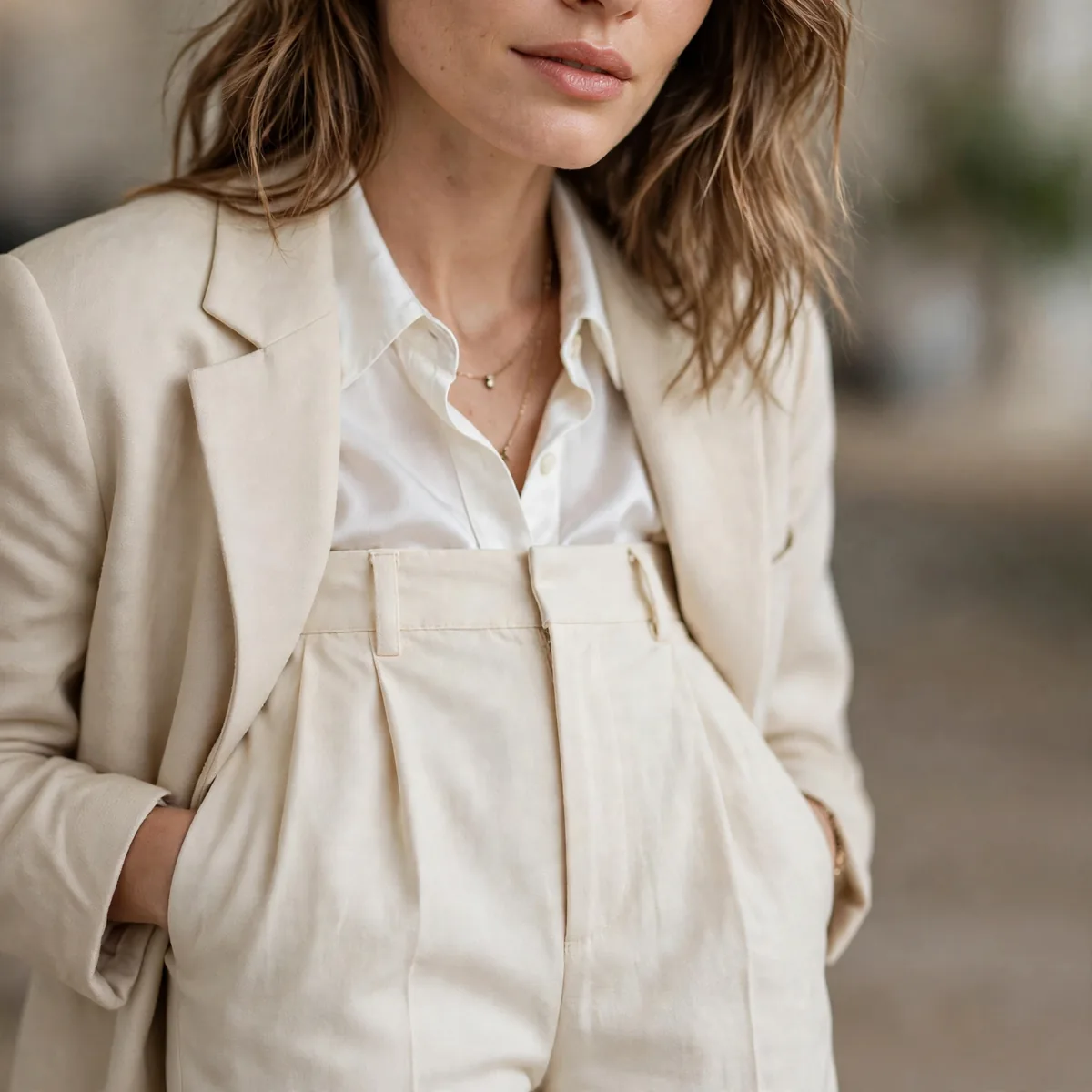
Cream trousers are softer than white, dressier than jeans. A minimalist’s secret weapon.
Best in thicker fabrics that don’t show every line.
Cream is more forgiving than stark white but still demands opaque fabric — hold the trousers up to light in the fitting room; if you can see your hand, walk away. Wool crepe and heavier cotton twill hide lines best, while a lined front panel adds insurance. A nude-for-you seamless underwear eliminates visible lines without adding bulk at the waistband.
These shine in transitional seasons: pair with a navy blazer and loafers for spring offices, or a camel sweater and ankle boots for autumn weekends. Roll the hem once to show a contrasting shoe, or keep the full length pooling slightly over a heel. Treat stains immediately with cold water — heat sets them permanently.
The Silk Scarf

One silk scarf adds personality to a neutral wardrobe — neck, bag, hair, wrist. Endless uses.
Vintage scarves are often better quality than new fast-fashion ones.
A 90cm square is the most versatile size: fold it into a triangle for a neckerchief, roll it into a band for a headscarf, or tie it to a tote handle for instant personality. Learn three knots and you're set — the simple cowboy drape, the French knot looped once around the neck, and the wrist wrap. Silk twill holds knots crisply; silk satin slips, so double-knot it.
Vintage scarves from estate sales and thrift shops often feature hand-rolled hems and richer prints than modern fast-fashion versions. Use one as a belt through trouser loops, a headband under a straw hat, or a bag charm. Hand-wash in cool water with mild soap, roll in a towel to remove moisture, and iron on low while slightly damp.
Delicate Gold Jewelry
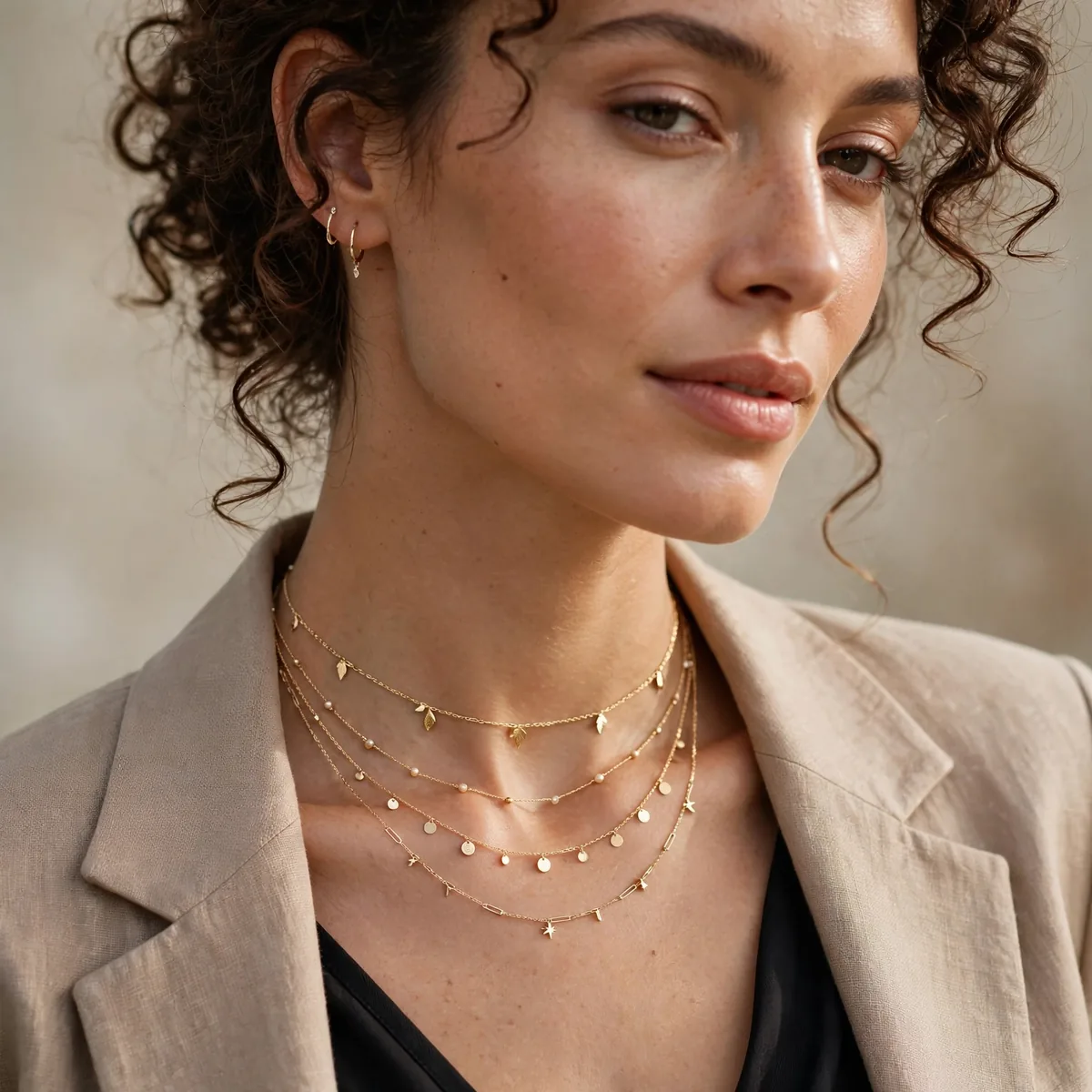
A small rotation of delicate gold pieces — hoops, a pendant, a bracelet — finishes every minimalist look.
Quality over quantity: a few real pieces beat a drawer of tarnishing trends.
Layering is an art of lengths: pair a 16-inch choker with an 18-inch pendant and a 20-inch chain so each sits in its own space without tangling. Mix textures — a fine cable chain, a paperclip link, a delicate pendant — for depth that reads curated rather than cluttered. On the ears, a small hoop plus a stud in the second piercing balances minimalism with interest.
Solid gold or gold-filled pieces resist tarnish and survive daily wear; gold-plated jewelry fades within months of regular use. Remove pieces before swimming, workouts, and applying perfume — chlorine and sweat are the fastest killers of shine. Store each piece separately in a soft pouch, and a Sunshine cloth restores luster in seconds.
The 37-Piece Rule

The classic capsule number: ~37 pieces including shoes, excluding workout and occasion wear. It’s a guideline, not gospel.
Start by removing what you haven’t worn in a year — the capsule builds itself from what’s left.
Build your capsule around a three-neutral palette — say black, cream, and camel — plus one accent color you genuinely love, like olive or burgundy. Every new piece must work with at least three existing items or it doesn't come home. The hanger trick reveals the truth: turn all hangers backward, and after three months, whatever still faces backward gets donated.
Count shoes and bags in your 37, but exclude workout gear, sleepwear, and true occasion pieces like gowns. Do a seasonal swap twice a year, storing off-season clothes in breathable cotton bags — never plastic, which traps moisture. When something wears out, replace it with the best quality you can afford; the capsule only works if every piece earns its place.
Less choosing, more living. Pin your capsule inspiration, and for quality secondhand finds see our thrifted outfit ideas.