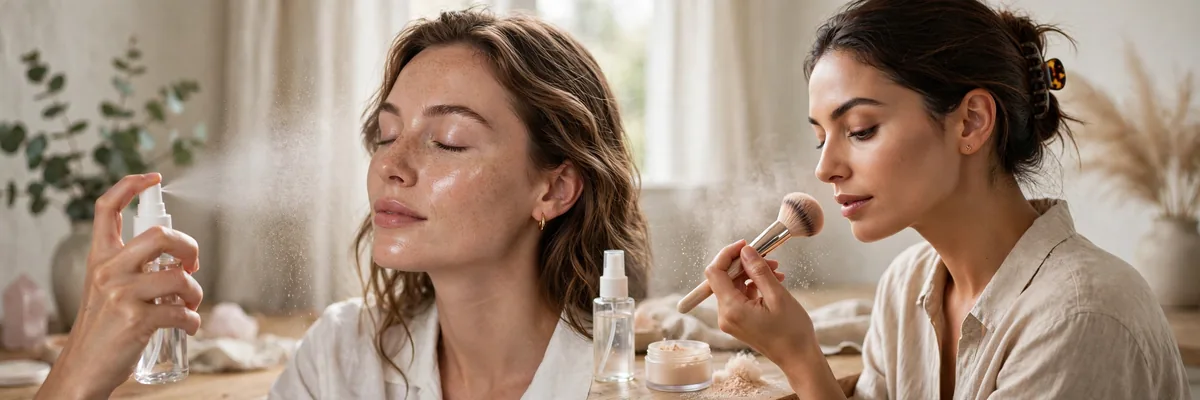
Spray and powder aren’t competitors. They’re teammates with different jobs.
Setting spray melts products together into skin and adds longevity. Powder absorbs oil and locks creams in place. Understanding the distinction ends the confusion.
Most long-wear routines use both — strategically, not interchangeably.
Here are 15 comparisons. Let’s get into it.
What Spray Does
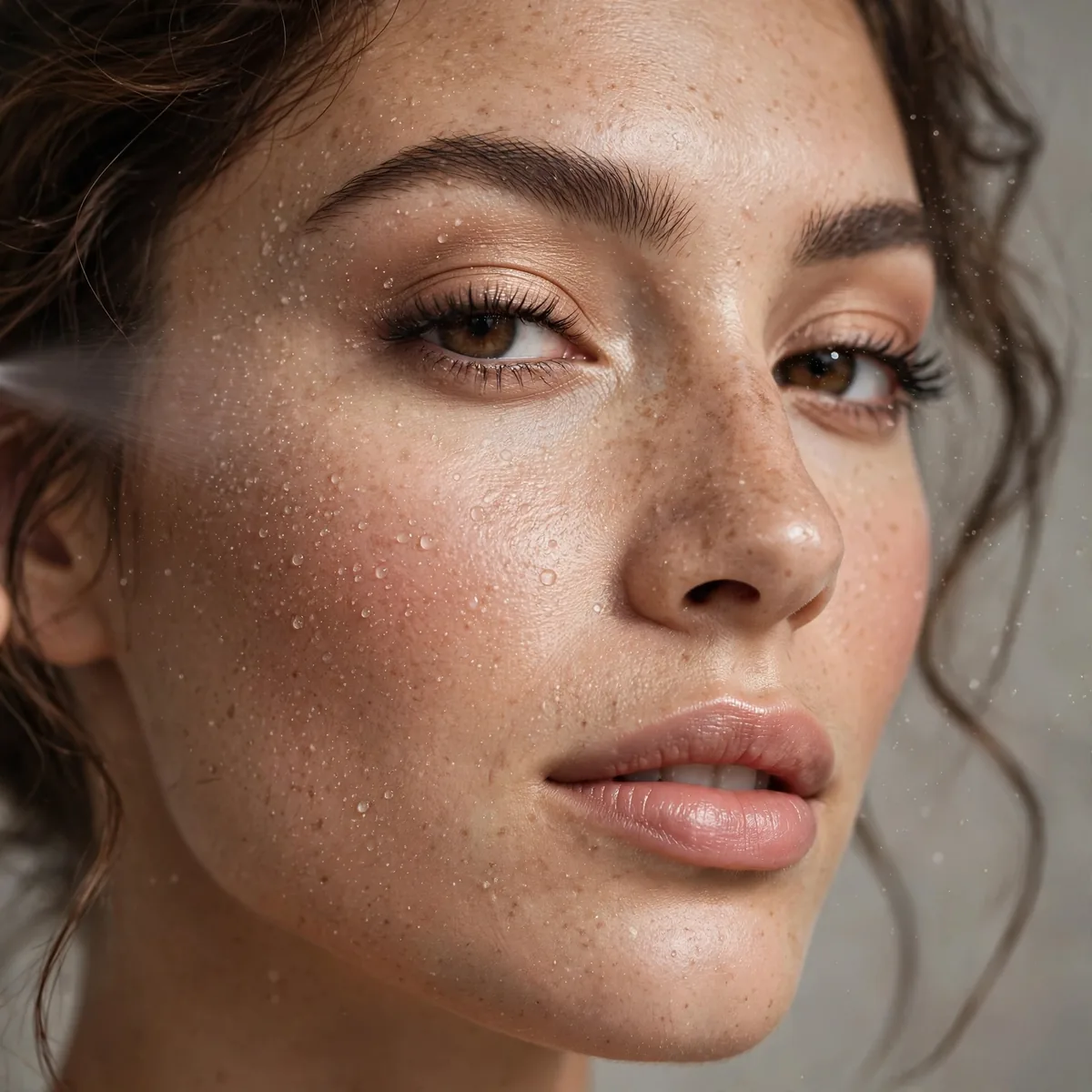
Spray melds layers into a unified, skin-like finish and extends wear.
Think of spray as the laminator — it seals everything together.
Hold the bottle about an arm's length away and mist in an X or T motion so the coverage stays even — a close-range blast is what leaves those telltale droplets. Choose your finish deliberately: hydrating sprays with glycerin or hyaluronic acid leave a dewy glow, while alcohol-based formulas skew matte and grippier for oily skin. Let each pass dry fully before the next, since layering over damp mist can shift foundation underneath.
Spray suits nearly every skin type once you match the formula: dry complexions love alcohol-free hydrating mists, while oily faces benefit from oil-control or matte-setting versions with silica. It also revives makeup midday — a light veil at hour six melts powdery edges and restores luminosity without piling on product. Just know that most sprays are not heavy-duty waterproofers; if you need true sweat resistance, pair the mist with a waterproof base and cream products.
What Powder Does
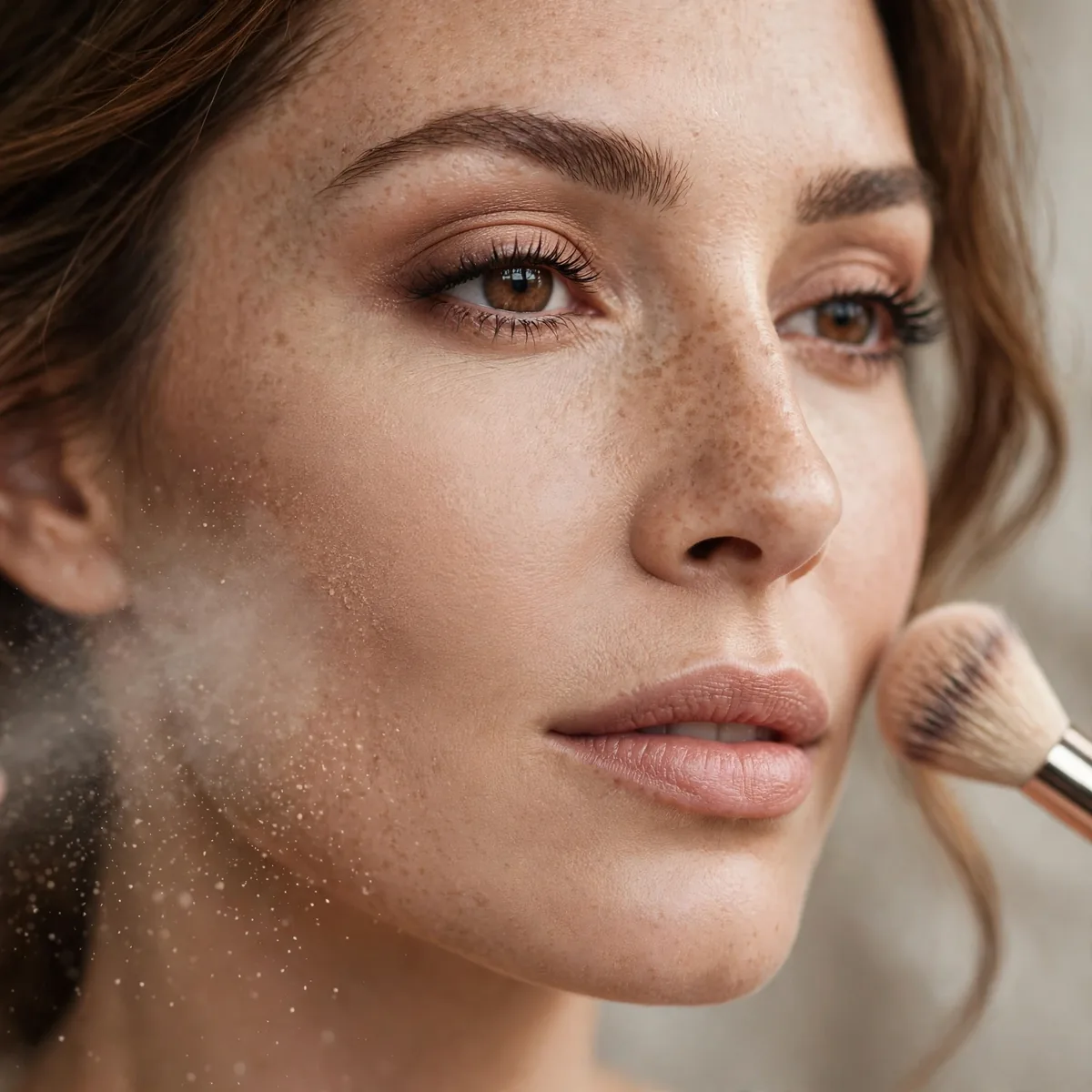
Powder absorbs oil, sets creams, and mattifies.
Powder is the oil manager. It controls shine and locks cream products.
Not all powders behave the same, so choose with intent. Translucent formulas disappear on any skin tone, while tinted versions add a whisper of coverage that can double as a light foundation on minimal days. Loose powder gives the softest, most diffused set, but pressed compacts win for portability and precision touch-ups. Apply with a large fluffy brush for sheer coverage or a damp sponge to press — never sweep — product exactly where shine appears.
The classic mistake is over-applying, which is why professional artists tap excess off the brush and build in thin layers instead. Powder can also cause flashback in flash photography — silica-heavy formulas reflect camera flash into a ghostly white cast — so test with a photo before event days. For longevity, press powder only into the T-zone and around the nose, leaving the high planes of the face powder-free to preserve a natural, dimensional glow.
Dry Skin: Spray Wins
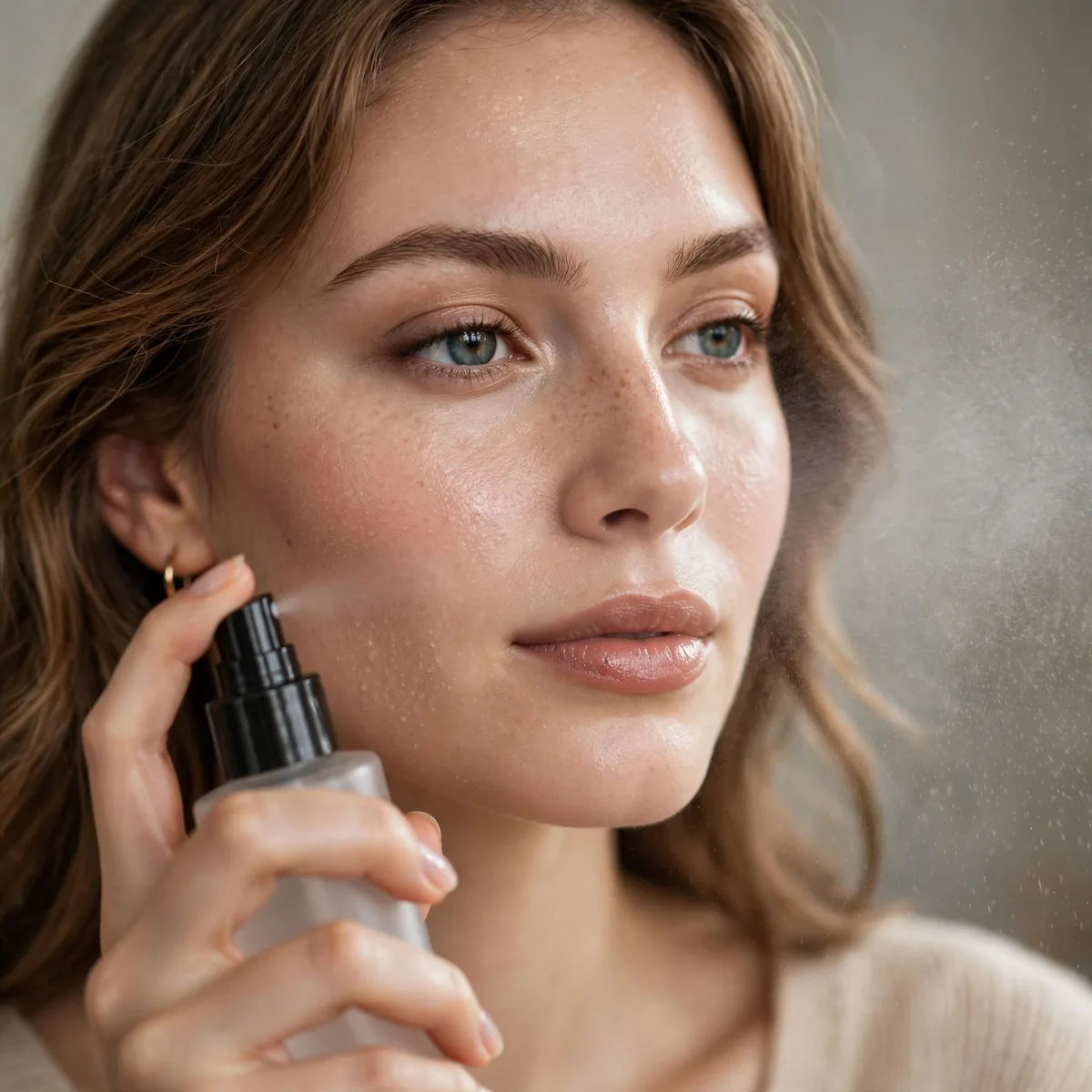
Dry skin should favor spray — powder emphasizes dryness.
Our dry-skin guide agrees. Spray hydrates while it sets.
For dry complexions, look for sprays built around hydrating ingredients like glycerin, rose water, or hyaluronic acid — these pull moisture toward the skin while locking makeup in place. Prep matters enormously: a rich moisturizer and a hydrating primer give the spray something to bond to, extending wear well past the six-hour mark. In winter, when dryness peaks, consider skipping powder entirely and relying on a dewy spray paired with cream blush and liquid highlighter.
The biggest dry-skin mistake is grabbing a mattifying spray designed for oily types — the alcohol content can tighten and flake by afternoon. Another trap is layering translucent powder 'just on the nose' out of habit; even small amounts settle into fine lines around drier areas. If you truly need a little shine control, swap loose powder for a finely milled pressed formula applied with a dry sponge, pressed lightly and only on the oiliest spot.
Oily Skin: Powder Wins
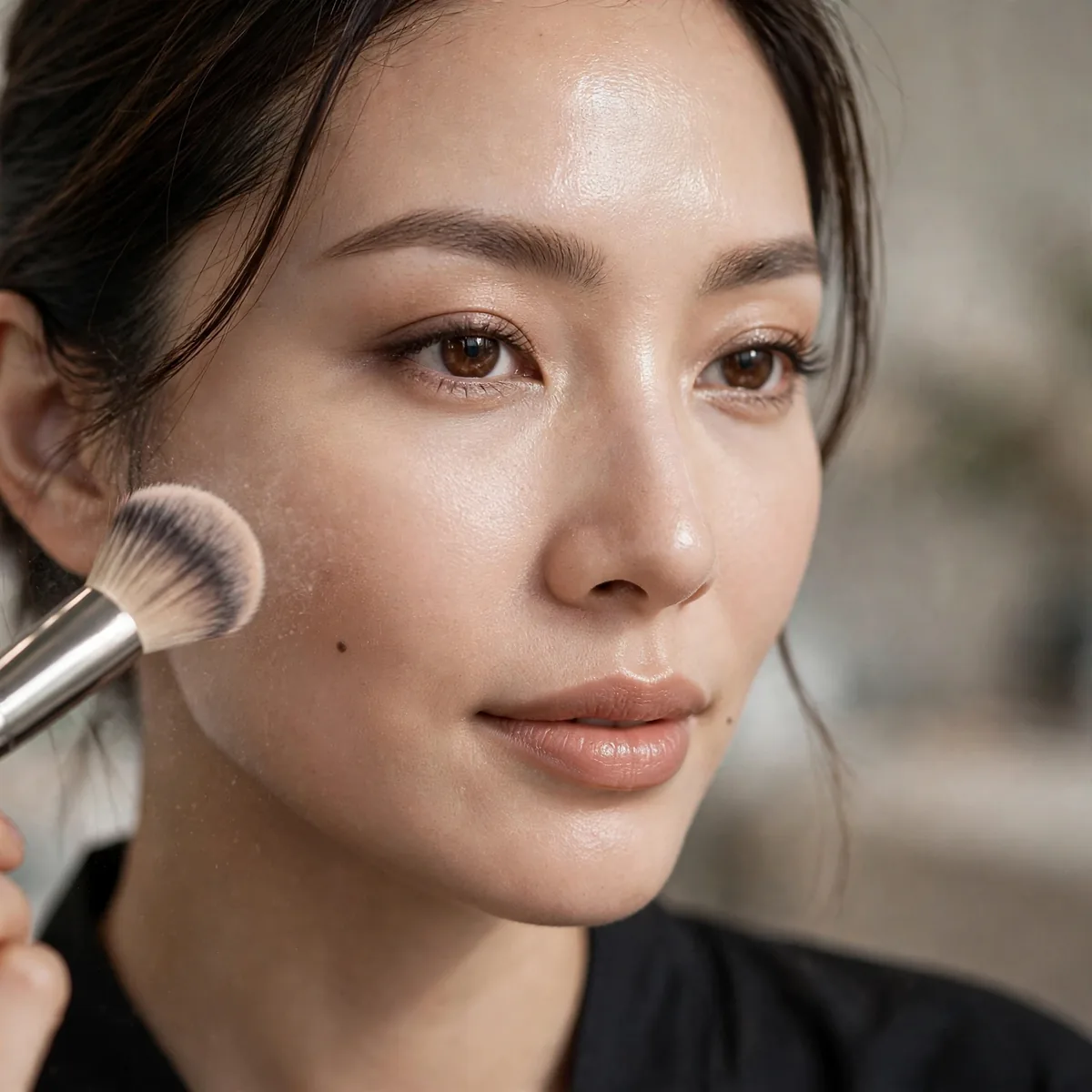
Oily skin needs powder’s oil absorption — spray alone won’t cut it.
Powder is non-negotiable for oily T-zones. Spray is the bonus.
Oily skin performs best with powders built for the job — silica, kaolin clay, and rice powder are the oil-absorbing heavyweights, and they keep shine at bay far longer than generic translucent formulas. Application matters as much as formula: press powder in with a damp beauty sponge or puff rather than brushing it on, since pressing packs the product into the skin for stronger oil control. Start with a mattifying primer underneath and the T-zone stays shine-free for hours longer.
Blotting papers are the oily skin's best friend — press one onto shiny areas before adding any powder, otherwise you're just layering product over oil and building cake. In summer and humidity, a waterproof setting spray as the final seal prevents the slide that heat causes. Keep a pressed compact in your bag for touch-ups rather than loose powder, and at day's end remove everything thoroughly with an oil-based cleanser so absorbed sebum and powder never clog pores overnight.
The Both Strategy
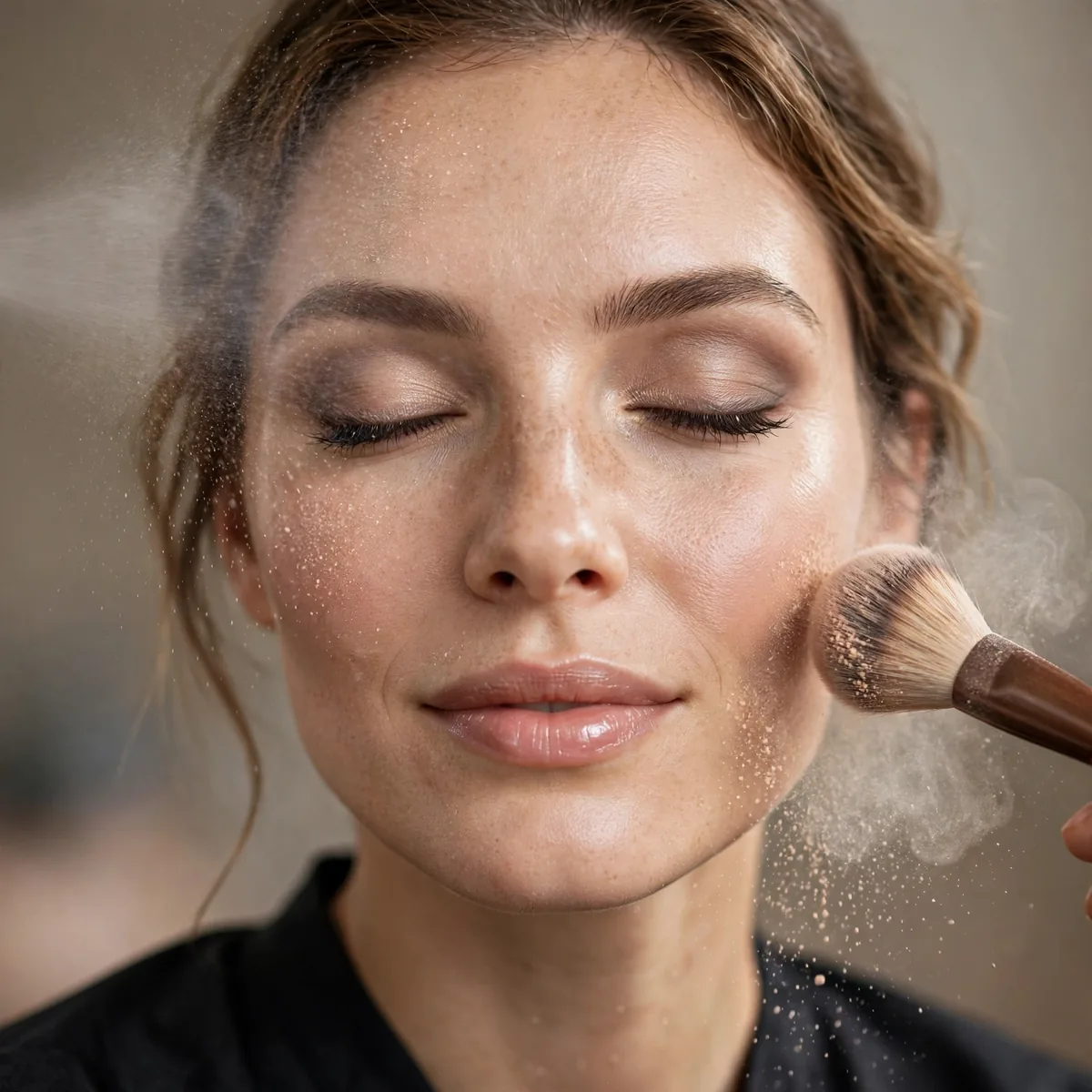
Powder oily zones, spray everything — the combination routine.
Targeted powder plus all-over spray gives the best of both. This is the pro standard.
Order matters: press powder into oily zones first, then mist the entire face to melt away any powdery residue and seal everything. Use a light hand with both — one thin veil of powder and two light passes of spray beat heavy layers every time. Let the powder sit for a minute before spraying so it can absorb oil first. This sequence is especially reliable for long days, weddings, and photo-heavy events where makeup must survive ten hours or more.
The mistake that ruins this routine is applying powder everywhere and then drowning the face in spray — saturation reactivates cream products and causes slipping instead of setting. Another pitfall: using a matte spray over powder on normal or dry areas, which can look flat by afternoon. Adapt the zones to the day: expand powder slightly in summer humidity, shrink it in winter dryness, and always let your skin's current behavior — not habit — decide the balance.
Spray Between Layers
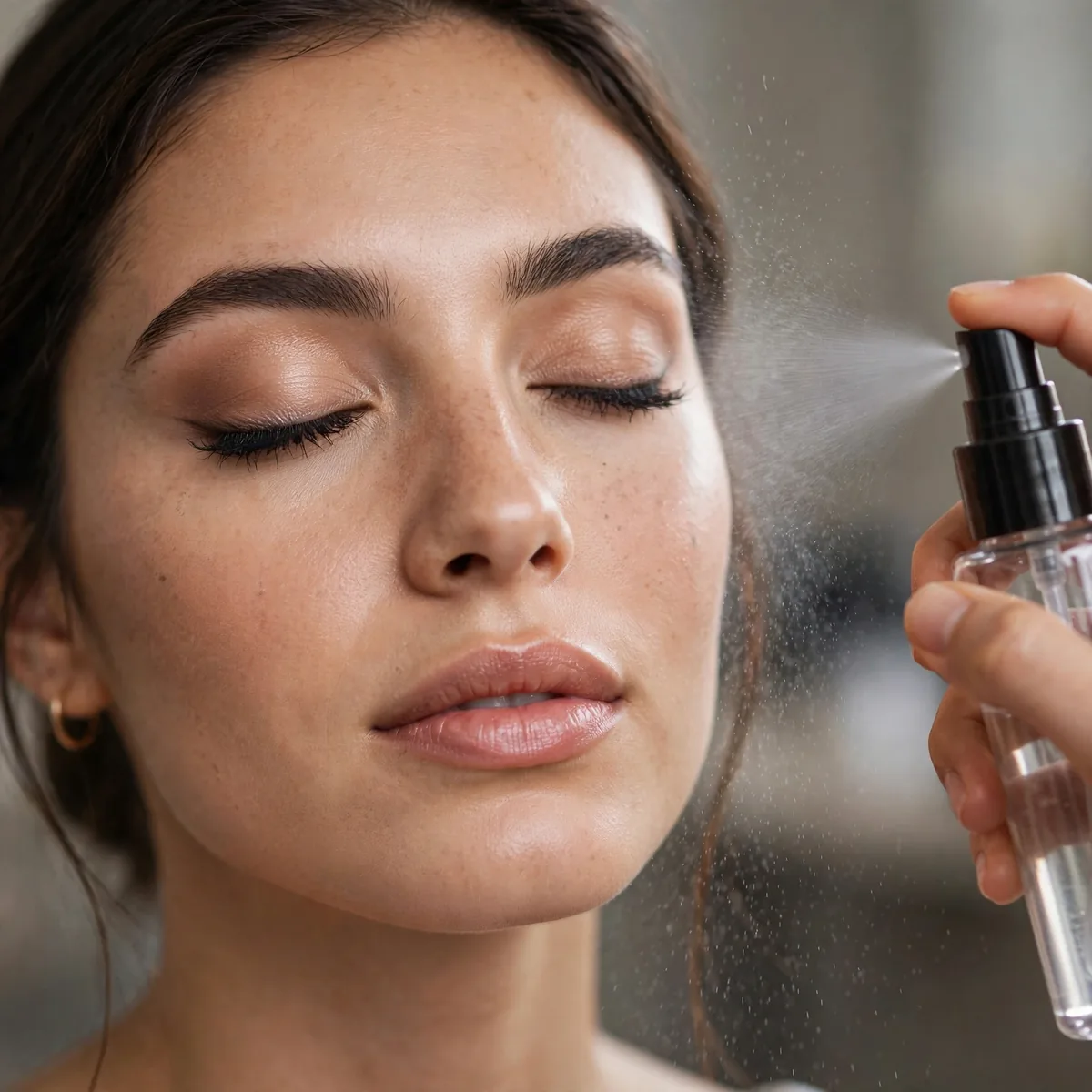
Spraying between cream layers locks each step.
Inter-layer spraying builds longevity cumulatively. The end spray is just the finale.
This technique shines between cream products: mist lightly after foundation, let it dry, then proceed to cream blush and contour before another pass. The spray essentially glues each layer to the one beneath it, so nothing migrates as the day heats up. Use a fine, even mist rather than a heavy spritz — you want a whisper of product, not a wet face. If the spray has skincare ingredients like niacinamide, you get a quiet complexion benefit layered in too.
The pitfall is impatience: applying the next layer over damp spray traps moisture and can make foundation pill or separate. Give each mist a full minute — longer in humid air — before continuing. Oily skin types can sandwich a whisper of powder into the routine instead of relying on spray alone between layers. At night, double-cleanse thoroughly, since all this layering means more product bonded to the skin than a minimal routine leaves behind.
Powder Before Foundation
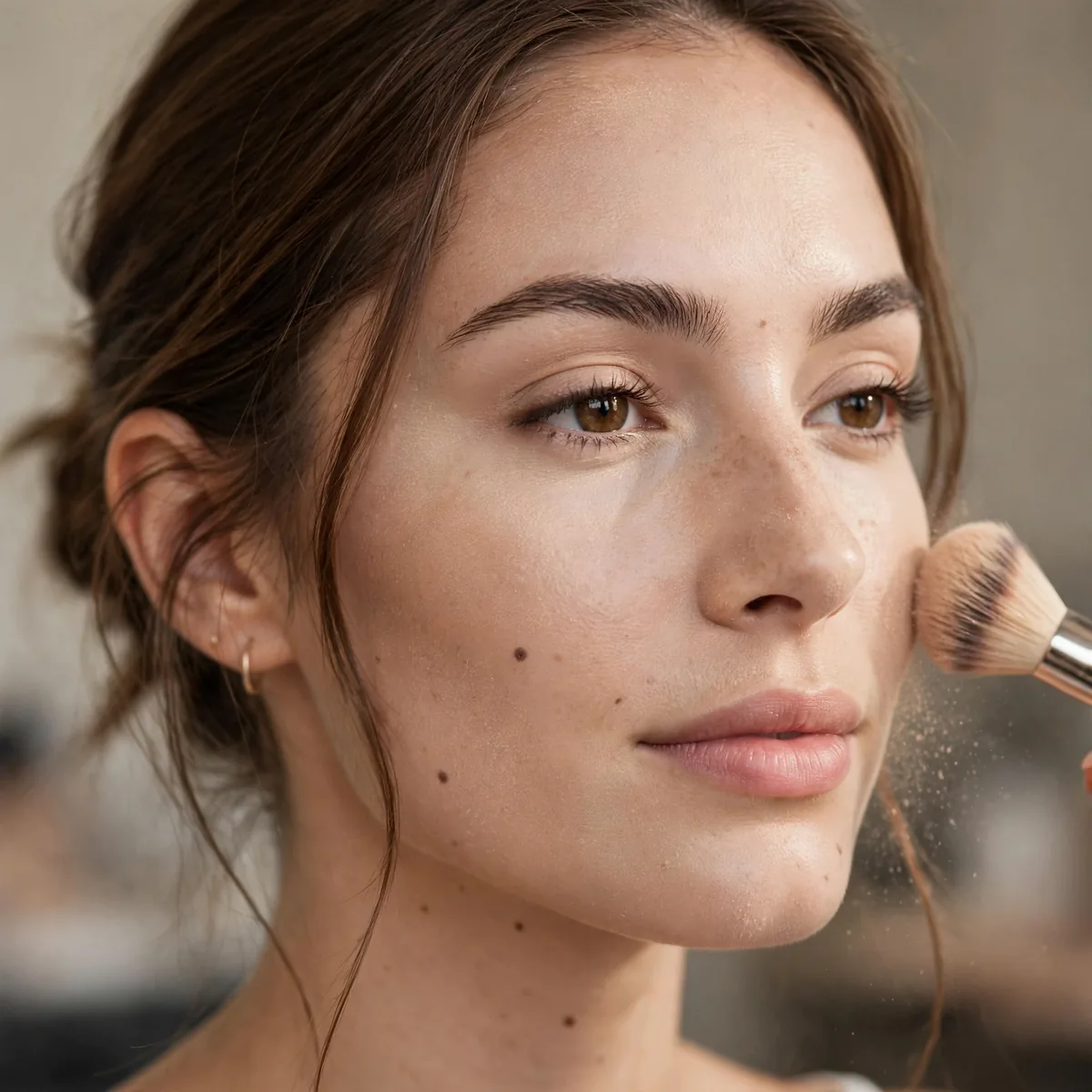
Powder on oily skin before foundation absorbs oil preemptively.
The reverse order works on oily skin. Rules adapt to skin type.
Use an extremely thin veil — a large fluffy brush with most of the product tapped off — dusted over the T-zone, chin, and anywhere you turn shiny by noon. Wait about thirty seconds so the powder absorbs surface oil, then stipple foundation over it with a damp sponge using pressing motions, never sweeping strokes. This suits very oily and combination skin; dry complexions should skip it, since powder beneath foundation emphasizes texture and fine lines.
Pair this trick with a mattifying primer underneath and a light setting spray on top for maximum staying power on hot days or at outdoor events. The common mistake is using a tinted or full-coverage powder, which darkens foundation's shade when the two blend; stick to translucent for this technique. In winter, when even oily skin produces less sebum, scale back to powder only on the nose — or drop the pre-powder step entirely until summer returns.
Dewy Finish: Spray Only
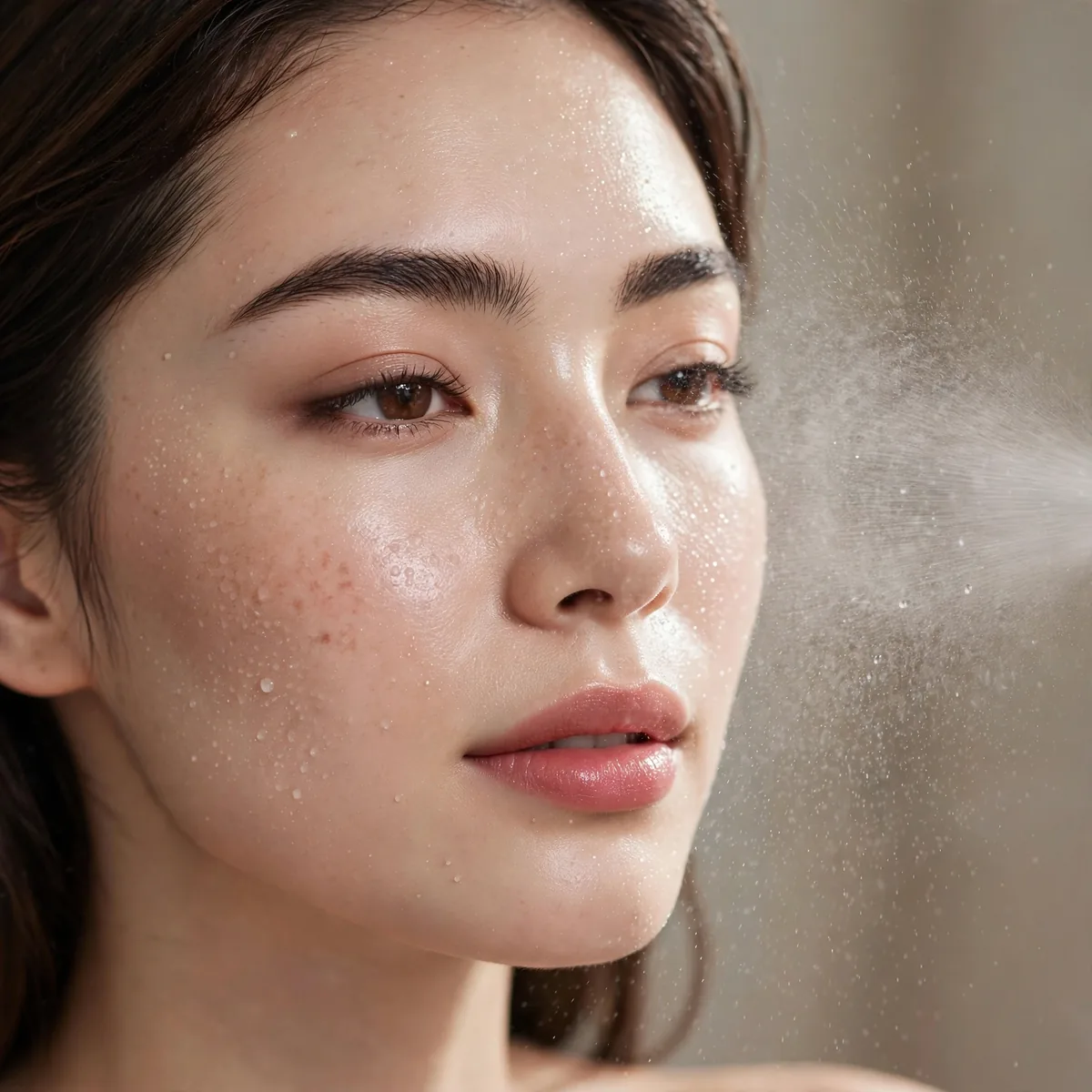
For dewy looks, skip powder entirely — spray preserves the glow.
Powder kills dewiness. If glow is the goal, spray alone.
Not every spray delivers dew — reach for hydrating mists with glycerin, aloe, or rose water rather than matte-lock formulas. A lovely trick is spritzing a damp beauty sponge before bouncing it over the face, which presses luminosity into the skin instead of letting mist sit on top. Work in cream everything — cream blush, cream bronzer, liquid highlighter — since powder products fight the glow you're protecting. Mist once more after mascara for a unified, lit-from-within sheen.
This routine flatters dry and normal skin most, and it's made for daytime events, brunches, and spring weddings where fresh-faced glow photographs beautifully. Oily types can adapt it by adding a gripping primer underneath and blotting the nose at hour four — then refreshing with another light mist instead of powder. Keep a travel-size spray in your bag; a midday veil revives dewiness instantly, which is something powder touch-ups can never do without killing the glow.
Matte Finish: Powder Forward
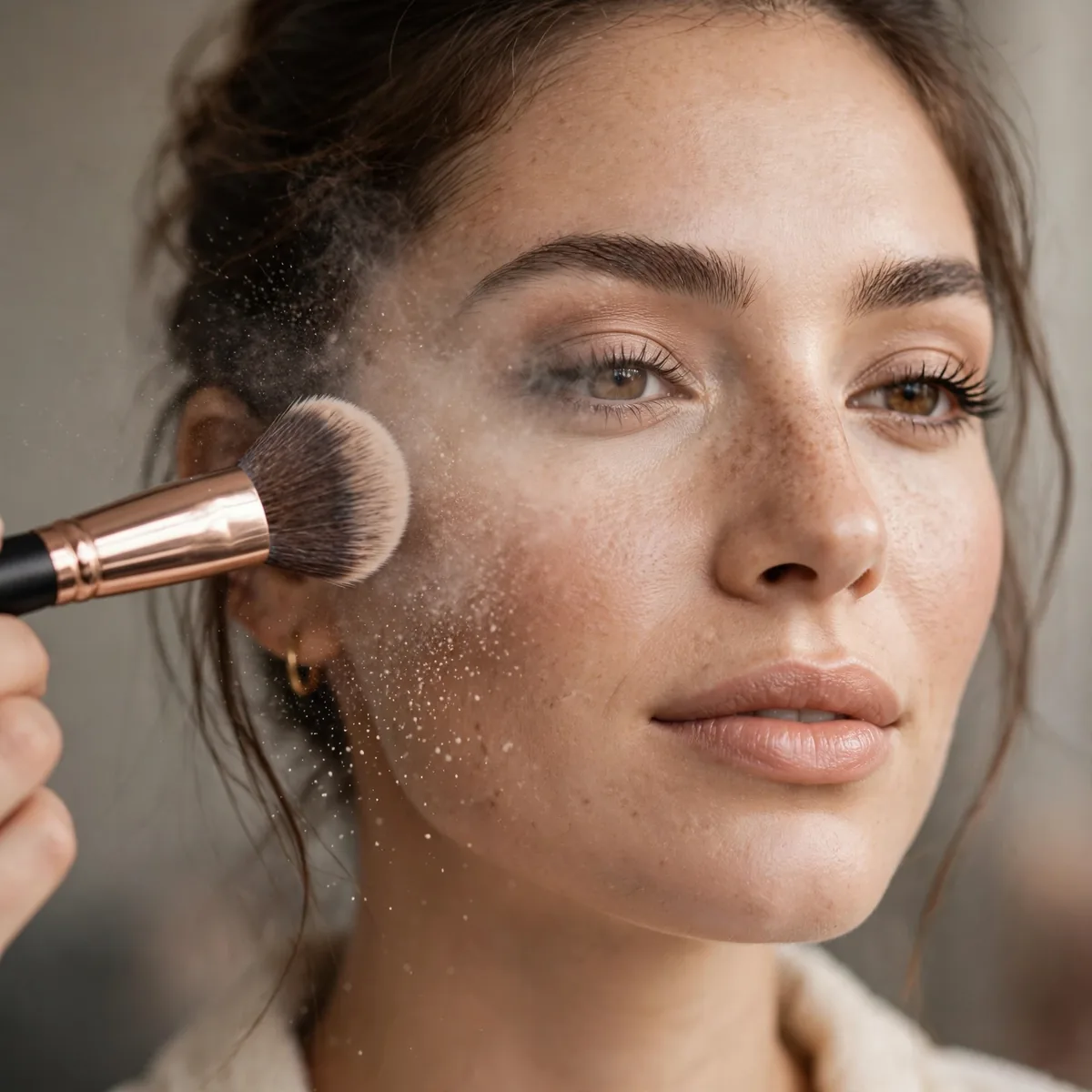
For matte looks, powder leads with spray as backup.
Matte needs powder’s absorption. Spray supports but doesn’t replace.
Silica- and kaolin-based powders are the matte finish's MVPs, absorbing oil for hours while keeping the face smooth. Press powder into the T-zone, chin, and around the nose with a puff — brushing leaves it too sheer to do its job. Follow with a mattifying setting spray; its job here is to erase any powdery texture, not add shine. Check your shade in daylight, since over-powdering can make complexion look flat and one-dimensional.
Matte shines on oily and combination skin, in summer heat, and for photography sessions where shine reads as grease under harsh lighting. Keep blotting papers and a pressed compact on hand — touching up with blotting first prevents the layered-cake buildup by afternoon. Pair the look with a satin or matte lipstick rather than a gloss to keep the finish consistent, and at night use an oil cleanser first so the heavy layer of powder and long-wear products dissolves fully.
Touch-Up Rules
Touch up with powder (after blotting); refresh with spray.
Powder fixes problems; spray revives everything. Different touch-up jobs.
Build a tiny touch-up kit: blotting papers, a pressed powder compact with a mirror, and a travel-size setting spray cover every scenario without weighing down your bag. Midday, blot the T-zone first, then press — never sweep — a whisper of powder only where shine returns. If the whole face looks tired rather than shiny, skip the powder and mist lightly instead; the spray rehydrates and re-seats everything without adding another layer of product.
The touch-up mistake everyone makes is powdering over unblotted oil — it mixes into a paste that clogs pores and looks worse by evening. Another is touching up too often; most faces need only one midday powder pass and one spray refresh, not hourly attention. For long events, do a full refresh at the halfway mark: blot everything, add a touch of cream blush to revive color, then mist. That five-minute reset carries makeup convincingly into the night.
Humidity Performance
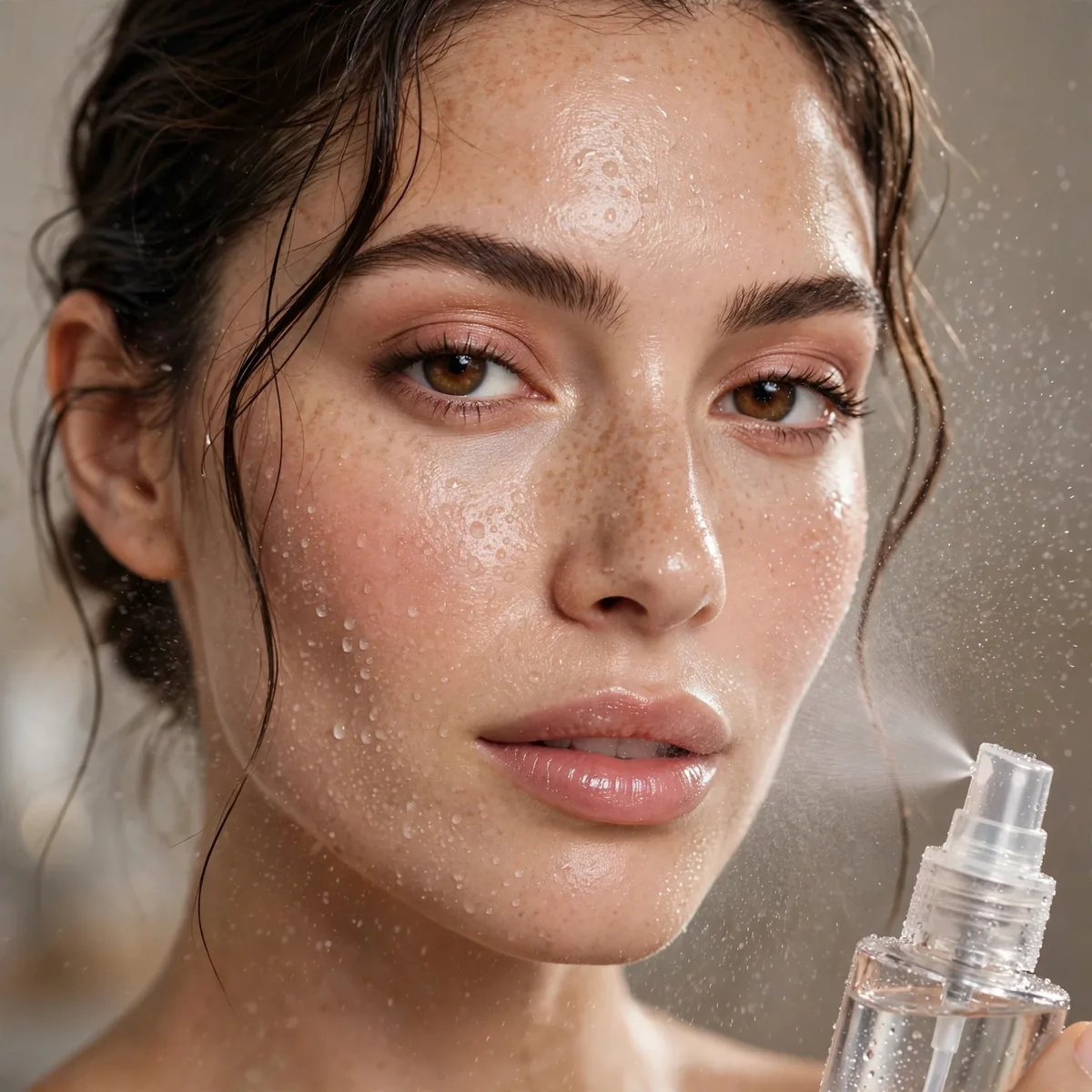
In humidity, you need both — powder for oil, spray for seal.
Humid climates defeat single-method setting. Layer your defenses.
In humidity, setting starts before foundation: a gripping, silicone-based primer creates the tacky base that everything else clings to. Layer waterproof or water-resistant formulas for blush, mascara, and liner so sweat can't relocate them. Then do the double seal — powder on the T-zone, spray over everything — and give the spray an extra minute to dry, since humid air slows its set time. Carry blotting papers and a mini spray; touch-ups are inevitable when the air feels like soup.
The humidity mistake is skipping primer and relying on setting products alone — without that tacky base, everything slides by hour three no matter how much you mist. Another trap is over-layering heavy creams, which turn mobile in heat; switch to lightweight, oil-free formulas in summer months. This routine earns its keep at outdoor weddings, beach vacations, and festivals. At night, cleanse extra thoroughly, since humidity plus long-wear layers is the fastest route to clogged pores.
The Mistake to Avoid
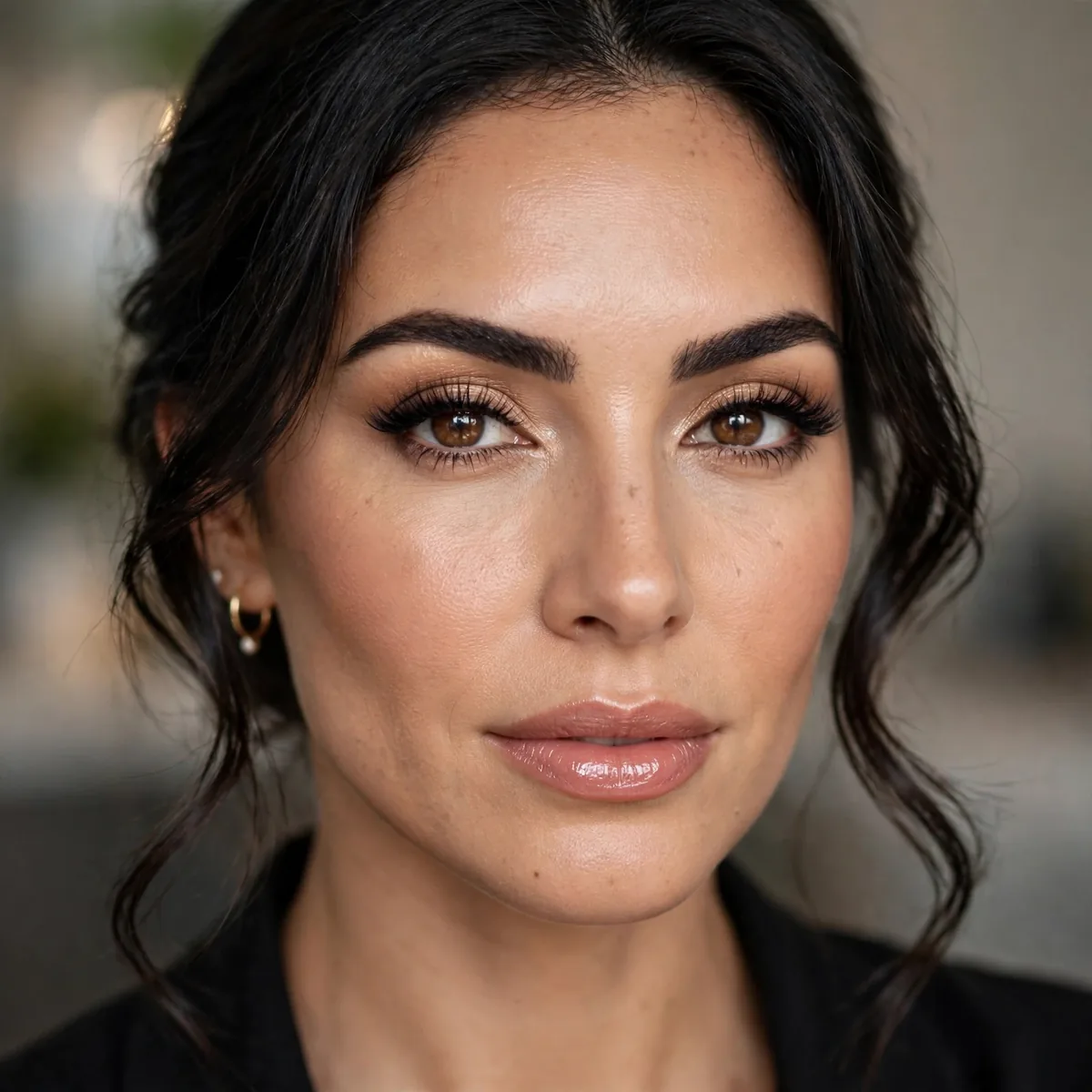
Spraying too close causes spots; powdering too much causes cake.
Distance for spray (arm’s length); restraint for powder (less than you think).
Fix spray spots by holding the bottle an arm's length away and moving it in a continuous X or T — stationary spraying is what creates droplets. If you do get spots, don't panic: let them dry, then tap a damp sponge gently over the area to blend them away. For powder cake, the rescue is a light mist afterward, which melts excess powder back into the skin. Prevention beats repair every time, so build thin and pause between layers.
Always shake your spray before use — the active ingredients settle, and an unshaken bottle delivers watery mist with none of the staying power. Another common error is mixing a mattifying spray with a dewy foundation, which fights your own base; match spray finish to foundation finish for coherence. And never spray before your base has set — misting over wet foundation disrupts coverage instead of sealing it. Timing, like distance and restraint, is a quiet part of the technique.
Budget vs Premium
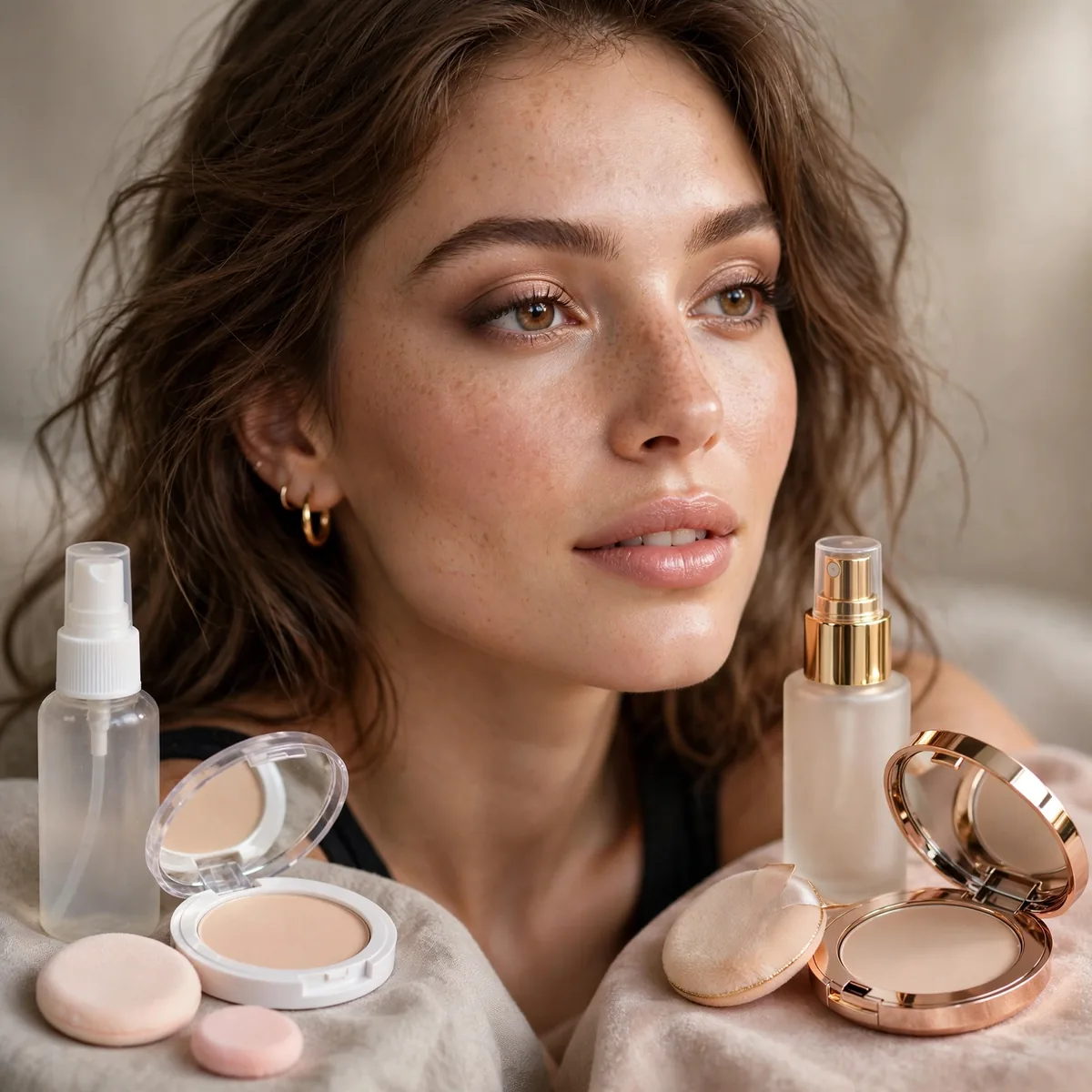
Drugstore sprays and powders perform remarkably well.
Setting is one category where price matters least. Technique matters most.
What actually separates a great set from a mediocre one is application: a drugstore spray misted from proper distance with patient drying time outperforms a luxury bottle blasted from two inches away. If you want to spend somewhere, invest in tools — a quality fluffy brush distributes powder more evenly than any formula upgrade. Check ingredient lists rather than price tags; glycerin, silica, and kaolin appear in budget and premium formulas alike.
Drugstore shelves now carry every finish worth having: matte-locking sprays, dewy hydrating mists, and finely milled translucent powders that rival anything at triple the price. The one budget caveat is nozzle quality — cheaper sprays sometimes deliver a coarser mist, so test the spray pattern on your hand first. Replace sprays every year or so; old formulas can separate and lose their setting power, and no amount of technique fixes an expired product.
Eye Makeup Setting
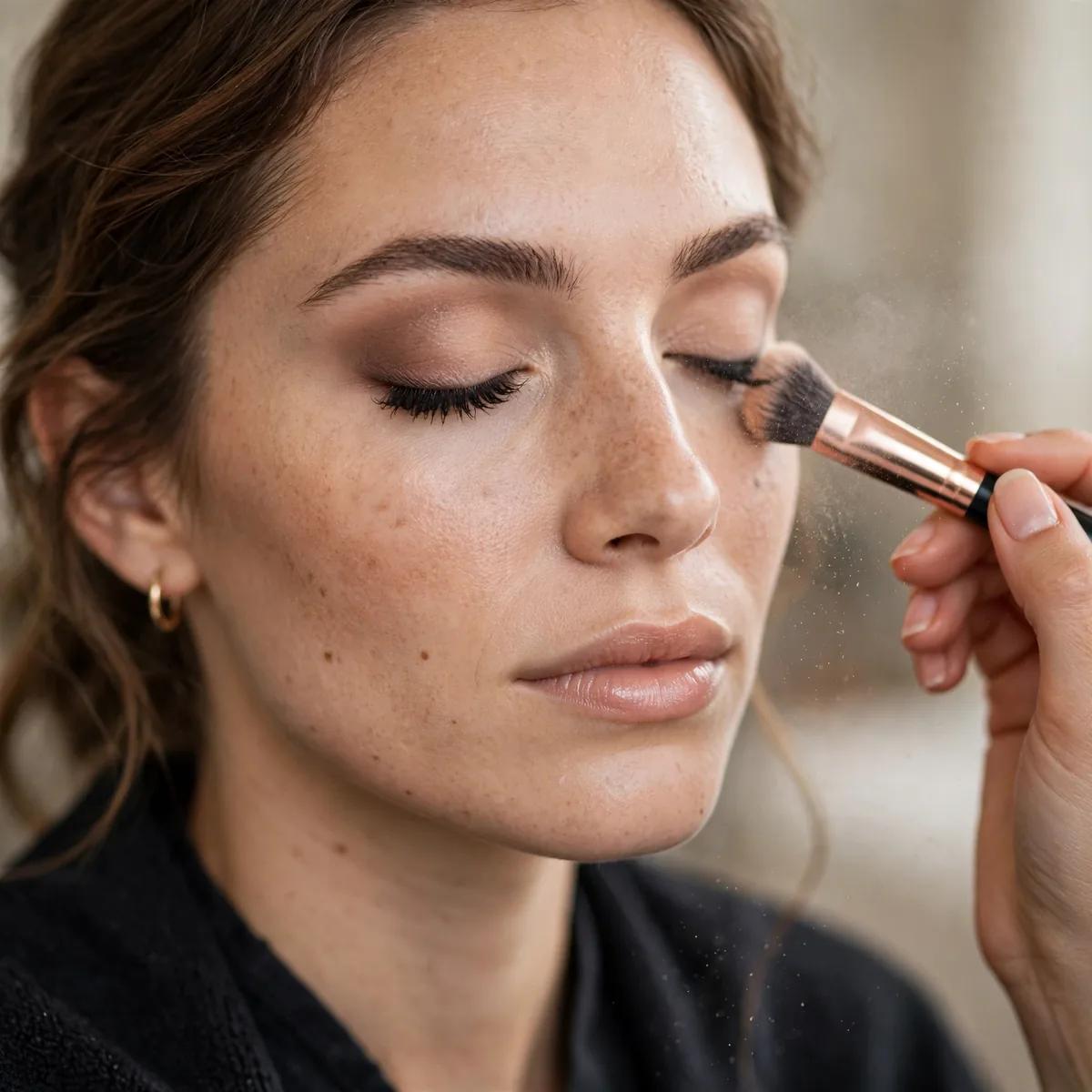
Set cream eye products with powder shadow; mist carefully around eyes.
Eyes need powder setting more than spray. Creasing is powder’s enemy to fight.
Eyeshadow primer is the foundation of crease-free lids — pat a layer from lash line to brow bone and let it set tacky before any shadow. For cream shadows, press a matching powder shade on top with a flat brush to lock the color; this two-step bond survives oily lids that swallow single-product applications. When misting, close your eyes and aim the spray above the face so only a fine drift settles — direct spraying stings and can dissolve liner.
Under-eye concealer benefits from a featherlight dusting of finely milled powder with a small fluffy brush — but skip heavy baking on dry or mature skin, where it settles into fine lines within hours. Waterproof mascara and smudge-proof liner are non-negotiable for long days, since eye-area setting products can only do so much. The common mistake is over-spraying near the eyes to 'lock' shadow; too much mist breaks down concealer instead, so keep the face mist for the lower face.
Your Setting Wardrobe
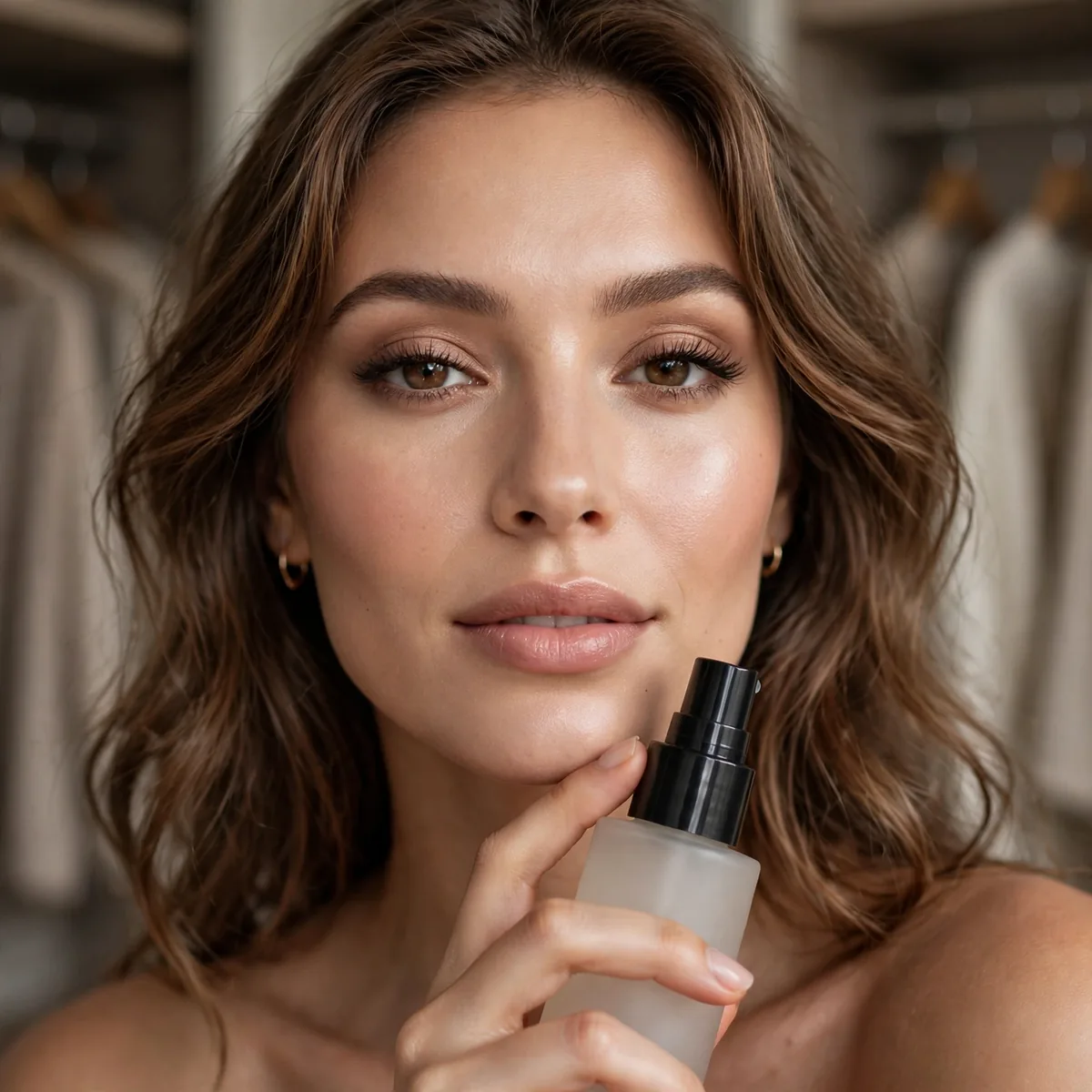
Own both: a translucent powder and a versatile spray.
For the full long-wear system, our long-wear guide integrates both. Two products cover every scenario.
A complete wardrobe needs four players: a loose translucent powder for home application, a pressed compact for the bag, an all-rounder spray, and one specialty — a matte locker or a dewy hydrating mist depending on your skin. Travel sizes are your friend; full bottles at home, minis on the go. Store sprays away from heat and sunlight, since temperature swings degrade formulas faster. Label nothing — you'll learn each bottle by its weight and mist pattern within a week.
Rotate the wardrobe with the seasons: mattifying formulas and oil-control powders earn their place in summer humidity, while hydrating sprays and lighter powdering take over in winter dryness. Oily skin leans on the matte locker year-round; dry skin lives with the dewy mist. The payoff of owning both systems is adaptability — when a surprise heatwave or a dry airplane cabin hits, you already own the answer instead of fighting your makeup all day.
Both, strategically — pin this guide. For the full system, see long-wear tips, or master natural foundation first.