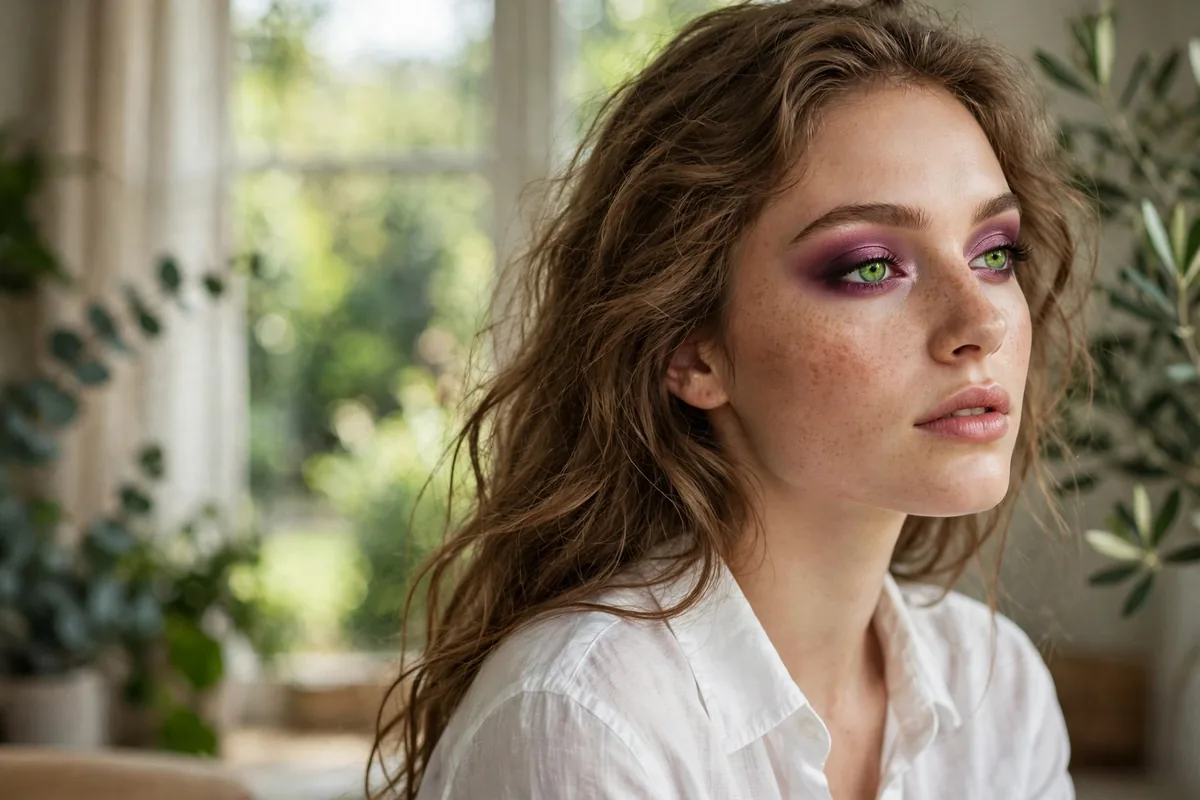
Someone told you to stop wearing shimmer after 40. They were wrong.
The issue was never shimmer — it was chunky glitter and frosty formulas that emphasize texture. Modern satins, pressed shimmers, and cream formulas give luminosity that flatters mature lids beautifully.
The rules are simple: fine shimmer over chunky glitter, lid-only placement, and matte in the crease. Follow those and shimmer becomes your best friend.
Here are 20 ways to do it right. Let’s get into it.
Champagne Shimmer Wash
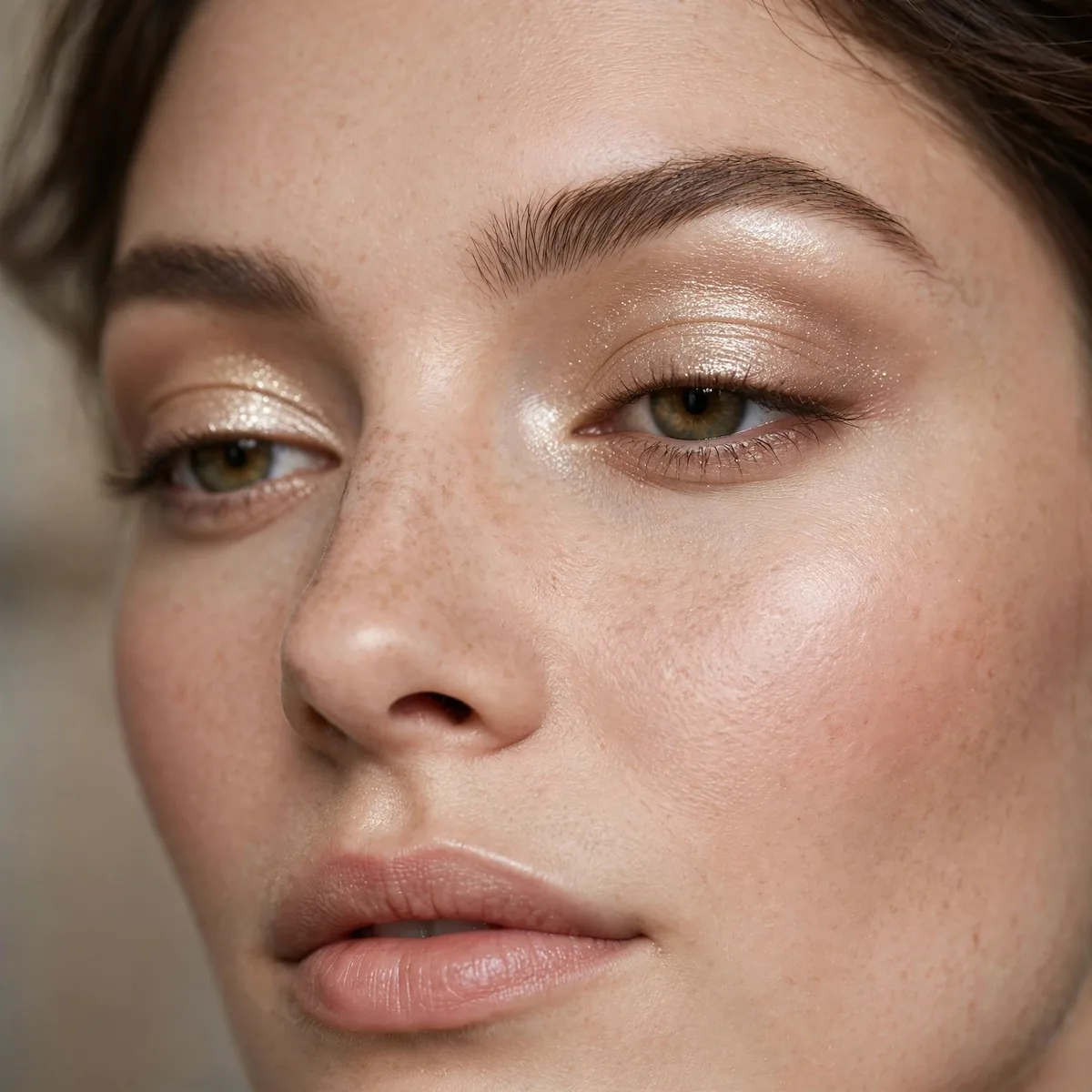
A sheer champagne shimmer across the lid — the universal flatterer. Brightens, lifts, never emphasizes texture.
Choose finely-milled formulas. The smaller the shimmer particles, the more flattering the finish.
This shade earns its reputation across skin tones — fair complexions get brightness without washing out, while medium and deep tones gain a lit-from-within lift because the pink-beige undertone never turns ashy. Over primer, a champagne wash holds from morning coffee through evening plans, so it doubles as a five-minute office eye that transitions to dinner with nothing more than a deeper liner.
For application, press the shimmer on with a flat shader brush rather than sweeping — pressing deposits pigment instead of scattering fallout, and a damp brush intensifies the payoff for evening. One common mistake is layering a second shade on top, which muddies the champagne; keep it solo and let the inner corner stay bare so the center lid remains the brightest point.
Soft Gold Lid
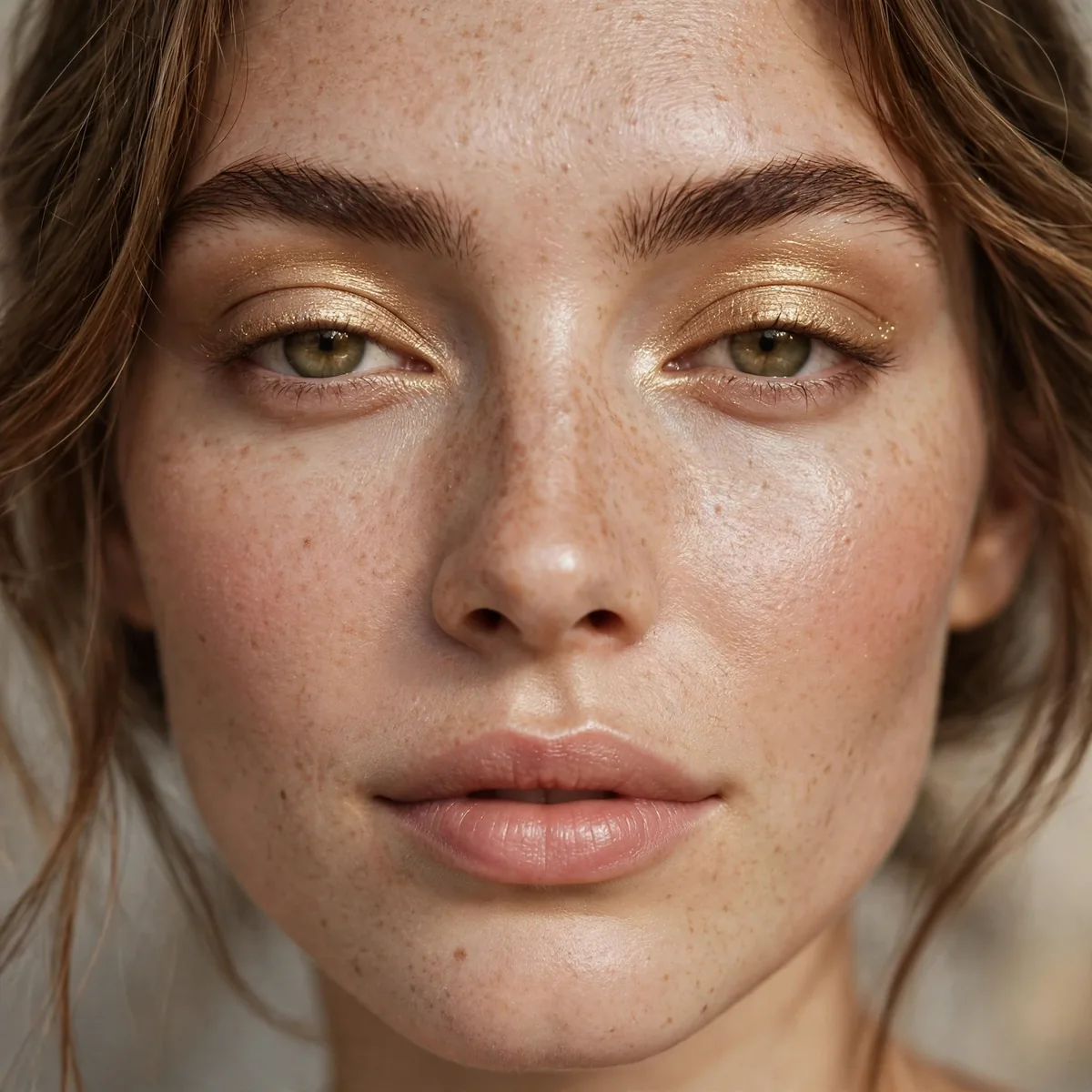
Warm gold shimmer on the lid with matte brown in the crease — the classic combination that works at every age.
Gold warms the whole eye area. It’s like candlelight for your face.
Blue and green eyes gain the most here — gold sits opposite blue on the color wheel, so the contrast makes irises look sharper and more awake. Pair the eye with a peachy-nude blush and a satin lipstick in a warm rose, since cooler pinks can fight the warmth. A thin bronze pencil along the upper lashes deepens the whole look without stealing the gold's spotlight.
The biggest mistake is choosing a gold with chunky glitter — large particles settle into fine lines and read frosty under office lighting. Stick to a finely milled shimmer and blend the matte brown crease shade upward with windshield-wiper motions so no hard edge separates the two. For longevity, set the lid with a light dusting of translucent powder before shadow; gold holds far better on a prepped base.
Satin Taupe Glow
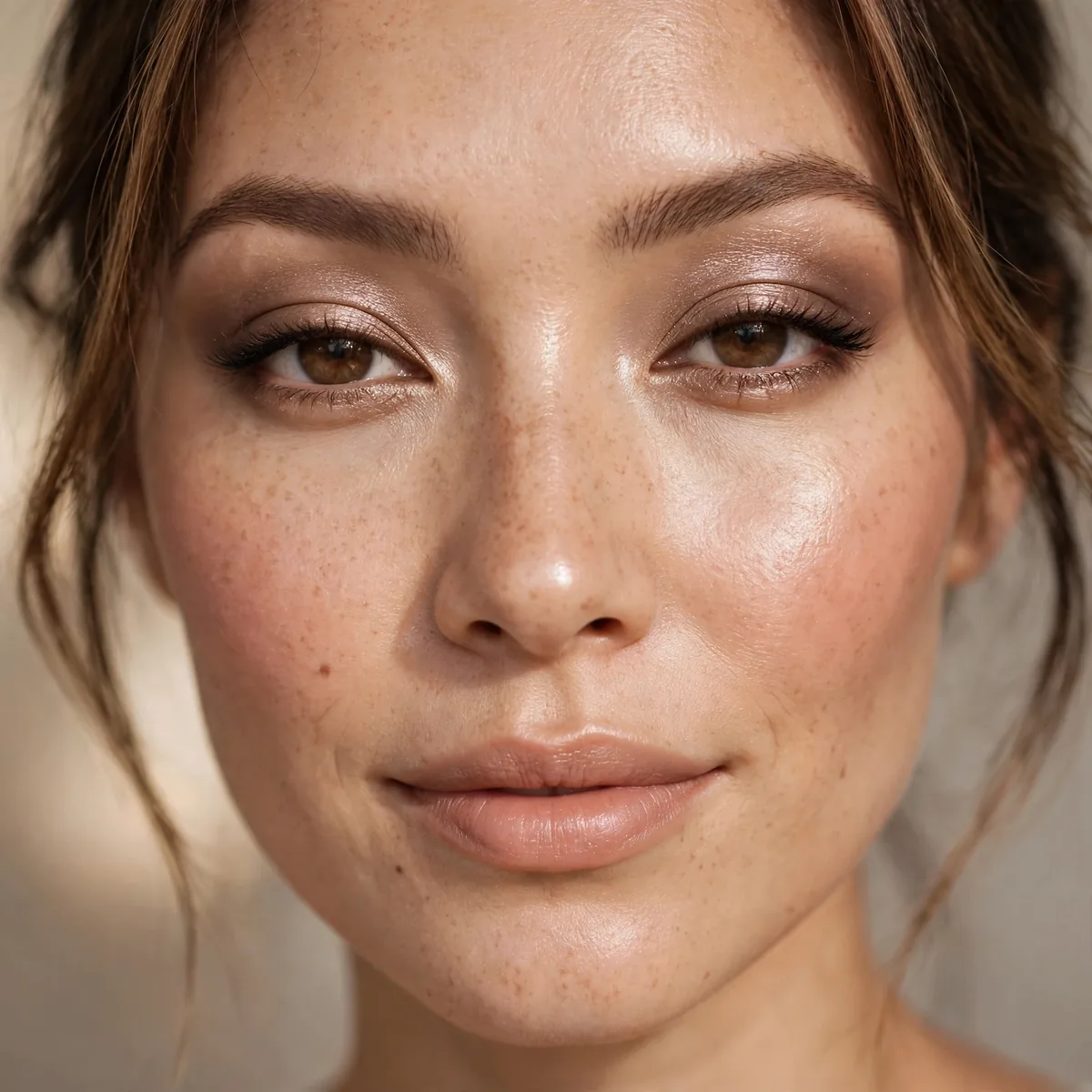
A satin-finish taupe — luminosity without obvious sparkle. The "is she wearing shimmer?" shade.
Best for anyone nervous about shimmer. Satin reads as healthy skin, not makeup.
Hooded and deep-set eyes love this shade because satin reflects light without the glare that shimmer throws into creases. Sweep it from lash line to brow bone with a fluffy brush, then deepen just the outer third with the same taupe layered twice — the gradient creates dimension while the satin finish keeps everything soft. It photographs beautifully for daytime events where flash can exaggerate sparkle.
In summer humidity, a satin taupe over an eyeshadow primer easily survives eight hours without creasing, making it the low-maintenance answer for hot days. The common error is applying it too sheer to see — build in two thin layers rather than one heavy pass, which can look patchy. Finish with waterproof mascara and a muted mauve lip, and the whole face reads polished with barely any effort.
Rose-Gold Luminosity
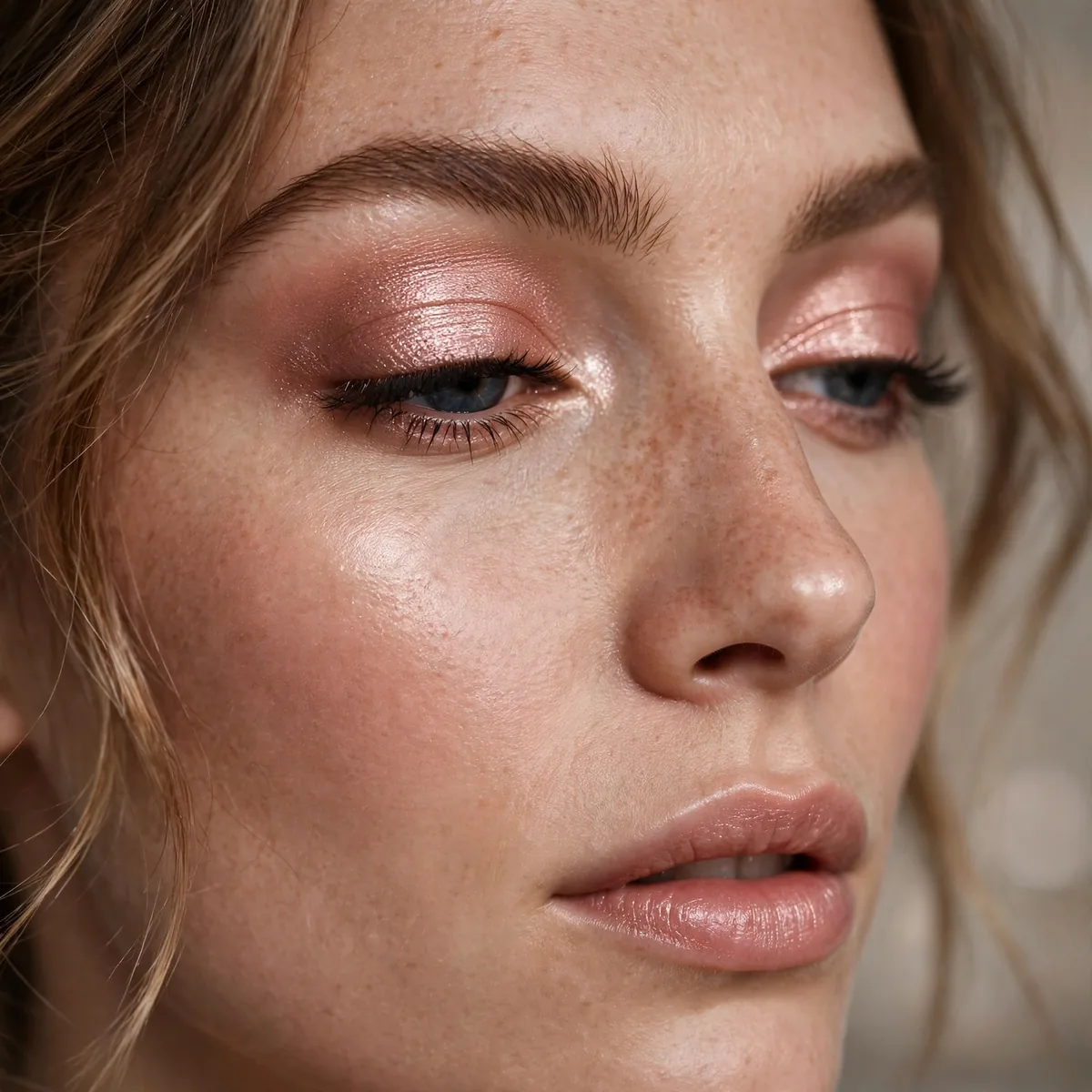
Rose-gold shimmer on the lids — romantic, flattering, modern.
The pink tones brighten tired eyes beautifully. A genuinely age-defying shade.
Fair skin with cool undertones should reach for a rose gold that leans pink rather than copper — the pink keeps the warmth flattering instead of brassy. Medium and olive complexions can wear the full coppery version, which deepens beautifully against golden skin. To take this look from day to night, press a slightly deeper rose shimmer into the outer V and swap your nude lip for a berry stain.
Cream blush in a dusty rose ties the whole face together — powder blush can look separate from a shimmery lid, while cream melts into the same luminous family. One mistake to avoid is pairing rose gold lids with frosted pink lips; the double frost reads dated. A satin or velvet lip finish balances the lid's glow, and a coat of lengthening mascara keeps the eye defined rather than dreamy.
Pressed Pearl Highlight
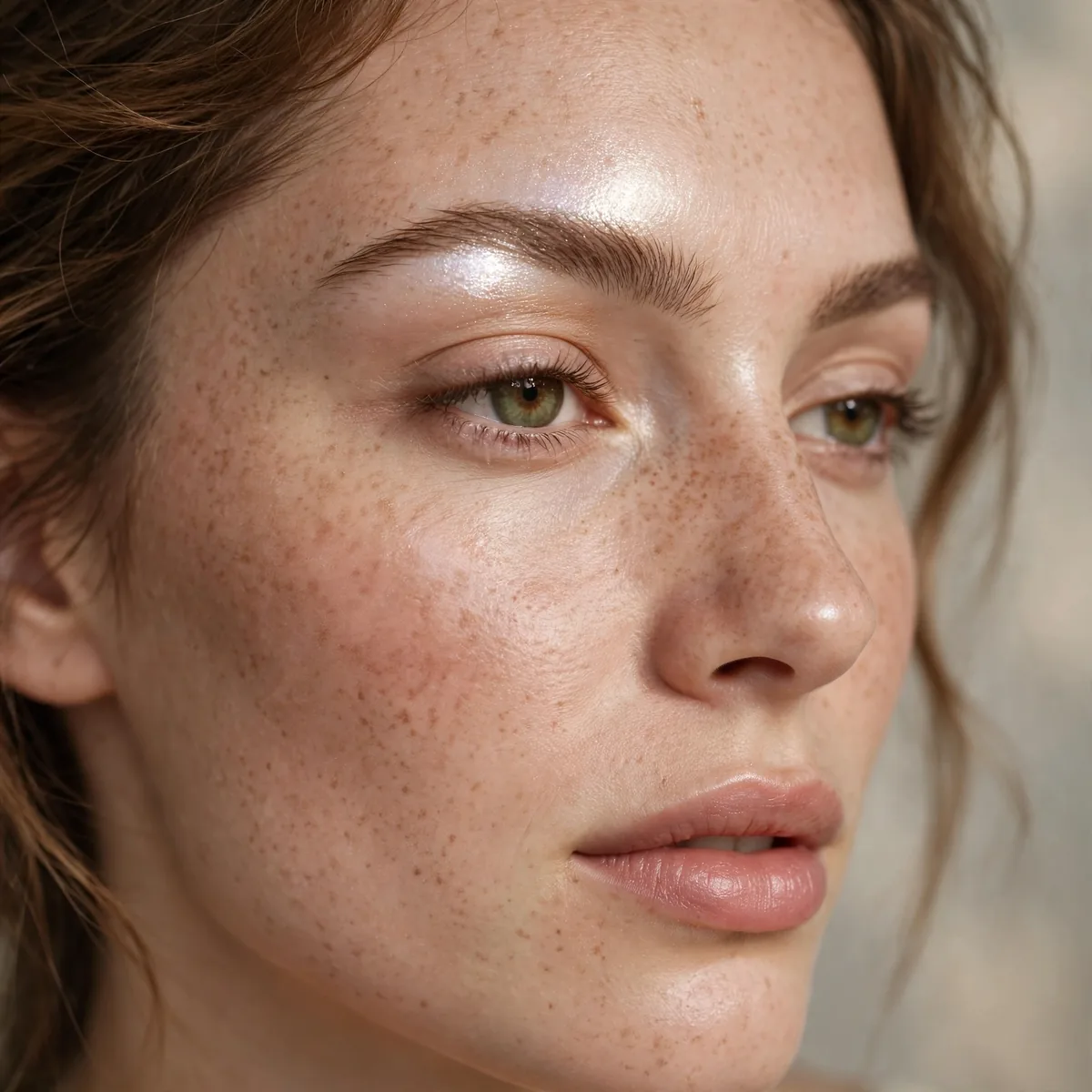
Pearl shimmer just under the brow bone and at the inner corner — strategic brightness.
Placement is everything: brow bone and inner corner lift; all-over shimmer overwhelms.
Apply pearl with a small detail brush or a fingertip, tapping — never dragging — since dragging deposits shimmer where you don't want it. On mature eyes the highlight should sit just below the brow bone, not on it; placing it a millimeter lower lifts without emphasizing the bone's texture. Skip this step entirely if your brow area is very textured, and rely on the inner corner alone for brightness.
The classic error is using a white matte instead of pearl for the brow bone — matte white looks chalky on mature skin, while pearl's soft reflection reads as light. This placement suits every eye shape, but deep-set eyes benefit most because the inner corner catches light that their sockets naturally lose. Keep the rest of the eye matte and the pearl becomes the whole brightening story, no extra products needed.
Warm Bronze Sheen
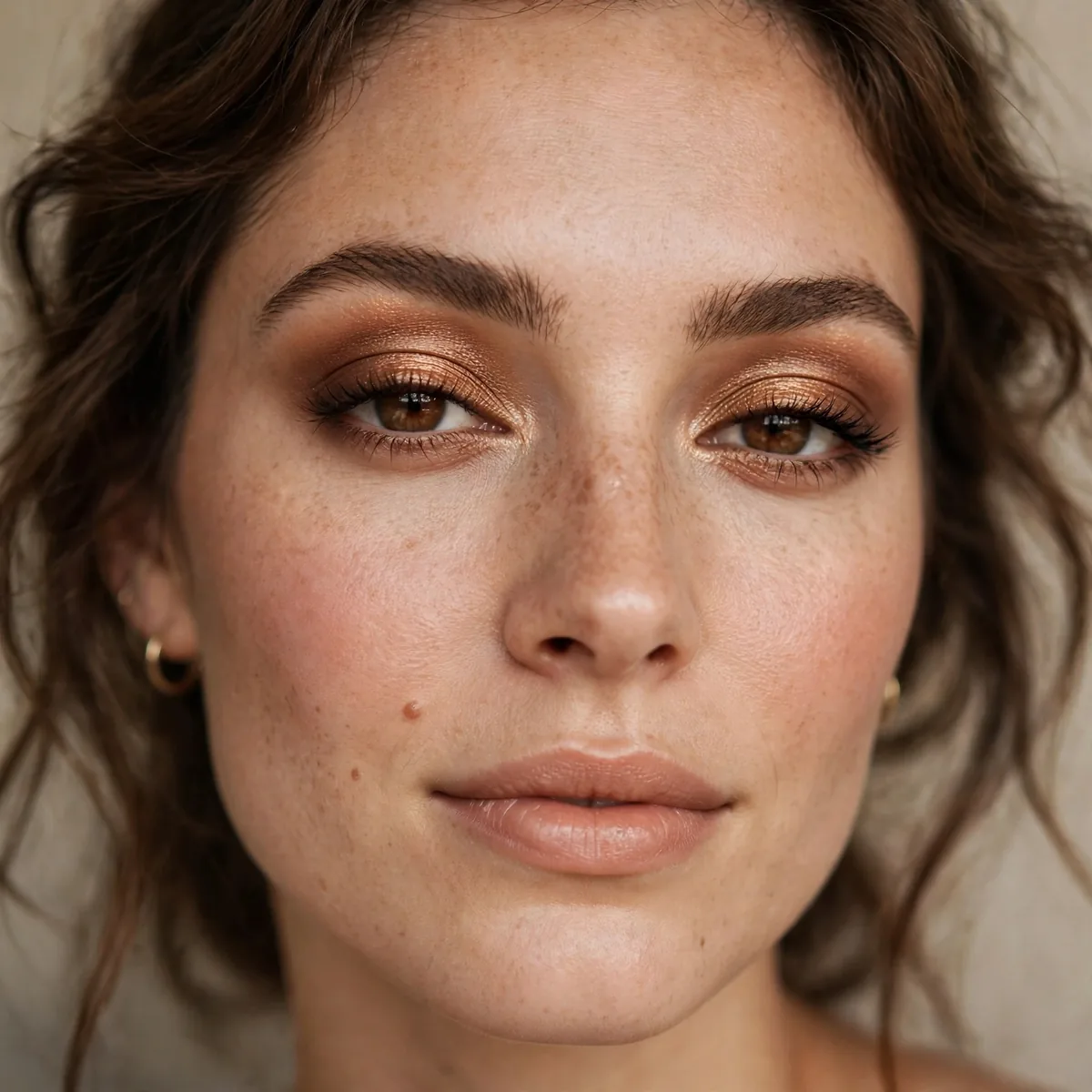
A sheer bronze sheen — warmth and light in one. Universally flattering.
Sheer formulas are more forgiving than opaque metallics on textured lids.
Bronze is the holiday-season hero — it echoes festive warmth without the fuss of red or green, and it pairs with the season's deeper wardrobe palettes. For wear time, press the sheen over a cream bronze base rather than bare lids; the cream grips the powder and prevents the midday fade that sheer formulas are prone to. By evening the color melts into a soft patina that actually looks better than the fresh application.
Removal is simple — bronze sheens dissolve easily with micellar water on a cotton pad, no tugging required, which matters for the delicate eye area. A common mistake is applying bronze over a yellow-toned concealer, which can turn the whole lid muddy; use a brightening concealer with a peach undertone instead. Finish with a warm nude gloss, and the look stays cohesive from lids to lips.
Shimmer Only on the Lid
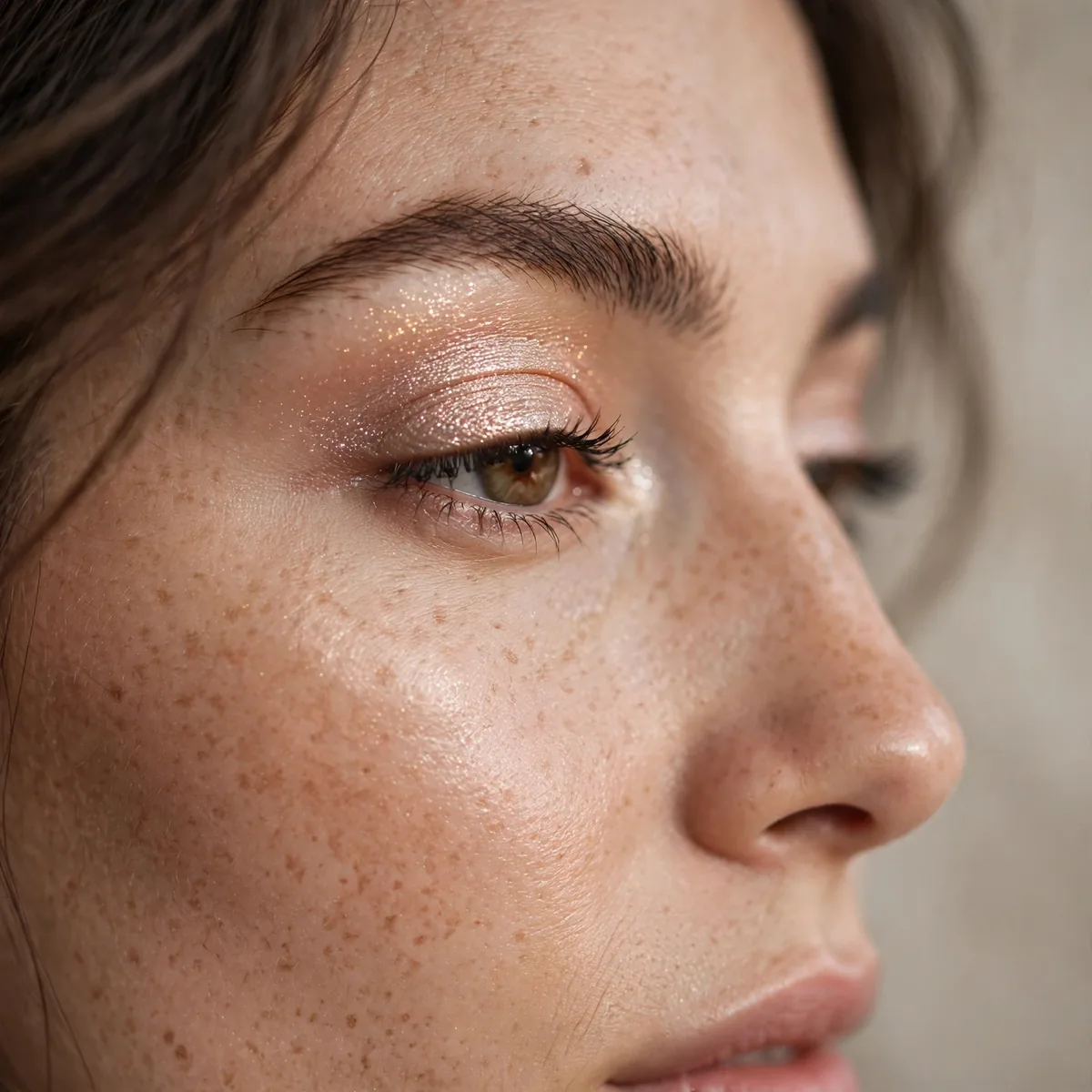
The golden rule: shimmer on the mobile lid only, matte everywhere else. Structure from matte, light from shimmer.
This single rule solves 90% of shimmer problems on mature eyes.
For hooded eyes, apply the lid shimmer with eyes open, looking straight into the mirror — this shows exactly which part of the mobile lid is visible, so you place light where it actually shows. Blend the matte crease shade slightly above the natural crease to create the illusion of depth, then keep every bit of shimmer below that line. Tightlining the upper waterline with a dark pencil adds definition that shimmer alone can't provide.
The mistake that breaks this rule is using a shimmery transition shade in the crease — it reads as the same error as crease shimmer, just quieter. Keep transition, crease, and outer-V shades strictly matte, and reserve every reflective particle for the lid. A spoolie-brushed brow and a single coat of mascara complete the structure, and the whole eye takes under ten minutes once the habit sticks.
Cream Shimmer Stick
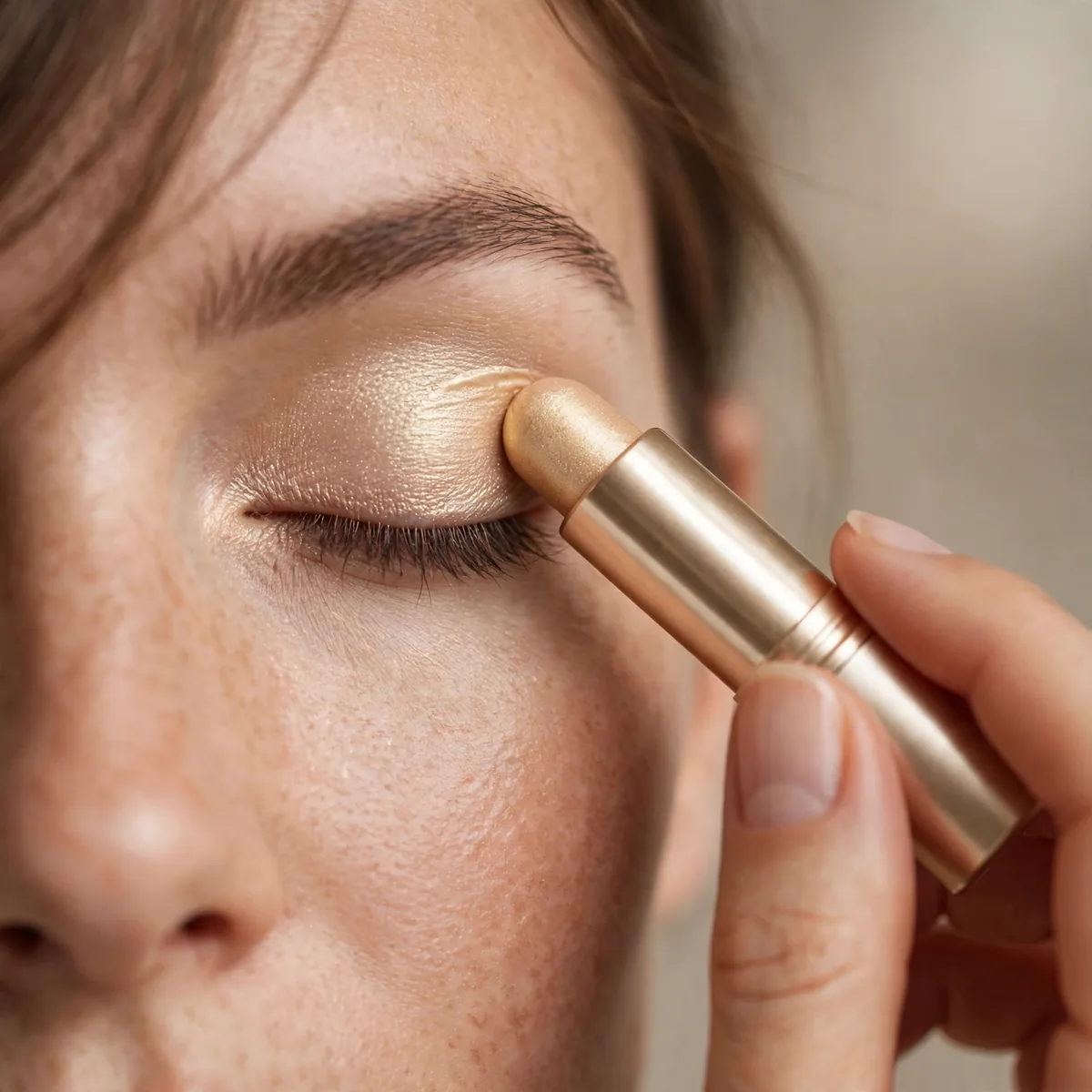
Cream shimmer sticks blend seamlessly and never look powdery. The most forgiving shimmer format.
Swipe on, blend the edges with a finger, done. Faster than powder and more flattering.
In heat and humidity, cream sticks outperform powders — they melt into skin rather than sitting on top, so there's less to crease or fade by afternoon. Swipe a thin layer across the lid, let it set for thirty seconds, then blend only the edges with a fingertip; blending the whole thing sheers it away. Set with a whisper of matching powder shadow if you need twelve-hour wear for a long event day.
Dry or crepey lids benefit most from this format, since cream never emphasizes texture the way powder can. One caution: layering a cream stick over an oily eye primer can cause slipping — use a mattifying primer or a dusting of translucent powder first. Toss the stick in your bag for touch-ups; a quick swipe at the inner lid revives the whole eye, no mirror precision required.
Soft Copper Glow
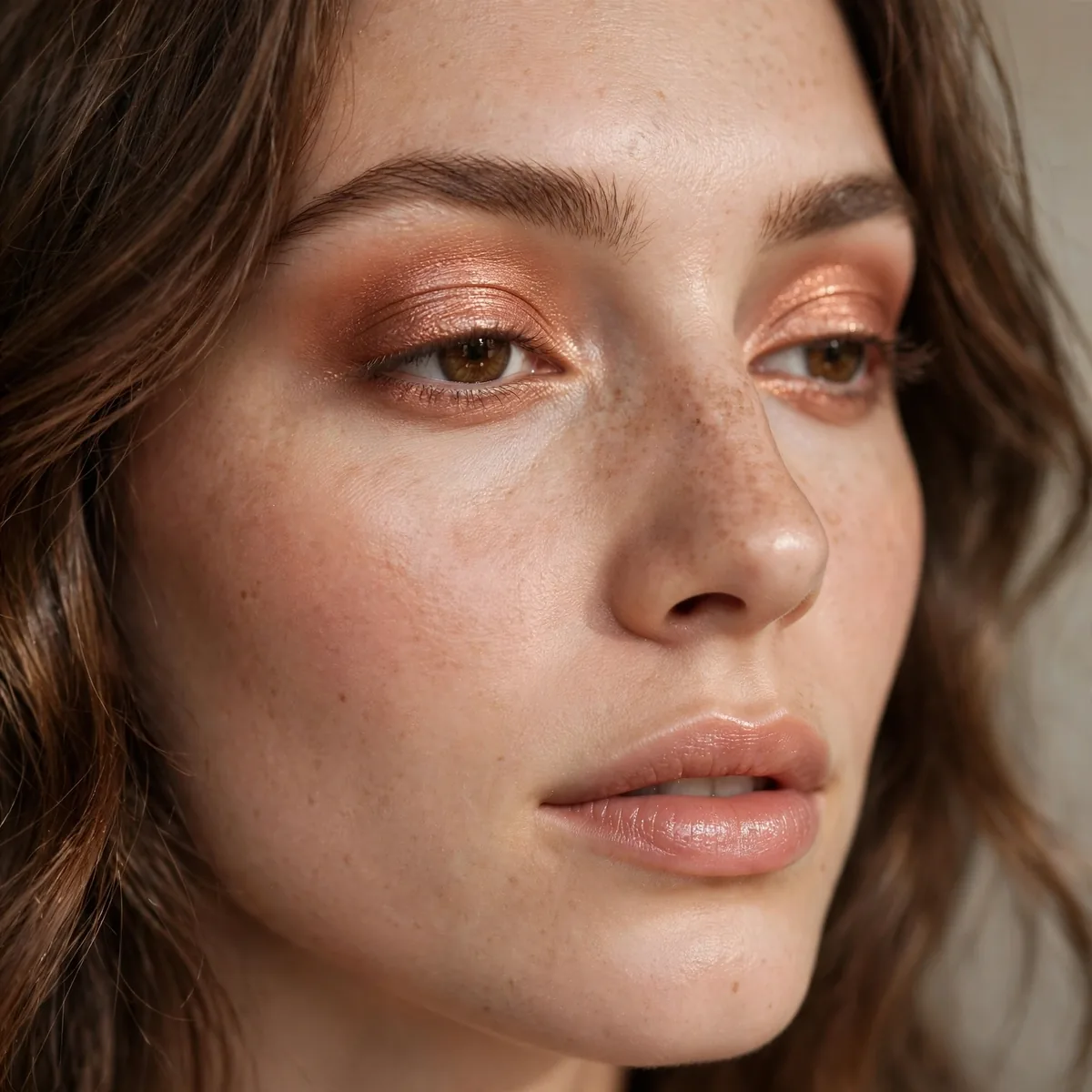
Copper shimmer — warm, rich, gorgeous on brown and hazel eyes especially.
Copper’s warmth counteracts any sallowness. It’s genuinely brightening.
Fair skin should keep copper sheer — a wash of color rather than full opacity — so the warmth reads as glow instead of orange. Medium to deep complexions can wear copper bolder, where it behaves like a neutral with energy. Pair it with terracotta blush on the cheeks; the shared warm family makes the whole face harmonious, and a glossy nude lip keeps the focus on the eyes.
To take copper from day to night, smudge a dark brown pencil along the upper lash line and blend it into the outer corner — the added depth turns the glow sultry without changing the shadow. The mistake to avoid is pairing copper lids with orange-red lipstick; the combination overwhelms. A sheer berry or warm mauve lip balances the warmth, and copper's glow does the rest of the talking.
Shimmer Inner Corner
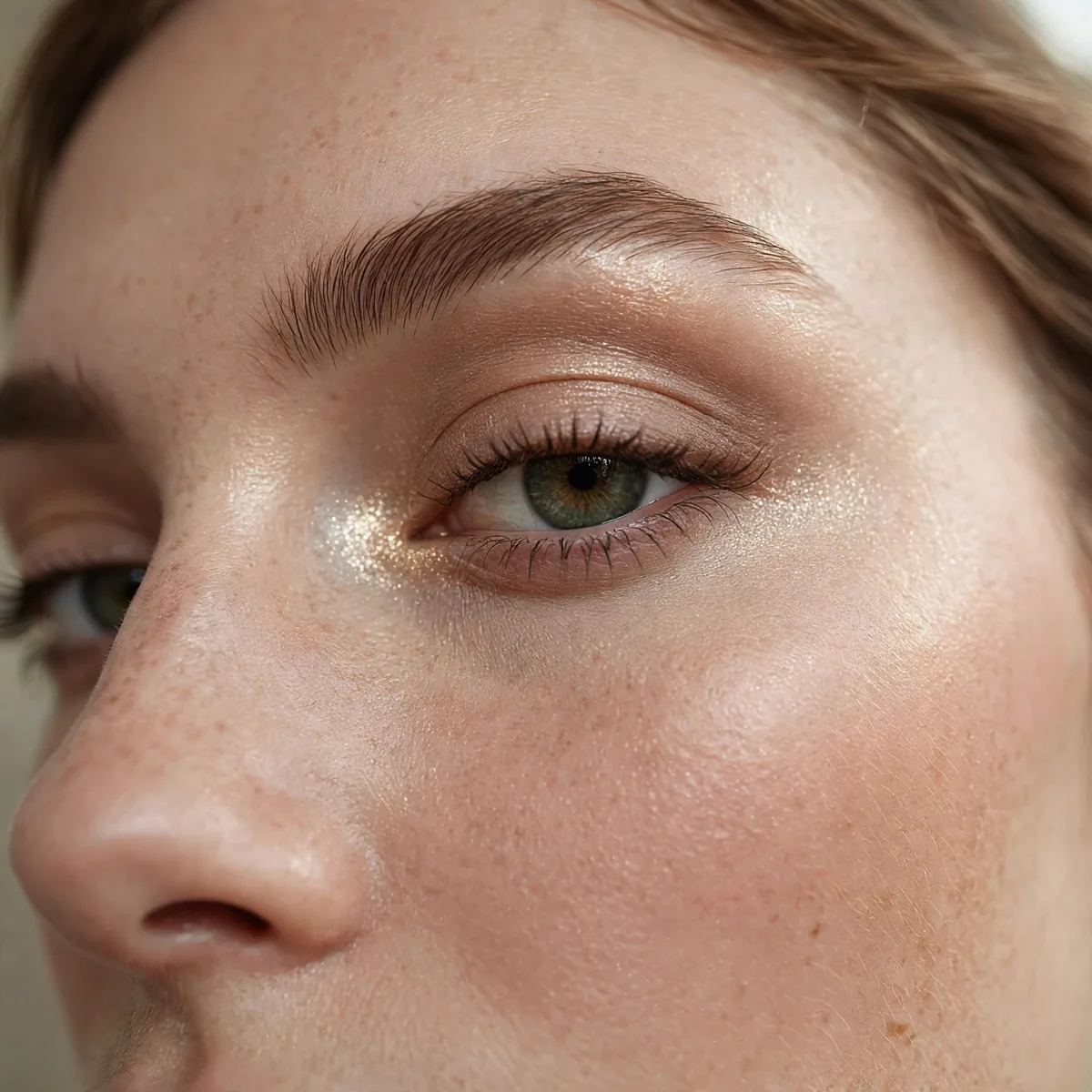
Just the inner corner in shimmer — the smallest placement with the biggest brightening payoff.
Works over any eye look. It’s the finishing touch, not the main event.
Use the very tip of a pencil brush or a dampened fingertip — precision is the whole point, and a big brush deposits shimmer across half the lid. For close-set eyes, keep the inner-corner shimmer minimal and extend it slightly outward instead, since extra light at the inner corner visually narrows the gap. Wide-set eyes can take a bolder inner-corner pop; the brightness draws the eyes inward and balances the spacing.
The error here is choosing a shade much lighter than your skin — stark white shimmer at the inner corner looks like a spotlight rather than a brightening. Pick a champagne or soft pearl close to your skin tone, and the effect reads as rested rather than made-up. This touch works over literally any eye look, from bare lids to full smokey, which is why makeup artists reach for it on every face in the chair.
Muted Mauve Sheen
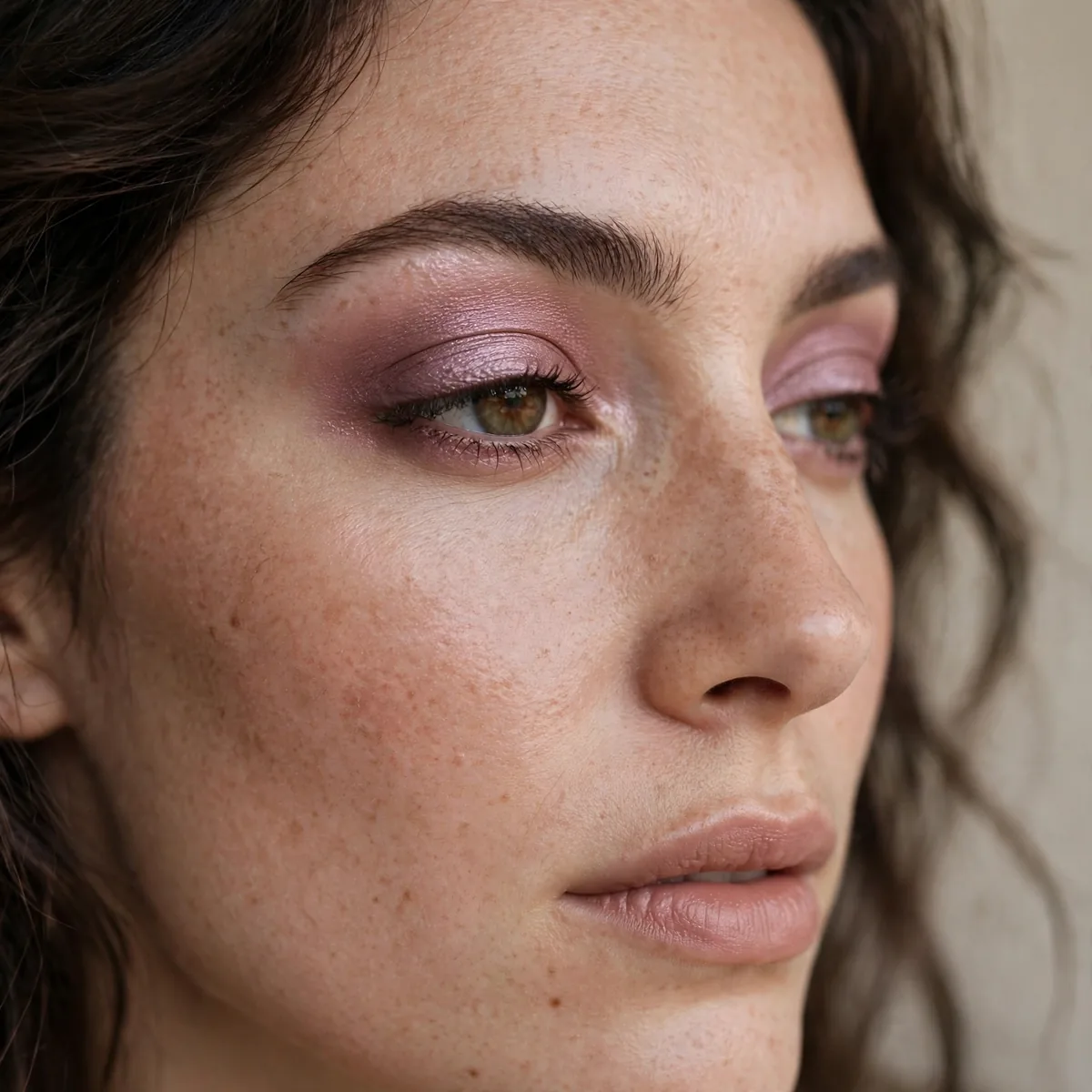
A mauve with a soft sheen — cool, sophisticated, quietly luminous.
Best for cool skin tones. The sheen keeps it from looking flat.
Cool and neutral undertones wear mauve most naturally, but warm-toned skin can borrow it for evening — the sheen stops the coolness from looking gray. It suits every age, though women over fifty often find mauve more flattering than pink, which can read young against mature skin. Pair it with a rosewood blush and a satin lipstick in a dusty rose for a fully tonal, elegant face.
Mauve shines in autumn and winter, when its cool depth echoes the season's moodier palette and richer fabrics. The mistake to avoid is using a mauve with heavy silver glitter — that veers frosty fast on mature eyes. A soft sheen, not sparkle, is the goal; check the shade in natural daylight before committing, since store lighting flatters shimmer far more than the sun does.
Satin Bone Highlight
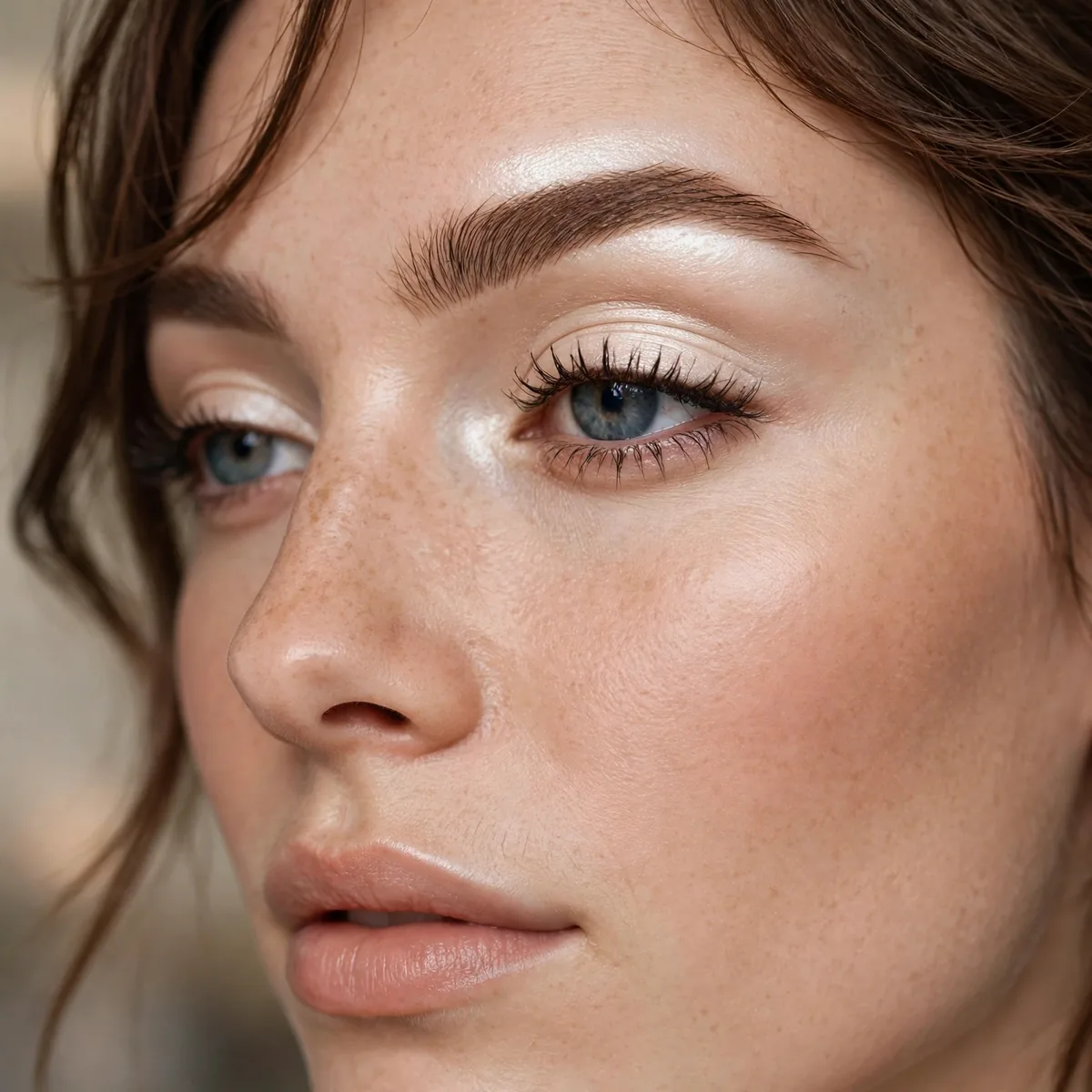
Satin (not matte, not shimmer) bone shade under the brow — the perfect middle ground.
It brightens without sparkle. The most professional-looking highlight option.
Sweep bone satin from the brow bone down to just above the crease with a clean fluffy brush, using barely any product — the goal is light, not a visible stripe. On prominent brow bones, this placement recedes the area slightly, which flatters strong bone structure. Because satin has no glitter to fade, this highlight looks identical at 8 a.m. and 8 p.m., making it the most reliable brightening step in any routine.
Deep-set eyes gain the most here — the satin lifts the brow area without the harsh glare a shimmer would throw across the socket. A common mistake is taking the highlight all the way down into the crease, which erases the definition you just built. Stop a clear millimeter above the crease line, and the contrast between bright brow bone and defined socket does the sculpting for you.
Shimmer Over Matte Base
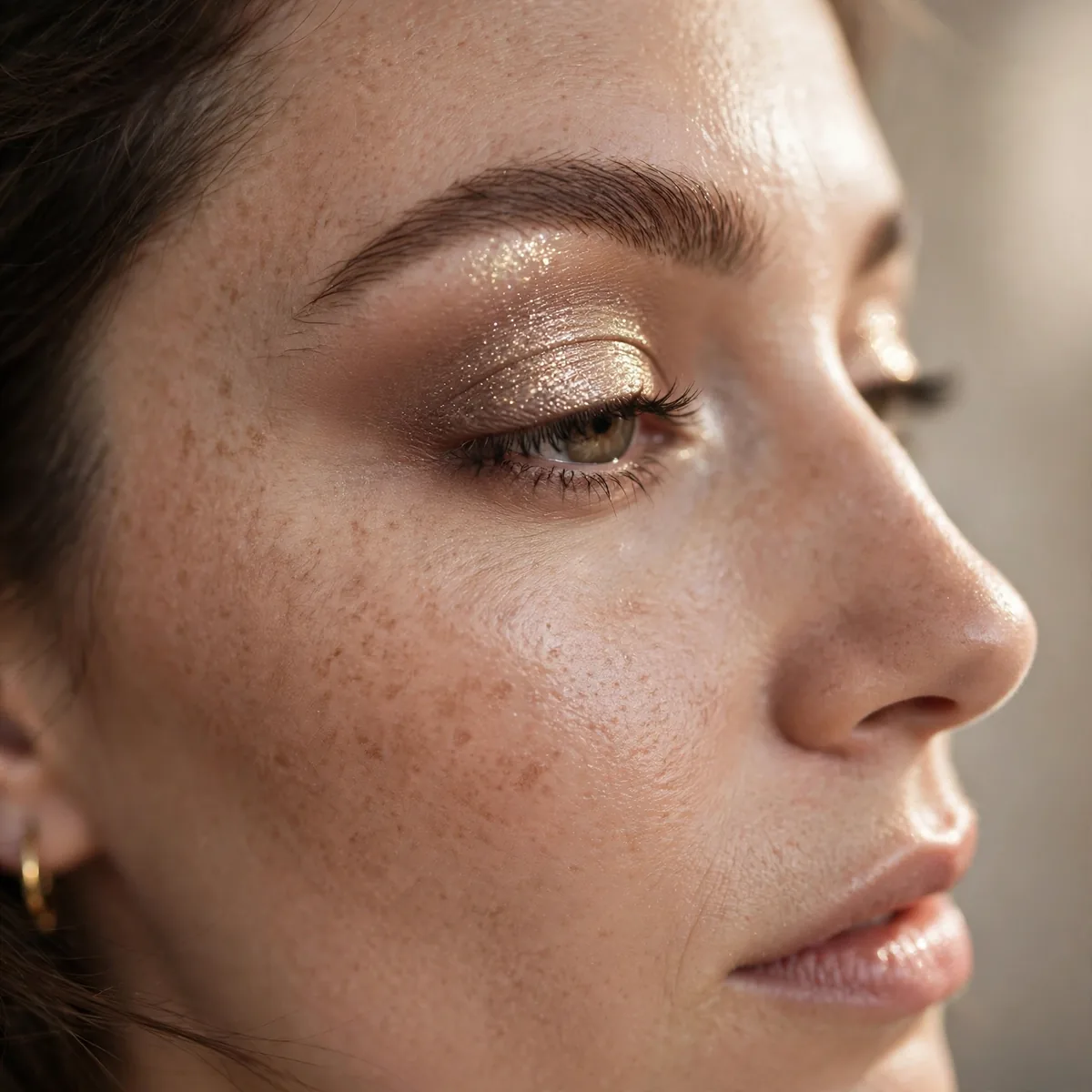
Build the shape with mattes first, then press shimmer only where you want light. Structure + glow.
The matte base gives the shimmer something to grip — it also lasts longer this way.
The sequence matters — apply all matte shades first, blend them fully, then press shimmer onto the center lid with a flat brush or fingertip, patting rather than sweeping so you don't disturb the matte work underneath. A damp brush intensifies the shimmer for evening, while a dry brush keeps it sheer for day. Wait a minute between the matte and shimmer layers so the base sets and the shimmer grips properly.
Skipping primer is the mistake that ruins this technique — without it, the shimmer migrates into the crease by midday and the matte base fades unevenly. With primer, this layered look holds eight-plus hours, which is why makeup artists build red-carpet eyes exactly this way. For removal, hold a micellar-soaked pad over the lid for ten seconds before wiping; the layered product dissolves without tugging the delicate skin.
Soft Pewter Glow
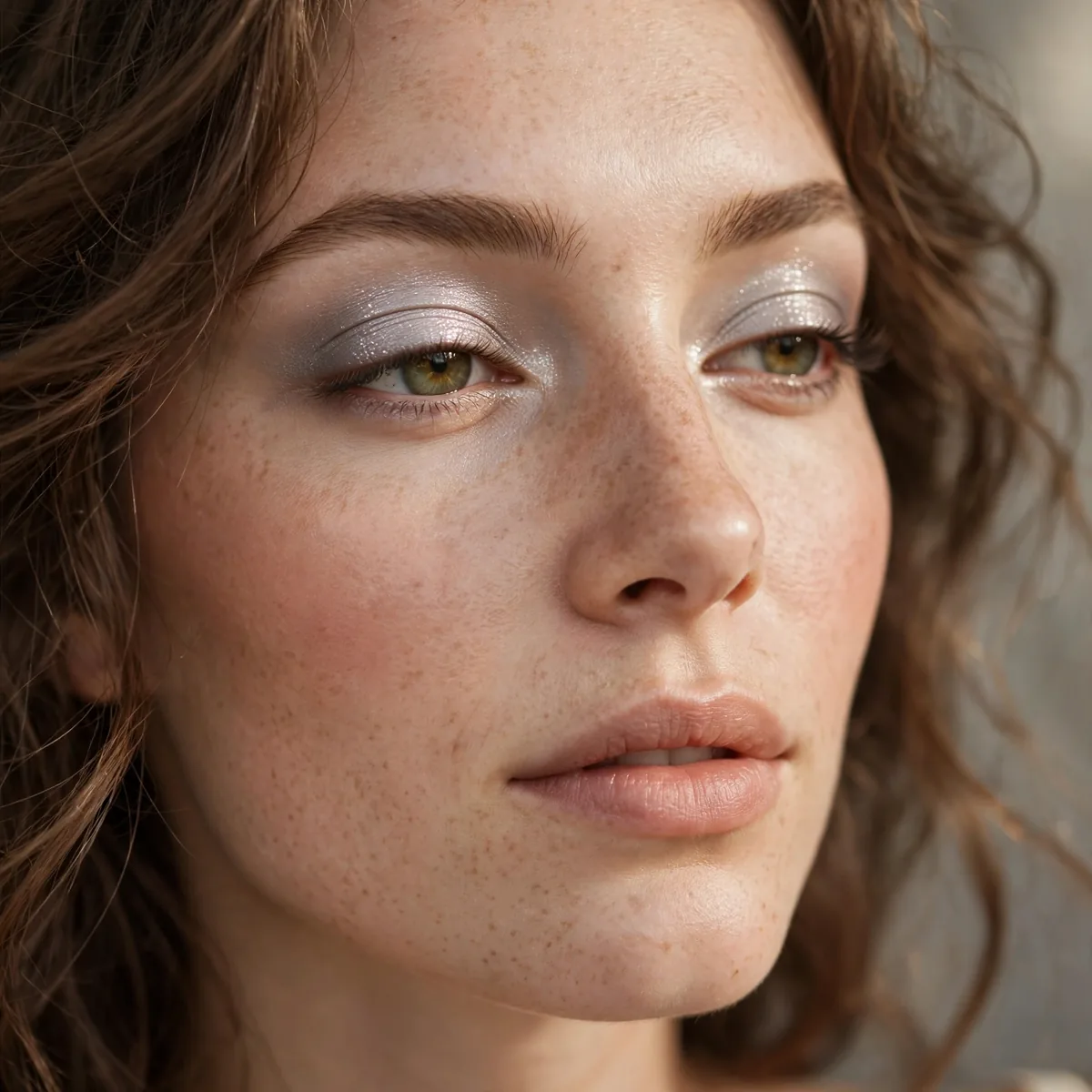
Pewter shimmer — the cool-toned luminous neutral. Modern and chic.
Best for gray and blue eyes. The cool tones make them look striking.
Fair to light skin tones wear pewter most easily — the cool silver-gray harmonizes with pink undertones instead of fighting them. On deeper skin, choose a pewter with more depth, closer to gunmetal, so it registers as luminous rather than ashy. This is an evening shade at heart; under candlelight or low restaurant lighting, the cool shimmer glows with a sophistication that daytime sun can flatten.
The mistake is treating pewter like a warm metallic — blending it with bronze or gold transition shades creates a muddy clash of temperatures. Keep every supporting shade cool: a soft gray-brown in the crease, a slate pencil along the lashes. Pair with a cool-toned nude lip and a touch of pink blush, and the whole face stays in one harmonious, modern color family.
Blurred Shimmer Edges
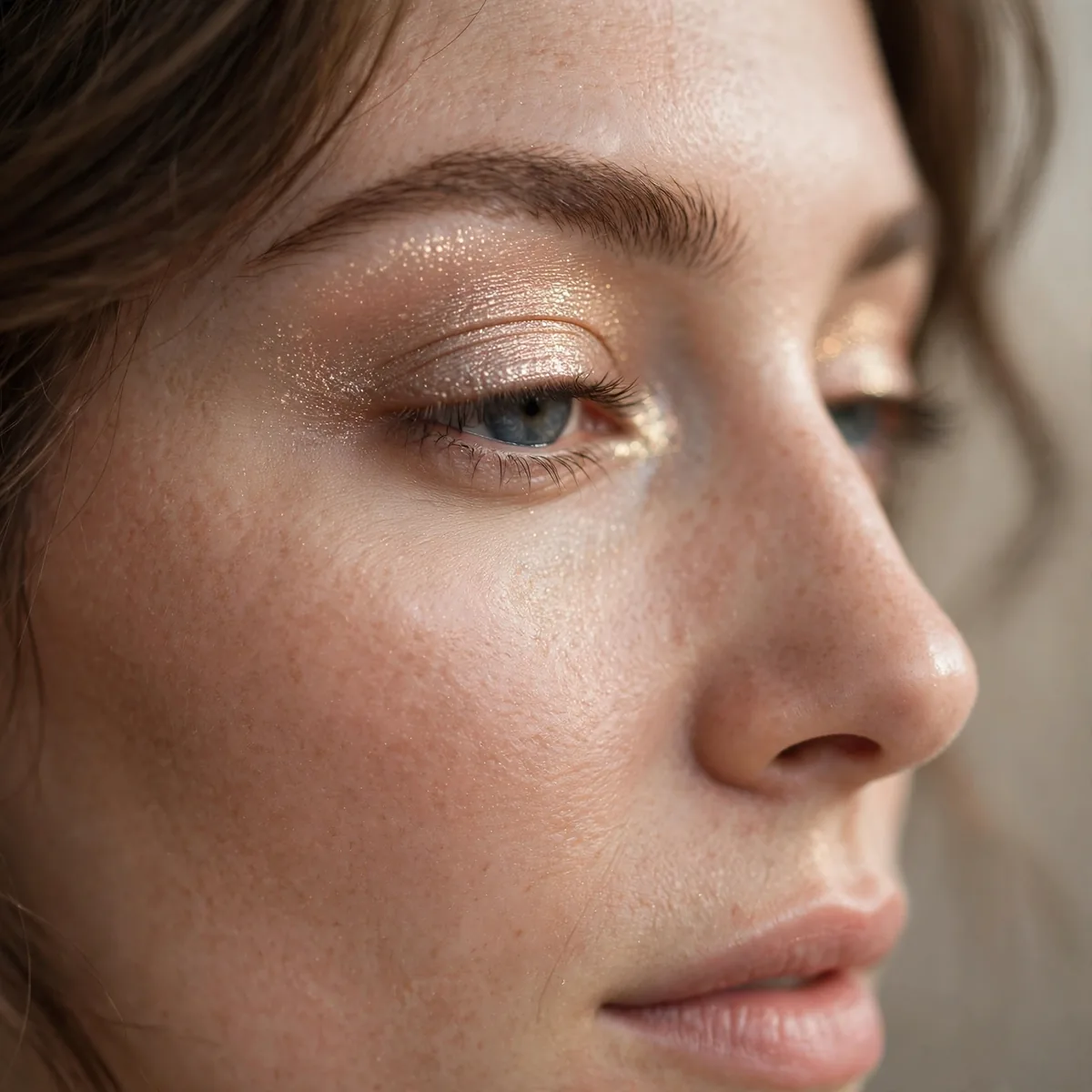
Apply shimmer, then blur the edges with a clean fluffy brush. No harsh lines anywhere.
Blurred edges are what separate "flattering" from "frosty." This step is non-negotiable.
After applying shimmer, take a completely clean fluffy blending brush — no product on it at all — and sweep it in small circles just along the edge where shimmer meets matte. Work in natural light if possible, since harsh bathroom lighting hides the very edges you're trying to soften. This takes fifteen seconds per eye and is the difference between a look that reads expensive and one that reads amateur.
The common error is using the same brush that applied the shimmer — leftover product on the bristles just spreads sparkle further instead of softening it. Dedicate one inexpensive fluffy brush solely to this blurring step and wash it weekly. On mature eyes especially, blurred edges are what keep shimmer looking like light on skin rather than makeup sitting on top of it.
One-Swipe Shimmer Wash
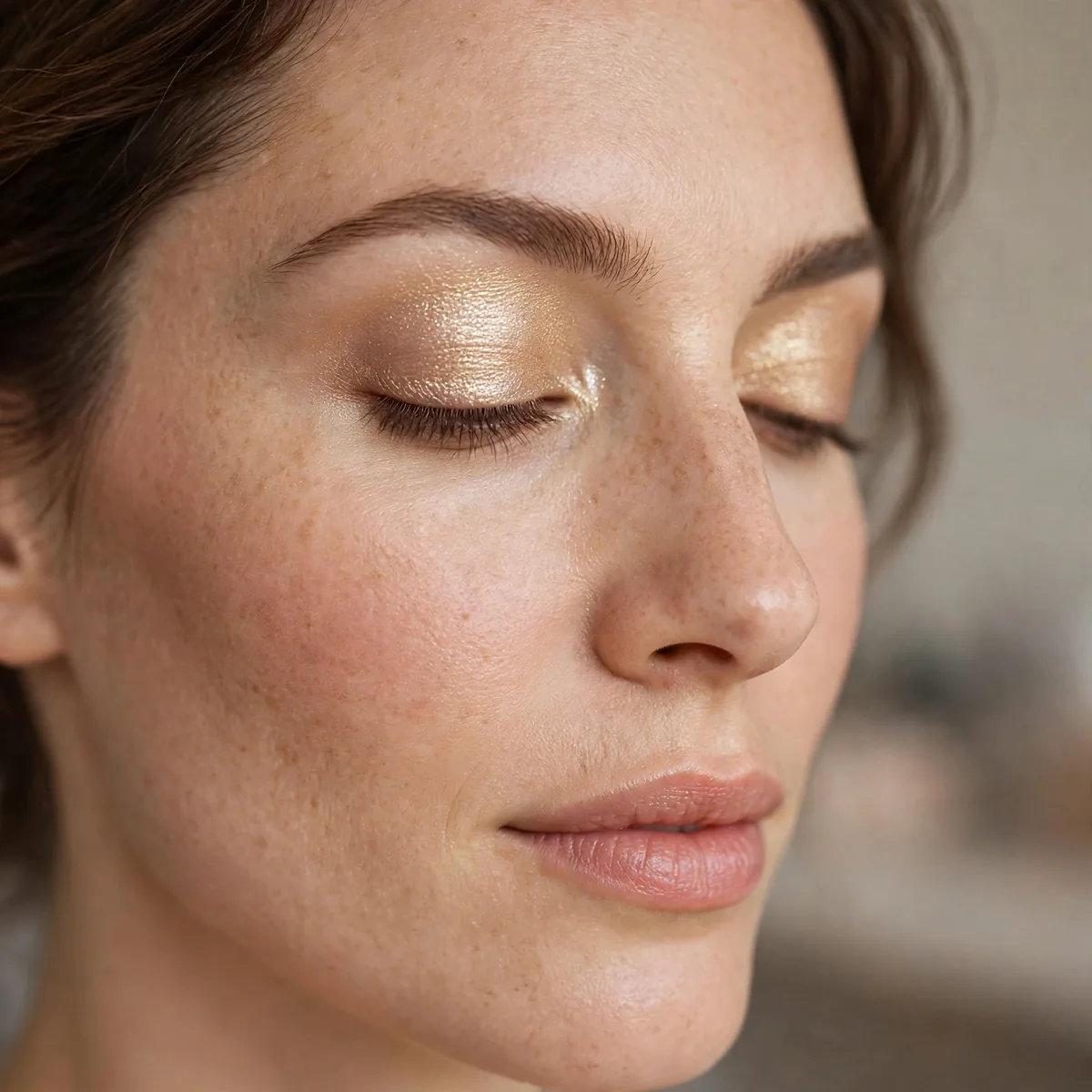
A single wash of sheer shimmer — the two-minute eye that looks polished.
Choose a shade close to your skin tone for the most natural effect.
This is the look for women who want polish without a routine — teachers, nurses, anyone out the door by seven. A cream shimmer stick works fastest here: one swipe per lid, a quick finger-blend at the edges, mascara, done. Over primer it holds through a full workday, and because the shade matches your skin, fading is invisible — there's no harsh line to betray the wear.
To stretch it into evening, deepen the outer corner with a matte brown using the same finger — no new tools needed — and add a second coat of mascara. The mistake is choosing a shade with visible glitter for this one-swipe method; chunky particles need precise placement to look good. A finely milled satin-shimmer close to your skin tone is the only formula that survives the true one-swipe test.
Warm Sand Shimmer
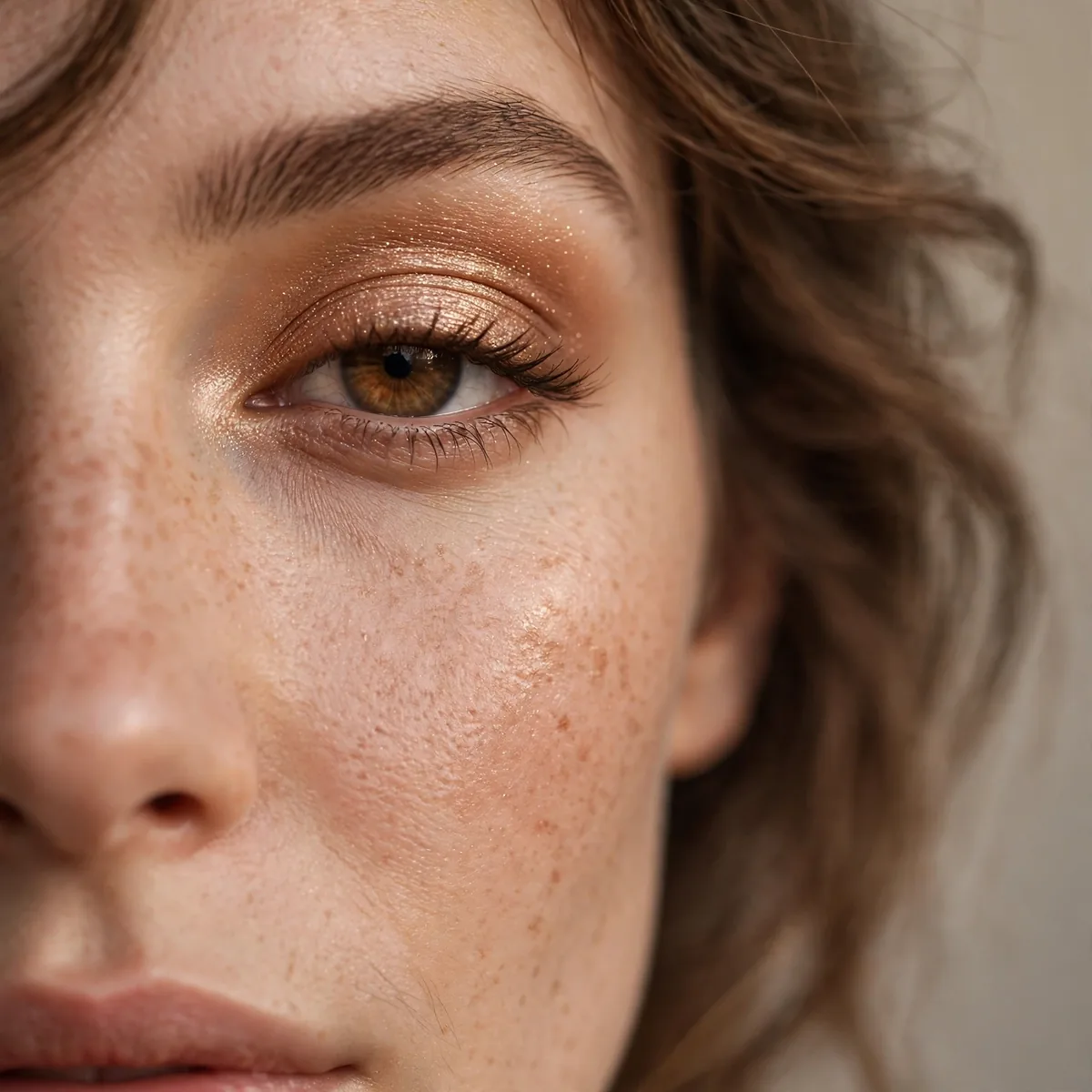
Sandy shimmer — the neutral glow that goes with everything.
The everyday shimmer. It’s as versatile as a nude lip.
Sand flatters every skin tone because it sits in the neutral middle — not too warm, not too cool — which is exactly why it works like a nude lip. Fair skin should choose a sand with a whisper of pink to avoid looking sallow; deep skin can go richer, toward a golden sand, for the same luminous effect. It layers beautifully under bolder looks too, as a base that brightens before the real color goes on.
This is the shimmer to reach for in spring and summer, when heavy metallics feel out of place and a light glow suits the season's easy makeup. Pair it with coral blush and a peachy gloss for a fully sun-warmed face, or keep it neutral with taupe cheeks and a nude lip for the office. One compact of warm sand shimmer can honestly replace three other eyeshadows in your bag.
The Shimmer-Free Crease
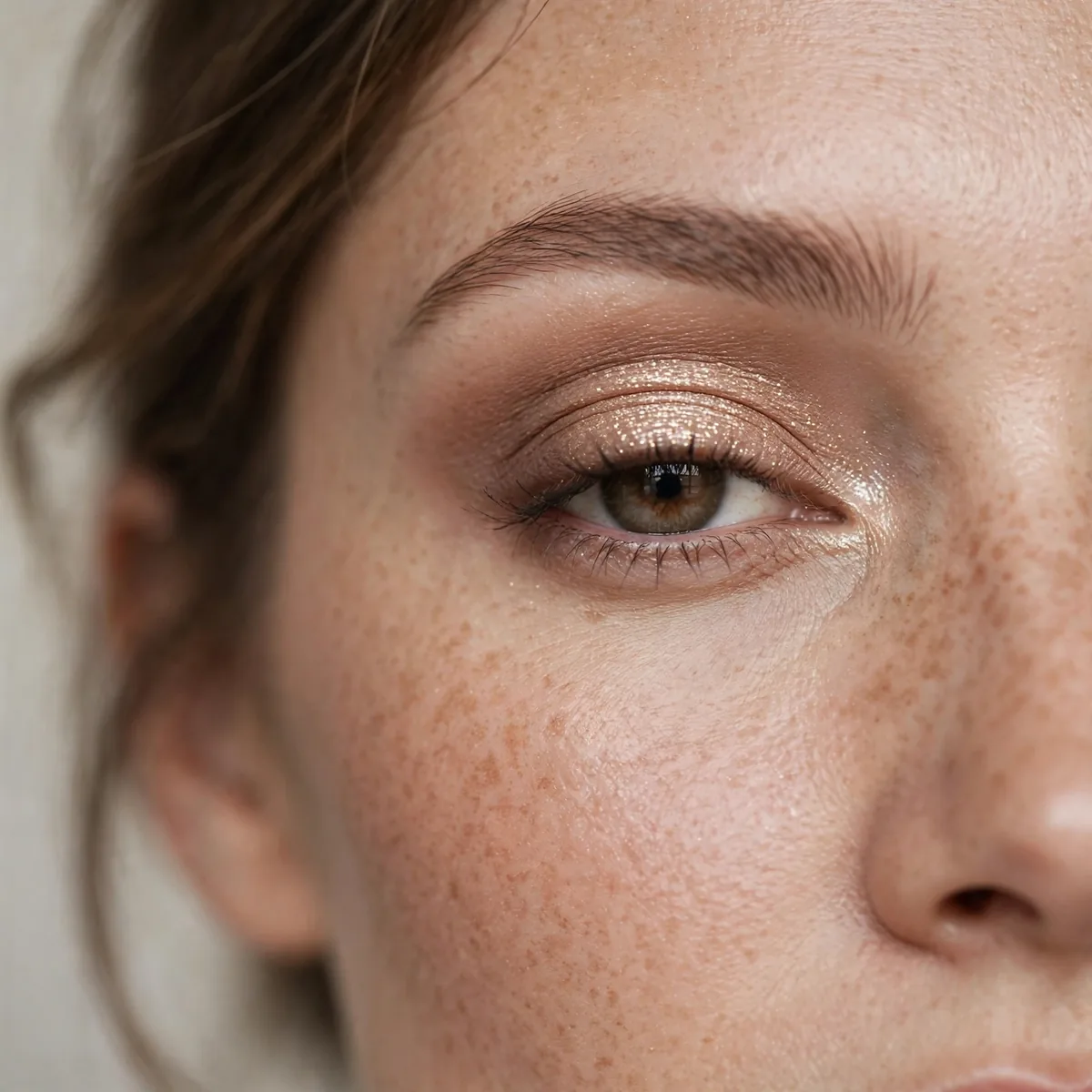
A firm rule worth repeating: never put shimmer in the crease on mature eyes. Matte defines; shimmer illuminates.
Crease shimmer emphasizes every fold. Lid shimmer emphasizes light. Know the difference.
Build the crease with a matte shade one to two tones deeper than your skin, applied with a tapered blending brush in windshield-wiper motions — the brush shape does the blending work for you. Place the color slightly above the natural crease on hooded eyes so the definition stays visible when eyes are open. Then press shimmer strictly onto the mobile lid below that line, keeping a clean boundary between the matte structure above and the light below.
The mistake that undermines this rule is using a matte shade with hidden shimmer — many transition shades labeled matte contain micro-sparkle that reads as crease shimmer under sunlight. Check your crease shade in daylight before trusting the label. Done correctly, this contrast is what gives mature eyes their shape back; the matte carves the socket while the shimmer brings the lid forward, and the eye looks lifted without a single harsh line.
Dewy Lid Technique
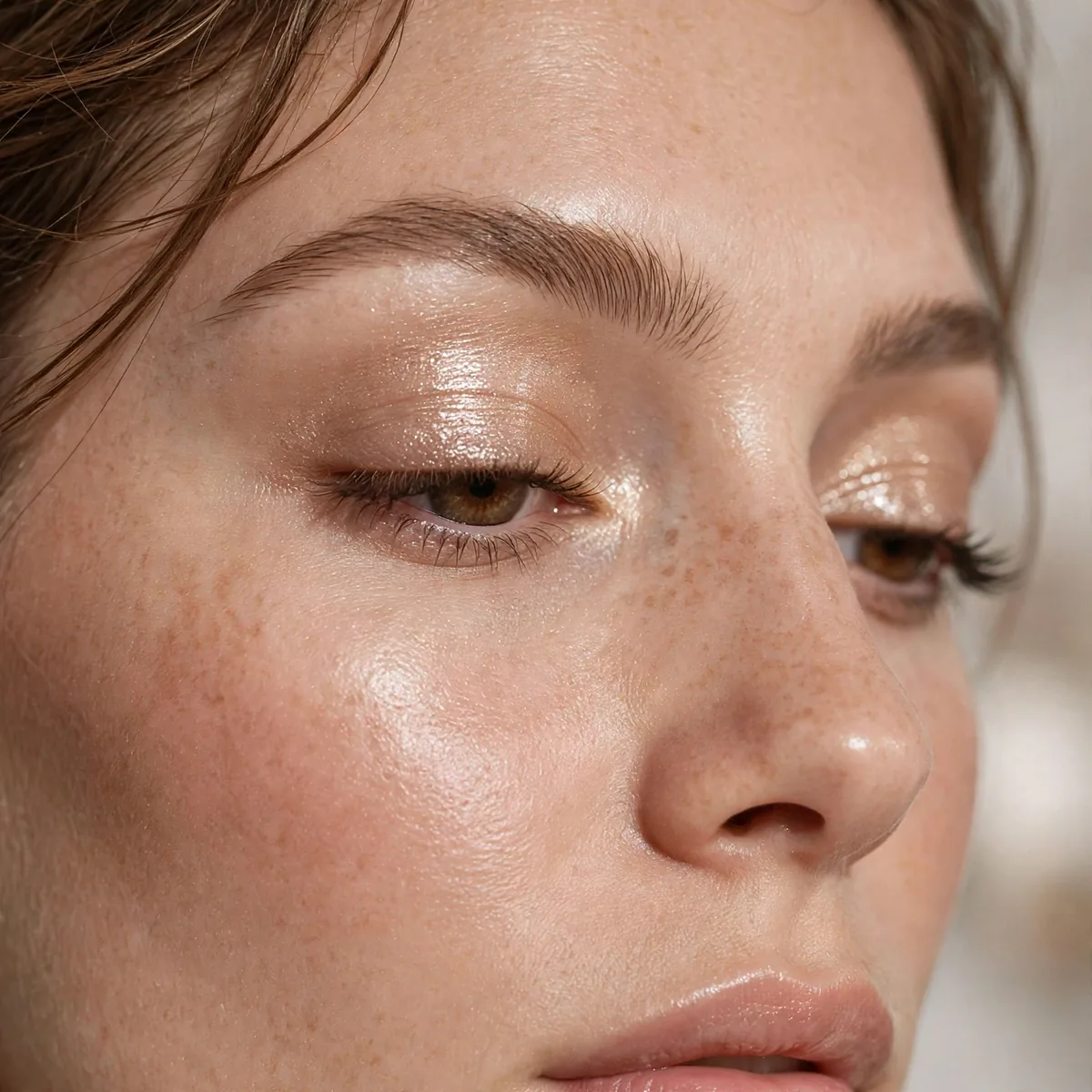
A dab of clear balm over shimmer creates a dewy, editorial finish. High fashion, surprisingly wearable.
Keep it to the center of the lid — full-lid gloss migrates. Pair with long-wear tips from our long-wear makeup guide if you need it to last.
This editorial trick suits special occasions best — weddings, photoshoots, evenings out — because a dewy lid catches camera light like nothing else. Use the tiniest amount of balm, warmed between fingertips first; too much product slides into the crease within the hour. Press it over the shimmer rather than sweeping, and keep the surrounding skin matte with a light powder so the dew reads as intentional contrast.
The mistake is layering balm over a chunky glitter — the gloss magnifies every large particle and the result looks wet in the wrong way. This technique only works over finely milled shimmer or satin, where the balm turns the finish glassy. Remove it at night with an oil-based cleanser, since balm-based products resist water-based removers and tugging the lid area ages it faster than almost anything else.
Evening Shimmer Upgrade
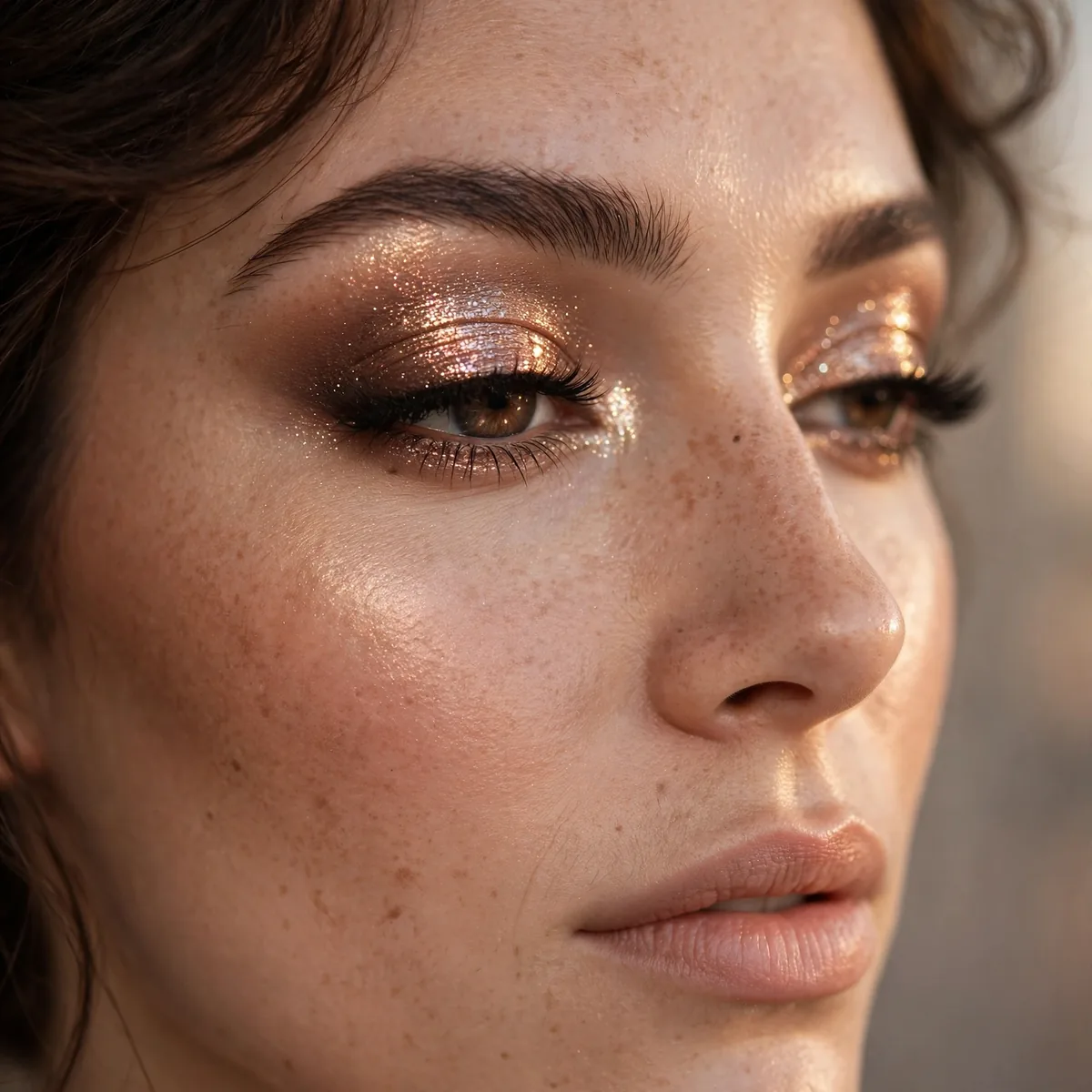
Take any daytime shimmer look to evening: deepen the outer corner, add liner, intensify the shimmer.
The same shimmer, more drama around it. Day-to-night in five minutes.
Start the upgrade by deepening the outer V with a matte espresso, blending it into the existing crease shade so no new edge appears. Next, swap your daytime pencil for a waterproof gel liner — evenings run long, and gel won't smudge through dinner and dancing. Finally, press an extra layer of shimmer just onto the center lid with a damp brush; the concentrated light makes eyes look larger in dim lighting.
The mistake is adding shimmer everywhere for evening — more sparkle in the crease and brow bone just reads messy under artificial light. Keep the upgrade focused: deeper outer corner, stronger liner, brighter center lid. Refresh the under-eye concealer before you head out, since daytime concealer settles by evening, and a bright under-eye makes the whole upgraded eye look intentional rather than tired.
Glow has no age limit — pin these techniques for your next makeup day. For more mature-eye wisdom, see our makeup for mature skin tips, or master the basics with hooded eye makeup tips.